Home Blog Page 881

Sidney Poitier: First Black man to win Best Actor Oscar dies aged 94

1

Sidney Poitier, the first black man to win a best actor Oscar, has died at 94.

The Hollywood star’s death was confirmed to the BBC by the office of Fred Mitchell, the Bahamas’ minister of foreign affairs.

Poitier was a trailblazing actor and a respected humanitarian and diplomat. He won the Academy Award for best actor for Lilies of the Field in 1963.

Former US President Barack Obama said Poitier “epitomised dignity and grace” and had “singular talent”.

He added that the actor revealed “the power of movies to bring us closer together” and “opened doors for a generation of actors”.

US broadcaster and journalist Oprah Winfrey also paid tribute, saying: “For me the greatest of the ‘Great Trees’ has fallen,” adding the actor “had an enormous soul I will forever cherish”.

Born in Miami, Poitier grew up on a tomato farm in the Bahamas and moved to New York aged 16.

He signed up for a short stint in the army and did several odd jobs while taking acting lessons, en route to becoming a star of the stage and screen in the 1950s and 60s.

Poitier broke racial barriers in Hollywood. His appearance in The Defiant Ones in 1958 earned him his first Oscar nomination – in itself a historic achievement for a black man in a lead category at the time.

Five years later he went one better, taking the glory for Lilies of the Field, in which he played a handyman who helps German nuns to build a chapel in the desert.

Speaking on a live Facebook stream on Friday, The Prime Minister of the Bahamas, Philip Davis said: “Our whole Bahamas grieves. But even as we mourn, we celebrate the life of a great Bahamian.”

He added: “His strength of character, his willingness to stand up and be counted and the way he plotted and navigated his life’s journey.

“The boy who moved from the tomato farm to become a waiter in the United States, a young man who not only taught himself to read and write, but who made the expression of words and thoughts and feelings central to his career.”

The actor was a regular on the big screen at a time of racial segregation in the US, appearing in a Patch of Blue in 1965, and then Heat of the Night the year after, followed by Guess Who’s Coming to Dinner, playing a black man with a white fiancée.

In Heat of the Night he portrayed Virgil Tibbs, a black police officer confronting racism during a murder investigation.

His other classic films included A Patch of Blue, The Blackboard Jungle and A Raisin in the Sun, which he also performed on Broadway.

He went on to direct a raft of films, and a Broadway play about life and career was announced last month.

‘Tackled racism head on’

Empire magazine’s Amon Warmann told the BBC: “He was a pioneer, he’s so influential and paved the way for so many in the industry to make their own mark, not least Denzel Washington, who paid tribute to him when he won an Oscar.”

Washington, who won an Oscar in 2002 on the same night Poitier won an honorary Oscar, joked as he said: “Forty years I’ve been chasing Sidney and what do they do – they go and give it to him in the same night.”

Warmann added that Poitier “tackled racism head on” in his work but was also “so versatile”.

“He really helped change the game for how black actors were viewed at that time [of his Oscar win]. He was one of the biggest stars during that period.”

Viola Davis, the first black American to win an Oscar, an Emmy and a Tony Award, said: “No words can describe how your work radically shifted my life.”

Actress Whoopi Goldberg quoted the lyrics to the song To Sir With Love, which soundtracked Poitier’s 1967 film. “He showed us how to reach for the stars,” she noted, while actor Joseph Gordon-Levitt called him an “an absolute legend”.

In an interview in 2000, Winfrey put it to Poitier that, as producer Quincy Jones had noted, he had “created and defined the African-American in film”.

“It’s been an enormous responsibility,” Poitier replied. “And I accepted it, and I lived in a way that showed how I respected that responsibility.

“I had to. In order for others to come behind me, there were certain things I had to do.”

Billionaire Strive Masiyiwa kickstarts 2022 with $10.3 million gain

88

By Victor Oluwole | Business Insider Africa |

Zimbabwe’s richest man and Executive Chairman of Econet, Strive Masiyiwa, has already made $10.3 million this year following a surge in the market value of his stake in the Zimbabwe-based smart tech group, Cassava Smartech.

The shares in Cassava Smartech since the beginning of the year have increased from a price of ZWL40.65 ($$0.1263) on Dec. 31, 2021, to ZWL44.9 ($0.1263) on Jan 5, Billionaires Africa reported.

According to analysts’ projections, the surge in the market value of Masiyiwa’s stake since the year began can be linked to recent buying interest in the company’s share in the new year.

Masiyiwa, who holds a beneficial 30.26-per cent stake in the company through Econet Global Limited, has Cassava Smartech’s soaring share price to thank as his stake in the company rose from ZWL31.87 billion ($98.97 million) at the beginning of the year to ZWL35.2 billion ($109.31 million) on January 5.

This led to gains of 10.45-percent for shareholders as Masiyiwa’s total gains of ZWL3.33 billion saw his net worth rise by ($10.34 million) in the first five days of the new year.

Cassava Smartech is a diversified smart tech group that leverages digital and financial technologies to build shared economies, drive financial inclusion and promote economic empowerment.

The company has evolved from a Fintech operation (primarily Mobile Money) to a full-fledged smartech business, constantly tapping into new opportunities to address everyday challenges through innovative and inclusive digital solutions.

Another big gainer this week is Nigerian billionaire industrialist Abdul Samad Rabiu, who is now the 2nd richest person in the country, according to Billionaires Africa.

He chairs BUA Foods Plc, an operating unit of manufacturing conglomerate BUA Group, both of which have completed the listing of its shares on the Nigerian Exchange.

Shares of BUA Foods rose nearly 10% from N40 ($0.0968) to N44 ($0.1065) this week, boosting Rabiu’s net worth by $1.2 billion. His fortune has risen to $7.2 billion, skyrocketing from $5.3 billion last year.

Makomborero Haruzivishe finally released on bail after 9 months in jail

16
The High Court has finally released MDC Alliance youth activist Makomborero Haruzivishe ending his nearly 10-month pre-trial incarceration.

The High Court has finally released MDC Alliance youth activist Makomborero Haruzivishe ending his nearly 10-month pre-trial incarceration.

Haruzivishe was on Friday granted ZWL 20,000 bail on the last of his pending criminal cases where he is charged for kidnapping with intent to promote public violence.

“The Applicant be and hereby admitted to bail in respect of the pending trial on the charge of kidnapping with intent to promote public violence (CRB 2165/21) on the conditions stated hereunder,” read the judgement.

Free at Last: MDC Alliance youth activist Makomborero Haruzivishe seen here with party MP Joana Mamombe

The pro-democracy campaigner was represented by constitutional law expert Professor Lovemore Madhuku.

MDC Alliance spokesperson Fadzayi Mahere and Danford Ngadziore among other party officials were in court as two judges ended Haruzivishe’s incarceration.

Haruzivishe was granted bail pending appeal on his 14-month prison sentence in July last year but the 28-year-old remained in prison following the revocation of his bail on separate charges.

There was mayhem at the Harare Magistrates Court where MDC Alliance activist Makomborero Haruzivishe was being sentenced as police beat up his friends and colleagues who were demonstrating against his 14 month custodial sentence.
There was mayhem in April 2021 at the Harare Magistrates Court where MDC Alliance activist Makomborero Haruzivishe was being sentenced as police beat up his friends and colleagues who were demonstrating against his 14 month custodial sentence.

He has been granted bail on all his cases and was released Friday evening.

MDC Alliance national spokesperson, Fadzayi Mahere welcomed the development.

“Mako has been granted bail. To report twice a week at Law and Order, reside at his given address, pay $20,000. Thank you, Jesus.

“We have confirmed with the clerk of court at Rotten Row that there are no outstanding cases or warrants of arrests against Mako. Subject to all formalities, @MakomboreroH will be going home today. Thank you to everyone who campaigned for his freedom. Mako is now free,” Mahere said. Nehanda Radio

ZIMRA forces reinstatement of retired CG as Moris Mpofu is embarrassed

3
Mr Rameck Masaire and Dr Moris Mpofu

The Zimbabwe Revenue Authority (ZIMRA) has reversed its controversial appointment of Moris Mpofu as the authority’s Acting Commissioner General and re-instated Rameck Masaire who had retired.

The authority announced the development in a statement on Friday afternoon.

“The Zimbabwe Revenue Authority (ZIMRA) Board wishes to inform members of staff that the assumption of duty of Dr Moris Mpofu as Acting Commissioner General of the Authority has been suspended.

“Accordingly, Mr Rameck Masaire will continue to serve as Acting Commissioner General of the Authority,” read the statement.

Mpofu’s appointment had raised eyebrows after revelations that in May 2019, the Zimbabwe Consolidated Diamond Company (ZCDC) board of directors fired seven senior executives, including then CEO Mpofu following allegations of rampant corruption and abuse of office.

The sacked ZIMRA official was arraigned on charges of criminal abuse of office charges after he allegedly recommended that ZCDC should sell diamonds to a blacklisted buyer.

He was released on ZWL 2 000 bail by magistrate Barbara Mateko. The State later withdrew charges against him.

The reinstated ZIMRA CG had served only one year in the office before he tendered his retirement. The move raised suspicion that “it was a boardroom coup.” Nehanda Radio

What are the options for Chamisa in the context of despotic-capture of MDC Alliance?

23
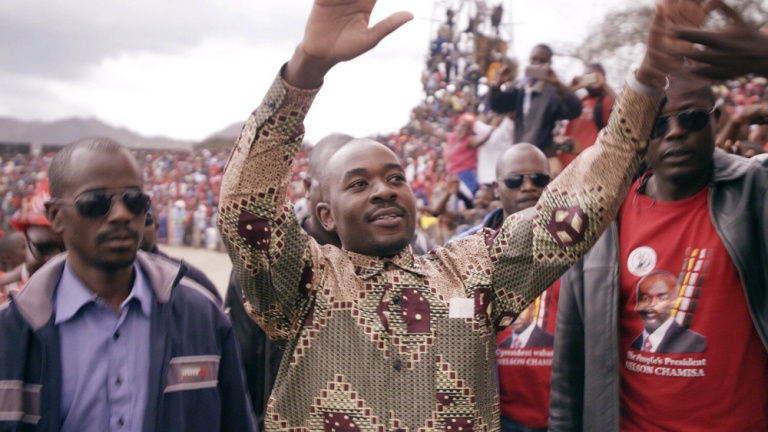
A clip from "The President" focussing on Nelson Chamisa and his presidential bid in 2018 (Picture via film “The President” which unmasked the alleged rigging in the 2018 election - Directed by Camilla Nielsson)

Reader in 1998, in Russia’s St Petersburg, Oleg Sergeyev ran for the Governor’s position. When he officially launched his campaign, to his chagrin there were two other opponents. Opponent one was Oleg Sergeyev, opponent two was Oleg Sergeyev.

On voting day, voters were unsure which Sergeyev they were voting for. For students of politics, it was therefore not a shock when in authoritarian Zimbabwe, Morgen Komichi, the chairperson of the splinter Movement for Democratic Change Tsvangirai (MDC T) led by Douglas Mwonzora announced on 24 October 2020 that his party was going to contest in future elections as Movement for Democratic Change Alliance (MDC Alliance).

A candidate from the MDC-T led by Douglas Mwonzora using the MDC Alliance name

Yet MDC Alliance is led by Nelson Chamisa, who has used that name in polls since the 2018 general election. So MDC Alliance, like Sergeyev of Russia, faces opponent number two as MDC Alliance at the nomination court for by elections on 26 January 2022, by elections voting day on 26 March 2022 and the subsequent general election constitutionally due in 2023.

What then are the political options? I am not here to be overly prescriptive but to lay the basis for democratic debate.

The first option for Chamisa’s MDC Alliance is party relabeling.

Party relabeling means the continuation of the same party but under a new label. Therefore, the relabelled party is not a brand new party. For this reason, party relabeling does not reconfigure party structures, membership and identity.

It does not extinguish the Gweru Congress process outcome held by the MDC Alliance in May 2019. The branches, the wards, the districts, the provinces, the National Executive Committee (NEC), the National Standing Committee (NSC) and the President remain the same. Inter alia there is no freezing of current party systems.

In this regard, the next congress date, unless varied by an extraordinary congress, remains ear marked for 2024. This option does not provide room for those that see an opportunity to grab power for the sake of power at every opportunity of change. On the other hand, it does not give room for consolidation of power by cliques. Party members can still make claims to the party’s historical legacy, the memory, blood and pain of the past.

There is some degree of continuity under this option. When faced with a Sergeyev crisis, the late founding President of the MDC, Morgan Tsvangirai, had to relabel from MDC to MDC T in 2008. However, the political stakes are higher at this historic juncture and the post-coup militarised party-state is bent on eliminating Chamisa and his party.

Therefore, what is likely to be at the centre of legal contestation is the name MDC. Prefixes or Suffixes to it-such as MDC C or MDC Z- might not resolve the conundrum, hence the need for a new way of relabeling.

The second option is party rebranding.

This does not entail the formation of a new party but it is a surgical process that requires transformation of substantive aspects of the party. It means a strategic review of the party’s goals, core objectives, principles and values and its ideology.

This might require cleaning up and waterproofing the constitution to avoid unnecessary legal loopholes manipulated by opponents. The party organs might need to be repurposed in line with the new core objectives.

The secretariat might as well need a complete overhaul under rebranding in order to streamline with the new strategic focus. In other words, if a collective decision is taken to rebrand Chamisa’s MDC Alliance, it must not just be about the change of a name.

The result should be a total refurbished party so that it is presented to the people in a new and pulchritudinous form. This is a time-consuming process.

Given that politics is fluid and moving very fast, one can relabel as a first step to deal with the immediate questions of the day like how to register candidates at the nomination court set for 26 January 2022 and rebrand thereafter.

Reader, before we move to the third and fourth options here is a question. What are the prospects of the masses resonating with relabeling and rebranding in the Zimbabwean context? I think they are high. Why? Zimbabwe has a politically hyper active society.

There are strong levels of political attention among the electorate so the changes will not evade the curious public eye. From the history of splits, Zimbabwean voters have predominantly utilised personalistic signals in identifying parties and making voting decisions, therefore they are able to reorient to a relabeled or rebranded party more easily.

Voters can identify the party under a new label or brand by simply checking out its leaders. Is Chamisa there, are his deputies, Lynette Karenyi-Kore, Tendai Biti and Welshman Ncube there, and is the national chairperson Thabitha Khumalo there including her deputy Job Sikhala and the Secretary General Chalton Hwende as well as Treasurer General David Coltart.

By looking at who the leaders are, that is whether the leaders remain in the party, voters would associate easily. In addition, the MDC Alliance is a less institutionalised party system, an embedded weakness but one which makes it less arduous to change based on the weak party hypothesis.

Finally, the larger demographics of the voting population are the young with less sentimental value to the old ways of doing things.

Now the third option will entail forming a new party.

A new party has to break orthodoxy and think afresh to be presented in a pulchritudinous form. This is a laborious process because it is not about trying to resurrect the MDC through reanimating the Tsvangirai days. A new party needs to think about big problems in a fresh way and come up with new big ideas.

One cannot just jerry-build ideas from the previous era. Continuity with the noble ideas can be valuable, but it is not enough to build a new party. This will require a competent infrastructure to develop new ideas followed by building a national movement with presence in every corner of Zimbabwe to advance the new big ideas.

This is important because durable new parties have to start from the bottom up around a popular big idea. Even if you capture voters’ attention around the charismatic Chamisa, he has to stand for a genuine national movement rising from the people.

Reader, a new party implies an inaugural congress which might produce an entirely new leadership from the current presidium to the branches. There is no guarantee, for example, that all the current deputies, national chairperson, Secretary General, Treasurer General et cetera will be retained.

It might be determined by a whole different party structure, constitution, party roots in society, membership, ideology and identity. For a new party will technically freeze the Gweru Congress and usher in a new birthday. The outcome is a double edged sword.

This process can pilot a new, dynamic and competent leadership unchained to orthodoxy, which will not merely hitch-hike old ideas but usher in fresh big ideas with renewed energy. However, it is common to see actors who will not make it in new parties, get disappointed at the shattering of their dreams and form splinter parties to restore a status quo ante.

This can plunge the opposition into the old cycle of splits. This option is a long term gamble and a rushed rally to launch a new party will not suffice especially ahead of the by-elections.

The fourth option is to maintain the party name as is. The logic is based on an assumption that the MDC Alliance is a strong brand with long term political exposure. Even a person with a remote interest in politics knows that the MDC is Zimbabwe’s main opposition party. It has long term exposure both locally and internationally. As a result, relabeling, rebranding or forming a new party is seen as a radical and risky step that might simply destroy the opposition.

MDC is embedded in the political marketplace for 22 years. There are also sentimental and emotional attachments to the name especially by the older generation. The history of struggle, pain, blood and memory are embedded in the name. In addition, the legacy of Tsvangirai is partly embedded in the name. The Mwonzora effect is also considered as a temporary inconvenience that will crumble in due course.

The idea is to fight for the retention legally and politically and allow the political burden and responsibility on Mwonzora and Mnangagwa the autocratic President of Zimbabwe as part of a total de-legitimisation strategy.

So all things being equal (ceteris paribus), all players would want to keep their name and fight to the end. However, this might be foolhardy given the balance of political forces in Zimbabwe today.

Reader, under normal democratic conditions parties do not make significant changes such as relabeling, rebranding, creating new identities because political parties are largely conservative in nature. However, internal or external shocks can break the status quo and trigger the need to weigh options as part of strategic insulation and self-preservation especially in authoritarian contexts bent on annihilating the opposition. The shock therapy here is despotic-capture of the name MDC Alliance.

The MDC Alliance, like Sergeyev of Russia, faces opponent number two as MDC Alliance. In the event of a shock therapy of this nature, history has taught us that partial rather than wholesale changes have significantly yielded more positive electoral effects. My modest contribution to the democratic debate is stated. I am out.

Dr Phillan Zamchiya holds a Doctor of Philosophy (D. Phil) degree in international development from the University of Oxford in the United Kingdom.

Trevor Dongo accuses Poptain of stealing his beat for new song

0
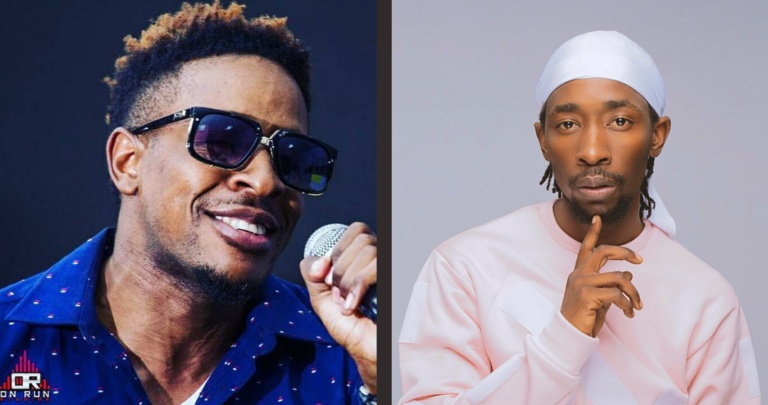
RnB singer Trevor Dongo and Zimdancehall singer Poptain

RnB singer Trevor Dongo has sparked controversy on social media after implying fast rising Zimdancehall chanter Poptain stole his beat for the song “Something” which featured Lorenzo FTS.

Dongo took to Instagram congratulating Poptain for releasing the song but also took the opportunity to highlight that the beat used in the song was his.

“Respect to my brother Poptain but is this a remix to my record ‘conversations with my heart’ or ndiri kutadza kunyatsonzwa,’ wrote Dongo.

Dongo’s song was produced by MacDee while Poptain’s song was produced by Rodney Beats and Shamex who indirectly responded to Dongo saying he should ‘pay for studio time.’

Posting on his InstaStories Shamex wrote, “normalize paying for studio time and production you won’t have any problems.”

His post was followed with another of a video of him and Poptain in the studio with the caption, “all day everyday asvotwa ngaarutse.”

Efforts to get comments from Trevor and Poptain did not yield any results as Trevor’s phone rang without a response while Poptain’s phone went straight to voicemail. Nehanda Radio

Muskwe hails AFCON tournament despite being ‘underrated’ in Europe

1

England based Warriors forward Admiral Muskwe has hailed the much ‘criticised’ and ‘disrespected’ Africa Cup of Nations (AFCON) competition, describing it as a ‘prestigious and major tournament’.

The Luton Town FC striker said this in an interview with his club’s media crew on Wednesday night ahead of his departure to Cameroon.

Muskwe was expected to join the rest of the Warriors squad in Bafoussam at La Valle de Bana where the team is currently camped ahead of their first two games against Senegal and Malawi.

“As a young boy you always dream about playing at a major tournament. Playing for your country is a huge honour, especially at such a prestigious tournament like the Africa Cup of Nations,” he said.

Muskwe expressed his pleasure and said it is a huge honour to play for Zimbabwe at the largest continental football showcase.

“It’s a huge honour for myself and even my family, I am very excited and I am looking forward to the whole experience.”

He added: “It is something that I’ve always wanted to do and now I’m going to get the opportunity to do so in few weeks time.”

The 23-year-old former Leicester City striker once turned out for the England national team under 16s and under 17s before he was invited to join the Zimbabwe senior national team.

But his sentiments come after the AFCON tournament, of late, has faced intense criticism and disrespect from the negative media coverage in Europe.

Seemingly, a number of European clubs and their coaches reportedly look down on the highly rated organised 24 team competition.

In November, the Liverpool coach Jurgen Klopp refereed AFCON as a ‘little tournament’ and this prompted a fierce debate.

In contrast to Klopp’s comments, Crystal Palace coach Patrick Vieira, Ajax player Sebastien Haller and former England and Arsenal striker Ian Wright called for the tournament to receive enough respect.

Ex-Zim cricketer Grant Flower hired as new Sussex batting coach

0

England based cricket team, Sussex County has officially announced the appointment of former Zimbabwean cricketer Grant Flower (51) as the club’s new batting head coach.

County took to their twitter account and website to confirm the arrival of Grant to their team.

“Sussex Cricket is thrilled to announce the appointment of Grant Flower as the club’s batting coach,” said the club.

In the coaching department, Grant will work together with head coach Ian Salisbury and his assistant Mark Davis.

The former Zimbabwe cricket head coach and all rounder hailed his new role and said: “It gives me great pleasure to be added to the Sussex coaching staff and I can’t wait to start.”

He also applauded the club for giving him the opportunity indicating he is hopeful of improving the club’s batters.

“I am excited to be given the opportunity of hopefully improving the exciting young batters I have already been told about. I wish to help them throughout their career.

“I always enjoyed playing against the Sharks and admired their professional approach and ultra-competitiveness. Hopefully I can add to that with some of my international coaching experiences and help contribute to make the Sharks batting unit both reliable and exciting.”

Upon Grant’s arrival at the English club, Sussex’s Performance Director, Keith Greenfield said: “To have such a high quality batting coach with the experience that Grant has come and join us at such a crucial time to help develop our young squad is absolutely fantastic.”

The 51-year-old joins Sussex after spending two years as the Sri Lanka national team batting head coach.

He also performed the same role for the Zimbabwe cricket national team from 2010 to 2014 and for Pakistan national team between 2014 and 2019.

Despite over a decade of coaching experience at international level, the iconic Zimbabwean cricketer has a distinguished playing career with the Chevrons.

He is Zimbabwe’s most capped one-day international player with 221 appearance, scoring 6,571 ODI runs to make him the country’s third-highest run-scorer in the tournament.

In addition, Grant is part of a select group of players with 1,000 runs and 100 wickets in ODIs.

He scored over 10,000 runs in his 288 international matches.

He also once helped English side Essex to win three one-day trophies from the period 2005 to 2010. Nehanda Radio

Ambassador Uebert Angel pledges another US$1 million for Covid-19 relief

5
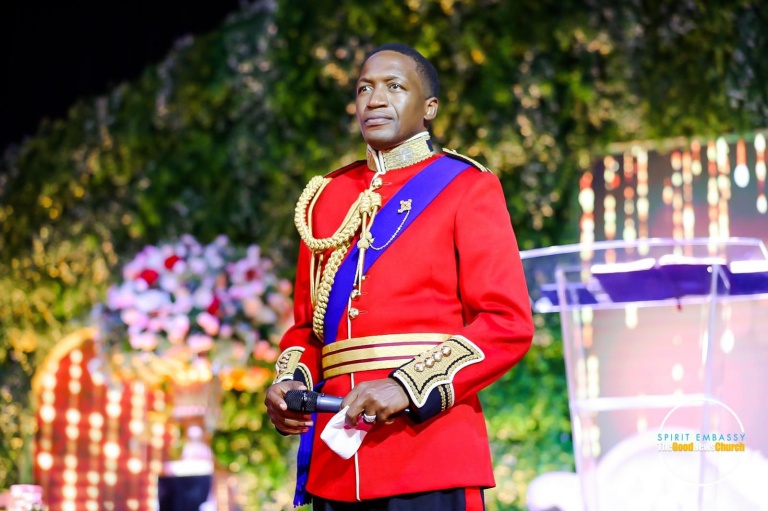
Presidential Envoy and Ambassador at Large, Prophet Uebert Angel

Presidential Envoy and Ambassador at Large, Prophet Uebert Angel has pledged another US$1 million to fund Covid-19 relief aid in Zimbabwe just like he did in 2020.

In 2020 the Spirit Embassy: GoodNews Church founder launched a non-political coronavirus relief aid that saw his Uebert Angel Foundation donating mealie meal and other basic commodities to thousands of people affected by the ravaging drought and effects of the Covid-19 lockdown in marginalised communities in Zimbabwe.

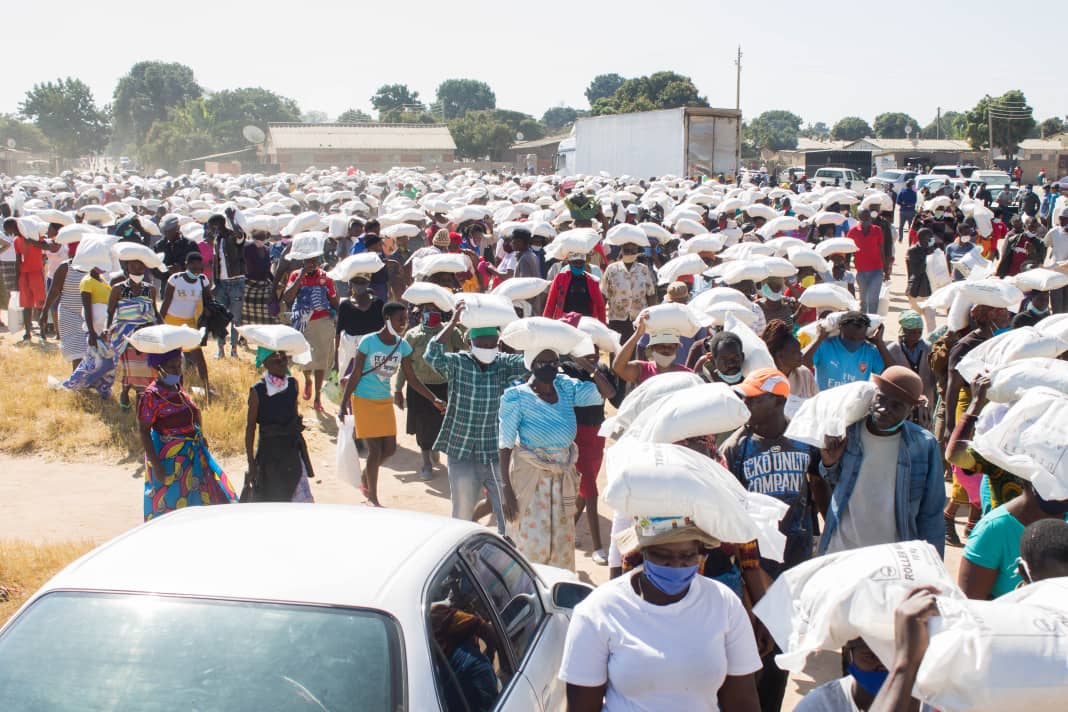
On Sunday the Uebert Angel Foundation was in Bulilima East again distributing truckloads of mealie meal. The local MP Mangaliso Ndlovu who is also the Minister of Environment, Climate, Tourism and Hospitality Industry thanked Prophet Angel for his ongoing gesture.
File picture of the Uebert Angel Foundation in Bulilima East distributing truckloads of mealie meal in September 2020

Both ruling party and opposition legislators were involved in the distribution of mealie meal, sugar, cooking oil and other basics.

This week the office of the Presidential Envoy and Ambassador at Large (OPEAAL) announced via Twitter that Ambassador Angel was pledging the same amount of US$1 million towards the relief aid.

“H.E Ambassador @UebertAngelAmb has pledged $1million United States Dollars to help 🇿🇼 through the Uebert Angel Foundation. This is the Second time around that Ambassador has shown generosity across the country with over 279 trips helping the less privileged,” OPEAAL said.

“Amb has promised to cover tuition fees, startups, help small scale farmers and charity. Over 5000 students were recipients of his scholarship fund last year. This year, University students facing challenges with tuition are more likely to benefit from these initiatives.”

The Uebert Angel Foundation was back in Chitungwiza again donating truckloads of mealie meal to feed thousands of vulnerable families affected by the Covid-19 related lockdown.
The Uebert Angel Foundation in Chitungwiza (July 2020) donating truckloads of mealie meal to feed thousands of vulnerable families affected by the Covid-19 related lockdown.

Prophet Angel was appointed Presidential Envoy and Ambassador at Large for Europe and America by President Emmerson Mnangagwa in March 2021.

His role among other things, comes with the responsibility of seeking trade and investment opportunities for Zimbabwe. Nehanda Radio

Why are Zimbabweans not angry with Mnangagwa and Zanu-PF?

4
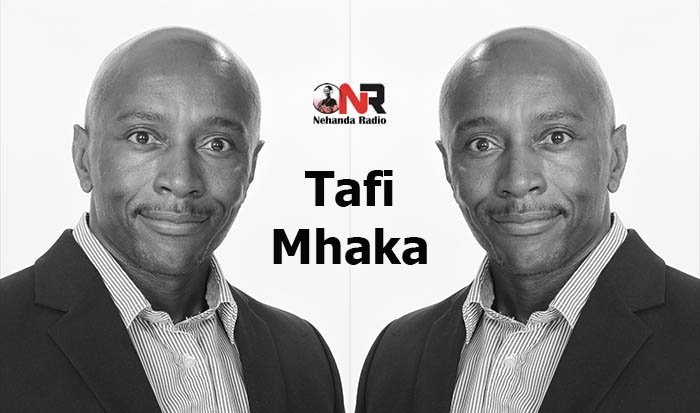
Tafi Mhaka, a social and political commentator, has a BA Honours degree from the University of Cape Town

In the last 41 years, our so-called leaders have done plenty to deliberately suppress the spirit and substance of our fledgling democracy. They have done everything possible to avoid transparency and upend accountability.

Yet after so much has gone wrong with Zimbabwe, the men and women who have squandered our immeasurable goodwill and precious resources – our entire lifetimes to be precise – only for power and personal glory, remain unrepentant and practically unafraid of any potential legal ramifications.

A long time ago, the Zanu-PF comrades decided that the truth was expendable and generally what they say it is. For example, the truth about the Gukurahundi massacres – suppressed via the suppression of the Chihambakwe Commission of Inquiry and Dumbutshena Commission of Inquiry reports – is seemingly lost forever.

Indeed, there are no official truths about the Gukurahundi massacres.

Similarly, the truth about the people behind the illegal arrests and torture of pro-democracy advocates Mark Chavunduka, Jestina Mukoko and Tawanda Muchehiwa, remains unknown.

Likewise, the truth about the abduction and forced disappearance of Itai Dzamara remains unknown.

What’s more, who ordered the vicious attacks on the late Morgan Tsvangirai and Nelson Chamisa in 2007?

Who organised the systemic beatings and murders of MDC activists in 2009?

Who stole approximately $15 billion worth of diamonds from the Chiadzwa diamond fields?

Who really won the 2018 presidential election?

Who ordered the abductions of Joana Mamombe, Cecilia Chimbiri and Netsai Marova in 2020?

Nobody knows, honestly.

We don’t know – because Zanu-PF has abrogated every human right that Zimbabweans truly deserve to enjoy.

Even our sacred right to vote for our desired leadership has been violated for decades through plain deceit and the fraudulent manipulation of standard electoral procedures.

Long before the Zimbabwe Electoral Commission (ZEC) came into being, Zanu-PF did everything it could to stifle the popular will through the highly compromised former Registrar-General Tobaiwa Mudede – a man whose despicable being betrayed an incredible distaste for democracy and opposition politics that set us back for years.

For the record, by 1990, many of us had grown tired of Zanu-PF’s baton-wielding brand of governance. We supported Edgar Tekere’s Zimbabwe Unity Movement (ZUM). For our troubles, many of our party’s leaders and supporters were thoroughly beaten as Zanu-PF unleashed mayhem on ZUM leaders and supporters – and Mudede implemented many questionable and illiberal electoral procedures, simply to oppress a peaceful and democratic rebuttal of the ruling party’s failed policies and inadequate leadership.

This was in 1990, just 10 years after independence.

We had had enough of Zanu-PF but did nothing to express our widespread disapproval and anger with its unsatisfactory rule.

We didn’t attempt to reclaim our precious birthrights from Zanu-PF. Instead, we cowered at the threat of both open and thinly veiled threats to our wellbeing. We babysat Zanu-PF’s extensive malfeasance and helped grow an unrepentant political beast.

Indeed, we didn’t demand to know the truth about Gukurahundi massacres. We didn’t demand justice for the many victims of state-sponsored terror. We didn’t march to the president’s office to demand accountability for the torture, disappearances and deaths of our fellow Zimbabweans.

Rather, we complained about Zanu-PF in the safety of our backyards and dining rooms – and whispered in the shadows of increasing poverty, unaware that suppressing our anger would only lend the beast the strength and conviction to oppress us further.

We even claimed that Zanu chiwororo in misplaced conversations, content to pretend that we, as a people, are helpless: that we are weak and destined to be a failed people, a failed nation.

Today, we are struggling to slay the beast that we reared for so long.

Zanu-PF has not abandoned its corrupt, murderous and hopelessly incompetent rule, and ZEC has sought to perfect the dubious electoral antics that Mudede introduced a long time ago. Like in 1985, 1990, 1995, 2000, 2005, 2009, 2013 and 2018, the presiding electoral authority will undoubtedly help determine the result of the 2023 election.

Unless Zimbabweans take a stand and stop Zanu-PF functionaries from suppressing the progressive vote, the MDC Alliance will lose both the presidential and general elections – unfairly, again.

Today, social media is abuzz with contempt for ZEC and government efforts to frustrate voter registration campaigns conducted by the MDC Alliance and civil groups.

But nobody appears to be exceedingly angry with ZEC or the Zanu-PF government.

Why are Zimbabweans not angry at Zanu-PF’s failures and bad governance?

Why are we not angered by our escalating poverty and joblessness?

Why are we not angered by the tremendous and questionable wealth accrued by Zanu-PF members and cronies?

In the face of severe repression and poverty, why is Zimbabwe such a tranquil nation?

The vote won’t be stolen in 2023 – Zanu-PF has been suppressing the progressive vote since 2018 through a plethora of underhand tactics and government policies.

So, we need to find our voices and counter Zanu-PF’s dishonesty through demonstrations – where need be through both small and massive countrywide demonstrations.

We need to vent our anger publicly and begin to help mould the Zimbabwe our elders died for.

Inevitably, any public demonstrations of displeasure with government’s failure to establish a fair and credible voter registration exercise – or electoral outcome, will elicit a fierce backlash in the form of government propaganda and violence, because the Zanu-PF comrades abhor democracy.

Still, that can’t hold us back.

We must be willing to welcome and bear the pains of a democratic struggle.

To achieve a vote that expresses the will of the people, Zimbabwe needs a lot more people like Makomborero Haruzivishe to help will our democracy forward.

As Zimbabweans, we have a tendency to overthink and over analyse our situation and become overly theoretical and less practical about our democratic struggle, our own strengths and our own responsibilities towards correcting our deplorable situation.

The 2023 presidential and general elections will not be won through clever inaction or smart negotiations with Zanu-PF.

But we might win them if we fight for what is really ours: our democracy – a principled democracy which works for all.

That means we have to use every legal and people-oriented action to secure a credible electoral environment and election.

We have made mistakes in past times and allowed Zanu-PF to ride roughshod over our rights – for fear of what may happen to us.

But how has that worked out for us?

Armed soldiers are running amok across the country, committing robberies.

Millions of skilled and educated people are jobless.

Millions are reluctant economic exiles.

Millions can’t afford to access proper healthcare.

And hundreds have died attempting to cross the Limpopo River to get to South Africa and thousands remain stranded by Beitbridge border – all desperate to earn a living in a functional economy – and the Zanu-PF leadership is simply unbothered by such an anomaly.

Hence, without democratic change, Zimbabwe’s woes will deepen.

We can’t allow Zanu-PF to shroud the 2023 election in controversy and force another Emmerson Mnangagwa win down our throats.

And we can’t sit back and merely hope for the best.

We have to fight for the Zimbabwe we want.

We owe it to the people who died before and after independence in pursuit of our democracy to confront these political bullies.

Nobody will help us – until we begin to stand up for ourselves.

Tafi Mhaka is a Johannesburg-based writer and commentator. His debut novel, Mutserendende: The African in Us, was scheduled for release in 2020. Follow him on @tafimhaka / tafi.mhaka