Home Blog Page 463

Jim Kunaka re-joins Zanu-PF, says “opposition parties are full of failures”

13
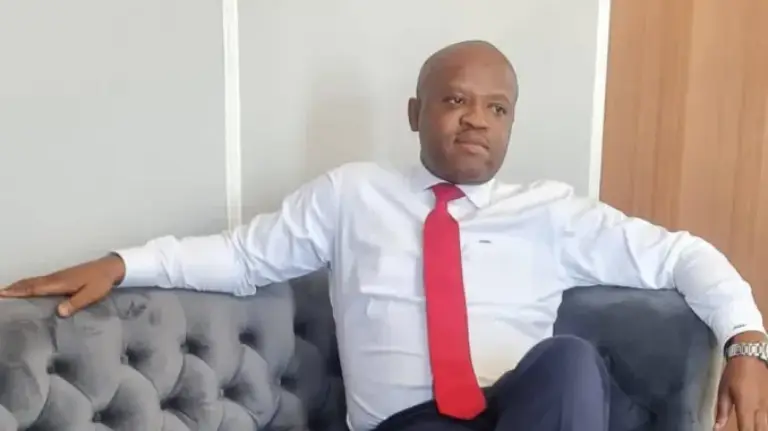
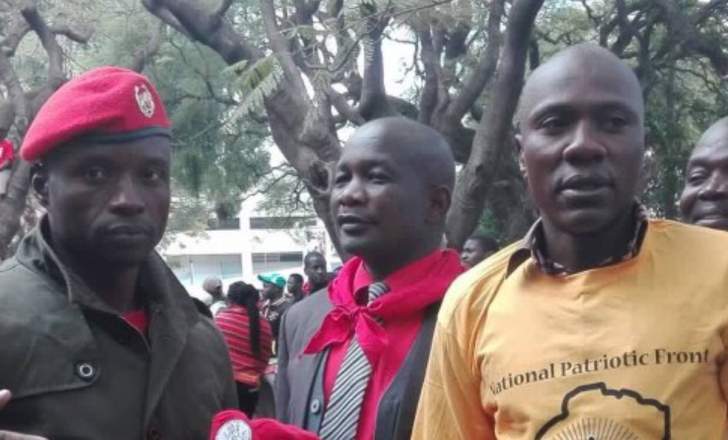
Former Zanu-PF terror group leader Jim Kunaka (right)

Former Zanu-PF Harare Provincial Youth chairman Jim Kunaka, who found notoriety organising political violence, has rejoined the ruling party claiming that “opposition parties are full of failures”.

Kunaka joined opposition politics in November 2017 after the military coup which ousted the late former President Robert Mugabe. He became a fierce government critic.

The prominent politician has decided to go back to Zanu-PF saying he was “myopic and misled by anger and disgruntlement.”

“I was myopic and misled by anger and disgruntlement. I am a Zanu PF member to the core and no one can take it away from me. This is my decision and I am not influenced by anyone,” Kunaka told journalists in Harare.

“I am ready to work for the party as a messenger. I am ready to deliver. I am ready to work for the party to ensure Harare is back to Zanu PF.

“The truth of the matter is that there is nothing there; opposition parties are full of failures. Some of them have been MPs, but they have nothing to show for it. Why should I follow such blind people?

“I said there is nothing that could stop me from returning home. This is my decision as a politician,” he said.

Zanu PF Secretary General Obert Mpofu, said Kunaka was welcome.

“The earlier the better, he realised the need to come back home; he is a product of the party,” said Mpofu.

“The President has always said everyone is free to come back home. The party is open for everyone.”

After the 2018 elections, Kunaka exposed Zanu-PF for allegedly using security forces to manipulate elections and deal with political foes through abductions, torture and smear campaigns.

He was speaking before a commission of inquiry which was investigating the August 1, 2018 shooting of six civilians during post election demonstrations in Harare.

“There should be mass action for Job Sikhala”- Temba Mliswa tells CCC

14

Former Norton legislator Temba Mliswa believes that the opposition Citizens Coalition for Change (CCC) has not done enough to stand in solidarity with its member Job Sikhala who has been languishing in prison for over a year over politically motivated charges.

Sikhala was arrested in June last year and charged with incitement to commit public violence to avenge the gruesome murder of CCC activist Moreblessing Ali. He was also slapped with obstructing the course of justice charges before being convicted and fined US$600.

He, however, remains in jail for the other cases which according to his party are trumped up charges.

Mliswa said the CCC is not pushing for Sikhala’s release. He rubbished claims by party activists that the party is a victim in the matter.

Opposition MDC Alliance Vice Chairman Job Sikhala says the “entire system is congested with idiots” after the outspoken MP was brought to and from court in leg irons
Then opposition MDC Alliance Vice Chairman Job Sikhala said the “entire system is congested with idiots” after the outspoken MP was brought to and from court in leg irons in January 2021

The former independent MP further cited Sikhala’s recent letter published by the NewsHawks in which he blamed his party for betraying him.

“People on my back harping about me blaming the victim in the Job Sikhala case are missing the point. Whatever injustices committed against Sikhala by those who have unjustly jailed him don’t absolve his own comrades from taking their own initiatives to alleviate his situation,” Mliswa wrote on his X handle.

“No wonder why Sikhala himself has written about betrayal as reported by NewsHawks. It’s because of the absence of these issues which I have cited. It’s as simple as that. The opposition has its own responsibility which doesn’t disappear because they are the victim.

“We all know the injustices being committed against Sikhala and those who have the powers and levers to change that. However, as the team on his side the opposition has its own sphere of influence and responsibility which mandates they have to act and not simply be pliant.

“Moral and financial support has nothing to do with power. Standing in solidarity and putting up his son as a candidate has nothing to do with the Gvt. Setting up a Trust to support him and his family, even all other arrested opposition members, is also within its purview.”

Mliswa said instead of boycotting President Emmerson Mnangagwa’s official opening of the 10th Parliament on Tuesday, the opposition needed to organise mass action demanding the release of Sikhala.

“I have been arrested over 60 times and know what the situation is like for a victim. You can’t tell me about being a jailbird. Thus I still ask my question, what have you done to stand with Job? There should be a clear standpoint on how a party responds and acts in such situations.

“How you react when your member is unjustly treated by the Govt engenders trust and confidence in the rest of the opposition family. This lackadaisical approach to Job’s case feeds more flesh to conspiracies that he may be inside with the silent agreement of his factional enemies.

“Instead of boycotting against ED which practically yields nothing, there should be mass action for Job, calling for his release from prison. You can’t be like Zanu PF that treats as an enemy anyone who contradicts specific ways of its operations. Criticism can be useful,” he added.

Teachers to take Mnangagwa to court over his unilateral legislative agenda

0

The Amalgamated Rural Teachers Union of Zimbabwe (ARTUZ) is planning to drag President Emmerson Mnangagwa to court for failing to include amendments to the Public Service Act (PSA) in his legislative agenda announced on Tuesday this week during the official opening of the 10th Parliament.

Mnangagwa, in his State of the Nation Address, said that 17 bills would be tabled for debate while four other pieces of “obsolete” legislation would be repealed.

The current PSA which restricts civil servants’ collective bargaining efforts for their wages and working conditions was left out.

Under the PSA section 19 civil servants are restricted to take industrial action if they are not satisfied with wages and their working conditions.

ARTUZ leader Obert Masaraure said the act infringes on civil servants’ right to to call for better livelihood. Against this background, the union has already initiated legal proceedings to challenge the current PSA.

“We will not allow the government to continue violating our constitutional rights,” Masaraure said.

“The Public Service Act currently on strike, doesn’t provide for collective bargaining and doesn’t capture the right to a fair wage.

“All these rights clearly captured in the 2013 Constitution particularly section 65,” added Masaraure.

Last year in February, the government threatened to fire striking teachers if they failed to return to work.

Masaraure further castigated the government’s ultimatum and 20% salary increase advocating for a need to set up a collective bargaining legislative mechanism which guaranteed they received satisfactory salaries and working conditions.

“As things stand, employers unilaterally fix conditions of service without going through collective bargaining.

“We will fight tooth and nail for the right to collectively bargain and we will leave no stone unturned and no turn unstoned.

“We will force the issue onto the legislative agenda, until we achieve our goal.

“We can’t afford 5 more years of poverty,” said Masaraure.

The union’s decision to take legal action is a significant escalation of the dispute over collective bargaining rights.

If ARTUZ is successful in its legal challenge, it could have far-reaching implications for civil servants across Zimbabwe.

It would mean that civil servants would finally have a legal binding voice in determining their own wages and working conditions.

For years, teachers have been calling for an improvement of their wages due to inflation which has taken a toll on Zimbabwe’s ZWL currency. They want to be exclusively paid in the stable United States dollar.

But the government remained adamant and continues to pay them in through the volatile currency.

Luton Town’s Marvelous Nakamba tops Premier League chart for tackles

31

Luton Town’s Zimbabwean midfielder Marvelous Nakamba sits on top of the English Premier League (EPL) chart for the most tackles made, earning glowing praise from his manager Rob Edwards.

Nakamba produced another scintillating performance as his Luton side powered past Everton 2-1 away at Goodison Park last Saturday.

Initialling joining Luton from Aston Villa on loan in January, the Hatters signed the Zimbabwean on a permanent basis on July 20 after his performances helped them secure promotion to the Premier League.

Performances in the 2-1 defeat to West Ham United have been followed up with fine displays against Fulham and Wolves.

“It was at Goodison Park that he really shone once more though, particularly in the second half as the Hatters dug in to keep their hosts at bay and hold on to their 2-1 victory,” Luton Today reported.

“Making six tackles with two interceptions, while also having the visitors’ best passing accuracy of just under 75 percent, it means that Nakamba is now up to 26 tackles this term, the highest in the entire Premier League,” the website said.

It puts him above Spurs’ Yves Bissouma and West Ham’s Lucas Paquetá, with team-mate Amari’i Bell in fourth place as well.

His manager Edwards said: “It shows that maybe we haven’t got the ball as much as others that we have to make more tackles as well, we’re going to need him to keep doing that!

“He was excellent, I love that saying, 70 percent of the world is covered by water, the other 30 percent by Marvelous Nakamba, I love that.

“I saw that again the other day, I was laughing to myself, as he’s brilliant.

“He’s some man, he just goes about his business in a real humble way.

“His performance was top the other day, really, really influential.

“He does the stuff that people won’t always see, and doesn’t want all the praise for it either, he just gets on and is a real top player, a top, top guy.”

Former Access Finance Group MD tells his story as bruising battle continues

0
Senziwani Sikhosana is former Access Finance Group shareholder and Managing Director (Access Forex).



By Senziwani Sikhosana

Following a recent public announcement by Access Finance Group, a local remittance and financial services company, that its chief executive Singathini Raymond Chigogwana is retiring and would be replaced by Salim Eceolaza, it became clear that there has been some material shareholding and structural changes at the business.

The notice said Eceolaza, who took over from Chigogwana on 1 October, is a “representative shareholder” in the company’s new equity structure. This means there is now at least one new shareholder in the business. Chigogwana remains on board as a non-executive director.

These changes affect me as a former shareholder who has not been fully paid for his shares. Although I have received cash payments, there is still some settlement through real estate which is outstanding. I have been given control of three townhouses in Harare which are part of the transaction, but not the title deeds to the properties.

Thus the announcement on 19 September 2023, which surprised some in the remittance business, triggered keen interest on my part as a former shareholder who still has a vested interest in the company. I was also interested in it as a banker and businessman who follows market developments and trends.

Chigogwana and I were business partners running several related companies; Access Forex (Pvt) Ltd, Access Finance (Pvt) Ltd, Tara Capital (Pvt) Ltd, Thirty-Six Mountbatten (Pvt) Ltd as well as Access Forex SA (Pty) Ltd.

At the beginning in 2014, as chief executive, Chigogwana owned 56% shareholding, myself who ended up as managing director 20% and chairman Isau Bwerinofa 24%.

When we started working together, we had a gentleman’s agreement that Chigogwana would at a later stage sell 10% shareholding to me from his 56% equity. It was a simple and straightforward deal.

Having known each other well and being friends from our days at the National University of Science and Technology in Bulawayo and working in the banking sector in Harare, we did not sign any paper agreement as trust and goodwill was enough to reach an understanding.

It was just verbal. That is how we trusted each other.

Trust is the social glue that holds business relationships and friendships together. Business partners who trust each other spend less time and energy plotting against one another’s downfall and protecting themselves from being short-changed to achieve better financial outcomes in the company.

It was good to work with him. When building a business with friends, you are not starting a new relationship from scratch and venturing into uncharted territory.

You begin with an established history, background, shared vision and values, motivations and personal experiences. And when the going gets tough, you count on your strong bonds and closeness to keep you together to weather the storm.

At least this is what I thought at the beginning, but reality is different sometimes.

Yet at the same it is important to remember that when starting a business you don’t just choose someone because they are a close friend. That is not enough. Working with a friend is a decision that should not be dictated solely by friendship.

There should be more important considerations than that. The most important factor should be their professional and personal qualities. You have to ensure that the friends you bring into the business have the right skills sets, motivation, ambition and determination to perform during times of adversity.

You should complement each other. People have different strengths and weaknesses. No one knows everything. Not even Albert Einstein during his time.

Trust is important because even best friends don’t always agree on everything.

As Marie-Claire Ross, author of Trusted To Thrive: How leaders create connected and  accountable teams, writes: “Trust is the cornerstone of business.  It’s the basis of every human relationship, every interaction, every communication, every initiative, every work project and even any strategic imperative you need to accomplish. Trust is essential. Without it, social groups can’t function properly.  Without trust, you generate a dysfunctional organisation with teams that make disappointing progress. An organisation that generates low trust is like a plane without fuel. You can fumble around in it all you want but it’s not going to successfully advance you to your destination. It is trust that shifts a group of people into a team.”

In any business, there will be moments where you hold different opinions. This can make it hard to function and if not well managed it can end up leading to a fight.

So remember to always listen to your business partners and trust their judgment without necessarily falling for everything hook, line and sinker. 

When things go wrong among friends working together, the betrayal can be deep and painful. The agony of betrayal can be devastating and tormenting. Traumatic.

After we launched our business with Chigogwana, Bwerinofa and myself, we did well. The company performed, grew and we made good returns. We invested some of the proceeds and expanded.

The business was on the rise even in a difficult operation environment amid economic challenges. We were bucking the trend in many respects. So only us could disturb its growth trajectory.

The remittances business in Zimbabwe has been lucrative due to the need for efficient financial solutions in the current digital environment.

Access Finance thrived in that market, serving individuals and Zimbabwe’s biggest companies.

In his 2023 mid-term monetary policy statement, Reserve Bank of Zimbabwe governor John Mangudya said as at 30 June international remittances through official channels amounted to US$1.4 billion, a 4% increase from US$1.3 billion recorded in the same period last year. 

The market is big enough for different players.

But things have changed now at Access Finance due to internal strife and turmoil.

As the business grew so did our dreams, ambitions and vested interests as shareholders.  

Everything seemed to be going on well until I raised the issue of the 10% shareholding in 2019. I believed it would be an easy issue to deal with as it was based on trust and only required that we adhered to our agreement. I had trust in my colleagues.

Little did I know that the issue would rip apart our friendship of years. When I raised the shareholding issue, it was initially met with a palpable lack of enthusiasm and indifference, then later as I repeatedly brought it up the reaction degenerated into hostility and resistance. That’s when I realised things had changed.

Power and money sometimes change people, some say. Yet others say they don’t  change people, they simply show you who they really are.

With time the shareholding issue and associated negotiations became confrontational and acrimonious, a difficult thing to handle among friends and colleagues.

Still, I hoped that our friendship and trust would be enough to overcome our differences and settle matter amicably, but that was never to be.

We tried everything between ourselves and through mediations by friends and colleagues, still we couldn’t bridge the gap which continued widening with each meeting.

Sometimes we would make progress – or so it appeared; take a step forward, only to take two steps backwards the following day. That pattern repeated over time ended up destroying all the trust and inevitably ruining the friendship which now lies in ashes.

When I eventually realised Chigogwana and even Bwerinofa would not sell me the promised 10% as initially agreed, I decided to dispose of my shareholding and leave. I couldn’t stand what I viewed as a betrayal of trust.

For me it was not about money per se, but trust and confidence. Our profession – banking – is about trust and confidence.

Confidence and trust are critical in how the economy functions. Spending, saving, borrowing, investing and associated transactions all depend on confidence and on the trust people have in financial institutions such as banks, insurance and credit-card companies, investment and pension funds.

Trust is also needed because the quality of many financial services cannot seen at face value, is believed in over years. Without trust, that won’t be possible.

Still, my exit was not easy after we had agreed to differ and part ways. A new deadlock soon arose on valuation of the business and the value of my shares. We engaged a valuer, but still we spent months arguing about that process.

After months of acrimonious back and forth, on 29 September 2022, we eventually agreed to settle, but only after I had accepted a much lower offer of US$600 000 – instead of US$1 million – which I knew was a raw deal; a complete rip-off.

But for the sake of peace and moving on, I took it. The truth is, I was not happy, but I had to leave the toxic environment which had been created by the hard negotiations and collapse of trust, the glue to our friendship and business relationship.

The eventual US$600 000 buyout deal included a cash payment of US$280 000 less US$140 000 as an offset transaction over a debt I owed to the company, with the US$140 000 balance being paid into two instalments of US$80 000 and US$60 000 separately.

It was also agreed I would get three townhouse units valued in Harare US$320 000.

The townhouses are located at No. 36 Mountbatten Complex in Marlborough, which has 37 townhouse units valued at US$3.9 million. Three of those properties became mine and I took them over, but without title deeds.

This is where the problem is now.

This brings me back to the Access Finance’s recent announcement. When the announcement was made in the media, I became interested mainly because while I have performed my side of the bargain in the agreement, Chigogwana and his entities haven’t.

They haven’t given me my title deeds. Yet their announcement shows that there has been shareholder changes at Access Finance, leaving me in the lurch.

As a result of this, I consulted my lawyers and we filed a court application demanding the title deeds or US$320 000 as payment. Failure to which I would have no choice but to attach properties belonging to Chigogwana to recover the value of my shares.

Besides that, Chigogwana and his entities should pay all the taxes, imposts and charges of the conveyance. I have already done my part of the in terms of paying my capital gains tax for the sale of shares.

The applicants in the High Court case – HC1007/23 – over properties are myself and my entities Ferden Investments, Rock Drill Mining and Seanmart Investments, while the respondents are Chigogwana, Bwerinofa, Thirty-Six Mountbatten, Access Finance, Access Forex, Tara Capital, The Sheriff of the High Court and the Registrar of Deeds and Companies.

I want Chigogwana to transfer the properties which were part of the settlement in real estate – that is with title deeds – or in cash form. If that is not done, I want the court to issue an order for me to attach my former partner’s assets to settle the remaining part of the deal.

I also want my erstwhile colleagues to pay all transfer taxes, imposts and costs associated with the deal, particularly the conveyance part of it. This is important as they are the ones selling property to me for my shares in the deal. They are the sellers (Chigogwana and Bwerinofa)  and I’m the buyer.

In my application, I put Chigogwana, in terms of clause 9 of the agreement of sale of my shares and property as well as the share purchase agreement, in mora (default) to address the issue within 14 days. In the event that the breach is not rectified, I have shall have a right to cancel the agreement or demand redress in casu (during the case).

When one sells an immovable property which is held under a Deed of Transfer (Title Deed), the buyer upon paying the full purchase price, is entitled to take transfer of the property. The process by which the buyer takes transfer is called conveyancing. The person (a lawyer) who does the conveyancing is called a conveyancer.

So Chigogwana’s lawyer Nikita Madya of Wintertons Legal Practitioners is the conveyancer in this case.

That is why he now is caught up in a storm of controversy over my shares and property on this issue as reported in the media recently.

Madya of Wintertons is a highly experienced corporate and commercial lawyer who has been in the field for over 23 years. He joined Wintertons on 1 July 2000 and became a partner on 1 July 2003.

I’m represented in the court application by Zinyegere and Rupapa.

Having been stuck in this transaction for almost a year now, I’m beginning to feel Madya has not been fair and just in handling the transactions between myself and my erstwhile business partner, Chigogwana.

We have filed a court case against Chigogwana and several entities in which I’m a still shareholder since the dispute has not yet been fully settled. I got some cash payments, but my properties remain encumbered after a recent sale of the companies by Chigogwana and Bwerinofa, which is problematic legally.

I can’t go into detail on some of the issues because they are part of the court case, hence sub judice, but the issue about how the conveyancer – Madya – has handled the transactions is not in the court case.

The shares were sold by way of cash and properties in an agreement signed exactly one year ago. As the payment for the shares was in part in the form of properties, it follows that the shares could not be handed over or transferred until the transfer of the property was done.

At the very least the two ought to have been done simultaneously. Now that the shares have been transferred without a corresponding transfer of title, I have been left exposed.

Madya was supposed to hold the share transfer forms in escrow until all aspects of the transactions were complete which he did not. It seems he favoured his own client, that is Chigogwana, and only acted to protect his interests at my expense.

By his own account or public profile, Madya says he is a highly-experienced corporate and commercial lawyer who has been in the field for more 20 years. He has extensive experience in corporate and commercial transactions, having been involved in a number of mergers and acquisitions for both listed and unlisted companies covering different sectors of the economy.

He also has an excellent grasp of the laws of Zimbabwe and has been involved in advising clients in a number of commercial transactions.

So I don’t understand how he has handled this transaction and how we ended up here. It’s baffling.

This begs many questions: First, how and why did Madya transfer my shares before I was fully paid? Second, is it legally and morally right to do that? Third, it is professional? Fourth, is it just and is it in the interest of justice therein? Fifth, why am I being prejudiced like that after fulfilling my side of the bargain and the agreement?

My lawyers have written letters to Madya and his client over the issue of outstanding title deeds,  but they have neglected or refused to respond to this  issue. How does a whole Wintertons lawyer fail to complete a simple conveyancing process like this one?  

Why are they not producing my titles deeds? This is where the issue is now.

There is a problem with conveyance and I’m not getting straight answers, which is worrying and disturbing, particularly given my recent experiences with my former colleague and stories we hear in the market when some lawyers breach trust on transactions.

I have lost all trust and confidence in their process, hence my public appeal to Madya and Wintertons to address this issue urgently, honestly, transparently and professionally to the satisfaction of all parties involved.

Madya, especially as a lawyer, knows better that justice delayed is justice denied.

Senziwani Sikhosana is former Access Finance Group shareholder and Managing Director (Access Forex).
Former mining giant, Falcon Gold wins Supreme Court appeal

0
File picture of mine workers

Former gold mining giant, Falcon Gold has won an appeal at the Supreme Court against a High Court judgement which had ordered them to stop operations at all their eleven claims.

The mining giant successfully appealed the judgement before a three Supreme Court bench led by Justices Tendai Uchena, Hlekani Mwayera and Antonia Guvava.

Falcon Gold was barred after former Mines minister, Winston Chitando filed an application seeking an interdict barring it and Nyamazane Gold (Pvt) from conducting operations at the disputed mines.

The mines were identified as Antelope East 2, Antelope 9, Antelope East Extension, Antelope East Extension 2, Antelope East, Antelope 2, 3, 4, 5, and 6, and Antelope 11.

In their ruling handed down recently, the Supreme Court judges said the minister was wrong before slapping him with costs.

“We are satisfied that the respondent acted contrary to the provisions of s 400 (1) (a) of the Act and s 3 of the AJ Act. His cancellation of the first appellant’s claims is therefore ipso facto null and void.

“We are therefore satisfied that the appellants have made out a case for the relief that they sought. There is no reason why costs should not follow the result,” said the judges.

Falcon Gold was the holder of certificates of registration in respect of the mining claims referred to above.

The said mining claims were given to Nyamazane Gold to work on in terms of a tribute agreement between the parties.

According to court papers, in April 2022 Chitando cancelled Falcon Gold’s certificates in respect of the claims, placing reliance on the provisions of s 400 (1) of the Mines and Minerals Act [Chapter 21:05].

Falcon Gold and Nyamazane Gold then approached the High Court challenging the minister’s decision to cancel the certificates under Case No. HC 2952/22. The application was dismissed on 10 August 2022.

On 15 August 2022, the two noted an appeal to the Supreme Court HH 403-23 HC 4038/23 against the judgment in HC 2952/22.

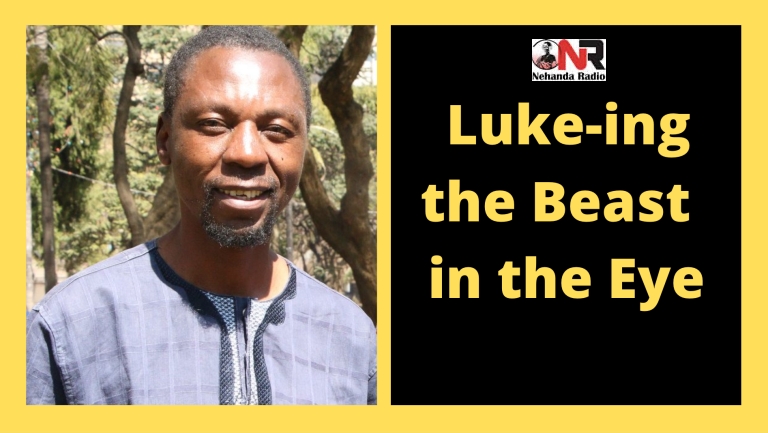
Luke-ing the Beast in the Eye: ED’s “last supper”

1
Luke Tamborinyoka is a citizen from Domboshava. He is a journalist and an ardent political scientist by profession.

As ED begins what he presumes to be his last term of office on the back of a stolen election, all indications point to a determined “lootocrat” lining up his family, cronies and allies for a “last supper” that will be defined by massive looting and avaricious plunder of State resources before he reluctantly disappears into the political sunset in 2028 or earlier.

Whatever the case, this is Mnangagwa’s last dance with power and the indications, especially given the shenanigans around the Mutapa Investment Fund (MIF), all point to looting on steroids. What we are currently seeing on the ground through this MIF is a brazen and systematic laying out of a clear framework to unveil a deliberate plan to steal the country’s vast wealth in the coming months, away from the public glare,

Our Lord Jesus Christ had his Last Supper or the Passover in the Upper room in the second floor of a building in Jerusalem Mnangagwa is definitely no Jesus Christ. But we see him blasphemously and in a crude and heathenic way cutting the national bread in the upper room; huge and sumptuous buttered slices that he intends to share only with his family and a coterie of his gothic disciples.

The Mutapa Investment Fund is a new zone of attack by Mnangagwa and his clanist brigade of certified thieves.

His appointment of family, clansmen and clanswomen into Cabinet and the deployment of relatives and cronies to strategic State and quasi-State institutions has all been part of a deliberate ploy to loot on a grand scale—and for the last time— the country’s vast natural and mineral wealth.

ED and his henchmen have become the latter day Pioneer Column, scouring the country for lithium and other wealth for their own self-aggrandisement.Indeed, they have become today’s colonialists pillaging and looting a whole nation’s assets and wealth.

We have seen it all before in his past and equally stolen term.Indeed, in his pilfered term from 2018 to 2023, Kuda Tagwirei, Henrietta Rushwaya, Justice Mayor Wadyajena, Scott Sakupwanya, Uebert Angel and a vast bandwagon of local and foreign nationals were exposed in the Gold Mafia documentary as part of a criminal underworld fronting Mnangagwa’s agenda to plunder the country’s resources.

ED has used an array of frontmen over the years, including his children and relatives, to build vast personal fortune and to turn this country into a personal empire.

Kuda Tagwirei, Delish Nguwaya and others have all frontED his vast appetite to loot and spirit away the proceeds of the country’s resources.

From waste management (the Pomona deal), fertiliser, Command Agriculture, the procurement of Zupco buses and other deals, ED’s surrogates have played the proxy in his unmitigated and gargantuan looting spree.

In the Ministry of Health where he first deployed his uncle Obadiah Moyo as Minister of Health and later his wife as a Health ambassador, we saw massive looting as these cronies purported to be assisting NatPharm to import the country’s medicines when in fact they were bleeding the country dry through overpricing. Proxy foreign firms would supply the country with medicines at inflated prices.

Now in this his Last Supper, his final term stolen on 23 August, Mnangagwa is determined to loot massively in his last dance with power so that he bequeathes the country’s wealth to his progeny.

Oh yes, the man is hell-bent on leaving the country’s wealth in the hands of his children.

And he will loot big with neither shame nor compunction, without batting an eyelid!

MIF(ED)

The Mutapa Investment Fund (MIF) has left the whole country miffed. Indeed, we’re all MIFfed by this deliberate plan to salt away the country’s immense wealth.

Under this well-orchestrated heist, over 20 State-Owned Enterprises have been farmed out to the Mutapa Investment Fund (MIF), formerly the Sovereign Wealth fund. The SOEs under the MIF include strategic entities such as ZESA, TelOne, the National Railways of Zimbabwe the POSB, ZUPCO, NETONE, Powertel, Air Zimbabwe, Hwange Colliery Company and COTTCO, among others.

The original idea of a Sovereign Wealth Fund was meant to leverage on the country’s huge natural and mineral wealth with the noble aim to use them to anchor inclusive economic growth and economic development.

But now the plan has been hijacked. The idea now is to use these strategic State entities to loot. The controversial Presidential gazette that seeks to mask all procurement and disposal of the assets of these strategic State entities is highly revealing The regulations make it clear that all transactions around these strategic State entities must happen away from the public glare, beret of any iota of transparency and accountability.

In fact the law legislates secrecy on anything to do with these entities, a last supper antic to make a meal out of these State companies.

Batai mbavha iyo ! Stop the thief.

Mnangagwa remains a touted murderer in the court of public opinion. Quite an uncanny reputation. And murderers by virtue of their trade, are known to have a strange affinity for secrecy and murkiness.

Maybe that trait would not be surprising for a crocodile whose element is the muddy waters. . The mud has never been a transparent arena.

The love for secrecy is Mnangagwa’s key tenet. Some five or so months ago, he was forced by public pressure to withdraw a similar regulation that sought to prohibit on grounds of “national interest” the publication of how and who would be supplying medical equipment to the country.

Yet what was in the national interest was for everything to be done transparently and under public scrutiny.

Mnangagwa obviously wanted to steal. And he wants to do it again as evidenced by the promulgation of similar regulations exhorting secrecy around the Mutapa Investment Fund, itself the scene of an imminent heist..

ED has come again with another veil of secrecy on public wealth, whose business in fact deserves to be transacted in full glare of the public, all n the interest of probity, transparency and accountability, key tenets of democracy.

This week, dear reader, I wish to make a few observations on why the Mutapa Investment Fund must bring huge palpitations to the nation’s collective heart

1. ED , his family and cronies are directly in charge

The MIF will be a huge entity worth billions of dollars overseen by the Ministry of Finance and Investment Promotion.

Forget Mthuli Ncube. He’s just a stooge currently in Cabinet at the benevolence of Mnangagwa after losing the Cowdray Park seat in the last election. He will not say a word about this pending heist.

ED’s pointman at the Finance Ministry that will be in charge of the MIF is his son, Kudakwashe David Mnangagwa, the deputy Minister of Finance.

Dear reader, Kudakwashe David is the same man who se company churned out huge amounts of money obtained from the RBZ to channel it into the illegal foreign currency market. Well, it would not be remiss of me to suspect that Kuda was just a front for his father as he kept Zimbabwe’s illegal foreign currency market kicking!

With a close relative, John Mushayavanhu, set to be appointed RBZ governor in the coming days, the MIF is under threat from a thieving triumvirate.Why? Simply because the trio of ED, his son David and his nephew Mushayavanhu could well decide over dinner the fate of the billions of dollars in assets of these strategic State entities.

2. The prospect of relatives as board members

The controversial regulations.provide for the appointment of a 10 member board of equal gender to the MIF.

The board is still to be appointed but given what we have seen in the past five years, the board members could very well be nieces, cousins, aunts and uncles from Chivi, Shurugwi, Gutu, Mapanzure and Zvishavane.

The pliable board, whenever it will be appointed,will simply allow ED’s allies to grab these companies and their assets for a song in the likely event that they are placed into “private” hands or should their assets be disposed of.

3. UnConstitutional regulations

In gazetting SI 156 of 2023 that instituted the attendant controversial regulations and renamed the Sovereign Wealth Fund to the Mutapa Investment Fund, Mnangagwa used his Presidential Powers to amend primary legislation.

It is the sole duty of Parliament to make laws. it is patently unconstitutional for the Executive, through the President, to amend a law made by Parliament without consulting the same Parliament whose primary role is to make law..

The notion of separation of powers is a key tenet of democracy. Over the years, we’ve seen the Presidency usurping the powers of Parliament by abusing Presidential Powers to make laws, itself the sole preserve of Parliament..

Even in the run-up to an election in which the President is a candidate, we have seen in the past the President amending the Electoral Act, in other words determining the rules of a game in which he is a player.

Mnangagwa has not stopped there. He has gone further and created his own “Commissions’ that have brazenly taken over the role of chapter 12 institutions that ought to be independent.

For example, in place of the Zimbabwe Anti-Corruption Commission, ED has set up what he calls an Anti-Corruption unit in his office, headed by his relative Thabani Vusa Mpofu.

In the place of the Zimbabwe Electoral Commission, we saw Mnangagwa creating a personal unit called Forever Associates of Zimbabwe (FAZ) to (mis)run the last election.

He has done it again, this time usurping the power of Parliament by unconstitutionally amending primary law, all in a sinister bid to prepare for his last supper as he brazenly puts strategic State entities on his menu card.

4. The return of the Undertaker

Mnangagwa has a history of plundering huge corporates and running them aground.

It is common knowledge that as Zanu PF secretary for Finance, Mnangagwa with his allies the Joshi brothers looted and ran down several thriving party companies.

It was a huge empire that Mnangagwa the Undertaker literally ran aground.

On April Fools day in 2004, disturbed by the way companies and party finances were being managed under Mnangagwa, the Zanu PF central committee set up a special investigation committee to probe the matter.

Upon the setting up of the committee, ED’s cohorts the Joshi brothers immediately skipped the country. All we know is that the internal report of the investigation committee was swept under the carpet, never to see the light of day, notwithstanding the undeniable fact that ED had run down the party’s once-thriving business empire.

ED had taken party members for fools through the committee that was set up on 1 April 2004, a probe team whose report went nowhere, assuming there was ever a report in the first place.

Today, the legendary corporate undertaker wants us to put all the country’s strategic entities into an empire of similar scope called the MIF, run by himself, his son at the Ministry of Finance, his nephew at the RBZ and obviously a pliable board that is still to be appointed

The Undertaker will definitely strike again.

Conclusion

It’s definitely a last supper crusade as the man prepares to loot in his last term, which he is unsure when it will end, given the nagging questions around his legitimacy following yet another stolen election.

For him, it’s time to eat one more time. The last supper.The last dance.

Akuda kudyira kuenda . Filling the tummy for the road, as we would say in the village.

And he remains determined to plunder the country’s national wealth while we all stand and watch.

They call it the Mutapa Investment Fund—-or simply MIF. Indeed, we are all MIFfed, though we appear to be helpless about it. Our national wealth appears to have been downgraded to that despicable moniker yet again: Mutapa Investment Fund for ED (MIFFED).

The whole country is MIFfed as the gluttonous Mnangagwa lines our children’s fortune for his last supper.

But why are we so helpless when this man is angling to run away with the country’s fortune?

Fellow Zimbabweans, we have been taken for granted for too long. Should we allow Mnangagwa to have a last supper of our collective national wealth? Shall we stand by and allow this evil man to partake to the vast natural resources bequeathed to all of us by our forebears?

Hell No!

Luke Tamborinyoka is a citizen from Domboshava. He is a journalist and an ardent political scientist by profession. Tamborinyoka is also a change champion in the Citizens Coalition for Change (CCC). You can interact with him on his Facebook page or on the twitter handle @ luke_tambo.

‘Things are okay now’ – Emtee speaks on relationship with estranged wife

3
South African rapper Emtee says that things are now normal with his estranged wife, Nicole Kendall Chinsamy

Only a few months after she filed grievous bodily harm charges against him, South African rapper Emtee says that things are now normal with his estranged wife, Nicole Kendall Chinsamy, as he is now even allowed to see and visit his children.

In a police statement made when Chinsamy filed the charges back in June, she alleged that the rapper was a drug abuser, who was not only assaulting her but was also invading her privacy on social media.

The couple had called it quits in March, only two months before Chinsamy gave birth to their third child.

In May, the rapper filed for divorce despite the fact that his wife had withdrawn the charges against him a month earlier.

Nicole then accused the rapper of trying to bankrupt their joint estate after he allegedly transferred over R500 000 from their trust account, although Emtee later undertook to pay back the money.

In an interview, Emtee said that his relationship with the mother of his three children had stabilised.

“Right now, things are okay, I can say because I can get to see my kids and spend time with them, I’m grateful for that,” he said.

After their split, Emtee claimed that his ex-wife never loved him but only wanted his money.

“When I start to produce receipts, bank statements and proof that, actually, this person [Chinsamy] just wants money [it will go down]. There was never love to begin with.”

Attempt to remove magistrate in PSMAS million dollar trial hits snag

0
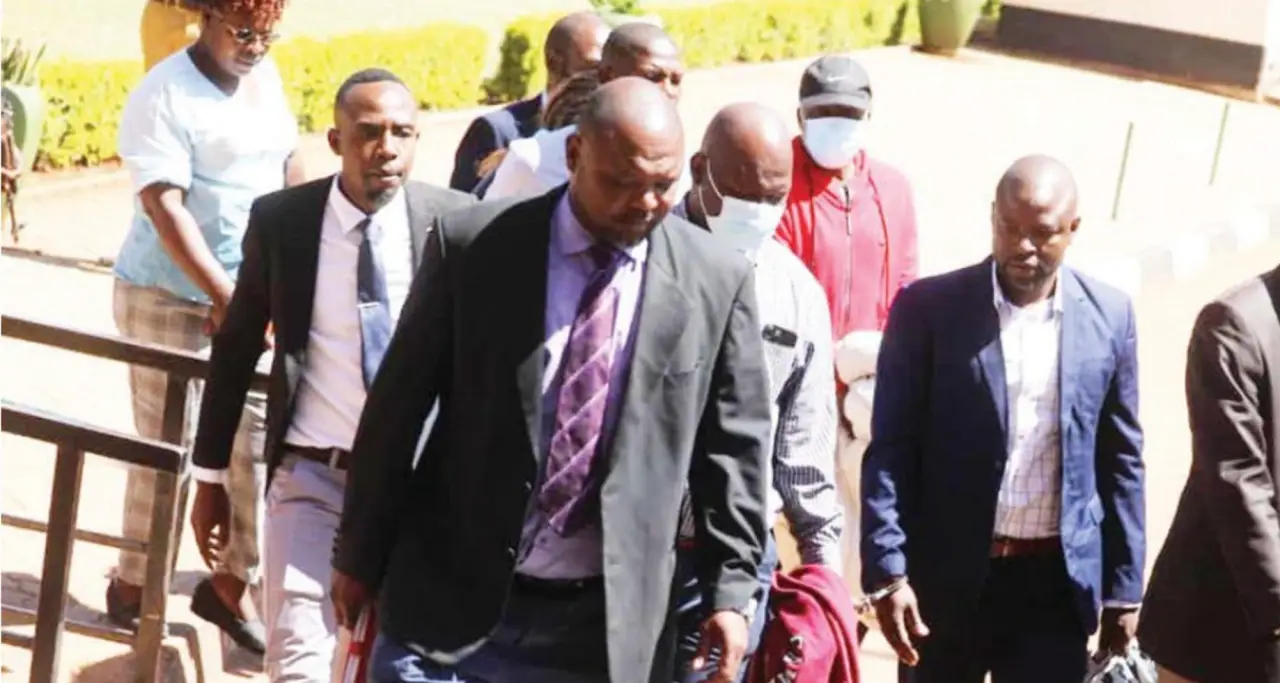
Four PSMAS bosses, Chief executive officer Farai Muchena, senior officials Victor Chaipa, Shingai Mabutho and Tafadzwa Gutu are appearing on trial

The state unsuccessfully filed an application to remove presiding magistrate Stanford Mambanje from the trial of Premier Service Medical Aid Society (PSMAS) bosses who swindled millions of dollars from public finances.

Four bosses, Chief executive officer Farai Muchena, senior officials Victor Chaipa, Shingai Mabutho and Tafadzwa Gutu are appearing on trial before Mambanje.

Chaipa prompted the application for recusal of the magistrate by the State after his lawyer Tapson Dzvetero filed an opinion piece in the magistrate record stating that the State needed to withdraw the charges against his client for lack of evidence.

The opinion by Dzvetero was supposed to be given to the State first before the magistrate and Prosecutor Madhume in his application submitted that since the opinion was filed in the magistrate record he should recuse self for the good administration of justice.

But in his ruling Mambanje admitted that the opinion record was indeed placed in his record but did not have time to read it.

He then dismissed the application by the state.

Mambanje then postponed the matter to October 25 for the continuation of trial.

It is the State’s case that in January 2015 and January 2017, PSMI appointed board members, Colonel Wellington Tutisa, Cecilia Alexandra, Richard Gundani, Vimbikai Magnes, Kusema, Loveness Dumwa, A. Friend, Miriam Chahuruwa, T. Shaw and Dr E, Purazi for the undertaking of the company’s strategic decisions and effective governance.

The board members signed contracts of appointment for the period 2015 to January 2018.

It is alleged that sometime in December 2018, Muchena and Chaipa, acting in common purpose, diverted PSMI company funds entrusted to them by approving yearly payments of holiday allowances to board members, which they were not entitled to.

Tutisa, the board chairperson, reportedly received holiday allowances of US$45 902.

Cecilia Alexander, the vice chair, got US$22 249 while each PSMI board member got US$6 745.

It is alleged that US$115 373 was taken from PSMI.

PSMI was also prejudiced of US$243 000.

It is further alleged that in 2020, Mabuto working in common purpose with Gutu, diverted funds by approving holiday allowances to eight board members amounting to $5 084 176, which they were not entitled to.

It is alleged that in 2021, Gutu and Mabuto approved holiday allowances amounting to $9 372 522 for the nine board members.

Sonia Mbele given “last opportunity” after missing court date for 42 charges

2
Generations actress Sonia Mbele

South Africa’s National Prosecuting Authority (NPA) has announced that it will not consider any no more postponements in the case of tax evasion involving former Generations actress Sonia Mbele, after she was once again a no-show for her latest court appearance.

Mbele is facing 42 charges alongside Yolisa Gqunta and Rebone Sesing, her co-directors on the real TV franchise, for contravening SA’s Tax Administration Act.

It is alleged that the three, as directors in relation to their company, Real Housewives of SA, were not filing company income tax from 2019 to 2022 while also failing to file their Value Added Tax (VAT) returns from 2020 to 2022.

The NPA has also charged the trio for failing to file their Pay-As-You-Earn (PAYE) from 2020 until 2022.

While Mbele submitted a medical certificate excusing her from proceedings, Phindi Mjonondwane said that the court has granted Mbele the last opportunity to appear on October 20.

“The court has granted the last opportunity to Ms Mbele to attend the proceedings, in that it marked the postponement as final, following her submission of a medical certificate for the second time where she could not attend court, citing ill health,” Mjonondwane said.

Mjonondwane said the justice system would not be blackmailed by Mbele’s claims of sickness.

“The criminal justice system cannot be held at ransom, where there are legitimate and serious health concerns.

“We as the prosecution have requested that those should be declared to the court, so that we can know whether or not these are legitimate and serious health concerns that necessitate that this matter be delayed.”

Through her spokesperson, Thato Malindi, Mbele said that the bout of exhaustion she suffered from in May had caused her inability to attend court proceedings.

Mbele was reportedly hospitalised for two weeks in May after she collapsed due to exhaustion.

According to Zimoja, the actress had to be rushed to hospital, as the stress about the failure or success of the third season of the reality TV series, which was launched on 19 May, got to her.

“She is currently still getting treatment and taking weekly iron drips, as for the court matter her legal representative, the NPA and SARS are dealing with the court matter accordingly,” said Malindi.