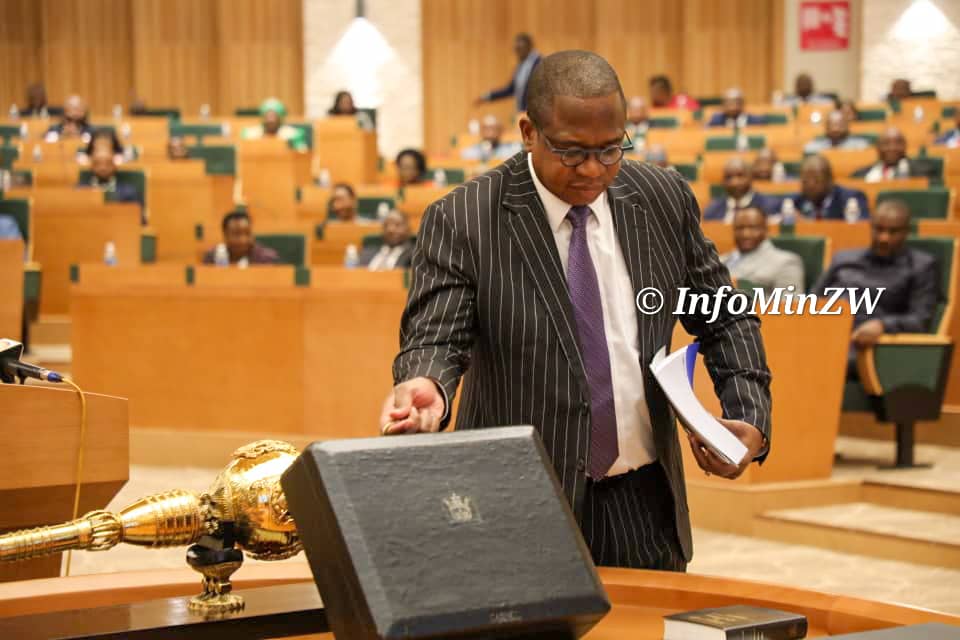
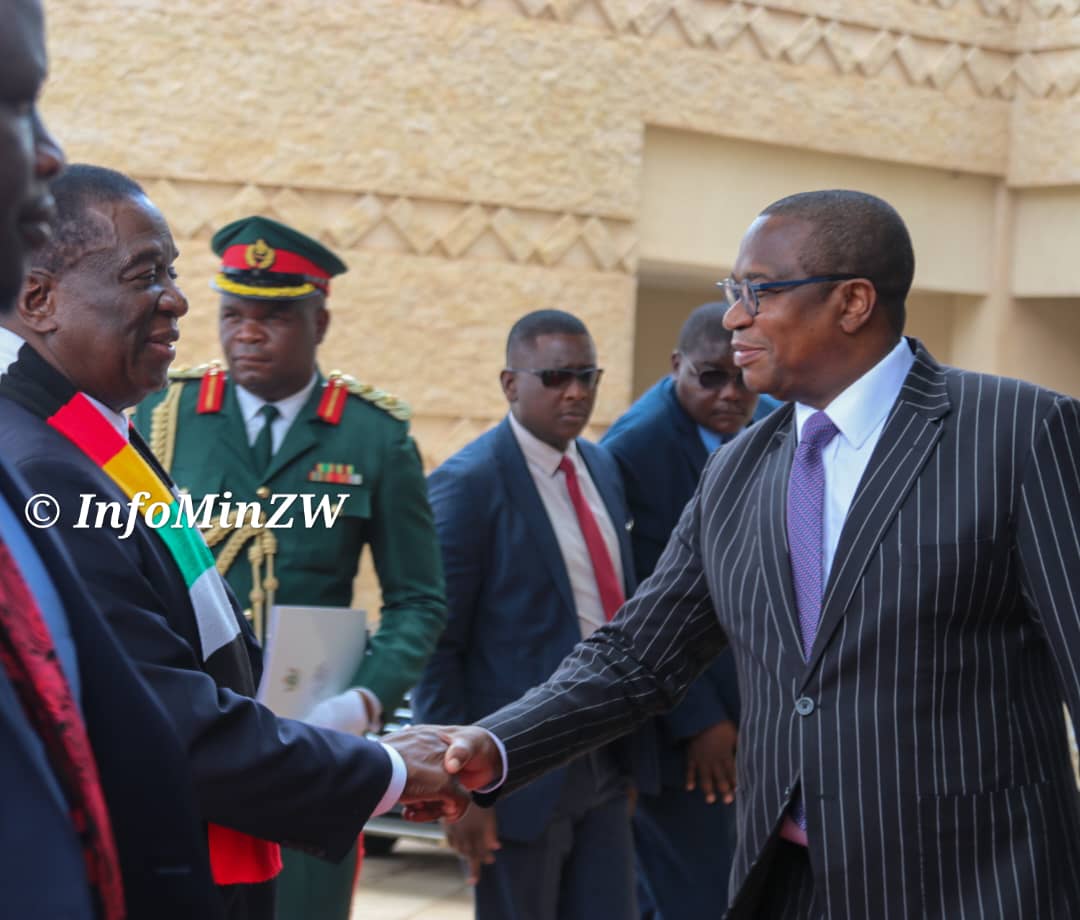
As the weekend unfolded I took on the trepidatious task of reviewing the Minister of Finance’ 2024 Budget statement. I must say this year the budget doesn’t disappoint, the nervous feelings were well rewarded. This budget is a ‘trillion’ percent worse than the last, its contemptuous, inaccurate and retrogressive in every aspect.
The budget is denominated in ZWL or Zimbabwe Dollars this approach is administratively delinquent given the high volatility of the ZWL. This means the budget statements cease to be comparable and literally within 24 hours the figures presented are no longer accurate due to inflation.
It is also not clear what rate of exchange has been applied at different sections. For instance when analysing the Public and Publicly guaranteed debt there are 2 different rates of exchange applied to the domestic debit (@1:US$5480) and the external debt (@1 :US$4645).
To avoid such delinquencies the budget could just be written and calculated using the US$ which will allow for transparency, comparability and better accuracy.
The approach to use ZW$ purposefully creates smokes and mirrors with the budget failing the transparency litmus test. This is crucial and must be addressed urgently.
For instance there is a 92% increase in public debt using ZW$ amounts compared to a 20% increase using US$ amounts for the same public debt. This shows that reporting using ZWD is confusing even to the authors.
Other inaccuracies for instance are the analysis of the growth rates. For Electricity, Gas, Steam and Air Conditioning for the year 2022 this is reported in November 2022 as 14.3% and yet in this year’s statement for the same year the growth rate is 3.5%.
The same analysis for Agriculture for the year 2022 -14.1% according to November 2022 statement and 6.2% for the same year in this statement. Such glaring discrepancies cast a shadow of doubt on the whole budget statement which relies on the ministry’s ability to forecast.
As a minimum there must be a section to explain this discrepancy as it makes the two budget statements created under the same office holder incomparable and renders at least one of them inaccurate.
The merchandise exports section really also gives cause for concern on the technical validity of this budget.
In the 2022 statements Services Exports are recorded for 2022 as being US$175million in the first 6 months, in this current budget Services Exports total for 2022 have seemingly trebled to US$453million.
This is with the recognition by the same budget that retreating commodity prices have had a negative impact on the exports. The Minister of Finance must look into these discrepancies for the sake of credibility and investor confidence.
This casts a serious shadow of doubt over the pronounced current account surplus balance.
With regards to inflation calculation, the statement highlights an adjustment to personal income tax threshold in August – this reflect a wage inflation of 81.6%. Therefore this invalidates the inflation developments which are at 21.6% and will apparently decrease to below 20%.
This deficiency is likely to have downstream ramifications with budget disbursement and allocation. So serious is this that its enough cause for the budget to be declared invalid and a review undertaken by independent auditors.
Setting aside technical issues this budget is devoid of the Zimbabwean reality which has become a common feature in both monetary and fiscal statements over the years. One of the major issues impacting Zimbabwe over the next couple of years is the El Nino phenomena.
The budget statement only speaks of El Nino in relation to agriculture and fails to recognise that this is a multi-hazard event. As experienced in Zimbabwe in 2008 and 2016 the El Nino effect will have adverse impact on Health sectors with increased transmission of infectious disease.
Already we are in the middle of a Cholera crisis which continues to spread. However Cholera only gets mentioned once throughout the whole budget statement. In 2008 the dual combination of El Nino climate and cholera not only resulted in 4000 deaths but also brought the economy to its knees in every aspect.
Healthcare access, malnutrition, reduced productivity etc are known impacts of El Nino even based on Zimbabwe’s own experiences. From this perspective the budget should have been strong on resilience especially on social protection which has been allocated a total of less than 1% of the total budget.
This lack of foresight is likely to impact Zimbabweans of which the country has been put on extreme hunger watch from February 2024.
The growth predictions are made on very flawed assumptions. The budget talks of normal to below rainfall patterns, however characteristically El Nino is defined by low rainfall patterns. In 2016 Zimbabwe declared a state of disaster following the impact of El Nino Phenomenon.
The statement also assumes a positive impact brought about by slight decline in commodity prices. However for Zimbabwe commodity prices will have a continued negative effect as international commodity prices particularly energy, fertilisers and grain prices are nearly double what they were in 2020.
Furthermore the country’s energy crisis means that any small decline is likely to have little to no positive impact on our economic growth cycle. On the basis of these assumption the growth prediction cannot be considered near accurate.
The Multi-currency regime is also listed as a positive underlying growth assumption. This is quite laughable as Zimbabwe has been persistently ranked as the country with the worst inflation in the world since the inception of the multi-currency regime.
The continued economic downturn has had the multi-currency regime as a constant. Its time we call a spade a spade – Multi -currency regime has resulted in the gross economic decline and overall money heist through the interchange auction.
It is a complete fallacy to suggest that the multi-currency will suddenly work to increase economic output in 2024.
Reading between the lines it also appears as though government is hell bent on de-dollarisation. This is inspite of not only domestic instability but also the presence of exogenous global conditions that demand a stable currency in order to build resilience.
The statement has not heeded any caution, given that El Nino may affect liquidity as input prices increase as supply becomes impacted. This puts a huge requirement on currency stability. While the roadmap to de-dollarisation still remains vague- public services will now receive payments in local currency.
However this will be unsustainable as government is going to require foreign currency to pay for energy inputs, grains, healthcare inputs and other costs.
It will also mean that the public service contracts will be serviced in local currency which contractors will inturn look to offload this local currency as they rely on imported raw materials as well as fuel which is paid for in USD.
Other fiscus measures such as the high retention on foreign deposits mean that these transactions will likely happen on the parallel market. This will continue to increase the exchange rate. In the long run exchange rates and inflation will respond with sharp increases.
The mining sector growth rate is highly questionable. Firstly in the 2022 November Budget statement Mining was expected to grow by 10.4% in 2022 , in this current statement this has now been revised down to 4.8%.
Without any explanation of these discrepancies one can only assume incompetent forecasts and exercise caution with these figures. Furthermore the statement appears to suggest a reliance on Lithium demand to boost mining output.
However lithium prices have been unstable since 2022 with some global analysts suggesting that there will be sharp decline in Lithium prices in 2024 and 2025. Notwithstanding the huge government investments in Lithium plants we can only hope that the benefits are realisable over the next year.
Again a critical success factor for the mining sector is electricity supply which the country is currently not meeting demand and will have to rely on costly importation.
Its not clear why government is taking the stance to commercialise given the amount of public investment including high interest loans that have gone into the development of Hwange 7 and 8.
Promises made in 2022 in relation to regulations within the mining sector appear completely abandoned in this latest statement. Included in abandoned policy position are investments mentioned in the last two years totalling over US$10million in the mining sector some funded by SDRs there is no mention of any realisable return on investment from these.
The statement is also agnostic of mining illicit flows and no continuity on previously mentioned mechanisms to address mining illicit flows or the support to formalisation of artisanal mining.
In 2022 Government highlighted that they would invest in efficient tax administration. However this also goes onto the rhetoric pile. Instead of introducing effect tax administration burden which would see tax revenue increase they have opted for the option of increasing public tax structure.
Given that most private sector employees are paid in US$ it would have been ideal for this threshold to be expressed in US$ it would ease the burden of tax forecasting both on employees and their employers. However using one of the exchange rates implied in the document of of ZW$1: US$5480, the new tax -free threshold is at US$136.
This tax free threshold sadly is below the monthly cost of a basket of basic consumer goods for a family of 6. This means the statement immediately fails the litmus test of cushioning low income families especially given the El Nino effect which is fully underway.
Government has lifted the zero rating on basic goods and services at a time where it is most needed. It’s not clear whether there has been any consideration for vulnerable families who essentially are now also paying income tax on low wages.
Finally we see the Anti-Corruption Commission in action in the report but only with regards to the tax rebate offered to civil servants.
While the rebate on duty for vehicles has been withdrawn that doesn’t appear to be anything in its place to cushion civil servants who still require increase in their salaries to cover transport costs amongst other basic expenses.
The command economics style displayed in the licensing of traders is worrisome. Nearly 90% of the adult population in Zimbabwe are informal traders. Government must work with this constituency to foster inclusive economic growth.
Putting restrictions on their ability to trade unless they are VAT registered is wholly punitive. Real domestic resource mobilisation recognises the domestic market and keeps it strong and buoyant. Such punitive measures will force traders to import outside of Zimbabwe to evade tax.
Traders will naturally engage with formal administration systems where there is mutual benefit to do so. Punitive tax policy are harmful to the domestic market. The VAT threshold must be reviewed in lieu of hyper-inflation, El Nino effect and the Cholera pandemic.
It appears that the Minister of Finance may be punishing citizens who didn’t vote for him in Cowdry Park as he has subsequently withdrawn the Duty Free incentive on all basic good. As inflation continues to persist it appears that this was nothing short of an election gimmick on the part of the minister.
From a macro-economic perspective the exact same conditions if not worse still exist as the time he announced the exemption. Its also quite awkward that in the statement the minister is supportive on tax exemption for foreign private entities who will be taxed arbitrarily at the discretion of the Public Agreements Advisory Committee.
We must as a matter of urgency understand what the minister means by ‘Government will assume Third Party Insurance’. The status quo tells us that monopolising any service especially through the state in Zimbabwe is likely to result in increased prices and poor service.
There must be due consideration on what this will look like with legislature being given the opportunity to support or reject this before it is implemented. One also worries about whether this will also be back-door privatised as seen with other institutions under the Mutapa Wealth Fund.
I must admit I nearly fell of my chair when I read that gold which accounts for 32% of mineral exports only contributes 0.33% to mining tax revenue. The minister proposes to address these fiscal revenues through enforcement of tracking of mining rights…. Minister more than 60% of gold revenue is from artisanal miners.
Please kindly watch Gold Mafia by Al Jazeera incase you genuinely want to address this issue. The problem is illicit flows of gold trade. If this could be addressed it would reduce the requirement to increase revenue through personal income tax and VAT.
The proposed Wealth Tax must be wholly rejected by parliament this strategy is ‘cutting one’s nose to spite the face’. We have made several calls for lifestyle audits especially for those who appear to drive luxury cars ,live in mansions and have lavish lifestyles and yet their income generating operations are not known to ZIMRA.
There are many ways to mitigate against tax evasion without penalising law abiding citizens. Furthermore there is a risk of double taxation for those who used their after tax income to purchase properties.
The wealth tax will be a huge indictment on the Minister’s tenure it can potentially make poor those who would have otherwise been income-secure making this retrogressive and punitive.
Temporary closure of business for tax non-compliance has never been known to necessarily improve tax compliance. Not only does this cause a huge administrative burden as tax administrators now become responsible for offloading whatever goods or services ceased but it seldom achieves debt recovery.
What is required is an improvement in tax administration and collection with appropriate measures taken through the justice systems as required. The idea that state institutions have the right to take over business property increases the already adverse country risk profile when it comes to property rights.
Any loser or winners in this budget statement ? Pensioners are definitely the most disenfranchised by this budget, compensation to pensioners in the future has been stated in Zimbabwe Dollars although it will be disbursed from March 2024. There is no mention of how it will be adjusted for inflation.
Pensioners will also be impacted by the wealth tax on properties as most of them will have high value properties that they purchased in their prime when property was still affordable in Zimbabwe but is now overvalued.
Lowered personal income tax threshold coupled with the removal of duty free and vat exemption on basic goods mean also that low income families will lose out with this budget. Civil servants are mostly ignored and only remembered with regards to restructured of duty on vehicles.
The winners will be whoever is currently illegally dealing in gold or other mining trade as they will be able to continue doing so together with whomever will be given the tender for Third Party insurance.
Insurance companies are at risk as government creeps in to takeover their sector. Inherently this will result in loss of jobs. For The rest of us the 90% trying to make a living through the hustler economy government is definitely not on your side!
Interestingly it isn’t on the side of the elites as it comes after your private deposits and mansions too! This budget is, definitely not for everyone.
Chenayi Mutambasere (Msc Development Economics and Policy) is based in the UK. You can follow her on Twitter: @ChenayiM