Home Blog Page 4

From Herbert Chitepo to Philip Valerio Sibanda: The long shadow of tribalism in Zimbabwean politics

0
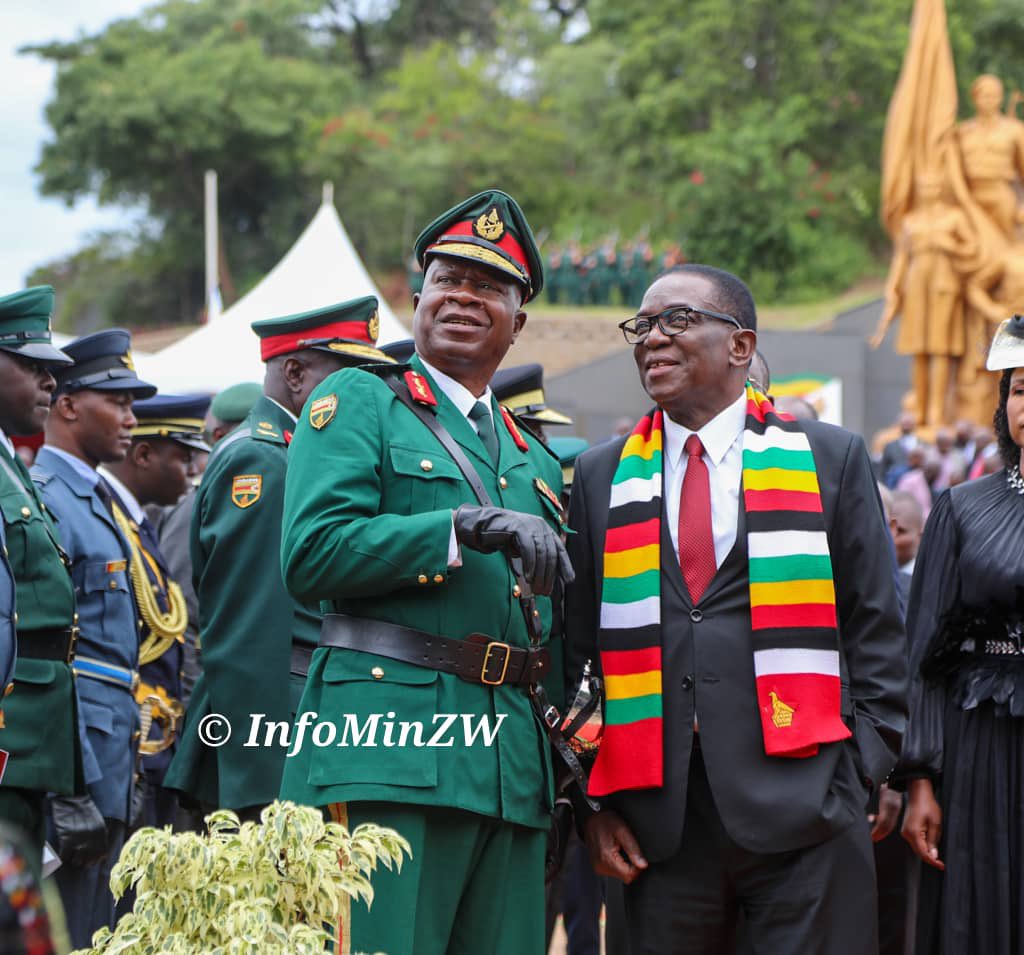
Then Zimbabwe Defence Forces (ZDF) commander General Philip Valerio Sibanda seen here with President Emmerson Mnangagwa (Picture via X - Ministry of Information)

​The recent appointment of retired General Philip Valerio Sibanda to the ruling ZANU PF Politburo marks a significant moment in the country’s contemporary political landscape.

Constitutionally permissible and involving a highly decorated liberation war veteran and former commander of the Zimbabwe Defence Forces, the elevation initially appears to be a routine co-optation of a trusted military stalwart.

Yet, beneath the veneer of bureaucratic normality, the appointment has reignited a fierce, long-standing debate regarding tribal balancing, ethnic patronage, and the persistent role of identity politics.

To understand the structural matrix of ZANU PF politics, one must look past the party’s modern bureaucratic facade and examine the deep ethnic, regional, and clan-based arithmetic that has governed its internal power dynamics since the liberation struggle.

​The central thesis of this analysis is that tribalism has been one of the most influential, yet least honestly discussed, structural forces in Zimbabwean politics from the liberation struggle to the present day.

While ideology, class, nationalism, and personal ambition have undeniably mattered, ethnic calculations have consistently shaped political alliances, leadership contests, military appointments, succession battles, and the distribution of state patronage.

When analysing Zimbabwean elite politics, analysts look at the interplay between the major Shona sub-ethnic groups – primarily the Karanga, dominant in Masvingo and Midlands provinces, the Zezuru, dominant in Mashonaland provinces, and the Manyika, dominant in Manicaland.

​To understand this phenomenon, one must reject simplistic narratives that portray tribalism as the sole explanation for Zimbabwe’s political crises.

Tribalism does not operate in a vacuum. Instead, it functions as an underlying fault line that repeatedly intersects with factionalism, regionalism, and elite struggles for state power.

As the late political scientist Masipula Sithole brilliantly documented in his seminal 1979 study, Struggles Within the Struggle, the nationalist movement was never a monolithic entity driven purely by anti-colonial ideology.

It was deeply fractured by regional and ethnic anxieties long before the raising of the Zimbabwean flag in 1980.

​The Tribal Fault Lines Of The Liberation Struggle

​The internal fractures of the nationalist movement during the 1960s and 1970s laid the foundation for the ethnicised politics of the post-colonial state.

The definitive split of 1963, which saw the birth of ZANU out of the Joshua Nkomo-led Zimbabwe African People’s Union (ZAPU), was initially framed in ideological and tactical terms. However, as the armed struggle intensified, accusations emerged that ethnicity was overlapping with political loyalties.

Leadership contests involving iconic figures such as Joshua Nkomo, Ndabaningi Sithole, Herbert Chitepo, Robert Mugabe, Leopold Takawira, and Edgar Tekere were frequently shadowed by ethnic opinions.

​Sithole’s Struggles Within the Struggle remains the most authoritative expose of these dynamics. In this groundbreaking work, Sithole made the explicit and highly controversial claim that ethnic factionalism – particularly intra-Shona rivalries – was a primary driver of internal violence and political assassinations within the liberation movements.

He argued that as the liberation war progressed, ZANU became less of an ideologically unified front and more of an arena for competitive “ethnic arithmetic,” where different subgroups manoeuvred for post-colonial dominance.

Specifically, Sithole documented how the tragic assassination of Herbert Chitepo in 1975 and the subsequent Mgagao Declaration were severely exacerbated by intense, calculated rivalries between Manyika, Karanga, and Zezuru factions.

He claimed that elites systematically manipulated these sub-ethnic identities to mobilise support and eliminate political rivals, showing that the pursuit of personal power frequently wore a tribal mask.

These internal power struggles demonstrated that nationalist politics was continuously compelled to navigate regional and ethnic identities, turning the liberation movement into a fragile coalition of ethno-regional interests rather than a unified ideological front.

​ZANLA Versus ZIPRA Rivalries

​This ethnic clustering inevitably extended to the armed wings of the liberation movements. The Zimbabwe African National Liberation Army (ZANLA), aligned with ZANU, and the Zimbabwe People’s Revolutionary Army (ZIPRA), aligned with ZAPU, developed distinct operational cultures and demographic compositions.

Over time, a powerful perception crystallised that ZANLA was predominantly associated with Shona-speaking communities, whereas ZIPRA became increasingly associated with Ndebele-speaking communities.

​While both armies possessed cross-ethnic representations, the geopolitical realities of their bases (ZANLA in Mozambique and ZIPRA in Zambia) reinforced these regional biases.

The tragic clashes between integrated ZIPRA and ZANLA cadres at Entumbane in 1980 and 1981 demonstrated that these wartime divisions had survived the liberation struggle.

They entered the independence era as volatile, unresolved animosities ready to be exploited by elite actors seeking to consolidate power.

​The Gukurahundi Catastrophe

​The most devastating and tragic manifestation of ethnic politics in independent Zimbabwe occurred during the mid-1980s with the Gukurahundi massacres. Executed by the North Korean-trained Fifth Brigade, the state-sponsored violence was ostensibly launched to curb a low-level dissident menace.

However, historical evidence and documentation from human rights organisations, most notably the Catholic Commission for Justice and Peace (CCJP) in their landmark report Breaking the Silence, reveal that the violence disproportionately targeted civilian Ndebele-speaking communities in Matabeleland and parts of the Midlands.

​The CCJP report famously concluded that “the victims were selected on ethnic and political grounds.” Regardless of competing political interpretations or state denials, Gukurahundi permanently altered ethnic relations in Zimbabwe.

It deeply entrenched perceptions of structural exclusion and state-sponsored marginalisation among minority communities, leaving a profound psychological and political trauma that has never been genuinely healed or officially redressed.

​The Mugabe Era And The Karanga-Zezuru Power Balance

​Following the 1987 Unity Accord, which effectively absorbed ZAPU into ZANU PF, the focus of tribal anxiety shifted inward toward intra-Shona dynamics, specifically crystallising around the “Karanga-Zezuru power balance.”
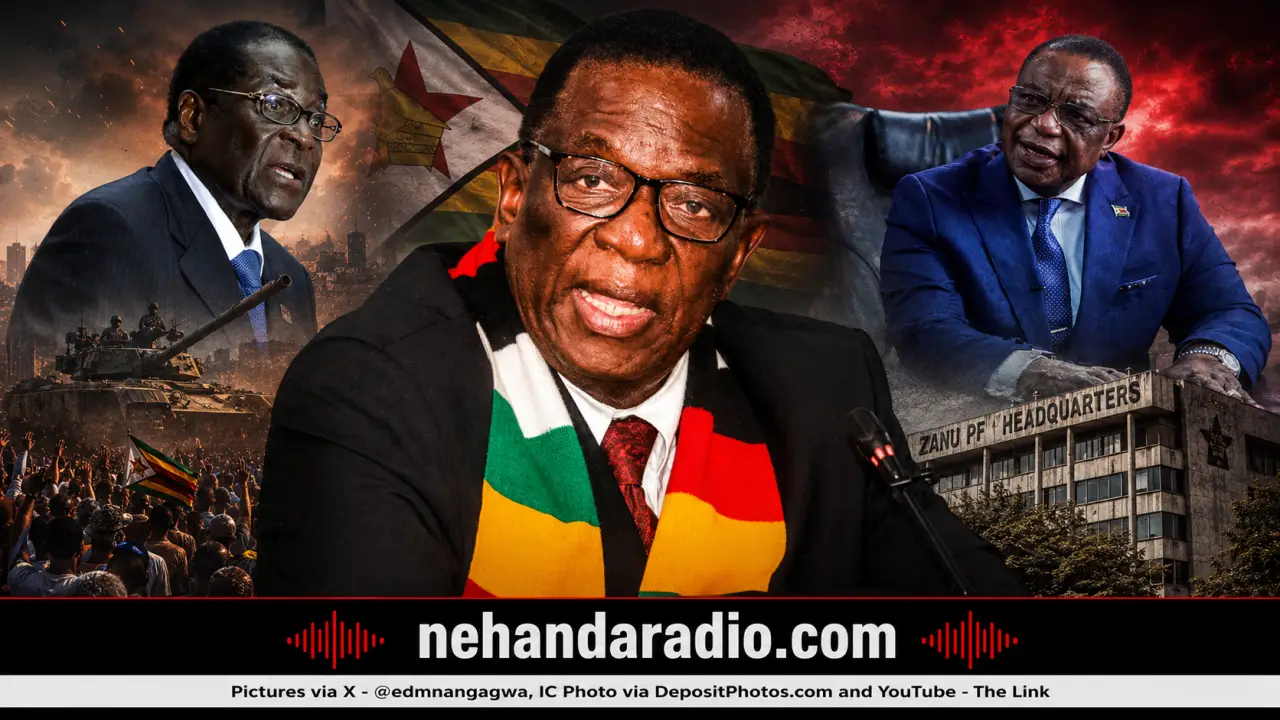
The late former Zimbabwean president Robert Mugabe, current president Emmerson Mnangagwa and Vice President Constantino Chiwenga (Pictures via IC Photo via DepositPhotos.com, X - @edmnangagwa and YouTube - The Link)
The late former Zimbabwean president Robert Mugabe, current president Emmerson Mnangagwa and Vice President Constantino Chiwenga (Pictures via IC Photo via DepositPhotos.com, X – @edmnangagwa and YouTube – The Link)

This concept refers to the historical alliance and occasional rivalry between these two specific linguistic and regional power blocs, which collectively form the traditional axis of state and military control in Zimbabwe.

​Historically, during the liberation war of the 1970s and throughout the 37-year rule of Robert Mugabe, who was Zezuru, the state and security architecture relied on an implicit, calibrated distribution of power between these groups.

Under Mugabe, the political apex was heavily weighted toward the Zezuru elite, creating a powerful perception of Zezuru dominance in key institutions of state, government, and party structures.

However, to maintain absolute stability, Mugabe relied heavily on an expansive military and security apparatus heavily staffed and commanded by the Karanga officer corps.

This perception of imbalance became a highly potent political weapon, fueling deep-seated resentment among Karanga and Manyika cadres who felt systematically sidelined from civilian political dominance despite controlling the instruments of hard power.

​The Rise Of Karanga Influence Under Mnangagwa

​The dramatic political transition of November 2017 disrupted the old Zezuru-dominated civilian status quo. It was orchestrated by a security establishment that brought together a powerful coalition of Karanga and Zezuru players to depose Mugabe.

This transition has triggered a perceived reconfiguration of ethnic hegemony, witnessing what critics describe as the rise of a Karanga-centred power network.

This network is allegedly manifested through the prominence of influential figures from the Midlands and Masvingo provinces within senior government positions, security institutions, and state-allied corporate entities.

​Public discourse surrounding prominent business figures, such as Kudakwashe Tagwirei, often intersects with these ethnic narratives, with critics characterising them as key beneficiaries of a localised patronage system.

In this context, succession politics, military influence, and economic distribution are routinely interpreted through the lens of a historical shift from Zezuru to Karanga dominance, demonstrating how elite factionalism continues to rely on ethnic mobilisation.

​Chiwenga And The Mechanics Of Succession

​Vice President Constantino Chiwenga, a Zezuru from Mashonaland East, navigates this landscape through a specific political logic. His political survival and his claim to the presidency do not rest on narrow Zezuru tribalism.

Retired General Philip Valerio Sibanda and retired General Constantino Chiwenga (Pictures via Office of the President and ZBC News)

Instead, his power is rooted in maintaining a cross-ethnic, institutional alliance between the Zezuru political elite and the Karanga securocrats who backed the 2017 transition.

Chiwenga relies on this balance in three distinct ways. First, as the voice of the armed forces, he benefits from a military establishment historically rich with Karanga commanders who view him as their premier representative in civilian governance, seeing the military as a unified institutional bloc that transcends sub-ethnic rivalries.

​Second, Chiwenga’s position rests on the original 2017 compact: a transactional pact where Emmerson Mnangagwa would take the presidency, and Chiwenga would be the clear, undisputed heir apparent.

This arrangement perfectly balanced the two most powerful regional and ethnic factions within the party, ensuring mutual deterrence and stability.

Third, Chiwenga relies on a shared resistance to absolute monopolisation. He finds common ground with the Zezuru political establishment, parts of the Manyika bloc, and even traditional Karanga cadres who believe that power must continue to rotate or be shared.

The underlying fear within ZANU PF is that if this balance is broken, power will become dangerously concentrated within a single regional or clan enclave, alienating the rest of the liberation aristocracy.

​The Sibanda Appointment In Context

​This brings us back to why the appointment of Philip Valerio Sibanda to the Politburo so thoroughly disrupts the established calculus. By introducing Sibanda into the party’s supreme decision-making body, President Mnangagwa directly threatens the specific balance Chiwenga relies on.

Sibanda does not fit into the traditional Karanga-Zezuru factional matrix; he is a ZIPRA veteran from the Matabeleland region, representing the historical PF-ZAPU stream.

At the same time, rumours circulating in political circles allege that Sibanda and Mnangagwa share deep-seated clan and family connections that transcend their shared liberation history.

​While these unverified claims should not be presented as established facts, their rapid traction is highly revealing. By elevating Sibanda, the executive introduces a highly respected, disciplined military alternative that complicates Chiwenga’s cross-ethnic institutional backing.

It signals to the security apparatus that a commander does not need to be part of the traditional Karanga-Zezuru axis to command absolute state authority, effectively diluting the specific geopolitical alliance Chiwenga has spent nearly a decade cultivating to secure his succession.

The persistence of such suspicions reflects a profound crisis of public trust, where every administrative action is filtered through a lens of ethnic favouritism.

​Other Dimensions Of Tribal Politics

​The obsession with majoritarian ethnic rivalries has historically overshadowed the severe marginalisation narratives expressed by Zimbabwe’s micro-minorities.

Peripheral communities, including the Tonga, Venda, Kalanga, Nambya, Shangani, Sotho, and others, have long complained of linguistic, cultural, and economic erasure.

​Language politics in education and public broadcasting historically favoured Shona and Ndebele, leaving minor languages underfunded and ignored for decades. Furthermore, these regions frequently suffer from substandard infrastructure and limited access to state resources.

This reality demonstrates that tribalism is not merely an elite game played out in boardroom politics, but a systemic issue affecting the everyday socio-economic lives and citizenship experiences of thousands of Zimbabweans.

​The Opposition And Tribal Politics

​It would be intellectually dishonest to characterise tribal politics as an exclusive pathology of ZANU PF. Zimbabwe’s mainstream opposition parties, from the original Movement for Democratic Change (MDC) to its subsequent iterations, have consistently struggled to transcend ethnic and regional clustering.

The split of the MDC in 2005 carried distinct regional undertones, and subsequent internal factional disputes have frequently pitted leaders against one another along ethnic lines.

​The ethnic geography of voting patterns since 1980 reinforces this reality. Matabeleland provinces have historically demonstrated highly distinct regional voting behaviours, frequently rejecting the ruling party in favour of opposition entities that they perceive as more sympathetic to their historical grievances.

While regional voting patterns do not automatically prove inherent tribalism, they provide undeniable empirical evidence that historical traumas and regional identities remain powerful drivers of political choices.

​The Devastating Cost Of Tribal Politics

​The socio-political cost of this enduring tribal shadow is catastrophic. Tribalism severely weakens national cohesion and eviscerates the state’s institutional legitimacy.

When ethnic affinity replaces meritocracy as the primary criterion for public service and military advancement, institutional competence declines, and democratic accountability is destroyed.

​Commerce and development are also severely stifled when national resources are distributed via networks of ethnic patronage rather than national priority.

Ultimately, the persistence of tribal calculations has prevented Zimbabwe from realising the inclusive, democratic national identity that was envisioned at independence, replacing the liberatory promise of a unified nation with a fragmented collection of suspicious ethnic fiefdoms.

​Conclusion

​Zimbabwe’s greatest existential challenge is not simply authoritarian governance, rampant corruption, or systemic economic decline. The much deeper, more insidious challenge is the country’s collective failure to honestly confront the deep ethnic anxieties and historical grievances that have quietly governed its politics for more than half a century.

The modern state remains haunted by the unresolved ghosts of the liberation struggles, the horrors of Gukurahundi, and the silent warfare of elite ethnic patronage.

​Until Zimbabweans courageously build an open, transparent political culture that explicitly acknowledges and systematically addresses these tribal undercurrents, true nation-building will remain an impossibility.

Without a genuine, structurally supported national truth and reconciliation process, every political transition, succession battle, military promotion, and factional alignment will continue to be interpreted through the reductive, polarising lens of the tribe rather than the collective progress of the nation.
Nine killed as train ploughs into bus at Chiredzi railway crossing

0
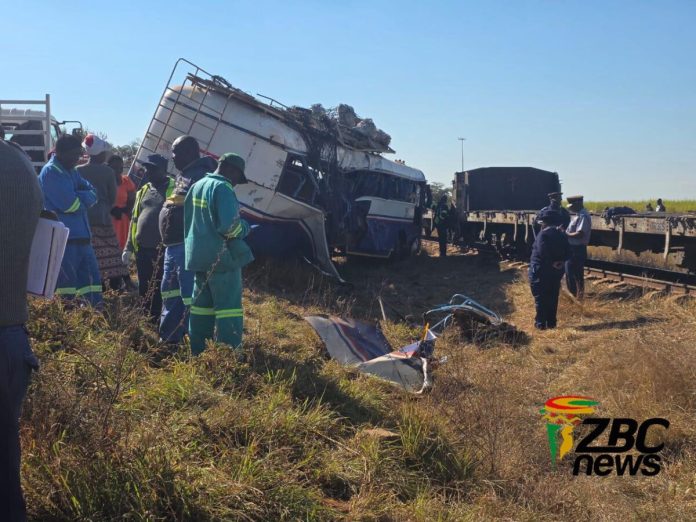
Nine killed as train ploughs into bus at Chiredzi railway crossing (Picture via ZBC News)

Nine people, including two children, were killed on Tuesday morning when a passenger bus was struck by a goods train after reportedly failing to stop at a railway level crossing in Chiredzi district.

The fatal collision occurred at around 7AM on Mbizi Road in Triangle, sending dozens of passengers to hospital and triggering a major emergency response.

According to the National Railways of Zimbabwe (NRZ), the Makuku Bus was travelling from Chikombedzi to Masvingo when it entered the railway crossing directly in the path of an approaching train.

The goods train was travelling from Triangle to the NRZ Lundi siding at the time of the crash.

In a statement, the NRZ said preliminary investigations indicated that the bus driver failed to comply with railway crossing regulations.

“The bus driver failed to observe level crossing rules, which require drivers to stop and check for oncoming trains before proceeding,” the NRZ said.

The impact killed nine passengers, among them seven adults and two children.

At least 25 other passengers were rushed to hospital with injuries, according to the NRZ.

Police later confirmed the death toll and reported that 26 people had been injured in the crash.

National police spokesperson Commissioner Paul Nyathi said officers were still at the scene conducting investigations.

“More details will be availed soon as police officers are still attending to the accident,” said Nyathi.

Emergency services, including police, ambulance crews and fire brigade personnel, were deployed to the scene as rescue efforts continued throughout the morning.

The tragedy is one of the deadliest railway crossing accidents in recent years and has renewed concerns over road safety and compliance with level crossing regulations.

The NRZ expressed condolences to the families of those who lost their lives and wished the injured a speedy recovery.

The railway operator also urged motorists to exercise greater caution when approaching railway crossings.

“We would also like to urge all motorists to strictly observe level crossing regulations to avoid loss of lives and injuries,” the NRZ said.

Authorities are expected to release further details once investigations into the circumstances surrounding the collision are completed.

Trump hails Iran deal as Netanyahu faces pressure over Lebanon conflict

0
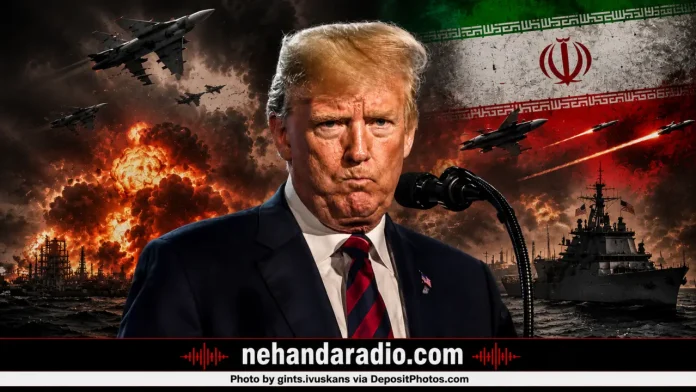
US President Donald Trump and a graphic illustration of the war with Iran (Picture of Donald Trump via gints.ivuskans via DepositPhotos.com)

US President Donald Trump says a new agreement with Iran will ensure Tehran never acquires a nuclear weapon, as details begin to emerge about a framework deal intended to end months of escalating tensions in the Middle East.

Speaking at the G7 summit in France, Trump described the agreement as a decisive barrier against Iran obtaining nuclear capabilities, insisting that preventing Tehran from developing a nuclear weapon was the central objective of the negotiations.

“Iran will never have a nuclear weapon,” Trump told reporters. “That’s about 99.9 percent of what I wanted.”

The agreement was first announced on Sunday by Pakistan, which played a key mediating role in negotiations between Washington and Tehran.

While the full text has yet to be released publicly, US officials say both sides have already signed the framework electronically, with a formal signing ceremony expected in Geneva later this week.

Trump indicated the agreement would be submitted to Congress and said he intends to publicly read the document once it is formally signed.

Despite the breakthrough, conflicting accounts have emerged regarding some of the deal’s provisions.

Iranian officials claim the agreement includes commitments toward economic reconstruction, sanctions relief and measures to secure shipping through the Strait of Hormuz.

Tehran has also linked peace in Lebanon to the broader agreement, arguing that Israel must halt military operations there.

The Trump administration has pushed back on several of those claims. US officials have denied that Israeli withdrawal from Lebanon forms part of the agreement and dismissed reports suggesting Washington would finance reconstruction efforts in Iran.

The Strait of Hormuz remains one of the deal’s most sensitive components. Trump has said the crucial shipping route will reopen under the agreement, although few details have been released.

Ship traffic through the waterway remains significantly below normal levels. Maritime data shows only a handful of vessels have passed through the strait since the announcement, compared to more than 100 daily crossings before the conflict disrupted regional trade.

The agreement also appears to be creating fresh political challenges for Israeli Prime Minister Benjamin Netanyahu.

Trump again criticised Israeli military operations in Lebanon, suggesting the scale of some attacks was excessive.

“You don’t have to knock down an apartment house every time you’re looking for somebody,” the US president said.

The comments are the latest sign of growing differences between Washington and Jerusalem over how to manage regional security following the Iran deal.

Israeli officials have insisted they will maintain freedom of action against Hezbollah targets in Lebanon and have rejected suggestions of a military withdrawal.

Meanwhile, Qatar, another key participant in the negotiations, said it was cautiously optimistic that the agreement could create a foundation for broader regional stability and future talks on Iran’s nuclear programme.

The current framework extends a ceasefire for 60 days while negotiators work toward a comprehensive settlement. Technical discussions on Iran’s nuclear activities are expected to begin immediately.

Whether the agreement ultimately succeeds may depend on what emerges from those negotiations over the next two months, with supporters calling it a breakthrough and critics warning it could prove weaker than previous nuclear agreements.

Nigerian army rescues kidnapped general’s widow days after his death in captivity

0
Amina Abubakar is now being treated in hospital after her rescue (Original picture via Nigeria Army Headquarters)

Nigeria’s military has rescued the wife of a retired army general who died while being held by kidnappers, bringing a dramatic twist to a kidnapping ordeal that has gripped the country.

Maj Gen Rabe Abubakar and his wife, Amina Abubakar, were abducted from their home in Katsina State in north-western Nigeria at the end of May.

The retired officer died while still in captivity, but military authorities announced on Monday that his wife had been successfully rescued during an operation targeting the kidnappers.

According to the Nigerian military, troops intensified search-and-rescue efforts following the general’s death and eventually tracked down the armed group holding Mrs Abubakar.

Military spokesperson Samaila Uba said the kidnappers opened fire during the operation and shot Mrs Abubakar before fleeing as security forces closed in.

“During sustained offensive operations and pressure mounted on the criminal elements, troops made contact with the bandits, leading to the successful recovery of Mrs Abubakar,” Uba said.

Mrs Abubakar was taken to a military medical facility where she is receiving treatment for her injuries.

Her daughter, Bilkisu Abubakar, confirmed the rescue in a message shared on WhatsApp.

“We are deeply grateful to Allah for His mercy and protection. Our mummy has been rescued from the hands of evil by the Nigerian Army,” she wrote.

“We pray that Allah grants her good health, complete recovery, peace of mind, and strength after everything she has been through.”

The rescue came just days after the Katsina State Government announced the death of Maj Gen Abubakar while in captivity.

Officials said the retired officer, who reportedly suffered from diabetes and high blood pressure, died due to health complications while being held by his captors.

He was buried on Saturday.

The kidnapping attracted national attention after a video emerged online on June 6 showing the retired general and his wife pleading for help.

In the footage, the couple appealed to the Katsina State Government to release detained bandits and seized livestock in exchange for their freedom.

No group has claimed responsibility for the abduction.

However, north-western Nigeria has experienced a surge in kidnappings carried out by heavily armed criminal gangs known locally as bandits. The groups routinely abduct people for ransom and have terrorised rural communities through cattle rustling, attacks and extortion.

The region has also witnessed activity by jihadist groups operating alongside criminal networks.

Following the retired general’s death, Nigerian President Bola Tinubu said he was shocked by the tragedy and described it as a stark reminder of the continuing threat posed by armed criminal groups across the country.

The military says operations are continuing to track down those responsible for the kidnapping and bring them to justice.

After months of high rates to shield ZiG, Zimbabwe starts monetary easing

0
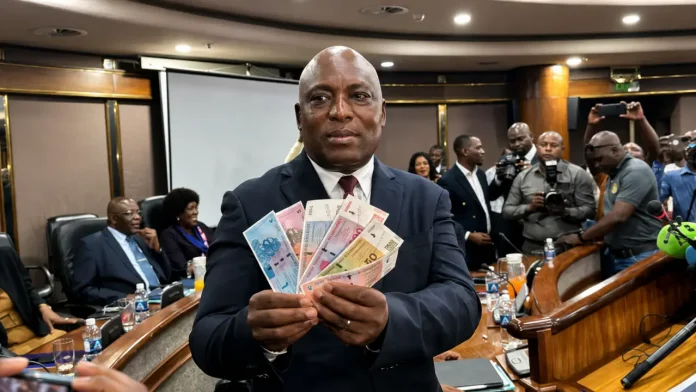
John Mushayavanhu, then the new governor or the Reserve Bank of Zimbabwe, displays new banknotes of the country's currency to reporters, in Harare, April 5, 2024. (Columbus Mavhunga/VOA)

Zimbabwe has begun easing its tight monetary stance after months of maintaining some of the region’s highest interest rates to defend the ZiG, as the Reserve Bank of Zimbabwe (RBZ) reduced its benchmark policy rate from 35 percent to 30 percent amid slowing inflation and improved exchange-rate stability.

The rate cut marks a significant shift from the central bank’s previous stability-first approach, under which high borrowing costs were used to absorb excess liquidity, curb speculative demand for foreign currency and restore confidence in the country’s newest currency.

However, authorities insist the move does not represent a broader relaxation of monetary policy, arguing that rates are merely being adjusted to reflect the lower inflation environment while risks to stability remain.

The decision, announced following the Monetary Policy Committee (MPC) meeting held on June 15, comes as authorities point to a significant decline in inflation, stronger foreign currency inflows and improved stability in the ZiG exchange rate.

The central bank said annual inflation has fallen from a peak of 95.8 percent in July 2025 to below 5 percent since January 2026, reaching 4.4 percent in May 2026.

Foreign currency reserves backing the ZiG have also increased to over US$1.5 billion, while foreign currency inflows reached US$8.3 billion by May, compared with US$6 billion during the same period last year.

The MPC argued that the reduction in the policy rate reflects a “realignment” with the new inflation environment rather than a broad shift towards easy monetary conditions.

“The decision to reduce the Bank Policy Rate does not entail easing monetary policy at this stage, but a realignment of the policy rate to the structural shift in inflation dynamics,” the committee said.

The rate cut marks a shift from the central bank’s February position, when it maintained the benchmark rate at 35 percent and abandoned the fixed 2030 deadline for ending the multi-currency system, arguing that a transition to a mono-currency economy would depend on stronger economic fundamentals, including higher foreign reserves, sustained low inflation and confidence in the ZiG.

At the time, economists viewed the 35 percent rate as a defensive tool designed to absorb excess liquidity and limit speculative pressure on the local currency.

Economist Tinotenda Bunhu said the high rate reflected a deliberate effort by authorities to prioritise currency and price stability.

“In my view, the RBZ’s decision to maintain the benchmark policy rate at 35 percent showed that the central bank remained in a defensive, stability-first posture. The primary objective was clear: protect the currency and prevent a relapse into high inflation,” Bunhu said.

However, he warned that prolonged tight monetary conditions carried economic costs.

“Only projects with exceptionally high returns can justify borrowing at such elevated costs,” he said, noting that expensive credit could delay business expansion, particularly among small and medium enterprises.

African Vendor Network founder and economist Tinashe Nyangaire also argued that while high interest rates could assist in stabilising inflation and reducing speculative borrowing, they risked constraining productive activity if maintained for too long.

“Persistent high borrowing costs may dampen private sector investment and reinforce self-financing models, particularly among small and medium enterprises,” Nyangaire said.

He added that there was a risk of greater financial exclusion as businesses and informal traders bypass formal banking channels due to the high cost of credit.

The reduction to 30 percent may offer some relief to borrowers, although lending costs are expected to remain elevated. The RBZ also reduced the interest rate on its Targeted Finance Facility from 20 percent to 15 percent, with banks’ lending to productive sectors capped at an all-inclusive rate of 25 percent.

Meanwhile, statutory reserve requirements were left unchanged at 30 percent for demand deposits and 15 percent for savings and time deposits in both local and foreign currencies, indicating that the central bank remains cautious about releasing additional liquidity into the economy.

Zimbabwe’s economy is projected to grow by 5 percent in 2026, down from a revised estimate of 8.2 percent in 2025, with the RBZ maintaining that future policy decisions will depend on inflation trends, exchange-rate stability and broader macroeconomic developments.

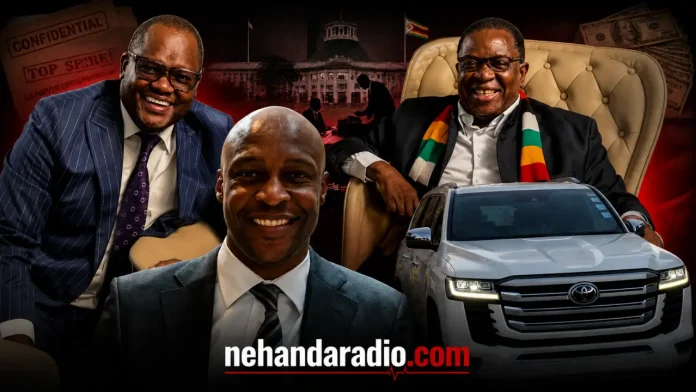
The Land Cruiser that shook the court: Why Tungwarara’s payment may have cost Tagwirei more than US$200 000

0
Presidential Adviser Paul Tungwarara, President Emmerson Mnangagwa and political activist Rutendo Benson Matinyarare (Pictures via Facebook - Rutendo Benson Matinyarare and X - Paul Tungwarara)

Politics is often misunderstood as a contest of money. Those who watch events unfold from a distance frequently assume that the wealthiest individual automatically possesses the greatest influence. Yet the inner workings of power rarely operate according to such simplistic logic.

Particularly within Zimbabwe’s ruling establishment, money is merely a tool. The true currency of political relevance is usefulness.

That reality may explain one of the most intriguing developments in recent Zimbabwean political discourse: the decision by Paul Tungwarara to settle obligations that many believed should have been honoured by businessman and presidential ally Kudakwashe Tagwirei.

At first glance, the story appears straightforward. A dispute involving activist and commentator Rutendo Matinyarare escalated into a public spectacle. Debts became a matter of public discussion.

A luxury vehicle reportedly worth around US$200 000 and substantial legal obligations became symbols of a relationship that had deteriorated dramatically. Then, unexpectedly, Tungwarara stepped forward and assumed responsibilities that were not his own.

The obvious question is also the most important one.

Why?

After all, Tungwarara and Tagwirei are not political partners. They occupy overlapping territory within the same ecosystem of influence. They are widely perceived as competitors seeking proximity to the same centre of power. Their interests intersect. Their ambitions overlap. Their supporters often clash.

Under such circumstances, it would be natural to expect distance rather than intervention.

Yet Tungwarara intervened.

The significance of that decision becomes clearer when viewed through the lens of how power functions around President Emmerson Mnangagwa.

For years, observers have noted that Mnangagwa’s political style differs markedly from that of many leaders who surround themselves with unquestioning favourites. Instead, he appears to cultivate an environment in which multiple centres of influence co-exist, compete and occasionally collide. Rivalries are not necessarily extinguished. They are managed. Ambition is not discouraged. It is harnessed.

In such a system, the individuals who thrive are not merely those who profess loyalty. Loyalty is abundant. Nor are they necessarily those with the deepest pockets. Wealth alone is insufficient.

What matters most is the ability to solve problems.

The individual who can resolve crises, eliminate embarrassments, neutralise threats and restore stability acquires a value that money alone cannot purchase.

This is where the Tungwarara intervention becomes politically fascinating.

For years, Tagwirei’s value proposition has rested upon his role as a strategic enabler. His influence has been linked to financial networks, institutional reach, business infrastructure and access to resources capable of supporting large-scale political and economic projects. His reputation has been built on being indispensable to the machinery of power.

That reputation remains formidable.

However, every political asset carries a hidden vulnerability. Once a person’s role becomes predictable, it also becomes measurable. Once it becomes measurable, alternatives inevitably emerge.

Tungwarara has historically occupied a very different space. His public profile has largely been associated with highly visible interventions that produce tangible results.

Water projects, community development initiatives, health-related programmes and other service delivery efforts have helped cultivate an image of a man who fixes practical problems.

His brand has been rooted in visible outcomes rather than political intrigue.

What occurred in the Matinyarare affair appears to represent an attempt to broaden that brand significantly.

Rather than limiting himself to physical infrastructure, Tungwarara stepped into a politically sensitive dispute involving competing narratives, bruised relationships and reputational risks. This was no longer about repairing boreholes or rehabilitating rivers. It was about repairing political damage.

That distinction matters.

When Matinyarare publicly aired grievances, the issue extended beyond a simple disagreement between individuals. The controversy generated conversations about influence, patronage and internal tensions. It created a spectacle capable of attracting unwanted attention and feeding opposition narratives.

Whether one agrees with Matinyarare’s claims or not is almost beside the point. The political reality is that a noisy dispute involving insiders often becomes a liability for those at the top. The challenge therefore was not merely financial. It was reputational.

And reputational crises are among the most dangerous forms of political instability because they cannot always be neutralised through silence.

This is where Tungwarara’s intervention takes on a different meaning.

His actions can be interpreted as a carefully calibrated message directed towards a very specific audience.

The message is simple.

When a political problem emerged courtesy of Tagwirei and continued to escalate, I acted.

When relationships deteriorated, I repaired them.

When obligations became sources of controversy, I resolved them.

When others struggled to contain the fallout, I produced a solution.

Whether that interpretation is entirely accurate is ultimately less important than the fact that such a perception now exists.

Politics often rewards perception as much as reality.

Perhaps the most damaging aspect for Tagwirei is not the monetary value involved. Wealthy individuals absorb financial losses routinely. The greater issue is symbolic.

By settling obligations associated with a rival’s political headache, Tungwarara effectively positioned himself as the man capable of extracting opportunity from another person’s difficulty.

That is a dangerous precedent in any competitive environment.

Every unresolved grievance becomes an opening. Every neglected relationship becomes an opportunity. Every disappointed ally becomes a potential recruit. Every public controversy becomes a stage.

The implication is not simply that Tungwarara solved a problem. The implication is that he demonstrated an ability to derive political capital from problems that others failed to solve.

That shifts the conversation entirely.

It also explains why reactions from various supporters and proxies have been so intense. The battle is not fundamentally about Matinyarare. Nor is it primarily about a vehicle or legal fees.

The battle is about narrative control.

One side seeks to portray the episode as evidence of generosity, competence and political maturity.

The other seeks to frame it as opportunism, manipulation or calculated self-promotion.

Both understand that the verdict which ultimately matters will not be delivered on social media.

It will be formed within the corridors where influence is measured and future relevance is assessed.

Meanwhile, Matinyarare emerges with significant benefits of his own. His financial burdens are reportedly eased. His organisational structures gain breathing room. His political isolation is reduced.

Most importantly, he avoids the appearance of retreating quietly from a confrontation that had become central to his public identity.

Tungwarara also appears to gain considerably. Beyond the publicity, through Matinyarare he potentially acquires access to networks extending into the diaspora, advocacy platforms and international relationships that complement his existing domestic profile.

Yet the greatest beneficiary may be Mnangagwa himself.

The controversy has been de-escalated. A potentially disruptive dispute has been softened. Competing lieutenants have once again demonstrated their usefulness. The system continues functioning exactly as intended.

Ultimately, the most revealing aspect of this saga is not that one influential figure paid another’s apparent debt. It is what that payment communicated.

A Land Cruiser can be replaced. Money can be recovered. Legal fees can be settled.

Political symbolism is far more valuable.

Tungwarara entered this episode primarily known as a man associated with visible development initiatives. He emerges from it projecting a broader image: a man seeking recognition not merely as a fixer of infrastructure but as a fixer of political infrastructure as well.

Basically, his actions strongly amount to an acknowledgement that Matinyarare has a legitimate case. They portray Tagwirei as a dishonest operator who routinely uses people by hiding behind the President’s name, only to discard them once they are no longer useful.

This behaviour not only damages the President’s reputation but also shows Tagwirei’s failure to defend him when he comes under attack.

Whether that ambition succeeds remains uncertain.

What is certain is that the audience for this performance was never the public. It was the solitary figure at the apex of the system, observing which among his competing lieutenants demonstrates the greatest utility when circumstances become difficult.

In a political environment where usefulness is the ultimate currency, that may prove to be the most consequential payment of all.

Tunisia sack coach Sabri Lamouchi after humiliating World Cup thrashing

0
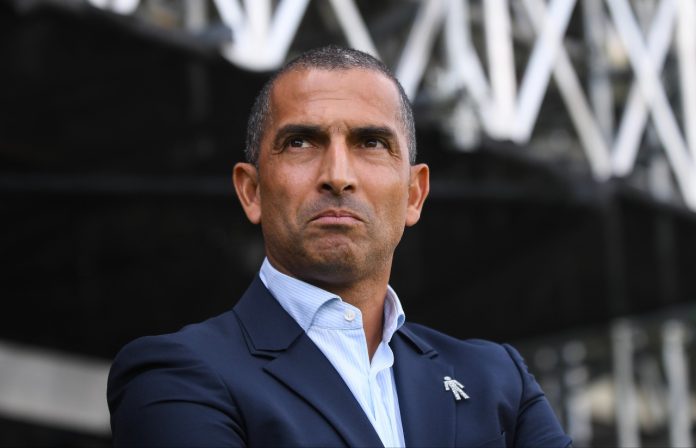
LONDON, ENGLAND - AUGUST 24, 2019: Forest manager Sabri Lamouchi pictured during the 2019/20 EFL SkyBet Championship game between Fulham FC and Nottingham Forest FC at Craven Cottage. — Photo by CosminIftode via DepositPhotos.com

Tunisia have become the first nation to dismiss their head coach during the 2026 FIFA World Cup after parting ways with Sabri Lamouchi following a crushing 5-1 defeat to Sweden in their opening match.

The Tunisian Football Federation confirmed Lamouchi’s departure on Monday, less than 24 hours after the North Africans were dismantled by Sweden in Guadalupe.

“An agreement has been officially reached to dismiss coach Sabri Lamouchi,” the federation said in a statement posted on Instagram.

The federation added that former Tunisia coach Mondher Kebaier is expected to take charge on an interim basis as the team attempts to rescue its World Cup campaign.

The decision comes after a disastrous start to the tournament and follows growing pressure on Lamouchi in the weeks leading up to the World Cup.

Tunisia were heavily beaten 5-0 by Belgium in a pre-tournament friendly in Brussels, raising concerns about the team’s form and preparedness before travelling to North America.

Those fears were brutally exposed against Sweden, who ran riot in a one-sided contest.

Sweden’s victory was inspired by a brace from midfielder Yasin Ayari, while Viktor Gyokeres and Alexander Isak also got on the scoresheet. Tunisia’s only response came through Omar Rekik.

The defeat reportedly triggered an emergency meeting by Tunisian football officials immediately after the match, culminating in Lamouchi’s dismissal.

The 54-year-old had only been in charge since January, having been appointed following the departure of Sami Trabelsi after Tunisia’s disappointing Africa Cup of Nations campaign.

His tenure lasted just five matches, with his sole victory coming in a 1-0 win over Haiti.

Lamouchi, a former midfielder who previously managed Ivory Coast at the 2014 FIFA World Cup, has now endured group-stage exits in both of his appearances as a World Cup coach.

He is also well known to English football fans for his spell as manager of Nottingham Forest.

While managerial dismissals during a World Cup are rare, Tunisia’s decision is not without precedent.

The country famously sacked coach Henryk Kasperczak during the 1998 World Cup after a poor start to the tournament. South Korea also dismissed coach Cha Bum-kun during that same competition, while Spain parted ways with Julen Lopetegui just days before the 2018 World Cup began after he agreed to join Real Madrid.

Tunisia now face an uphill battle to keep their World Cup hopes alive.

Kebaier’s first task will be preparing the team for Saturday’s crucial clash against Japan in Guadalupe before a difficult final group-stage encounter against the Netherlands.

Following the heavy defeat, Tunisia defender Mohamed Amine Ben Hamida apologised to supporters and admitted costly mistakes had contributed to the embarrassing result.

“We suffered a heavy defeat because of small details and mistakes,” he said.

“At this level, against a team like Sweden, when you make such serious mistakes, you pay a heavy price.”

With their tournament hanging by a thread, Tunisia will now hope a change in leadership can spark an immediate response before it is too late.

Mliswa threatens Parliament protests as feud with Chivayo over CAB3 gifts explodes

0
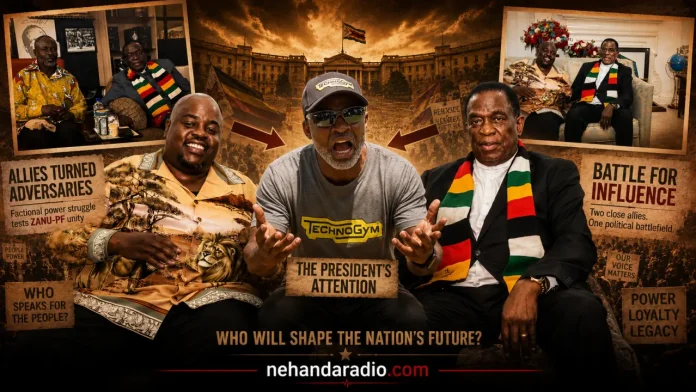
Two of President Emmerson Mnangagwa's allies Temba Mliswa and Wicknell Chivayo are fighting on social media (Pictures via Facebook - Wicknell Chivayo and X - Temba Mliswa)

The war of words between tenderpreneur Wicknell Chivayo and former Norton legislator Temba Mliswa has escalated dramatically, with Mliswa now threatening to mobilise protests at Parliament over gifts awarded to lawmakers who support Constitutional Amendment Bill No. 3 (CAB3).

The latest development comes days after Chivayo publicly accused Mliswa of hypocrisy, alleging that the former legislator had accepted a Ford Raptor vehicle worth US$107,000 while simultaneously condemning rewards given to MPs backing the controversial constitutional amendment.

In response to Chivayo’s rewards programme, Mliswa has adopted a more confrontational stance, warning that citizens should resist what he describes as attempts to influence the parliamentary process through gifts and financial incentives.

Speaking in a social media video, Mliswa declared that lawmakers who had received vehicles or other benefits should not be allowed to participate in deliberations on the constitutional amendment.

“No member of Parliament must receive any gifts at this time. Not at this time. We shall make sure that, as people of this country, we will protest against it.

“We shall make sure that we are at the Parliament’s entries to not allow any member of Parliament to vote or to take part if you have been given a car,” said Mliswa.

His remarks mark a significant escalation in the dispute, which initially centred on whether Chivayo’s rewards amounted to legitimate philanthropy or constituted improper inducements linked to the legislative process.

Mliswa has argued that the gifts undermine the credibility of CAB3 and create the perception that parliamentary support is being secured through financial incentives rather than genuine conviction.

Chivayo, however, has rejected allegations of bribery, insisting that the rewards are given only after MPs have publicly declared their support for the Bill.

The controversial businessman maintained that recognising legislators whose views align with his own political beliefs cannot be construed as influencing their votes.

The feud intensified further after Chivayo revealed that Mliswa had allegedly accepted a Ford Raptor purchased by him for US$107,000. Chivayo cited the vehicle as evidence that Mliswa was applying different standards to himself and to MPs receiving rewards for supporting CAB3.

“I am actually surprised that you now appear to take a strong position against accepting my gratuity, yet recently you graciously accepted the Ford Raptor I paid cash US$107,000 which I bought you,” Chivayo wrote.

Mliswa has disputed that characterisation, saying in a separate social media post that the vehicle was not a personal gift to him but was intended for an association of headmen that he leads.

At the centre of the controversy are rewards given to lawmakers who publicly endorsed CAB3, including Zanu-PF Bindura South MP Remigious Matangira and Citizens Coalition for Change proportional representation MP Samantha Mureyani.

Both of whom were each given a 2026 Toyota Fortuner GD6 and US$50,000 after backing the Bill.

The escalating confrontation is unfolding as CAB3 faces increasing scrutiny from critics and legal challenges from opponents who argue that the proposed constitutional changes should be subjected to a national referendum.

SA tycoon Robert Gumede moves closer to rescuing Tongaat Hulett as liquidation showdown looms

0
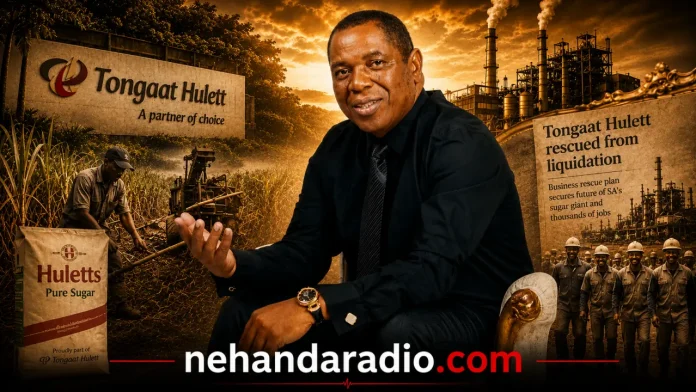
South African billionaire Robert Gumede (Pictures via facebook and AI)

South African businessman Robert Gumede appears to be on the verge of securing a deal that could save struggling sugar giant Tongaat Hulett from liquidation, just days before a crucial court hearing that will determine the company’s future.

According to a Bloomberg report published on June 14, Gumede’s Vision Group and the state-owned Industrial Development Corporation (IDC) have reached broad agreement on a transaction that could bring an end to the company’s prolonged business rescue saga.

The proposed arrangement would see the IDC acquire a 40 percent stake in Tongaat Hulett’s South African sugar operations in exchange for continued financial backing, while Vision Group would retain majority control through its position as the company’s dominant creditor.

If finalised, the agreement would mark a major breakthrough in efforts to rescue one of South Africa’s oldest and most important agricultural businesses.

The deal comes ahead of a critical liquidation hearing scheduled for June 17 and 18 in the Durban High Court before Judge Rithy Singh.

The court proceedings were postponed in April after the IDC provided an emergency R200 million funding package that allowed Tongaat’s mills to open for the 2026-27 crushing season.

That intervention increased the IDC’s total exposure to the company to approximately R2.5 billion.

The liquidation application stems from the collapse of Tongaat’s business rescue process earlier this year.

Vision Group became the central player in the rescue effort in May 2025 after acquiring the claims and security rights of Tongaat’s banking creditors.

The company reportedly paid around R3.2 billion for debt with a face value of roughly R9 billion, effectively making Vision the controlling creditor.

However, efforts to implement a rescue plan unravelled in February 2026 when agreements between Vision and Tongaat’s business rescue practitioners expired.

Vision subsequently demanded immediate repayment of approximately R11.7 billion, triggering the provisional liquidation process and intensifying concerns over the future of the 134-year-old company.

Gumede has repeatedly defended his company’s role in the rescue effort, arguing that Vision remains committed to preserving jobs, protecting investment and supporting rural communities dependent on the sugar industry.

He previously told Bloomberg that Vision shareholders had committed about R4 billion to the rescue initiative, including an initial R1.6 billion deposit and a further R2 billion payment made in 2025.

“It’s most unfortunate that the Vision business-rescue plan has been allowed to fail,” Gumede said at the time, while maintaining that his company remained determined to save Tongaat’s South African operations.

The stakes are particularly high for KwaZulu-Natal’s agricultural sector.

An estimated 18,000 sugarcane growers depend on Tongaat’s milling infrastructure to process their crops. Industry leaders have warned that liquidation could leave many farmers without viable alternatives, creating significant economic disruption across rural communities.

Vision has also outlined plans to diversify Tongaat beyond traditional sugar production.

Among the proposals under consideration is the transformation of the company’s milling assets into renewable energy facilities capable of generating electricity, creating additional revenue streams as the sugar industry faces mounting challenges.

The sector has been hit hard by a surge in imported sugar, particularly from Brazil.

Figures from the South African Sugar Association show deep-sea sugar imports climbed from 25,000 tonnes during the 2023-24 season to more than 213,000 tonnes in 2025-26, with imports expected to reach 300,000 tonnes in the current season.

Founded in 1892, Tongaat Hulett was once regarded as one of Africa’s leading sugar producers, with operations extending into Zimbabwe, Mozambique and Botswana.

The company’s troubles began in 2022 after the discovery of a massive accounting scandal involving former executives. The fraud, estimated at R12 billion, destroyed shareholder value and plunged the company into a financial crisis from which it has yet to recover.

The upcoming court hearing is expected to determine whether the reported Vision-IDC agreement is sufficiently advanced to persuade the court to halt liquidation proceedings.

Should the deal succeed, it could secure the future of one of South Africa’s most historic agricultural businesses. Failure, however, could bring an end to a company that has operated for more than a century and reshape the sugar industry across the region.

Two Bulawayo artisanal miners jailed 50 years for killing rival miner in gang dispute

0
Illustration of artisanal miners and the Bulawayo High Court in the background (Pictures via AI)

Two artisanal miners from Bulawayo have each been sentenced to 25 years in prison after being convicted of murdering a fellow miner whom they accused of sheltering members of a rival illegal mining gang.

Promise Ndebele (20) and Xolani Moyo (27), both from Mazwi Village in St Peters, were found guilty of murder by the Bulawayo High Court.

Justice Ngoni Nduna sentenced the pair to a combined 50 years behind bars for the killing of 56-year-old Josphat Sibanda.

The court heard that the fatal attack occurred during the early hours of October 18, 2024.

According to chief public prosecutor Kudakwashe Jaravaza, the two accused men went to Sibanda’s shack at around 1AM after accusing him of harbouring rival gang members involved in illegal mining activities.

The prosecution said Moyo kicked open the door to the shack and confronted the victim.

As Sibanda attempted to flee, Moyo allegedly struck him on the head with a rasp, also known as a wood file, which he had tucked into his belt.

The blow knocked the victim to the ground.

The court heard that when Sibanda tried to get back up, Ndebele stabbed him once in the back with a knife.

The attack was witnessed by Oscar Mlauzi and Alex Ndlovu, who had been in the company of the accused after attending a birthday party.

Fearing for their own safety, the two witnesses fled the scene during the assault.

Prosecutors told the court that Ndebele later caught up with the pair and advised everyone to leave the area and return to St Peters, leaving Moyo behind at the scene.

Despite his injuries, Sibanda managed to escape into nearby bushland.

His body was discovered the following day at around 5PM.

After learning of his death, the two witnesses reported what they had seen to police, leading to the arrest of the accused men.

The deceased’s body was taken to the United Bulawayo Hospitals mortuary for a post-mortem examination.

Following the trial, Justice Nduna found both men guilty of murder and imposed 25-year prison terms on each accused.

The case highlights the growing violence associated with illegal mining operations, where disputes between rival groups have increasingly resulted in serious assaults and loss of life.