Home Blog Page 3

35 opposition MPs help Mnangagwa term extension Bill clear first hurdle

0
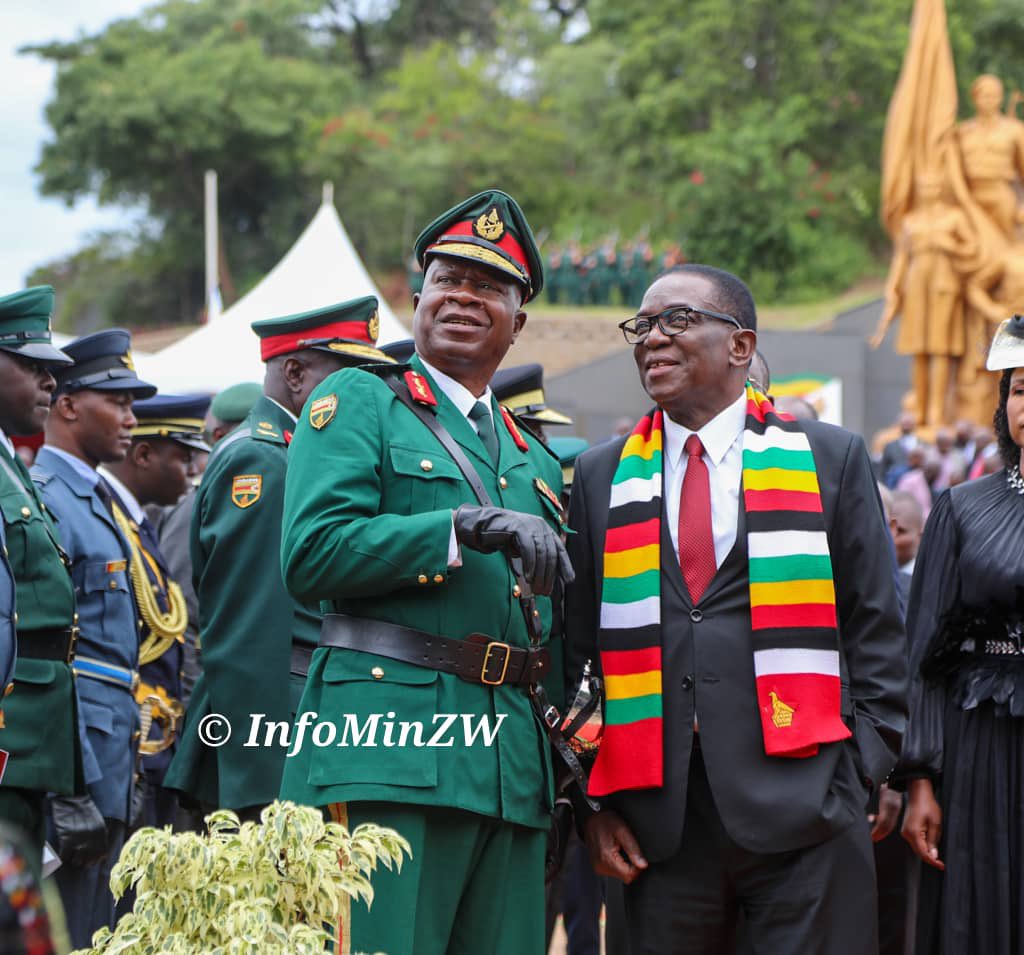
President Emmerson Mnangagwa officially opening the 22nd ZANU PF National People’s Conference in Mutare, 17 October 2025 (Picture via X - @edmnangagwa)

Thirty-five opposition legislators voted alongside Zanu PF on Thursday to help the controversial Constitutional Amendment Bill No. 3 (CAB3) secure the two-thirds majority needed to pass its first major test in Parliament.

The Bill was approved by 216 Members of Parliament, while 42 voted against it, comfortably exceeding the 187 votes required for constitutional amendments in the 280-seat National Assembly.

The result highlighted the crucial role played by opposition MPs in the vote, as Zanu PF did not have sufficient numbers on its own to reach the constitutional threshold required for the Bill’s passage.

Following the vote, Speaker of the National Assembly Jacob Mudenda formally declared the Bill passed and announced that it would now proceed to the Senate for consideration.

CAB3 will require another two-thirds majority in the Senate before it can advance further in the constitutional amendment process.

The proposed legislation has sparked intense debate across Zimbabwe’s political landscape.

Critics argue that some of the changes contained in the Bill are so significant that they should be subjected to a national referendum rather than being decided solely through parliamentary votes.

Among the most controversial provisions are proposals that would extend the terms of office for President Emmerson Mnangagwa and Members of Parliament by two years.

Opponents have maintained that extending presidential tenure through a parliamentary amendment undermines the spirit of the constitution and should instead be put directly to voters.

The vote comes after days of heated debate in the National Assembly, where opposition lawmakers repeatedly challenged the Bill and accused the government of attempting to push through constitutional changes without sufficient public consultation.

Despite those objections, the Bill comfortably cleared the lower house, largely due to support from opposition legislators who crossed party lines to back the measure.

Attention now shifts to the Senate, where the government will once again need to secure a two-thirds majority if CAB3 is to continue its journey towards becoming law.

Matinyarare accuses Tagwirei of frustrating bid to lift sanctions against Mnangagwa

0
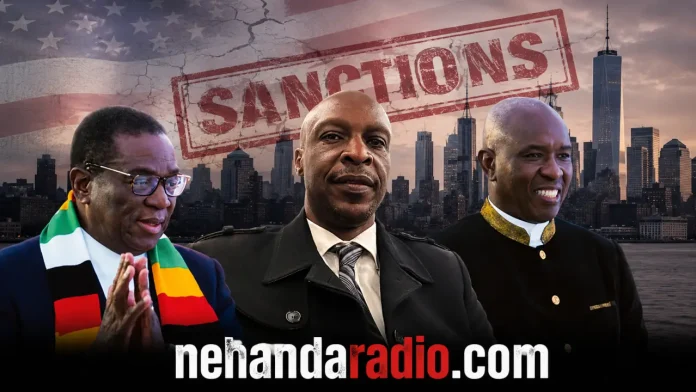
President Emmerson Mnangagwa, political activist Rutendo Matinyarare and businessman Kudakwashe Tagwirei (Pictures via Facebook - Rutendo Matinyarare and Social Media)

Explosive allegations have emerged that controversial businessman Kudakwashe Tagwirei interfered with efforts to secure the removal of United States sanctions imposed on President Emmerson Mnangagwa, First Lady Auxillia and other Zimbabwean officials.

Former sanctions campaigner Rutendo Matinyarare made the claims against Tagwirei on social media.

Matinyarare, who has constantly claimed Tagwirei owes him millions in Rands for fighting against sanctions, has claimed that what Tagwirei did could result in him being charged for “treason”.

“I don’t quite agree that this suffices as a breach of the Patriotic Act but it may be read as treason or failure to combat economic warfare/sabotage,” he said.

Interestingly, he is now alleging that Tagwirei instructed him not to pursue the removal of certain sanctions for a period of five years from the time they met in 2022, arguing that this would allow him to acquire companies struggling under sanctions.

He further claims that Tagwirei and his associates directed him not to challenge the United States’ Magnitsky sanctions imposed on Mnangagwa, the First Lady and other officials after executive order sanctions were lifted in 2024.

According to Matinyarare, the alleged instructions were made in the presence of witnesses, and he claims to possess recordings of meetings and telephone conversations with Tagwirei.

He also alleges that Tagwirei refused to sign affidavits in a South African court challenge against US President Joe Biden, the US Treasury, the US Secretary of State, global banks and other entities, despite allegedly being requested to do so.

A screenshot of an email circulated by Matinyarare appears to show correspondence from South African lawyer Simba Chitando to Tagwirei dated January 22, 2024, requesting him to sign an affidavit related to sanctions litigation.

The authenticity of the email and the broader allegations have not been independently verified.

Tagwirei has not publicly responded to the latest allegations at the time of publication.

Constitutional lawyer Thabani Mpofu said the allegations present two possible legal outcomes depending on their truthfulness. He said if Matinyarare’s claims are false, they could constitute serious defamation, potentially exposing him to legal action even while outside Zimbabwe.

However, Mpofu argued that if the allegations are proven to be true, the conduct described could amount to treason, given the implications of allegedly interfering with efforts to remove sanctions imposed on Zimbabwean leaders.

“If Rutendo is lying, then he has defamed Tagwirei in a manner that cannot be brushed aside. It’s not political talk but malicious slander. He must be held to account and can be sued in our courts even if he is not in the country,” Mpofu stated.

“If, however, he is telling the truth, then Tagwirei’s conduct is assuredly treasonous, laying aside for once the small matter of it being in breach of the Patriotic “Act”.

“Either way, the law must take its course, and it must do so against whoever is guilty. This cannot be business as usual.

“If Rutendo is in the wrong, Tagwirei must move decisively to clear his name. He has no option. If Tagwirei is in the wrong, then the alleged commission of treason is not something to be waved away; Zimbabweans would have every right to demand criminal accountability.”

UK based Zimbabwean father of three killed in fiery M25 lorry crash

0
The late Langton Zulu and a representative image background of the M25 between Junction 28 for Brentwood and Junction 27 were the accident took place (Picture via Handout and AI)

A Zimbabwean father of three was tragically killed on Tuesday after the lorry he was driving burst into flames following a collision on the M25 motorway in Essex.

Nehanda Radio understands that Langton Zulu, who lived in Kettering, Northamptonshire, died at the scene after his vehicle collided with another heavy goods vehicle carrying a flammable liquid.

Zulu, a Deacon in the ZAOGA church in the UK, is survived by his wife and their three young sons, aged eight, six and four.

The fatal crash occurred amid major disruption caused by two separate lorry fires on the anticlockwise carriageway of the M25.

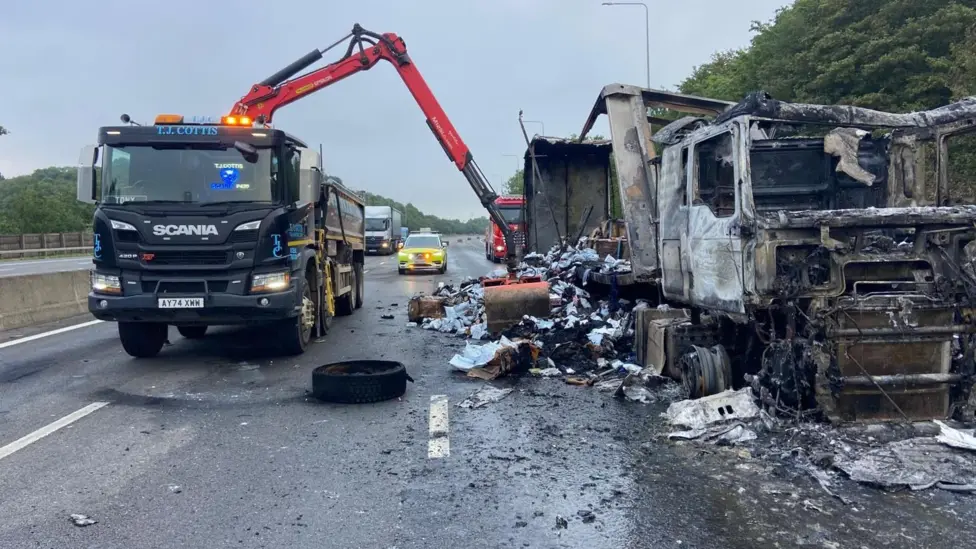
Grab lorries being used to remove the fire damaged contents from the HGVs in the first accident that caused the secondary accident and fire. This is not the truck Langton Zulu was driving (Picture via T J Cottis Transport Ltd)

Emergency services were first called at about 3:05am following a lorry fire between Junction 27 for the M11 and Junction 26 near Waltham Abbey. National Highways said the vehicle was already “well alight” when crews arrived.

A short time later, two further lorries collided in queuing traffic between Junction 28 for Brentwood and Junction 27. One of the vehicles caught fire, resulting in the death of Zulu.

There are no publicly available pictures of the truck that was being driven by Zulu, instead the pictures of the first lorry accident that created the congestion that led to the second accident and lorry fire

The incidents forced the closure of sections of the motorway for several hours, causing severe congestion throughout much of Tuesday.

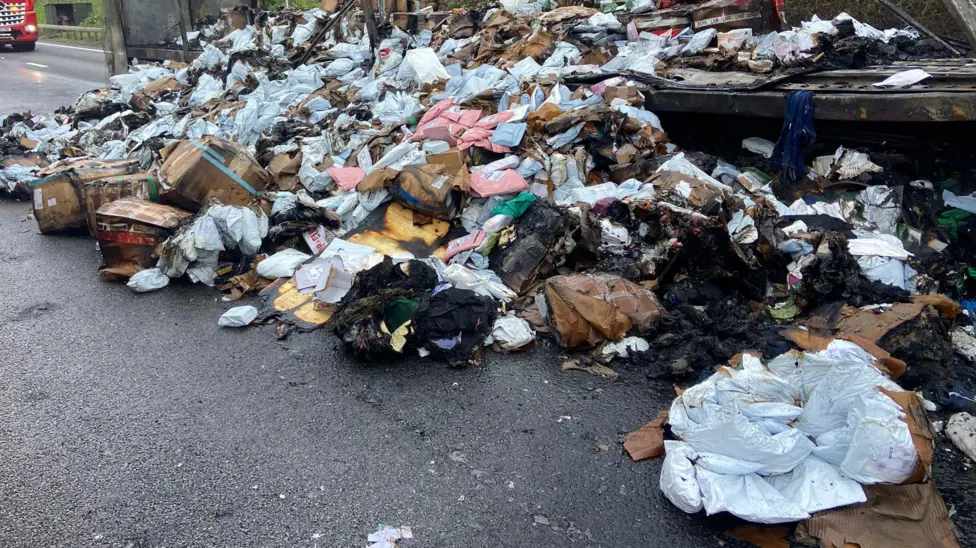
Burned items from the lorry in the first accident that caused the congestion that led to the second accident and fire. Please note this is not the truck Langton Zulu was driving (Picture via T J Cottis Transport Ltd)

National Highways said the initial lorry fire had scattered a substantial amount of debris and cargo across the carriageway, making recovery and clean-up operations particularly challenging.

“The lorry shed a significant load across the carriageway, which we expect to take some time to clear,” a spokesperson said.

Essex Police urged motorists to avoid the area while emergency services and recovery teams worked at both scenes.

“We know this will cause disruption, but this is important work and we’d urge motorists to find alternative routes,” the force said.

Recovery specialists, including Rayleigh-based T J Cottis Transport, were deployed to assist with clearing the motorway. Managing director Jedd Cottis said the company sent three vehicles to the scene after receiving an early-morning call.

The operation involved removing fire-damaged vehicles, debris and cargo strewn across the carriageway. National Highways confirmed that grab lorries were used to clear the burnt contents from the affected HGVs.

Images released by National Highways showed towering orange flames and thick smoke billowing from one of the burning lorries. Hundreds of parcels were reportedly destroyed in the blaze.

At the height of the disruption, motorists faced delays of more than 70 minutes and around five miles of congestion on approaches to the affected sections of the motorway.

Following overnight repairs and recovery work, all affected stretches of the M25 were fully reopened.

Investigations into the circumstances surrounding the fatal collision are continuing.

Editors note: We wish to clarify that the representative image previously used when the story intially broke was not the vehicle involved in Langton’s accident.

How does a whole cabinet agree that domestic workers deserve a measly US$90?

0
Tendai Ruben Mbofana is a social justice advocate and writer (Picture via Facebook - Tendai Ruben Mbofana)

​It seems that in Zimbabwe, some workers are simply deemed unworthy.

There is a profound, stomach-turning irony in policy decisions that pretend to be gifts while delivering nothing but insult.

The recent announcement that the cabinet has revised minimum wages for domestic workers to a baseline of $90 a month is one such decision.

Making this grand gesture coincide with International Domestic Workers Day on June 16 is not just a failure of economic logic; it is a moral failure.

To dress up a starvation wage as progress on a day meant to honor the dignity of labor is a masterclass in bureaucratic hypocrisy.

How does a room full of heavily subsidized policymakers, whose daily allowances likely exceed the monthly salary in question, sit around a mahogany table and collectively agree that $90 is a valid amount of money to sustain a human life?

To understand the sheer absurdity of this decision, one only has to look at the parallel baseline set by the exact same cabinet.

Workers in unclassified operations are now legally entitled to a minimum of $270.

By what twisted metric does a domestic worker deserve exactly one-third of that baseline?

Does a nanny who raises children, a housekeeper who secures a home, or a carer who looks after the sick expend one-third of the effort?

Do they pay one-third of the price for a loaf of bread, a bucket of maize meal, or a basic medical check-up?

The math of a $90 minimum wage does not work in any economy, let alone one defined by unforgiving living costs.

Break that number down.

It translates to roughly $3 a day.

In today’s economic reality, $3 can barely secure a single commuter trip and a basic meal, leaving absolutely nothing for rentals, school fees, utilities, or the standard emergencies of human existence.

By codifying this figure into law, the government has effectively institutionalized poverty.

They have told a vital, hardworking segment of the workforce that their labor is valued less than the basic cost of keeping themselves alive.

What this policy reveals is a deep-seated, structural disregard for domestic labor.

Because this work happens behind closed doors, often performed by women, it is treated as secondary, menial, and unworthy of a living wage.

Yet, the entire formal economy relies on the invisible scaffolding of domestic work.

Professionals, executives, and the very policymakers signing these decrees can only show up to their offices because someone else is managing their households, cooking their meals, and raising their children.

Tragically, this gazetted rate acts less like a protective safety net and more like an anchor dragging workers down.

In an environment where the bargaining chip is heavily weighted in favor of the employer, declaring $90 as a legally sanctioned rate gives exploitative households a shield to hide behind.

It justifies substandard pay under the guise of legal compliance.

International Domestic Workers Day is meant to celebrate the adoption of standards that protect the vulnerable.

It is a day to affirm that domestic work is work, and domestic workers are workers.

Instead, the cabinet chose this specific date to deliver a reminder of how cheap they consider that labor to be.

If the government truly wished to honor these workers, they would have pegged the minimum wage to a realistic basket of needs, matching or exceeding the $270 floor set for other unclassified sectors.

Instead, one cannot help but suspect a deeper, more cynical motive at play: keeping the domestic minimum wage deliberately low shields the state from pressure to raise the stagnant salaries of its own civil servants.

If the state were to enforce a genuinely living wage for domestic workers, it would be forced to significantly bump up public sector pay just so teachers, nurses, and clerks could afford the very help their demanding schedules require.

Until our policies reflect the true cost of living, announcements like these are not achievements to be celebrated with hashtags—they are a national shame that demands immediate, empathetic revision.

● Tendai Ruben Mbofana is a social justice advocate and writer. To directly receive his articles please join his WhatsApp Channel on: https://whatsapp.com/channel/0029VaqprWCIyPtRnKpkHe08

If you value my social justice advocacy and writing, please consider a financial contribution to keep it going. Contact me on WhatsApp: +263 715 667 700 or Email: [email protected]

CAB3 showdown rocks Parliament as CCC lawmakers force midnight standoff

0
Marondera Central MP Caston Matewu with the background of the Parliament of Zimbabwe (Picture via Facebook - Caston Matewu and Parliament of Zimbabwe)

Zimbabwe’s Parliament sat until after midnight on Tuesday as opposition Citizens Coalition for Change (CCC) legislators mounted a determined resistance against efforts to conclude debate on the controversial Constitution of Zimbabwe Amendment Bill (No. 3), widely known as CAB3.

The lengthy sitting turned increasingly tense after Justice Minister Ziyambi Ziyambi appeared ready to wind up the second reading debate and move the Bill to its next stage.

Pointing out that a record number of legislators had already contributed, the minister suggested Parliament had heard enough views on the proposed constitutional changes.

Opposition MPs strongly disagreed.

Dangamvura legislator Prosper Mutseyami immediately challenged the move, insisting that several lawmakers, including himself, had not yet been given an opportunity to speak on the Bill.

The dispute intensified when Deputy Speaker Tsitsi Geza suggested remaining members could make their contributions during the committee stage.

Leading the pushback was Marondera Central MP Caston Matewu, who argued that all constituencies and provinces deserved representation in a debate involving constitutional changes.

He maintained that lawmakers had a duty to present the views of the communities that elected them before debate could be closed.

Facing mounting resistance, Zanu PF Chief Whip Pupurai Togarepi proposed reducing speaking time from 20 minutes to 10 minutes per member in an effort to accommodate the dozens of legislators still waiting to contribute.

Despite objections from opposition benches, the ruling was adopted and debate continued.

The most dramatic moment came when Matewu took the floor. Declaring that he was speaking on behalf of the people of Marondera Central, he delivered a passionate rejection of CAB3, describing the 2013 Constitution as a product of national consensus and warning that the proposed amendments would fundamentally alter the relationship between citizens and the state without adequate public consultation.

Matewu also challenged provisions that would transfer the election of future presidents from direct popular vote to Parliament, arguing that Zimbabweans should not be stripped of the right to choose their head of state.

As his allocated speaking time expired, Geza repeatedly instructed him to conclude his remarks. Matewu insisted he had not exhausted his allotted time and continued speaking. After several warnings, the Deputy Speaker ordered him to leave the chamber.

His removal triggered uproar in the House. Kuwadzana MP Chalton Hwende protested the decision, arguing that the reduced speaking time had been agreed outside normal parliamentary procedures.

The confrontation quickly escalated into scenes of disorder, with lawmakers from opposing sides exchanging heated words and parliamentary business grinding to a halt as tensions flared.

Several opposition legislators used their contributions to attack key provisions of the Bill. Harare proportional representation MP Ellen Shiriyedenga argued that CAB3 would weaken constitutional democracy rather than strengthen it.

She criticised proposals affecting judicial appointments and warned that transferring electoral responsibilities away from the Zimbabwe Electoral Commission could undermine institutional independence.

Kadoma Central MP Miriam Mambipiri accused the government of attempting to reverse democratic gains secured under the 2013 Constitution.

She rejected arguments that extending presidential terms was necessary to complete development projects, pointing to long-delayed infrastructure projects as evidence against the claim.

Supporters of the Bill were equally determined. Togarepi warned that Zanu PF members were prepared to remain in the chamber throughout the night if necessary to complete the speakers’ list.

The debate, which began shortly after 2pm, eventually stretched beyond midnight. At 12:22am, Ziyambi moved for adjournment, saying other ministers, including Home Affairs Minister Kazembe Kazembe and Energy Minister July Moyo, still needed to address technical aspects of the Bill before Parliament entered the committee stage.

The minister noted that more than 200 legislators had participated in the debate, describing it as an unprecedented level of engagement.

Debate was adjourned to Wednesday, when ministers are expected to respond before the Bill proceeds to committee stage and eventually a vote in the National Assembly.

CAB3 is expected to pass comfortably given Zanu PF’s two-thirds majority in the National Assembly and its strong influence in the Senate.

Among its most controversial proposals are extending presidential terms from five to seven years and replacing direct presidential elections with a parliamentary voting system. President Emmerson Mnangagwa is currently due to leave office in 2028 after serving two five-year terms.

Are the conditions that sparked the French Revolution emerging in Zimbabwe?

0
Bhekilizwe Bernard Ndlovu, a Mental Fitness scholar-practitioner, coach and social innovator focused on leadership, intergenerational trauma and nation-building across workplaces, schools and tertiary institutions in African and global contexts and Mqabuko Gabriel Ndlovu, a historian based in the United Kingdom. (Pictures via Facebook)

“Predatory politics generates mass grievance. Mass grievance generates mass anger. Mass anger generates mass mobilization. Always.” — Sipho Malunga

Zimbabwe appears to be approaching one of those moments in history where politics, economics, and psychology collide.

Across history, societies rarely collapse because people are poor. Poverty alone does not produce revolutions. Human beings can endure hardship for surprisingly long periods. What often becomes intolerable is something deeper: the widening gap between the lived reality of ordinary people and the insulated reality of those who govern them.

This is why historians continue to study the French Revolution of 1789. France did not erupt simply because bread became scarce. It erupted because an increasingly desperate population watched an elite class continue to live in extraordinary privilege while appearing emotionally detached from the suffering around them. History never repeats itself exactly. However, it often reproduces familiar patterns, and Zimbabwe today is exhibiting some of those patterns.

A growing perception exists that political power is increasingly concentrated around a small network of politically connected business figures, government officials, religious personalities, social media defenders, and beneficiaries of state patronage.

In popular political language, many Zimbabweans have come to refer to sections of this network as “Zvigananda,” a term popularized by Vice President Constantino Chiwenga.

Among the most visible public faces associated with this emerging elite culture are businessmen Kudakwashe Tagwirei, Wicknell Chivayo, Scott Sakupwanya, Presidential Investment Advisor Paul Tungwarara, various politically aligned religious figures, like Ubert Angel and a network of social media activists commonly referred to as “Varakashi.”

Whether one supports or opposes these individuals is not the central issue. The issue is symbolism.

The recent wedding associated with the Tagwirei family became a national talking point not because Zimbabweans oppose weddings, but because the event appeared to many citizens as a public display of extraordinary wealth in a country experiencing extraordinary hardship.

The images of luxury, exclusivity, and opulence circulated through social media feeds into homes where many citizens struggle with unemployment, inflation, collapsing public services, and declining economic opportunities.

Psychologically, this creates what social scientists call relative deprivation. People do not judge their wellbeing in isolation. They compare themselves to others.

The greater the visible gap between elite privilege and ordinary suffering, the greater the likelihood of resentment, grievance, and social instability.

This is precisely the dynamic that lawyer Sipho Malunga warned about when he observed: “The mistake predatory political elites make is to believe they can permanently contain or restrict political space and immobilize citizens’ resistance. Predatory politics generates mass grievance. Mass grievance generates mass anger. Mass anger generates mass mobilization. Always.”

History supports his observation.

The French aristocracy did not believe their world could collapse. The Russian aristocracy did not believe their world could collapse. The Shah of Iran did not believe his world could collapse.

Many ruling elites throughout history have mistaken temporary control for permanent legitimacy. They eventually discovered that citizens can absorb only so much humiliation before they begin to withdraw their psychological consent.

From a Mental Fitness perspective, the situation becomes even more interesting. The excessive accumulation and display of wealth often reveal something deeper than confidence as we have observed in our previous articles, it may reveal fear where human beings accumulate when they are afraid of losing.

They control when they are afraid of vulnerability. They surround themselves with loyalists when they are afraid of uncertainty. The tragedy of many post-colonial societies is that the same trauma created by colonial domination often survives independence and reappears in new forms.

This has been the heart of our mental fitness lens. Power becomes safety. Money becomes protection. Control becomes emotional regulation. The result is a political culture where wealth is not merely enjoyed, it is performed.

Cars become symbols. Weddings become political theatre. Public gifts become demonstrations of influence. Religious endorsement becomes moral cover. Social media defenders become psychological reinforcement for the system. The elite begin to inhabit a parallel reality, increasingly insulated from the emotional and economic experiences of ordinary citizens.

This is not merely a political problem. It is a psychological one.

History suggests that when enough citizens conclude that the system no longer exists for them, but only for a privileged few, the resulting grievance can become a force that neither money nor propaganda can easily contain.

South Africa offers a contemporary reminder of this reality. In recent months, public attention has focused on senior law-enforcement figures, investigations into organised criminal networks, and commissions probing allegations of corruption and state capture.

What struck many observers was not merely the allegations themselves, but the willingness of certain individuals within the system to speak publicly despite the obvious risks involved.

Figures such as Lieutenant General Nhlanhla Mkhwanazi became symbols, for some South Africans, of institutional courage, the idea that an individual can refuse to be intimidated by powerful interests, wealth, influence, or political connections.

Equally significant was the public response. Large sections of society rallied behind calls for accountability, demonstrating that even where money, patronage, and influence appear deeply entrenched, public legitimacy still matters.

Wealth can purchase many things, but it cannot permanently purchase trust. Influence can shape narratives, but it cannot indefinitely silence grievance.

West Africa offers another reminder. In Guinea, decades of authoritarian rule under Lansana Conté left citizens exhausted by corruption, patronage, and elite accumulation.

When Captain Moussa Dadis Camara seized power in 2008, many hoped for change, only for the country to descend into further instability. Yet the deeper lesson from Guinea is that no ruling order, however entrenched, can permanently suppress a population’s desire for dignity, accountability, and participation.

The eventual rise of leaders such as Alpha Condé reflected the power of public pressure and democratic aspiration, even if later developments would reveal the complexity and fragility of political transitions. Guinea’s story reminds us that legitimacy ultimately matters more than force, money, or patronage.

Perhaps the most dramatic example came from Tunisia in 2010. The Tunisian Revolution, which became the spark for what the world later called the Arab Spring, began not with generals or politicians but with an ordinary street vendor, Mohamed Bouazizi. Humiliated repeatedly by local authorities, stripped of dignity and opportunity, Bouazizi’s desperate act of self-immolation ignited something that had been accumulating beneath the surface for years.

Within weeks, protests spread across the country. Within a month, President Zine El Abidine Ben Ali, who had ruled Tunisia for twenty-three years, fled the country. The lesson was profound. Political systems often appear stable right up until the moment they are not.

Beneath the surface, grievance accumulates quietly until a triggering event transforms private frustration into collective action. The Arab Spring demonstrated that fear can dominate a population for years, but once enough citizens stop being afraid simultaneously, history can move with astonishing speed.

The lesson is an old one. Powerful elites often assume that money is the ultimate source of security. History repeatedly shows otherwise. The true source of stability is legitimacy.

When citizens believe institutions serve the public good, societies endure. When citizens begin believing that institutions exist primarily to protect a connected few, a dangerous psychological shift occurs.

People stop identifying with the system and begin emotionally withdrawing from it.

That moment is often difficult to detect from within elite circles. Everything may appear normal. The parties continue. The motorcades continue. The speeches continue. The displays of wealth continue. Yet beneath the surface, grievance accumulates. And history teaches that accumulated grievance has a habit of eventually finding expression, often in ways that ruling elites neither anticipate nor control.

This is why the Zimbabwean moment is so significant. The question is no longer simply who has money, influence, or political power. The deeper question is whether those with power still understand the emotional reality of the people they govern. History suggests that when that connection is lost, money alone is rarely enough to save a system.

The question facing Zimbabwe today is therefore not whether history will repeat itself. The question is whether Zimbabwe’s political and economic elite have learned enough from history to avoid repeating its mistakes.

The Cargo Cult of the Zvigananda

Anthropologists coined the term “cargo cult” to describe communities that became fascinated by the wealth and goods brought by outsiders and attempted to reproduce the outward symbols of prosperity without understanding the underlying systems that produced it.

The term has limitations, but it offers a useful metaphor for understanding an emerging culture within sections of Zimbabwe’s elite. The defining feature of this culture is not wealth itself but the performance of wealth.

Cars, convoys, private jets, multi-million-dollar weddings, birthday celebrations, public gifting ceremonies, televised handouts, social media spectacles, the wealth is not merely possessed, it is displayed, repeatedly, publicly, relentlessly.

The display itself becomes part of the power. A person who quietly owns ten luxury cars does not create the same political effect as a person who publicly hands out ten luxury cars while cameras roll. The gift becomes theatre. The recipient becomes advertisement. The audience becomes psychologically conditioned. This is where figures such as Wicknell Chivayo become important symbols. The cars are never just cars. The houses are never just houses. The gifts are never just gifts. They communicate a message:

“Power resides here.”
“Resources reside here.”
“Loyalty is rewarded here.”

In the same way, the public generosity associated with figures such as Scott Sakupwanya and the extraordinary displays associated with the Tagwirei network operate as more than personal acts. They become political language. The language of patronage. The language of influence. The language of dependency.

Historically, patronage systems emerge where institutions weaken. When institutions work, citizens obtain opportunities through transparent systems. When institutions weaken, opportunities increasingly flow through personal relationships.

The benefactor replaces the institution. The gift replaces policy. The patron replaces the state. The danger is that citizens gradually begin looking upward toward powerful individuals rather than outward toward functioning institutions. The result is a culture of dependency.

From a Mental Fitness perspective, this represents a profound psychological shift. People begin confusing survival with citizenship. Instead of asking: “How do we build systems that work for everyone?” they begin asking: “Who can help me?” This is how oligarchic cultures reproduce themselves. Not merely through money. But through psychology.

The tragedy is that such systems often become increasingly detached from the daily experiences of ordinary citizens. The person struggling to buy bread. The nurse earning an inadequate salary. The graduate unable to find work. The family unable to access healthcare. The farmer struggling with production costs.

These realities become distant. And history teaches us that elite detachment is one of the most dangerous stages in the life cycle of any political order. The French aristocracy reached that stage. The Russian aristocracy reached that stage. Numerous post-colonial African elites have reached that stage. The warning signs are remarkably similar. Increasing disbelief that change can occur through ordinary democratic channels.

The question facing Zimbabwe is not whether wealth should exist, but the question is whether a political economy built around patronage, spectacle, and elite accumulation can remain stable indefinitely in a society experiencing widening economic hardship. History’s answer has rarely been encouraging.

Is This Where Zimbabwe Is Now?

History rarely announces itself, but it whispers, and leaves clues and also sends warnings. And then one day people wake up and realise that what seemed impossible has suddenly become inevitable. The French Revolution did not begin with crowds storming the Bastille on 14 July 1789.

By the time Parisians marched on the Bastille, the revolution had already happened psychologically. The people had stopped believing, stopped trusting, stopped hoping, stopped fearing the state. That is the point at which ruling elites become most vulnerable.

France in the late 1780s was a country trapped between two realities. On one side stood the monarchy, aristocracy, and privileged classes who continued to enjoy enormous wealth and privilege. On the other stood millions of ordinary French citizens struggling under rising food prices, unemployment, debt, taxation, and hopelessness. Bread prices had risen dramatically. Harvests had failed, and the state was effectively bankrupt. Yet Versailles remained a world of ceremonies, luxury, banquets, and elite insulation.

The problem was not merely poverty, but contrast, and the people could see. And once people begin to see clearly, history becomes dangerous. The atmosphere became electric. Pamphlets circulated. Rumours spread. Conversations shifted. Anger accumulated.

Every display of privilege became another insult. Every display of excess became another grievance. Every act of elite indifference became another spark. The political class mistook silence for acceptance. They believed they still controlled the nation. They believed the people remained afraid. They were wrong.

The storming of the Bastille became symbolic not because the prison held many prisoners. It held only seven. What mattered was what it represented: fear. And on that day, ordinary citizens demonstrated that they were no longer afraid. The Bastille fell. Then the old certainties began collapsing with astonishing speed.

Nobles fled. Officials resigned. The authority of the monarchy evaporated. What had seemed permanent suddenly looked fragile. The crowds grew bolder. The language became harsher. The demands became greater. Eventually the revolution consumed even those who had helped create it. King Louis XVI was executed. Queen Marie Antoinette was executed. Many aristocrats were executed. Even leading revolutionaries such as Georges Danton and Maximilien Robespierre would themselves later be swallowed by the forces they unleashed.

History’s lesson is not that revolutions are glorious. Often, they are tragic. The lesson is that ruling elites frequently fail to recognise the moment when public grievance transforms into public anger, and public anger transforms into public action.

Zimbabwe today is obviously not France of 1789. History never repeats itself in exactly the same way. But the emotional atmosphere feels familiar. Economic hardship, visible elite privilege, growing public frustration, increasing distrust., a widening gap between rulers and the ruled, a sense that ordinary democratic channels are becoming ineffective, a feeling that important decisions are being made by a small circle while the majority watch from the outside.

One hears whispers in commuter omnibuses, and one reads comments on social media, listens to conversations in homes, churches, beer halls, universities, and workplaces, The TENSION is there. The question is whether those in power can hear it.

Many Zimbabweans now look toward Vice President Constantino Chiwenga. Some see him as perhaps the last remaining internal obstacle to constitutional changes they fear will fundamentally alter the country’s future.

Others wonder whether he will ultimately accommodate the very forces he is expected to restrain. History offers no easy answers, and difficult questions for that matter, like, Will he be remembered as a man who spoke when it mattered? Or a man who remained silent when history demanded courage? Will he follow the path of accommodation? Or the path of resistance? Only time will answer.

But one thing is certain. The Zimbabwean moment is becoming increasingly serious. This is no longer merely a debate about personalities. It is a debate about the future architecture of the state itself.

The French Revolution teaches us that societies can tolerate suffering for surprisingly long periods. What they struggle to tolerate indefinitely is the feeling that those in power no longer care.

The danger for Zimbabwe is therefore not simply poverty, but the accumulation of grievance. And grievance, history teaches, has a way of eventually finding its voice.

Whether that voice emerges through reform, resistance, elections, institutions, or something far less predictable remains the unanswered question hanging over Zimbabwe today.

The COUNTRY STANDS AT A CROSSROADS.

And like France before 1789, many can sense that something is changing.

The only uncertainty is what comes next.

This article was co-authored by Bhekilizwe Bernard Ndlovu, a Mental Fitness scholar-practitioner, coach and social innovator focused on leadership, intergenerational trauma and nation-building across workplaces, schools and tertiary institutions in African and global contexts and Mqabuko Gabriel Ndlovu, a historian based in the United Kingdom.


CAB3 failed the rationality test — A key aspect of deliberative, parliamentary democracy

0
Vivid Gwede is an International Development Consultant, Public Policy, Economic Justice and Democracy SPURS/Hubert H. Humphrey Fellow 2024 (MIT)

The CAB3 debate has reminded us that parliamentary democracy is not only about legislative majorities but also meaning and substance.

Following the 2023 elections, President Emmerson Mnangagwa’s Zanu-PF expended significant effort and resources to regain the two-thirds majority it had lost through the elections.

This unprecedented reversal of the people’s vote through recalls turned out to be in preparation for the CAB3 — the Bill seeking to amend the constitution and extend the president’s and parliament’s tenure by two years.

In their calculations, the parliamentary debate of the Bill was supposed to be a mere procedure whose main objective was the vote, which partisan maths put in favour of the CAB3 proponents by virtue of their control of the ruling party.

With the whipping system and control of the speakership to their advantage, the CAB3 brigade saw everything figured out.

No wonder the insinuations by its apologists that the Bill was a ‘done deal.’

But the debate has turned out to be something else.

With Zimbabweans watching, this has become the worst indictment of the incumbent’s reasons for wanting to remain in office since 2017 as progressive opposition MPs dismantled every single rationale of the constitutional amendment.

Resoundingly debunked are the Bill’s two main flawed premises: 1) that toxic elections need a term extension, or lengthening as some argument goes, instead of electoral reform, and 2) that completion of national development projects requires extending the term of office of the executive.

Under scrutiny was also the self-dealing and self-centredness promoted by the Bill, in which incumbents are seeking to extend their term of office without popular approval.

A curious detail, even ironic at that, is how the rehearsed arguments of the legislative majority supporting the Bill became drowned by the comprehensive, superior, and detailed arguments of the legislative minority opposing the Bill.

This fact alone is an indictment against whipped majorities that believe the same weak argument in a constitutional debate can be made convincing by mere repetition through the sheer force of numbers.

Whoever came up with CAB3 forgot that Parliamentary democracy is fundamentally deliberative.

While an artificial majority in Parliament will probably have its way, in line with the ‘done deal’ mentality, the people no longer have illusions about the whole fiasco.

The whole CAB3 project has been delegitimised.

Its proponents can no longer hope to manufacture consent around it without appearing conflicted, hence the overheard jibe by one Zanu-PF MP to opposition MPs ‘hamusi imi murikutonga’ (you are not the ones ruling).

CAB3-ists can only fall back on a hollowed-out majoritarianism in a deliberative House.

In this regard, CAB3 proponents must be reminded that the essence of parliamentary democracy is not only about who makes decisions but also about why they are made.

Parliamentary democracy is not only majoritarian, but it is also deliberative and substantive.

Given that the Bill has failed the rationality test, if its proponents want to lean on a majority to pass it — there is only one ultimate majority they must appeal to, which is the people of Zimbabwe in a referendum.

The debate phase of law-making is not a decorative procedure, but an important stage in a parliamentary democracy establishing the social, political, and economic basis of legal instruments.

Any Bill whose fundamental basis has been perforated and defenestrated, such as CAB3, should be abandoned, whether or not there is a legislative majority to vote for it.

Chamisa forced to deny abandoning Madzibaba veShanduko after former ally’s criticism sparks row

0
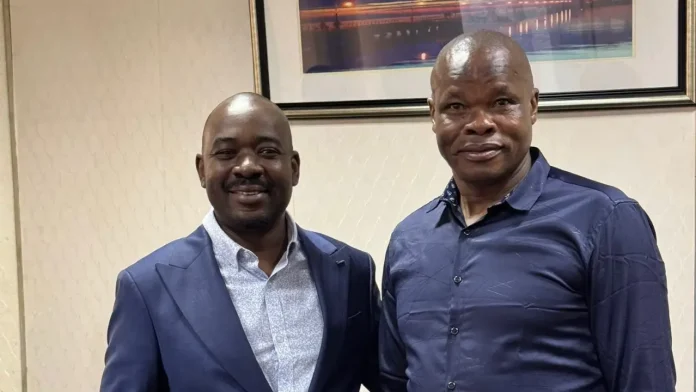
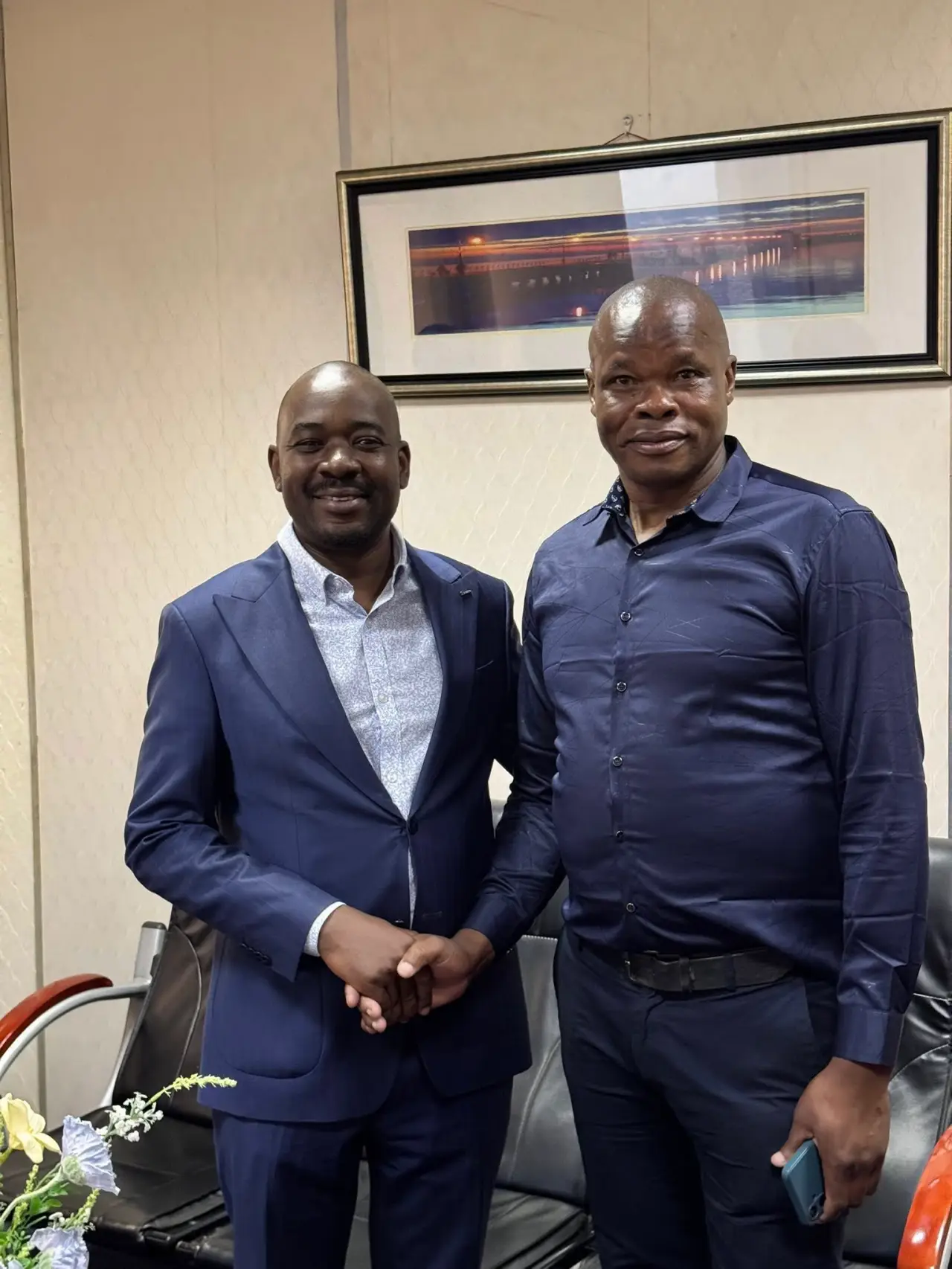
Former Citizens Coalition for Change (CCC) leader Nelson Chamisa has publicly welcomed political activist Godfrey Karembera, popularly known as Madzibaba veShanduko, just days after he was released from prison following the collapse of a high-profile public violence case. (Picture via Facebook - Nelson Chamisa)

Opposition leader Nelson Chamisa has been forced to publicly defend his treatment of political activist Godfrey Karembera, popularly known as Madzibaba veShanduko, after former MDC provincial chairman Julius Magarangoma accused opposition leaders of exploiting activists for publicity while abandoning them in times of need.

The dispute erupted after prominent journalist Hopewell Chin’ono launched a fundraising campaign to assist Karembera, who is reportedly facing severe financial difficulties following his release from prison.

Karembera spent more than eight months in detention before being acquitted of public violence charges earlier this month.

Announcing the campaign on X, Chin’ono said Karembera was struggling to pay school fees for his children and support his family after his home was destroyed by fire during his incarceration.

“He is facing serious financial difficulties and is struggling to pay his children’s school fees and provide for their basic upkeep,” Chin’ono wrote.

The appeal prompted a sharp response from Magarangoma, who appeared to take aim at Chamisa without mentioning him by name.

“They will rush to receive you when you are released from prison so that they can have a photo-moment at your expense,” Magarangoma wrote on social media.

“In the meantime they never lifted a finger to help you or your family whilst you were incarcerated.”

Former Citizens Coalition for Change (CCC) leader Nelson Chamisa publicly welcomed political activist Godfrey Karembera, popularly known as Madzibaba veShanduko and his family, just days after he was released from prison following the collapse of a high-profile public violence case. 05 June 2026 (Picture via Facebook - Nelson Chamisa)
Former Citizens Coalition for Change (CCC) leader Nelson Chamisa publicly welcomed political activist Godfrey Karembera, popularly known as Madzibaba veShanduko and his family, just days after he was released from prison following the collapse of a high-profile public violence case. 05 June 2026 (Picture via Facebook – Nelson Chamisa)

He further suggested that activists often discover they have been used for political purposes only after their sacrifices are no longer useful.

“You then turn to the likes of Hopewell Chin’ono for help. You become Hopewell’s burden, yet those you profess allegiance to and swear to die for, are nowhere to be found,” he said.

The criticism comes just weeks after Chamisa publicly welcomed Karembera and his family to his offices in Harare following his release from prison.

At the time, Chamisa described him as a “Citizens’ Hero” and praised his commitment to the struggle for political change.

However, the meeting had already attracted criticism from some activists and supporters who questioned why Chamisa had not publicly visited or spoken out more forcefully during Karembera’s lengthy detention.

Responding to the growing controversy, an X account identifying itself as the Presidential Spokesperson issued a detailed statement defending Chamisa and rejecting claims that Karembera had been abandoned.

“There has been a deliberate attempt to mislead the nation through false reports and unnecessary misinformation surrounding the solidarity extended to Madzibaba during his persecution and incarceration,” the statement said.

Former Citizens Coalition for Change (CCC) leader Nelson Chamisa publicly welcomed political activist Godfrey Karembera, popularly known as Madzibaba veShanduko and his family, just days after he was released from prison following the collapse of a high-profile public violence case. 05 June 2026 (Picture via Facebook - Nelson Chamisa)
Former Citizens Coalition for Change (CCC) leader Nelson Chamisa publicly welcomed political activist Godfrey Karembera, popularly known as Madzibaba veShanduko and his family, just days after he was released from prison following the collapse of a high-profile public violence case. 05 June 2026 (Picture via Facebook – Nelson Chamisa)

According to the statement, Karembera and his family personally requested the meeting with Chamisa after his release and asked for photographs to be taken as a way of preserving memories and expressing appreciation for support received during his imprisonment.

The statement further claimed that coordinated assistance had been provided throughout Karembera’s detention.

“Claims that there was no coordinated citizens’ support are false and misleading. Welfare assistance was provided, including rental payments and support towards the schooling of his children,” it said.

The Chamisa camp also insisted that assistance provided to citizens in distress is not publicised because helping people should not be treated as a public relations exercise.

“The Citizens Movement does not publicise acts of assistance because helping people is not a public relations exercise,” the statement added.

The controversy has reignited debate within opposition circles over how political activists are supported when they face arrest, imprisonment or other hardships linked to their activism.

Karembera became a prominent figure within opposition politics through his outspoken support for Chamisa and the citizens’ movement.

His detention and eventual acquittal attracted significant public attention and made him a symbol of political persecution for many opposition supporters.

While the fundraising campaign continues, the public disagreement has exposed growing tensions over welfare, solidarity and accountability within Zimbabwe’s opposition movement.

From Herbert Chitepo to Philip Valerio Sibanda: The long shadow of tribalism in Zimbabwean politics

0
Then Zimbabwe Defence Forces (ZDF) commander General Philip Valerio Sibanda seen here with President Emmerson Mnangagwa (Picture via X - Ministry of Information)

​The recent appointment of retired General Philip Valerio Sibanda to the ruling ZANU PF Politburo marks a significant moment in the country’s contemporary political landscape.

Constitutionally permissible and involving a highly decorated liberation war veteran and former commander of the Zimbabwe Defence Forces, the elevation initially appears to be a routine co-optation of a trusted military stalwart.

Yet, beneath the veneer of bureaucratic normality, the appointment has reignited a fierce, long-standing debate regarding tribal balancing, ethnic patronage, and the persistent role of identity politics.

To understand the structural matrix of ZANU PF politics, one must look past the party’s modern bureaucratic facade and examine the deep ethnic, regional, and clan-based arithmetic that has governed its internal power dynamics since the liberation struggle.

​The central thesis of this analysis is that tribalism has been one of the most influential, yet least honestly discussed, structural forces in Zimbabwean politics from the liberation struggle to the present day.

While ideology, class, nationalism, and personal ambition have undeniably mattered, ethnic calculations have consistently shaped political alliances, leadership contests, military appointments, succession battles, and the distribution of state patronage.

When analysing Zimbabwean elite politics, analysts look at the interplay between the major Shona sub-ethnic groups – primarily the Karanga, dominant in Masvingo and Midlands provinces, the Zezuru, dominant in Mashonaland provinces, and the Manyika, dominant in Manicaland.

​To understand this phenomenon, one must reject simplistic narratives that portray tribalism as the sole explanation for Zimbabwe’s political crises.

Tribalism does not operate in a vacuum. Instead, it functions as an underlying fault line that repeatedly intersects with factionalism, regionalism, and elite struggles for state power.

As the late political scientist Masipula Sithole brilliantly documented in his seminal 1979 study, Struggles Within the Struggle, the nationalist movement was never a monolithic entity driven purely by anti-colonial ideology.

It was deeply fractured by regional and ethnic anxieties long before the raising of the Zimbabwean flag in 1980.

​The Tribal Fault Lines Of The Liberation Struggle

​The internal fractures of the nationalist movement during the 1960s and 1970s laid the foundation for the ethnicised politics of the post-colonial state.

The definitive split of 1963, which saw the birth of ZANU out of the Joshua Nkomo-led Zimbabwe African People’s Union (ZAPU), was initially framed in ideological and tactical terms. However, as the armed struggle intensified, accusations emerged that ethnicity was overlapping with political loyalties.

Leadership contests involving iconic figures such as Joshua Nkomo, Ndabaningi Sithole, Herbert Chitepo, Robert Mugabe, Leopold Takawira, and Edgar Tekere were frequently shadowed by ethnic opinions.

​Sithole’s Struggles Within the Struggle remains the most authoritative expose of these dynamics. In this groundbreaking work, Sithole made the explicit and highly controversial claim that ethnic factionalism – particularly intra-Shona rivalries – was a primary driver of internal violence and political assassinations within the liberation movements.

He argued that as the liberation war progressed, ZANU became less of an ideologically unified front and more of an arena for competitive “ethnic arithmetic,” where different subgroups manoeuvred for post-colonial dominance.

Specifically, Sithole documented how the tragic assassination of Herbert Chitepo in 1975 and the subsequent Mgagao Declaration were severely exacerbated by intense, calculated rivalries between Manyika, Karanga, and Zezuru factions.

He claimed that elites systematically manipulated these sub-ethnic identities to mobilise support and eliminate political rivals, showing that the pursuit of personal power frequently wore a tribal mask.

These internal power struggles demonstrated that nationalist politics was continuously compelled to navigate regional and ethnic identities, turning the liberation movement into a fragile coalition of ethno-regional interests rather than a unified ideological front.

​ZANLA Versus ZIPRA Rivalries

​This ethnic clustering inevitably extended to the armed wings of the liberation movements. The Zimbabwe African National Liberation Army (ZANLA), aligned with ZANU, and the Zimbabwe People’s Revolutionary Army (ZIPRA), aligned with ZAPU, developed distinct operational cultures and demographic compositions.

Over time, a powerful perception crystallised that ZANLA was predominantly associated with Shona-speaking communities, whereas ZIPRA became increasingly associated with Ndebele-speaking communities.

​While both armies possessed cross-ethnic representations, the geopolitical realities of their bases (ZANLA in Mozambique and ZIPRA in Zambia) reinforced these regional biases.

The tragic clashes between integrated ZIPRA and ZANLA cadres at Entumbane in 1980 and 1981 demonstrated that these wartime divisions had survived the liberation struggle.

They entered the independence era as volatile, unresolved animosities ready to be exploited by elite actors seeking to consolidate power.

​The Gukurahundi Catastrophe

​The most devastating and tragic manifestation of ethnic politics in independent Zimbabwe occurred during the mid-1980s with the Gukurahundi massacres. Executed by the North Korean-trained Fifth Brigade, the state-sponsored violence was ostensibly launched to curb a low-level dissident menace.

However, historical evidence and documentation from human rights organisations, most notably the Catholic Commission for Justice and Peace (CCJP) in their landmark report Breaking the Silence, reveal that the violence disproportionately targeted civilian Ndebele-speaking communities in Matabeleland and parts of the Midlands.

​The CCJP report famously concluded that “the victims were selected on ethnic and political grounds.” Regardless of competing political interpretations or state denials, Gukurahundi permanently altered ethnic relations in Zimbabwe.

It deeply entrenched perceptions of structural exclusion and state-sponsored marginalisation among minority communities, leaving a profound psychological and political trauma that has never been genuinely healed or officially redressed.

​The Mugabe Era And The Karanga-Zezuru Power Balance

​Following the 1987 Unity Accord, which effectively absorbed ZAPU into ZANU PF, the focus of tribal anxiety shifted inward toward intra-Shona dynamics, specifically crystallising around the “Karanga-Zezuru power balance.”

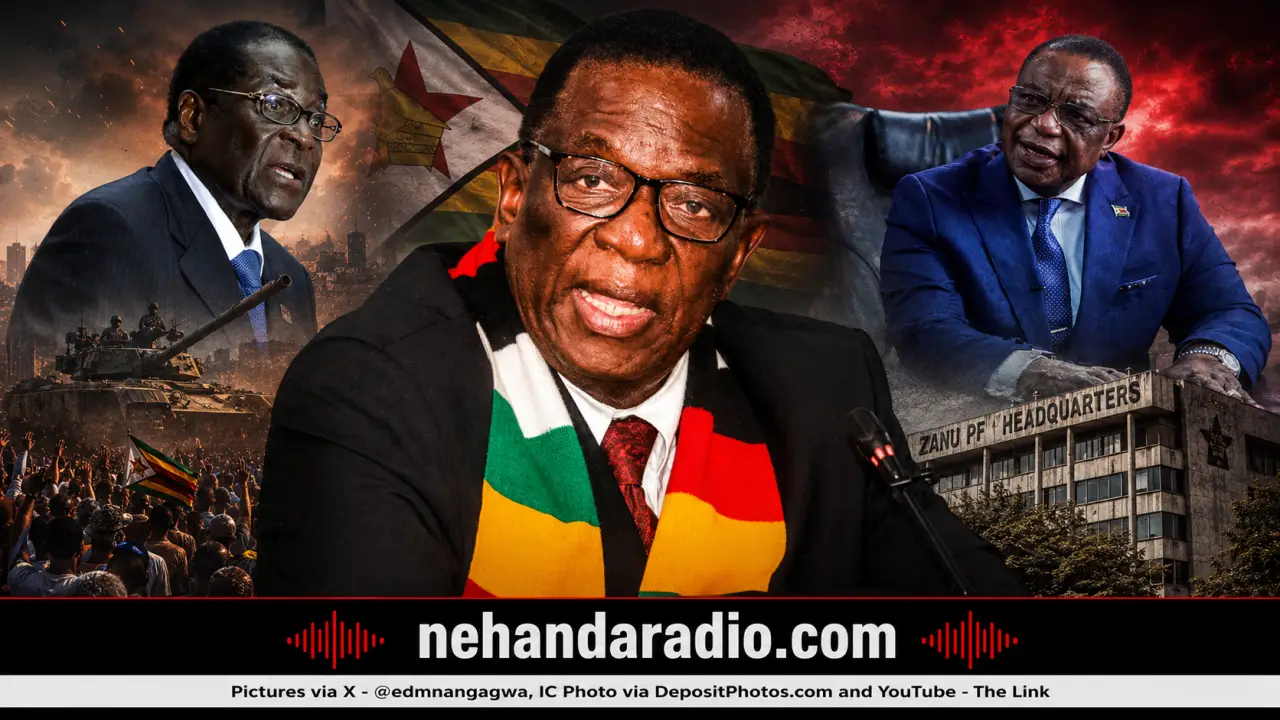
The late former Zimbabwean president Robert Mugabe, current president Emmerson Mnangagwa and Vice President Constantino Chiwenga (Pictures via IC Photo via DepositPhotos.com, X - @edmnangagwa and YouTube - The Link)
The late former Zimbabwean president Robert Mugabe, current president Emmerson Mnangagwa and Vice President Constantino Chiwenga (Pictures via IC Photo via DepositPhotos.com, X – @edmnangagwa and YouTube – The Link)

This concept refers to the historical alliance and occasional rivalry between these two specific linguistic and regional power blocs, which collectively form the traditional axis of state and military control in Zimbabwe.

​Historically, during the liberation war of the 1970s and throughout the 37-year rule of Robert Mugabe, who was Zezuru, the state and security architecture relied on an implicit, calibrated distribution of power between these groups.

Under Mugabe, the political apex was heavily weighted toward the Zezuru elite, creating a powerful perception of Zezuru dominance in key institutions of state, government, and party structures.

However, to maintain absolute stability, Mugabe relied heavily on an expansive military and security apparatus heavily staffed and commanded by the Karanga officer corps.

This perception of imbalance became a highly potent political weapon, fueling deep-seated resentment among Karanga and Manyika cadres who felt systematically sidelined from civilian political dominance despite controlling the instruments of hard power.

​The Rise Of Karanga Influence Under Mnangagwa

​The dramatic political transition of November 2017 disrupted the old Zezuru-dominated civilian status quo. It was orchestrated by a security establishment that brought together a powerful coalition of Karanga and Zezuru players to depose Mugabe.

This transition has triggered a perceived reconfiguration of ethnic hegemony, witnessing what critics describe as the rise of a Karanga-centred power network.

This network is allegedly manifested through the prominence of influential figures from the Midlands and Masvingo provinces within senior government positions, security institutions, and state-allied corporate entities.

​Public discourse surrounding prominent business figures, such as Kudakwashe Tagwirei, often intersects with these ethnic narratives, with critics characterising them as key beneficiaries of a localised patronage system.

In this context, succession politics, military influence, and economic distribution are routinely interpreted through the lens of a historical shift from Zezuru to Karanga dominance, demonstrating how elite factionalism continues to rely on ethnic mobilisation.

​Chiwenga And The Mechanics Of Succession

​Vice President Constantino Chiwenga, a Zezuru from Mashonaland East, navigates this landscape through a specific political logic. His political survival and his claim to the presidency do not rest on narrow Zezuru tribalism.

Retired General Philip Valerio Sibanda and retired General Constantino Chiwenga (Pictures via Office of the President and ZBC News)

Instead, his power is rooted in maintaining a cross-ethnic, institutional alliance between the Zezuru political elite and the Karanga securocrats who backed the 2017 transition.

Chiwenga relies on this balance in three distinct ways. First, as the voice of the armed forces, he benefits from a military establishment historically rich with Karanga commanders who view him as their premier representative in civilian governance, seeing the military as a unified institutional bloc that transcends sub-ethnic rivalries.

​Second, Chiwenga’s position rests on the original 2017 compact: a transactional pact where Emmerson Mnangagwa would take the presidency, and Chiwenga would be the clear, undisputed heir apparent.

This arrangement perfectly balanced the two most powerful regional and ethnic factions within the party, ensuring mutual deterrence and stability.

Third, Chiwenga relies on a shared resistance to absolute monopolisation. He finds common ground with the Zezuru political establishment, parts of the Manyika bloc, and even traditional Karanga cadres who believe that power must continue to rotate or be shared.

The underlying fear within ZANU PF is that if this balance is broken, power will become dangerously concentrated within a single regional or clan enclave, alienating the rest of the liberation aristocracy.

​The Sibanda Appointment In Context

​This brings us back to why the appointment of Philip Valerio Sibanda to the Politburo so thoroughly disrupts the established calculus. By introducing Sibanda into the party’s supreme decision-making body, President Mnangagwa directly threatens the specific balance Chiwenga relies on.

Sibanda does not fit into the traditional Karanga-Zezuru factional matrix; he is a ZIPRA veteran from the Matabeleland region, representing the historical PF-ZAPU stream.

At the same time, rumours circulating in political circles allege that Sibanda and Mnangagwa share deep-seated clan and family connections that transcend their shared liberation history.

​While these unverified claims should not be presented as established facts, their rapid traction is highly revealing. By elevating Sibanda, the executive introduces a highly respected, disciplined military alternative that complicates Chiwenga’s cross-ethnic institutional backing.

It signals to the security apparatus that a commander does not need to be part of the traditional Karanga-Zezuru axis to command absolute state authority, effectively diluting the specific geopolitical alliance Chiwenga has spent nearly a decade cultivating to secure his succession.

The persistence of such suspicions reflects a profound crisis of public trust, where every administrative action is filtered through a lens of ethnic favouritism.

​Other Dimensions Of Tribal Politics

​The obsession with majoritarian ethnic rivalries has historically overshadowed the severe marginalisation narratives expressed by Zimbabwe’s micro-minorities.

Peripheral communities, including the Tonga, Venda, Kalanga, Nambya, Shangani, Sotho, and others, have long complained of linguistic, cultural, and economic erasure.

​Language politics in education and public broadcasting historically favoured Shona and Ndebele, leaving minor languages underfunded and ignored for decades. Furthermore, these regions frequently suffer from substandard infrastructure and limited access to state resources.

This reality demonstrates that tribalism is not merely an elite game played out in boardroom politics, but a systemic issue affecting the everyday socio-economic lives and citizenship experiences of thousands of Zimbabweans.

​The Opposition And Tribal Politics

​It would be intellectually dishonest to characterise tribal politics as an exclusive pathology of ZANU PF. Zimbabwe’s mainstream opposition parties, from the original Movement for Democratic Change (MDC) to its subsequent iterations, have consistently struggled to transcend ethnic and regional clustering.

The split of the MDC in 2005 carried distinct regional undertones, and subsequent internal factional disputes have frequently pitted leaders against one another along ethnic lines.

​The ethnic geography of voting patterns since 1980 reinforces this reality. Matabeleland provinces have historically demonstrated highly distinct regional voting behaviours, frequently rejecting the ruling party in favour of opposition entities that they perceive as more sympathetic to their historical grievances.

While regional voting patterns do not automatically prove inherent tribalism, they provide undeniable empirical evidence that historical traumas and regional identities remain powerful drivers of political choices.

​The Devastating Cost Of Tribal Politics

​The socio-political cost of this enduring tribal shadow is catastrophic. Tribalism severely weakens national cohesion and eviscerates the state’s institutional legitimacy.

When ethnic affinity replaces meritocracy as the primary criterion for public service and military advancement, institutional competence declines, and democratic accountability is destroyed.

​Commerce and development are also severely stifled when national resources are distributed via networks of ethnic patronage rather than national priority.

Ultimately, the persistence of tribal calculations has prevented Zimbabwe from realising the inclusive, democratic national identity that was envisioned at independence, replacing the liberatory promise of a unified nation with a fragmented collection of suspicious ethnic fiefdoms.

​Conclusion

​Zimbabwe’s greatest existential challenge is not simply authoritarian governance, rampant corruption, or systemic economic decline. The much deeper, more insidious challenge is the country’s collective failure to honestly confront the deep ethnic anxieties and historical grievances that have quietly governed its politics for more than half a century.

The modern state remains haunted by the unresolved ghosts of the liberation struggles, the horrors of Gukurahundi, and the silent warfare of elite ethnic patronage.

​Until Zimbabweans courageously build an open, transparent political culture that explicitly acknowledges and systematically addresses these tribal undercurrents, true nation-building will remain an impossibility.

Without a genuine, structurally supported national truth and reconciliation process, every political transition, succession battle, military promotion, and factional alignment will continue to be interpreted through the reductive, polarising lens of the tribe rather than the collective progress of the nation.

Nine killed as train ploughs into bus at Chiredzi railway crossing

0
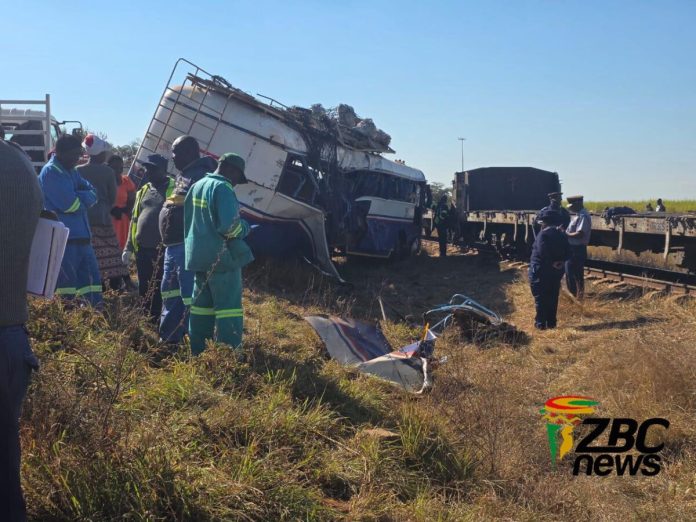
Nine killed as train ploughs into bus at Chiredzi railway crossing (Picture via ZBC News)

Nine people, including two children, were killed on Tuesday morning when a passenger bus was struck by a goods train after reportedly failing to stop at a railway level crossing in Chiredzi district.

The fatal collision occurred at around 7AM on Mbizi Road in Triangle, sending dozens of passengers to hospital and triggering a major emergency response.

According to the National Railways of Zimbabwe (NRZ), the Makuku Bus was travelling from Chikombedzi to Masvingo when it entered the railway crossing directly in the path of an approaching train.

The goods train was travelling from Triangle to the NRZ Lundi siding at the time of the crash.

In a statement, the NRZ said preliminary investigations indicated that the bus driver failed to comply with railway crossing regulations.

“The bus driver failed to observe level crossing rules, which require drivers to stop and check for oncoming trains before proceeding,” the NRZ said.

The impact killed nine passengers, among them seven adults and two children.

At least 25 other passengers were rushed to hospital with injuries, according to the NRZ.

Police later confirmed the death toll and reported that 26 people had been injured in the crash.

National police spokesperson Commissioner Paul Nyathi said officers were still at the scene conducting investigations.

“More details will be availed soon as police officers are still attending to the accident,” said Nyathi.

Emergency services, including police, ambulance crews and fire brigade personnel, were deployed to the scene as rescue efforts continued throughout the morning.

The tragedy is one of the deadliest railway crossing accidents in recent years and has renewed concerns over road safety and compliance with level crossing regulations.

The NRZ expressed condolences to the families of those who lost their lives and wished the injured a speedy recovery.

The railway operator also urged motorists to exercise greater caution when approaching railway crossings.

“We would also like to urge all motorists to strictly observe level crossing regulations to avoid loss of lives and injuries,” the NRZ said.

Authorities are expected to release further details once investigations into the circumstances surrounding the collision are completed.