The recent appointment of retired General Philip Valerio Sibanda to the ruling ZANU PF Politburo marks a significant moment in the country’s contemporary political landscape.
Constitutionally permissible and involving a highly decorated liberation war veteran and former commander of the Zimbabwe Defence Forces, the elevation initially appears to be a routine co-optation of a trusted military stalwart.
Yet, beneath the veneer of bureaucratic normality, the appointment has reignited a fierce, long-standing debate regarding tribal balancing, ethnic patronage, and the persistent role of identity politics.
To understand the structural matrix of ZANU PF politics, one must look past the party’s modern bureaucratic facade and examine the deep ethnic, regional, and clan-based arithmetic that has governed its internal power dynamics since the liberation struggle.
The central thesis of this analysis is that tribalism has been one of the most influential, yet least honestly discussed, structural forces in Zimbabwean politics from the liberation struggle to the present day.
While ideology, class, nationalism, and personal ambition have undeniably mattered, ethnic calculations have consistently shaped political alliances, leadership contests, military appointments, succession battles, and the distribution of state patronage.
When analysing Zimbabwean elite politics, analysts look at the interplay between the major Shona sub-ethnic groups – primarily the Karanga, dominant in Masvingo and Midlands provinces, the Zezuru, dominant in Mashonaland provinces, and the Manyika, dominant in Manicaland.
To understand this phenomenon, one must reject simplistic narratives that portray tribalism as the sole explanation for Zimbabwe’s political crises.
Tribalism does not operate in a vacuum. Instead, it functions as an underlying fault line that repeatedly intersects with factionalism, regionalism, and elite struggles for state power.
As the late political scientist Masipula Sithole brilliantly documented in his seminal 1979 study, Struggles Within the Struggle, the nationalist movement was never a monolithic entity driven purely by anti-colonial ideology.
It was deeply fractured by regional and ethnic anxieties long before the raising of the Zimbabwean flag in 1980.
The Tribal Fault Lines Of The Liberation Struggle
The internal fractures of the nationalist movement during the 1960s and 1970s laid the foundation for the ethnicised politics of the post-colonial state.
The definitive split of 1963, which saw the birth of ZANU out of the Joshua Nkomo-led Zimbabwe African People’s Union (ZAPU), was initially framed in ideological and tactical terms. However, as the armed struggle intensified, accusations emerged that ethnicity was overlapping with political loyalties.
Leadership contests involving iconic figures such as Joshua Nkomo, Ndabaningi Sithole, Herbert Chitepo, Robert Mugabe, Leopold Takawira, and Edgar Tekere were frequently shadowed by ethnic opinions.
Sithole’s Struggles Within the Struggle remains the most authoritative expose of these dynamics. In this groundbreaking work, Sithole made the explicit and highly controversial claim that ethnic factionalism – particularly intra-Shona rivalries – was a primary driver of internal violence and political assassinations within the liberation movements.
He argued that as the liberation war progressed, ZANU became less of an ideologically unified front and more of an arena for competitive “ethnic arithmetic,” where different subgroups manoeuvred for post-colonial dominance.
Specifically, Sithole documented how the tragic assassination of Herbert Chitepo in 1975 and the subsequent Mgagao Declaration were severely exacerbated by intense, calculated rivalries between Manyika, Karanga, and Zezuru factions.
He claimed that elites systematically manipulated these sub-ethnic identities to mobilise support and eliminate political rivals, showing that the pursuit of personal power frequently wore a tribal mask.
These internal power struggles demonstrated that nationalist politics was continuously compelled to navigate regional and ethnic identities, turning the liberation movement into a fragile coalition of ethno-regional interests rather than a unified ideological front.
ZANLA Versus ZIPRA Rivalries
This ethnic clustering inevitably extended to the armed wings of the liberation movements. The Zimbabwe African National Liberation Army (ZANLA), aligned with ZANU, and the Zimbabwe People’s Revolutionary Army (ZIPRA), aligned with ZAPU, developed distinct operational cultures and demographic compositions.
Over time, a powerful perception crystallised that ZANLA was predominantly associated with Shona-speaking communities, whereas ZIPRA became increasingly associated with Ndebele-speaking communities.
While both armies possessed cross-ethnic representations, the geopolitical realities of their bases (ZANLA in Mozambique and ZIPRA in Zambia) reinforced these regional biases.
The tragic clashes between integrated ZIPRA and ZANLA cadres at Entumbane in 1980 and 1981 demonstrated that these wartime divisions had survived the liberation struggle.
They entered the independence era as volatile, unresolved animosities ready to be exploited by elite actors seeking to consolidate power.
The Gukurahundi Catastrophe
The most devastating and tragic manifestation of ethnic politics in independent Zimbabwe occurred during the mid-1980s with the Gukurahundi massacres. Executed by the North Korean-trained Fifth Brigade, the state-sponsored violence was ostensibly launched to curb a low-level dissident menace.
However, historical evidence and documentation from human rights organisations, most notably the Catholic Commission for Justice and Peace (CCJP) in their landmark report Breaking the Silence, reveal that the violence disproportionately targeted civilian Ndebele-speaking communities in Matabeleland and parts of the Midlands.
The CCJP report famously concluded that “the victims were selected on ethnic and political grounds.” Regardless of competing political interpretations or state denials, Gukurahundi permanently altered ethnic relations in Zimbabwe.
It deeply entrenched perceptions of structural exclusion and state-sponsored marginalisation among minority communities, leaving a profound psychological and political trauma that has never been genuinely healed or officially redressed.
The Mugabe Era And The Karanga-Zezuru Power Balance
Following the 1987 Unity Accord, which effectively absorbed ZAPU into ZANU PF, the focus of tribal anxiety shifted inward toward intra-Shona dynamics, specifically crystallising around the “Karanga-Zezuru power balance.”
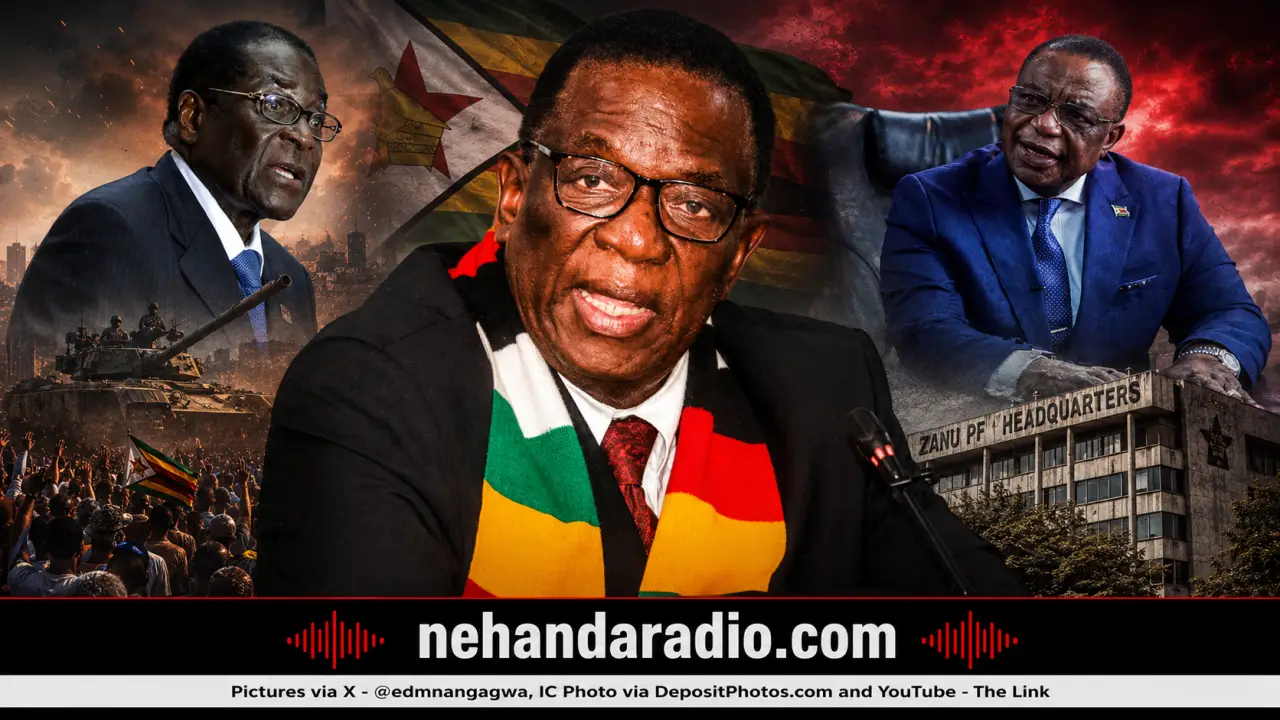
This concept refers to the historical alliance and occasional rivalry between these two specific linguistic and regional power blocs, which collectively form the traditional axis of state and military control in Zimbabwe.
Historically, during the liberation war of the 1970s and throughout the 37-year rule of Robert Mugabe, who was Zezuru, the state and security architecture relied on an implicit, calibrated distribution of power between these groups.
Under Mugabe, the political apex was heavily weighted toward the Zezuru elite, creating a powerful perception of Zezuru dominance in key institutions of state, government, and party structures.
However, to maintain absolute stability, Mugabe relied heavily on an expansive military and security apparatus heavily staffed and commanded by the Karanga officer corps.
This perception of imbalance became a highly potent political weapon, fueling deep-seated resentment among Karanga and Manyika cadres who felt systematically sidelined from civilian political dominance despite controlling the instruments of hard power.
The Rise Of Karanga Influence Under Mnangagwa
The dramatic political transition of November 2017 disrupted the old Zezuru-dominated civilian status quo. It was orchestrated by a security establishment that brought together a powerful coalition of Karanga and Zezuru players to depose Mugabe.
This transition has triggered a perceived reconfiguration of ethnic hegemony, witnessing what critics describe as the rise of a Karanga-centred power network.
This network is allegedly manifested through the prominence of influential figures from the Midlands and Masvingo provinces within senior government positions, security institutions, and state-allied corporate entities.
Public discourse surrounding prominent business figures, such as Kudakwashe Tagwirei, often intersects with these ethnic narratives, with critics characterising them as key beneficiaries of a localised patronage system.
In this context, succession politics, military influence, and economic distribution are routinely interpreted through the lens of a historical shift from Zezuru to Karanga dominance, demonstrating how elite factionalism continues to rely on ethnic mobilisation.
Chiwenga And The Mechanics Of Succession
Vice President Constantino Chiwenga, a Zezuru from Mashonaland East, navigates this landscape through a specific political logic. His political survival and his claim to the presidency do not rest on narrow Zezuru tribalism.

Instead, his power is rooted in maintaining a cross-ethnic, institutional alliance between the Zezuru political elite and the Karanga securocrats who backed the 2017 transition.
Chiwenga relies on this balance in three distinct ways. First, as the voice of the armed forces, he benefits from a military establishment historically rich with Karanga commanders who view him as their premier representative in civilian governance, seeing the military as a unified institutional bloc that transcends sub-ethnic rivalries.
Second, Chiwenga’s position rests on the original 2017 compact: a transactional pact where Emmerson Mnangagwa would take the presidency, and Chiwenga would be the clear, undisputed heir apparent.
This arrangement perfectly balanced the two most powerful regional and ethnic factions within the party, ensuring mutual deterrence and stability.
Third, Chiwenga relies on a shared resistance to absolute monopolisation. He finds common ground with the Zezuru political establishment, parts of the Manyika bloc, and even traditional Karanga cadres who believe that power must continue to rotate or be shared.
The underlying fear within ZANU PF is that if this balance is broken, power will become dangerously concentrated within a single regional or clan enclave, alienating the rest of the liberation aristocracy.
The Sibanda Appointment In Context
This brings us back to why the appointment of Philip Valerio Sibanda to the Politburo so thoroughly disrupts the established calculus. By introducing Sibanda into the party’s supreme decision-making body, President Mnangagwa directly threatens the specific balance Chiwenga relies on.
Sibanda does not fit into the traditional Karanga-Zezuru factional matrix; he is a ZIPRA veteran from the Matabeleland region, representing the historical PF-ZAPU stream.
At the same time, rumours circulating in political circles allege that Sibanda and Mnangagwa share deep-seated clan and family connections that transcend their shared liberation history.
While these unverified claims should not be presented as established facts, their rapid traction is highly revealing. By elevating Sibanda, the executive introduces a highly respected, disciplined military alternative that complicates Chiwenga’s cross-ethnic institutional backing.
It signals to the security apparatus that a commander does not need to be part of the traditional Karanga-Zezuru axis to command absolute state authority, effectively diluting the specific geopolitical alliance Chiwenga has spent nearly a decade cultivating to secure his succession.
The persistence of such suspicions reflects a profound crisis of public trust, where every administrative action is filtered through a lens of ethnic favouritism.
Other Dimensions Of Tribal Politics
The obsession with majoritarian ethnic rivalries has historically overshadowed the severe marginalisation narratives expressed by Zimbabwe’s micro-minorities.
Peripheral communities, including the Tonga, Venda, Kalanga, Nambya, Shangani, Sotho, and others, have long complained of linguistic, cultural, and economic erasure.
Language politics in education and public broadcasting historically favoured Shona and Ndebele, leaving minor languages underfunded and ignored for decades. Furthermore, these regions frequently suffer from substandard infrastructure and limited access to state resources.
This reality demonstrates that tribalism is not merely an elite game played out in boardroom politics, but a systemic issue affecting the everyday socio-economic lives and citizenship experiences of thousands of Zimbabweans.
The Opposition And Tribal Politics
It would be intellectually dishonest to characterise tribal politics as an exclusive pathology of ZANU PF. Zimbabwe’s mainstream opposition parties, from the original Movement for Democratic Change (MDC) to its subsequent iterations, have consistently struggled to transcend ethnic and regional clustering.
The split of the MDC in 2005 carried distinct regional undertones, and subsequent internal factional disputes have frequently pitted leaders against one another along ethnic lines.
The ethnic geography of voting patterns since 1980 reinforces this reality. Matabeleland provinces have historically demonstrated highly distinct regional voting behaviours, frequently rejecting the ruling party in favour of opposition entities that they perceive as more sympathetic to their historical grievances.
While regional voting patterns do not automatically prove inherent tribalism, they provide undeniable empirical evidence that historical traumas and regional identities remain powerful drivers of political choices.
The Devastating Cost Of Tribal Politics
The socio-political cost of this enduring tribal shadow is catastrophic. Tribalism severely weakens national cohesion and eviscerates the state’s institutional legitimacy.
When ethnic affinity replaces meritocracy as the primary criterion for public service and military advancement, institutional competence declines, and democratic accountability is destroyed.
Commerce and development are also severely stifled when national resources are distributed via networks of ethnic patronage rather than national priority.
Ultimately, the persistence of tribal calculations has prevented Zimbabwe from realising the inclusive, democratic national identity that was envisioned at independence, replacing the liberatory promise of a unified nation with a fragmented collection of suspicious ethnic fiefdoms.
Conclusion
Zimbabwe’s greatest existential challenge is not simply authoritarian governance, rampant corruption, or systemic economic decline. The much deeper, more insidious challenge is the country’s collective failure to honestly confront the deep ethnic anxieties and historical grievances that have quietly governed its politics for more than half a century.
The modern state remains haunted by the unresolved ghosts of the liberation struggles, the horrors of Gukurahundi, and the silent warfare of elite ethnic patronage.
Until Zimbabweans courageously build an open, transparent political culture that explicitly acknowledges and systematically addresses these tribal undercurrents, true nation-building will remain an impossibility.
Without a genuine, structurally supported national truth and reconciliation process, every political transition, succession battle, military promotion, and factional alignment will continue to be interpreted through the reductive, polarising lens of the tribe rather than the collective progress of the nation.
Discover more from Nehanda Radio
Subscribe to get the latest posts sent to your email.