Jailed Too Open band member has encouraged band members to remain united as he serves his jail term.
Emmanuel Kumire (R) with Suluman Chimbetu
Emmanuel Kumire is serving a jail term at the Chikurubi Maximum Security Prison after he was convicted of fraud.
He was involved in a botched US$5 000 deal.
In an interview with H-Metro during the actors, soccer legends and musicians’ tour of the Chikurubi Maximum Prison, Kumire said:
“I am serving my jail term here at Chikurubi but I want to tell my band members to remain united.
“I will pick it from where we left and these days I am writing songs so that when I finish serving my prison term I will then record the songs.
“I also want to tell my family to stick together, being jailed does not mean it’s the end of the road.”
He added:
“Some of the people out there are just there because they have not been caught and also same applies to some who are here have been convicted while they are innocent.
“Everyone can come here, zvinowanikwa kumunhu wese izvi but I am urging people who are outside to remain united, loving and to be to law abiding citizens.
“Jail is not a place to be my brother but ndozviripo we are just accepting the situation and remaining focused.”
The entertainer also told this publication that he once shared the stage with Zimbabwe Prisons and Correctional Services Suluman Chimbetu and Progress Chipfumo among others. H-Metro
Zimbabwe Stock Exchange (ZSE)-listed Cassava Smartech Zimbabwe Limited, a subsidiary of Strive Masiyiwa’s Econet Wireless, has threatened a complete shutdown of its EcoCash platform if the Reserve Bank of Zimbabwe (RBZ) insists on its ban on cash-in, cash-out transactions effected on Monday.
Strive Masiyiwa
The RBZ on Monday effectively put 50 000 EcoCash agents out of work after banning cash-in and cash-out services accusing them of “engaging in illegal activities”, including selling cash at a premium.
The ban curiously came after Masiyiwa last week said the RBZ should take the blame for starving the market of cash, creating opportunities for arbitrage.
The central bank has also banned the use of the cash-back service when customers pay with cards at point-of-sale machines, saying shops were no longer banking cash and abusing the
facility.
The central bank claimed the move was part of government efforts to eradicate illicit transactions which it said were fuelling the galloping inflation and exchange rates.
But in response to the RBZ’s move, Cassava Smartech Zimbabwe Limited has, in turn, warned that there will be a complete shutdown of the EcoCash facility as a result of the unexpected ban.
“The applicant (Cassava Smartech Zimbabwe Limited) has already started to implement the directive with the result that there will be a total shutdown of the entire EcoCash system in the process. The directive was only communicated to the applicant in the afternoon of September 30, 2019,” Cassava’s lawyer Mzokuthula Mbuyisa said in his certificate of urgency.
“My view is that the directive is ultra vires section 10 of the National Payment System (NPS) Act in that the section empowers the RBZ to only act against the acts or omissions of a system or of the management board of the system, yet in the present case the abuse complained about is attributed to some customers of the applicant and not to the system of the applicant or the management board of the applicant.”
Mbuyisa’s affidavit is contained in the urgent chamber application that was filed yesterday at the High Court by Cassava’s chief executive officer Edmore Chibi seeking a temporary interdict to stop the central bank from implementing a ban on EcoCash’s cash-in, cash-out transactions.
In his founding affidavit, Chibi accused the central bank of being discriminatory in the manner that the ban was carried out.
“In further alternative, I contend on behalf of the applicant (Cassava) that EcoCash has been discriminated against in preference to the RTGS [Real Time Gross Settlement] platform. Regarding the RTGS platform, the respondent (RBZ) has not banned any functionality that enables cash withdrawals and cash deposits. To prohibit cash withdrawals and cash deposits through the use of EcoCash only is thus discriminatory,” Chibi said.
According to the RBZ, the move to ban EcoCash’s cash-in, cash-out transactions was carried out in terms of the provisions of section 10 of the NPS Act, but Chibi argues that the directive is ultra vires the cited section.
“There is no wrong that is alleged to have been committed by EcoCash system or its management board. The annexure alleges wrongdoing on the part of some agents, not all of them or other innocent users of the system. Therefore, the kind of wrongdoing alleged by the respondent does not fall within the powers that respondent has under section 10 of the Act.”
Chibi further said EcoCash has played a critical role in facilitating transaction activity between Zimbabweans in circumstances of acute liquidity challenges, adding that the most important products, especially to the unbanked population that do not have ready access to banks, are the EcoCash’s cash-in and cash-out facilities.
“Some of these transactions are done to deal with life-saving situations. Pulling down EcoCash could, thus, mean loss of life, loss of opportunities that could save livelihoods, and financial loss running into hundreds of millions, if not billions. The shutdown of these facilities will also deprive the applicant and those of its agents that are innocent of revenue running into millions of dollars,” Chibi said.
The chief executive officer further urged the court to rule in his firm’s favour, arguing that it cannot be punished alongside the wrongdoers.
“The case of the innocent EcoCash user is much stronger than that of the good wheat crop that was saved from the risk of being uprooted by mistake in Matthew 13:24-43, where the master, in rejecting the request by his servants to pull up the weeds, said: ‘No, if you pull up the weeds, you might uproot the wheat along with them’,” he said.
Main opposition MDC legislators stand to lose more than $15 000 each in sitting allowances after they walked out on President Emmerson Mnangagwa’s State of the Nation Address (Sona) and the official opening of the Second Session of the Ninth Parliament in Harare yesterday.
Speaker of Parliament Jacob Mudenda
In a move meant to embarrass Mnangagwa, the opposition MPs turned up in Parliament and participated in the processions preceding the official opening of Parliament ceremony.
However, as Mnangagwa and the First Lady Auxillia entered the chamber — the opposition MPs remained seated, but later stood up and sang the national anthem.
As soon as Mnangagwa began his Sona, the opposition MPs walked out disturbing the flow of his speech.
Zanu PF MPs then quickly filled up the spaces left by the opposition MPs to ensure that the House did not look half full as it was a televised show.
Mnangagwa was then left to address Zanu PF legislators only, who cheered and clapped during his presentation.
They also sang “ED Pfee”, as he concluded his speech and left the House. The judges’ procession, led by Chief Justice Luke Malaba, also got resounding cheers from Zanu PF MPs as they left after Mnangagwa.
Speaker of the National Assembly Jacob Mudenda then made a ruling after Mnangagwa had gone, saying Finance minister Mthuli Ncube must not pay the opposition legislators yesterday’s sitting allowance, as well as the past five months’ sitting allowances.
But leader of the opposition in the National Assembly Thabitha Khumalo told NewsDay that her party lawyers were already looking at the Speaker’s ruling with a view to challenge it in court.
“We have heard about the Speaker’s ruling and have instructed our legal department to check into the issue. We do not know how much is involved. We snubbed the address because we have a congress resolution that Mnangagwa did not win the 2018 elections and so we are upholding the resolution,” she said.
Although Justice minister Ziyambi Ziyambi and Zanu PF chief whip Pupurai Togarepi refused to disclose the exact amount in sitting allowances that MPs are paid, a legislator who spoke on condition of anonymity said the amounts were recently increased through the supplementary budget from $75 per sitting to $700.
Effectively, this means each legislator from the MDC stands to lose more than $15 000 if the Speaker’s ruling is implemented.
Mudenda said before Mnangagwa’s address, he had engaged in discussions with Khumalo, Ziyambi and Togarepi, appealing to Khumalo that her party must not embarrass the President.
“In terms of powers vested in me as head of Parliament and also in respect of the Constitution (section 119), the behaviour which was demonstrated by opposition MPs who walked out when the President started to speak, these MPs shall not be allowed to come back into the House during this sitting today, and accordingly, they will not receive their sitting allowances,” Mudenda ruled.
“I am aware that we had put together a paysheet for the past outstanding sitting allowances for the past five months and I want that paysheet withdrawn from the Ministry of Finance. Effectively, it means no payment for today’s and five months other sitting days that were outstanding. If this unpalatable behaviour persists, then more drastic action shall be taken as guided by the Standing Rules and Orders Committee,” Mudenda ruled.
Ziyambi castigated the behaviour of MDC MPs, saying their actions were unfortunate.
Togarepi described the opposition legislators as “greedy” individuals who thought they were employed by Parliament.
“The punishment is not even severe. Actually, they must be chucked out of Parliament and we call for by-elections,” Togarepi said.
During his speech on the official opening of the Second Session of the Ninth Parliament, Mnangagwa announced that several Bills would be brought before the House for crafting.
Mnangagwa announced that around 25 Bills will be brought before Parliament; some of them which will impose stiffer penalties for money-laundering offences, rape and theft of Zesa power cables and equipment.
Of note are also the Provincial and Metropolitan Councils Bill to promote devolution of power, and Bills like the amendments to the Mines and Minerals Act, the Gold Trade Bill and the Precious Stones Act, as well as amendments to the Petroleum Act to impose stiffer penalties for vandalism and theft of electricity infrastructure.
Mnangagwa also vaguely expressed interest to initiate talks with MDC president Nelson Chamisa. “I am happy with the progress being made under the ongoing Political Actors Dialogue and stand ready to welcome all political parties who contested in the 2018 harmonised elections, and are yet to be part of this forum,” he said.
He said his government was committed to democratic reforms and observance of constitutional rights.
“The culture of fear and violence must be uprooted from our societies. In line with this commitment to deepen our democracy, I have set up an inter-ministerial taskforce to look into the political, electoral, legislative and administrative issues raised by the 2018 election observer missions and, indeed, the Motlanthe Commission of Enquiry,” Mnangagwa said. NewsDay
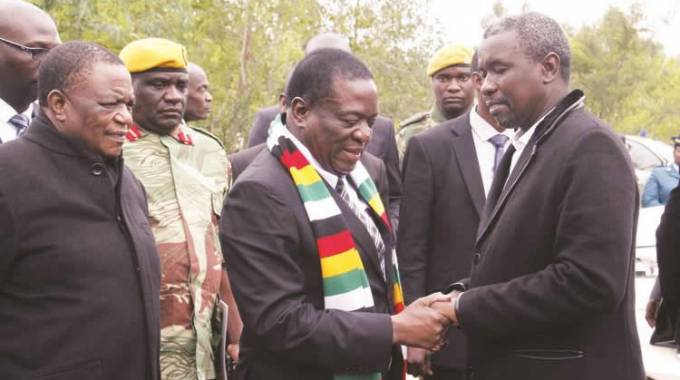
President Emmerson Mnangagwa consoles Mr Kudakwashe Tagwirei while flanked by Vice President Constantino Chiwenga before the burial of the businessman's father, Sekuru Phineas Tagwirei, in Shurugwi in 2018. - (Picture by John Manzongo)
BY VENERANDA LANGA
President Emmerson Mnangagwa yesterday described reports of alleged exchange rate manipulation, which also involved his top ally Kudakwashe Tagwireyi, as acts of economic sabotage, which must not be tolerated in the country.
President Mnangagwa consoles Mr Kudakwashe Tagwirei while flanked by Vice President Constantino Chiwenga before the burial of the businessman’s father, Sekuru Phineas Tagwirei, in Shurugwi in 2018. – (Picture by John Manzongo)
Mnangagwa said this in Parliament to Zanu PF legislators after their MDC counterparts had walked out on him, and during his delivery of the State of the Nation Address, which coincided with the official opening of the Second Session of the Ninth Parliament.
The central bank recently froze accounts belonging to Tagwireyi’s Sakunda Holdings and its sister companies, Access Finance as well as Spartan Security and Croco Motors, among others to allow for investigations by RBZ’s Financial Intelligence Unit over allegations of illicit financial deals.
“I am encouraged by the nation’s positive response to the currency reforms which we have embarked on, and government is equally-pleased with the relative stability of the exchange rate over the past eight weeks,” Mnangagwa said.
“However, last week’s events of exchange rate manipulation, amounts to economic sabotage and should not be tolerated. We all need to adhere to the rule of law and foster discipline at all levels.”
Mnangagwa said he was aware that Zimbabweans were suffering due to the economic problems bedevilling the country and those caused by the government’s austerity measures.
But he claimed that the suffering will come to pass as he had inherited an already bleeding economy which was going to take time to sort out.
“Government is fully aware of the challenges faced by the public in accessing. NewsDay
The United States of America yesterday issued a Withhold Release Order (WRO) for artisanal rough cut diamonds from Marange on allegations that they were produced using forced labour as problems continue to mount on President Emmerson Mnangagwa’s government.
File picture of panners at Chiadzwa after the sacking of firms triggerred chaos
According to a statement released by the United States Customs and Border Protection (CBP) , diamonds from Zimbabwe, still battling sanctions from the world’s economic power house, have been listed.
China, Brazil, the Democratic Republic of Congo (DRC) and Malaysia companies were also victims of the raid covering five different products, imported from five different countries.
According to the statement, the action was based on information obtained and reviewed by CBP that indicates that the products were produced, in whole or in part, using forced labour.
“A major part of CBP’s mission is facilitating legitimate trade and travel,” said acting CBP commissioner Mark Morgan.
“CBP’s issuing of these five withhold release orders shows that if we suspect a product is made using forced labour, we will take that product off US shelves.”
Under US law, the statement read, it is illegal to import goods into the US that are made wholly or in part by forced labour, which includes convict, indentured and forced labour once information is available linking companies to the listed practice.
The importers will, however, have the opportunity to either re-export the detained shipments at any time or to submit information to CBP demonstrating that the goods are not in violation.
Hetian Taida Apparel of Xinjiang, China, has been accused of producing garments using prison or forced labour while Malaysia’s WRP Asia Pacific has been accused of producing rubber gloves using forced labour.
Gold produced in artisanal small mines in eastern DRC has been linked to forced labour.
Zimbabwe has been on US sanctions for almost two decades and Mnangagwa has accused the embargoes for the deteriorating economic situation in the country. NewsDay
Former opposition MDC MP and economist Eddie Cross
By Eddie Cross
I am sitting in a hotel at the Victoria Falls. My hotel room has a view over a pan that is fed by pumping water – I assume from the nearby Zambezi River.
Former BULAWAYO South MDC-T legislator, Eddie Cross
The bushveld that surrounds us is bone dry after nearly 7 months of absolutely no rain, to the casual visitor it looks like a moonscape with dry sticks coming out of the hard, rocky ground. Only a thin strip of riverine forest is green. Everything you see is hot and thirsty.
This year has been unusually dry, the Falls is a stark black basalt wall for most of its 1,7 kilometre width – the only section which has any water going over the falls and plunging into the river below, is on the end where it has begun the long process of cutting a new trench.
To the west, the huge Okavango swamp is dry, the river that supplies this, one of the largest wetlands in the world, is virtually dry. The Botswana Government is drilling boreholes in the swamps to try and keep the wildlife and livestock alive.
The Falls is full of real tourists – you know the kind that has some money to spend. I watched them at dinner last night and wondered just what did they think of this dry and parched land. I recall attending a cattle sale in October one year in the deep south of the country.
2000 head were yarded and there was not a blade of grass in any direction for two hundred kilometres. A few days later I was on a business trip to Europe and stood knee deep in green grass and clover in a Swiss mountain valley. What would those tall rangy cattle do with this I wondered? Would they even know it was edible?
My granddaughter has just gone to the UK to start a career in hotel management and they began her visit with some time in Ireland where we have family and roots (my great grandfather and my daughter in laws relatives). She commented how green everything was compared to home.
Here the colours are stark but always beautiful and last evening, we watched the sun go down in a blaze of red and orange with a beautiful half-moon hung over us in the sky. As I walked back to my room an elephant trumpeted in the bush below me.
During the Liberation war that brought us to Independence in 1980, it always gave me a sense of continuity and hope when I watched the farmers ploughing their land in preparation for what was coming. It was an act of faith, not just in the weather, but in the future.
People who plough their land and plant trees do so knowing very well that they are at the mercy of what is to come, but they do it anyway. Our cattle and wild animals also know that although life is tough and all they will get today is a stomach full of dry leaves and maybe some small green shoots or flowers from a Knob thorn bush or tree. They know better times are coming.
I am told that elephants, who must drink every day and find tonnes of food to survive, can sense what is happening with the weather. Those great old females who are the matriarch’s, lead the way and the very survival of the family or herd depends on their skills and instincts.
Because of satellite technology, we know that the Intertropical Conversion Zone has formed over the vast forests of the Congo River basin. This year it seems well developed compared to last and is slowly coming south.
In South Africa, the normal cold fronts are sweeping in from the Atlantic and bringing early rains to the Highveld. Yesterday it was 1 degree Celsius in Bloemfontein and we were probably at about 30 degrees Celsius. Last week it was freezing for a few days.
It is all so finely balanced and governed by the global system. India has had a very heavy monsoon and historically that should mean we will get heavy rains here – from the ITCZ. But with global warming these patterns are changing and we all have to make adjustments. The long range forecast for southern Africa is that the south is going to get drier and the north, more rainfall than in the past, with greater variations and extremes.
But as Africans we know what is coming and who can forget the first real rain of the season as it sweeps across the dry and barren veld. That unforgettable smell of wet earth. The sight of dry river beds filling up with water from a storm in its catchment.
I can remember one occasion – again in October, when I was returning with a colleague from the Zambezi Valley and we were crossing a wide sand river. We got stuck in the sand despite our 4-wheel drive and were digging ourselves out in 40-degree heat, when I heard a soft rustling sound.
I spoke to my companions and asked – what is that sound. They stopped digging and listened and the older man said one word ‘water’. We collected what we could carry and ran, by the time we got to the river bank we were wading in water and in 30 minutes we could no longer see our Land Rover.
What the tourists visiting us here do not appreciate, it that once the rains come, the countryside responds with astonishing vigour and growth.
Boosted by the warm weather and the wet earth, the natural fertility of the ground kicks in and where you can now see through the bush for several hundred meters it will become bush so thick you cannot see your hand when it is stretched out in front of you.
At this point Zimbabwe is in a dry season. Our currency has again crashed, we are making new records for inflation and living standards for the great majority of our people is at a new low.
Many must subsist on 10 percent of what they earned in real terms a year ago. Austerity seems all that we face and when we think about the future, the only thing we think about is how to survive, survive until what? The future looks bleak and dry, little to eat and only heat and thirst.
But it is not our first long dry winter, there have been many such periods when I could not see any future and all we had was faith that things would change.
No one who lives in this crazy world can do so without faith in the future. Life is tough – that is the norm, it’s how we manage the tough times that sets us apart and helps us survive. Many don’t and the veld is littered with their dry white bones.
I commented to a group of friends how things had come off the rails in the past 4 months and one of them responded by saying – look at what we have achieved in the past few months! He then listed the changes we had been responsible for and which have started to bear fruit.
I can recall a time during the Liberation War when I thought we were going to fall down in a heap and collapse and I went to my Chairman and asked him what I should do. His advice to me was disappointing, but I have never forgotten it – he said ‘Eddie, come to work tomorrow morning and do your job to the best of your ability’.
I had hoped he would propose some grand plan of action – but I took his advice, at the time I was a new graduate and a junior in the Office, I worked my butt off and became Chief Economist and then a CEO in the Group.
Perhaps the most rewarding time in my life was leading my management team through the drought of deep winter in my countries life. We survived and in the process had a fantastic time. We have to do it again.
The death of former President Robert Mugabe on September 6 has exposed all the skeletons to the public which should have remained hidden.
Ken Mufuka
The purpose of funeral rituals is to bring a modicum of unity between the departed (now entering the realm of ancestors) and those remaining. In the case of a national leader like Mugabe, the rituals would have served the purpose of uniting the family, the opposition party and the ruling party, at least for the few days before and after the funeral celebrations.
But we must not miss the reason why there were hold-ups before burial. Traditionally, certain scores were to be settled, certain debts paid or promises made and forgiveness sought followed by reconciliation. In my short life I have had the privilege of sitting at the feet of two of the African luminaries, Reverend Bishop Desmond Tutu and Professor John Mbiti.
I remember clearly their emphasis on the presence of invisible spiritual forces in the universe as well as forces that enforce natural law. This twin ideological understanding of the universe is very important in the African psyche but as Basil Davidson and B. Malinowski have shown, they are recognized universally. A little emphasis is not amiss.
The whole premise of ZANU-PF since the murder of Herbert Chitepo, has been the assumption that the powerful can murder, rape, cheat, use the treasury as their piggy bank, and loot diamonds; as long as they remain in power, there are no outside forces that can compel them to comply with the norms of society, whether spiritual or material. The same idea has prevailed in their economic thinking.
It is alright to seize and occupy white-owned farmland, drive former owners away, take no precautions or care about the farm workers left indigent. Having done all these, they do not expect any consequences; in fact, they expect the world to come to their aid, fund their projects and feed their starving populace.
According to this thinking, there are no spiritual forces over and above those enforceable by human hands. Holding power in their hands is the key to prosperity.
Mugabe was the chief practitioner of this gospel of power.
Need for cleansing
Having practiced these dark arts of government, it s no surprise that Mugabe’s successor is faced by a plethora of impediments to his rule, some of which directly emanate from ZANU-PF succession method.
Foremost among Mnangagwa’s difficulty is the crisis of legitimacy even among his own. Second is the spiraling economic chaos, which is a direct result of lack of trust and legitimacy. Third, as if the spiritual world has deserted him, the heavens have with-held rains, thus destroying half the economic base.
Clearly, there the intertwining of the spiritual world, as Professor George Kahari used to say, “Zvinhu hazvizi right” something ought to be done, atonement and repentance on the spiritual level and change of economic policies on the material level.
Mugabe, in death, as in life, sought to deny his successor both.
Mugabe and national atonement
The history of ZANU-PF is replete with secret national rituals aimed at advancing the national cause. When the liberation war had stalled in 1971, Herbert Chitepo sent a delegation to the spirit of Prophetess Nehanda Charwe Nyakasikana
A lesser known medium, Patrick Zimbiru of the Shiri Hungwe clan, was shot dead by Rhodesian forces after he held similar ritual ceremonies at Dombo-Mashava in 1974 in favor of the liberation forces. Dombo-Mashava is situated in the Chinamhora paramountcy.
But the great matter of national atonement is that war crimes were never accounted for, proper compensation done and reconciliation sought.
Gukurahundi, Murambatsvina and 2008 murders come to mind. I was approached in 1984 by a Mbonga joice Makwiramiti, a comrade who, a war veteran who joined the prison services at Mutimurefu in Masvingo province. As a Mbonga (a woman-who assumes the role of male prophet) she was in the line of Sekuru Kaguvi. I was then Director of National monuments at Great Zimbabwe, the proper place for such ceremonies.
But ZANU-PF leadership never accepted the need for a national atonement day. Instead, they preferred secret preventative ceremonies aimed to at preventing avenging spirits from taking a toll of the perpetrators of war crimes. (kutanda ngozi-kutanda zviremwa-remwa-chasing evil spirits by using necromancers, wizards or magicians).
Some of this necromancy has been hidden in plain sight. General Solomon Mujuru’s death was an assisted termination of life for which a cigarette fire was blamed. Mugabe, in his funeral oration, said that the death was “unexplainable.” Even deeper into the annals of ZANU-PF, the widow, who was then vice president, was persuaded to go along with the pretensions, on the grounds that her position in state and in society would remain protected.
Verily, I say unto you there are no blind men as those who do not want to see.
A very pronounced absence of Christian religious leaders marked all these burials. Mugabe was Catholic and yet the Holy Fathers were not prominent at his funeral ceremonies.
The agreed facts are cause for concern.
The family feared that Mugabe’s bodily parts, (ears, teeth and private parts) could be removed for ritual ceremonies. It is standard procedure for the presiding wizard to use a portion of the deceased’s body, dip it I some muti, (usually smoked mbanda leaf, mixed with human parts and other muti).
The wizard then pronounces in a smoke filled room: “We have buried you today, go and never return to trouble the living. We are finished with you.” Very often a goat’s body is buried with the deceased, as a scapegoat-carrying the malefactions of those who remain.
The Mugabe family was afraid that if Mugabe was buried at heroes Acre, there would no guarantee that his body would not be secretly violated during darkness by these wizards.
Mugabe’s explicit instruction that Ms. Grace should never leave the body, speaks to that.
These ritual ceremonies are I direct contrast to Christian ceremonies (or Jewish ceremony of atonement). These rituals are intended to transfer by magic the powers and aura formerly carried by a previous ruler through magical transference to the next ruler.
Christian ceremonies require confession and repentance to be followed by reconciliation and recompense. Confession exposes them to even greater danger of worldly punishment through criminal courts.
The aim, by Mugabe, in death, was to deny his successor E.D. Mnangagwa, a role in the funeral ceremonies, I private and in public, whether ritual or even peripheral, the old wizard denied his brother in arms, the passing of Elijah’s mantle. Other sources have since reported that Mugabe called Savior Kasukuwere to Singapore and passed on the staff and cloth of Mbuya Nehanda.
By these actions, as he had previously chosen Ambrose Mutinhiri to form the National Patriotic Front and prior to that had been fronting the name of Dr. Sydney Sekeramayi, the old wizard has sown the seeds of a whirlwind whose destination in unknowable.
In our ten year research, Cyril Zenda and I came to the conclusion that to Mugabe, men were to be used and discarded when their usefulness expired. Zimbabwe was his formation (as Shaka Zulu also assumed that Zulu nation was his formation).
Therefore, at his death, rather than allow Nehanda’s staff to pass on to Mnangagwa, he has denied him his blessings, thus creating a contested leadership. It was Mugabe’s lifetime motto, whatever he could not master, he destroyed.
(Ken Mufuka (and Cyril Zenda) was engaged in a ten year project which resulted in the book, Life and Times of Robert Mugabe 1980-2017: Dream Betrayed). The book is available in Zimbabwe through INNOV Bookshops and on the Internet through kenmufukabooks.com. Mufuka served as Regional Director of Monuments at great Zimbabwe 1982-1984.)
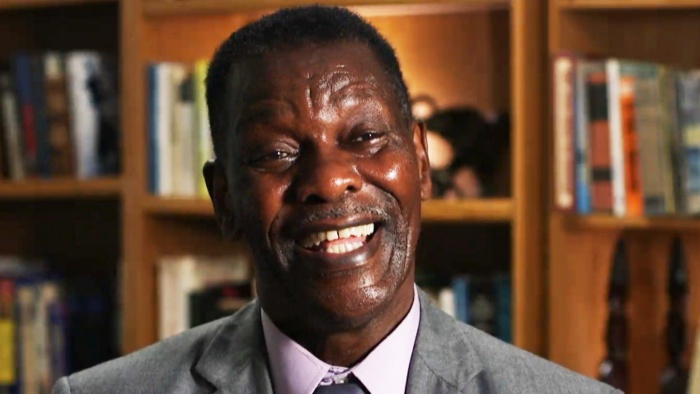
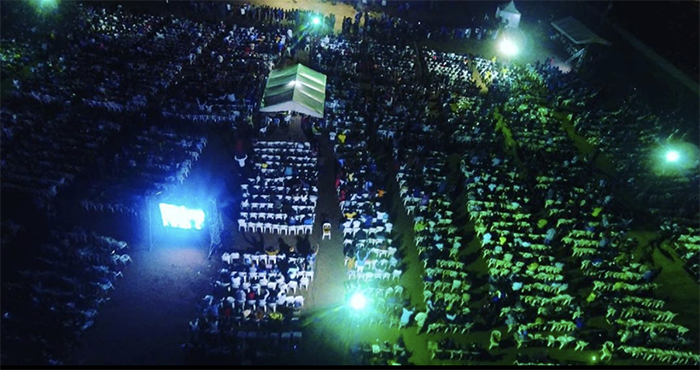
After drawing a 70 000 crowd at the Entebbe New Jerusalem Stadium in Uganda in July this year, Zimbabwean preacher Uebert Angel took his latest crusade to the Ivory Coast on Thursday.
The Spirit Embassy: GoodNews church founder was in the Ivory Coast capital of Abidjan in a continuation of what his church says is a crusade targeting francophone countries in Africa.
The crusade was spread over four days from Thursday, Friday, Saturday and Sunday.
While his contemporaries appear to be focussed on Zimbabwe, Angel is rolling out an ambitious global strategy with branches around the world. This year he became the first Zimbabwean to own and run a gospel TV station that broadcasts on the much coveted Sky platform in the UK.
Sky is Europe’s largest media company and pay-TV broadcaster by revenue (as of 2018), with 23 million subscribers and more than 31,000 employees as of 2019.
On the 29th of May 2019, GoodNews TV launched on Sky giving it access to the whole of Europe. His followers in Africa, Asia and Middle East continue to be served by his Miracle TV station.
Last year the church said it was going to print out and distribute ‘Daily Devotionals’ targeting an ambitious one million people across the world including prisons and some non-christian areas.
Angel admits he is inspired by popular Nigerian televangelist, Chris Oyakhilome (Pastor Chris), the founder of Christ Embassy. The two appear to spend a lot of time together amidst a growing feeling the Nigerian pastor is helping the younger preacher to grow spiritually. Nehanda Radio
South Africa’s former president Thabo Mbeki recently gave a relatively brief speech on the legacy of the late Robert Mugabe. He was speaking at a memorial service organized by the ruling African National Congress (ANC) in Durban, South Africa.
Thabo Mbeki seen here with Robert Mugabe in this file picture
Mbeki’s speech and probable future interviews on Mugabe was always going to be highly anticipated. Not only because as president of South Africa and in various capacities within the Southern African Development Community (SADC) and the African Union (AU) he was pivotal in defending what he considered Zimbabwe’s sovereignty.
By default this was also seen to be a defense of Mugabe’s leadership by Western superpowers.
And as expected in his eulogy Mbeki was always going to touch on the shared history of the ANC and Zimbabwe’s liberation movements. Including the all important post Zimbabwe independence decision under Mugabe’s leadership to delay a radical land reform process in order not to railroad the independence negotiations of South Africa.
He however made a rather outlandish statement by saying that not a single Zimbabwean wanted Robert Mugabe deposed from power. And that such a motive was largely motivated by ‘outsiders’.
He also made reference to the media as being key in this narrative of Mugabe’s ouster and that even the main opposition political outfit, the Movement for Democratic Change (MDC) wanted help to help ‘us find each other’. As opposed to seeing the back of Mugabe.
With his own emphasis as of old that the ANC during his leadership was keen on the reality that the people of Zimbabwe be allowed to determine their own destiny.
Mbeki also mentioned the Global Political Agreement for which he was SADC’s appointed mediator, as showing in part the character of the country that Mugabe wanted to leave behind as his legacy.
While not going into its details, it was evident that Mbeki valued the GPA and the reforms it brought to Zimbabwe. However to imply that it was part of Mugabe’s vision might be taking things a tad too far as this was also co-authored by opposition leaders.
And in any event, it was to be a short lived political arrangement that Mugabe was happy to see the back off, apart from constitutional amendments that allowed him to retain the executive presidency.
But perhaps that is all moot and for the historians to adjudge as to the GPA’s durability and legacy.
The most controversial point that Mbeki raised in his speech was that at some point former British prime minister Tony Blair had some sort of plan to use force to effect political change in Zimbabwe.
(It would be useful to also remember that they were once very good friends espousing the ‘third way’ in global development policies.)
Citing a retired general who stated in his memoirs that he was surprised that Blair had asked him of the feasibility of military intervention in Zimbabwe, Mbeki sarcastically makes the comment that Blair would deny this.
Soon after Mbeki’s lecture, a former minister in Blair’s cabinet Peter Hain tweeted that it was ‘fantasy’ that Britain ever considered an invasion of Zimbabwe.
The good thing for Zimbabweans, regardless of whoever is telling the truth, is that there was no military invasion of our country. Iraqi, Libya or Afghanistan style. And for that we owe SADC and probably Mbeki himself a lot.
What I also found intriguing was the Pan African narrative that Mbeki intended to demonstrate full knowledge of. And the inference of the necessity of compromise and learning from each other of the main liberation movements in the region. It was almost as though Mbeki knows that what he values as the actions of Pan African solidarity of old together with an attendant nationalist consciousness is dying.
The only catch is that there are many reasons for this, which include but are not limited to the fact our nationalist leaders failed to grasp generational praxis. That is, the ability of the leaders to build organizations that function organically and with an understanding that democratic value systems transcend one person’s particular leadership.
The deficit in this preferred understanding are glaringly clear with the continued specter of xenophobia in South Africa and undelivered promises of liberations struggles across generations. And more significantly in our leaders’ latter day tragic embrace of neo-liberalism as inevitable and without an alternative.
*Takura Zhangazha writes here in his personal capacity (takura-zhangazha.blogspot.com)
The United States has blocked the import of goods suspected to have been made with forced labor from five countries, including clothing from China and diamonds from Zimbabwe, officials said on Tuesday following a rare crackdown on slave labor abroad.
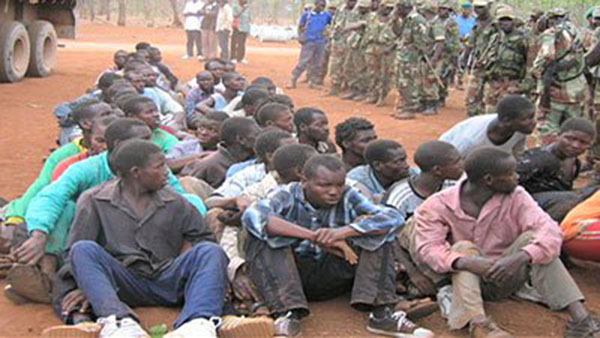
File picture of diamond panners rounded up by soldiers in the Marange area
The U.S. Customs and Border Protection (CBP) said it seized five different products this week based on information indicating the goods were made using slave labor overseas.
The other items included rubber gloves made in Malaysia, gold mined in the Democratic Republic of the Congo and bone black – charred animal bones – manufactured in Brazil.
Under a 2016 law, it is illegal to import goods into the United States that are made entirely or in part by forced labor – which includes prison work, bonded labor and child labor.
“A major part of CBP’s mission is facilitating legitimate trade and travel,” said Acting CBP Commissioner Mark Morgan.
“CBP’s issuing of these five withhold release orders shows that if we suspect a product is made using forced labor, we’ll take that product off U.S. shelves,” he said in a statement.
A company hit with a withhold release order can decide to reroute the shipment and try to sell their products elsewhere or persuade CBP to change its decision by providing documents to demonstrate due diligence and argue the goods are slavery-free.
More than $400 billion worth of goods likely to be made by forced labor enter the U.S. market each year, according to estimates by the Human Trafficking Institute, a non-profit.
Yet reporting by the Thomson Reuters Foundation in April found that only $6.3 million worth of goods had been blocked since the law banning slave-made imports was passed in 2016.
Prior to the latest crackdown, the CBP had issued seven detention orders since 2016, including chemical compounds, peeled garlic and toys from China and cotton from Turkmenistan.
“It’s exciting to see CBP’s progress towards robust enforcement of this law,” said Annick Febrey, head of government and corporate relations at the Human Trafficking Institute, who in April described the agency’s impact until then as “minimal”.
“This is a clear signal to companies that they need due diligence procedures in place that prevent forced labor in their supply chain if they want to sell in the United States.”
Neha Misra, senior specialist in migration and human trafficking for advocacy group Solidarity Centre, welcomed the “significant step” and said economic pressure could boost the drive for full labor rights for workers in global supply chains.
The U.S. Department of Labor said last year it was boosting its fight against slave-made goods “to safeguard American jobs” for its 325 million citizens and that it was playing a key role in protecting vulnerable workers from abuse worldwide.
About 25 million people globally are victims of forced labor, according to the U.N. International Labour Organization. Reuters







 The Spirit Embassy: GoodNews church founder was in the Ivory Coast capital of Abidjan in a continuation of what his church says is a crusade targeting francophone countries in Africa.