Home Blog Page 8039

Gono, Tomana issue not serious: ZANU PF

0

Charles Tembo

HARARE – President Robert Mugabe’s ZANU PF party on Tuesday said it saw no need for outside help to break a deadlock with Prime Minister Morgan Tsvangirai’s MDC party over appointment of Zimbabwe’s central bank chief and attorney general.

In remarks clearly designed to show South African President and regional chairman Jacob Zuma that any attempts to push for ZANU PF and MDC to share the two key posts will be resisted, a top official of Mugabe’s party said a dispute over the two appointments was an internal matter for Zimbabwe’s unity government to resolve.

ZANU PF deputy spokesman Ephraim Masawi said the party considered the issue of Western sanctions against Mugabe and his inner circle a more urgent matter than who should be the country’s central banker or attorney general.

“As ZANU PF those are internal issues that must be solved between the President, the Prime Minister and the Deputy Prime Minister. What is hurting us most are sanctions,” Masawi told ZimOnline.

“We think the Gono (Gideon, central bank chief) and Tomana (Johannes, attorney general) issues are not very serious issues because in any case any appointed person can never be independent,” he added.

Reports by South African media this week suggested that Zuma, who met Tsvangirai in Johannesburg last week to discuss the deadlock over the two top posts and other problems holding back Zimbabwe’s unity government, was expected to visit Harare to push for a resolution of the issues.

The reports said Zuma would pressure Mugabe, who gave the central bank and attorney general’s jobs to Gono and Tomana without consulting his coalition partners, to agree to give one of the two posts to Tsvangirai’s MDC party.

RBZ governor Gideon Gono

Zuma is expected to visit Zimbabwe in response to an invitation from the Zimbabwean government, but an official state visit is not yet on the cards. 


The South African President is considered more sympathetic to Tsvangirai but he will next month step down as chairman of the Southern African Development Community with Mugabe ally and Democratic Republic of Congo President Joseph Kabila assuming the rotating regional chair.

Zimbabwe’s unity government has done well to stabilise the economy and end inflation that was estimated at more than a trillion percent at the height of the country’s economic meltdown last year.

But doubts remain about the administration’s long-term effectiveness, fuelled by unending squabbles between ZANU PF and the MDC as well as by the unity government’s inability to secure direct financial support from rich Western nations. – ZimOnline

Bishop Magaya on Rules for our Rulers

0

Interview broadcast 03/08/09 

As Zimbabwe struggles towards a new constitution, SW Radio Africa in conjunction with Zimbabwe Democracy Now, bring you Rules for our Rulers, a programme that gives you the chance to air your views on the constitution you want. We speak to the youth, women, churches, politicians and civil society groups working in and outside Zimbabwe. Rules for our Rulers….telling politicians what you want. 

Lance Guma: Maswera sei mhuri ye Zimbabwe, we welcome you to Rules for our Rulers, a programme where we are looking at the crafting of a new constitution and giving various groups the platform to have their say. This week we speak to Bishop Ancelimo Magaya from the Christian Alliance. Bishop, thank you very much for joining us on the programme. 

Bishop Ancelimo Magaya: You’re welcome. 

Lance: Now just recently you took part in the Mass Public Opinion Institute’s monthly forum on the 29th of July and this was really a debate on whether or not the new constitution process represented a false start. Now opening remarks, Bishop Magaya, what do you make of the process so far?

Magaya: OK, I think the process so far, as far as I’m concerned, in the circumstances that are prevailing, the current process that we have, I’m sure, is the only possible practical way forward. Of course I am quite cognizant of the fact that people have various views regarding that and there are others who would have felt that these processes should not have involved the government at all because they argue from the theory that the politicians of the day should not take part or should not be predominant in the writing of the constitution and therefore they feel that people must wholly own this process and by that they mean that it should be strictly civic society and other various stakeholders, apart from the government. 

So you have on one hand that extreme point, but you also have on the other hand another possible extreme view which would have wanted to see the executive really driving this process. And I think that this process that we have which I dub the ‘middle of the road’ approach is the best in the circumstances prevailing where we have at least a kind of combination of the two. We have the parliament which is the only democratic institute that we have in Zimbabwe currently, facilitating this process and I believe that, as of now that is the ideal practical situation. 

Lance: Now those who are opposed to that type of process Bishop Magaya are saying if you leave it to the politicians there will be no control of the final product by ordinary people so their reservations are drawn from that. 

Magaya: That argument is well understandable, especially that we are coming from a background where that has happened before, I mean 1999 and 2000, we have the same sort of thing happening where the government was actually driving this process and then one of the reasons why it is called people rejected that constitution is that one, people felt that it was driven from the executive but also secondly, there are certain commissioners that were part of this process that disassociated themselves. Why – because they felt that the end result of that process was actually doctored, what they had seen was not, as far as they were concerned, was not what they initially crafted in there. 

So of course you understand, I think so what? Given if the politicians actually control, so what, does this mean we should then withdraw and actually leave it wholly to them? I think that we should fight to ensure that that does not happen. I was actually arguing last Thursday that the select committee, which I’m sure so far has done fairly well despite the disruptions from various quarters, politicians, Zanu-PF in particular, they have attempted to disrupt this process because I don’ think the hard-liners within Zanu-PF are keen for the writing of the constitution. 

They have done so well and I was arguing then that look, the All Stakeholders Conference should be the supreme organ in this process, where we have that organ determining and defining in every minutest detail how this process must unfold and one of the demands that we have to make is that. We don’t want any member within the executive or any parliamentarian to alter even in a minute fraction of that draft once we are done with the consultations. Once the All Stakeholders have said yes this is what we have agreed on and then the Select Committee submits their draft report and then straight we go to the referendum. 

Lance: But confusing the whole issue, I think one aspect that has really muddied the waters here a little bit is the Kariba Draft. Now we know Robert Mugabe has already told his Zanu-PF central committee that the Kariba Draft should form the basis of a framework for a new constitution, we’ve also heard the State-owned Herald newspaper publishing the Kariba Draft, so there are worries from a lot of quarters that this whole constitutional process is nothing but a sham to smuggle the Kariba draft into the constitution. 

Magaya: As I said already, again the cynics, the suspicions are well understandable. Number one because Zanu-PF is not to be trusted, they have shifted goal posts at time without …(inaudible) and I’m sure nobody should actually trust them, but equally so if the fact that we don’t trust them should not mean that we should actually give up and allow them to run an open cheque with peoples’ lives. What I’m very certain of is that the Kariba document is the desire of Zanu-PF and of course in a democratic society it is their right to campaign for Kariba document but they should equally so not be allowed to impose the Kariba document onto the populace of Zimbabwe. 

And one of the things…(inaudible)…Zimbabweans are still slaves to the past, slaves to the history. Mugabe says something at a central committee meeting or political meeting of Zanu-PF and they should not confuse that as an official statement of the government. He is speaking from the viewpoint of the president of a political party which is not necessarily the government. Don’t you forget that after having said that, he is having to meet about 52 members of cabinet who would look at him in the face and say no to what he is talking about. So people should not be scared simply because the State (owned) Herald has pontificated on the Kariba document, or Mugabe has pre-empted whatever this process and say this Kariba document – that is his opinion and he is one of the Zimbabweans but that should not be taken as the gospel regarding the writing the constitution. 

Lance: Now groups like the NCA have taken the position to completely boycott; I did speak to Munyaradzi Gwisai a couple of weeks ago and the position of their own organisation, the Democratic United Front is that they will participate under protest. Now is there a feeling, listening to you talking, saying we should use this chance, is there a feeling that government has in a sense, bullied people into accepting this process, although it’s not what they really would have wanted, in terms of the civil society groups, it’s not really what they would have wanted but they have simply been bullied into accepting this? 

Magaya: Yah, one would say yes, the people might have been bullied but I don’t think the fact that they have accepted to actually participate, albeit of course under protest, does mean that we have accepted the bullying. It simply is an acknowledgement of the fact that the reality on the ground is that Zanu-PF still holds a sizeable amount of power and the only thing that they would want is for the people to boycott this whole process and then of course we’d delay, we’d delay the process of change. 

But we are saying look remember 29th March in 2008, people spoke with clarity in an environment that was not conducive to free and fair elections. Of course we appreciate that it was relatively free in comparison with 27th June non event but we have said despite that environment which is not quite ideal, despite the process that is not ideal, we will go on, we will mobilise the people and the will of God as will be expressed in the will of the people, will prevail and this I can assure you despite the circumstances obtaining. 

Lance: Now at this Mass Public Opinion Institute Forum, you gave an overview of the history of Zimbabwe’s constitution, before of course looking at the potential benefits and pitfalls in the current process, so I have to ask this question – do you think the ‘vote no’ campaign that was run by the NCA in 2000 was a mistake?

Magaya: I wouldn’t say that was a mistake really, I think that was a very clear political statement. Why – because it was run by one party, it was a sort of one party activity. Of course it has its own consequences in that it has somewhat delayed certain processes of change but I think we have had to count our losses in principle and I wouldn’t want to suggest that it was really a mistake, not at all. Look, people had to make a statement, number one it was wholly run by Zanu-PF and we also had to test our ground, rather to test the waters for possibility of change. 

So it was quite providential and necessary there. But now there has been reconfiguration, things have changed and there are many more players, men and women of integrity that are now part and parcel of this process and we need to understand that the MDC does not have a total control of this, but we need to take advantage of the slight window of opportunity that has opened up to actually ensure that the will of the people will prevail. 

Lance: Is there a big worry that there has been a lot of focus on the process rather than the content? Are we not being waylaid into looking… 

Magaya: Precisely. Precisely that. I think we have also made reference to what has happened in other countries, for example South Africa. Look we have had politicians involved and they did not even hold a referendum but they have a probably an ideal constitution so wasting time on process as opposed to content, it’s like chasing a rat that has entered a house when the house is burning and we actually waste energy and resources on minors and rather majoring on the minors and minoring on the majors. 

Lance: In terms of what we should have in this whole new constitution, getting to specifics, the content that we’re talking about, what sort of things would an organisation like the one that you represent, the Christian Alliance, what sort of things would you want in a new constitution? 

Magaya: Right, what we would want in a new constitution has, and of course I appreciate the fact that a lot of these things are going to be quite reactionary but I also believe that they are going to be timeless in terms of their value and application. But what really we are keen on is things surrounding electoral and electoral processes in our country which have really been abused to favour a different side but also the excessive powers on the part of the office of the president, we would want a situation where power is separated, and that for us is going to be very critical, but also human rights, human rights, the upholding of human rights where people are allowed to associate freely. 

For us these are critical and fundamental issues that we feel would be non-negotiable. In other words, we want this constitution to be able to address the processes of structural power. We don’t want people to hold onto power even though when people no longer want them. 

Lance: Now I had one interesting interview some time ago with Dr Alex Magaisa who had written an article entitled ‘A new constitution will not save Zimbabwe’. Now his argument is that there’s an obsession with the constitution as a panacea to everything, saying what is needed is a respect for constitutions rather than really looking at a new constitution in itself. For example the current constitution, if respected, guarantees a lot of freedoms. So it’s all about respect for a new constitution or respect for a constitution rather than just having a new constitution for the sake of having a new one. 

christian_pastorsMagaya: Exactly, this is what we call constitutionalism – the way in which people interact to the constitution, the way they uphold that which is enshrined and contained in the constitution. You know it is not the constitution alone that actually makes things right. I have actually heard people, even in some of these organisations, people actually change the constitution for purposes of what, their own personal gain, so really you are right, I agree with Dr Alex Magaisa, that yes, it’s not only the constitution that is important but also respect for it. But we’ve got to have a starting point, where we in the first place have to have a good constitution and then we begin to move onto the next level where we fight and defend that constitution and ensure that we are ready to die for it in the event that somebody would want to abuse it and so forth. 

Lance: My final question Bishop Magaya, constitutions are very technical creatures, I mean if you were to be going out in the rural areas, outreach programmes would people there really understand what’s happening, what sort of input they should give, what is a constitution, what is a constitution meant to be doing – is that not quite a challenge for this process?

Magaya: Of course it is but I think we can demystify some of these concepts. People know what happened to them last year, they were beaten, battered, bruised and so forth and then we told them to explain the constitutional issues vis-à-vis, I mean their experiences. The fact that they have been abused, they have been tortured, simply because that party did not have rightful respect for the constitution. So you try to demystify the complex concepts of the constitutional issues and try to bring it home where people really understand it. And I’m sure it’s going to be a bit tough but I think also it is not insurmountable. 

Lance: That there is Bishop Ancelimo Magaya speaking to us on Rules for the Rulers and he of course is from the Christian Alliance. Bishop Magaya thank you very much for joining us on the programme. 

Magaya: Thank you very much my brother, God bless you.

Msika was kept alive for Heroes Day

0

By Denford Magora

While waiting for Robert “The Solution” Mugabe to speak at the funeral of VP Msika today, a member of the ZANU PF Politburo turned to me and said, “So they kept him on ice for this day?”

I did not quite understand until Mugabe started to speak. Then it dawned on me and afterwards, I asked the gentleman what he meant.

Apparently, the Vice-president was hospitalised at West End Hospital for 46 days. I am told that by the 23rd day, it was clear that the veteran nationalist was now simply breathing artificially through the life support system.

For the next 26 or so days, the “charade” as my conversationalist put it, was kept up. The life support kept him “functioning” even though life had ceased to be in him quite a while back.

It was only on Wednesday morning, as Mugabe revealed when he briefed the Politburo, that the life support system was taken off the VP. This was five days before Heroes Day.

The five days allowed for the body to be taken to Chiweshe, the VPs rural home which he loved very much and would have preferred to be his final resting place were he not such a towering national figure.

After that, his body was flown to Bulawayo where throngs flocked to White City Stadium to bid him farewell. Bulawayo is where his political career not only started but was also anchored.

Then it was back to Harare where he lay in state at Stoddart Hall in Mbare, which, together with Highfields, was the epicentre of resistance to colonial rule during the VPs and Mugabes heydays.

The timing was perfect. So perfect, in fact, that it could literally have been engineered to go this way.

Conveniently, the Vice-President passed away only days before the Heroes Day holiday. The gathering at Heroes Acre, therefore, became much more than just the usual gathering where Mugabe speaks over the graves of his departed comrades-in-arms.

It was a masterstroke, I guess: burying a true and undisputed hero on Heroes Day at Heroes Acre.

josephmsika2It is a script worthy of any fiction-writer. Except this is reality.

Mugabe today explicitly thanked the Public Service Medical Aid Society and their parent company, who own West End hospital where the VP spent the last 46 days of life.

The president also explicitly noted the 46 days the VP spent there in his speech.

Generals finally salute Tsvangirai

0

By Never Kadungure

Zimbabwe’s arrogant set of generals who vowed never to salute Morgan Tsvangirai were forced to eat humble pie on Tuesday when they saluted the country’s new Prime Minister.

The generals have time and time again said they would not salute anyone without a liberation war history and specifically made it known their loyalty was to Mugabe and not Tsvangirai.

But during Armed Forces Day on Tuesday which was attended by Tsvangirai, the generals saluted their previously sworn enemy.

Several weeks ago Defence Minister Emerson Mnangagwa told parliament that the generals were not legally obliged to salute anyone outside their military structures.

Mnangagwa further explained that Mugabe was always saluted because he was the Commander in Chief of the armed forces.

“There are two positions: the legal and the civil position. At law, no officer will commit any offence for not saluting a person who is not in the military structure, but morally they should salute senior members of society,” he said

Eddie Cross: So Close, Yet So Far

0

By Eddie Cross

I bumped into Max Chigweda last week and in the course of our discussion he said to me, “At least we are closer to the end than the start”. That just about sums up where we are right now and the territory in front of us is as deadly as any we have traversed so far. As has been the case so often in the past 30 years, we are dependent in part on what the region does or does not do to ensure we can cover the ground that remains. 

I am quite encouraged by the news from South Africa where the Prime Minister saw the President on Monday. It seems clear to us that the South African leadership understands the situation we are in right now, both the President and the Minister responsible for Foreign Affairs are savvy, street wise and certainly more committed to a democratic outcome than was Thabo Mbeki. But the ghosts of the Mbeki administration remain and those in the region who want to try and protect Zanu PF from its fate are still embedded in the system and active. 

The visit to South Africa and the discussions held with the President are in the same league as the September 1976 visit to Pretoria by Henry Kissinger when the Americans delivered the final blow that led to the demise of the Rhodesian Front and the eventual transfer of power to Mugabe in 1980. Because of the nature of diplomacy it will be some time before we see the final outcome of all this diplomatic manoeuvring. 

If we look back over the past six months since MDC entered the transitional government, we can point to a number of key achievements – we have stabilised the economy, secured a resumption of all basic services – health, education, water, sanitation and communications. We have been able to restore markets and get the retail and wholesale sector back into business. 

The finances of central government are recovering steadily – total revenues to the State have grown from $4 million in January to $70 million in July. My guess is that the theft and plunder of public assets has been reduced from perhaps $1,5 billion last year to $250 million. That is partly because we have closed down the Reserve Bank and partly because there is not much left to steal. 

eddie_cross4_thumbnailWe have been able to partly restore our relations with the international community – the World Bank and the IMF are both back in Zimbabwe with limited programmes of technical assistance and the Bank is making its first forays into local finance since 1997. We have made formal contact with virtually all the OECD States as well as the Non Aligned countries; international grant aid has reached $100 million a month and lines of credit negotiated, although we have yet to see the colour of this money. 
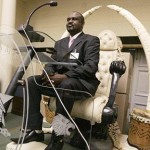
On the downside we have seen little progress in media reform. No changes in the attitude or the activities of the security agencies and no changes to repressive legislation or improvements in the management system for elections. The constitutional reform process has started, but faces a difficult and tortuous path over the mountains in its way. The judicial system as a whole is being used as an instrument of oppression and a political weapon. No progress has been made in agriculture where output and activity continues to decline. 

Yesterday the South African Minister responsible for Foreign Affairs said that she wanted to see “the acceleration of the implementation of the Global Political Agreement”. In fact I think she said the “full implementation” and that would be even better. More we could not ask for, as the GPA, even though it has numerous weaknesses and faults, is the only way forward. 

I attended the annual Congress of the Commercial Farmers Union this week in Harare. It was a courageous and well organised affair and Deon Theron was elected President. I was glad to see both – it is vital that while we work on the solution to our problems and negotiate the difficult terrain ahead of us that we keep what is left of our economic institutions alive and operational. Deon will make a good President and is an important player in this situation. 

The keynote address was given by a farmer from Zambia who is the current President of the International Association of Agricultural Unions. It was an excellent summary of the global state of agriculture and it was good to see a farmer from Africa in such an influential position. Zimbabwe’s displaced farmers are making a huge impact on agriculture throughout the continent and are a real testimony to what we have lost in the way of human capital. 

C G Tracey died the other day and his book “All for nothing?” was on sale at the CFU Congress. It is an excellent read for anyone who is interested in this country and wants to see what has gone on over the past century – no man played a bigger role in building the country and served its best interests more than “CG”, as he was known. The title was suggested by his wife before she died and all he did was to add the question mark to emphasise that it is not yet all over.

I hear rumbles that JZ may visit Zimbabwe for talks with Mugabe shortly. The Vice President of SA is here for the funeral of our Vice President who died last week and he will be buried on Monday and no doubt talks will take place on the sidelines – funerals are great events for this sort of activity. Certainly we will have to wait for a couple of weeks to ascertain what is going to happen on this front. 

If (as usual) we are let down by the region, we will have to fight our way through some very tough terrain. There is no doubt in my mind where the people are and if we can mobilise the resources required, we could stun Zanu PF yet again with a significant electoral victory in the bi elections. I was listening yesterday to some music especially written for the MDC and one song in particular asked “if you vote for Zanu, where are you going?” That just about sums things up. 

This is not the time to relax or to abandon the prayer mat – we need to work and pray. At its heart this is a spiritual battle and both activities are vital to our eventual victory. 

Eddie Cross, Bulawayo, 8th August 2009

Bridegroom Vanishes On Big Day

0

Harare — An AFM reverend’s daughter in Bindura was left in the lurch after her intended failed to show up for the wedding, with families and relatives of the bride waiting the whole day in excited anticipation.

Gamuchirai Letticia Chivasa the first daughter of Reverend Chivasa, cried bitter tears all the way back home after her wedding failed before the crowds gathered at Hermann Gemeiner High School in Bindura on August 1.

The bridegroom, Walter Mutsvene, and his family did not show up for the wedding that would otherwise have been one of the most enviable in Bindura. The bridegroom’s family gave no reason for the no-show.

Gamuchirai’s parents refused to comment, saying they were still nursing their wounds of disappointment. They said an interview with The Herald would only add salt to the wound.

“If you want to help us honestly pray for us,” Mrs Chivasa said, “because our role is to pray for the people.

“But if it is like this, it is we who are involved vanofanira kukunamatirai (they should pray for you).”

Rev Chivasa said his wife and family were still trying to come to terms with the incident that left tongues wagging in Bindura. Efforts to contact the bridegroom were fruitless. It is believed that Walter had now relocated to South Africa. Source: The Herald.

Speaker defends commission interviews

0

Lovemore-Moyo in Parly(MISA/IFEX) – The Speaker of Parliament Lovemore Moyo has denied media reports of a deadlock resulting in the alleged concealing of results for the interviews conducted to appoint potential candidates to the Zimbabwe Media Commission (ZMC).
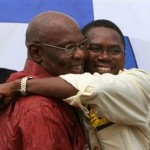
He claimed it is normal that people voice concern if their preferred candidate received low marks and confirmed that the matter has been finalised.

“I am happy to say we have fully concluded the matter with 12 names to be sent to His Excellency and six to be sent to the minister of media, information and publicity anytime from now'” confirmed Moyo.

A list of six will be submitted to the President who will in turn appoint three members to serve with the Broadcasting Authority of Zimbabwe (BAZ).
However, still in contention, of which the public is owed an explanation, is how the Standing Rules and Orders Committee (SROC) also bundled the ZMC interviews with those for BAZ.

The advertisements placed for applications to be submitted for interviews by the Committee were specifically for the ZMC and made no mention of the possibilities of the interviewees being also considered and shortlisted for BAZ appointments.

Mugabe scoffs at foreign handouts

0

President Robert Mugabe on Monday lashed out at “racist” western states wary of Zimbabwe’s power-sharing deal, saying foreign handouts were not a solution to the country’s economic woes.

“The West seeks to divide us and disturb our peace. If they do not want to deal with us why should we continue to want their help,” Mugabe told thousands gathered at a funeral for his ally and deputy Joseph Msika.

“Zimbabwe need not be tied to any one corner of the world, least of all, to a corner of former imperialist and racist colonisers. We are not part of western Europe and the United States.”

Mugabe’s rhetoric comes days after US Secretary of State Hillary Clinton pushed for greater reforms while on a visit to South Africa where the two countries pledged to work together to speed up Zimbabwe’s power-sharing pact.

The 85-year-old leader joined Prime Minister Morgan Tsvangirai in a unity government in February after disputed polls saw him lose his first post-independence majority.

But Western powers have pushed for evidence of reform and an international chill remains towards Mugabe amid reports of continued rights abuses and internal power-struggles over key posts.

Mugabe spurned foreign assistance, saying “great nations” were built on their own endowment at the funeral of Msika who was one of two deputy presidents from his party who joined the unity arrangement.

“Let everyone in the inclusive government and the country generally know that our nation will never prosper through foreign handouts,” he said.

Msika was one of the founder nationalists who waged a liberation war against the British colonial rule, and died of hypertension on Wednesday.

His burial was attended by senior government officials including Tsvangirai, deputy prime minister Mutambara and representatives of regional leaders including South Africa’s deputy president Kgalema Motlanthe. AFP

Mugabe offers Dabengwa Vice Presidency

0

By Denford Magora

Robert “The Solution” Mugabe, in a shock move, has offered Dumiso Dabengwa the vice-presidency left vacant by death of John Msika.

Only a few minutes ago, I confirmed this with two senior ZANU PF and government officials.

Mugabe is said to have called Dabengwa yesterday and spent more than hour talking to him. Two emissaries have been dispatched to Bulawayo today to try and talk the former ZIPRA Commander into accepting the offer.

Mugabe, in explaining his motivations yesterday, said that, most importantly, he would like to be “flanked by fighters” in the ZANU PF presidium. He also mentioned the fact that John Nkomo, who many consider the logical choice, only got eminence during the late 1970s, when the Frontline States (Kaunda, Nyerere and others) pushed for a common front between Joshua Nkomo and Mugabe through the UANC of Bishop Muzorewa.

John Nkomo, the current ZANU PF chairman, was nominated by ZAPU to be their representative within Zimbabwe for the UANC.

Mugabe appears to be reluctant to confirm John Nkomo, to the extent that he even said that he would consider Simon Khaya Moyo, Zimbabwe’s current ambassador to South Africa.

Khaya Moyo was Joshua Nkomo’s aide during the Liberation War.

Mugabe told Dabengwa that it was he, Dabengwa, who had thrown ZANU PF away and that ZANU PF had never thrown him away. He pointed to the fact that the party has never formally expelled him.

Most interesting, though, is Mugabe’s claim that Msika himself had explicitly said his wish would be for Dabengwa to take over from him. This he apparently said late in 2007 when he wanted to retire and was forced by Mugabe to stay on. Msika subsequently repeated this in the last few months of his life, apparently.

Mugabe is reported to have told the late Vice-president when he wanted to retire: “You can never quit a struggle.” He still believes that he is fighting a “Third Liberation War”.

Mugabe appears to have been hinting at his approach to Dabengwa during his speech at the Msika home on Wednesday night. He repeatedly told the gathering that Msika had wanted “unity” amongst the people and that he implored Mugabe to ensure that unity prevailed in the country.

Of course, we all know that Mugabe considers his unity with ZAPU to be almost sacrosanct and he thinks everyone should see it the same way, no matter what wrongs are being done.

Dabengwa is said to be reluctant, but we now all know about Mugabe’s plotting and his seeming ability to resurrect himself from political ashes like the proverbial Phoenix.

Dabengwa himself knows that, were he to accept Mugabe’s offer, he would lose credibility with his constituency.

DabengwahugsMakoniAs one speaker said to him during the Bulawayo meeting last year when Dabengwa endorsed Simba Makoni’s bid for the presidency: “DD, we have always loved you, but we hated the jacket that you were now wearing (ZANU PF)”.

Still, Dabengwa has been invited to the burial of Msika on Monday and Mugabe has already indicated that he will want to speak to the ZAPU leader again on that day, after the proceedings.

This is going to be an extremely interesting week, then.

The way ZANU PF operates, Mugabe chooses his own deputies and no one else really has any say in it. Once Mugabe makes his choice known, the party always falls in line behind him, endorsing his choice.

Mugabe succession could spark coup: Biti

0

By Fortune Tazvida

Finance Minister Tendai Biti has warned that if Zanu PF does not resolve its long running succession dispute over who will replace President Robert Mugabe, the country could descend into Somalia-like chaos and see military coups.

“The succession debate in ZANU PF should be resolved very urgently as it can result in a military coup in this country. It is not a secret that there is chaos in ZANU PF about succession,” said Biti at a weekend meeting with business leaders in Bulawayo.

Internal fighting within Zanu PF is said to have escalated following the death of Vice President Joseph Msika last Tuesday. Two factions, one led by Defence Minister Emerson Mnangagwa and the other by retired army general Solomon Mujuru are said to be jostling for control.

tendai-biti-2Biti believes any one of those factions could resort to a military coup to seize power.

“We don’t want a military coup because of a failure to replace the leadership. Zimbabwe will be like Somalia and Ivory Coast if the succession issue is not urgently dealt with…a failure to deal with this issue will affect future generations of Zimbabweans.”