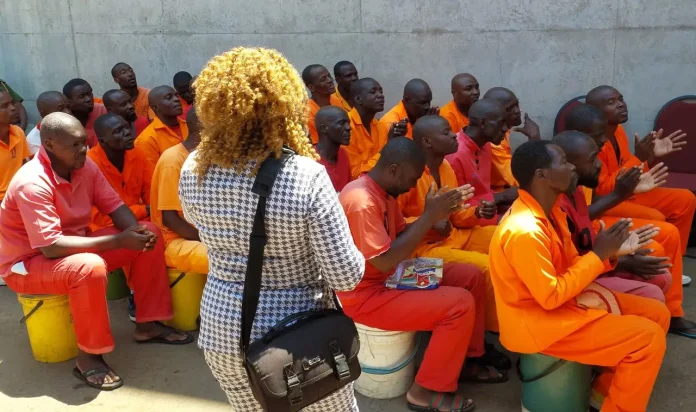
Inmates at Chikurubi Maximum Security Prison, October 2025 (Picture via X - Ministry of Justice)
An inmate at Chikurubi Farm Prison, a unit within Zimbabwe’s largest correctional facility, Chikurubi Maximum Security Prison, has died under unclear circumstances, prompting an independent investigation amid social media claims that he may have been assaulted.
The Zimbabwe Prisons and Correctional Service (ZPCS) confirmed that Gift Mbowa (185/26), who was serving a 12-month sentence, was found unresponsive in his cell at around 3:00 a.m. on 20 March 2026 after reportedly complaining of chest pains.
While social media reports have suggested that Mbowa’s death could have been linked to assault, ZPCS stated that these allegations are being treated seriously. The service said it has launched a full and independent investigation into the circumstances surrounding the incident.
“The ZPCS remains firmly committed to upholding human rights, maintaining professional conduct among its officers, and ensuring the safety and welfare of all inmates under its care,” the statement read.
“Any conduct found to be inconsistent with these standards will be dealt with decisively in accordance with the law.”
The service has urged the public to avoid speculation and allow the investigation to proceed without interference. It also confirmed that the family of the deceased has been notified and extended its condolences.
ZPCS has pledged to provide updates as more verified information becomes available and has invited members of the public to submit complaints or enquiries through its official channels.
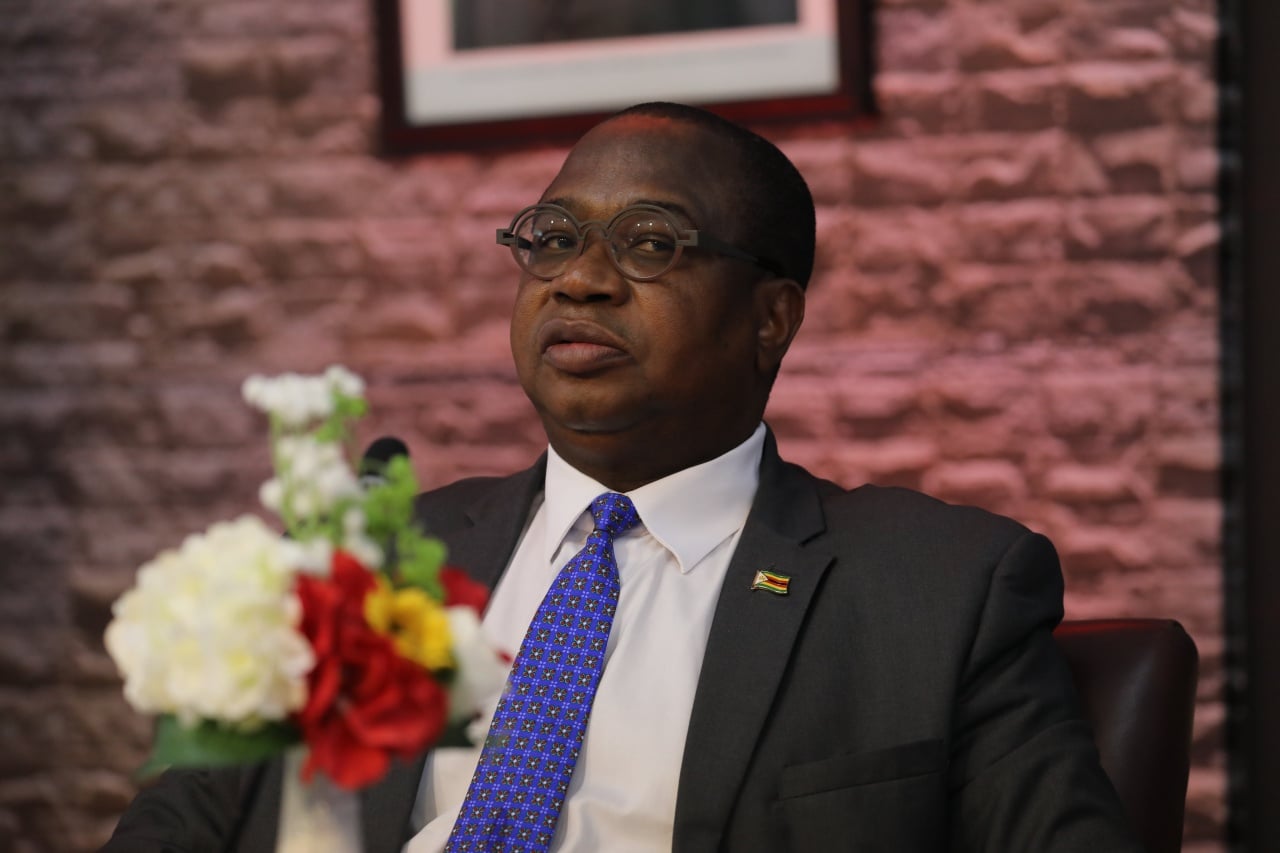
Finance Minister Mthuli Ncube (Picture via X - Parliament of Zimbabwe)
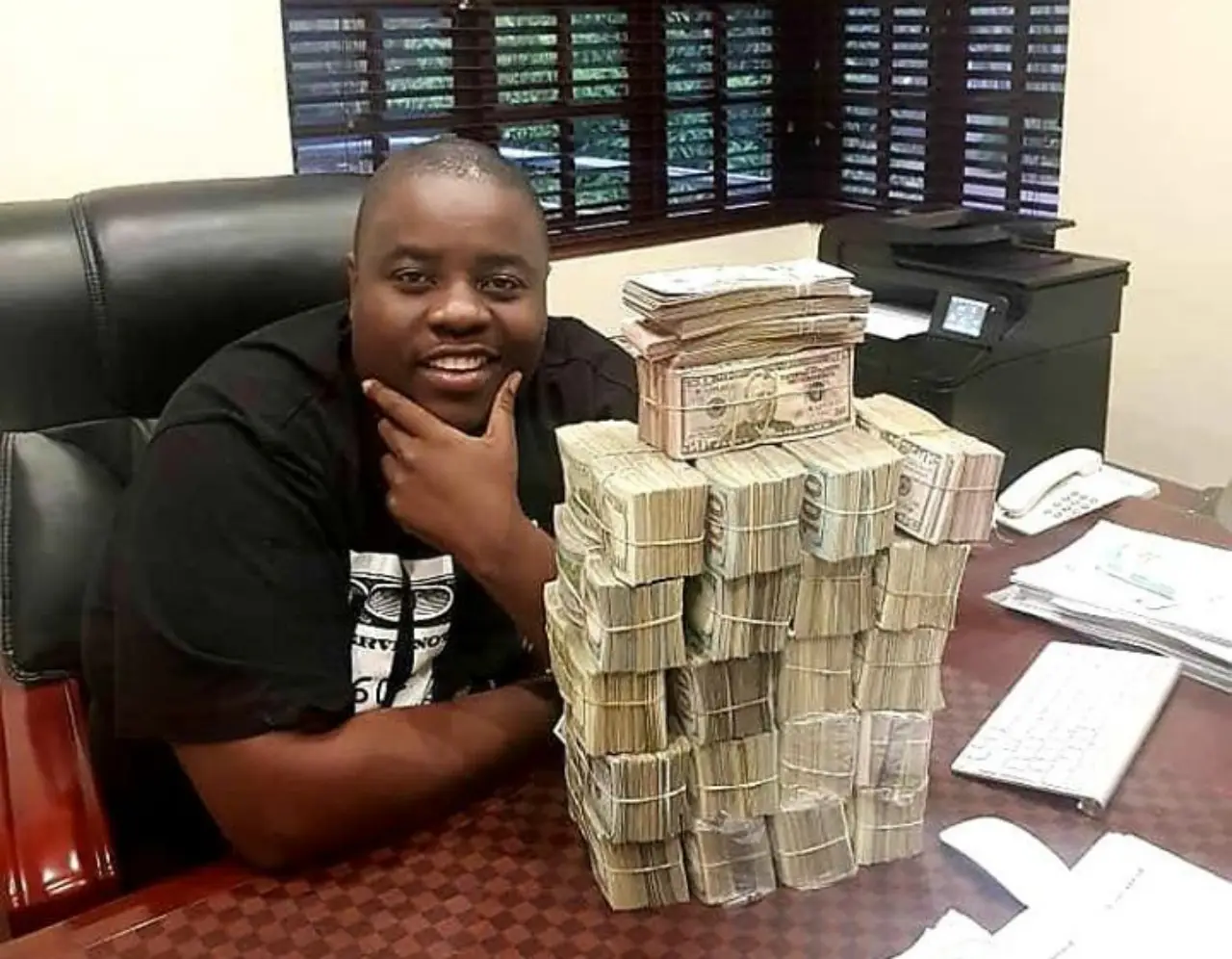
Controversial businessman Wicknell Chivayo, whose lavish public cash donations have sparked widespread debate, has received indirect legal backing after Finance Minister Mthuli Ncube told Parliament that holding large sums of money is not a crime in Zimbabwe.
Ncube, on Wednesday, told Parliament that it is not illegal for individuals to possess large amounts of cash in Zimbabwe, clarifying a contentious issue that has drawn public debate in recent years.
Controversial tenderpreneur Wicknell Chivayo (Picture via Facebook – Sir Wicknell)
The Minister said the law only places limits on how much money can be withdrawn from banks at a given time, but does not criminalise the possession of cash, regardless of the amount.
“The law is very clear in terms of limiting withdrawals; it limits withdrawals from the bank. You can keep withdrawing for the next 10 days or 30 days. By that time, you will have a lot of money with you.
“It is not illegal to be found in possession of that money at all. There is no illegality,” he said.
His remarks came after legislators raised concerns about increasing cases of individuals seen handling or distributing large sums of cash, often outside the formal banking system.
Minister of Home Affairs and Cultural Heritage, Kazembe Kazembe (Picture via X – Parliament of Zimbabwe)
Home Affairs and Cultural Heritage Minister, Kazembe Kazembe, also highlighted the challenges police face in investigating crimes involving large amounts of cash.
He said such cases are difficult to prosecute because complainants often fail to provide proof of ownership, such as serial numbers, and may underreport amounts for fear of scrutiny over the source of funds.
“One of the major challenges is accountability for the cash exhibits when they are recovered,” Kazembe stated.
“When police recover such money, in the majority of cases, complainants are not able to properly account for their money through serial numbers and courts therefore find it difficult to link recovered money to the complainant, as there will not be any other proof of ownership.
“Under such circumstances, money may even end up not being handed back to the complainant, which defeats all efforts involved.”
The issue has been amplified by public scrutiny of Chivayo, who has in recent years attracted attention for distributing large cash donations to musicians, church figures, congregants, footballers and politicians.
Chivayo’s high-profile giveaways have sparked debate on social media and among critics, some of whom have accused authorities of failing to act against him due to political connections.
During the same session, legislators also questioned whether existing exchange control regulations were being breached, particularly in cases where individuals are believed to access large sums from banks.
In response, ministers indicated that such matters would fall under financial regulators and would require specific evidence to trigger investigations.
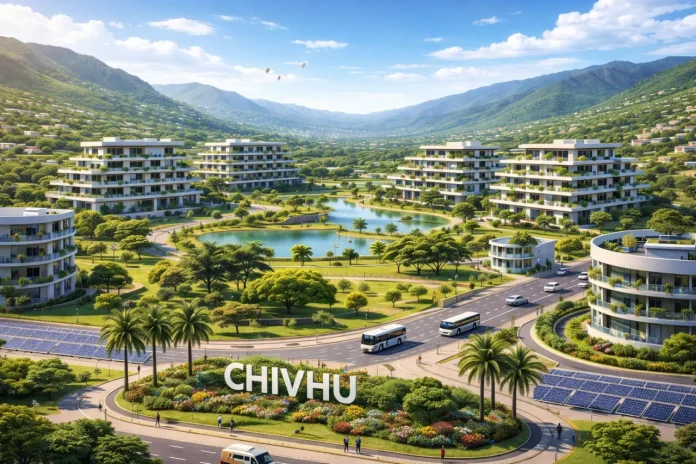
WestProp Holdings is charting a bold new chapter in its growth journey with the expansion into Mashonaland East, Chivhu, a town just one hour and thirty minutes from Harare. (Picture via AI illustration)
WestProp Holdings is charting a bold new chapter in its growth journey with the expansion into Mashonaland East, Chivhu, a town just one hour and thirty minutes from Harare.
More than a location, Chivhu is a gateway city – a central hub where nodal roads converge, linking Harare, Gweru, Masvingo, Bulawayo, Victoria Falls, and Mutare.
It is also the natural corridor to South Africa, Botswana, and Mozambique, making it a halfway city to Zimbabwe’s major urban centres and regional markets.
A new city will soon take shape some 8 km outside the town towards the new iron and steel plant at Dinson. The land is opposite the well-known Denise Kitchen.
This land carries a rich history, it was once famed as Tangenhamo, a vibrant tourist centre that drew visitors from across the globe. Today, WestProp is reimagining that legacy, breathing new life into Chivhu as a modern hub of tourism, commerce, and community.
Chivhu’s identity is deeply rooted in farming and mining, from iron and steel mining to tobacco cultivation and cattle ranching.
Its economy is sustained by hardworking communities and enriched by a vibrant diaspora spread across nearby towns and cities. This blend of local resilience and global connections makes Chivhu a fertile ground for WestProp’s vision of sustainable urban evolution.
By expanding into Chivhu, WestProp is not just building developments, it is unlocking opportunity. The town’s strategic location positions it as a natural hub for commerce, logistics, and lifestyle.
WestProp’s projects will bring modern housing, innovative infrastructure, and community-centered spaces that reflect the company’s hallmark of sustainability, innovation, and trust.
This move signals more than geographic expansion, it is a statement of intent: WestProp is weaving Chivhu into Zimbabwe’s urban future, transforming it into a city that connects people, industries, and nations.
With flagship projects that blend storytelling, community engagement, and visionary design, WestProp is poised to make Chivhu a symbol of progress and possibility.
Company chief executive Mr Ken Sharpe feels the “onus is now on the people of Chivhu and surrounding towns and growth points to embrace the emergence of a smart city within their commune”.
“We are happy to be expanding. We have previously concentrated our developments in Harare but due to demand and calls for outward growth, we have decided to make Chivhu our immediate target. We are going to be the corridor for growth in Chivhu and nearby centres,” he said.
Westprop is known for flagship developments such as Pokugara, Millennium Heights, Pomona City and The Hills Luxury Golf Estate.
The company is prepared to bring its theme of live, work , shop and play in Chivhu and to revive some of the town’s dying tourism infrastructure.
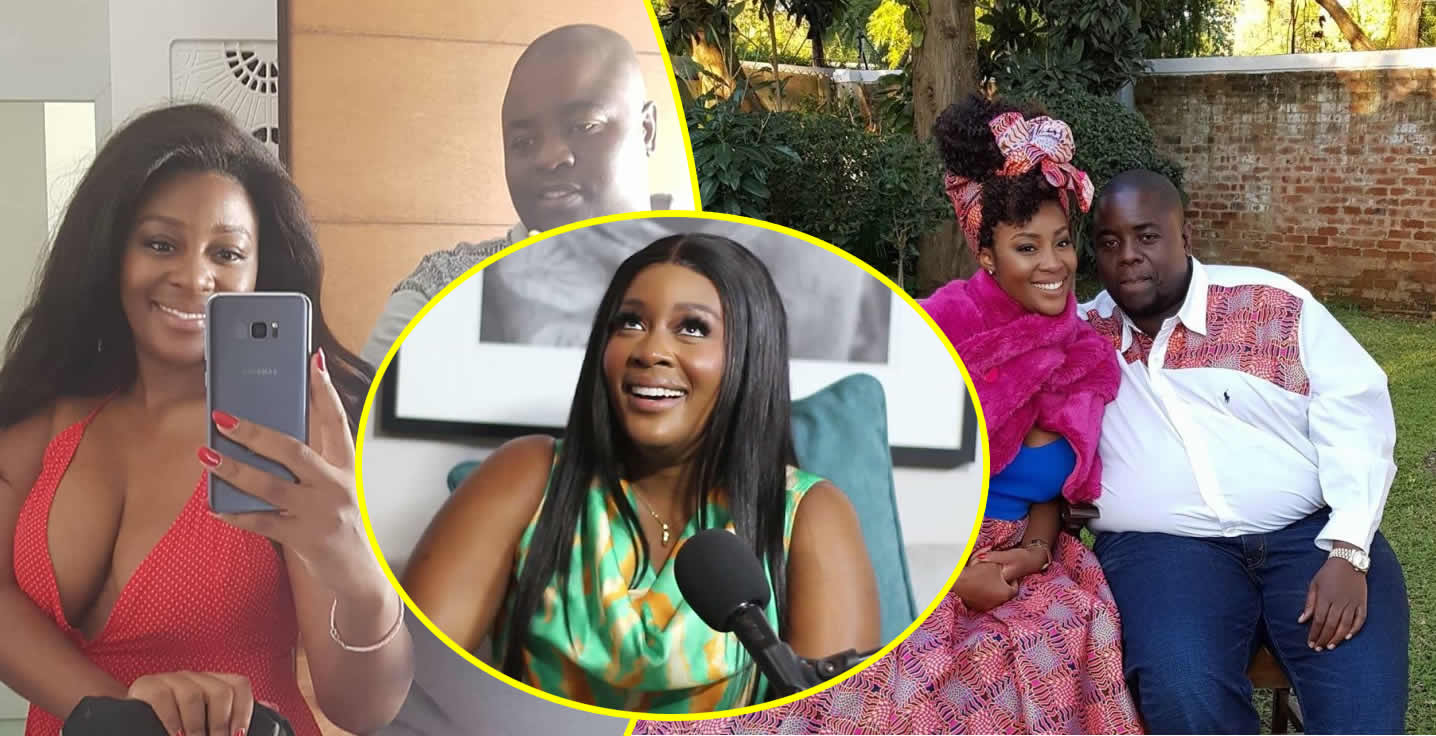
In March 2024 Sonja Madzikanda confirmed that her marriage of seven years to controversial businessman Wicknell Chivayo had broken down, saying that the two have not been together for a while.
A high-stakes divorce battle involving controversial businessman Wicknell Chivayo has erupted into the open, with his former partner tabling eye-watering financial demands — including a $25 million payout, hefty monthly maintenance, and a garage of ultra-luxury cars.
Court filings show Sonja Madzikanda is seeking a multimillion-dollar settlement as the pair’s bitter split escalates into a full-blown legal war over money, assets, and access to their young children.
Luxury Lifestyle Claims Take Centre Stage
Madzikanda’s demands paint a picture of extraordinary wealth. She wants:
A once-off $25 million payment
$40,000 monthly spousal support
A $1 million annual budget for holidays and lifestyle expenses
On top of that, she is claiming ownership of high-end properties in Harare and Johannesburg — and a fleet of seven luxury vehicles, including three Rolls-Royces.
She is also pushing for comprehensive financial support for the couple’s two children, covering elite education, international medical insurance, and lifestyle costs through to adulthood.
Battle Over Marriage Legitimacy
At the heart of the dispute is whether the couple’s relationship qualifies as a legally binding marriage.
Wicknell Chivayo and new wife Lucy Chivayo. His ex-wife Sonja Madzikanda seen with him on the right (Picture via Facebook – Wicknell Chivayo)
Madzikanda argues they entered a valid customary union in 2017, complete with lobola payments, making the relationship subject to Zimbabwe’s marriage laws.
She insists only a court can dissolve the union — dismissing a traditional separation token paid in 2024 as legally meaningless.
Her position: she is entitled to a fair share of the wealth accumulated during their time together.
Chivayo Fires Back: ‘Extortionate’ Demands
Chivayo’s legal team has hit back hard, branding the claims “frivolous” and “extortionist.”
Businessman Wicknell Chivayo and wife Sonja Madzikanda in happier times (Pictures via Facebook – Wicknell Chivayo)
They argue the union was never formally registered, stripping it of legal standing for property division or spousal maintenance. They also maintain that Madzikanda ended the relationship herself — and therefore forfeited any financial claims.
His lawyers insist the fortune in question was built solely through his business ventures, and that Madzikanda made no meaningful contribution.
In blunt terms, one filing states: “Defendant is not her meal-ticket for life.”
Custody Clash Turns Urgent
While the financial dispute dominates headlines, a parallel fight over the couple’s two children has taken on urgency.
Wicknell Chivayo and Sonja Madzikanda in happier times (Pictures via Facebook – Sir Wicknell)
Chivayo has approached the High Court seeking immediate access, accusing Madzikanda of blocking contact and using the children as leverage in financial negotiations.
He is pushing for shared access, including alternating weeks, holidays, and birthdays.
According to his court filings, he has been denied visits, cut off from school updates, and prevented from attending key events in the children’s lives.
Court Weighs Next Move
The High Court has yet to rule on the interim custody application, leaving both the access dispute and the broader divorce battle unresolved.
With millions of dollars, prime assets, and parental rights on the line, the case is shaping up to be one of the most explosive legal showdowns in Zimbabwe’s recent history.
Air Marshal (Retired) Henry Muchena has warned former Norton legislator Temba Mliswa (Picture by Tayananiswa via Pindula and X - Temba Mliswa)
Open letter to Rt Air Marshall H. Muchena.
As a young citizen of this country, I write in response not only to a well-earned rebuttal towards Sabhuku T. Mliswa, written under your name, but generally, to many other issues you’ve dutifully raised since the introduction of CAB3.
I write as a young Zimbabwean who identifies both as a student of history and as someone admittedly opposed to ZanuPF governance since becoming politically conscious.
I make that concession so as to clarify both my political persuasions, and disillusionment with your approach.
Without delving much into history, I write to you having observed a pattern.
Firstly, towards the 2023 elections, in a directed attack at the Opposition, Gen Chiwenga bullishly threatened to amend the current constitution, pursuant of trivial Zanu PF political agendas.
Secondly, on a series of his first interviews, Blessed Geza [MHSRIP] claimed that the “nationalist” class of ZanuPF, singling out Mugabe and Mnangagwa after him, have had their turn as presidents.
Geza further claimed that: “..us the real war veterans…” are next in line.
Although Geza’s grievances, which citizens outside ZanuPF correctly identified with, eventually outgrew [or at least were packed to seem so], mere succession contradictions within ZanuPF, the agenda seems to remain so.
Your series of letters, Gen Muchena, are doing the same.
I put it to you, Gen Muchena, that your emphasis on collective history and current identity not only as liberation war fighters but proud ZanuPF leaders and members are a cause of concern.
Though this is your democratic rights, I can’t nevertheless help but feel uncertain.
That uncertainty comes from tragic lessons learned from history, particularly the events of 2017, where the likes of Patrick Chinamasa and Amb Mutsvangwa eventually demanded that the exit of RG Mugabe was a “Zanu PF internal matter”
Never mind how many 🇿🇼ns had played diff roles.
To that end, Gen Muchena, I put it to you that your series of correspondence have failed to do the following
(i) Put a clear and unequivocal message that what’s actually at stake isn’t ZanuPF succession no party constitution, but the state constitution and democratic processes.
In fact, although there is very little to be done about what has transpired in the past, the reality is that CAB3 is a continuation of partisan power consolidation.
Resolving this would demand re-emagining 🇿🇼 outside party loyalties, as the liberation struggle envisioned.
(ii) Secondly, Gen Muchena, your series of correspondences thus far make no attempt to set a nationalistic and holistic push back against autocratic entrenchment.
This has been consequntiated by your over-emphasis on being “ZanuPF,” making some of us feel like outsiders.
(iii) Thirdly, Gen Muchena, your letters, struggle & consequently fail to paint the 🇿🇼 you envision should CAB3 fail, specifically should Mr. Mnangagwa not be on the ballot in 2028.
The political problems bedeviling 🇿🇼 won’t be resolved by simply having an election in 2028.
Again, I make the concession that we can not do much about history.
Yet that being the case, the man-made crisis we find ourselves in today (which we shouldn’t waste) demands that we be clear about what must happen next.
🇿🇼 simply needs to return to democratic legitimacy.
As you dutifully reject CAB3 and demand a referendum, can you Gen. Muchena join calls for the total implementation of the current constitution and and time-bound commitments towards a credible electoral process?
One which you colleagues in the security forces today will respect.
(iv) Fourthly, can you and team, Gen Muchena, as war veterans and ex-senior gov officials inspire calls for replacing the individualistic #Vision2030, with a National Vision born out of an inclusive dialogue.
We are a country where gov dialogues with citizens through violence.
It is my reflection and belief, Gen Muchena, that such an approach as highlighted by those 4 points, conspicuously absent from, and/or downplayed in your letters thus far, will bring clarity on what you are representing.
The ruling ZANU-PF party says there will be no referendum on Constitutional Amendment Bill No. 3, come hell or thunder.
Yet its political actions increasingly resemble a party preparing for one.
I am informed through research that factional strategists within the ruling party have not ruled out a referendum as a last option.
More importantly, earlier internal state agents’ assessments suggest the Bill could face a significant and humiliating defeat under a free and fair national vote.
However, their strategists now see a tiny window. Repression of opposition, fragmented resistance, muted and ambiguous voices from critical actors, and internal delegitimisation by party-state structures have created conditions for a reassessment.
Reader, let us revisit the Bill. It was gazetted on 16 February 2026. At its core, the proposal removes the direct election of the President by citizens and transfers that power to Members of Parliament.
It extends the term of both the President and Parliament from five to seven years. It allows the President to appoint additional Senators, while weakening institutions that oversee elections, gender equality, and aspects of judicial accountability.
This is the context in which the current wave of mobilisation must be understood.
In Mashonaland West, ZANU-PF’s provincial leadership is running structured awareness campaigns on the Bill. District by district, party members and local structures are being engaged.
Similar processes are reported in Mashonaland East in Mutoko, and in Harare in areas such as Mabvuku.
This is coordinated, systematic, and expected to spread across all ten provinces in the next few days.
This resembles groundwork for a national referendum campaign.
ZANU PF’s structures are being activated. Messages are being tested with state agents quietly observing responses. At the same time, mapping loyalties and identfying weak points.
Alongside this, the political space is tightening for opposing voices.
On 23 March 2026, Tendai Biti, convenor of the Constitution Defenders Forum, was granted bail with conditions that bar him from convening grassroots meetings on the Bill. This has direct political consequences. Mobilisation capacity is being constrained at a critical moment.
Reports from Zimbabwe Lawyers for Human Rights on 24 March 2026 point to an increase in violations. This signals a broader pattern of pressure on dissent.
If there was certainty that no referendum would take place, such restrictions would be less necessary. Actors like Timba, Madhuku’s networks, and women and students’ movements would not face constraints at grassroots level.
I have also picked disturbing indications that, if a referendum is eventually triggered, it may not follow previous models.
Earlier referendums in 2000 and 2013 allowed citizens to vote anywhere using a national ID. That created flexibility.
Current hard-core signals from within ZANU-PF point to a constituency-based approach.
Their preference is for voting to be territorially fixed, allowing administrative control over participation and predetermined outcomes.
This is the context in which current actions must be read.
Progressive Zimbabweans cannot organise on the basis of ZANU-PF’s official statements alone.
Organisation must respond to observable actions and counter-intelligence.
If a referendum is ever to be called, groundwork will already be in place.
Preparation cannot therefore be reactive. It must be anticipatory.
Organisation must be built at constituency and polling station level.
In authoritarian settings, outcomes are often shaped before the public event.
The referendum being denied today can emerge tomorrow, but offered in half measure.
So one way is to organise according to scenarios, including this wild card scenario.
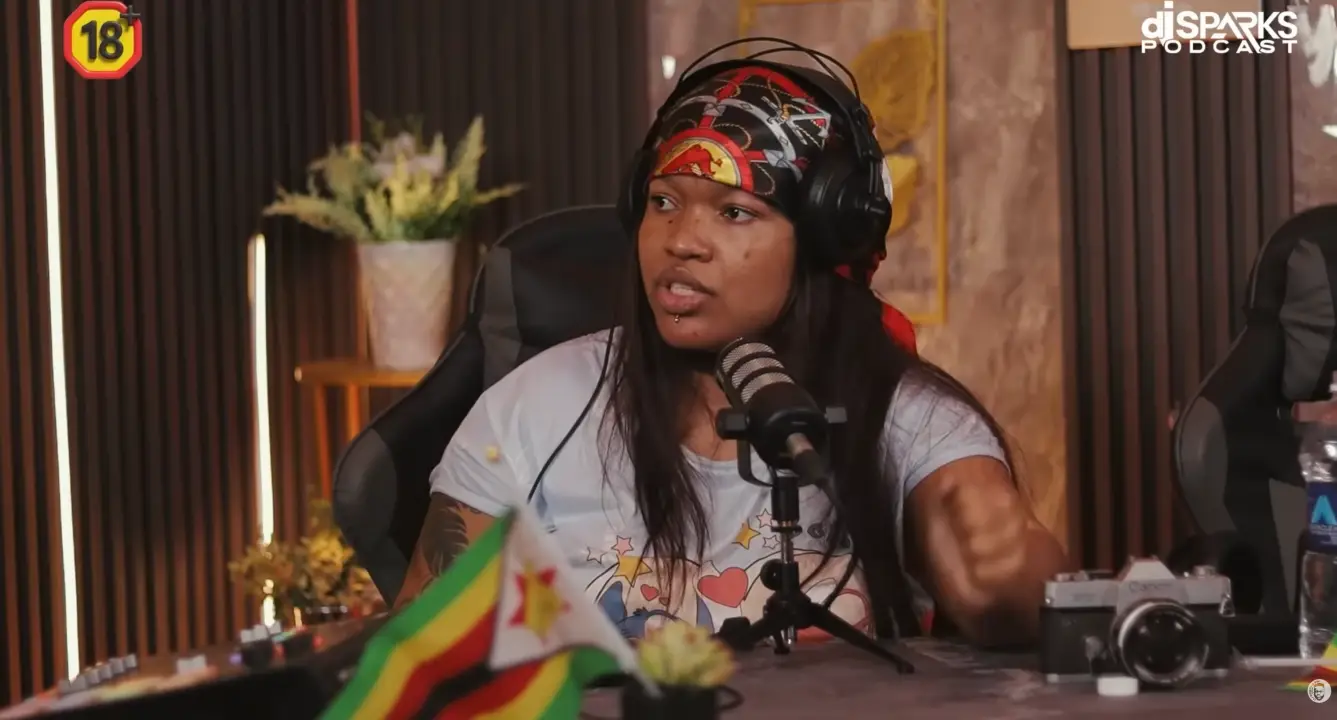
Zanu PF councillor Simbarashe Chanachimwe and Zimdancehall artist Malloti Rose (Pictures via Harare City Council and YouTube - DJ Sparks ZW)
Simbarashe Chanachimwe, better known as Dhama, an alleged Mbare drug dealer arrested in 2023 and now serving as a councillor, has been indirectly named in fresh allegations by Zimdancehall artist Malloti Rose, who claims that authorities are turning a blind eye not only to him but also to other influential figures allegedly controlling Harare’s drug trade.
In an interview on the DJ Sparks Podcast, Malloti said she was merely a drug user and not a supplier, but alleged that well-known figures, some with political influence, are behind the distribution of drugs.
“I know the suppliers of drugs. If the police want, I can accompany them to the bases. I am just a drug user, not a supplier,” she said.
Without mentioning his name, she further alleged that a prominent drug supplier in Mbare, whom she linked to political office, had previously led anti-drug campaigns despite being involved in the trade.
The person who was elected as a councillor and has led an anti-drug campaign is Dhama.
He is a well-known drug supplier in Mbare.
“There is a well-known drug supplier in Mbare who once led an anti-drug campaign, carrying placards, yet he is one of the biggest suppliers of drugs in Harare. I believe he is a councillor,” she said.
Malloti Rose during an interview on DJ Sparks Podcast (Picture via YouTube – Dj Sparks Zw)
Malloti argued that law enforcement efforts often target users rather than suppliers, questioning the effectiveness of current anti-drug operations.
“Now there are calls to arrest Hulengende and Malloti, but if these drugs were not being supplied in the first place, where would we get them?
“People turn to drugs partly because those who supply them, often influential individuals, are not held accountable. I am simply an addict who depends on the supplier,” she added.
Her remarks come amid heightened scrutiny of her and her husband, who is also a fellow artist, Hulengende, after they were named in Parliament over allegations of promoting and normalising drug and substance abuse through their social media content.
Speaking in the National Assembly, Zvimba South legislator Taurai Malinganiso accused the pair of using platforms such as TikTok, Instagram and Facebook to glamorise drug use, including cannabis and the misuse of codeine-based cough syrups.
He called for stricter regulation of digital platforms and stronger enforcement of drug laws.
Zanu PF councillor Simbarashe “Dhama” Chanachimwe (Picture via Harare City Council)
The allegations have sparked broader debate, with anti-corruption activist Jacob Ngarivhume weighing in, saying the issue points to deeper systemic challenges.
Ngarivhume said the claims reflect widespread concerns that influential individuals linked to the ruling party are involved in drug trafficking while publicly supporting anti-drug campaigns.
“What this discussion exposes is the deeply entrenched deceit in the government when it comes to fighting drugs. Drug dealers are known to the police, and some of them have been appointed councillors, MPs and ministers,” he said.
He added that enforcement agencies often focus on arresting low-level offenders instead of targeting alleged high-level suppliers.
In February 2023, police arrested Dhama after raiding his flat and recovering 26 sachets of mbanje and a cannabis plant. The arrest was part of a nationwide operation targeting drug dealers and peddlers.
Chanachimwe was later elected as a councillor under the Zanu-PF banner in 2023, a development that fueled debate over accountability and vetting of public officials.
Meanwhile, the Zimbabwe Republic Police has said it is waiting for a formal extradition request from South Africa before taking action to arrest Malloti, who is wanted in connection with an armed robbery.
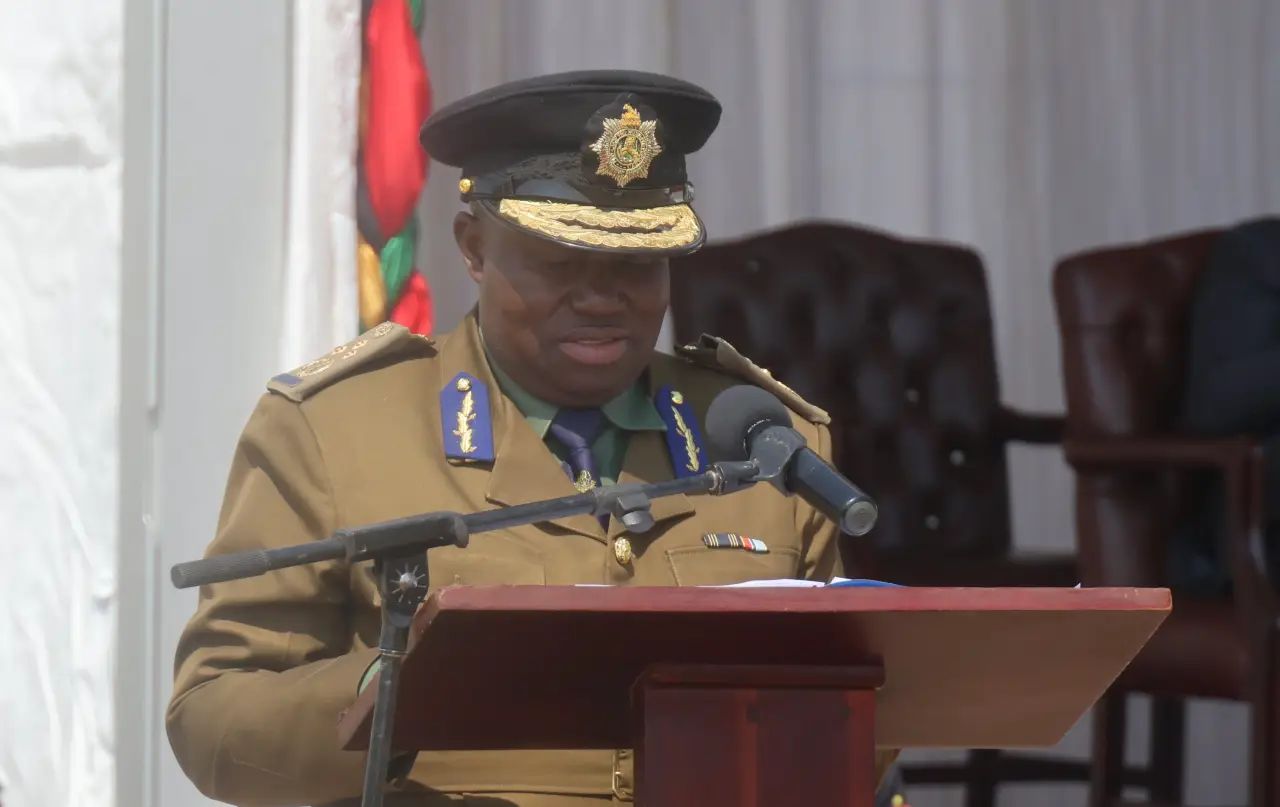
Deputy Commissioner-General of Police (Crime and Operations), Learn Ncube addresses the crowd in Mbare, 01 September 2025 (Picture via X - Zimbabwe Republic Police)
Zimbabwe’s police force has issued a nationwide directive ordering officers to remove all social media content showing themselves in uniform.
The order, issued by Deputy Commissioner General Learn Ncube, warns that unauthorised posts on platforms such as Facebook, TikTok and WhatsApp violate police regulations and risk eroding public trust.
“Displaying oneself in police uniform on social media platforms without authorisation is totally unacceptable and breaches the police standing rules and regulations,” Ncube wrote.
“Such actions compromise the integrity of the organisation and undermine public trust.
“As a matter of urgency, all those with posts on social media platforms whilst dressed in police uniform should immediately remove such posts. Disciplinary action shall be taken against those who fail to comply with this given directive,” he added.
The move follows a surge in officers sharing personal content online — from dance videos to public commentary — often reaching wide audiences.
Police leadership framed the crackdown as necessary to preserve professionalism and organisational integrity, signalling growing concern over how individual behaviour online reflects on state institutions.
Former First Lady Grace Mugabe and President Emmerson Mnangagwa, March 2026 (Picture via Ministry of Information)
At a recent public function, the opening of The Sprout Restaurant in Harare, we saw former First Lady Grace Mugabe moving within the same orbit as senior ZANU PF figures, her presence neither resisted nor theatrically embraced.
It was not warmth. It was something quieter, more deliberate. A recognition without intimacy. A co-existence without reconciliation.
Conversations did not freeze when she arrived, nor did they gather around her. She was acknowledged, but not centred. Seen, but not politically felt.
What struck me most was not simply her presence, but the ease with which that presence had been normalised. There was no visible tension, no residue of the very public animosities that once defined her relationship with President Emmerson Mnangagwa and his allies.
If anything, the choreography of the moment suggested a system that had already metabolised its own past conflicts.
Grace Mugabe was not being reintroduced into power. She was being reabsorbed into the margins of it. And this quiet reintegration into the social spaces of the ruling elite has not been confined to a single event.
Grace and her daughter Bona also attended Mnangagwa’s inauguration after the 2023 presidential elections, an appearance that would have been unthinkable in the immediate aftermath of 2017.
Former First Lady Grace Mugabe and Bona Mugabe at the National Sports Stadium in Harare for President Emmerson Mnangagwa’s inauguration, 04 September 2023 (Picture via X – Ministry of Information and Publicity)
The optics alone were striking. The woman who had once publicly ridiculed Mnangagwa, who had celebrated his political downfall, now sat within the ceremonial architecture of his power. No denunciations. No visible hostility. Just a careful, almost studied normalcy.
And yet, beneath that surface lies one of the most fascinating unresolved relationship dynamics in Zimbabwean politics.
Zimbabwean politics is usually read through the language of force. Power is seized, enemies are crushed, families are exiled and assets are stripped to the bone.
Within that tradition, Mnangagwa is habitually cast as a hard man, a survivor shaped by intrigue, patience and ruthless calculation. The Crocodile.
But the story of his relationship with Grace Mugabe and the Mugabe family complicates that portrait in ways that are both subtle and revealing.
Bona Mugabe at the National Sports Stadium in Harare for President Emmerson Mnangagwa’s inauguration, 04 September 2023 (Picture via X – Ministry of Information and Publicity)
The starting point is not harmony but hostility of an unusually personal kind. Grace Mugabe was not merely a political opponent. She was the public face of the G40 faction that engineered Mnangagwa’s dismissal as vice president.
She did not operate in whispers. She spoke in rallies, in front of cameras, in language that stripped him of dignity and questioned his legitimacy. She transformed factional politics into spectacle. She made him small in public.
Few leaders recover from that kind of humiliation and choose restraint when the balance of power shifts. Yet that is precisely what followed November 2017.
Grace Mugabe was removed from formal politics, expelled from ZANU PF and stripped of institutional power. But she was not destroyed.
There was no prosecution that turned her into a public example. There was no systematic confiscation of family wealth. There was no exile. She remained in Zimbabwe, diminished but intact, politically irrelevant yet socially visible.
This is where the relationship becomes intellectually interesting. What exists today between Grace and Mnangagwa is not reconciliation in any emotional sense. It is a carefully managed equilibrium. A balance between memory and power.
Mnangagwa’s approach has been consistent. He has allowed the Mugabe name to remain present, but never powerful. He has preserved the symbolism while neutralising the substance.
Defence Minister Oppah Muchinguri, former First Lady Grace Mugabe and President Emmerson Mnangagwa, March 2026 (Picture via Ministry of Information)
Grace Mugabe can attend events. She can appear in public. She can exist within the national space. But she cannot organise, mobilise or meaningfully influence the direction of ZANU PF.
This is not accidental. It is strategic.
Within ZANU PF, the Mugabe legacy still carries weight. Robert Mugabe was not just a former leader. He was a founding figure of the state, a symbol of the liberation struggle, a reference point that still shapes political legitimacy.
To openly persecute his widow would risk unsettling that symbolic foundation. It would create discomfort within the party, the military and the broader liberation movement network across the region.
Mnangagwa understands this. He governs not just through power, but through continuity. November 2017 was carefully framed not as a revolution but as a correction within the party. His treatment of the Mugabe family reinforces that narrative.
By showing restraint, he avoids rewriting the past in ways that might destabilise the present.
But restraint here should not be mistaken for generosity. It is closer to containment.
Former First Lady Grace Mugabe at the National Sports Stadium in Harare for President Emmerson Mnangagwa’s inauguration, 04 September 2023 (Picture via X – Ministry of Information and Publicity)
Grace Mugabe today occupies a peculiar political space. She is visible but powerless. Present but peripheral. She is not an ally of Mnangagwa, but neither is she an active threat. Her past ensures that she cannot be fully reintegrated into ZANU PF structures.
Her lack of organisational machinery ensures that she cannot operate outside them effectively. She exists in suspension, a political memory that has not been erased but has been rendered impotent.
Even her occasional appearances alongside Mnangagwa should be read carefully. They are not signs of personal reconciliation. They are signals of political control.
They communicate that the past has been domesticated, that former antagonisms no longer pose a destabilising risk. They are, in effect, performances of stability.
Within ZANU PF itself, the centre of gravity has long shifted. The factional battles that once defined the party are no longer organised around G40 versus Lacoste. New tensions have emerged, particularly around succession and generational change.
In that context, Grace Mugabe’s relevance has faded further. She is no longer a player in the game. At most, she is a symbol that others might invoke, but not a force capable of shaping outcomes.
And yet, she cannot be entirely dismissed.
Symbols matter in Zimbabwean politics. Memory matters. The Mugabe name still resonates in certain constituencies, particularly among those who view the liberation struggle as the ultimate source of political legitimacy.
Former First Lady Grace Mugabe and President Emmerson Mnangagwa, (Picture via Office of the President)
Mnangagwa’s careful handling of Grace Mugabe ensures that this symbolic reservoir is not turned against him. By avoiding open conflict, he denies her the possibility of martyrdom. By allowing limited visibility, he absorbs the legacy rather than confronting it.
There is also a deeper layer of calculation at work. Power in Zimbabwe is not just about the present. It is about precedent. How a leader treats those who fall from power shapes expectations for future transitions.
Mnangagwa’s restraint towards the Mugabe family sends a message, both to allies and rivals, that political defeat does not automatically lead to personal annihilation. In a system where fear often governs behaviour, that message has its own strategic value.
Still, it would be naive to romanticise this arrangement. Mnangagwa’s restraint is selective. It has not been extended uniformly across the political landscape.
Those who threaten his authority from within the party or from broader society have often encountered a far less accommodating state. His tolerance is hierarchical, reserved for figures whose symbolic weight makes confrontation costly.
Grace Mugabe benefits from that hierarchy. Not because she holds power, but because she represents a chapter of history that cannot be crudely erased.
What, then, is the true nature of the relationship today?
Former First Lady Grace Mugabe and President Emmerson Mnangagwa, March 2026 (Picture via Ministry of Information)
It is not friendship. It is not forgiveness. It is not even genuine reconciliation. It is a controlled peace, sustained by mutual recognition of political reality. Grace understands that her path back to power is effectively closed.
Mnangagwa understands that unnecessary hostility towards her carries more risk than benefit. Between those two recognitions lies the quiet, durable arrangement we now observe.
The image of Grace Mugabe at state functions, seated within the architecture of Mnangagwa’s Zimbabwe, is therefore more than a curiosity. It is a statement.
It tells us that power has been consolidated, that past conflicts have been neutralised, and that the system has found a way to absorb its own history without being destabilised by it.
It also tells us something about Mnangagwa himself. He is not merely a hard man. He is a deliberate one. He understands when to act, but also when not to. In a political culture shaped by confrontation, that restraint is not softness. It is discipline.
And in Zimbabwe, discipline of that kind is often the difference between power that is seized and power that endures.
Gabriel Manyati is a Zimbabwean journalist and analyst delivering incisive commentary on politics, human interest stories, and current affairs.
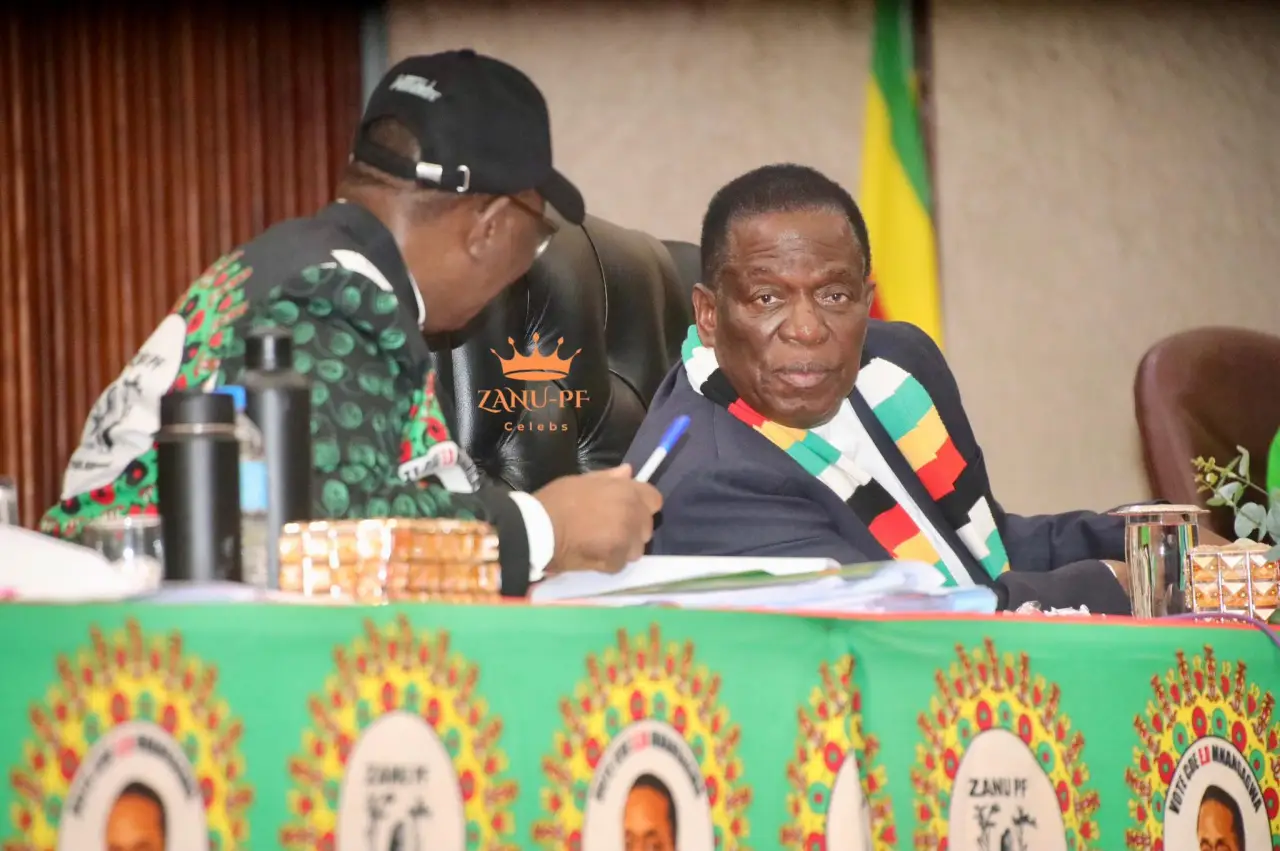
Vice President Constantino Chiwenga and President Emmerson Mnangagwa during a Zanu PF Central Committee meeting (Picture via X - @SokoCindy - Zanu PF Celebs)
In this second and final part of the article, I continue to examine the potential outcomes of ZANU-PF’s succession politics, focusing on whether Kudakwashe Tagwirei (whom I metaphorically refer to as “Mamvura”) will succeed in his presumed bid for the presidency, whether General Constantino Chiwenga will recover his political standing and take over, whether someone else will ascend to the throne, and whether President Mnangagwa will ultimately retire in peace.
I argue that Kuda Tagwirei is not the preferred successor of President Mnangagwa and that even if he were, he would not succeed.
I also argue that while the 2030 Agenda may succeed in the short term, it is destined to fail eventually, making it impossible for President Mnangagwa to enjoy peaceful retirement.
Target of vengeance: What is the 2030 Agenda, and why is it likely to spectacularly backfire against President Mnangagwa?
There are primarily two groups of people who are driving the absurd “2030 Agenda” in ZANU-PF: the “outer-circle” and the “inner-circle”. The outer-circle consists of those who champion the 2030 Agenda because they want to prolong their stay on the “gravy train”.
They know certainly that if President Mnangagwa leaves office in 2028, their political careers will instantly collapse, leaving them vulnerable to persecution, prosecution, and loss of their plunder under a new leadership, particularly that which is vindictive towards President Mnangagwa.
Some of them will flee into exile while others will be jailed.
This group includes figures such as Tatenda Mavetera and Owen “Mudha” Ncube and compromised opposition politicians in Parliament, the Senate, and local councils, especially those under the leadership of Sengezo Tshabangu and those who know that Nelson Chamisa will not work with them again.
It also includes people like Jonathan Moyo and Temba Mliswa, who are seeking to be rewarded with government positions should the 2030 Agenda succeed. This group has crossed the Rubicon; it has everything to lose should the agenda fail.
They know that their political fortunes depend on President Mnanagwga’s prolonged stay in power and the eventual transfer of power to a president who is anointed by Mnangagwa.
President Emmerson Mnangagwa presiding over the 2026 New Year’s Reception for the Diplomatic Corps, March 2026 (Picture via X – @edmnangagwa)
President Mnangagwa has referred to them as “persuaders” because they are persuading him to extend his term of office until at least 2030. They are enthusiastic and sycophantic in their support for the 2030 Agenda.
For them, the 2030 Agenda is the difference between political life and death. They are not pursuing it to protect and promote national interest.
They want to avoid, using every means possible, the possibility of General Chiwenga succeeding President Mnangagwa because they know that it will be “Magor-missabib”—terror on every side.
They do not have any ambitions to succeed President Mnangagwa. All they want is a president who continues to protect their selfish interests. They are ready to do whatever it takes, including eliminating their opponents, to make 2030 a success.
Unlike the outer-circle, the inner-circle consists of President Mnangagwa himself and some high-ranking political and military elites within ZANU-PF and the government, including war veterans and retired Generals, who seek to block the ascendancy of General Chiwenga and promote an alternative candidate.
Some inner-circle members aim to succeed President Mnangagwa or ascend to the presidency in the future. They see the blocking of General Chiwenga as an opportunity for them to pursue their presidential ambitions.
For President Mnangagwa, the 2030 Agenda is eventually intended to create room for a peaceful retirement by choosing a successor who will protect and promote his interests, including by appointing his children and allies to key government positions.
He wants to maintain political influence long after leaving power because he knows that it is through this influence that he will be able to have a peaceful retirement life.
He certainly knows that should General Chiwenga succeed him, his retirement life will be miserable because their relationship has been ruptured beyond repair.
However, he must realize that even if he handpicks a successor, there are chances that the successor will turn against him.
President Mnangagwa’s 2030 Agenda has four potential game plans
First, it is intended to test the political waters and provoking his opponents to emerge so that he can crush them. Second, it lures General Chiwenga and the opposition into a rabbit hole, keeping them distracted by the 2030 shadow while he solidifies a path for his chosen successor to win big in 2028.
Under this plan, President Mnangagwa would allow the proposed Bill to pass all stages, only to decline to sign it into law. Suddenly, the criticism that he is a dictator will sound hollow, and his claims of being a constitutionalist, credible. To his credit, he will instantly move from being labelled as the undertaker of the constitution to its saviour.
It will be a spectacular rebranding of himself at the most critical stage of his presidency. This might be why he is not vocal about the Agenda because he knows that he intends to disown it at the last minute to his own benefit. It would also allow him to appoint a successor of his choice. Those pushing the agenda will be left with egg on their faces, but they will be accommodated by the successor.
The second plan is for President Mnangagwa to sign the Bill into law, cancel the 2028 elections, and extend his term of office to 2030. He could then position his chosen successor, to whom he will hand over power before 2030, to ensure they are firmly entrenched by that time.
The third plan, which is the most brutal and risky one, is for President Mnangagwa to sign the Bill into law and extend his term of office to 2030, stay in power until 2030 or even beyond, and eventually hand power to a successor of his choice.
I would like to take this opportunity to tell President Mnangagwa that there are three important things about the “2030 Agenda” that he must know. First, the majority of those chanting “2030 VaMnangagwa vanenge vachitonga” (the outer-circle) are mostly low-ranking ZANU-PF members and leaders who do not have significant influence in the party or the security infrastructure to determine the outcome of succession politics in ZANU-PF.
When the stakes get high, they will instantly scatter. They sing “handimbotya”, but when things come to a head and fear comes their way, they fear and flee or beg for forgiveness.
It is suicidal to listen to such people in the unforgiving waters of ZANU-PF succession politics. Furthermore, they are not pushing the 2030 Agenda out of love for the President or the nation, but out of sycophancy and the desire to protect their selfish interests.
The second factor is that many of the high-ranking ZANU-PF leaders (the inner-circle) who are making the infamous statement that “2030 vaMnangagwa vanenge vachitonga” are saying with their mouths what they do not believe in their hearts.
These are the people with the power to define the outcome of the succession race. While they cannot openly criticize the 2030 Agenda for the sake of self-preservation, a closer look reveals that they are deeply unhappy with it.
This is why the agenda is likely to cause a deep but subtle divide within ZANU-PF. President Mnangagwa must realize that if the 2030 Agenda fails, he will be the primary target of vengeance. He will bear the greatest costs of its failure.
Even if it succeeds, the tide may eventually turn, making it impossible for him to enjoy a peaceful retirement. The third factor is that the President himself has little to gain from this agenda.
In fact, the costs of extending his term of office far outweigh the benefits. The constitution is very clear that term-limit provisions can only be amended via a referendum.
Furthermore, the constitution specifies that if a term-limit provision is successfully amended via a referendum, the incumbent cannot benefit from that amendment. If the incumbent wishes to benefit, they must go to another referendum and succeed.
However, Mnangagwa is seeking to amend term-limit provisions without the required referendums. He must know that this is a costly and brazen political miscalculation that will eventually backfire.
Should President Mnangagwa eventually decide to sign the proposed Constitutional Amendment Bill into law, he will draw the battle lines, he will cross the Rubicon. He will create the ground that will justify ruthless resistance from those who are opposed to it, particularly within ZANU-PF itself.
He must, therefore, understand that while the Bill is an instrument for him to prolong his stay in power, it is also a treasonous snare that can see him being removed from power before 2028 or immediately thereafter.
He must take this warning seriously because he is creating conditions that prompt the broader opposition and powerful elements within ZANU-PF—who are opposed to the agenda—to set their differences aside and view him as a common enemy to be annihilated.
It is a risk that is not necessary to take.
My counsel to President Mnangagwa is that he must exercise extreme caution in his decision-making, particularly at a time when he is getting older and when his tenure draws to a close.
He should engage with General Chiwenga to resolve their differences and support him as the ZANU-PF presidential candidate for 2028.
While this path carries significant risk because the General could still turn against him once he rises to the presidency, it is safer than blocking him in favour of another candidate.
The safest path for President Mnangagwa is to follow ZANU-PF’s established succession plan rather than rebel against it. He should remember that he is a beneficiary of that very system.
Terror on every side: Why must the 2030 Agenda brigade budget for unforeseen political events?
President Mnangagwa is a shrewd leader with a long political history. He knows precisely when to exercise restraint, when and how to ensnare his political opponents, and when to move decisively against them, never hesitating to take ruthless action if the situation demands it.
Having ascended to power through the 2017 military intervention, he understands how to secure his throne. Determined not to repeat the mistakes of President Mugabe and the G40 faction, who were caught unprepared in November 2017, he has spent his presidency implementing measures to coup-proof his regime.
He has systematically weakened General Chiwenga and he possesses the leverage to sideline him further. With the introduction of the Constitutional Amendment Bill Number 3 of 2026, which seeks to extend presidential terms to seven years and shift the election of the president to Parliament, President Mnangagwa appears set to secure his rule until 2030.
The Bill will pass easily because the opposition is too weak, divided, and compromised to mount a successful challenge. Furthermore, the regime has demonstrated a willingness to go to any lengths to silence anyone who opposes the 2030 Agenda.
This is why, in recent months, we have seen the firebombing of SAPES Trust, the assault of Professor Lovemore Madhuku and his team, and the deployment of police and rogue elements to prevent Tendai Biti, Jameson Timba, and others from holding meetings to oppose the Bill.
Other sectors of Zimbabwean society that can play a defining role in opposing the Bill are also weak. For example, civil society organisations are at their most vulnerable, with some closing (such as the Crisis Coalition) or unable to fund their operations because of financial constraints.
The independent media is also facing a severe financial crisis, exemplified by Trevor Ncube’s recent letter to Alpha Media Holdings stakeholders. On the global stage, the international community is preoccupied with tragic conflicts in Russia and Ukraine, Israel and Gaza, and escalating tensions involving Iran, Israel, and the USA.
As the multilateral order collapses and the United Nations appears increasingly incapacitated, it is unlikely that the 2030 Agenda will receive significant international attention or condemnation. Domestically, the courts are widely seen as compromised. Any legal challenges to the Bill are therefore bound to fail.
In fact, they will be used to legitimize it rather than condemn it. The 2030 Agenda therefore faces no significant hurdles. This is why the 2030 Agenda brigade is throwing caution to the wind. They are confident that their faction has won the succession battle.
To them, the opposition is dead and Chiwenga and his allies have been defeated, a sentiment reflected by those who boldly sing “Mupanduki chera mwena” (traitor, dig your own hole, the time is up) or openly challenge the Vice President as we see Temba Mliswa doing.
However, proponents of the “2030 Agenda” must understand that although they appear to be on a winning course, politics is a long and unpredictable game. We do not yet know how the succession battle will turn out.
In their zeal and confidence, they must not forget to budget for unforeseen political developments that could suddenly turn the tables. For example, the potential incapacitation or death of President Mnangagwa before 2028.
In life, there are things that we cannot control regardless of the power that we may have. This is why the “2030ists” must plan for worst-case scenarios. They must imagine, for example, how they would react to the sudden news that President Mnangagwa has suffered a cardiac arrest.
It would be a “Magor-missabib moment”, a “Sarajevo moment”, where the tables turn drastically. Under current dynamics, General Chiwenga remains a formidable figure poised to succeed President Mnanagwa should a vacancy suddenly arises.
The most critical question for President Mnangagwa and his allies regarding the 2030 Agenda is not whether it will succeed, but how “success” is defined and benchmarked. It is delusional for them to believe that success merely entails passing the Bill and allowing the President to rule until 2030.
That would merely be the first step towards either success or failure. True success requires that the President extends his term, rules until 2030 without destabilizing opposition, secures a hand-picked successor, and eventually retires in peace, with his family, interests, and allies fully protected, including after his death.
If the Bill passes but he faces constant unrest between 2028 and 2030, that is not success. If he eventually fails to enthrone a successor of his choice, that is not success. If he enthrones a successor who eventually turns against him and his allies or is removed by those who are vindictive towards him, that is not success.
If he rules peacefully until 2030, but post-retirement circumstances make it impossible for him and his allies to live in peace, that is not success.
If he rules peacefully until 2030, retires, and eventually dies in peace, but after his death, his family, material possessions, and allies are targeted by a vindictive future leadership, that is not success.
This means that the success of the 2030 Agenda must be evaluated in three distinct phases: during his 2028–2030 tenure, after his retirement, and posthumously.
While the Agenda may succeed in one or more of these phases, it is unlikely to succeed in all of them. Essentially, it is destined to fail in one way or another.
The 2030 path is full of hazards. The first is that President Mnangagwa’s extended tenure from 2028 to 2030 will face fierce and relentless resistance from both the political opposition and deeply disgruntled factions within ZANU-PF.
It will be characterized by the deepest crisis of legitimacy Zimbabwe has faced since gaining independence in 1980, as the President will be accused of brazenly violating the constitution and crushing dissent to extend his stay in power.
Those supporting ‘ED2030’ argue that it allows him to finish his development projects. However, what they ignore is that he will spend more time suppressing widespread civil disobedience than building the country.
In fact, he will lack the space to focus on anything except fighting persistent opposition. The 2030 agenda will not only provoke a constitutional crisis, but it will also trigger further isolation and worsen the nation’s existing economic struggles.
The second hazard is President Mnangagwa’s age. He is officially 83, though some accounts suggest that he is actually 87. As he approaches 2030, his cognitive alertness will inevitably decline, creating openings for tactical errors that his opponents will ruthlessly exploit.
We saw this pattern with Mugabe. There is a high possibility that President Mnangagwa may be removed before 2030 or even before 2028.
The third hazard is that President Mnangagwa may rule until 2030 and choose a successor to contest the 2030 elections. However, the successor may lose the 2030 election, or may win the election but, once in power, turn against President Mnangagwa or be removed from power by a faction or political party that is vindictive towards him.
These circumstances will make it impossible for President Mnangagwa to retire in peace. That is why my counsel to President Mnangagwa is that he should not focus on how long he will remain in power, but on whether he will retire peacefully.
The 2030 Agenda may win in the short term, but it is bound to lose the final showdown because time often favours the underdog.
This is why, if I became a ZANU-PF supporter today and a sycophantic follower of President Mnangagwa, I could never genuinely support the nefarious 2030 Agenda. I may support it with my mouth, but certainly not with my heart.
Is Kudakwashe Tagwirei the preferred successor of President Mnangagwa, will Mamvura drive the bus?
It is widely believed that Tagwirei is President Mnangagwa’s handpicked successor and that he is already on the campaign trail, but I disagree with this view. It is more likely that Tagwirei is a strategic decoy designed to achieve two major goals.
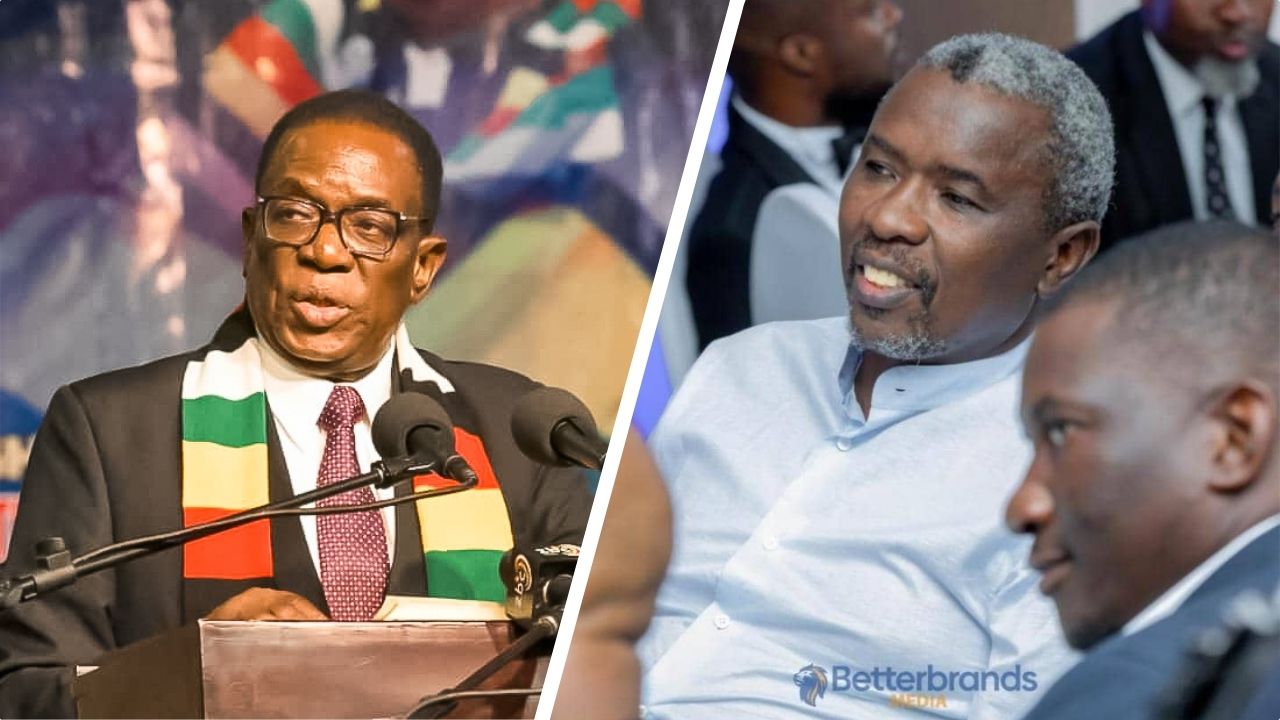
President Emmerson Mnangagwa and Kudakwashe Tagwirei (Picture via X – @edmnangagwa and BetterBrands Media)
The first is to make it difficult for Mnangagwa’s political opponents to identify his true choice by focusing their attention on Tagwirei.
The second is to provoke General Chiwenga into actions or statements that expose him to attacks from President Mnangagwa, particularly through his allies. Mnangagwa is therefore likely using Tagwirei to clear the path for a hidden successor.
In his famous Big Saturday Read titled “When Mamvura Drove the Bus”, Alex Magaisa wrote that “there was a man at our local growth point, paSadza, who answered to the name Mamvura. He was not very well; his affliction was in the head.
The story is that from time to time, Mamvura used to threaten that one day, if he got the chance, he would drive one of the buses that stopped at Sadza on their way to Buhera or back to Harare.
No one took him seriously. People would laugh and dismiss him, saying he was unwell and did not know what he was talking about. However, one day, when everyone least expected it, Mamvura climbed into the driver’s cabin of one of the buses.
He closed the door and started driving. As the bus began to move, people alerted the driver and his crew. “Mamvura aenda nebhazi”! someone shouted. They quickly left their food and ran after the bus”.
There are five reasons why I believe that Kudakwashe Tagwirei is not President Mnangagwa’s preferred successor and why, even if he were, he would not succeed in his bid to “drive the bus.”
First, Tagwirei lacks the two credentials most vital for any contender in a ZANU-PF succession race: he did not participate in the liberation struggle, and he lacks significant experience and influence within the party, government, and security structures.
If we apply the “Mamvura saga” to the ongoing succession battle in ZANU-PF, Tagwirei fits the Mamvura character perfectly, not because he has an affliction in the head, but because he is daring to “drive the bus” despite that he lacks the key characteristics required to succeed in ZANU-PF succession politics.
Tagwirei possesses only two assets, both of which are assailable: immense wealth and proximity to the President. While his financial muscle has supported ZANU-PF and funded the 2017 coup, in ZANU-PF succession politics, he cannot be ranked above those with liberation war credentials and long-standing party seniority.
Furthermore, the ZANU-PF leadership is aware that Tagwirei’s wealth is not “clean,” as it primarily originates from the state through opaque tendering processes.
Of course, ZANU-PF politics has become so transactional, appearing to make it possible for wealthy figures like Tagwirei to use money as a means to the party presidency. But the truth is that there are many dynamics in ZANU-PF succession politics that are weightier than money.
Given President Mnangagwa’s intention to sideline a political heavyweight like General Chiwenga, it is logical for him to seek a replacement of comparable stature rather than a “newcomer” like Kuda Tagwirei.
This is why I believe that President Mnanagwa’s preferred successor is likely to be someone with a robust history in the liberation struggle, ZANU-PF, the government, and likely the military such as General Philip Valerio Sibanda.
It would be strategic folly for President Mnangagwa to block General Chiwenga, a figure who is deeply embedded in the nation’s foundational history of the liberation struggle, pivotal transitions such as the Mgagao Declaration and the November 2017 coup, the army, and national and party politics, only to “anoint” Tagwirei, who lacks this essential foundation.
However, the President should be aware that elevating any heavyweight with military ties carries inherent risks because such a successor may maintain latent loyalties to General Chiwenga and the military establishment, potentially shifting their allegiance once in power.
The second reason I believe that Kudakwashe Tagwirei is not President Mnangagwa’s preferred successor, and even if he were, he would not succeed in his bid to “drive the bus”, is that while some high-ranking ZANU-PF politicians with liberation war credentials may oppose General Chiwenga’s rise, they are even more likely to resist Tagwirei.
This stems from a fierce sense of entitlement rooted in their participation in the struggle and decades of serving the party and the government. These “veterans” believe that they possess a superior understanding of ZANU-PF and governance compared to a “newcomer” like Tagwirei.
In fact, many of them view Tagwirei as an impatient and unprocedural “newcomer” who must enrol at the Herbert Chitepo School of Ideology to learn “gwara remusangano” (the party’s ideological path).
To them, the idea of Tagwirei “coming from nowhere” to become their boss is outrageous. This is especially considering that some of them have presidential ambitions. They therefore view Tagwirei’s ascent as an existential threat that would permanently rupture the party’s established pecking order and succession traditions.
A successful bid by Tagwirei would mark a definitive transfer of the presidency from the liberation war generation to the youth. This would make it nearly impossible for anyone who belongs to the liberation war generation to become President in the future.
Put simply, if Tagwirei succeeds, it means that Christopher Mutsvangwa, Oppah Muchinguri-Kashiri, and General Philip Valerio Sibanda will never ascend to the throne because their generational door would have been shut, and permanently so.
I do not think that war veterans, especially those occupying high-ranking positions in ZANU-PF and the military, are ready for this generational shift of power in the party.
Remember that the generational window for war veterans to rise to presidency is closing due to their advanced age and mortality.
Furthermore, there is long-standing disgruntlement among war veterans who believe that Zimbabwe has never been led by a president who served on the front lines of the liberation struggle and that this is the key reason why the welfare of veterans has been neglected by the post-colonial state.
These are some of the reasons why some war veterans may not support President Mnangagwa’s extension of his term of office to 2030 despite the trinkets he may give them.
On 12 March 2026, battle-hardened retired generals and senior civil servants who are ex-combatants, through Air Marshal (Retired) Henry Muchena, wrote a scathing opposition to the proposed Bill.
I want to focus on the part where they said: “We speak as men who were present when this nation was being born in blood and fire, men who commanded comrades to their deaths with a solemn promise: that the people of Zimbabwe would one day govern themselves.
It is now clear that this promise is now under threat. We have in the recent past restrained ourselves and we cannot remain silent… Now, men and women who did not endure a single night in the bush, who never buried a comrade, who did not witness what we witnessed…”
You can see from the tone of the submission that these men and women who reside(d) in the citadel of hard power have drawn a line in the sand.
They are not at all ready for people like Tagwirei to take the reins of ZANU-PF. They believe that the party has been hijacked by Zvigananda.
In a conversation recorded in The Big Saturday Read titled “One Year After the Coup – A Conversation with Professor Jonathan Moyo,” Moyo told Alex Magaisa that, “Some of us found the presentation of Mnangagwa as the only successor… as ludicrous and contrary to the fundamental principles of democracy… By June 2017… the idea that Mnangagwa was the only candidate for succession needed to be interrogated.”
Moyo’s remarks show that there has always been a prevailing belief within ZANU-PF that there is a rigid, step-by-step succession order.
It is this order that the G40 faction challenged and sought to overthrow, and this is what prompted the military to execute the coup of November 2017.
Although this order reportedly traces its roots back to the 1975 Mgagao Declaration, it was fundamentally reshaped by the November 2017 events because those who risked everything during the coup believe that they are entitled to the presidency in the future.
While Tagwirei provided essential funding, his contribution is viewed as incomparable to those who led and executed the coup.
It is treacherous and unforgivable that President Mnangagwa benefited from this “pecking order of succession” when the military intervened and enthroned him in 2017, but he is now seeking to dismantle it and block General Chiwenga and others whom he does not like.
The more he dismantles or strays from the “straitjacket”, including the November 2017 “gentleman’s agreement”, the more he creates enemies within the highest echelons of the party.
I think that appointing Kuda Tagwirei as his successor would be a huge and intolerable departure from this order. This will make his retirement life miserable should his succession plans fail.
The third reason I believe that Kudakwashe Tagwirei is not President Mnangagwa’s preferred successor, and even if he were, he would not succeed in his bid to “drive the bus” is his premature introduction to ZANU-PF’s succession politics.
This early exposure casts doubt on the authenticity of his candidacy. At the height of the ZANU-PF succession battle in 2017, specifically on 01 June, Professor Jonathan Moyo announced that Dr Sydney Sekeramayi was the most suitable candidate to succeed President Robert Mugabe.
That same month, Grace Mugabe publicly urged her husband to name his successor, but Mugabe refused, even though the party was only months away from its December congress.
By the time that he was removed from power in November 2017, he still had not named a preferred successor, because he understood the risks of doing so prematurely.
In contrast, Tagwirei was co-opted into the ZANU–PF Central Committee in October 2025, several months after speculations that he is the preferred successor of President Mnangagwa.
With ZANU-PF’s next ordinary congress scheduled for October 2027 and Zimbabwe’s general elections expected around August 2028, it would have been premature for President Mnangagwa to reveal a successor as early as 2025. In politics, timing is critical.
It is risky and unwise for President Mnanagwa to prematurely unveil his preferred successor because it gives his opponents more time to organize and oppose his choice.
The fourth reason I believe that Tagwirei is not President Mnangagwa’s preferred successor, and even if he were, he would not succeed in his bid to “drive the bus” is that ZANU-PF has always extensively relied on the narrative that it fought the liberation struggle.
This history provides the party with the bulk of its political currency and legitimacy. Tagwirei did not fight in the liberation struggle.
If Tagwirei, therefore, succeeds in his bid to drive the bus, it would signal the end of an era for ZANU-PF because it would mean that it must dissociate itself from its umbilical cord: the narrative that it fought the liberation war.
Instead, it would have to adopt Tagwirei’s rhetoric of “Pasi neNhamo” and “Pamberi Nemari Muhomwe,” euphemisms for crude corruption and individualism.
Instead of relying on the liberation struggle narrative, Tagwirei will rely more on transactional politics. He will therefore take Zimbabwe to the deepest part of the dungeon of “Sapatina-Sapatina” politics.
The fifth reason I believe that Tagwirei is not President Mnangagwa’s preferred successor and why he would fail even if he were, is that the military has always been the ultimate kingmaker in Zimbabwean politics.
The army played the decisive role in blocking the opposition from ousting ZANU-PF and was the architect of the November 2017 coup. If Tagwirei were to succeed, it would signal that money, rather than military might, is now the ultimate kingmaker in Zimbabwean politics.
This seismic shift would imply that wealthy individuals, whether connected to ZANU-PF or “coming from nowhere”, can purchase their way to the top of the party. Nothing would stop other “tenderpreneurs” like Wicknell Chivayo or Scott Sakupwanya from following suit.
As Tendai Ruben Mbofana suggests, it would mean that “ZANU-PF is for sale”. Ultimately, Tagwirei’s success would mean that the army is purchasable and that the purse has become mightier than the gun.
The truth is that the army believes that it must always be the kingmaker and stockholder of Zimbabwean politics. I will go back to the submission by generals and senior civil servants who are ex-combatants:
In the year 2002, through the late General Vitalis Zvinavashe, a soldier of immense honour, we as senior commanders made our position clear to the nation.
We declared that the leadership of Zimbabwe must fit into a straitjacket of principle. The party does not reshape itself around the appetites of its leaders. Leaders reshape themselves around the values of the party and the will of the people.
Today, we watch with sorrow as Zvigananda attempt to invert this entirely by bending the nation’s foundational law to serve their own ambitions and protect their own interests…
“We wish to be clear on one matter: we are ZANU-PF. We have always been ZANU-PF. We will die ZANU-PF. We are not merely members we are stockholders. This is our party, forged in our sacrifice”.
My friendly but blunt advice to President Mnangagwa is that he must understand that he is at a point where he is aging and his term of office is nearing its end, even if he rules until 2030. This is a sensitive, “make or break” moment.
He should, therefore, be concerned not with how long he remains in power, but with whether he will have a peaceful and dignified retirement.
This is not the time to make a costly mistake, not at all. He must not listen to those who are urging him to brazenly violate the constitution to extend his term.
They are doing so for selfish reasons, not out of love for him. He must be constructively selfish by prioritizing his own desire to retire peacefully.
This can only be achieved by facilitating a smooth, orderly, and peaceful transfer of power—something that Zimbabwe has never experienced since independence.
This is the least he can do to ensure an honourable ending to a reign defined by systemic corruption, incompetence, brazen election rigging, the killing of protesters, state capture, human rights abuses and nefarious attempts to dismantle the constitution.
A responsible leader avoids actions that risk plunging the country into civil strife. Why is ZANU-PF allowed to convene meetings to discuss the proposed constitutional amendments, while anyone who opposes them is silenced?
Why are citizens being denied the right to express their opposition to proposed constitutional amendments that ZANU-PF claims are “from the people”?
My other advice to him is that in his desire to block General Chiwenga and select a successor of his own choosing, he must not depart too far from the “pecking order of succession” and the gentlemen’s agreement of November 2017, which he has already breached.
The more he deviates from this established order, the more dangerous the situation becomes for him and his family. Even if he creates and exploits a serious lack of cohesion within the security sector, specifically the military, the Tagwirei project remains a high-risk gamble.
He should not throw caution to the wind. He must abandon the 2030 Agenda, mend relations with disgruntled war veterans and Generals, and support General Chiwenga as ZANU-PF’s presidential candidate for the 2028 elections.
If the rupture of their relations is far gone, then he has to support another candidate but certainly not Kuda Tagwirei.
I believe that Kudakwashe Tagwirei is not President Mnangagwa’s preferred successor; and if he is, he will not succeed. I view him as a “Mamvura” character in ZANU-PF’s succession politics. I do not have anything personal against Tagwirei and his ambitions to succeed President Mnangagwa, but I believe that he is a Mamvura who will never drive the bus.
If he were to succeed, it would be a legendary case of “Mamvura driving the bus”. However, as the late Alex Magaisa has warned, it is not prudent to nonchalantly dismiss a Mamvura character when he threatens to drive the bus because one day, he may indeed take the wheel, and we will be left wondering and shouting “Mamvura aenda nebhazi”.
Whichever way the dice will fall, what does ZANU-PF’s succession battle mean for Zimbabwe?
ZANU-PF is a system, which is why the removal of Mugabe changed nothing. In fact, Zimbabwe’s situation has only worsened. Because the problem is systemic, it cannot be solved by replacing individuals with others from the same system. For Zimbabwe’s long-standing problems to be resolved, there is need for a new leadership that dismantles the old order and establishes a new one. Zimbabwe needs a total reset. This can only be achieved if we have an opposition that is strong and organised enough to wrestle power from ZANU-PF.
The uncomfortable truth is that we have no such opposition, and we are unlikely to have one for decades to come. The tragedy of opposition politics in Zimbabwe today is that those with the ideas to remove ZANU-PF and build a new nation are either not interested in entering politics or are already in politics but they lack popular support.
This is because our political landscape is driven by populism instead of ideas. Conversely, Advocate Nelson Chamisa, who possesses immense popular support, does not know how to leverage it to gain power.
In fact, he has done everything amazing to sabotage his own chances of getting into power. He is very arrogant, he does not listen to people of ideas, and he does not learn from his past mistakes. He is simply not the person to build a formidable opposition in Zimbabwe, but he is not willing to allow another leader to take over from him.
For example, he operated an opposition without formal structures, leaving it weak and vulnerable to infiltration by ZANU-PF. He has surrounded himself with “praise singers” while banishing intellectually grounded critics whose desire is to see him succeed.
Furthermore, he failed to capitalize on the damning SADC report regarding the 2023 elections. He went on a two-year political sabbatical when he should have remained in the trenches, only to return and claim that there is “no constitution to defend” at a critical time when the Constitution must be defended and protected from a nefarious agenda to extend President Mnangagwa’s term to 2030 and block both Chamisa and General Chiwenga from ascending to the presidency.
The other tragedy of opposition politics is that it focuses on “who was anointed” instead of who offers the best ideas and strategies to remove ZANU-PF and build a new Zimbabwe.
I think that it is important for opposition supporters to reconcile with the uncomfortable reality that no change is coming to Zimbabwe any time soon: not in 2028, not in 2033, and—I dare say—not even in 2038.
ZANU-PF is therefore with us for many years to come, especially if the successor of President Mnangagwa happens to be someone who is willing and committed to genuinely fight corruption, build infrastructure, equip our hospitals, return to the values of the liberation struggle, stop the exploitation of our resources and degradation of our environment by the Chinese, appoint people to positions of power on the basis of merit instead of political affiliation or sycophancy, take an inclusive approach to nation building, address historical wounds such as Gukurahundi and politically-motivated violence, and implement reforms that can yield significant economic improvements.
But as Zimbabweans, we must be conscious that if the “2030 Agenda” succeeds, the country will embark on a path from which it will take decades to recover.
This is why all Zimbabweans of goodwill, regardless of political affiliation, must unite and valiantly oppose this nefarious agenda through every constitutional means possible.
Should General Chiwenga succeed in his bid to take over from President Mnangagwa, he will stand at the same crossroads that Mnangagwa stood in November 2017.
If he chooses the wrong path, as his predecessor did, he will lead the nation in a tragic direction never seen before. However, if he chooses to take the country in a new direction, for instance, by forming a unity government; implementing genuine economic, political, and electoral reforms; fostering a culture of constitutionalism and respect for human rights; fighting corruption and land barons; championing beneficiation; and embarking on a transparent and inclusive land reform program, he could become Zimbabwe’s towering post-independence President.
The question remains: does he have the courage to face the system, change it, and lead differently from both Mugabe and Mnangagwa? It is for him to answer.
At this point, Zimbabwe requires a firm, disciplined, and no-nonsense leadership, and General Chiwenga has the potential to provide it.
Whether it will be General Chiwenga, Tagwirei (“Mamvura”), or someone else who will drive the bus, we can’t be sure yet. If President Mnangagwa stays on course with the 2030 Agenda, he is bound to have a miserable retirement.
Although the hour is late, it remains possible for him to change his course, build bridges, and set the stage for a peaceful retirement. If he has ears, let him ear! Ndapedza.
Dr. Moses Tofa is a Research Leader, political analyst, and self-critical Pan-Africanist. He holds a PhD in Politics from the University of Johannesburg and a PhD in Conflict Studies from the University of Kwa-Zulu Natal. He is an Investigator at the University of Andes, Colombia. He writes in his capacity. He can be reached at [email protected], Twitter handle: @DrDrMTofa.