In this second and final part of the article, I continue to examine the potential outcomes of ZANU-PF’s succession politics, focusing on whether Kudakwashe Tagwirei (whom I metaphorically refer to as “Mamvura”) will succeed in his presumed bid for the presidency, whether General Constantino Chiwenga will recover his political standing and take over, whether someone else will ascend to the throne, and whether President Mnangagwa will ultimately retire in peace.
I argue that Kuda Tagwirei is not the preferred successor of President Mnangagwa and that even if he were, he would not succeed.
I also argue that while the 2030 Agenda may succeed in the short term, it is destined to fail eventually, making it impossible for President Mnangagwa to enjoy peaceful retirement.
Target of vengeance: What is the 2030 Agenda, and why is it likely to spectacularly backfire against President Mnangagwa?
There are primarily two groups of people who are driving the absurd “2030 Agenda” in ZANU-PF: the “outer-circle” and the “inner-circle”. The outer-circle consists of those who champion the 2030 Agenda because they want to prolong their stay on the “gravy train”.
They know certainly that if President Mnangagwa leaves office in 2028, their political careers will instantly collapse, leaving them vulnerable to persecution, prosecution, and loss of their plunder under a new leadership, particularly that which is vindictive towards President Mnangagwa.
Some of them will flee into exile while others will be jailed.
This group includes figures such as Tatenda Mavetera and Owen “Mudha” Ncube and compromised opposition politicians in Parliament, the Senate, and local councils, especially those under the leadership of Sengezo Tshabangu and those who know that Nelson Chamisa will not work with them again.
It also includes people like Jonathan Moyo and Temba Mliswa, who are seeking to be rewarded with government positions should the 2030 Agenda succeed. This group has crossed the Rubicon; it has everything to lose should the agenda fail.
They know that their political fortunes depend on President Mnanagwga’s prolonged stay in power and the eventual transfer of power to a president who is anointed by Mnangagwa.
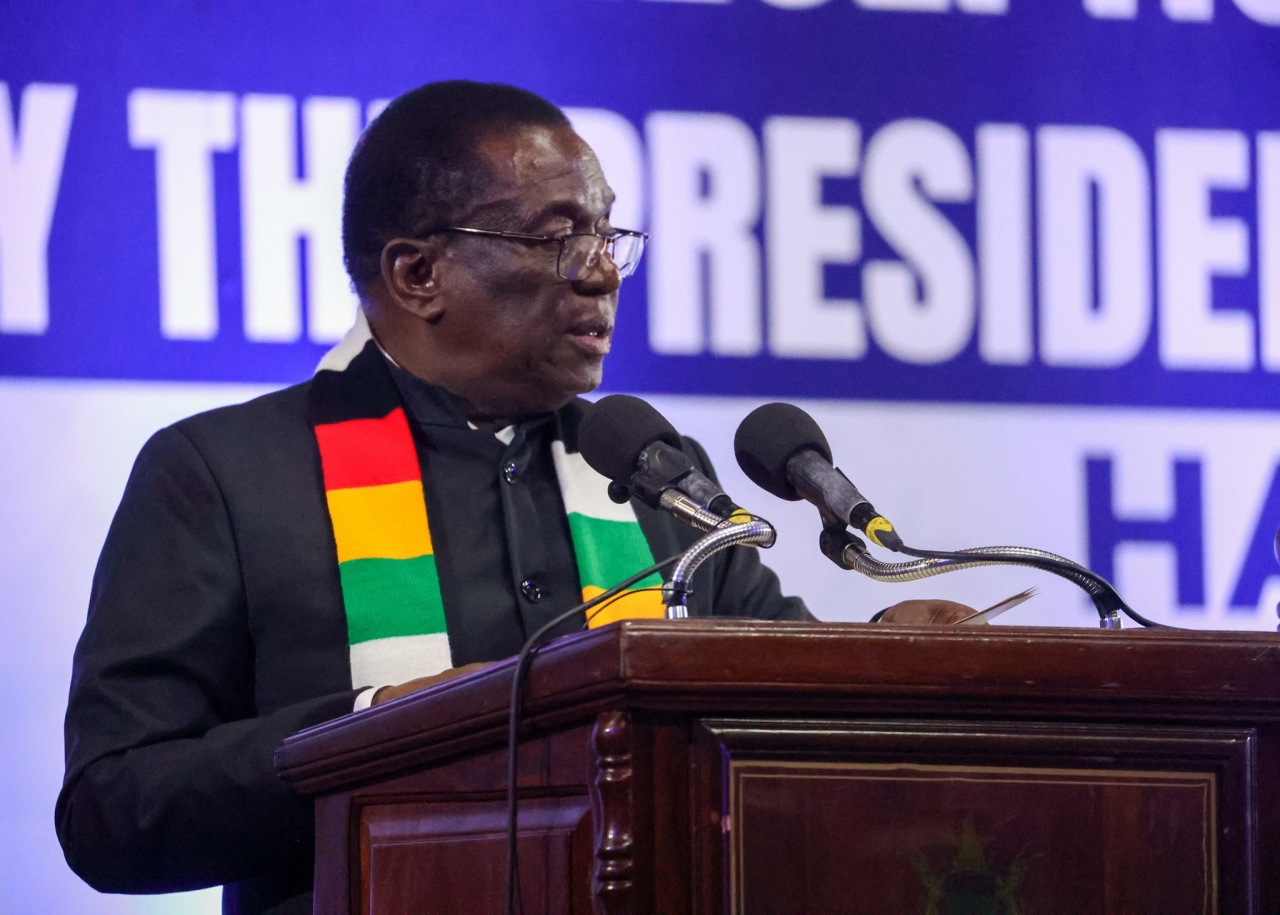
President Mnangagwa has referred to them as “persuaders” because they are persuading him to extend his term of office until at least 2030. They are enthusiastic and sycophantic in their support for the 2030 Agenda.
For them, the 2030 Agenda is the difference between political life and death. They are not pursuing it to protect and promote national interest.
They want to avoid, using every means possible, the possibility of General Chiwenga succeeding President Mnangagwa because they know that it will be “Magor-missabib”—terror on every side.
They do not have any ambitions to succeed President Mnangagwa. All they want is a president who continues to protect their selfish interests. They are ready to do whatever it takes, including eliminating their opponents, to make 2030 a success.
Unlike the outer-circle, the inner-circle consists of President Mnangagwa himself and some high-ranking political and military elites within ZANU-PF and the government, including war veterans and retired Generals, who seek to block the ascendancy of General Chiwenga and promote an alternative candidate.
Some inner-circle members aim to succeed President Mnangagwa or ascend to the presidency in the future. They see the blocking of General Chiwenga as an opportunity for them to pursue their presidential ambitions.
For President Mnangagwa, the 2030 Agenda is eventually intended to create room for a peaceful retirement by choosing a successor who will protect and promote his interests, including by appointing his children and allies to key government positions.
He wants to maintain political influence long after leaving power because he knows that it is through this influence that he will be able to have a peaceful retirement life.
He certainly knows that should General Chiwenga succeed him, his retirement life will be miserable because their relationship has been ruptured beyond repair.
However, he must realize that even if he handpicks a successor, there are chances that the successor will turn against him.
President Mnangagwa’s 2030 Agenda has four potential game plans
First, it is intended to test the political waters and provoking his opponents to emerge so that he can crush them. Second, it lures General Chiwenga and the opposition into a rabbit hole, keeping them distracted by the 2030 shadow while he solidifies a path for his chosen successor to win big in 2028.
Under this plan, President Mnangagwa would allow the proposed Bill to pass all stages, only to decline to sign it into law. Suddenly, the criticism that he is a dictator will sound hollow, and his claims of being a constitutionalist, credible. To his credit, he will instantly move from being labelled as the undertaker of the constitution to its saviour.
It will be a spectacular rebranding of himself at the most critical stage of his presidency. This might be why he is not vocal about the Agenda because he knows that he intends to disown it at the last minute to his own benefit. It would also allow him to appoint a successor of his choice. Those pushing the agenda will be left with egg on their faces, but they will be accommodated by the successor.
The second plan is for President Mnangagwa to sign the Bill into law, cancel the 2028 elections, and extend his term of office to 2030. He could then position his chosen successor, to whom he will hand over power before 2030, to ensure they are firmly entrenched by that time.
The third plan, which is the most brutal and risky one, is for President Mnangagwa to sign the Bill into law and extend his term of office to 2030, stay in power until 2030 or even beyond, and eventually hand power to a successor of his choice.
I would like to take this opportunity to tell President Mnangagwa that there are three important things about the “2030 Agenda” that he must know. First, the majority of those chanting “2030 VaMnangagwa vanenge vachitonga” (the outer-circle) are mostly low-ranking ZANU-PF members and leaders who do not have significant influence in the party or the security infrastructure to determine the outcome of succession politics in ZANU-PF.
When the stakes get high, they will instantly scatter. They sing “handimbotya”, but when things come to a head and fear comes their way, they fear and flee or beg for forgiveness.
It is suicidal to listen to such people in the unforgiving waters of ZANU-PF succession politics. Furthermore, they are not pushing the 2030 Agenda out of love for the President or the nation, but out of sycophancy and the desire to protect their selfish interests.
The second factor is that many of the high-ranking ZANU-PF leaders (the inner-circle) who are making the infamous statement that “2030 vaMnangagwa vanenge vachitonga” are saying with their mouths what they do not believe in their hearts.
These are the people with the power to define the outcome of the succession race. While they cannot openly criticize the 2030 Agenda for the sake of self-preservation, a closer look reveals that they are deeply unhappy with it.
This is why the agenda is likely to cause a deep but subtle divide within ZANU-PF. President Mnangagwa must realize that if the 2030 Agenda fails, he will be the primary target of vengeance. He will bear the greatest costs of its failure.
Even if it succeeds, the tide may eventually turn, making it impossible for him to enjoy a peaceful retirement. The third factor is that the President himself has little to gain from this agenda.
In fact, the costs of extending his term of office far outweigh the benefits. The constitution is very clear that term-limit provisions can only be amended via a referendum.
Furthermore, the constitution specifies that if a term-limit provision is successfully amended via a referendum, the incumbent cannot benefit from that amendment. If the incumbent wishes to benefit, they must go to another referendum and succeed.
However, Mnangagwa is seeking to amend term-limit provisions without the required referendums. He must know that this is a costly and brazen political miscalculation that will eventually backfire.
Should President Mnangagwa eventually decide to sign the proposed Constitutional Amendment Bill into law, he will draw the battle lines, he will cross the Rubicon. He will create the ground that will justify ruthless resistance from those who are opposed to it, particularly within ZANU-PF itself.
He must, therefore, understand that while the Bill is an instrument for him to prolong his stay in power, it is also a treasonous snare that can see him being removed from power before 2028 or immediately thereafter.
He must take this warning seriously because he is creating conditions that prompt the broader opposition and powerful elements within ZANU-PF—who are opposed to the agenda—to set their differences aside and view him as a common enemy to be annihilated.
It is a risk that is not necessary to take.
My counsel to President Mnangagwa is that he must exercise extreme caution in his decision-making, particularly at a time when he is getting older and when his tenure draws to a close.
He should engage with General Chiwenga to resolve their differences and support him as the ZANU-PF presidential candidate for 2028.
While this path carries significant risk because the General could still turn against him once he rises to the presidency, it is safer than blocking him in favour of another candidate.
The safest path for President Mnangagwa is to follow ZANU-PF’s established succession plan rather than rebel against it. He should remember that he is a beneficiary of that very system.
Terror on every side: Why must the 2030 Agenda brigade budget for unforeseen political events?
President Mnangagwa is a shrewd leader with a long political history. He knows precisely when to exercise restraint, when and how to ensnare his political opponents, and when to move decisively against them, never hesitating to take ruthless action if the situation demands it.
Having ascended to power through the 2017 military intervention, he understands how to secure his throne. Determined not to repeat the mistakes of President Mugabe and the G40 faction, who were caught unprepared in November 2017, he has spent his presidency implementing measures to coup-proof his regime.
He has systematically weakened General Chiwenga and he possesses the leverage to sideline him further. With the introduction of the Constitutional Amendment Bill Number 3 of 2026, which seeks to extend presidential terms to seven years and shift the election of the president to Parliament, President Mnangagwa appears set to secure his rule until 2030.
The Bill will pass easily because the opposition is too weak, divided, and compromised to mount a successful challenge. Furthermore, the regime has demonstrated a willingness to go to any lengths to silence anyone who opposes the 2030 Agenda.
This is why, in recent months, we have seen the firebombing of SAPES Trust, the assault of Professor Lovemore Madhuku and his team, and the deployment of police and rogue elements to prevent Tendai Biti, Jameson Timba, and others from holding meetings to oppose the Bill.
Other sectors of Zimbabwean society that can play a defining role in opposing the Bill are also weak. For example, civil society organisations are at their most vulnerable, with some closing (such as the Crisis Coalition) or unable to fund their operations because of financial constraints.
The independent media is also facing a severe financial crisis, exemplified by Trevor Ncube’s recent letter to Alpha Media Holdings stakeholders. On the global stage, the international community is preoccupied with tragic conflicts in Russia and Ukraine, Israel and Gaza, and escalating tensions involving Iran, Israel, and the USA.
As the multilateral order collapses and the United Nations appears increasingly incapacitated, it is unlikely that the 2030 Agenda will receive significant international attention or condemnation. Domestically, the courts are widely seen as compromised. Any legal challenges to the Bill are therefore bound to fail.
In fact, they will be used to legitimize it rather than condemn it. The 2030 Agenda therefore faces no significant hurdles. This is why the 2030 Agenda brigade is throwing caution to the wind. They are confident that their faction has won the succession battle.
To them, the opposition is dead and Chiwenga and his allies have been defeated, a sentiment reflected by those who boldly sing “Mupanduki chera mwena” (traitor, dig your own hole, the time is up) or openly challenge the Vice President as we see Temba Mliswa doing.
However, proponents of the “2030 Agenda” must understand that although they appear to be on a winning course, politics is a long and unpredictable game. We do not yet know how the succession battle will turn out.
In their zeal and confidence, they must not forget to budget for unforeseen political developments that could suddenly turn the tables. For example, the potential incapacitation or death of President Mnangagwa before 2028.
In life, there are things that we cannot control regardless of the power that we may have. This is why the “2030ists” must plan for worst-case scenarios. They must imagine, for example, how they would react to the sudden news that President Mnangagwa has suffered a cardiac arrest.
It would be a “Magor-missabib moment”, a “Sarajevo moment”, where the tables turn drastically. Under current dynamics, General Chiwenga remains a formidable figure poised to succeed President Mnanagwa should a vacancy suddenly arises.
The most critical question for President Mnangagwa and his allies regarding the 2030 Agenda is not whether it will succeed, but how “success” is defined and benchmarked. It is delusional for them to believe that success merely entails passing the Bill and allowing the President to rule until 2030.
That would merely be the first step towards either success or failure. True success requires that the President extends his term, rules until 2030 without destabilizing opposition, secures a hand-picked successor, and eventually retires in peace, with his family, interests, and allies fully protected, including after his death.
If the Bill passes but he faces constant unrest between 2028 and 2030, that is not success. If he eventually fails to enthrone a successor of his choice, that is not success. If he enthrones a successor who eventually turns against him and his allies or is removed by those who are vindictive towards him, that is not success.
If he rules peacefully until 2030, but post-retirement circumstances make it impossible for him and his allies to live in peace, that is not success.
If he rules peacefully until 2030, retires, and eventually dies in peace, but after his death, his family, material possessions, and allies are targeted by a vindictive future leadership, that is not success.
This means that the success of the 2030 Agenda must be evaluated in three distinct phases: during his 2028–2030 tenure, after his retirement, and posthumously.
While the Agenda may succeed in one or more of these phases, it is unlikely to succeed in all of them. Essentially, it is destined to fail in one way or another.
The 2030 path is full of hazards. The first is that President Mnangagwa’s extended tenure from 2028 to 2030 will face fierce and relentless resistance from both the political opposition and deeply disgruntled factions within ZANU-PF.
It will be characterized by the deepest crisis of legitimacy Zimbabwe has faced since gaining independence in 1980, as the President will be accused of brazenly violating the constitution and crushing dissent to extend his stay in power.
Those supporting ‘ED2030’ argue that it allows him to finish his development projects. However, what they ignore is that he will spend more time suppressing widespread civil disobedience than building the country.
In fact, he will lack the space to focus on anything except fighting persistent opposition. The 2030 agenda will not only provoke a constitutional crisis, but it will also trigger further isolation and worsen the nation’s existing economic struggles.
The second hazard is President Mnangagwa’s age. He is officially 83, though some accounts suggest that he is actually 87. As he approaches 2030, his cognitive alertness will inevitably decline, creating openings for tactical errors that his opponents will ruthlessly exploit.
We saw this pattern with Mugabe. There is a high possibility that President Mnangagwa may be removed before 2030 or even before 2028.
The third hazard is that President Mnangagwa may rule until 2030 and choose a successor to contest the 2030 elections. However, the successor may lose the 2030 election, or may win the election but, once in power, turn against President Mnangagwa or be removed from power by a faction or political party that is vindictive towards him.
These circumstances will make it impossible for President Mnangagwa to retire in peace. That is why my counsel to President Mnangagwa is that he should not focus on how long he will remain in power, but on whether he will retire peacefully.
The 2030 Agenda may win in the short term, but it is bound to lose the final showdown because time often favours the underdog.
This is why, if I became a ZANU-PF supporter today and a sycophantic follower of President Mnangagwa, I could never genuinely support the nefarious 2030 Agenda. I may support it with my mouth, but certainly not with my heart.
Is Kudakwashe Tagwirei the preferred successor of President Mnangagwa, will Mamvura drive the bus?
It is widely believed that Tagwirei is President Mnangagwa’s handpicked successor and that he is already on the campaign trail, but I disagree with this view. It is more likely that Tagwirei is a strategic decoy designed to achieve two major goals.
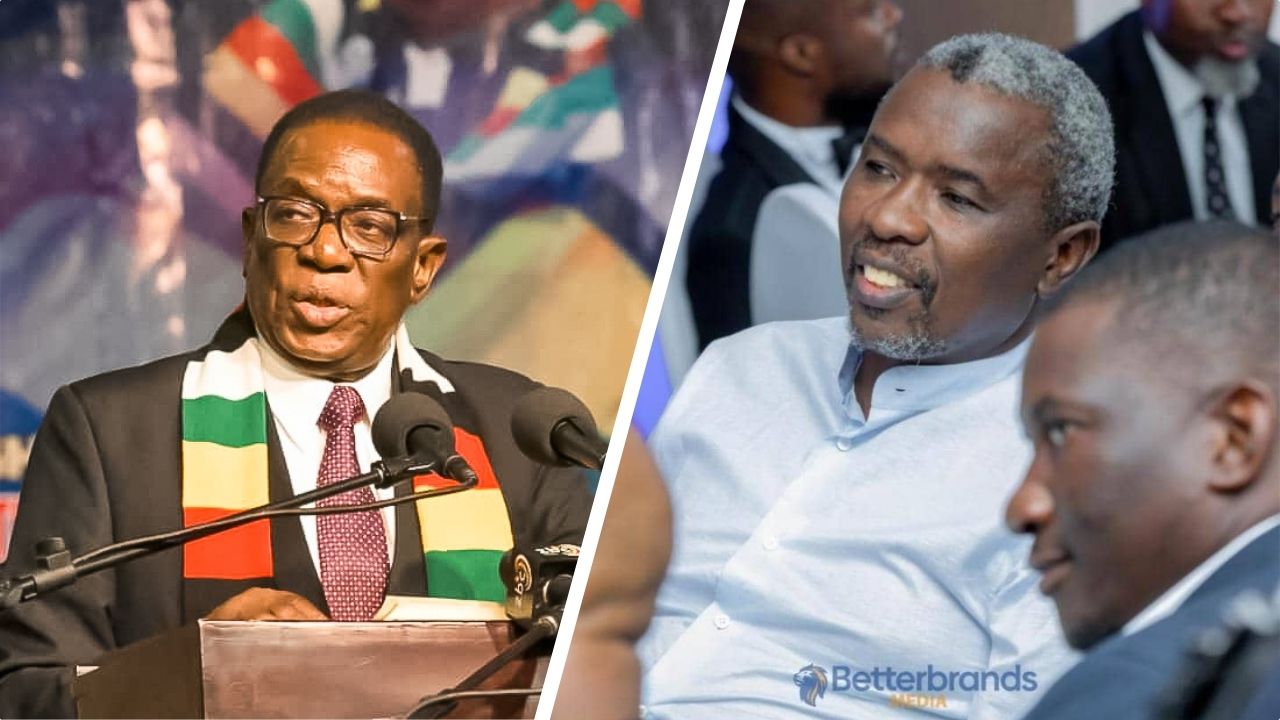
The first is to make it difficult for Mnangagwa’s political opponents to identify his true choice by focusing their attention on Tagwirei.
The second is to provoke General Chiwenga into actions or statements that expose him to attacks from President Mnangagwa, particularly through his allies. Mnangagwa is therefore likely using Tagwirei to clear the path for a hidden successor.
In his famous Big Saturday Read titled “When Mamvura Drove the Bus”, Alex Magaisa wrote that “there was a man at our local growth point, paSadza, who answered to the name Mamvura. He was not very well; his affliction was in the head.
The story is that from time to time, Mamvura used to threaten that one day, if he got the chance, he would drive one of the buses that stopped at Sadza on their way to Buhera or back to Harare.
No one took him seriously. People would laugh and dismiss him, saying he was unwell and did not know what he was talking about. However, one day, when everyone least expected it, Mamvura climbed into the driver’s cabin of one of the buses.
He closed the door and started driving. As the bus began to move, people alerted the driver and his crew. “Mamvura aenda nebhazi”! someone shouted. They quickly left their food and ran after the bus”.
There are five reasons why I believe that Kudakwashe Tagwirei is not President Mnangagwa’s preferred successor and why, even if he were, he would not succeed in his bid to “drive the bus.”
First, Tagwirei lacks the two credentials most vital for any contender in a ZANU-PF succession race: he did not participate in the liberation struggle, and he lacks significant experience and influence within the party, government, and security structures.
If we apply the “Mamvura saga” to the ongoing succession battle in ZANU-PF, Tagwirei fits the Mamvura character perfectly, not because he has an affliction in the head, but because he is daring to “drive the bus” despite that he lacks the key characteristics required to succeed in ZANU-PF succession politics.
Tagwirei possesses only two assets, both of which are assailable: immense wealth and proximity to the President. While his financial muscle has supported ZANU-PF and funded the 2017 coup, in ZANU-PF succession politics, he cannot be ranked above those with liberation war credentials and long-standing party seniority.
Furthermore, the ZANU-PF leadership is aware that Tagwirei’s wealth is not “clean,” as it primarily originates from the state through opaque tendering processes.
Of course, ZANU-PF politics has become so transactional, appearing to make it possible for wealthy figures like Tagwirei to use money as a means to the party presidency. But the truth is that there are many dynamics in ZANU-PF succession politics that are weightier than money.
Given President Mnangagwa’s intention to sideline a political heavyweight like General Chiwenga, it is logical for him to seek a replacement of comparable stature rather than a “newcomer” like Kuda Tagwirei.
This is why I believe that President Mnanagwa’s preferred successor is likely to be someone with a robust history in the liberation struggle, ZANU-PF, the government, and likely the military such as General Philip Valerio Sibanda.
It would be strategic folly for President Mnangagwa to block General Chiwenga, a figure who is deeply embedded in the nation’s foundational history of the liberation struggle, pivotal transitions such as the Mgagao Declaration and the November 2017 coup, the army, and national and party politics, only to “anoint” Tagwirei, who lacks this essential foundation.
However, the President should be aware that elevating any heavyweight with military ties carries inherent risks because such a successor may maintain latent loyalties to General Chiwenga and the military establishment, potentially shifting their allegiance once in power.
The second reason I believe that Kudakwashe Tagwirei is not President Mnangagwa’s preferred successor, and even if he were, he would not succeed in his bid to “drive the bus”, is that while some high-ranking ZANU-PF politicians with liberation war credentials may oppose General Chiwenga’s rise, they are even more likely to resist Tagwirei.
This stems from a fierce sense of entitlement rooted in their participation in the struggle and decades of serving the party and the government. These “veterans” believe that they possess a superior understanding of ZANU-PF and governance compared to a “newcomer” like Tagwirei.
In fact, many of them view Tagwirei as an impatient and unprocedural “newcomer” who must enrol at the Herbert Chitepo School of Ideology to learn “gwara remusangano” (the party’s ideological path).
To them, the idea of Tagwirei “coming from nowhere” to become their boss is outrageous. This is especially considering that some of them have presidential ambitions. They therefore view Tagwirei’s ascent as an existential threat that would permanently rupture the party’s established pecking order and succession traditions.
A successful bid by Tagwirei would mark a definitive transfer of the presidency from the liberation war generation to the youth. This would make it nearly impossible for anyone who belongs to the liberation war generation to become President in the future.
Put simply, if Tagwirei succeeds, it means that Christopher Mutsvangwa, Oppah Muchinguri-Kashiri, and General Philip Valerio Sibanda will never ascend to the throne because their generational door would have been shut, and permanently so.
I do not think that war veterans, especially those occupying high-ranking positions in ZANU-PF and the military, are ready for this generational shift of power in the party.
Remember that the generational window for war veterans to rise to presidency is closing due to their advanced age and mortality.
Furthermore, there is long-standing disgruntlement among war veterans who believe that Zimbabwe has never been led by a president who served on the front lines of the liberation struggle and that this is the key reason why the welfare of veterans has been neglected by the post-colonial state.
These are some of the reasons why some war veterans may not support President Mnangagwa’s extension of his term of office to 2030 despite the trinkets he may give them.
On 12 March 2026, battle-hardened retired generals and senior civil servants who are ex-combatants, through Air Marshal (Retired) Henry Muchena, wrote a scathing opposition to the proposed Bill.
I want to focus on the part where they said: “We speak as men who were present when this nation was being born in blood and fire, men who commanded comrades to their deaths with a solemn promise: that the people of Zimbabwe would one day govern themselves.
It is now clear that this promise is now under threat. We have in the recent past restrained ourselves and we cannot remain silent… Now, men and women who did not endure a single night in the bush, who never buried a comrade, who did not witness what we witnessed…”
You can see from the tone of the submission that these men and women who reside(d) in the citadel of hard power have drawn a line in the sand.
They are not at all ready for people like Tagwirei to take the reins of ZANU-PF. They believe that the party has been hijacked by Zvigananda.
In a conversation recorded in The Big Saturday Read titled “One Year After the Coup – A Conversation with Professor Jonathan Moyo,” Moyo told Alex Magaisa that, “Some of us found the presentation of Mnangagwa as the only successor… as ludicrous and contrary to the fundamental principles of democracy… By June 2017… the idea that Mnangagwa was the only candidate for succession needed to be interrogated.”
Moyo’s remarks show that there has always been a prevailing belief within ZANU-PF that there is a rigid, step-by-step succession order.
It is this order that the G40 faction challenged and sought to overthrow, and this is what prompted the military to execute the coup of November 2017.
Although this order reportedly traces its roots back to the 1975 Mgagao Declaration, it was fundamentally reshaped by the November 2017 events because those who risked everything during the coup believe that they are entitled to the presidency in the future.
While Tagwirei provided essential funding, his contribution is viewed as incomparable to those who led and executed the coup.
It is treacherous and unforgivable that President Mnangagwa benefited from this “pecking order of succession” when the military intervened and enthroned him in 2017, but he is now seeking to dismantle it and block General Chiwenga and others whom he does not like.
The more he dismantles or strays from the “straitjacket”, including the November 2017 “gentleman’s agreement”, the more he creates enemies within the highest echelons of the party.
I think that appointing Kuda Tagwirei as his successor would be a huge and intolerable departure from this order. This will make his retirement life miserable should his succession plans fail.
The third reason I believe that Kudakwashe Tagwirei is not President Mnangagwa’s preferred successor, and even if he were, he would not succeed in his bid to “drive the bus” is his premature introduction to ZANU-PF’s succession politics.
This early exposure casts doubt on the authenticity of his candidacy. At the height of the ZANU-PF succession battle in 2017, specifically on 01 June, Professor Jonathan Moyo announced that Dr Sydney Sekeramayi was the most suitable candidate to succeed President Robert Mugabe.
That same month, Grace Mugabe publicly urged her husband to name his successor, but Mugabe refused, even though the party was only months away from its December congress.
By the time that he was removed from power in November 2017, he still had not named a preferred successor, because he understood the risks of doing so prematurely.
In contrast, Tagwirei was co-opted into the ZANU–PF Central Committee in October 2025, several months after speculations that he is the preferred successor of President Mnangagwa.
With ZANU-PF’s next ordinary congress scheduled for October 2027 and Zimbabwe’s general elections expected around August 2028, it would have been premature for President Mnangagwa to reveal a successor as early as 2025. In politics, timing is critical.
It is risky and unwise for President Mnanagwa to prematurely unveil his preferred successor because it gives his opponents more time to organize and oppose his choice.
The fourth reason I believe that Tagwirei is not President Mnangagwa’s preferred successor, and even if he were, he would not succeed in his bid to “drive the bus” is that ZANU-PF has always extensively relied on the narrative that it fought the liberation struggle.
This history provides the party with the bulk of its political currency and legitimacy. Tagwirei did not fight in the liberation struggle.
If Tagwirei, therefore, succeeds in his bid to drive the bus, it would signal the end of an era for ZANU-PF because it would mean that it must dissociate itself from its umbilical cord: the narrative that it fought the liberation war.
Instead, it would have to adopt Tagwirei’s rhetoric of “Pasi neNhamo” and “Pamberi Nemari Muhomwe,” euphemisms for crude corruption and individualism.
Instead of relying on the liberation struggle narrative, Tagwirei will rely more on transactional politics. He will therefore take Zimbabwe to the deepest part of the dungeon of “Sapatina-Sapatina” politics.
The fifth reason I believe that Tagwirei is not President Mnangagwa’s preferred successor and why he would fail even if he were, is that the military has always been the ultimate kingmaker in Zimbabwean politics.
The army played the decisive role in blocking the opposition from ousting ZANU-PF and was the architect of the November 2017 coup. If Tagwirei were to succeed, it would signal that money, rather than military might, is now the ultimate kingmaker in Zimbabwean politics.
This seismic shift would imply that wealthy individuals, whether connected to ZANU-PF or “coming from nowhere”, can purchase their way to the top of the party. Nothing would stop other “tenderpreneurs” like Wicknell Chivayo or Scott Sakupwanya from following suit.
As Tendai Ruben Mbofana suggests, it would mean that “ZANU-PF is for sale”. Ultimately, Tagwirei’s success would mean that the army is purchasable and that the purse has become mightier than the gun.
The truth is that the army believes that it must always be the kingmaker and stockholder of Zimbabwean politics. I will go back to the submission by generals and senior civil servants who are ex-combatants:
In the year 2002, through the late General Vitalis Zvinavashe, a soldier of immense honour, we as senior commanders made our position clear to the nation.
We declared that the leadership of Zimbabwe must fit into a straitjacket of principle. The party does not reshape itself around the appetites of its leaders. Leaders reshape themselves around the values of the party and the will of the people.
Today, we watch with sorrow as Zvigananda attempt to invert this entirely by bending the nation’s foundational law to serve their own ambitions and protect their own interests…
“We wish to be clear on one matter: we are ZANU-PF. We have always been ZANU-PF. We will die ZANU-PF. We are not merely members we are stockholders. This is our party, forged in our sacrifice”.
My friendly but blunt advice to President Mnangagwa is that he must understand that he is at a point where he is aging and his term of office is nearing its end, even if he rules until 2030. This is a sensitive, “make or break” moment.
He should, therefore, be concerned not with how long he remains in power, but with whether he will have a peaceful and dignified retirement.
This is not the time to make a costly mistake, not at all. He must not listen to those who are urging him to brazenly violate the constitution to extend his term.
They are doing so for selfish reasons, not out of love for him. He must be constructively selfish by prioritizing his own desire to retire peacefully.
This can only be achieved by facilitating a smooth, orderly, and peaceful transfer of power—something that Zimbabwe has never experienced since independence.
This is the least he can do to ensure an honourable ending to a reign defined by systemic corruption, incompetence, brazen election rigging, the killing of protesters, state capture, human rights abuses and nefarious attempts to dismantle the constitution.
A responsible leader avoids actions that risk plunging the country into civil strife. Why is ZANU-PF allowed to convene meetings to discuss the proposed constitutional amendments, while anyone who opposes them is silenced?
Why are citizens being denied the right to express their opposition to proposed constitutional amendments that ZANU-PF claims are “from the people”?
My other advice to him is that in his desire to block General Chiwenga and select a successor of his own choosing, he must not depart too far from the “pecking order of succession” and the gentlemen’s agreement of November 2017, which he has already breached.
The more he deviates from this established order, the more dangerous the situation becomes for him and his family. Even if he creates and exploits a serious lack of cohesion within the security sector, specifically the military, the Tagwirei project remains a high-risk gamble.
He should not throw caution to the wind. He must abandon the 2030 Agenda, mend relations with disgruntled war veterans and Generals, and support General Chiwenga as ZANU-PF’s presidential candidate for the 2028 elections.
If the rupture of their relations is far gone, then he has to support another candidate but certainly not Kuda Tagwirei.
I believe that Kudakwashe Tagwirei is not President Mnangagwa’s preferred successor; and if he is, he will not succeed. I view him as a “Mamvura” character in ZANU-PF’s succession politics. I do not have anything personal against Tagwirei and his ambitions to succeed President Mnangagwa, but I believe that he is a Mamvura who will never drive the bus.
If he were to succeed, it would be a legendary case of “Mamvura driving the bus”. However, as the late Alex Magaisa has warned, it is not prudent to nonchalantly dismiss a Mamvura character when he threatens to drive the bus because one day, he may indeed take the wheel, and we will be left wondering and shouting “Mamvura aenda nebhazi”.
Whichever way the dice will fall, what does ZANU-PF’s succession battle mean for Zimbabwe?
ZANU-PF is a system, which is why the removal of Mugabe changed nothing. In fact, Zimbabwe’s situation has only worsened. Because the problem is systemic, it cannot be solved by replacing individuals with others from the same system. For Zimbabwe’s long-standing problems to be resolved, there is need for a new leadership that dismantles the old order and establishes a new one. Zimbabwe needs a total reset. This can only be achieved if we have an opposition that is strong and organised enough to wrestle power from ZANU-PF.
The uncomfortable truth is that we have no such opposition, and we are unlikely to have one for decades to come. The tragedy of opposition politics in Zimbabwe today is that those with the ideas to remove ZANU-PF and build a new nation are either not interested in entering politics or are already in politics but they lack popular support.
This is because our political landscape is driven by populism instead of ideas. Conversely, Advocate Nelson Chamisa, who possesses immense popular support, does not know how to leverage it to gain power.
In fact, he has done everything amazing to sabotage his own chances of getting into power. He is very arrogant, he does not listen to people of ideas, and he does not learn from his past mistakes. He is simply not the person to build a formidable opposition in Zimbabwe, but he is not willing to allow another leader to take over from him.
For example, he operated an opposition without formal structures, leaving it weak and vulnerable to infiltration by ZANU-PF. He has surrounded himself with “praise singers” while banishing intellectually grounded critics whose desire is to see him succeed.
Furthermore, he failed to capitalize on the damning SADC report regarding the 2023 elections. He went on a two-year political sabbatical when he should have remained in the trenches, only to return and claim that there is “no constitution to defend” at a critical time when the Constitution must be defended and protected from a nefarious agenda to extend President Mnangagwa’s term to 2030 and block both Chamisa and General Chiwenga from ascending to the presidency.
The other tragedy of opposition politics is that it focuses on “who was anointed” instead of who offers the best ideas and strategies to remove ZANU-PF and build a new Zimbabwe.
I think that it is important for opposition supporters to reconcile with the uncomfortable reality that no change is coming to Zimbabwe any time soon: not in 2028, not in 2033, and—I dare say—not even in 2038.
ZANU-PF is therefore with us for many years to come, especially if the successor of President Mnangagwa happens to be someone who is willing and committed to genuinely fight corruption, build infrastructure, equip our hospitals, return to the values of the liberation struggle, stop the exploitation of our resources and degradation of our environment by the Chinese, appoint people to positions of power on the basis of merit instead of political affiliation or sycophancy, take an inclusive approach to nation building, address historical wounds such as Gukurahundi and politically-motivated violence, and implement reforms that can yield significant economic improvements.
But as Zimbabweans, we must be conscious that if the “2030 Agenda” succeeds, the country will embark on a path from which it will take decades to recover.
This is why all Zimbabweans of goodwill, regardless of political affiliation, must unite and valiantly oppose this nefarious agenda through every constitutional means possible.
Should General Chiwenga succeed in his bid to take over from President Mnangagwa, he will stand at the same crossroads that Mnangagwa stood in November 2017.
If he chooses the wrong path, as his predecessor did, he will lead the nation in a tragic direction never seen before. However, if he chooses to take the country in a new direction, for instance, by forming a unity government; implementing genuine economic, political, and electoral reforms; fostering a culture of constitutionalism and respect for human rights; fighting corruption and land barons; championing beneficiation; and embarking on a transparent and inclusive land reform program, he could become Zimbabwe’s towering post-independence President.
The question remains: does he have the courage to face the system, change it, and lead differently from both Mugabe and Mnangagwa? It is for him to answer.
At this point, Zimbabwe requires a firm, disciplined, and no-nonsense leadership, and General Chiwenga has the potential to provide it.
Whether it will be General Chiwenga, Tagwirei (“Mamvura”), or someone else who will drive the bus, we can’t be sure yet. If President Mnangagwa stays on course with the 2030 Agenda, he is bound to have a miserable retirement.
Although the hour is late, it remains possible for him to change his course, build bridges, and set the stage for a peaceful retirement. If he has ears, let him ear! Ndapedza.
Dr. Moses Tofa is a Research Leader, political analyst, and self-critical Pan-Africanist. He holds a PhD in Politics from the University of Johannesburg and a PhD in Conflict Studies from the University of Kwa-Zulu Natal. He is an Investigator at the University of Andes, Colombia. He writes in his capacity. He can be reached at [email protected], Twitter handle: @DrDrMTofa.
Discover more from Nehanda Radio
Subscribe to get the latest posts sent to your email.