


The passage of the Constitution of Zimbabwe Amendment (No. 3) Bill, now widely known as CAB3, through both houses of Parliament in June 2026 represents a defining watershed in the tortuous landscape of Zimbabwean post-colonial politics.
On the surface, the legislative piece appears to be a decisive, perhaps terminal, blow to the presidential ambitions of Vice President Constantino Chiwenga. By elongating the electoral cycle from five to seven years and effectively deferring the next general elections from 2028 to 2030, President Emmerson Mnangagwa has engineered a masterful constitutional manoeuvre.
This legislative shift not only extends the incumbent’s tenure but also fundamentally dismantles the transition timeline that many within the ruling ZANU PF and the wider security establishment assumed was set in stone.
The direct popular vote for the presidency is replaced by a system of parliamentary selection, a structural reconfiguration that consolidates executive control over the succession process while shielding the incumbent from the volatile arena of public plebiscites.
For the casual observer, the political obituary of the former military commander who orchestrated the November 2017 coup is ready to be written.
Yet, an interrogation of Zimbabwe’s deeply non-linear political history suggests that writing such an obituary is not only premature but risks misinterpreting the very nature of power in Harare, where constitutional texts frequently serve as mere opening gambits in much longer, subterranean conflicts.
The Broken Compact of 2017
To peel back these legalistic layers and expose the raw, pulsing arteries of partisan survival is the precise mandate of this week’s instalment of The Sunday Political Read. To understand the current friction, one must return to the dramatic events of November 2017, when tanks rolled into the streets of Harare to depose the long-ruling Robert Mugabe.
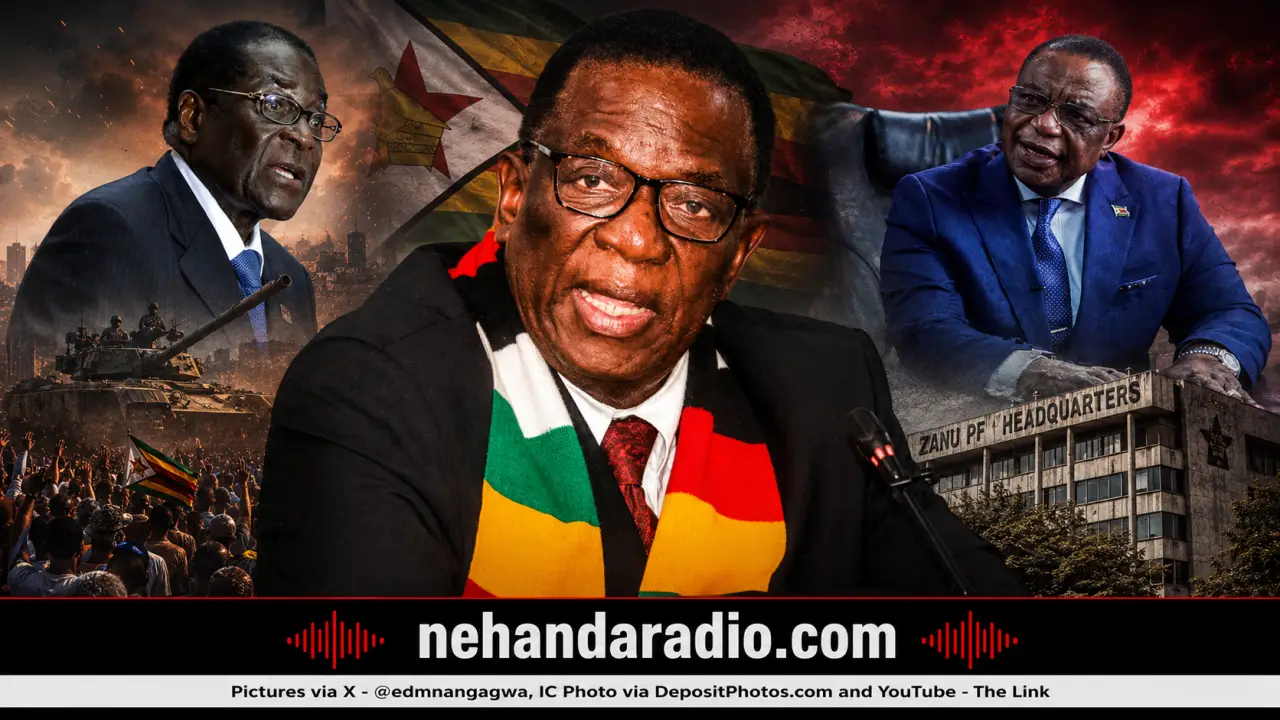
It has been a persistent, widely acknowledged tenet among political heavyweights that the military intervention was underpinned by an implicit, gentleman’s agreement within the senior echelons of the security apparatus and the party.
This unspoken compact dictated that Emmerson Mnangagwa would serve as a transitional, stabilising figurehead, a bridge between the Mugabe autocracy and a future civilian-clothed administration led by Constantino Chiwenga himself.
For the commanders who risked their lives and careers in that high-stakes intervention, the operation was viewed as an investment in a structured, predictable succession pipeline.
CAB3 effectively tears up that foundational bargain. By extending the presidential horizon to 2030, the legislative framework directly betrays the expectations that have animated the Chiwenga faction for nearly a decade.
The current palace anxieties are the direct product of a bargain that one heavily armed faction believes has been systematically violated by the other, transforming what was meant to be a co-operative duopoly into a zero-sum game of political survival.
Mnangagwa’s Genius for Survival
The modern history of ZANU PF is littered with the political corpses of those who underestimated Emmerson Mnangagwa’s extraordinary capacity for political endurance.
Throughout his long career, from the fallout of the 2004 Tsholotsho Declaration where his initial prime ministerial ambitions were thwarted by Robert Mugabe, to his outright dismissal from both the party and government in late 2017, Mnangagwa has repeatedly demonstrated a rare genius for navigating existential crises.
A politician who has survived poisoning, exile, and systemic purges is highly unlikely to willingly facilitate the rise of an ambitious rival who possesses an independent, heavily institutionalised power base.
CAB3 must therefore be understood not through the high-minded lens of constitutional reform, but as an instrument of pure political survival and dynasty building.
By using a vast financial war chest, fortified by lucrative state-directed patronage networks and the active support of a loyalist business oligarchy, the presidency has successfully co-opted and coerced the necessary legislative majorities to secure this extension.
This consolidation demonstrates that Mnangagwa views the law not as a constraint on executive power, but as a malleable weapon to neutralise internal competitors before they can gather critical momentum.
The Institutional Erosion of the Vice Presidency
Concurrently, the visible indicators of Vice President Chiwenga’s political fortunes have shown signs of significant erosion. His public profile has been systematically managed and reduced; his closest political and military allies have been gradually reassigned, retired, or marginalised within key state organs.
The rapid ascendancy of Mnangagwa loyalists within the civil service, the judiciary, and the party structures has created an institutional environment that is increasingly hostile to the Vice President’s ambitions.
The apparent ease with which CAB3 sailed through a Parliament filled with both co-opted ruling party members and nominal opposition figures suggests that Chiwenga’s leverage within the formal structures of the state has reached its lowest ebb since 2017.
Nonetheless, students of Zimbabwean history will recall that apparent total defeat in Harare is often an illusion. Robert Mugabe himself frequently appeared to have completely neutralised Mnangagwa during the height of the Generation 40 vs Lacoste factional wars, only for the institutional architecture of the state to pivot violently within a matter of days. In this highly fluid environment, formal marginalisation does not automatically equate to permanent political extinction.
Coded Resistance and Scriptural Warfare
Unable to wield the hard institutional levers that were once his to command, Chiwenga has increasingly been reduced to expressing his deep frustration and acute sense of humiliation through the fraying medium of political innuendo and scriptural allegory.
This retreat into coded resistance was starkly visible during his address at the ZANU PF Annual People’s Conference in Mutare, where the atmosphere was thick with sycophantic declarations backing the “ED2030” term-extension project.
Forced onto the stage to perform a ritual of loyalty, Chiwenga attempted a subtle rearguard action. In a speech loaded with subtext, he delivered the verbatim warning that “no-one is above the law,” adding deliberately that corrupt officials must be warned because the law would eventually catch up with them. While ostensibly a standard anti-graft homily, the Harare political class immediately read it as a pointed, defensive salvo directed at the commercial cartels financing the President’s prolonged stay in office.
This coded warfare reached a more profound, almost desperate theatricality shortly thereafter during what has become known as the Hezekiah sermon.
Speaking before a Catholic congregation, the Vice President delivered a highly charged biblical exposition based on the Old Testament narrative of King Hezekiah, who, upon facing imminent death, wept and successfully begged God for an extension of 15 years to his life.
In a scathing, thinly veiled paraphrase of the modern Zimbabwean presidency, Chiwenga mocked the ancient king’s request as the short-sighted folly of an unstable or foolish leader – using terms like “benzi”, “shasha”, and “zungairwa” to describe a leader who receives a temporary extension only to oversee the ultimate ruin and moral decay of his kingdom during those bonus years.
To the educated general public, the sermon was a blistering indictment of the 2030 agenda, a raw manifestation of a sidelined general using the pulpit because the Politburo floor had been shut to him.
The Fading Mystique of the General
Yet, this reliance on metaphors and spiritual parables has had a devastating unintended consequence: it has exposed the profound limitations of Chiwenga’s current political artillery, triggering a visible collapse of his long-cherished mystique as a fierce, uncompromising military general. For a man who once commanded the state’s ultimate instruments of violence, a reliance on scriptural analogies signals vulnerability rather than strength.
This perceived weakness has invited unprecedented, highly public salvos from Mnangagwa’s frontline attack dogs, most notably the combative former legislator Temba Mliswa and the abrasive, excitable ZANU PF spokesperson Christopher Mutsvangwa.
These loyalist actors routinely fire public broadsides at the Vice President, openly mocking his camp’s complaints, challenging his historical credentials, and systematically dismantling the aura of invincibility that had shielded him since the 2017 tanks rolled into Harare.
When figures like Mutsvangwa can publicly patronise or aggressively counter a former military chief without facing immediate institutional or coercive retribution, it signals to the broader bureaucracy and international community that the general’s bite no longer matches his historical bark.
The Restructured Security Architecture
The ultimate reservoir of Chiwenga’s historical influence has always been the military, yet the composition and character of that institution have undergone a profound transformation over the last nine years.
Since the 2017 intervention, the executive has engaged in a quiet, methodical restructuring of the Zimbabwe Defence Forces. Veteran commanders who shared deep wartime or operational bonds with Chiwenga have been progressively replaced by a newer generation of officers whose loyalty is tied directly to the current commander-in-chief through professional advancement and institutional patronage.
The Central Intelligence Organisation has similarly been fortified as a counterweight to military influence, creating a fragmented security landscape that makes a repetition of the 2017 intervention exceedingly difficult to co-ordinate.
Without a cohesive, unified institutional appetite for political adventurism within the barracks, the Vice President’s primary lever of coercive power appears significantly blunt. The modern military commander is increasingly integrated into the formal economy and corporate boards, a reality that raises the personal and institutional costs of open mutiny against a sitting president who commands the legal architecture of the state.
The Paradox of Prolonged Transitions
This structural delay of the succession question introduces a profound paradox, as lengthening an incumbent’s tenure often intensifies high-level anxiety rather than subduing it.
By locking the constitutional door until 2030, CAB3 may have temporarily frozen the succession issue in legal prose, but it has simultaneously rendered the informal political arena far more volatile. A prolonged transition period of four additional years creates an extended window of vulnerability for an aging incumbent, during which economic shocks, health concerns, and subterranean palace intrigues can fester.
Rather than resolving the factional warfare, the bill forces the conflict deeper into the shadows, encouraging the formation of clandestine alliances and heightening the sense of insecurity among dynamic party figures who fear being purged before the next decade arrives.
History shows that when formal channels for power transitions are blocked or artificially extended, the pressure within informal networks builds exponentially, frequently exploding in unpredictable ways that legal texts are entirely powerless to contain.
Strategic Ambiguity as a Means of Survival
In analysing Chiwenga’s public passivity throughout this constitutional coup, one must confront the difficult question of whether his behaviour reflects genuine political fear or a calculated strategy of patience.
Emmerson Mnangagwa’s reputation as an uncompromising state tactician is well earned, and the fates of previous contenders who openly challenged the executive serve as a powerful deterrent.
In the realities of Zimbabwean politics, the line between strategic prudence and raw political fear is virtually non-existent; an open rebellion against a sitting president who controls the central intelligence apparatus, the police, and the financial levers of the state is often a form of political suicide.
Chiwenga’s public silence and compliance with collective cabinet responsibility must therefore be viewed through the lens of survival. He understands that an open, premature confrontation would allow the state machinery to legally isolate and destroy him.
His inaction may not be a sign of total submission, but a recognition that the current institutional balance of power forces him to wait for a more opportunistic moment, even if that wait carries the immense risk of his domestic network slowly evaporating.
This strategic caution was vividly illustrated by the Vice President’s notable absence from the funeral of Blessed Geza, the outspoken war veteran popularly known as Comrade Bombshell, who died in February 2026.
Geza had openly demanded Mnangagwa’s immediate resignation and publicly championed Chiwenga as the rightful successor, becoming a lightning rod for anti-regime sentiment within the veteran community before his passing.
For Chiwenga, attending the funeral would have sent an unambiguous signal of solidarity with a dissident faction, an act that the presidency would have undoubtedly interpreted as an overt declaration of hostilities.
By staying away, Chiwenga maintained a posture of strategic ambiguity, deliberately distancing himself from those who attempted to launch a rebellion in his name.
While this calculated absence protected him from immediate executive retaliation, it undoubtedly sent a wave of profound disappointment through his traditional base of radical war veterans and retired officers, who had long expected a greater degree of political boldness from the former general. The incident highlighted the acute dilemma facing the Vice President: the very caution required to survive in the short term is steadily undermining his reputation as a formidable, courageous alternative leader.
The Tyranny of Vanishing Time
The inescapable reality of the past few years is that every attempt by the traditionalist faction to halt or disrupt the 2030 agenda has met with uniform failure. From internal party deliberations to the public consultation hearings on CAB3, the Mnangagwa network has consistently outmanoeuvred its opponents, demonstrating an absolute control over both the legislative process and the party organs.
This track record raises a fundamental and deeply uncomfortable question for the Chiwenga camp: if every defensive manoeuvre has failed, what logical reason is there to believe that any future plot or plan will succeed?
Time is a luxury that the Vice President simply does not possess, as each passing month allows the presidency to further entrench its loyalists, restructure the security apparatus, and deepen its control over the commanding heights of the economy.
Potential allies within the business community and the civil service, recognising the apparent inevitability of the 2030 project, are likely to abandon a declining succession movement in order to secure their own survival within the dominant patronage network.
Lessons from Global Authoritarian Transitions
Yet, a comparative analysis of authoritarian regimes across the globe reminds us that constitutional longevity is frequently an illusion that masks deep internal fragility.
In Uganda, Yoweri Museveni has repeatedly altered the constitution to remove term and age limits, yet these legal victories have not eliminated succession anxieties; instead, they have institutionalised a permanent state of palace intrigue and family succession battles that paralyse the state.
Similarly, in Cameroon, Paul Biya’s endless prolongation of his rule has created a brittle, stagnant political system where the ruling tier is consumed by an exhausting waiting game, leaving the country highly vulnerable to sudden instability.
In Russia, Vladimir Putin’s constitutional manoeuvres to reset his term limits required the total subordination of the state apparatus, a process that creates a brittle system where any sudden shock can expose the absence of genuine institutional consensus.
Conversely, the transition in Angola from José Eduardo dos Santos to João Lourenço serves as a stark warning to long-ruling incumbents; dos Santos believed he had secured his legacy and protected his family through legal guarantees, only for his handpicked successor to systematically dismantle his empire within months of taking power.
Most instructively, the events in Algeria during the attempted prolongation of Abdelaziz Bouteflika’s tenure demonstrate that when an elite project ignores the underlying political and economic realities for too long, a sudden convergence of popular anger and military anxiety can instantly reduce a constitutional amendment to worthless paper.
The Rise of Informal Battlegrounds
Ultimately, constitutions cannot settle deep-seated rivalries when the real distribution of power resides in informal networks, control over resource extraction, and the loyalty of armed men.
CAB3 has fundamentally altered the rules of the game, but it has not altered the underlying nature of the conflict. By eliminating direct presidential elections, the bill has paradoxically turned Parliament and the ZANU PF Central Committee into the supreme battlegrounds for succession.
This structural shift could unintentionally create new, highly combustible centres of opposition within the ruling party, as ambitious mid-career politicians realise that their path to advancement is completely blocked by an entrenched gerontocracy.
The greatest threat to the Mnangagwa succession project is not the formal political opposition, which remains fractured and co-opted, but the profound internal uncertainty that this extension generates.
In this environment of enforced waiting, the ultimate beneficiary of CAB3 may not be Chiwenga or any member of the First Family, but a dark-horse candidate completely outside the current duopoly – a figure who quietly accumulates capital and connections while the two main titans exhaust themselves in a protracted war of attrition.
A Dangerous Period of Executive Waiting
Has Constantino Chiwenga been politically buried by the passage of CAB3? The most rigorous answer must be that while his traditional path to power has been decisively blocked, his political life is not entirely extinguished.
He is no longer the formidable power-broker of 2017 who could dictate terms to the state; he is now a profoundly constrained actor trapped within a complex, highly securitised system that he can no longer control through raw military prestige alone.
Mnangagwa has indisputably won this major constitutional battle, demonstrating a ruthless tactical superiority that has left his rival isolated and quiet.
Yet, to declare the succession war completely over is to misunderstand the volatile history of a state where political authority has always been negotiated through a shifting calculus of coercion, patronage, and inner-circle consensus.
Zimbabwe has now entered a prolonged, dangerous period of executive waiting, characterised by institutional paralysis and deepening economic vulnerability.
CAB3 has not answered the succession question; it has merely prolonged the drama, ensuring that the final, inevitable resolution will take place in a much murkier, more desperate, and potentially more violent arena.
Discover more from Nehanda Radio
Subscribe to get the latest posts sent to your email.



