Home Blog Page 1548

Forsaken in life but loved in death!

0
The hearse carrying the late rapper Cal Vin

By Bruce Ndlovu

During his burial on Sunday last week, there was a moment when the Master of Ceremonies requested that Cal_Vin’s song, Thabani, be played as a tribute to the rapper.

The hearse carrying the late rapper Cal Vin

The song choice, right before any speech eulogising the fallen rapper was made, was both apt and haunting. It was apt because the song spoke about how unloved he felt in his own city, the same city that had turned up in its thousands to bid him farewell.

It was haunting because on this same song, he raps prophetically about how he was going to die this year.

“Batshele u Cal_Vin uzokufa lonyaka
Thabani majaha
Eyi, hey wena
They wanna do me like Majaivana”

Those lyrics, those on the day of his burial, seemed to haunt the Bulawayo Amphitheatre as they poured out of the speakers, leaving a bitter after-taste on a day that seemed more of a celebration of his life than a mourning of his death.

In the song’s chorus, Cal_Vin gives a nod to Majaivana, the man whose pen came up with some of those lyrics. The rapper, a keen student of music from across genres, had given Majaivana’s Ingwe Ban’ a modern twist. The message that the two songs, made two decades apart from each other, was essentially the same.

The echo of Majaivana’s cry of discontent, a by-product of the cold shoulder that he felt his city and country reserved especially for him, was heard by Cal_Vin 20 years and in his death, those at Amphitheatre heard it too. While Majaivana is still alive, the legendary musician is “dead” to fans and followers alike — as he has left no trace of his existence for the best part of two decades.

From Majaivana all the way to Cal_Vin that cry is very familiar to those that follow music in the city. When Novuyo Seagirl was booed off-stage last year at Queens Sports Club, that very same cry was heard.

When Asaph produced hit after hit, dominating the national charts but walking around with barely any recognition in his city, that cry is repeated yet again.

But is it true that Bulawayo does not support its own? And what about those who claim that Bulawayo artists, sandwiched between musical powerhouses Harare and Johannesburg (South Africa), do not make music that matches the standards of their local and international rivals?

Cont Mhlanga, a long-time advocate of local art, told Sunday Life that the problem did not lie with artists but with middlemen who were supposed to make their art accessible.

“For starters music is a product that consumers must access in order to consume. That’s the first challenge when it comes to Bulawayo. The second point is that musicians are manufacturers of the music product and, therefore, musicians are factories that make products that do not have wholesalers and supermarkets to sell to consumers. That’s the biggest problem in Bulawayo.

“Bulawayo itself does not have the required solid music infrastructure that can make its own talent be easily supportable by Bulawayo consumers and that can make its talent bankable. It just does not have that infrastructure. We underestimate the role of infrastructure in making talent bankable and I think I want to speak to that,” he said.

Cal_Vin’s burial, Mhlanga said, showed that Bulawayo knew its heroes and would celebrate them when they were alive if given enough exposure and access.

“What you saw at the late Cal_Vin’s send-off, when a lot of people stood on their feet, that tells you that people in Bulawayo are very aware of what their talent is doing. It tells you that people know what their talent can do and is capable of because no one has known Cal_Vin for anything else except the music that he made.

“It means that people know and appreciate that there are people that make good music in Bulawayo. So, the challenge is not with the music makers or the audience themselves, but somewhere in the middle of the two.

“In fact, the turnout at the send-off should give a lot of young artistes in Bulawayo courage and hope that people in Bulawayo are aware of what they’re doing. The bankability of what they do and people coming to consume their art is a different ballgame that requires a whole different people to address and not the musicians or the consumers themselves,” he said.

Playwright and critic Raisedon Baya said while artists might clamour for more support from the wider Bulawayo public, they had also let themselves down by failing to build support structures, starting with their own homes.

“On Twitter someone said ‘why do you want us to support an artist whose family has never been seen at their event’ and that rang true because if you go to a lot of your white communities, remember they aren’t as many as black people, you will find they have family there.

“If you go to a theatre show, they will fill-up the theatre, if you go to the music academy when there is a show, they fill up the place. Why do they do that? It’s because the families are their first base of support, their first port of call.

“They don’t just come to see the show, they also pay and support the show. If we hold shows our families should show support because we expect them to believe in whatever we do. We cannot expect people from outside to buy-in to our work when our own people, our own blood, our own relatives don’t buy into your work as an artist. I think that’s one place where we can blame ourselves as artistes,” he said.

With most major companies headquartered in the capital, Baya said corporate support was also hard to come by. While their counterparts in Harare walked away with lucrative endorsements, Bulawayo musicians had to make do with scraps tossed their way from time to time.

“I would also blame our corporates. I am not saying they should support all artists but I think they should support a few events but you rarely see them and I think the biggest problem is that most of the people making the decisions in the so-called bigger companies are probably not in Bulawayo. The decision-makers are probably in Harare.

“There are a lot of problems but the solutions come with organisations, come with putting structures, come with advocacy and also come with an understanding from artistes that at the end of the day they might not make it despite their hard work. I say this because there are lot of young, and even older artistes, that believe that someone owes them success. We owe it to ourselves to push and push and push,” he said.

At times, it seems as if there is a cultural umbilical cord that connects Bulawayo to Johannesburg. According to Baya, this had led to local artistes, who have lesser means and are not as exposed in mainstream media, being compared unfavourably with their South African counterparts.

“I would blame our general public. Whether it’s due to socialisation or bias, especially in music, I think they prefer South African work. There is an inferiority complex whereby it’s seen as not nice to like local things. It’s quite fashionable to know what’s current in SA whether it’s in music or other things. That’s why you find even social media challenges, whether it’s John Vuligate or Jerusalema, a lot of locals jump onto it.

They think it takes them to another level but when we do our own everyone is laughing and making jokes about it because we’ve really become a laughing stock,” he said.

Fellow rapper, “Kabelo KBrizzy” Matiwaza said while some might blame audiences, the problem sometimes is that the economic situation made it difficult to support local musicians.

“At first, I also used to think that people in Bulawayo also don’t support, but as my understanding grew, I also realised that economics also comes into play.

“The medium family in Bulawayo right now is struggling to put food on the table so it’s very unfair for a large group of artistes to expect people to buy an album, buy merchandise, attend three shows a month when they don’t even have transport money to go to work or are struggling to just put basic commodities on the table for their children.

“It just won’t work. That’s why it takes the extraordinary once in a month shows for people to show up because people just sacrifice for that one time,” he said. The Sunday News

Danai Gurira speaks on American election experience

0

By Bruce Ndlovu
A close and controversial presidential race between Democratic nominee Joe Biden and incumbent Republican President Donald Trump has forced Zimbabwean Hollywood star Danai Gurira to reflect on the value of voting, in particular because her own parents were denied that same right before Zimbabwe attained majority rule in 1980.

Danai Gurira is a Zimbabwean-American actress and playwright. She is best known for her starring roles as Michonne on the AMC horror drama series The Walking Dead and as Okoye in the Marvel Cinematic Universe superhero films Black Panther, Avengers: Infinity War, and Avengers: Endgame.

This year’s American elections have been a tense affair, with Trump alleging voter fraud while Biden pinned his hopes on late arriving mail-in ballots that his rival campaigned against. Gurira, like other figures in Hollywood, spent a large part of the campaign encouraging young people to vote.

“It was really interesting, in the sense that I think a lot of us are feeling like in 2020 it’s quite a year and a lot’s going on and you can feel a lot of frustration, a lot of helplessness: How do I help? How do I contribute at this moment? And as playwrights, we see the institutions, theatres are of course very much hard-hit by Covid-19 and unable to function at all,” she told OZY Media.

Despite a feeling of haplessness, Gurira said she had been encouraged to rope in other creatives in efforts to create voter awareness.

“And so, there was just a desire that hit me one day to connect with other playwrights and try to give voice to the Americans we often don’t hear from. Our job as playwrights is really that, to reflect society back to itself, and so we really thought like maybe . . . I called Tarell (Alvin) McCraney. I called Jocelyn Bioh. I called Lynn Nottage.

“And I was like, “What do you guys think about just trying to give a voice in a way that we can just encourage folks to contribute that, really saying, ‘Let’s vote, guys, let’s make sure we vote this time.’” I mean, it’s a lot of loss of voice when we see how little people have voted in the past. And apparently, there were at least 100 million eligible voters who did not vote in 2016. So, it’s just really giving voice to voices and just encouraging people to get out and vote and to give some material also to the theatres that we love and that have supported us and that need support right now in this time,” she said.

Gurira spoke of the pain that her parents felt when they were unable to vote in Smith’s Rhodesia.

“In 2016, I traveled through a lot of states and really was trying to get out the vote effort during that time, and met a lot of young people who were choosing not to vote. And that was . . . it was a hard thing to hear that and to hear people make that decision, knowing exactly what you said. I come from a country . . . I was born two years before all Zimbabweans were able to vote after colonial rule (was) toppled in 1980. And so literally, my parents were only able to vote really in their 40s in the country of my origin, where I then grew up,” she said.

The experiences of her parents had convinced her to convince other people not to take the right to vote for granted.

“And so, it is something that is close to me in that regard, that I know how hard it is. My parents grew up in a nation they could not vote in, and their parents could not vote in. And of course, here in the United States, we are 100 years this year from the 19th Amendment where women gained the right to vote and then even more of a fight further along the civil rights movement for black women to be able to vote . . .”

“So, it’s not something that we can take lightly. We just had the passing of John Lewis. And that to me was very hard. We’ve lost a lot of our heroes, but what their service to a better tomorrow in this nation has definitely taught me, and I know it’s taught many of us, is that we must use our full effort and the gifts we’ve been given to contribute to our nation.” The Sunday News

Prince Dube now a dad

1
Prince Dube and partner

By Mehluli Sibanda
Prince Dube is not only in fine form for his Tanzanian club Azam where he has scored six league goals so far, the lad is also a sharp shooter at home with the results already out there for everyone to see.

Prince Dube and partner

It appears the 23-year-old Dube has been scoring freely for Azam knowing well that he had scored the most crucial goal in Zimbabwe before he headed off to Tanzania in August.

Dube has welcomed the birth of his first child, with the player allowed time to be briefly with the newly born and the mother when he reported for Warriors duty on Friday.

The Azam striker was one of four foreign-based players to arrive last Friday ahead of back-to-back Africa Cup of Nations qualifier matches against Algeria.

Zimbabwe face Algeria in Algiers on Thursday before the two teams clash at the National Sports Stadium four days later. Given the way he has been scoring for Azam, Dube is expected to play a huge part in the next two matches.

The South Africa-based trio of Elvis Chipezeze, Devine Lunga and Ovidy Karuru are the other ones who arrived in the country on Friday. Warriors team manager Wellington Mpandare said Dube is expected back in Harare today.

“Prince we gave him time to see (his) new born child so he is in Bulawayo coming back tomorrow,’’ said Mpandare.

United States of America-based goalkeeper Tatenda Mukuruva and defender Tendai Jirira are not available because of travel obstacles in USA, which prevented them from flying to Zimbabwe. This means the squad of 24 is now reduced to 22, with no additions to be made.

“We knew about those issues, Mukuruva and Jirira are not coming, which is why we had a squad of 24 players,’’ Mpandare said.

According to a schedule of arrivals made available by Mpandare, central defender Alec Mudimu, who plays club football in Moldova, was expected to arrive yesterday.

Jimmy Dzingai, Jordan Zemura, Tendai Darikwa, Adam Chicksen, Tafadzwa Rusike, Kudakwashe Mahachi, Knowledge Musona, Terrence Dzvukamanja, Khama Billiat and David Moyo should land in the country tomorrow.

Marvelous Nakamba, Teenage Hadebe, Tino Kadewere, Marshal Munetsi should arrive in Zimbabwe on Tuesday, the day the Warriors fly out by chartered flight to the North African country.

Squad
Goalkeepers: Elvis Chipezeze, Talbert Shumba

Defenders: Jimmy Dzingai, Alec Mudimu, Jordan Zemura, Teenage Hadebe, Divine Lunga, Tendayi Darikwa, Adam Chicksen

Midfielders: Marshall Munetsi, Ovidy Karuru, Butholezwe Ncube, Tafadzwa Rusike, Kudakwashe Mahachi, Knowledge Musona, Terrence Dzvukamanja, King Nadolo, Marvelous Nakamba, Khama Billiat

Strikers: Tinotenda Kadewere, David Moyo, Prince Dube. The Sunday News

Khama clocks 50 but . . .

1
Former Zimbabwe Warriors and Kaizer Chiefs striker Khama Billiat

By Langton Nyakwenda

Khama Billiat clocked 50 league appearances for Soweto giants Kaizer Chiefs last week but the milestone was overshadowed by concerns about the diminutive forward’s prolonged goal drought, which have dominated sports pages in some of South Africa’s media.

Warriors and Kaizer Chiefs striker Khama Billiat

The 30-year-old forward scored four goals last season but is yet to open his account this term and now has a total of eight strikes in his 50 league appearances for Amakhosi.

Billiat’s management is now hoping the star forward can use today’s MTN 8 semi-final clash against Orlando Pirates and the upcoming Africa Cup of Nations qualifier against Algeria to find his range again.

“Let’s wait for the national team and outcome of this weekend,” Billiat’s manager, Godfrey Bakasa, told The Sunday Mail Sport.

Billiat, who is expected in the national team camp tomorrow, is a perennial match winner for the Warriors but his club form has left new Chiefs coach Gavin Hunt scrambling for answers.

The veteran gaffer has, however, reiterated his support for Billiat but expects more effort from the striker, who has scored three goals in his last 25 league appearances.

“What we can’t do at the moment is leave him out and give him a little bit of a break because of our situation, so we’ve got to try and play him through this patch and get him to be in the right areas and do the right things,” Hunt told Kick Off soccer magazine on Friday.

Chiefs have one win in their opening three league matches and are trailing rivals Orlando Pirates 0-3 going into today’s second leg of the MTN 8 Cup semi-final.

“Certainly, you can do all the talking you want — and we have spoken on numerous occasions, trying to give him a little bit more understanding of where to be when the ball is in certain areas — but it’s got to be a little self-instinct as well about wanting to do it,” added Hunt.

Back home, Chiefs legend and former Warriors midfielder, Tinashe Nengomasha, has backed Billiat to rediscover himself and win trophies for Amakhosi.

“Khama is like a younger brother to me. I saw him grow up at Aces Academy and his talent was never in doubt. So, I would like to say congratulations to him for reaching this milestone.

“It’s not easy to reach 50 games for Chiefs, it shows that he is working hard to stay in the team and he is taking good care of his health.

“He now needs to target 100 games,” said Nengomasha, who clocked over 300 appearances for Kaizer Chiefs in his 10-year stay at the Soweto giants.

“Yes, his form has been worrisome but remember Khama is not a machine, he is just a human being.

“Even Lionel Messi, the world’s best player is not the same these days. I think Khama should just re-collect himself, forget about the past and focus on the future.

“There is pressure at Amakhosi because everyone is looking at you. So, sometimes you have to sacrifice even your social life.

“Khama has to try and pinpoint where the problem is and fix it.

“Kaizer Chiefs need a brilliant Billiat and when he hits top form for Amakhosi then the Warriors will benefit,” said Nengomasha.

Ex-Warriors defender Thomas Sweswe, made 59 league appearances for Chiefs between 2009 and 2012 and he knows how difficult it is to adjust to life at Naturena.

Billiat was the talk of South African football when he joined Chiefs from Mamelodi Sundowns in 2018, two years after bagging the Footballer of the Year award.

He won a CAF Champions League medal at Sundowns in 2016, the same year he was shortlisted for the CAF African-based Player of the Year award.

Amakhosi broke the bank to lure Billiat to Soweto but the Zimbabwean has so far failed to justify his price tag.

“It’s always difficult at Kaizer Chiefs because almost the whole of South Africa wants to play for the biggest football brand in the country. Just getting a contract is a blessing on its own.

“The pressure is just too much.

“So for Khama to reach 50 games is commendable. At Chiefs you need to be on your toes and focused so that you can play every week.

“Also, there are a lot of sacrifices so that you keep in the right shape and play well so as not to disappoint the fans.

“I wish Billiat an injury-free season so that he can help the team win trophies,” Sweswe said.

Billiat’s teammate and long-serving midfielder, Willard Katsande, has been playing a brotherly role for the beleaguered forward who was a victim of some brutal media attacks towards the end of last season.

“It’s every kid’s dream to play for Kaizer Chiefs and to reach 50 games is a huge achievement. It’s good for him (Billiat),” the 34-year-old Katsande said.

“There were some moments where Khama was brilliant and some moments where there were hiccups. It happens in football, especially when you are joining a new team.

“So it was the duty of us senior guys who have been there with the team for long, to know where exactly we needed to help him adjust.

“Now I can tell you he is happy, he has found his footing again and he will score goals because he’s a special player.

“We are going to achieve a lot with him. He will achieve more milestones, he’s going to keep playing well.

“Whenever he has the ball on his feet he is bound to create a scoring opportunity so he is a good asset for Chiefs.

“To play for Kaizer Chiefs is difficult but Khama was groomed by a renowned academy, he is a good player, a good father and a good role model to the upcoming youngsters,” said Katsande.

Billiat joined Chiefs in 2018 after spending five seasons at Mamelodi Sundowns where he scored 39 goals in 99 league appearances.

He made his South African Premiership debut with Ajax Cape Town on August 27, 2010 in a 2-0 win against Bloemfontein Celtic. After spending three seasons at Ajax, Pitso Mosimane brought him to Sundowns.

He now has a total of 232 league appearances in the South African PSL and has now played 18 692 minutes since August 27, 2010. The Sunday Mail

Allan Chimbetu’s biggest plea

1
Boroma and Allan Chimbetu (Picture by NewsDay)

By Prince Mushawevato

“I wish I could put someone in my shoes for a single day and they experience the pressure that I go through everyday to unite my family. The guys, particularly Sulu (Sulumani), Tryson and Douglas, are a difficult lot that need special tact when dealing with them,” claimed the only surviving Dendera “godfather”, Allan Chimbetu, last week.

Boroma and Allan Chimbetu (Picture by NewsDay)

To his credit, Allan has done his best to keep the family left behind by his late brothers Simon, Naison and Briam intact.

Through the 48-year-old’s effort, the Chimbetu family can now gather under one roof for major family events. This was hardly possible in the past as squabbles, accusations and counter-accusations, particularly of witchcraft, threatened to tear the family apart.

It was often Sulu and his cousin Tryson at war. But the storm appears to have calmed. The Chimbetus of song — Sulu, Tryson, Douglas and Saiwe, led by Allan — united this year for the annual Simon Chimbetu commemoration gig in August.

Fans cheered the move.

However, Allan feels more still needs to be done.

Contents of his forthcoming fifth studio album “Urgent Matter”, due for release this coming Saturday, sums it all up.

The Sunday Mail Society got the chance to sample the 10-track album.

While all the songs easily grab attention, the fifth track, “Kombe”, is spellbinding.

The Chewa song, which is marinated with sublime Dendera instruments, speaks of a man with a “serious” family predicament.

“Kombe means a fishing net. In the song, I am pleading with the Almighty to give me the power to recover my borrowed nets from relatives that seek to control them forever. I am tabling an option to be granted the means to acquire a new set of tools so that I am able to execute my duties as a family head,” he explained.

Allan argues it is his duty as leader of the family to boost the genre’s waning fortunes.

“It took me a great effort to come up with ‘Urgent Matter’. I think it is my best to date. I have done everything outside music to unite the family and feel there is still a need for me to bring them under one roof musically.

“Everyone in the family respected Simon and Naison’s music talent. It is against that background that I feel a superb product will help me further gain respect and grip from my nephews.”

The horn-bill is once again crowing on the well-knit album that features Sulu and Mathius Mhere on the songs “Nhodzerai” and “Nyasha Dzinesu” respectively.

The effortless blending with Mhere, a gospel singer, confirms Allan’s versatility and experience in the music industry.

Other tracks on the album include “Sorry”, “Ndichinge Ndisina Mari”, “Urgent Matter”, “Mudzimai Akarongeka”, “Tiverengane”, “Rwendo” and “Hello”.

The veteran guitarist, composer and vocalist retraced his Dendera roots on the effort.

Similarly, the magical touch of veteran producers that include Canada-based Munya Viali, Mokoomba band member Trust Samende, South Africa-based Keith Farquharson and Oscar Chamba is difficult to miss.

“I joined Simon when I was about 23 years old. In 1998, I managed to play the guitar on his album ‘Lullaby’. It is through my experience that I have the Dendera curriculum direct from the founders. This project delivers nothing short of excellence,” said Allan.

Unity

“I know people want a family album, and we are arranging for that. I have made strides in bringing them to talking terms and that is a big step towards the plan. I love all my nephews.

“I worked with Sulu on this not because I favour him: I simply follow protocol. He is the eldest in the family.

“Let me take this opportunity to thank Fasfit Matlock owned by Thompson Dondo. They sponsored the album recording and are also sponsoring the launch to be held . . . in Waterfalls.”

The launch will be aired on ZBC-TV starting at 9pm.

“. . . he came looking for assistance and I did not object since we already knew each other. I personally can work with any artist. Besides, Allan is a seasoned musician that deserves respect,” said Dondo.

Fasfit Matlock branch manager Caroline Chizema adds: “We always try to assist our artistes in every little way possible. We are pulling out all the stops to make sure that his November 14 launch is a massive success.”

Allan’s other albums include “Sonny” (2006), “Professor” (2007), “Simukai” (2009) and “Covenant” (2016). The Sunday Mail

Massive pile-up at VID . . . aspirants flunk exams

1

By Tendai Chara

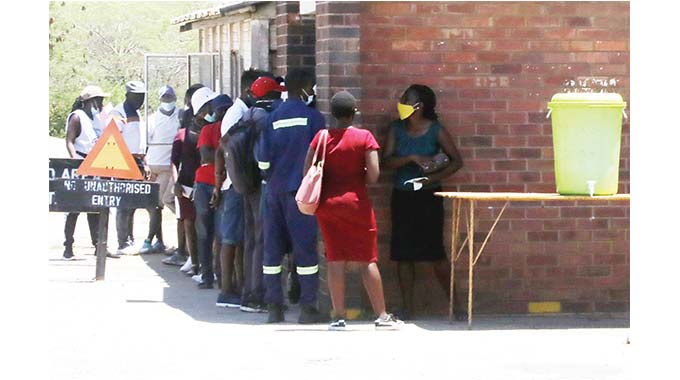
An unusually long, winding queue snakes its way past the pre-cast wall of the Vehicle Inspectorate Department (VID)’s Eastlea depot in Harare before coming to an abrupt end some few metres from the banks of a heavily polluted stream nearby.

Ignoring the heavy stench emanating from the pile of rubbish that is scattered across the streambank, scores of people could be seen waiting anxiously for their turn to be ushered into the VID premises.

Since the resumption of VID operations last month, there has been an incredibly high number of people who are thronging the premises seeking both learner’s and driver’s licences.

The government recently gave the nod for the resumption of road tests and the issuance of driver’s licences.

Operations at VID have been suspended since March due to the Covid-19-induced lockdown.

Although most VID depots are traditionally characterised by heavy human traffic, the number of people that are besieging the depots seeking licences have been markedly high.

Investigations carried out by this publication revealed that a hoax social media message which purported that learner’s and driver’s licence fees were going to be hiked is behind the current artificial demand for services.

The message suggested that licence fees were going to be pegged in United States dollars.

When this reporter visited the Eastlea depot on Friday, scores of people who made the long queue were pushing and shoving as they impatiently awaited their turn to be served.

Some of those in attendance had been at the premises as early as 5am.

The majority of the people that were interviewed confirmed being driven by the hoax message.

“I have been here since 5am and as you can see, I am still very far from the entrance. I was told that the fees for acquiring a learner’s licence will soon be increased,” a young man who introduced himself as Mike said.

“I was here some two days ago and I failed the provisional licence test. I came back to rewrite since I was told that the licence fees will soon be pegged in United States dollars. Where will I get the foreign currency?” Belinda, one of the many youthful people who were part of the melee, queried.

Application fees for learner’s licences are currently pegged at $100.

Sources close to the goings-on at VID said the majority of those that are sitting for the provisional driver’s licence are failing to pass the examinations.

The sources attributed the high failure rate to a lack of preparedness.

“People are panicking. They are coming here ill-prepared. Those that are failing are re-doing the test and this explains why the queues are not getting any shorter,” one of the sources said.

Dr Johannes Pedzapasi, the director of Transport Management in the Ministry of Transport and Infrastructural Development, confirmed the unusually high demand for the licences.

“This demand is artificial. Fake social media reports indicated that the licence fees are going to be increased, resulting in many people trying to write the tests before the said increase,” he said.

Dr Pedzapasi added that measures are being taken to manage the situation.

“We introduced a raft of measures to contain the situation. By 7am, our depots will be opened. We are also open during weekends,” he said.

He dismissed social media speculation that ignited the artificial demand.

Any fee changes, he added, are first approved by relevant authorities before an official communication is made.

“As far as I know, the learner licence application fees remain at $100,” Dr Pedzapasi said.

Long queues are also the order of the day at the Central Vehicle Registry (CVR) amid calls for Government to improve the registry’s capacity to issue adequate vehicle registration licences.

Transport and Infrastructural Development Permanent Secretary, Engineer Amos Marahwa, recently told Parliament’s Portfolio Committee on Transport that the Central Vehicle Registry received funding to procure 168 000 pairs of plates.

Statistics from the CVR Registrar’s Report to the Parliamentary Transport Committee on September 28, 2020 had indicated that there were 80 000 unregistered vehicles in the country, yet the CVR has only the capacity to issue 32 000 registration plates by year-end. The Sunday Mail

Chihombori agonises over Gringo’s pain

5
Gringo (centre) with wife Netsai and Sekuru Banda

By Langton Nyakwenda

Enock Chihombori, the man who created the character “Gringo”, which was played by the now ailing comedian Lazarus Boora, is pained by the renowned actor’s plight.

Gringo (centre) with wife Netsai and Sekuru Banda

The South Africa-based scriptwriter was famous for creating the popular drama series “Gringo” back in the 1990s.

The hilarious Boora was the chief protagonist in a cast that had the likes of William Matenga (Gweshe Gweshe); the late Stembeni Makawa, who played “Mai Gweshe Gweshe”; and Memory “Madhumbe” Makuri.

A notorious gardener, who always gave his employer Gweshe Gweshe some torrid times with his notoriety, especially in the 2013 production “Gringo Troublemaker”, “Gringo” is unwell and in dire need of support.

Chihombori says he has a fresh “Gringo” script ready for shooting but the main character, Boora, is currently not available.

Boora is battling intestine obstruction (tesnel), hearing and talking difficulties, and was last week admitted to a medical facility in the capital.

Chihombori, who is now based in South Africa after relocating from Botswana in 2017, has been following events back home.

“Lazarus’ (Boora) plight is painful to bear. As Zimbabweans, we have witnessed quite a number of our prominent artists go through difficult times when sickness or old age sets in.

“It is frightening. Some people can quickly blame lack of planning on the part of the artiste, but in many instances, it is simply a case of not having earned enough to afford a comfortable lifestyle or even having enough to put aside or invest in one’s future,” Chihombori told The Sunday Mail Society.

“I have experienced the life of an actor in Zimbabwe and I know how financially tough it was to try and survive on acting. Actors like Boora persevered because they had the talent and passion to keep on pushing. Only a lack of opportunities limited their abilities.

“With everything that Boora has done artistically over the years, he certainly does not deserve his current situation. It is painful,” said Chihombori, who played the character “Tobby Waters” in the Gringo series.

He described Gringo as one of the funniest characters of the era” and remembered his first encounter with the actor back in the 1990s.

“I was lucky to have worked with some of the funniest actors of that era — the late Collin Dube (John Banda), Fanuel Tonganayi (Firimoni), Blessing Chimhowa (Mbudziyadhura) and of course Lazarus Boora (Gringo). It was one of the most amazing and memorable experiences of my life.

“It was just a joy to be on set with these guys. We were always happy and laughing and cracking jokes with Boora leading with his endless humour and wit. Boora made my writing experience a joy, because he was able to seamlessly fit into the character of Gringo without much effort.

“It seemed natural. I always thought he made my writing and story-lines seem better than they really were.

“He has natural ability — that which does not need much coaching or guidance. The first day he came for auditions, he got the part immediately.

“In fact, his name was suggested before the auditions. I had known him from an acting club called Screen Talent, but by then I had not known him on a personal level.

“His understanding of what was required from him just made us click artistically,” revealed Chihombori.

We also tracked the burly Matenga (Gweshe Gweshe) in Chitungwiza.

“I called him (Boora) on Tuesday (last week) and I could hear from the phone that he was not well. I am yet to see him but I have been in touch with his son,” Matenga said.

“It’s sad Gringo is going through all this, especially at a time when we were planning to do Gringo Troublemaker Part 2,” said the 60-year-old Matenga.

Gringo Troublemaker is a 2013 comedy written by Chihombori and directed by Ben Mahaka.

Matenga, Blessing Chimhowa, Tapiwa Mavindidze, Evangelista Mwatse and Chati Butau are some of the main actors in the film.

“That guy (Gringo) is very creative, very brilliant and someone who can do some extraordinary things on set.

“He made us think beyond the script. If you are not creative with Gringo waitorasika.

“We had some guidelines and a script we would follow in those dramas but Gringo would go beyond.

“Some of the things you saw in those Gringo series, he thought about them on set. We actually didn’t realise we would have such an audience, but thanks to Gringo’s antics our dramas became very prominent,” Matenga said.

“Gringo has to be back to full fitness so that we can do Gringo Troublemaker Part 2, and I would like to wholeheartedly thank Sekuru Banda for coming on board to help our friend and fellow actor.

“This is good for him (Gringo) because we need him back. Actually, we are trying to get in touch with well-wishers like Sekuru Banda to see how best they can assist us in our bid to produce Gringo Troublemaker 2.

“I think if we can do it, Gringo will be a happy man,” said Matenga.

Sekuru Banda visited Boora at his residence in Hatfield last week and pledged to foot the actor’s medical bills.

Boora was admitted Wednesday to Westview, where, according to sources, some doctors are taking care of his medical bills.

In light of the latest developments, Sekuru Banda told the publication last Friday that he would continue to follow through his promises to the actor.

“It is good news to hear that there are a lot of people who are coming aboard and supporting Gringo.

“Everyone who can should help this actor who made us all laugh with his hilarious acts when he was still fit,” said Sekuru Banda.

“I have pledged to build a house for Gringo and his family. They have also told me about the plans to produce Gringo Troublemaker Part 2 and the constraints they are facing.

“Funding is hard to come by these days but I will assist the crew as and when possible so that they can produce another comedy for the people.

“Gringo loves to act; comedy is his way of living, so we are saying he needs to be fit again and return to the stage and entertain us the way he used to,” said the traditional healer. The Sunday Mail

‘Believe my prophecy or I shoot you’

0
Madzibaba Moses Chatara

By Harmony Agere

A self-proclaimed prophet who last week filmed himself threatening to shoot members of his church for refusing to believe in his prophecies has been arrested.

Madzibaba Moses Chatara

Madzibaba Moses Chatara of the Johane Masowe Apostolic sect appeared in court yesterday facing charges of violating the Firearms Act. He was jointly charged with Denford Ganye, who allegedly gave him the firearm. It is the State’s case that on November 5, 2020, Ganye, who is a licensed firearm owner, gave or hired the gun to Chatara.

“Moses Chatara then self-recorded himself a video threatening congregates of Johane Masowe saying he will use the firearm against his clients who deny his prophecies,” prosecutor Lloyd Tarenyika alleged.

“The video went viral on social media and investigations into the possession of the firearm were instituted.

“On November 6, 2020, Moses Chatara was arrested, leading to the arrest of the accused person and subsequent recovery of the firearm used in the commission of the offence.”

The duo were remanded out of custody until tomorrow.

Meanwhile, a Zvimba man, Gift Chemhuru (40), who was arrested last week after he was found in possession of a one-month-old baby boy allegedly kidnapped by his wife Miriam Bwanali at Spar Montague in Harare on October 22, will return to court tomorrow for routine remand.

Chemhuru has been linked to two other child kidnappings. His wife, Bwanali, is still on the run after she escaped just before police reached her house last week. The Sunday Mail

Edson Sithole’s family still looking for closure

2
Edson Furatidzai Chisingaitwi Sithole was a politician, a nationalist leader and the second black barrister in the then Southern Rhodesia present day Zimbabwe.

By Isaya Muriwo Sithole

On Thursday, October 15, 2020, we commemorated 45 years since the abduction, disappearance and subsequent death without trace of national hero Dr Edson Furatidzayi Chisingaitwi Sithole.

Edson Furatidzai Chisingaitwi Sithole was a politician, a nationalist leader and the second black barrister in the then Southern Rhodesia present day Zimbabwe.

It is pertinent for the nation to pause for a moment and reflect on the life and death of this selfless son of the soil.

The fact that Dr Sithole’s remains have not been found and have not been given a decent burial to date, 45 years after he met his fate, reflects the callous nature of the heinous crimes of the colonial regime.

There is sufficient cause for thorough self-introspection and soul-searching among his contemporaries, fellow nationalists and the nation at large.

History

In order to understand the concerns, frustrations and agony of the Sithole family, it is important to look at how the Dr Sithole mystery has been handled over the years.

It is the Sithole family’s contention that the resolution of the Dr Edson Sithole mystery has not yet been given the seriousness and attention that it deserves, starting with the Smith regime itself, followed by the Smith-Muzorewa government through to the former late President, Robert Mugabe’s government.

Throughout, there wasn’t sufficient political will to confront the issue head-on.

It is the hope of the Sithole family that the Second Republic will have the will to bring finality to this dark past of our struggle for independence and ensure that the remains of Dr Sithole are found and given a decent burial at the national shrine.

This will appease both his restless spirit and the troubled soul of the Sithole family and the nation at large.

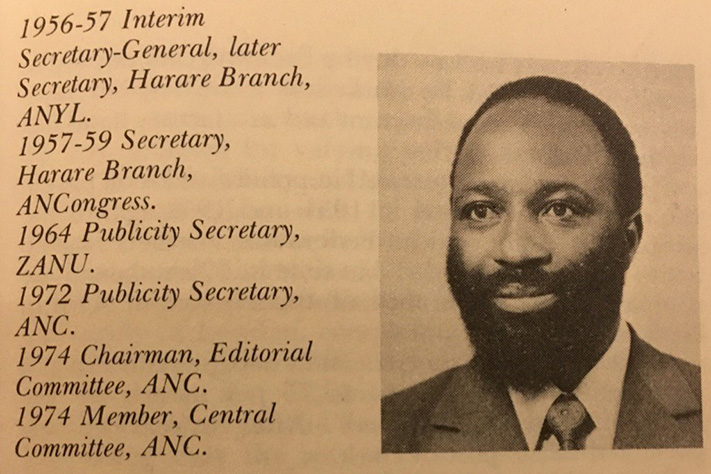
The unresolved riddle of Dr Sithole’s disappearance and how it has been handled thus far calls for Government to create a platform for an inquest to be conducted on the circumstances surrounding the abduction, disappearance and subsequent death of the fiery nationalist, who was a ZANU Central Committee member and the publicity secretary of the African National Congress.

The idea of an inquest is not a novel idea.

After the disappearance of Dr. Edson Sithole at a local hotel on the evening of October 15, 1975, The (Rhodesia) Herald had an editorial entitled “Thorough Inquiry” in its October 18, 1975 issue.

I quote parts of the editorial comment in detail: “The mysterious disappearance of Dr. Edson Sithole . . . is having repercussions which can only be harmful to Rhodesia . . . Dr Sithole had plenty of enemies. Of that there is no doubt. But if it turns out that he was kidnapped, no effort must be spared to catch his abductors. They must be brought before the courts where there need be no fear they will be dealt with in the proper manner. We are confident that the police will see to it that the investigation into the disappearance of Dr Sithole and Miss Mhlanga will be conducted with vigour and thoroughness. What they turn up may be very different from what has been suggested but in no way must it be accepted that people can disappear in odd circumstances in the middle of Salisbury (now Harare) without prompt action by the authorities. Where the alleged victim has been extremely critical of those authorities, as Dr Sithole has been, then the swift and effective response should be visible to all.”

The Smith government, apart from cosmetic and inconclusive investigations, was largely indifferent.

The Smith-Muzorewa government was equally indifferent.

The previous government of the late former president, Robert Mugabe, also fell short of expectations and hopes of the Sithole family.

Since independence in 1980, there was virtual official silence about Dr Edson Sithole until, after intense lobbying behind the scenes, he was declared dead and subsequently declared a national hero in 1994, together with other ZAPU cadres who were declared national heroes following the Unity Accord.

The conferment of national hero status on Dr Sithole gave renewed hope to the Sithole family that this political riddle would finally be resolved.

After Dr Edson Sithole was declared a national hero, the Sithole family was invited to a meeting with the then-Minister of Home Affairs, the late Cde Dumiso Dabengwa, where we were told that there were plans to put a representative grave for Dr Sithole at the national shrine, even if his remains had not been found.

It was obviously becoming embarrassing for the President to meet the family behind a photo of Dr Edson Sithole, which was normally placed next to Cde Herbert Chitepo’s grave, every Heroes Day.

The family was assured that when such plans were executed they would be consulted and invited to be part of the event. However, this was not to be so.

In August 1999, when the family went to the national shrine as state guests for the Heroes Day programme, we were surprised to see that the empty grave for Dr Edson Sithole had already been surreptitiously put at the national shrine without consultation and involvement of the Sithole family.

We were just told by officials that this was done hurriedly at the behest of the then-president, Robert Mugabe.

At the time, the late Cde John Nkomo was the Minister of Home Affairs.

During the tour of graves, President Mugabe told us that “takatsvaga takashaya, hamheno kuti mabhunu akamuisepi”. (We searched for him but we did not find anything, we don’t know where the white people put him).

He claimed the “cenotaph monument” was put at the national shrine “just in memory” of him. He advised that if we had any issues that needed attention, we were supposed to engage Cde John Nkomo. That’s as far as it went.

Efforts by the family to push for an inquest into the abduction, disappearance and subsequent death of Dr Edson Sithole have not been successful to date.

That notwithstanding, the need for an inquest into the circumstances surrounding his fate cannot be overemphasised.

The Sithole family hopes that the Second Republic will find it in their hearts to accede to this long overdue request.

At both a political and philosophical level, the Sithole family has already come to terms with what happened to him, but the call for an inquest is mainly to ensure that his remains are found and given a decent burial at the national shrine, with honours befitting a departed national hero.

Sadly, although we always attend the Heroes Day programme as State guests, the biography of Dr Sithole does not feature in the pamphlets that are normally made for the event.

Dr Sithole was a committed nationalist with deep convictions.

He was loved and hated; understood and misunderstood in different measures by many.

On March 28, 1993, The Sunday Times carried a story entitled, “The Edison Sithole mystery deepens” in which it was reported that “the mysterious disappearance of fiery politician, Edson Sithole, has taken another twist with the revelations that he was handling arms smuggled from Maputo days or weeks before he died”.

In the report, a former British intelligence officer confirmed that Dr Edson Sithole was the author of a manuscript, “Serpents in the Sunshine”, in which a character called Dr Edson Thule receives a cache of arms from ZANU.

Dr Thule then secretly manages to transport the arms to Greenfields with the help of a white man who works at the railway station. The officer confirmed that he knew Dr Sithole personally and that he worked as his cover at the railway station in the then Salisbury.

The officer said he knew Dr Sithole “very well” as from 1972 and that it was the politician who tipped him to leave the country in April 1974. He credited him with having a very extensive network of informers “even in the Criminal Investigations Department”.

The British intelligence officer said although Dr Sithole was officially the African National Congress’ publicity secretary, that was only a cover.

“His actual job was as an undercover top ZANU man in the country. He was the only one with the freedom to move about.”

At the time, ZANU was a banned organisation and its senior leaders were either in jail or in Maputo. It is important to restate the importance of the Government creating a platform for an inquest.

The Sithole family hopes the current engagements between the family and both the ruling party and Government will bear fruit.

It is hoped that, among other things, the process of writing the late nationalist’s biography, which the family is spearheading, will be adequately supported.

The process of researching and writing the biography cannot be separated from the process of searching for the remains of Dr Sithole.

Isaya Muriwo Sithole is a legal practitioner practicing in Harare and is the founder and executive director of the Dr. Edson F.C Sithole Foundation. He is the Sithole family spokesperson. The Sunday Mail

Pride of Murehwa charms Bournemouth

0

By Langton Nyakwenda and Forward Nyanyiwa

Growing up in England, Jordan Zemura’s biggest influence was former Zimbabwe captain Benjani Mwaruwari, whose unique celebration styles, especially during his stint at Manchester City, charmed many.

Jordan Zemura
Jordan Zemura

The England-born star has matured into a 20-year-old wingback prospect at Championship side AFC Bournemouth and is basking in glory after receiving his first call-up for Zimbabwe.

Zemura, who traces his roots to Mukarakate Village in Murehwa and is of the Moyo totem, is part of the Warriors squad that leaves for Algeria on Tuesday for a Group H Africa Cup of Nations qualifier at the Stade du 5 Juillet 1962 in Algiers on Thursday.

The return leg is at the National Sports Stadium on Sunday.

“The call-up means everything,” Zemura told The Sunday Mail Sport from his UK base last week.

The roving left-back has made it into the match-day squad for Bournemouth twice this term and was on the score sheet when the club’s Under-21 side won 4-3 at Southend United last Wednesday.

“Currently, I am transitioning into breaking into the first team and playing competitively. So at the moment, I am ready and can’t wait for the opportunity (to play for the Warriors).

“It is something that I have always wanted to do. I received the call-up from the manager and had a good conversation with him, and now things are looking good and I want to be part of this team,” an ecstatic Zemura said.

“I am proud to be Zimbabwean. I am from Mukarakate Village in Murehwa under Chief Mangwende and my totem is Moyo Muzukuru, Gono Chirandu.”

Zemura has never set foot in Zimbabwe and is expected to do so tomorrow, 20 years after his birth, and his kinsmen from rural Murehwa are said to have been pushing for a home-coming ceremony at the airport, but the Covid-19 restrictions have stalled the plans.

Nonetheless, his love for the land of his forefathers has never waned, thanks largely to the inspiration he received from ex-Manchester City and Portsmouth star striker Mwaruwari.

“A big player he was (Mwaruwari).

“He played in England when I was growing up. Seeing a fellow countryman of his stature was everything.

“He played for the likes of Manchester City, Portsmouth and many others. To reach his level will be everything.

“And, of course, how can I forget to mention his celebration which was amazing and something that lit up my eyes.”

Zemura starred for Bournemouth’s Under-21 side last Wednesday night and has been nominated for the club’s Goal of the Month award for October after his goal in the 5-1 friendly win against Eastleigh on October 19.

AFC Bournemouth’s official website described the goal: “Bombing forward on the left flank, he finished off a superb team move by depositing Dinesh Gillela’s inch-perfect cross into the bottom corner first time.”

He has received rave reviews from the English press following a solid performance in his side’s 1-2 loss against Manchester City in a Carabao Cup match on September 24.

He came up against City’s Algerian forward Riyad Mahrez and the two could clash again on Thursday in Algiers.

“My game plan is to make sure I am in the best condition. As you all know, Mahrez is a top player but coming up against him before was a good battle.

“I felt I had done well against him, so I am looking to do more of the same and just backing my own defence’s ability against him.

“Then helping the team while going forward. “My recent performances have been good and every time I step out on the field I have been working harder and harder to help the team in every way possible. What drives me is an easy one, it’s the feeling of success and wanting to win which sets me up – nothing better than winning and having a good game, and personally knowing that I played well.”

He is, however, not getting ahead of himself. He knows how formidable the Algerians are. After all, they are African champions who have never lost in their last 20 matches.

“The game is going to be challenging as we are up against a top side, but if we prepare right and show our talent as a team, I am sure we will come out with a positive result,” he noted.

A versatile defender, who can play anywhere in the back four, Zemura is proud of the Warriors and is excited at the prospects of linking up with his national teammates for the first time. “I know they (Zimbabwe) have qualified for the recent African Cup of Nations tournaments and it is something that I want to be part of, as they are on the rise.

“I haven’t had the chance to communicate with any Warriors players, so going there will be a first and I am really excited to link up with the squad.”

He insisted it was still early days but pledged to fight for the pride of Zimbabwe.

“Promises are a bit awkward thing to do as we are not in control of the future, but I can definitely guarantee my fellow Zimbabweans that I will give everything for the people and the country.

“I want to give hope to other young players coming up, such as my cousin, Chris Mazenge, who plays for the Under-15 and 16 side here, that the country is on the right path and will do everything we can.

“In three years, I hope to be at the best of my game and playing in the Premier League, which I personally believe is the best league.”

He already has a few nicknames, but he could add another one during the Warriors camp.

“To be honest I have got a few (nicknames) but the one that sticks is JZ,” he says.

“It is something that’s been said since I can remember. So, yeah, JZ, that is me and I like the ring to it.”

For Zemura, it will be a classic case of being thrown into the deep end in his debut in the cauldron of the Stade du 5 Juillet 1962, where losing is taboo to the Desert Foxes.

“I am ready to fight for my country,” he declared. The Sunday Mail