Home Blog Page 153

Moneybags Scottland handed first defeat of the season by Ngezi Platinum Stars

0
Ngezi Platinum Stars striker Obriel Chirinda and Scottland FC defender Peter Mudhuwa (Picture via Facebook - Scottland FC)

HARARE – Premier Soccer League (PSL) new boys Scottland FC finally bit the dust three games into the 2025 season after they were handed a 1-0 defeat by 2023 champions Ngezi Platinum Stars at Rufaro Stadium on Friday afternoon.

A goal by Ngezi Platinum Stars’ captain Kudzai Chigwida was the difference.

Chigwida scored in the dying minutes of the match from the spot kick after Ngezi Platinum were awarded a penalty.

Scottland midfielder Frederick Botchway fouled Ditima in the box with veteran and highly rated referee Brighton Chimene pointing to the penalty spot.

Ngezi Platinum defender Chigwida then showed some leadership qualities, stepping forward to take the penalty.

He sent Talbert Shumba the wrong way with the goal helping the Mhondoro based side collect maximum points away.

It was Scottland’s first defeat in the just started 2025 campaign, having recorded wins against Triangle and CAPS United.

Supreme Court dismisses FBC Bank’s appeal in labour dispute with employee

0
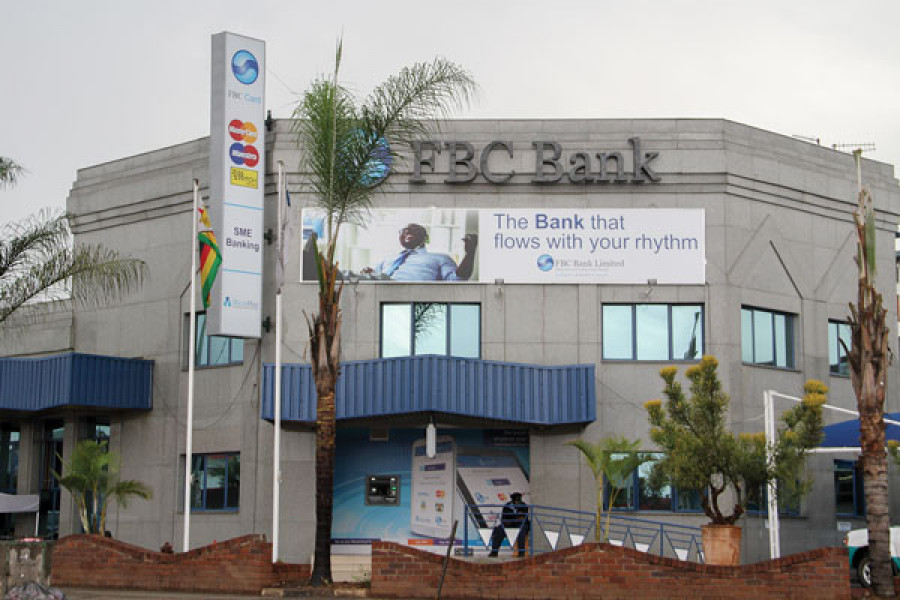
FBC Bank branch in Graniteside, Harare (Picture via https://www.equityaxis.net/)

HARARE – FBC Bank Limited’s bid to appeal a Labour Court ruling has been rejected by the Supreme Court of Zimbabwe, upholding the lower court’s decision to strike off the bank’s application for rescission of a default judgement in a labour dispute with former employee Kudzai Kwangwari.

The case stemmed from a labour dispute between the bank and Kwangwari who had successfully appealed his dismissal at the Labour Court, but FBC Bank, citing an error in their records, failed to attend the hearing, resulting in a default judgment against them.

FBC Bank filed an application for rescission of the default judgement, which was later struck off the roll by the Labour Court on preliminary points. The bank then sought leave to appeal this decision to the Supreme Court.

In a chambers hearing, Justice Tendai Uchena of the Supreme Court dismissed FBC Bank’s application.

The court found that the bank’s intended notice of appeal contained a fatally defective relief sought, as it requested the Supreme Court to grant the rescission of the default judgement, a decision that the Labour Court, having only dealt with preliminary issues, could not have made.

The Supreme Court further ruled that it could not interfere with unterminated proceedings of the lower court.

Justice Uchena stated that superior courts should only intervene in ongoing proceedings in exceptional circumstances, such as proven gross irregularities or clearly wrong interlocutory decisions.

The court found that the Labour Court’s decision did not meet these criteria, as FBC Bank still had the option to re-apply for rescission of the default judgment at the Labour Court.

The Supreme Court also addressed other points raised, including the bank’s locus standi, which was upheld, and the issue of appealing against obiter dicta, which was not permitted.

The court also noted the divergence of views within prior supreme court rulings regarding the ability to amend defective applications, and allowed the application to proceed despite the defects, rather than ruling the application fatally defective.

“The decision of the court a quo cannot be said to be clearly wrong, and the applicant’s counsel agreed that the applicant can re-apply for rescission of the default judgment to the Court a quo.

“The alleged irregularity by the court a quo does not go to the root of the proceedings, nor does it irreparably vitiate them,” Justice Uchena ruled.

“There is therefore no justification for interfering with the unterminated proceedings. The application for leave to appeal against the decision of the Court a quo should be dismissed.”

The application for leave to appeal was ultimately dismissed with costs, effectively upholding the Labour Court’s decision to strike off FBC Bank’s application for rescission.

London-listed firm sees strategic investor boost stake in Zimbabwe coal project

0
The Muchesu Coal Mine covers 19,236 hectares of the highly prospective Karroo Mid Zambezi coal basin, located in the established Hwange mining district in north-western Zimbabwe. (Picture via Contango Holdings)

HARARE – London Stock Exchange listed Contango Holdings Plc has announced that a strategic investor has increased its ownership stake in Monaf Investments, the owner of the Muchesu coal project in Zimbabwe.

According to the company, a firm controlled by a director of Huo Investments acquired a 6.502% stake in Monaf from a local minority shareholder. This purchase does not affect Contango’s interest in Monaf.

Contango Holdings CEO Carl Esprey welcomed the development, stating that it demonstrates the investor’s commitment to the Muchesu project and reinforces its inherent value. The investor has already acquired a 20.42% stake in Monaf and become Contango’s largest shareholder.

“We note the Investor’s purchase of additional shares in Monaf from another minority shareholder and the Investor’s continued investment into the Muchesu Project.

“This should provide shareholders with further confidence of the Investor’s focus on the development of the Muchesu Project and reinforce its inherent value,” Esprey stated.

“The Investor has already made a material investment ‘into the ground’ at Muchesu, acquired a 20.42% holding and become Contango’s largest shareholder.

In addition to this, royalty payments to Contango have commenced. This further increased ownership interest in Monaf and the Muchesu Project bodes well for the Investor’s commitment towards fully developing Muchesu.

“I look forward to updating shareholders on further progress and the completion of outstanding documentation with respect to the Definitive Agreements.”

The Muchesu coal project, valued at over 2 billion tonnes, is a key asset for Contango Holdings. The company is working towards developing the project, with royalty payments already commenced.

The announcement is likely to be seen as a massive development for Contango Holdings, which is listed on the London Stock Exchange under the ticker symbol CGO.

Zimbabwe “imposes” backdoor price controls amid currency confusion

1
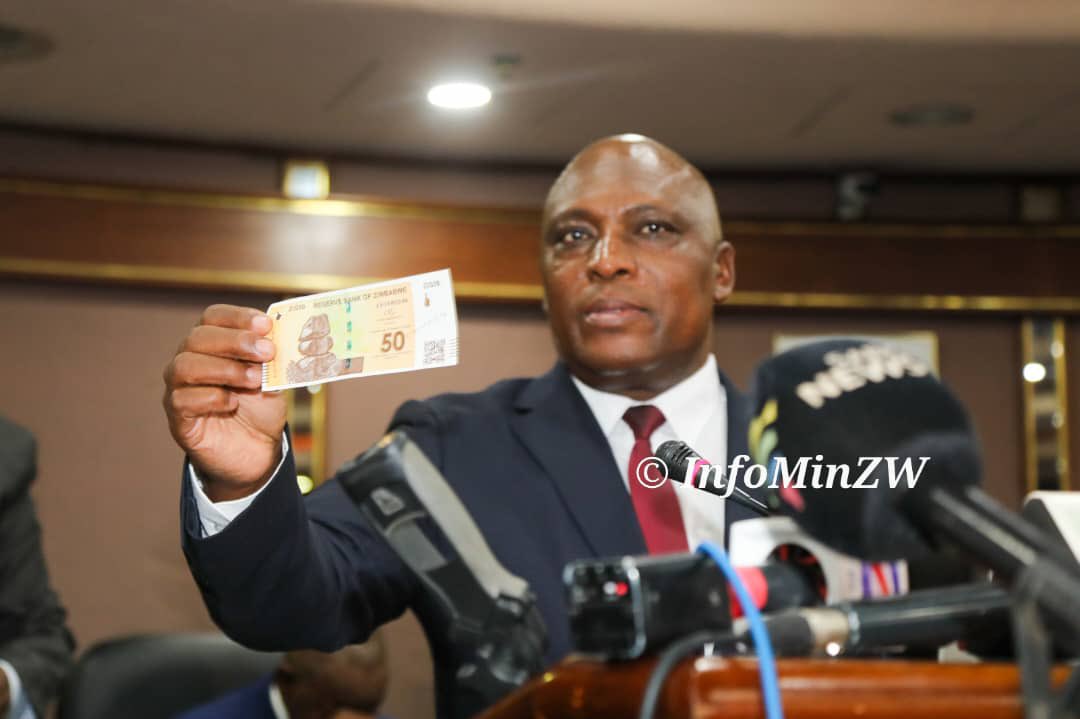
Reserve Bank of Zimbabwe (RBZ) governor John announcing the introduction of the new gold-backed currency known as ZiG (Picture via Ministry of Information)

HARARE – The Reserve Bank of Zimbabwe (RBZ) is facing criticism from economists and market analysts who accuse it of implementing de facto price controls through its recent directives on exchange rate determination.

This comes after the RBZ issued a press statement clarifying its stance on the floating exchange rate system and the pricing of goods and services.

The controversy lies in the RBZ’s insistence that the exchange rate determined by authorised dealers (banks) in the interbank market, based on the willing-buyer willing-seller (WBWS) principle, should be the sole guide for pricing goods and services.

Governor John Mushayavanhu stated that no other entity outside the interbank market should determine the exchange rate.

“For clarity, ‘market determined rate’ simply means a rate determined on the interbank foreign exchange market based on foreign currency supply and demand.

“The exchange rate that is determined in the foreign exchange market by banks is the one that should be used to guide the pricing of all other goods and services in the economy.

“Therefore, no other business entity outside the interbank market should determine the exchange rate,” Mushayavanhu stated.

However, economists like Tinashe Murapata argue that this directive effectively reintroduces price controls, albeit indirectly.

He points to the disparity between the RBZ’s desired exchange rate of around ZWG22 to the US dollar, and the market rate of 32-37 ZiG, which supermarkets were using.

This, according to Murapata, reveals an attempt by the RBZ to dictate market behaviour and enforce an artificial exchange rate.

“The RBZ public statements were moral suasion, behooving the market to recognise the rate of 22. And not the crazy rates of 32 & above,” Murapata stated through thread on his X handle.

“RBZ is reneging on their promise of a floating exchange rate by imposing a priority list induced interbank market restricted to only banks.”

In an interview with Nehanda Radio, Chenayi Mutambasere, another prominent economist, echoed these concerns, highlighting the practical difficulties of enforcing the RBZ’s directives.

She argued that as long as the central bank lacks sufficient foreign currency liquidity to meet market demand, businesses and individuals will continue to rely on parallel market pricing.

She also pointed out the issue of trust and confidence in the formal banking system.

“As long as the bank doesn’t not have sufficient foreign currency liquidity to meet the demand, businesses and individuals will still resort to parallel market pricing – this policy is nice but not enforceable.

“The RBZ has no stamina to insist on this! The market may comply in the immediate to short term but medium to long run will see compounding disparities as a result,” she said.

“In addition The RBZ is saying only banks should set the exchange rate, but in practice, many businesses in Zimbabwe use alternative rates to hedge against currency instability.

“Without strict enforcement, businesses might continue to set their own rates based on market realities rather than the official rate.

“Many businesses and individuals lack confidence in Zimbabwe’s formal banking system due to past currency volatility, inflation, and policy shifts.

“Unless the RBZ ensures consistent access to foreign currency at transparent rates, businesses may continue relying on informal markets.

“This policy is not enforceable and any attempts to rail road the economy by forcing these bank rates will be detrimental as it will erode confidence and trust.”

The RBZ’s claim that there are no forex shortages, evidenced by a recent sale of US$20 million in the interbank market, has been met with skepticism.

Murapata argues that this amount is insignificant compared to the actual demand for foreign currency and the historical monthly allocations under the previous auction system.

He further highlighted several underlying economic issues that contribute to the market’s skepticism, including:

Exporters not being fully paid their ZiG from 30% retention, rollover of NNCDs given to importers and exporters, the government’s US$1.2 billion debt to suppliers and treasury’s default on US$177 million Treasury Bills.

These factors, according to Murapata, create a situation where a street premium is inevitable, and the RBZ’s attempts to control the exchange rate are seen as unrealistic and detrimental to market confidence.

The economist further argue that the RBZ’s actions create a situation where retailers are forced to accept ZiG, while facing the reality that many of their costs, such as fuel for generators, are denominated in US dollars.

This predicament could lead to retailers increasing their USD prices to maintain their ZiG revenue.

Murapata believes that dollarisation could restore stability and confidence in the financial system by eliminating arbitrage opportunities and bringing informal market funds back into the formal banking sector.

“The government of Zimbabwe requires a coordinated approach across all ministries. With Western aid freeze across the board it’s safe to assume Zimbabwe requires full dollarisation as a means to defend itself,” Murapata said.

“Full dollarisation will not end all problems but it will take away the arbitrage opportunities which are a huge cost to the economy. But it will get the financial markets working again. With time bank deposits increase as money flows back into formal channels.

“There is US$1-$2bn that trades as cash in the informal markets. This money avoids the friction and distortions in our banking system. Full dollarisation will get this money back as bank deposits and credit multiplier. Will the RBZ listen?”


Blessed Mhlanga’s family in limbo: Journalist’s bail hearing delayed indefinitely

0
HStv journalist Blessed Mhlanga, who has been in detention since February 24 on charges of incitement in connection to his interview with war veteran Blessed Geza (Picture by Lovejoy Mutongwizo via X - CPJ Africa)

HARARE – Incarcerated AMH senior journalist Blessed Mhlanga’s family has been left in a state of uncertainty after the journalist’s court appearance for his bail application was indefinitely adjourned.

Mhlanga, who was arrested on February 24, is facing charges of incitement to commit public violence.

His lawyer, Chris Mhike, has been seeking the release of critical evidence, including electronic and video recordings, to support their application for bail.

The prosecution has opposed the application, arguing that the defence should have made the request earlier.

Mhike, however, maintained that the requested evidence is crucial in strengthening their case, as it will reveal discrepancies between what was uttered in the videos and what was written on the request for remand forms.

“The prosecution has a warned and cautioned statement which they cannot release because of the privilege they have on the docket,” Mhike stated.

“We believe the video graphic evidence will cure our arguments.”

Justice Gibson Mandaza of the Harare High Court, on Wednesday, postponed the bail hearing indefinitely, citing the need for more time to review the defense application.

Mhike has expressed concerns about the delay, stating that the court cannot deny Mhlanga bail based on evidence it has not seen.

As the case remains in limbo, Mhlanga’s family is left waiting anxiously for a resolution.

Mhlanga was arrested for conducting interviews with war veteran and politician Blessed Geza, who criticised President Emmerson Mnangagwa’s leadership and called for his resignation.

Geza also advocated for public protests to push Mnangagwa out of office, citing economic crisis, corruption and the President’s failure to govern. The former war veteran was subsequently expelled from the Zanu-PF party for violating regulations in public comments about Mnangagwa.

Mhlanga’s lawyer, Chris Mhike, believes that his client’s arrest serves as a warning to others to refrain from discussing political topics, such as whether Mnangagwa should seek a third term.

Mhlanga faces two charges relating to “transmitting data messages inciting violence or damage to property,” which he denies.

In an interview with Voice of America, Mhike stated that the arrest of Mhlanga was unconstitutional, as Zimbabwe’s Constitution guarantees the right to freedom of expression and press freedom.

“The arrest has had a chilling effect on the practice of journalism, as is always the case when journalists are either harassed, or put through the legal process, really for activities that are directly linked to their work,” Mhike said.

Farai Marapira, the Zanu-PF information director, claimed that Mhlanga’s arrest was not a reflection of the state of press freedom in the country, but many remain skeptical.

“We’re worried that season two is a disaster”… Zulu royal requests chance to edit Shaka Ilembe

0
Shaka ILembe is a South African series produced by Bomb! Production for M-Net's channel Mzansi Magic. (Picture via YouTube - MzansiMagicOfficial)

SOUTH AFRICA – In an unprecedented step, the Amazulu royal family has requested a chance to edit the second season of the hit series Shaka Ilembe, as they believe that the first edition of the popular show was riddled with inaccuracies.

Shaka Ilembe is set to return for its second season in June.

However, while anticipation for the series is high, the royal family has spoken out against the fact that they were not consulted in its making.

The spokesperson for AmaZulu King Misuzulu kaZwelithini, Prince Nathi, said they were thus requesting a preview.

“As the royal house, we were disturbed by season one of Shaka iLembe, mainly because it was far from the truth. Now we are concerned that season two will be a continuation of misrepresentation of our culture.

“Our great concern is that this play will wipe away our history if it goes on air without us seeing it. We therefore ask the production house and the channel to let us preview this play.”

His views were supported by Prince Zeblon Zulu who said the royal house was disturbed by the inaccuracies in the first season.

“We watched Shaka iLembe season one in disbelief, but it was too late to do anything,” said Zulu.

“Unfortunately, we couldn’t do much because some top people were paid and we couldn’t do much. I’m not going to mention names or expose anyone, but as the royal house, we were embarrassed and disgraced by season one of Shaka iLembe.”

Magaya ‘refuses’ to cooperate with court order allowing sale of Heart Stadium

0
Prophet Walter Magaya (Picture via Facebook - Prophet Walter Magaya)

HARARE – Prophet Walter Magaya, the founder of the Prophetic Healing and Deliverance (PHD) Ministries, is allegedly refusing to cooperate with a court order to settle a US$420,140.72 debt owed to GetBucks Microfinance Bank Limited, allegedly denying the Sheriff of Zimbabwe access to his properties and prompting the bank to seek the intervention of Zimbabwe Republic Police (ZRP) Commissioner-General.

GetBucks has escalated its efforts to enforce a High Court judgement against Planet Africa (Private) Limited, Walter Magaya, and Tendai Magaya (Magaya’s wife), requesting the intervention of the police boss.

The bank is alleging that police are failing to provide necessary escort services to the Sheriff of Zimbabwe, hindering the execution of a court order to recover a debt of US$420,140.72.

The High Court’s Commercial Division in Harare, in a ruling issued on October 9, 2024, granted judgment in favour of GetBucks, ordering the defendants to pay the outstanding amount with a 10% monthly interest from September 11, 2024.

The court also declared a piece of land belonging to Planet Africa, where Walter Magaya’s Heart Stadium and hotel are located, specially executable.

According to documents seen by Nehanda Radio, GetBucks instructed the Sheriff to execute the writ of execution against Planet Africa at their Prospect, Waterfalls address, and against Walter and Tendai Magaya at their Mount Pleasant residence in November 2024.

However, Sheriff’s officers were reportedly denied access to both premises.

In line with legal procedures, the Sheriff requested police escort services from Waterfalls and Marlborough Police Stations.

While Waterfalls Police initially agreed to provide escort on January 10, 2025, and later postponed to January 16, 2025, they subsequently failed to deploy officers.

GetBucks alleges that the Officer in Charge at Waterfalls Police did not release the police details despite follow-ups, and that the request was forwarded to District Headquarters for approval, with no action taken to date.

The bank, through its legal representatives, Danziger and Partners, argues that the ZRP’s inaction renders the court order unenforceable, undermining the judicial authority of the High Court.

They have submitted a formal request to the ZRP Commissioner-General, urging intervention to ensure the rule of law is upheld and to prevent potential harm to the Sheriff’s officers.

The letter to the ZRP Commissioner-General includes attachments of the court order, writ of execution, execution instructions, returns of service, police escort requests, proof of payments, and correspondence between the Sheriff, ZRP, and legal practitioners.

Copies of the letter have also been sent to the High Court Registrar, the Ministers of Justice and Home Affairs, the Sheriff of Zimbabwe, and the Judicial Service Commission.

GetBucks has further indicated its intention to file urgent mandamus proceedings against those neglecting their duties and contempt of court proceedings against the defendants.

They have also filed a complaint against the defendants or any person who denied the Sheriff access, alleging contravention of Section 184(b) of the Criminal Law (Codification and Reform) Act, which criminalises hindering or obstructing an officer of the court.

“Our client is of the view that if the ZRP cannot assist, then this is a cause for law reform to allow the Sheriff to be allowed to use private security nominated by the judgment creditors. We hope the above course shall not be necessary.

“In addition, our client reserves the right to issue urgent mandamus proceedings against all those neglecting their duties and contempt of court proceedings against the Defendants.

“The Police are duty bound to assist the Sheriff in enforcing court orders to protect the integrity of the courts and to curb undermining of court orders and judicial authority at large as is happening in this case where the Sheriff as an officer of the court is being hindered from enforcing the court orders.

“That is a direct undermining of judicial authority which should not be permitted in any progressive judicial system,” the bank stated.

The Heart Stadium, inaugurated by President Emmerson Mnangagwa in December 2024, has been touted as a state-of-the-art facility.

Magaya has faced other legal challenges, including allegations of rape and fraud. The Zimbabwe Gender Commission is currently investigating him over allegations of sexual abuse.

Armed robbers raid Kirsty Coventry’s parents, make off with US$90k in cash and jewellery

0
Kirsty Coventry at State House in Harare after being re-appointed Minister of Sports, Recreation, Arts and Culture, September 2023 (Picture via Ministry of Information)

HARARE – Armed robbers laid siege on a home owned by the parents of Zimbabwe’s Minister of Youth, Sport, Arts and Recreation Kirsty Coventry, tying them up before robbing them of cash, jewellery and other items worth a total of US$90 000.

Two armed men broke into Robert Edwin and Lyn Coventry’s Glen Lorne house, tied their legs up with shoelaces before ransacking their home.

The robbers reportedly took US$15000 in cash, jewellery worth US$60 000, three hair dryers, Olympic clothes, travelling bags, hearing aids valued at US$5000 and three hunting firearms.

Police are yet to comment on the incident, as armed robberies continue to skyrocket in the country despite a highly publicised crackdown by police.

National police spokesperson, Commissioner Paul Nyathi recently affirmed the force’s desire to wipe out criminal gangs after law enforcement officers bust an armed robbery syndicate in Bulawayo.

“We are fully committed to ensuring the safety of all residents. The dismantling of this armed robbery syndicate is a clear demonstration of our determination to tackle crime head-on and bring perpetrators to justice,” said Comm Nyathi.

Malawi court rules Prophet Shepherd Bushiri and wife can be extradited to South Africa

0
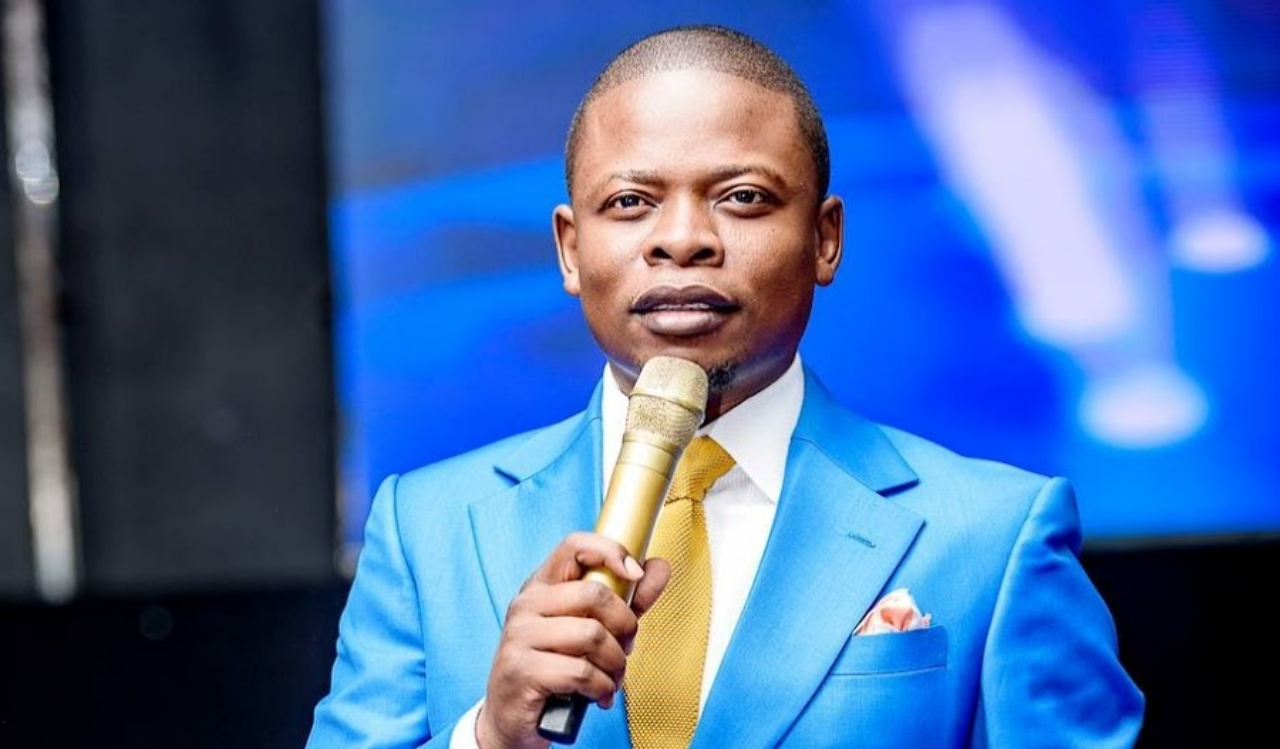
Prominent preacher Prophet Shepherd Bushiri (Picture via YouTube - @ProphetShepherdBushiriOfficial)

LILONGWE – A court in Malawi has ruled that Prophet Shepherd Bushiri and his wife, Mary, can be extradited to South Africa from where they fled claiming persecution while out on bail facing various criminal charges.

The pair face various charges of contravening the Financial Advisory and Intermediary Services Act, as well as the Immigration Act, among others.

After a lengthy court case, Malawi’s chief resident magistrate’s court on Wednesday ruled that the pair be returned to South Africa and also ordered that they should remain in custody until they are handed over to South African authorities.

The judgment was well received by the South African government, with its Department of Justice and Constitutional Development hailing it as an indication of judicial independence in the two countries.

“This decision reaffirms judicial independence, international co-operation and public trust in the SA and Malawian legal institutions,” the Department of Justice and Constitutional Development said in a statement.

Wednesday’s ruling was “a significant milestone in international legal co-operation, demonstrating the strength of both countries’ judicial frameworks and diplomatic engagements”, it added.

“It reinforces the principle that no-one is above the law and underscores the importance of accountability, transparency and adherence to legal frameworks in SA and Malawi.”

The SA government also revealed that it had been informed that the Bushiris intended to appeal the decision and have since been granted bail.

On Thursday, the Attorney General in Malawi, Thabo Chakaka Nyirenda told broadcaster Newzroom Afrika that the Bushiris got bail after the court ruling on Wednesday, and the matter would be heard in the high court of Malawi.

“The SA government will oppose the appeal. The department will await the outcome of the appeal process if they proceed. If the couple choose not to pursue the appeal, the department will await formal notification from the central authority of Malawi,” the department said.

“Once received, Interpol, in collaboration with SA police, will co-ordinate the transfer arrangements and logistics. The state will cover all associated costs.”

Leaked: AG Virginia Mabiza instructed POSB to grant access to its vaults to HIG

6
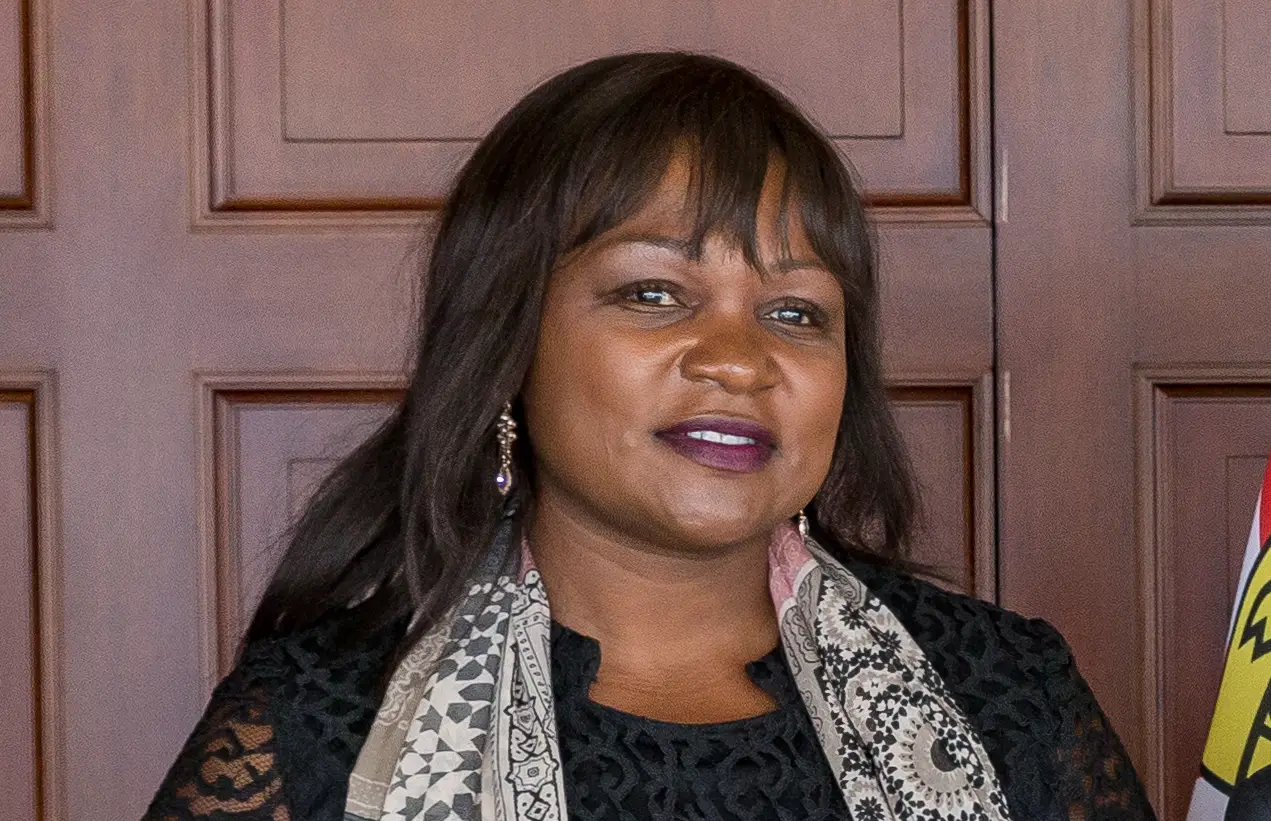
Zimbabwe's Attorney General Virginia Mabiza (Picture via World Intellectual Property Organization, CC BY-SA 2.0 , via Wikimedia Commons)

HARARE – Another leaked document has revealed that Attorney General Virginia Mabiza instructed the People’s Own Savings Bank (POSB) to grant access to its vaults to Hebrew Investment Group (HIG), a controversial private investor fronted by President Emmerson Mnangagwa’s ally Morris Brown Gwedegwe.

The directive, which has raised eyebrows, is part of a broader initiative to set up and operationalise the BOMA Financial System. Critics argue that this move reeks of corruption and lack of transparency.

According to the leaked documents, Mabiza instructed the CEO of POSB to provide HIG with access to the bank’s vaults for the injection of operational cash, as well as access to all branches and necessary support from personnel.

“In accordance with the directive from His Excellency the President of the Republic of Zimbabwe, I am instructing you to immediately join hands with HIG, a joint venture partner of the Government of Zimbabwe, for the setup and operationalization of the BOMA Financial System. This collaboration is critical to enhancing our financial infrastructure and ensuring efficient banking operations,” reads part of Mabiza’s letter dated 13 February 2025.

“As part of this initiative, you are required to provide HIG with access to the POSB bank’s vaults for the injection of operational cash, access to all branches, and the necessary support from all personnel, in accordance with the terms of the joint venture agreement.

“Your prompt cooperation and active participation in this endeavour are essential for the successful implementation of the BOMA Financial System.”

This development comes amid reports that Mnangagwa has ordered the sale of POSB to a private investor, despite denials by the Reserve Bank of Zimbabwe (RBZ).

Controversy surrounds the sale of POSB, with reports alleging that Mnangagwa personally selected HIG as the investment partner, bypassing the traditional public bidding process.

The group is set to acquire a 70% stake in POSB by injecting US$70 million into the bank’s recapitalisation efforts.

Under the terms of the deal, the Zimbabwean government will retain a 10% stake, utilizing existing POSB assets, while private investors will contribute US$20 million for a 20% stake.

A joint venture agreement also outlines a substantial US$6 billion loan from HIG to the Zimbabwean government, repayable over 30 years.

The leaked documents have sparked outrage, with critics labelling the deal “corrupt”.

According to investigative journalist Hopewell Chin’ono, this scandal is the reason why Alpha Media Holdings senior journalist Blessed Mhlanga is being detained. Mhlanga was arrested two weeks ago for allegedly transmitting messages likely to incite public violence.

“Bank vaults store valuable items such as cash, which includes large sums of money that need to be securely stored. They also hold important documents, including legal papers, contracts, and deeds.

“Gold and precious metals, such as bars, coins, and other valuable metals, are also commonly stored in vaults.

“This scandal is the real reason why Zimbabwean journalist and now political prisoner Blessed Mhlanga was arrested and jailed, after he gave a television platform to Jealousy Mawarire, who blew the whistle on this attempted bank theft during Mhlanga’s programme.

“I will share more documentation (on this scandal) that has been given to me by government officials who are fed up with Mnangagwa’s looting and plundering of state assets using criminal elements purported to be businessmen,” Chin’ono said.