Home Blog Page 120

Ministers clash in Parliament over PSMAS funding delays, civil servants stranded

1
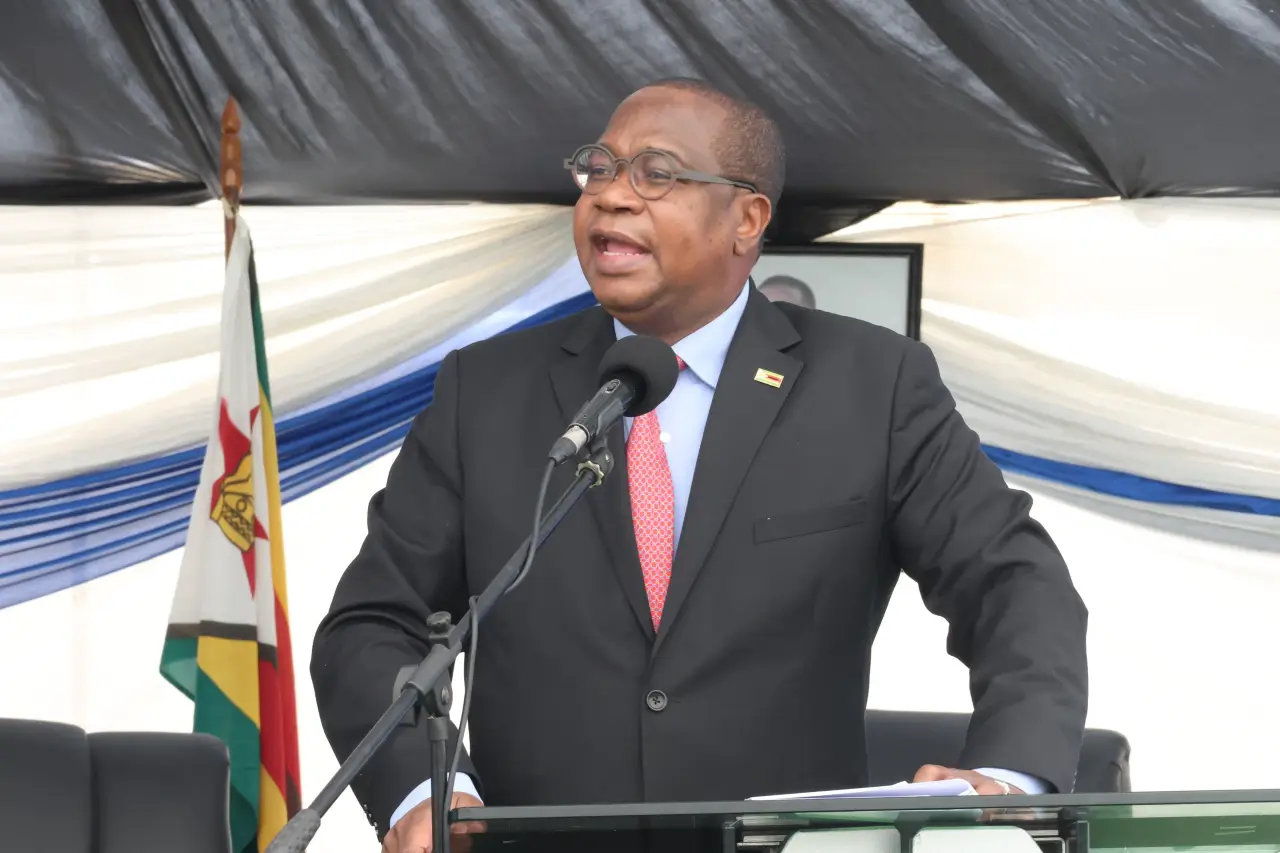
Finance Minister Mthuli Ncube unveiling the Investment Compendium for Midlands Province, 04 April 2025 (Picture via Ministry of Finance)

HARARE – A tense exchange erupted in Parliament on Wednesday between the Ministry of Health and Child Care and the Ministry of Finance, Economic Development and Investment Promotion over persistent delays in funding for the Premier Service Medical Aid Society (PSMAS), leaving civil servants without timely access to healthcare services.

The issue was brought to the floor by opposition Citizens Coalition for Change MP Tendeukai Matara, who expressed frustration over the lack of progress despite earlier assurances from the Minister of Health and Child Care.

Matara highlighted that a month had passed since a promise to address the PSMAS subscriber issues, particularly for civil servants, yet subscribers were still struggling to receive support from service providers.

The Deputy Minister of Health, Sleiman Kwidini, responded by explaining that while a deadline had been established for PSMAS, its effectiveness depended on service providers accepting the arrangements.

Kwidini reiterated that PSMAS funding comprises 20% from subscriptions and 80% from the Treasury, with funds needing to be allocated to the Treasury before being directed to PSMAS for timely payments to service providers.

However, Kwidini stated that the Ministry of Health could not provide a specific timeframe, as the release of funds falls under the purview of the Ministry of Finance, Economic Development and Investment Promotion.

“The contributions are taken to the Ministry of Finance, Economic Development and Investment Promotion.

“Perhaps, the Ministry can respond on our behalf because they are the ones responsible for the release of funds to the service providers so that the service providers can continue helping.

“Maybe, the Ministry of Finance can give us that timeframe when they will release the money, but as for us, we are trying to liaise with the Ministry of Finance, Economic Development and Investment Promotion so that we can correct this,” Kwidini stated.

This response prompted a supplementary question from Matara, who stressed the urgency of the matter, citing that “no one applies to get sick” and civil servants are forced to pay cash for medical services due to the ongoing delays.

Matara pressed for a concrete timeframe for rectifying the problem.

The exchange escalated when Mbizo legislator Corban Madzivanyika questioned whether the government had failed in its responsibility to ensure the proper use of contributed funds, given the Ministry of Health’s deferral to the Ministry of Finance.

When given the floor, Finance Minister Mthuli Ncube stated he was “not aware of the request” for which money had to be released, implying a lack of formal communication or processing of the funding request from the Ministry of Health.

“As you know, our systems are such that if you need to draw down from the Treasury, you have to make a proper request. I am not aware of the request that he is referring to, for which the money has to be released,” Ncube stated.

The Speaker intervened, encouraging direct conversation between the two ministries to resolve the impasse.

Zimbabweans want improved livelihoods, and not statistics, Mr. President

0
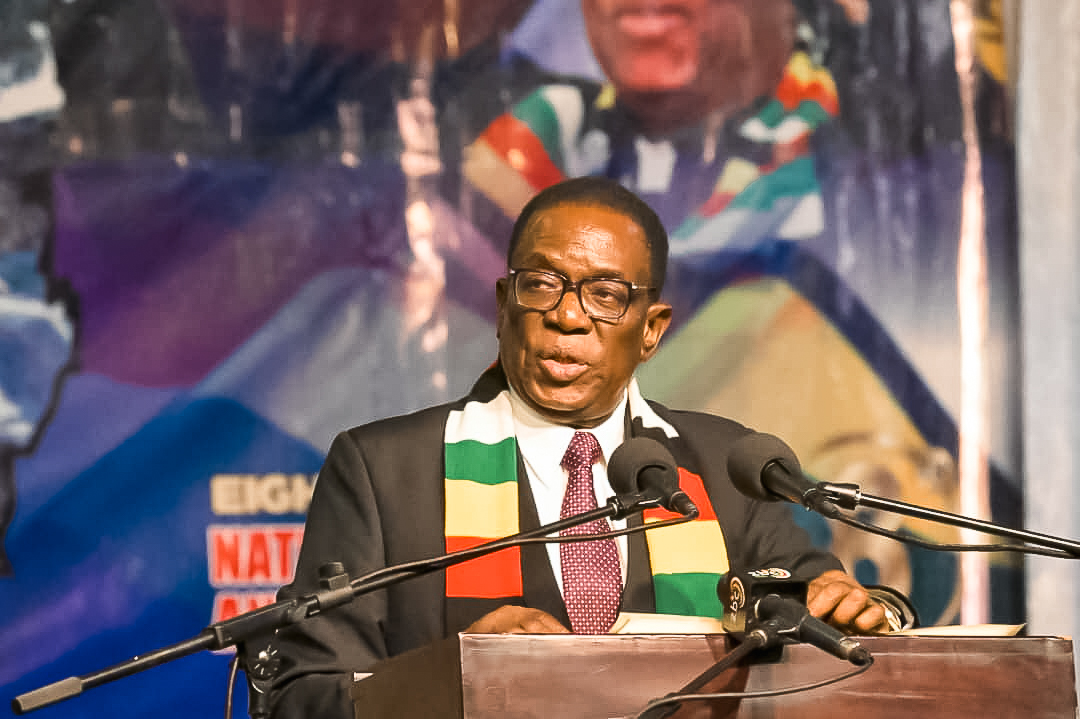
President Emmerson Mnangagwa joining the National Thanksgiving and Dedication Service, 29 December 2024 (Picture via X - @edmnangagwa)

In Shona, we say: “Matakadya kare haanyaradzi mwana” — and the same can be said of empty statistics in a nation gripped by grinding poverty.

The state-controlled The Herald newspaper proudly announced that the so-called Second Republic, under President Emmerson Mnangagwa, had implemented an astounding 9,706 development projects since 2018, of which 6,660 are said to be completed.

On paper, this sounds like a stunning success story—one befitting a nation on the cusp of transformation.

But a closer examination of these claims reveals a disturbing pattern: empty numbers, unverified statistics, and a narrative completely divorced from the lived reality of millions of Zimbabweans.

While government spin doctors pat themselves on the back for a supposed infrastructure revolution, ordinary citizens remain trapped in an endless cycle of suffering—crippled by 16-hour power cuts, collapsing hospitals, unaffordable public services, and grinding poverty.

The question every discerning Zimbabwean should be asking is: where are these 9,706 projects, and why are we not feeling their impact?

The government’s figures raise more questions than they answer.

Who exactly compiled this number?

Was the data independently audited?

Were the results subjected to public or parliamentary scrutiny?

There is no detailed breakdown of what constitutes a “project,” no cost estimates, no timelines, and no implementing agencies listed—just a parade of numbers meant to dazzle, not inform.

Does rehabilitating a single classroom or fixing a broken borehole in a remote village count as one full-fledged “project,” equal to building a modern hospital or dam?

Without standardization and transparency, the public has no way of knowing whether this is genuine development or just manipulation of statistics.

Year after year, Auditor-General reports have consistently exposed how numerous government projects are abandoned midway, grossly overpriced, or riddled with procurement irregularities.

So, until a full, independently verifiable database is made public, this 9,706 figure should be treated with deep skepticism.

Beyond that, the numbers are thrown around in a vacuum, devoid of context or baseline data.

What percentage of the country’s infrastructure gap do these projects close?

Have they translated into better healthcare outcomes?

Have school pass rates improved?

Are rural clinics now fully staffed and equipped?

Has access to clean water significantly increased?

If these projects are truly “life-changing” and “people-centred,” why do 80% of our people still live in poverty?

Why are urban dwellers still digging shallow wells and relying on candles?

Why do teachers and nurses continue to flee the country in droves for survival jobs in foreign lands?

Big numbers are only meaningful if they reflect real, measurable improvements in people’s lives.

In Zimbabwe, that’s not what we’re seeing.

The government claims that these projects have resulted in increased employment, massive housing delivery, and modernised infrastructure.

But again, where is the evidence?

Where are these houses that have supposedly improved living standards?

Is there a registry of new housing units built, their locations, and beneficiaries?

Where are the new jobs?

Are we counting short-term contract workers who disappear once construction ends?

What percentage of these projects generated permanent employment?

We hear of “modernisation” in vague terms, yet roads are potholed beyond recognition, power generation is a national embarrassment, and hospitals lack even the most basic medical supplies.

If the government wants to claim progress, it must present verifiable impact assessments, not just self-congratulatory praise.

The article goes further to suggest that Zimbabwe’s 2024 chairmanship of SADC led to numerous infrastructure benefits and accelerated national development.

But let’s be clear: chairing SADC is a ceremonial, rotational position, handed to member states by turn, not based on merit or achievement.

To pretend that this chairmanship somehow unlocked new development or investment is both disingenuous and insulting to the intelligence of Zimbabweans.

What new infrastructure projects were launched solely because of SADC chairmanship?

Were they regionally funded?

Did cross-border trade improve?

Was the rail system upgraded to enhance regional integration?

Unless such evidence is provided, these claims remain baseless propaganda.

Perhaps the most disturbing aspect of this grand announcement is how completely disconnected it is from the daily experiences of ordinary Zimbabweans.

To directly receive articles from Tendai Ruben Mbofana, please join his WhatsApp Channel on: https://whatsapp.com/channel/0029VaqprWCIyPtRnKpkHe08

Power cuts last up to 16 hours a day in many areas, paralyzing both industry and domestic life.

Public hospitals are understaffed and under-equipped.

Women are dying during childbirth for lack of basic facilities.

Cancer patients are left to die waiting for non-existent treatment.

Young professionals, including teachers and nurses, are fleeing the country because they cannot survive on slave wages.

Basic food items are beyond the reach of many, with inflation decimating incomes.

Informal traders are being harassed daily despite being the backbone of the economy.

In this context, talking about 9,706 projects is not only absurd—it’s an insult to a nation that is bleeding.

The government’s latest attempt to paint a picture of progress through bloated statistics and hollow declarations is a stark reminder of how far removed the ruling elite is from the suffering of ordinary people.

Zimbabweans do not eat numbers.

They cannot survive on slogans.

If the government truly believes it has delivered development, let it open up the compendium of projects for public audit.

Let citizens verify whether these projects exist and whether they changed their lives.

Let us compare reality to rhetoric—on the ground, not in glossy press statements.

Besides, if there were genuine, impactful development in Zimbabwe, people would see and feel it in their daily lives — they wouldn’t need to be told about it by The Herald.

Until then, this figure of 9,706 is just another chapter in the long novel of statistical deception and image management.

The truth is in our empty wallets, broken hospitals, decaying schools, and unlit homes.

No amount of spin can erase that.

● Tendai Ruben Mbofana is a social justice advocate and writer. Please feel free to WhatsApp or Call: +263715667700 | +263782283975, or email: [email protected], or visit website: https://mbofanatendairuben.news.blog/

The Paradox of Plenty: Why Southern Africa’s resource wealth isn’t working for its youth

0
Johannesburg, South Africa - May 23 2011: Underground Platinum Palladium Mining and Equipment — Photo by SunshineSeeds via DepositPhotos.com

Across Southern Africa, a deep contradiction haunts the post-independence promise: the coexistence of immense natural resource wealth with pervasive youth unemployment and disillusionment.

Countries such as Zimbabwe, Mozambique, Botswana, Angola, and Zambia boast some of the richest deposits of platinum, diamonds, lithium, copper, and natural gas on the continent.

Yet these nations also report some of the highest youth unemployment rates globally, with vast segments of their populations stuck in informal, insecure, and low-paying livelihoods.

This paradox—where abundance breeds exclusion rather than inclusion—should no longer be treated as an unfortunate irony. It is the predictable outcome of a postcolonial political economy that has, in many ways, replicated the extractive logic of colonialism.

Instead of disrupting the old patterns of accumulation, successive governments have often rebranded them under the banner of nationalism, indigenisation, or “empowerment.”

The result has been the entrenchment of elite-driven growth, with little benefit for the region’s largest demographic: its youth.

The Structural Roots of Economic Exclusion

The much-discussed “resource curse” is not a myth. It is a structural condition, particularly potent in economies where natural wealth is not accompanied by strong institutions, developmental statecraft, or inclusive economic planning.

In Southern Africa, mineral resources continue to be exported in raw form, with negligible beneficiation or value addition taking place locally. This limits job creation and perpetuates dependence on volatile commodity cycles.

The extractive industries themselves are capital-intensive and technologically driven, offering few employment opportunities relative to their output.

Moreover, the overwhelming control of these industries by foreign multinationals—often in joint ventures with politically connected elites—means that profits are routinely expatriated, while environmental degradation and social displacement are left behind.

In countries like Mozambique, where natural gas discoveries initially promised transformation, the picture has been grim. Youth in Cabo Delgado—the epicentre of extraction—remain unemployed, disempowered, and disillusioned.

Similar trends are observed in Zimbabwe’s platinum belt, Botswana’s diamond sector, and Angola’s oil economy. In all cases, the promise of economic empowerment has bypassed the very communities and young people most in need of opportunity.

Youth Unemployment: A Ticking Time Bomb

Southern Africa’s youth bulge should be a demographic dividend. Instead, it is fast becoming a demographic disaster.

More than 60% of the region’s population is under 35, yet youth unemployment rates range from 35% to over 60% in some countries, when adjusted for discouraged work seekers.

The informal sector has become the default employer, characterised by low productivity, insecurity, and stagnation.

This has profound political implications. Across the region, we are witnessing a rise in social unrest, civic frustration, and distrust in institutions.

From the #FeesMustFall movement in South Africa to recent youth-led protests in Zimbabwe and Zambia, the message is clear: the post-independence social contract is fraying. Governments can no longer promise a better tomorrow while delivering precarity today.

Toward a Different Developmental Future

If the region is to avert an economic and political crisis, it must abandon extractivism as its primary mode of accumulation. This is not a call for naïve anti-capitalism, but for a strategic reorientation of development policy. Three imperatives are urgent.

First, governments must pursue resource sovereignty. This means asserting meaningful control over natural resources—not just through ownership, but through governance, transparency, and policy alignment.

Countries like Botswana offer partial lessons in beneficiation and strategic partnerships, though even these successes are threatened by rising inequality and elite capture.

Second, youth inclusion must move beyond slogans. This entails massive investment in education reform, vocational training, digital skills, green economy jobs, and access to finance for youth entrepreneurs.

Government procurement should be leveraged to create local value chains where young people are not simply labourers but owners and innovators.

Third, civil society, academia, and the media must play a more assertive role in shaping public discourse. The idea that economic growth automatically trickles down has been thoroughly debunked.

What is required is deliberate redistribution and structural transformation—neither of which will occur without sustained civic pressure and political will.

The Regional Dimension

The Southern African Development Community (SADC) must evolve from a diplomatic bloc into a development-focused institution. It should create binding regional charters on employment, beneficiation, and youth empowerment.

Competition for foreign direct investment often leads countries to undercut each other with tax holidays and relaxed labour laws. A harmonised approach could prevent this race to the bottom and promote regional industrialisation.

Conclusion

Southern Africa stands at a historic crossroads. It can continue down the path of elite accumulation, where mineral wealth enriches the few and marginalises the many. Or it can choose a new direction—one grounded in justice, equity, and long-term sustainability.

The wealth beneath our feet must not be a curse to our young people. If properly governed, it can be the foundation of a new developmental era. If mishandled, it will deepen the gulf between the promises of independence and the lived reality of the next generation.

The choice belongs to us all—but it must be made urgently, and it must be made well.

Dr Sibangilizwe Moyo writes on Church & Governance, politics, legal and social issues. He can be reached at [email protected].

“When still waters swirl: The Mkhwananzi revelation and the unmasking of South Africa’s political illusions”

1
KwaZulu-Natal Provincial Police Commissioner, Lt General Nhlanhla Mkhwanazi (Picture via South African Police Service)

There is an African proverb that whispers with the quiet force of ancestral wisdom: “A swirl or stir of stagnant waters means something has beat the waters.” It is a deceptively simple formulation, but its implications are far from naïve.

When the calm is broken, something—known or unknown—has disturbed the stillness. The question, however, is not merely that something has done so, but what it is.

Is it a hippo? Is it a whale? Or is it something so unspeakable, so taboo, that even its naming would rupture the rules of political engagement?

This is the dilemma now facing the South African body politic, in the wake of Commissioner Lieutenant-General Nhlanhla Mkhwanazi’s devastating disclosures. The waters are indeed swirling, and the sediment long settled at the bottom is now rising to the surface.

But the challenge before us is not to marvel at the turbulence, but to identify the creature responsible—and to ask whether we, as a nation, have the courage to face it.

The Stir: Disruption or Disclosure?

Commissioner Mkhwananzi’s testimony did not merely stir the waters—it has altered the ecosystem.

For years, South African governance has survived on a careful equilibrium of inertia and ritualised outrage. Commissions, reports, and polite condemnations have functioned as the moral ventilators of a decaying state.

But what Mkhwananzi has brought into the open is not a scandal—it is a structure. Not a breach, but a pattern. His words do not describe an anomaly. They describe a system working exactly as it was distorted to function.

This is not just a swirl. This is an awakening.

Of Hippos, Whales, and the Terror of Naming

To ask what beat the waters is not a mere rhetorical flourish—it is the central question of our political moment. In African folklore, the hippo is a massive but discreet creature, often submerged, dangerous not because of what it reveals but because of what it conceals.

The whale, on the other hand, is immense, awe-inspiring, and occasionally breaches the surface in full spectacle—a force of nature whose presence cannot be ignored.

But what if what beat the waters is neither—and instead is something whose name we dare not speak? Something taboo? An idea, a cabal, a truth that indicts not just individuals but the very DNA of the post-apartheid state?

In this respect, Mkhwananzi’s revelations do not just disrupt—they threaten. They threaten the pact of selective amnesia that binds elites together.

They threaten the idea that the system can be reformed without being dismantled. And most dangerously, they threaten those who believed they could forever remain in the shadows.

Minister Mchunu: Captain, Passenger, or Sacrificial Offering?

In moments such as these, moral clarity demands that no position of authority be immune to scrutiny.

Minister Senzo Mchunu, currently at the helm of the Department of Home Affairs—the very ministry now engulfed in this maelstrom—must reckon with more than bureaucratic responsibility.

The question is not merely whether he was involved in wrongdoing. The deeper question is whether he presided over a machinery of malfeasance, whether by omission, wilful blindness, or structural complicity.

To survive this moment politically, Mchunu must confront a brutal reality: public trust no longer attaches itself solely to innocence in a legal sense, but to vigilance in a moral one.

Did he ask hard questions? Did he demand institutional audits? Did he disturb the still waters—or did he, too, find comfort in their calm?

If he did not act when the water was still, can he truly lead now that it is churning?

The Crisis of Moral Legitimacy

There is a political illusion that proximity to scandal can be managed by technocratic distance. But this is not a time for procedural evasions or careerist survivalism. What South Africa now faces is not a crisis of governance—it is a crisis of moral legitimacy.

The state is bleeding not because it is weak, but because it is wounded by internal corrosion. The “whale” we fear may be the revelation that the institutions meant to hold the line are themselves complicit—either as pawns, placeholders, or protectors of entrenched interests.

To simply allow heads to roll without interrogating the body from which they grew is a cosmetic exercise. To remove functionaries while sparing architects is to perform accountability without practising it.

Conclusion: The Courage to Name

We return to the proverb: the waters have stirred. Something has beat them. But what? A hippo? A whale? Or a force we cannot name because to name it would be to indict too many, too deeply, too directly?

This is the question South Africa must now confront with intellectual honesty and political courage. Mkhwananzi has sounded the alarm. The moment calls not for evasion, but for exorcism.

Minister Mchunu and others in proximity to this debacle must understand: survival will not come from silence or spin, but from transparency, truth, and if necessary—resignation.

There is no more stillness to hide in. The waters are moving, and the nation must now look beneath the surface—without flinching.

Dr Sibangilizwe Moyo writes on Church and Governance, politics, legal and social issues. He can be reached at [email protected]

Arrest First, Investigate Later: The Culture of Pre-Trial Punishment in Zimbabwe

0
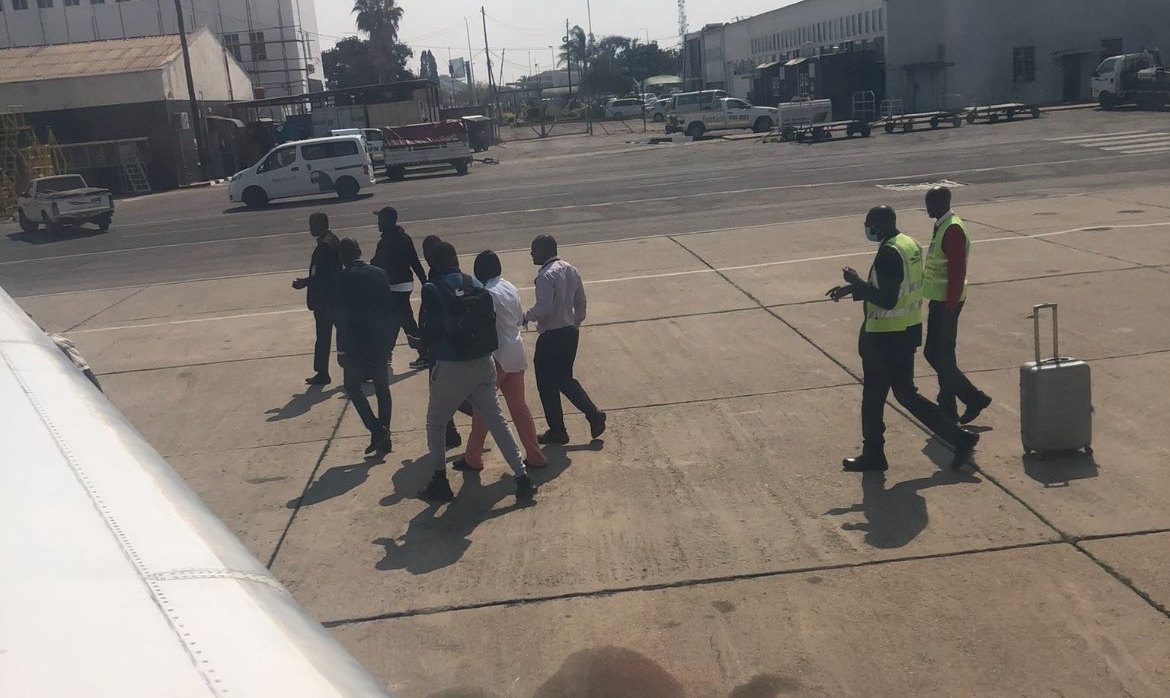
Three pro-democracy activists arrested at the Harare Airport in July 2024 were forced off the plane (Picture via Social Media)

“When pre-trial detention becomes the punishment, justice has already failed.”

The Weaponization of Justice

On 31 July 2024, four Zimbabwean human rights defenders: Namatai Kwekweza, Robson Chere, Samuel Gwenzi, and Vusumuzi Moyo, were violently dragged off a domestic flight at Robert Mugabe International Airport by plainclothes security agents.

Their “crime”? Merely being associated with a peaceful protest that had taken place over a month earlier.

Three pro-democracy activists arrested at Harare Airport, forced off the plane (Picture via Social Media)

For the next eight hours, these activists were held incommunicado, denied access to legal counsel, and, in the case of victim Robson Chere, tortured so severely that he they later faced kidney failure.

Their ordeal is not just a miscarriage of justice, it is a chilling example of how Zimbabwe’s criminal justice system has become a tool for political repression, where arrest and detention are punishment in themselves.

“Bail is not a privilege, it is a right.”

Pre-Trial Detention as Political Weapon

Under Zimbabwe’s Criminal Law (Codification and Reform) Act, vague provisions such as “disorderly conduct in a public place” (Section 41(b)) have become the go-to charges against journalists, student leaders, and civil society actors.

Pre-trial detention, which international standards consider a measure of last resort, is systematically weaponized to punish dissent. Bail applications are routinely denied on flimsy grounds, effectively turning remand into state-sanctioned punishment without conviction.

As Amnesty International observes, these tactics form part of a “wider pattern of judicial harassment against government critics.”

Torture and Incommunicado Detention

The International Covenant on Civil and Political Rights (ICCPR), to which Zimbabwe is a party, categorically prohibits torture and ill-treatment (Article 7). Yet, detainees like Chere have reported severe abuse while being denied legal access for hours.

The African Charter on Human and Peoples’ Rights (ACHPR) likewise guarantees personal liberty and freedom from arbitrary detention (Article 6).

These violations are not isolated incidents. Similar patterns were observed during the arbitrary arrests of 78 opposition activists in June 2024 and in the prolonged detention of opposition MP Job Sikhala, who spent nearly 600 days in pre-trial detention for speaking out against political violence.

“When pre-trial detention becomes the punishment, justice has already failed.”

Shrinking Civic Space and Fear

The arrest of Kwekweza and other activists came just weeks before the Southern African Development Community (SADC) Summit in Harare.

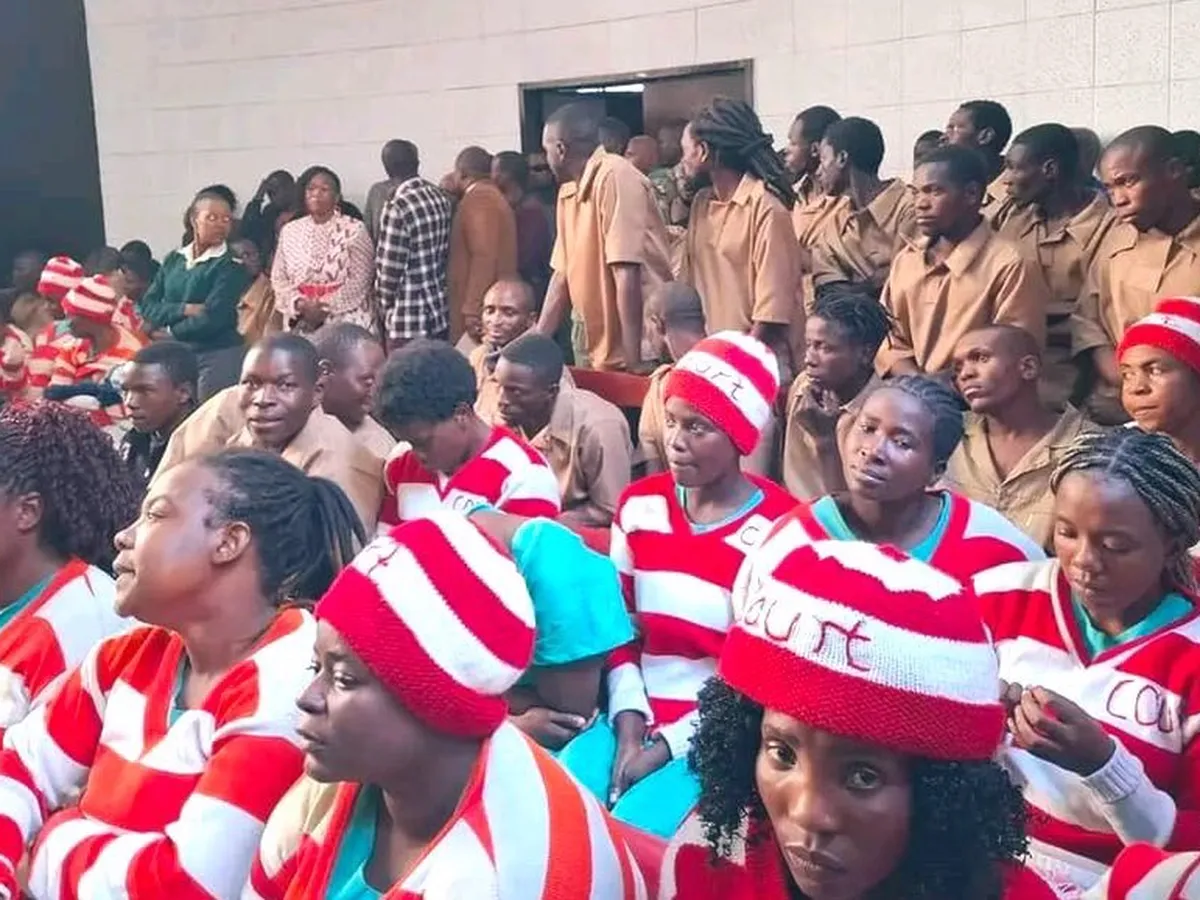
Citizens Coalition for Change (CCC) faction leader Jameson Timba and 78 party activists remained in custody after being denied bail several times

Such timing is not coincidental. As Zimbabwe prepared to host regional leaders, authorities sought to project an image of control, silencing dissent through intimidation.

This “arrest first, investigate later” culture creates a climate of fear for activists, journalists, and ordinary citizens. Prolonged legal harassment and trial delays are used not to deliver justice, but to drain resistance and discourage civic engagement.

The Private Voluntary Organisations (PVO) Amendment Bill, passed in 2023, further tightens the noose around NGOs, granting authorities sweeping powers to shut down organizations deemed “unfriendly” to the state.

The message is clear: anyone who challenges state authority risks becoming the next target.

A Call to Action

Zimbabwe’s justice system must be held accountable. The judiciary must stop functioning as an extension of political power and return to its constitutional mandate of safeguarding rights.

International bodies like the United Nations Human Rights Council and the African Commission on Human and Peoples’ Rights must continue pressing for independent investigations into cases of torture and arbitrary detention, starting with Chere’s ordeal.

Civil society and the global community must also keep amplifying these stories. Silence only emboldens repression.

As citizens, journalists, and human rights defenders, we must insist that bail is not a privilege, but a right, and that freedom of expression and assembly are cornerstones of democracy, not crimes to be punished.

“Justice in Zimbabwe should not be political theatre. It must be transparent, impartial, and true to its constitutional promise.”

Authors: Human Rights and Democratisation LLM students 2025 Cohort from Centre for Human Rights (University of Pretoria)

Temba Mliswa decries Mutsvangwa’s anti-Tagwirei stance as self-serving

1
Temba Mliswa and Christopher Mutsvangwa (Pictures via Facebook - Hon Temba Mliswa and X - Zanu PF Official )

HARARE – Former Norton legislator Temba Mliswa has unleashed a scathing attack on Zanu-PF spokesperson Christopher Mutsvangwa, publicly accusing him of manipulating internal party processes and leveraging party rules to further his personal aspirations of one day leading the ruling party.

In a series of statements posted on X, Mliswa claimed that Mutsvangwa views Vice President Constantino Chiwenga and prominent businessman Kudakwashe Tagwirei as significant impediments to his political ambitions.

He alleged that Mutsvangwa’s recent vocal opposition to Tagwirei’s proposed co-option into the Zanu-PF Central Committee is not a principled stand on party regulations but a calculated move to sideline perceived rivals.

“Mutsvangwa harbours ambitions of being Zanu-PF leader and sees both VP Chiwenga and Tagwirei as stumbling blocks to the realisation of that dream,” Mliswa stated.

“The spirited press conferences against Tagwirei are an opportune moment for him to decimate the figure of one of his supposed opponents.”

The party’s rejection of Harare Province’s recommendation to co-opt Tagwirei into the Central Committee has been a hot topic of discussion within the political circles in Zimbabwe.

Mutsvangwa publicly stated that Tagwirei did not meet the constitutional requirements for Central Committee membership, specifically citing the five-year minimum service at provincial or District Coordinating Committee level.

Mliswa, however, dismissed this explanation as disingenuous, arguing that the Zanu-PF Politburo possesses the authority to grant waivers to candidates who may not meet the strict service requirements if their strategic value, loyalty, and contributions to the party are deemed significant.

“No one can argue against Tagwirei as lacking any of the above values for Zanu-PF! It is thus merely convenient lies for Mutsvangwa to cite the party law book as the hindrance against Tagwirei.

“It’s not! The hindrance is his own ambitions which he feels Chiwenga and Tagwirei are endangering and he has to act to scupper them in whichever way!” Mliswa asserted.

Mliswa further accused Mutsvangwa of a long history of political opportunism, alleging a pattern of undermining colleagues to advance his own career.

He pointed to previous incidents, including Mutsvangwa’s alleged role in the ouster of former Vice President Joice Mujuru and then-War Veterans leader Jabulani Sibanda, as examples of what he described as self-serving political maneuvers.

“Mugabe died with regret for being misled by figures like Mutsvangwa, who instigated the expulsion of Mai Mujuru under the false pretense that she sought to usurp power. Such underhanded tactics are emblematic of Mutsvangwa’s political modus operandi,” Mliswa claimed.

“He exhibited the same when Jabulani Sibanda, then War Vets leader, was ousted for raising legitimate concerns within the party. Mutsvangwa seized the opportunity to ascend as the leader of the War Veterans in 2014.”

Blasting Mutsvangwa’s political credentials, Mliswa claimed he often distances himself during periods of turmoil, only to resurface and claim credit when the dust settles.

He cited the 2017 “Restore Legacy” campaign, stating that while others worked diligently, Mutsvangwa “retreated from visibility” and “resurfaced when it was calmer.”

On the Tagwirei issue, Mliswa argued it would be hypocritical for Zanu-PF to benefit from the businessman’s financial support while denying him meaningful participation in party structures.

He suggested Zanu-PF consider adopting a model similar to South Africa’s ruling African National Congress (ANC) party, which owns businesses to fund its operations, thereby reducing dependency on individual financiers like Tagwirei.

Mliswa’s remarks come amid intensified speculation about succession dynamics within the ruling party as it prepares for its 2027 elective congress.

The accusations follow Mutsvangwa’s recent strong public rebuke of Tagwirei, where the Zanu-PF spokesperson declared that Zimbabweans must “stop picking heroes from the streets and foisting them on the people.”

Speaking at a press conference, Mutsvangwa had cited the party’s rejection of Tagwirei’s alleged presidential ambitions, describing him as “unelectable” and accusing him of attempting to “buy power” through “lavish handouts.”

Mutsvangwa also insisted that Tagwirei’s wealth and empire were a product of Zanu-PF’s political leadership.

“Zanu-PF made Tagwirei. Tagwirei can’t be bigger than the party. The people of Zimbabwe should remain confident in Zanu-PF. We are not for sale,” Mutsvangwa said.

Zanu-PF is rocked by factional battles linked to succession disputes within Zanu-PF, as President Emmerson Mnangagwa’s term is expected to end in 2028.

Vice President Chiwenga is widely considered the frontrunner in the succession race, but Mnangagwa is allegedly nurturing Tagwirei to replace him.

Maswanhise nets brace in Scottish League Cup, Garananga shines in UEFA Champions League

0
Zimbabwe national team winger Tawanda Maswanhise (Picture via X - Zimbabwe Football Association)

Scotland based Zimbabwe national team forward Tawanda Maswanhise grabbed a brace to help his club Motherwell beat Greenock Morton 3-0 in a Scottish League Cup tie that was played on Tuesday evening.

With the victory, Motherwell progressed to the next round of the competition.

Maswanhise consistently found himself in threatening positions and capitalised with two clinical finishes.

His second goal, a composed and powerful strike, drew particular praise for its precision and poise.

Maswanhise has scored four goals in his last two games, having grabbed another brace in the previous match.

Zimbabwean international defender Munashe Garananga officially completed his move to Danish top flight league giants FC Copenhagen in July 2024. (Picture via X - FC Copenhagen)
Zimbabwean international defender Munashe Garananga officially completed his move to Danish top flight league giants FC Copenhagen in July 2024. (Picture via X – FC Copenhagen)

Meanwhile, his fellow countrymen Munashe Garananga delivered a commanding performance as FC Copenhagen secured a 2–0 win over Drita in the UEFA Champions League second qualifying round on Tuesday.

The Zimbabwean international played the full 90 minutes.

He anchored the heart of Copenhagen’s defence.

Garananga’s standout contribution came in distribution, where he completed 114 of 122 passes, the highest in the match.

This earned him a rating of 8.2/10.

Macrons sue Candace Owens over claims France’s first lady was born male

4
Emmanuel Macron with his wife at the summit of the French-speaking countries in Yerevan, Armenia. October 11, 2018: — Photo by Grigor Yepremyan via DepositPhotos.com

PARIS – French President Emmanuel Macron and his wife Brigitte on Wednesday filed a defamation lawsuit against right-wing US influencer Candace Owens over her persistent claims that the French First Lady was born a male.

The lawsuit filed in the US state of Delaware accuses of Owens of spreading “outlandish, defamatory, and far-fetched fictions”.

Owens meanwhile has over the years insisted she will not back down from the claims and in March 2024 vowed she would stake her “entire professional reputation” on her belief that Mrs Macron “is in fact a man”.

Candace Owens speaking with attendees at the 2024 Young Women's Leadership Summit at the San Antonio Marriott Rivercenter on the River Walk in San Antonio, Texas. (Picture via Gage Skidmore from Surprise, AZ, United States of America, CC BY-SA 2.0 , via Wikimedia Commons)
Candace Owens speaking with attendees at the 2024 Young Women’s Leadership Summit at the San Antonio Marriott Rivercenter on the River Walk in San Antonio, Texas. (Picture via Gage Skidmore from Surprise, AZ, United States of America, CC BY-SA 2.0 <https://creativecommons.org/licenses/by-sa/2.0>, via Wikimedia Commons)


She has used her popular podcast and social media channels (7m followers on X) to repeat conspiracy theories that claim Mrs Macron was born male under the name Jean-Michel Trogneux, which belongs to her brother.

Early this year she took matters further by releasing a video series titled Becoming Brigitte.

A statement from lawyers representing the French president and his wife revealed that they had repeatedly asked Owens for a retraction, but “ultimately concluded that referring the matter to a court of law was the only remaining avenue for remedy”.

“Ms Owens’ campaign of defamation was plainly designed to harass and cause pain to us and our families and to garner attention and notoriety,” the statement said.

“We gave her every opportunity to back away from these claims, but she refused.”

Athens, Greece – September 7, 2017: French president Emmanuel Macron with his wife Brigitte during a welcoming ceremony at the presidential palace in Athens, as part of his two-day official visit to Greece. — Photo by Vverve via DepositPhotos.com

The Macrons allege Owens “disregarded all credible evidence disproving her claim in favor of platforming known conspiracy theorists and proven defamers.”

Legal experts have said that under US law the Macrons will have to prove “actual malice” – meaning that Owens knew the information was false, but she published or broadcast it anyway.

FC Platinum chairman Dumisani Sisale unveils manifesto ahead of PSL elections

0
FC Platinum chairman Dumisani Sisale (Picture via X - @MBS_SOLANA)

ZVISHAVANE – FC Platinum chairman Dumisani Sisale last week officially launched his manifesto as he vies for the position of Chairman of the Premier Soccer League (ZPSL), ahead of the elections set for Friday.

Sisale will contest the PSL chairmanship against Isiah Mupfurutsa (Simba Bhora), Masimba Chihohwa (Manica Diamonds) and Leonard Musariri (Ngezi Platinum Stars).

Below is Sisale’s manifesto

MANIFESTO FOR ZPSL CHAIRMANSHIP

Candidate: Dumisani Sisale
Position: Chairman, Zimbabwe Premier Soccer League (ZPSL)
Motto: “Reignite the Game – Reform. Empower. Excel.”

INTRODUCTION AND BACKGROUND

I, Dumisani Sisale, humbly present my candidacy for the position of Chairman of the Zimbabwe Premier Soccer League. I was groomed in a system where my club won 4 championship titles in the PSL and a prize for discipline.

My inspiration is rooted in a deep passion for football, a commitment to good governance, and the need to modernize our league to meet international standards. I seek to lead a transformation that benefits clubs, players, fans, sponsors, and the nation at large.

VISION

To transform the Zimbabwe Premier Soccer League into a commercially viable, professionally run, and globally respected football league by enhancing competitiveness, promoting youth development, ensuring financial transparency, and embracing innovation.

MISSION

To promote professional football in Zimbabwe through transparent governance, youth development, strategic commercialization, and community engagement.

STRATEGIC PILLARS OF THE MANIFESTO

Commercialization and Revenue Growth

  • Building and implementing a balanced commercial structure that promotes stability, growth and resilience through a strategy based on innovation, visibility, and inclusivity.
  • Secure and Expand TV Broadcast Rights, including digital streaming.
  • Partnerships with national broadcasters and regional networks for live match coverage.
  • Launching or licensing digital streaming platforms to reach diaspora and tech-savvy audiences.
  • Implementation of value-added content to boost viewer engagement and monetization.
  • Fair revenue-sharing agreements with clubs to incentivize quality and compliance.

League Rebranding

  • Turning the PSL into a cash positive entity to implement its projects including construction of the offices and accompanying infrastructure
  • Full brand revamp, visual identity, and messaging.
  • Consolidate relationship with current sponsors
  • Bring on board additional tailored sponsorship packages catering for different
    investment levels.
  • Engagement of key sectors as long-term strategic partners.
  • Offering branding opportunities across digital, in-stadium, and broadcast platforms.

Pricing Strategy

  • Introducing and implementing pricing strategies for match attendance that balance profitability and competitiveness
  • Negotiate for periodic cash disbursements to clubs to increase competitiveness and cash flows
  • Bring in more partners to sponsor end of season awards

Youth Development Policy

  • Mandatory U19 Registration: Compel clubs to register at least 5 Under-19 players for their first team roaster.
  • Compliance Monitoring: Registration is reviewed and verified by the league’s technical committee.
  • Mandatory Minutes Rule: Clubs to accumulate about 2500 minutes of playing time for Under-19 players over the league season.
  • Incentives for Compliance and Excellence: Clubs exceeding required minutes or debuting multiple U19s may receive development bonuses, priority in youth sponsorship and marketing campaigns, and league recognition awards.

Good Governance and Transparency

  • Implement Open and Audited Financial Systems for the PSL Office.
  • Introduce Club Licensing Systems Aligned with CAF/FIFA Standards.
  • Enhances Accountability and Representation through Club Participation in Decisions.
  • Improves Club Support and League Competitiveness.

Standardised Medical, Legal, and Welfare Policies

  • Establishes a unified framework for player and staff medical care, legal protection, and welfare.
  • Enforced through club audits and capacity-building workshops.

Invest in Stadium Infrastructure through Strategic Partnerships

  • Forms partnerships with local authorities, the Ministry of Sports, and private investors to rehabilitate and modernize stadiums.
  • Focus areas include pitch quality, lighting, seating, and facilities.
  • Encourage home-stadium ownership or long-term lease models to foster community identity.

Gender Equality Policies

  • Establish clear policies promoting gender equality within the league.

Partnerships with National and Regional Bodies

  • Collaborate with the national football association, government agencies, NGOs, and regional football bodies to coordinate efforts and share resources.

IMMEDIATE GOALS (FIRST 12 MONTHS)

  • Secure National Broadcast Partner to increase league visibility and reach.
  • Host ZPSL Indaba to foster collaboration and align league priorities.
  • Launch Youth Development Charter to promote and support youth talent development across all clubs.

IMPACT GOALS BY YEAR 2

  • 100% of Teams with Active Youth Academies to establish a sustainable talent pipeline.
  • League Broadcast in at least 3 Regional Markets to boost brand visibility and attract cross-border sponsorships.
  • Over 20% of Minutes Played by U19 Players Across the League to accelerate player development.
  • Improved League Competitiveness and Viewership to ensure a balanced, engaging, and unpredictable season.

Seke road tragedy exposes Zimbabwe’s crisis of governance, public service neglect

0
The scene of deadly crash along Seke Road on July 22, 2025 (Picture via ZBC)

CHITUNGWIZA – A devastating traffic accident on Seke Road on Tuesday, which claimed the lives of 17 individuals, including a young learner, has exposed the dire situation of Zimbabwe’s roads, its emergency response capabilities, and the overall state of public services in the country.

The accident, involving a commuter omnibus and a 30-tonne haulage truck near Hunyani Bridge, has since been declared a national disaster by President Emmerson Mnangagwa, prompting state support for affected families.

The incident has brought to the forefront critical questions about government priorities, resource allocation, and the overall capacity of state institutions to safeguard its citizens.

The Amalgamated Rural Teachers Union of Zimbabwe (ARTUZ) has expressed sorrow and declared Friday, July 24, 2025, a “Black Friday” in remembrance of the victims.

ARTUZ highlighted the death of a child traveling to school as a stark indicator of the “widening education crisis” and “persistent inequality and chronic underinvestment” in the education system, forcing children to undertake perilous journeys for schooling.

“The tragic loss of a learner underscores the widening education crisis in Zimbabwe. That a child must travel dangerous distances to access schooling highlights the persistent inequality and chronic underinvestment in our education system.

“Zengeza, like many areas across Zimbabwe, remains underserved, forcing children to seek education far from home at great personal risk,” ARTUZ stated.

Horror crash … The scene of deadly crash on July 22, 2025 (Picture via ZimLive)

Beyond education, ARTUZ’s statement also raised concerns regarding the country’s emergency response services.

“We are equally concerned by the poor state of Zimbabwe’s emergency response services. It is disheartening that lives that could have been saved were lost due to the lack of investment in life-saving infrastructure.

“Our government continues to spend heavily on tools of repression, while neglecting systems that preserve and protect life,” the organisation stated.

Echoing these sentiments, former Finance Minister Tendai Biti characterised the accident as an exposé of “State Failure, misaligned priorities, corruption and leadership collapse.”

Biti noted: “The tragic Seke road accident brings to the fore the stark realities of State Failure, misaligned priorities, corruption and leadership collapse.

“The absence of adequate Disaster Response Mechanisms exposes a rotten vacuous leadership that exists in its own artificial reality”

Former Citizens Coalition for Change (CCC) leader Nelson Chamisa also conveyed his deep sadness and condolences, emphasising the “painful moment for our nation.”

While extending gratitude to first responders, he highlighted the challenging conditions under which they operate.

“This is a painful moment for our nation, and we mourn together. May the souls of the departed rest in peace, and may comfort and strength surround every grieving family.

“We must continue to work toward safer roads and a more compassionate society where every life is valued and protected.

“We are praying for all those injured and affected, and we stand with you in this time of grief.

“We also extend our sincere gratitude to the first responders, emergency services, and the dedicated hospital staff who continue to serve tirelessly, even under the most difficult and almost impossible conditions,” Chamisa noted.

In response to the tragedy, Minister of Local Government and Public Works Daniel Garwe on Wednesday announced the national disaster declaration and assured the public of ongoing investigations into the cause of the accident.

He stated that measures would be implemented to prevent similar future incidents. The government is also coordinating funeral arrangements and providing counseling and psychosocial support services to the grieving families.