Home Blog Page 7376

Gideon Gono attacks ‘reckless indigenisation’

0

By Gideon Gono

Debate on indigenisation of Zimbabwe’s financial sector has occupied centre-stage for the last two or three years with the Reserve Bank of Zimbabwe (RBZ) expressing unhappiness over the “one-size-fits-all” method of implementing this long-overdue and desirable programme.

Gideon Gono attacks 'reckless indigenisation'
Gideon Gono attacks ‘reckless indigenisation’

Strategists the world over are familiar with the saying that “the devil is in the detail”, in this case of implementation, while those in the legal fraternity will warn you against ignoring “the small print”.

This installment seeks to highlight our experiences and why the financial sector ought to be treated with caution and why the “one-size-fits-all” approach to indigenisation of the financial services sector is considered to be inappropriate, disruptive and dangerous, hence our view that any “deals” that foreign banks in this market voluntarily or involuntarily enter into and sign-off without our prior approval will remain “deals on paper” — basically null and void.

Role of RBZ in indigenisation

Like any national programme, the indigenisation and economic empowerment programme must be implemented in a manner that respects the entire legislative mapping of Zimbabwe as represented by various pieces of legislation on our books that seek to create checks and balances against potentially domineering legislative elephants in the living room, so to speak.

The following are some of the critical pieces of legislation and regulatory frameworks to be respected: Banking Act, Chapter 24:20; Reserve Bank Act, Chapter 22:15; Exchange Control Act, Chapter 22:05; Public Finance Management Act, Chapter 22:19; Procurement Act, Chapter 22:14; Arbitration Act, Chapter 7:15; Bilateral Investment Promotion and Protection Agreements; Competition Act, Chapter 14:28 and Corporate Governance Framework for Parastatals of which National Indigenisation and Economic Empowerment Board is part of.

In view of the above plethora of legal instruments, the current seemingly unilateral approach to implementing the indigenisation can only lead to fictional results akin to the mining deals involving Zimplats, Unki and Mimosa which will have to be renegotiated and submitted to us for approval for them to become “real”.

In the banking sector, and as the law stands, it is only the central bank that has been conferred with legal powers to issue or withdraw banking licenses and that is the practice the world over.

Furthermore, as a central bank, we are duty-bound by local Banking Act (Chapter 24:20) and RBZ Act (Chapter 22:15) as well as international laws and conventions, to check, verify and certify that people wishing to be shareholders or group of shareholders of any financial institution in our backyard are identifiable men and women or institutions of impeccable credentials.

My position on indigenisation

I am on record, as far back as 2007, as having been one of the first public officials to hail the government for passing the then long-overdue Indigenisation and Economic Empowerment Act.

The central bank’s voice on this subject is, therefore, as old as the enactment of the law itself. On October 1 2007, while presenting my monetary policy statement, I said: “As monetary authorities, we fully support the noble objective of empowering the majority of Zimbabweans through the introduction of enabling statutes that expand wider, the involvement of the people in the mainstream economy.

“Noble as this objective is, our well-considered advice to legislators and government in general is that a fine balance should be struck between the objectives of indigenisation and the need to attract foreign investment.

“Specifically, the local-foreign ownership thresholds must be taken and implemented as down–the-horizon targets, as opposed to excitable but impractical overnight conversion events.”

I also went further in the same statement to give advice to government well before the current officials in the Ministry of Youth, Indigenisation and Economic Empowerment had been appointed.

“Of particular concern to us as monetary authorities would be any attempts to forcibly push the envelope of indigenisation into the delicate area of banking and finance. To this end, we call upon those with interests in the financial sector to approach the central bank with their applications for new banking licences.

“It is important to note that this comment comes against a background of reported incidences involving well-connected personalities who are positioning themselves to muscle into certain mining, manufacturing, financial and other entities that are currently performing well and contributing to the foreign currency inflows of the country.”

It is against the above background that the entire new board of the central bank unanimously passed a resolution in support of the indigenisation at its meeting of July 31 2012 which resolution, as governor, I disseminated to the public through the my monetary policy statement of the same date, stating:

“That the Reserve Bank of Zimbabwe supports the government’s indigenisation and empowerment policies as enunciated in relevant statutes and regulations. It is fully supportive of the need to ensure that the indigenous people of Zimbabwe are capacitated to engage in the entire spectrum of Zimbabwean economic activities including the financial services sector. However, the bank has reservations concerning implementation of the policies.

“That the Reserve Bank is conscious of the sensitivities surrounding the economy, particularly the banking sector and mining sectors. It supports the implementation of indigenisation and economic empowerment regulations in the various sectors and is of the view that they should be done in a manner that preserves confidence. Any adverse developments in the banking sector could grind economic activity in Zimbabwe to a halt.

“That this is particularly so, given that regional and international banks in the local banking industry play a pivotal role in providing the vital link between the domestic economy and the international community, particularly through correspondent banking relationships.

“In this context, the need to reconcile the indigenisation regulations and other Acts of Parliament cannot be over-emphasised. As such, the implementation of the indigenisation and economic empowerment provisions has to be done in harmony with the Banking Act and Regulations, RBZ Act, Exchange Control Act and Regulations, Companies Act, Mines and Minerals Act, Zimbabwe Investment Act and other existing legislations.”

Thus acknowledging the above as given, it is a total misrepresentation of my position as governor to suggest that I or my management team and board are opposed to the indigenisation programme. Nothing can be further from the truth.

Banking sector architecture

From the early 1990s, the financial sector is one of the sectors which benefitted immensely from liberalisation of the economy. From a sector which was largely dominated by a few foreign-owned institutions to the current standing where the majority of banks (71%) are locally-owned.

Currently, there are 24 banking institutions in the country, of which only seven (29%) are foreign-owned and internationally active banks. The international banks are among the country’s systemically important banking institutions whose condition needs to be safeguarded at all times.

In the interest of clarity and common understanding, a systemically important institution is one whose size, complexity, scale of operations and connectedness to the local and foreign financial and other economic systems is such that an event within or surrounding it would have far reaching implications for others and economic sectors within a given jurisdiction.

There are 24 mainstream banking institutions namely commercial banks (17), merchant banks (2), building societies (4) and savings bank (1).

In addition, there are 164 licenced microfinance institutions (MFIs), 53 money lending institutions (MLIs) and 16 asset management companies (AMCs) in Zimbabwe spread throughout the country giving the following outlook as illustrated above:

If we are talking about sectoral institutional ownership and outlook regardless of size, the above picture tells a story which we cannot ignore when it comes to how open the financial sector is to new indigenous entrants.

As for size, it is a function of age, market confidence, capitalisation, reputation, stability, and international connections, among other factors.

The seven foreign owned banks (3%) command US$250 million (36%) of the sector’s US$700 million paid-up capital of which 64% (US$450 million) is held by 97% of the market players who are indigenous.

In terms of deposits, indigenous banks cumulatively hold about US$3 billion (70%) in total deposits, while the foreign-owned institutions hold US$1,3 billion (30%) of total deposits as at March 29, 2013.

In terms of the loan book, out of a total market book of US$3,6 billion, indigenous owned banks had a loan book of about US$2,7 billion (75%), while the seven foreign-owned banks have extended loans of about US$900 million (25%).

From the above, it is clear that the “rush” to indigenise the banking sector is more driven by emotions and an uninformed perspective than by necessity.

When all is said and done, on banks we should all ask ourselves the question: Whose money do we want to indigenise? No wonder over US$2 billion is circulating in the informal sector, thus adversely causing serious liquidity challenges for the economy, apart from chasing away investors. We are shooting ourselves in the foot through such ill-advised demands.

What needs to be done

There is need for more creativity, co-operation confidence and leverage strategy to secure more benefits for indigenous people through foreign networks and associations.

As chief superintendent of the Zimbabwe’s banking sector, I’m on record emphasising that foreign-owned banks will need to comply with the country’s indigenisation laws over a mutually agreed period of time and in proportions that allow foreign shareholders to feel comfortable that they can still leave their names, brands and systems attached to the same indigenised institutions.

In other words, we need to “hurry slowly”. We can achieve the desired benefits through other creative means such as lending quotas, mobilisation of support lines of credit and supply-side empowerment.

It is important that the process does not disconnect the local institutions from their original parentage as doing so would be to throw away serious associational benefits to the country that come with those connections.

The benefits I am referring to include, among others, access to lines of credit, latest technology platforms, training and exposure to international best practices, strength through adequate capitalisations as and when required, access to international networks as well as customer confidence arising from the mere knowledge that local outfits are part of an international balance sheet of both financial and technical capabilities, products and a recognised brand network that can be counted upon in international business transactions, travel, investment advice and general services.

Historically and even today for instance, close to 90% of all lines of credit for our tobacco auction-floor purchases, cotton and other external funding requirements come through these foreign owned banks and trying to change their ownership in a unstructured and reckless manner can only be counter-productive at a time when indigenous owned banks, save for a few, are struggling to meet basic minimum standards of capitalisation, international networks, brand recognition internationally and capacity to mobilise meaningful international lines of credit for the country’s needs.

My next installment will show the potential impact and far-reaching consequences to the economy of unstructured and emotive interventions on banks if that is allowed to happen.

Dr Gideon Gono is the governor of the Reserve Bank of Zimbabwe. This article was originally published by the Zimbabwe Independent
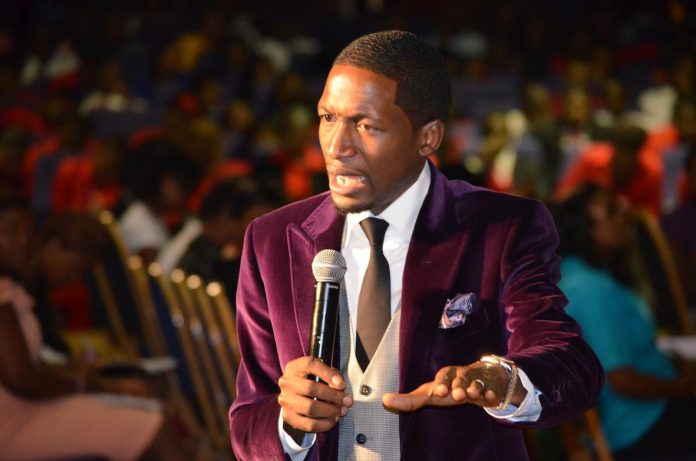
VIDEO: Prophet Uebert Angel delivers woman from alcohol addiction

0
Prophet Uebert Angel

Watch as flamboyant Zimbabwe preacher Prophet Uebert Angel, allegedly delivers a woman from her alcohol addiction through the power of prayer. The video was uploaded to You Tube by Prophet Angel’s Spirit Embassy church.

Cheating wife attacked and left for dead

0
Close shave with death.... Proficiency displays her wounds (right) and Proficiency receiving treatment after the attack (left)

By Arron Nyamayaro

CHITUNGWIZA – A cheating Seke woman was attacked by her husband when he came across love messages on her Facebook page.

Close shave with death.... Proficiency displays her wounds (right) and Proficiency receiving treatment after the attack (left)
Close shave with death…. Proficiency displays her wounds (right) and Proficiency receiving treatment after the attack (left)

Blessing Hwesva, 31, of Mayambara in Seke hacked his 24 year old wife Proficiency Maritinyu’s Facebook account and communicated with her alleged boyfriend one Simon Ngonyama who fell for the trick.

A scuffle ensued in Sasolburg, South Arica where they both work before Blessing forced Proficiency to accompany him into the country to seek counselling from one of her relatives Agnes Maritinyu, 27.

After one of the relatives expected to lead the counselling failed to turn up, Blessing is alleged to have attacked Proficiency with a broken beer bottle at midnight and she sustained neck, chin, left hand and nose injuries that she is nursing.

Proficiency confirmed cheating with 26 year old Simon who is also based in South Africa in retaliation after Blessing brought a prostitute into their matrimonial bedroom.

“He is the one who started cheating by bringing a prostitute into my bedroom and I decided to retaliate because I am the one looking after him as he is not employed,” said Proficiency.

“I fell in love with Simon Ngonyama in June last year and from July I was not seeing him; we started communicating via Facebook and Whatsapp.

“A wife to Blessing’s friend Stengisiwe is the one who helped me open a Facebook account and I suspect that she is the one who exposed me to Blessing after I confronted Blessing over his affair with a prostitute.

“Blessing communicated with Simon asking him if he was prepared to marry me if I leave my marriage and he answered indicating that he was ready to take me to another town in South Africa.

“Simon failed to meet Blessing as he (Blessing) did not know the place we usually meet. Blessing had invited him home lying that he (Blessing) was in Zimbabwe.

“Pangadai pakarwiwa chaizvo because Simon is also a violent person and that caused Blessing to force me to come here where he attacked me and is even threatening to kill me after discovering that he left me alive.

“Blessing sped off with his sister Marian Kofi and her husband who both witnessed Blessing viciously attack me.

“Blessing in anger broke an empty beer bottle in his own head before attacking me with it and I lost a lot of blood and he left me for dead sprawling on the ground. He left me when he saw a passing motorist.

“What angered him is my admission that I was in love with Simon and there was nothing to hide because he had seen it all from his Facebook and Whatsapp conversations with Simon.

“At the moment I do not have a mobile phone as he confiscated it from me and Simon is not aware of the situation I am going through. He was exaggerating by including many boyfriends when I only cheated with Simon.

“I am no longer interested in staying with him because he was ever assaulting me and all our neighbours know about it. His decision to come and attack me in this country was the fear of South African police because he was arrested twice for assaulting me.

“Zvese zvaanopfeka ndini; ndinoshanda iye haashande and he is illiterate. I do not even know how he was communicating with Simon via Facebook and Whatsapp,” said Proficiency.

Agnes (Proficiency’s sister who was supposed to provide counselling) found Proficiency lying in a pool of blood after she heard noise as Blessing was attacking her.

“I heard noise after they left my house and I decided to follow and I found her lying in a pool of blood. I took her to Chitungwiza General (Central) Hospital” said Agnes.

“I failed to settle the dispute before Blessing decided to take her to my parents. I did not know that he wanted to kill her on the way,” she added.

Blessing and Proficiency have a 5 year old daughter and have been living together for six years. Blessing moved to South Africa in February 2009 before Proficiency followed in May of the same year.

Provincial police spokesperson Inspector Tadeous Chibanda urged members of the public to desist from resorting to violence as a way of solving disputes.

“A young couple arrived in the country on the 4th of May from South Africa and the husband was accusing his wife of infidelity before they visited her sister in Mayambara in Seke to seek counselling.

“After their uncle who was expected to counsel them failed to turn up, the couple is said to have decided to visit the wife’s parents in Chitungwiza where the accused stopped the car and tracked the complainant with an empty beer bottle.

“The complainant sustained cuts on her nose, chin, left hand and on her neck before she was taken to hospital where she received treatment and was discharged. The accused is reported to have fled the scene and left the country for South Africa and investigations are in progress,” said Inspector Chibanda.

“Police are urging members of the public to desist from using violence in solving problems but seek help from elders or report to their nearest police stations,” added Inspector Chibanda. H Metro

Bosso players caught in love triangle

0

By Mbongeni Ncube

BULAWAYO – Barely two weeks after another Highlanders football team star was caught on the wrong side of publicity, it seems like there is a “dark cloud” hovering over the team off field.

Priscilla Ncube
Priscilla Ncube

And this time it is the duo of Bruce Kangwa and Knox Mutizwa who have scored an OWN GOAL.

The two footballers are allegedly seeing the same woman who was recently captured posing while naked for another footballer.

According to a source, Bosso left back Kangwa holds the majority stake in Nkulumane based Priscilla Ncube’s heart. But Mutizwa, according to reports has dribbled past his teammate and with great aplomb he did.

“What I know is that Kangwa is the boyfriend because he usually comes to her house but recently Knox has also been going there.

“There is something definitely fishy about the whole thing because previously the two would come together but Knox is coming alone these days,” said the source close to the woman.

The source claimed that the woman goes around telling whoever cares to listen that she is bedding the two.

“Almost everyone around this place knows that she is sleeping with the two because that is what she tells people.”

The woman caught up in the eye of the storm is said to be in the habit of bedding footballers.

“She just loves them. That’s all she does. I don’t know why but she has the answers.”

B-Metro laid its long fingers on a collage of pictures that neither Kangwa nor Mutizwa were the ‘photographers’ capturing their ‘sweetheart’ in her birthday suit and posing like a ……..during one of her sessions with another footballer who is said to be plying his trade in the lower rungs of football.

The woman said she was dating Kangwa and refuted allegations that she was also bedding Mutizwa.

“Yes I am seeing Bruce, he is my boyfriend but Knox, no, I just know him,” she said.

Asked on how she knows Mutizwa, she said: “He plays for Bosso obviously I know him besides he is Bruce’s friend and teammate and I talk to him daily.”

Quizzed on why she talks to Mutizwa daily and whether Bruce would be there during the chats, she said:

“I will just be talking to him and I can’t say anything further.”

On the issue of nude pictures and the other boyfriend, she demanded to know their source.

“Who gave them to you? But what I know is that you can’t publish them because the law doesn’t allow you to do that,” she said.

Kangwa said it was impossible that the woman could be double crossing him with his teammate. “I do not think it is happening,” he said.

Mutizwa acknowledged knowing the woman and said he does not talk to her. “She is Bruce’s girlfriend and I don’t talk to her. But that story shouldn’t come out bra,” he said.

While Mutizwa denies talking to her she earlier on confirmed that they are Whatsapp friends. B Metro

VIDEO: Morgan Tsvangirai full interview

0

VIDEO – Watch this exclusive News 24 interview with Zimbabwe Prime Minister Morgan Tsvangirai. The MDC-T leader talks about the new constitution, upcoming elections and the future of his political party.

‘For he’s a jolly evil fellow’ – Zimbabwe Vigil

0
The Guardian – described by a columnist in the British Sunday Times as ‘a small circulation north London newspaper’ – would have been less sanguine if the inhabitants of north London had been bulldozed without warning or compensation for the proposed high speed train line.

The Vigil has had a soft spot for the British newspaper the Guardian ever since its brave report justifying ‘Murambatsvina’.

The Guardian – described by a columnist in the British Sunday Times as ‘a small circulation north London newspaper’ – would have been less sanguine if the inhabitants of north London had been bulldozed without warning or compensation for the proposed high speed train line.

As the homes and businesses of some 700,000 of the poorest were trashed, the Guardian hailed it as visionary town planning. No doubt the Guardian also applauded Stalin’s gulags, Mao’s cultural revolution and Pol Pot’s skull harvesting.

The Guardian – described by a columnist in the British Sunday Times as ‘a small circulation north London newspaper’ – would have been less sanguine if the inhabitants of north London had been bulldozed without warning or compensation for the proposed high speed train line.

This would, of course, have been an outrage. But Murambatsvina? Well that’s Africa, innit? It is this patronizing tone that enchants the Vigil as we read the Guardian’s latest musings on Zimbabwe. Why should we worry about the Guardian? Well, it sets the agenda for the BBC for one thing.

Go into any BBC newsroom and you will see scribes buried in the paper (after a brief glance at the topless ladies in the vulgar press). The Guardian is essential reading because it tells them what to think.

So what’s the Guardian’s current narrative on Mugabe? Misunderstood, demonized, rebel with a cause. An article by the British academic Ian Scoones on the Guardian Africa Network website (see: Zimbabwe: how the tide is turning – http://www.guardian.co.uk/world/2013/may/10/zimbabwe-mugabe-tide-turning) talks of ‘anecdotal evidence’ that Mugabe is ‘softening his clenched fist’.

Well Professor Scoones knows all about anecdotal evidence as shown by his book on the alleged success of land reform. Not that his mention of ‘white capital seeking a reassertion of power’ is anecdotal of course.

The Guardian went further in the print edition with a full page on Zimbabwe by David Smith reporting from Harare.

Here are the headlines: ‘Mugabe: at first a hero, then a villain – and finally the redeemed father of his nation?’, ‘West may see this year’s election as credible’, ‘Shift in attitudes following years of demonisation’.

Smith’s talk of Mugabe as possibly ‘the redeemed father of his nation’ seems to the Vigil to sanitise a man who boasted of having degrees in violence. Murambatsvina, Gukurahundi, murder, rape, torture? No Mugabe is just misunderstood.

For the Guardian it seems to be ‘one equal light’. Mugabe might be not as nice as he should be but Tsvangirai on the other hand is a flop. How’s that for balance? Smith doesn’t ignore Mugabe’s crimes: the Vigil’s objection is that they don’t seem to matter.

‘The following scenario, once unthinkable, is now just conceivable’, he writes:

‘The Zimbabwean president will retain power in this year’s elections through fair means or foul; the poll will be relatively peaceful and deemed “credible” by the west; then sanctions will be lifted against Mugabe and his inner circle, ushering him back in from the cold.’

(http://www.zimbabwesituation.com/may11_2013.html#Z13 – Robert Mugabe: from liberation hero to villain to redeemed father of a nation?).

Absolutely right. But where we disagree is when Smith says ‘the fact that land reform’s consequences (are being) debated is a step towards making Mugabe’s legacy less unpalatable’. He goes on to quote the Zimbabwean writer Petina Gappah as saying;

“This idea of Mugabe as Hitler? He’s extremely charming and intelligent’. Gappah obviously knows nothing of Hitler who was admired by some British aristocratics such as Unity Mitford who commented on his charm. Perhaps Gappah has been reading the Herald:

‘When a nation is faced with food shortages owing to drought, the burden of providing food to the people falls on the broad shoulders of Government and it is for this reason that we commend President Mugabe for showing true leadership . . . ‘

The message from the Guardian is that the coming election must be accepted however flawed.

The Vigil begs to disagree. We don’t think Mugabe is a jolly good fellow and believe that SADC should stand by the Global Political Agreement it foisted on the MDC. And if it doesn’t the MDC should refuse to take part in the promised charade.

Other points

• Zanu PF has a number of scholarships available for British academics to visit one or two new farmers and write books about them.

• Thanks to Charles Dumisani Ndlovu and Michelle Dube who were with us at the start of the Vigil. Thanks also to Mary Muteyerwa, Tendai Chadehumbe, Cleopas Chigaru and Nkosikona Tshabangu who arrived early to help set up. Mary was in charge of the front table and Michelle the back table.

For latest Vigil pictures check: http://www.flickr.com/photos/zimbabwevigil/. Please note: Vigil photos can only be downloaded from our Flickr website – they cannot be downloaded from the slideshow on the front page of the Zimvigil website.

FOR THE RECORD: 44 signed the register.

Securocrats should not be allowed to govern

0

By Tendai Kwari

This is a clarion call to all democratic forces and peace loving Zimbabweans.

We do not take the impending elections lightly. We also take the politicisation of the military seriously. If ZANU –PF or MDC wins the next election in a free and fair poll, we must respect that outcome.

Commander of the Zimbabwe Defence Forces General Constantine Chiwenga
General Constantine Chiwenga (pictured) was described as a “political general” with “little practical military experience or expertise” by Major-General Fidelis Satuku and Brigadier-General Herbert Chingono.

However, as Zimbabweans, we should not allow those who attack the constitutional system and intend to replace an elected government by a regime of their own choosing to sabotage the result.

The securocrats (a military or police officer who has the power to influence government policy) in Zimbabwe must accept the outcome of the elections.

The securocrats must be reminded that they will be denied all legitimacy as they will have no moral or political right to become our government of Zimbabwe.

As we draw closer to the 2013 general election it is becoming apparent that a grand coalition is unlikely to materialise.

Our achilles heel has been our obsession to remove Robert Mugabe, not the system. As opposition political parties and civic organisations, we have failed to be consistent and show the electorate that we can offer something better than ZANU-PF.

ZANU-PF has been able to spell out its ideology – good or bad, and has stood by it. The only real enemy of ZANU-PF is Mugabe’s advanced age and the securocrats, like a pack of rabid wolves, are smelling blood and moving in for the final kill.

They would seek to secure Mugabe’s legacy so as to protect themselves and their ill-gotten riches; not forgetting the mafia style assassinations clandestinely perpetrated over the years.

If ZANU-PF fails to win the forth coming election and the securocrats (military) refuse to acknowledge the elected government; a grand coalition of all democratic forces (including the civic organisations) should be formed and impose a defence policy against the securocrats.

Opposition political parties and civic organisations must band together and denounce the military regime.

The securocrats will require legitimacy, that is, acceptance of their moral and political right, or authority to rule. They must be denied all cooperation and no one in the Government or in the population should assist or obey them in any way.

They must be repudiated as illegitimate with no rightful claim to become our government. The grand coalition and civic organisations must gear into omnipresent resistance institutions against the securocrats.

Dissension and opposition among the supporters of the securocrats, the police and other members of the army must be encouraged. We do not expect the securocrats to control all of the military forces and the police.

The regional and international community must exert opposition to the securocrats by diplomatic, economic and public pressure against the securocrats.

Furthermore, we will call upon university and tertiary education college student leaders to make a statement and organise demonstrations on a weekly basis – across the country.

Through the social networks and independent media, we will mobilise Zimbabweans in and outside to donate food and water for our demonstrators. We will call upon commuter omnibus drivers, public and civil servants to join demonstrators and refuse to follow orders from the securocrats.

We will call upon religious leaders to lead in prayers and join the demonstrators. For a change, we would like to see the Makandiwas, the Apostles and the mainstream churches filling up stadiums and open fields for a different cause.

We will refuse to get engaged into a violent confrontation. The securocrats will have a good reason to kill us and we will not win that way. Zimbabweans must not accept any military intervention from the former colonial masters, imperialists or any other Western country.

It must be a home initiative and must be accomplished in Zimbabwe, by Zimbabweans and for Zimbabweans.

‘Mugabeland’ play set for Manchester theatre

0

By Ivan Mudzudzu

MANCHESTER – Mugabeland! is a play by the award-winning Manchester based theatre company Come As You Arts Northwest.

DOCU_GRUPO Robert MugabeThe play is set in a bar, ‘Mugabeland!’ and tells the true story of those caught up in Robert Mugabe’s rise to power in Zimbabwe and the difficult aftermath of his rule.


Two friends from different backgrounds –Stuart and Chinua- must navigate their own pasts to find the future while the words of the people of Zimbabwe –refugee and resident- swirl around them.

Mugabeland! Is an epic true story, integrated with original music and song that will get your heart pounding and spirits soaring. The story written and directed by Justin MacGregor after a chance meeting with Rhodesian ‘Stuart’ in a bar whilst on holiday in Cambodia.

The Rhodesian tells him of his incredible chance encounter with Robert Mugabe, President of Zimbabwe and how he had a chance to shoot him until his wife talked him out of it.

Lowry Theatre Manchester Thurs 16 May – Sat 18 May, Times 8pm & Fri 1pm. Tickets £10.

http://www.thelowry.com/event/mugabeland

https://www.facebook.com/home.php#!/hseltd

Zimbabwe Wall of Shame: Kudakwashe Bhasikiti

0
Former Masvingo State minister Kudakwashe Bhasikiti

By Lance Guma

[twitter-follow username=”lanceguma” scheme=”dark”]

MWENEZI – His first name means ‘the will of God’ but Kudakwashe Bhasikiti, the ZANU PF MP for Mwenezi East, led and participated in vicious acts of political violence in Zimbabwe that left dozens dead and hundreds displaced in his constituency. 

Kudakwashe Basikiti, the ZANU PF MP for Mwenenzi East
Kudakwashe Basikiti, the ZANU PF MP for Mwenezi East

According to a detailed dossier Bhasikiti moved around with a gang of ZANU PF militia who beat up and killed several MDC-T activists in the period April to June 2008.

Even with a coalition government in place, in March 2010 the MP was still setting up more torture bases to use to torment people.

When Morgan Tsvangirai and his party won the March 2008 parliamentary and presidential election, Basikiti and his gang were incensed.

With a presidential run-off engineered by ZANU PF, he went on a rampage that left homes destroyed, livestock killed and many perceived MDC-T activists maimed, killed and displaced.

Several MDC-T activists lost their lives at the hands of this MP. Most of the reported acts of aggression and brutal attacks in which Bhasikiti was directly involved, resulted in fatalities. Basikiti was rewarded for his brutality with a coveted seat on the ZANU PF supreme decision making, Politburo.

On the 14th June MDC-T activist Kennedy Dube was abducted from his home during the night and taken to a base in Maranda village. Those who witnessed the abduction said “ZANU PF youths tied his hands behind his back and beat him up whilst his family watched.” He was quizzed on why he supported the MDC-T.

Dube was detained for the whole night, forcing his family to file a report with the police. Also in detention with him was his friend Kennedy Mapuranga. When the police went to the base they “just asked some questions and were told that the two men were Basikiti’s prisoners and were to be released that day.”

Aware that this was a state sanctioned abduction and torture session the police left and never reported back to the family. It was also noted by witnesses that Basikiti visited the base the following morning and his two prisoners were subjected to intensive questioning, followed by severe beatings.

Dube and Mapuranga eventually succumbed to the torture and died at the base on the morning of June 14, 2008. The base was hastily abandoned and the corpses were collected by the police. No arrests were made.

The murderous rampage continued a few days later on the 17th June when ZANU PF youths, dressed in green youth militia uniforms, beat up a teacher known as Muguni at the Neshuro Business centre. They pounded him with booted feet, fists and baton sticks while asking him why he had campaigned for the MDC-T.

The assault continued for some time and only stopped when Muguni ceased screaming and was motionless. People who had seen it happening rushed to assist Muguni, but he was dead. Basikiti picked up the gang members using his party truck and drove off at high speed from the centre.

On the 23rd June Bhasikiti and his mob were travelling in a convoy of cars while celebrating the decision by Tsvangirai to withdraw from the presidential run-off due to the violence.

They attacked MDC-T activist Stanley Mapuranga, viciously assaulting him at Maranda Village “using every type of weapon they could lay their hands on”.

Within a few moments Mapuranga was lying in a pool of blood. With the gang having left, his relatives tried to help him but he was already dead.

“Those present when he was buried noted that his body was so badly damaged that it was difficult to handle. Reportedly all the bones in his body had been broken,” a witness states in the dossier.

On the same day Bhasikiti and his gang attacked known MDC-T activist John Dube, because he was wearing his party t-shirt. They grabbed Dube and bundled him into one of the trucks. “They never drove away from the shops but stood in a circle around the truck and it appeared Basikiti was issuing some instructions.”

Without warning the gang threw Dube out of the truck and started pelting him with stones, iron bars and an assortment of other weapons. He died during the assault which was directed by the MP. Bhasikiti and his gang drove off leaving Dube lying under a pile of stones, sticks and bricks.

Bhasikiti’s violence and intimidation didn’t stop there.

In March 2011, he moved around his constituency telling villagers to toe the ZANU PF line on the new constitution or be killed. In preparation for the constitutional outreach exercise he set up bases in the Maranda, Dinhe and Neshuro areas. He also declared Mwenezi a no-go area for the MDC-T.

Bhasikiti secured a landslide margin to win the Mwenezi East parliamentary seat, but only because he threatened to deny GMB and NGO food to anyone who didn’t vote for him. Because Mwenezi lies in ecological zone four, crop production is very poor.

With villagers surviving on handouts, Basikiti simply took advantage of their poverty.

The Zimbabwe Wall of Shame is constantly updated with new information. If you have any extra details or testimonies that need investigating or publishing contact this journalist via email [email protected] or follow him on twitter @LanceGuma

Zimra forced to revert to old system

0
Zimra officers suspended for smuggling mealie-meal

BEITBRIDGE – The Zimbabwe Revenue Authority has been forced to revert to calculating duty for vehicle imports at Beitbridge border post after their information and technology officers failed to address internet connectivity at the Manica bonded warehouse.

Zimra set new rules for cross border travellersPrior to this Zimra was handling all the vehicle clearance processes at the Manica transit shed except for payments which were to be made at the border post for security reasons.

Problems at Manica mounted when Zimra introduced the Asycuda Plus system for processing vehicle import duty in March this year in a bid to ensure efficiency. Asycuda (Automated System for Customs Data) is a more efficient and advanced system for customs data processing since it is internet-based.

Before the introduction of Asycuda, the revenue authority had been relying on a system which is based on the local area network. The new system is connected to the organisation’s national grid. However, the system has strongly affected the processing of car imports due to intermittent connectivity challenges.

A Zimra official at the border post said yesterday they were forced to do the calculations at the border as efforts to resuscitate the Asycuda system at Manica were taking ages.

“This has brought a lot of pressure on us as we have to shuttle between Manica and the border post for valuations and duty calculations,” said the officer.

Zimra spokesperson Mr Canisio Mudzimu could not be reached for comment yesterday as his office and mobile phones went unanswered. As of late yesterday only physical examinations, popularly referred to as PE and the processing of customs clearance certificates were being done at Manica. The Herald