HARARE – Air Zimbabwe is set to resume direct flights between Harare and London by June 2026, following a restructuring programme led by the Mutapa Investment Fund, which includes leasing a long-haul aircraft to service the route.
MIF chief executive officer John Mangudya on Friday said the state-controlled airline is in the process of leasing a long-haul Boeing aircraft to service the United Kingdom route, which he described as one of Africa’s most commercially viable international connections.
“Government has given us authority to sell the Boeing 777s, whose proceeds will be used to pay deposits for smaller aircraft for domestic routes,” Mangudya said.
“At the same time, we are putting in place a facility to lease a bigger plane, one of these Boeings, to fly the Harare–London route.”
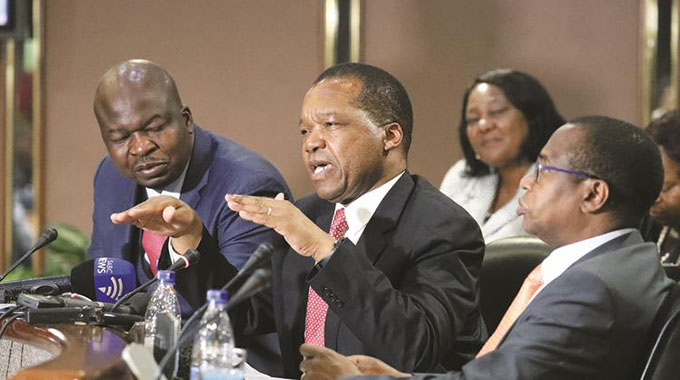
Mangudya said Air Zimbabwe’s board and management have set June as the target date for the relaunch of the direct UK service. He noted that the route previously played a key role in supporting Zimbabwe’s horticultural exports.
“Before, we used to export our horticulture in the evening and by morning the produce would be on the shelves in UK shops,” he said.
Air Zimbabwe, which has faced years of operational and financial challenges, is among several state-owned enterprises currently undergoing restructuring under the Mutapa Investment Fund.

The MIF was established through Statutory Instrument 156 of 2023, which consolidated government shareholdings in a wide range of state-owned companies across multiple sectors of the economy.
Entities under the fund include mining firms such as Kuvimba Mining House and Defold Mine; transport operators ZUPCO, National Railways of Zimbabwe Holdings, NRZ Ltd and Air Zimbabwe; energy-related companies including the Zimbabwe Power Company, National Oil Company of Zimbabwe, Petrotrade, Powertel and Hwange Colliery; and agricultural entities such as Silo Investments, ARDA Seeds, Cottco and AFC Limited.
The fund also oversees telecommunications companies NetOne Cellular, TelOne and Telecel Zimbabwe; the People’s Own Savings Bank (POSB) in the financial sector; and industrial firms including the Cold Storage Commission, Allied Timbers and the Industrial Development Corporation.
However, Since its establishment, many Zimbabweans and analysts have expressed growing concern over the lack of transparency surrounding the MIF, particularly regarding the initial valuation of the assets now under its control.
Critics have been arguing that the government’s failure to publicly disclose a consolidated figure makes it difficult to assess whether national resources are being managed responsibly.
Questions intensified after the fund’s reported US$1.6 billion purchase of the remaining shares in Kuvimba Mining House, which, when compared to the overall US$16 billion valuation attributed to the MIF, has raised doubts about the accuracy and reliability of the fund’s reported figures.
Concerns were further heightened by legislative changes under Statutory Instrument 156 of 2023, which critics said concentrated excessive power in the hands of the President while limiting parliamentary oversight.
The amendments allow the President to appoint the MIF board and CEO with minimal consultation and remove the requirement for quarterly reporting to Parliament, restricting public scrutiny.
Additionally, provisions granting the fund unrestricted rights to transfer and externalize foreign currency have raised fears of potential misuse and illicit financial flows.
Discover more from Nehanda Radio
Subscribe to get the latest posts sent to your email.