By Cyril Zenda
The High Court has ruled that two men who were acquitted of fraud after forcibly and fraudulently dispossessing Harare businessman, Douglas Mamvura, of his controlling stake in a business that they had invited him to be a partner be re-tried as their acquittal was irregular.
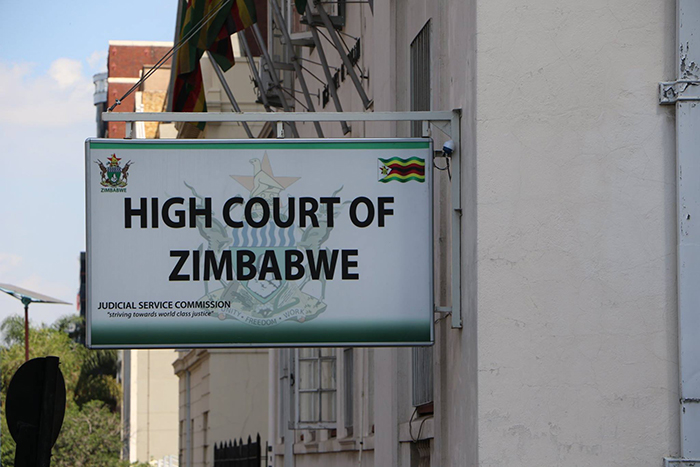
This follows an appeal to the High Court of Zimbabwe by the Prosecutor General’s office against the curious acquittal of Israel Tangwena and Tonderai Muhocha even when prosecution had proved essential elements of fraud beyond reasonable doubt when the duo was tried in the Magistrates Court in 2014.
Tangwena and Muhocha had invited Mamvura to be a shareholder in an agro-business venture called Hedgehold Trading (Private) Limited by making a huge cash injection which would give him a controlling shareholding in the company. The duo needed the cash injection in order to acquire back their agri-business, Makonde Industries, which was under liquidation.
The plan involved Hedgehold Trading effectively purchasing Makonde Industries and assuming its liabilities. It turned out that one of the reasons why the duo approached Mamvura—a former executive at Premier Bank (now Ecobank Zimbabwe) – was that he was better placed to secure bank funding.
In the new set up, Mamvura became the majority shareholder with 75 percent control after he had single-handedly raised all the funding for the new entity (Hedgehold), with Tangwena and Muhocha owning 11 percent and five percent respectively.
The late Fanuel Chimbindi owned the other five percent while the remaining four percent was to be owned by a charity fund called Open Tribe Foundation Trust.
Mamvura injected US$350 000 into the new business. Of this, US$250 000 was from a loan secured from Stanbic Bank, against which he put up his Borrowdale home as collateral, while the other US$100 000 was from a CBZ Bank loan, for which he pledged another of his properties.
Mamvura went further to inject into the business US$12 000 of his own personal savings, in addition he obtained a soft loan from a micro-finance company against which he pledged his wife’s vehicle as security.
However, because the duo was unhappy that the deal had left them as minority shareholders in a business that they previously owned, the working relationship was never smooth and it led to open conflicts that culminated in the duo locking Mamvura out of the premises, and then “firing” him.
After this, they quickly moved to change the company’s ownership, by filing fraudulent company ownership documents that purported that Mamvura had resigned and that the company’s entire shareholding was being put under the ownership of Open Tribe Foundation Trust.
This resulted in Mamvura filing fraud charges against the duo.
During the trial, officials from the Registrar of Companies were brought in and they testified that the company’s documents had been fraudulently changed.
Despite this, Tangwena and Muhocha were acquitted of the fraud charges, a development that infuriated the Prosecutor General’s office, resulting in the appeal to the High Court.
Justice Mushore expressed dismay at the way the case was handled at the lower court and overturned the not-guilt verdict, and ordered that the duo be retried.
“It is highly implausible that complainant would have consented to his entire shareholding being transferred to an unregistered, voluntary organisation which he knew virtually nothing about, without at the very least receiving some form of compensation. It is also very unlikely that he would surrender his home, another property, pledge his wife’s vehicle and empty at least one bank account for no reason at all. Why would complainant act in such a foolhardy manner when by all accounts prior to meeting the respondents he had been operating a successful business?
“Clearly the court should have been alive to the fact that the defence cases were of no substance,” Justice Mushore noted in a judgment that her colleague, Justice Charles Hungwe, concurred with.
“In the present matter, the magistrate went beyond finding the complainant’s testimony to be incredulous and began making assumptions that were in no way apparent from the evidence given. The court a quo very strangely indulged itself in a justification of the fraudulent actions of the respondents by inferring that those actions were warranted. The court had misguidedly formed the view that the respondents’ actions were reasonable because the respondents objected to the complainant having a larger shareholding than that of the respondents.
“Moreso the court’s reasoning is incomprehensible, given the fact that it was the respondents themselves who compiled the C.R. 2 which gave the complainant a 75 percent shareholding in Hedgehold Trading (Private) Limited. Later on, the respondents themselves filed the contentious C.R. 2 which took away the 75 percent shareholding owned by the complainant.
“Clearly the act of compiling documents which divested the complainant of his shareholding and directorship and which documents the experts found to be questionable, suggests that the respondents had the mens rea (intention) to benefit from their conduct. It is our considered view that the court a quo’s observations became skewered because it concluded bizarrely that complainant’s acts were motivated by vengeance.”
Mamvura told the Financial Gazette’s Companies & Markets last week that he was in the process of reviving the company’s operations that had been thrown into limbo for more than two years as a result of this dispute.
“The re-trial has not started yet because after the High Court ruling was made, they went into hiding… they are on the run as we speak,” he said. Financial Gazette
Discover more from Nehanda Radio
Subscribe to get the latest posts sent to your email.