spot_img

Waive charges, Mangudya tells struggling banks

Must Try

Trending

Nehanda Radio
Zimbabwe News and Internet Radio

By NDAKAZIVA MAJAKA

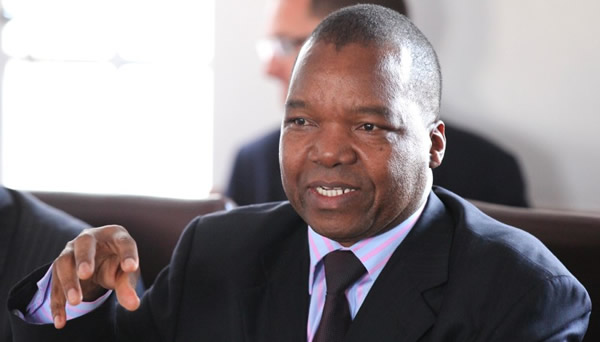
HARARE – Struggling banks must stop charging fees on depositors who are failing to access their funds, the Reserve Bank of Zimbabwe (RBZ) governor John Mangudya has said.
- Advertisement -
John Mangudya
John Mangudya

He said the institutions should not charge “for services not rendered”.

“When clients cannot access their money in the banks, it is not prudent to be charging bank charges because essentially the whole purpose is defeated,” the central bank chief told delegates at the Annual Banks and Banking Survey Awards recently.

Mangudya said the charges were prejudicing depositors.

- Advertisement -

On average, banks charge $10 monthly service fees and a minimum $5 on withdrawals per transaction.

This comes as some local banks are facing solvency challenges, resulting in them limiting withdrawals, and forcing depositors to make several withdrawals in order to access significant amounts.

According to the Depositors Protection Corporation (DPC), as at June 2014, a total $15 million belonging to 9 000 depositors was locked up in three banks.

Of the $15 million, DPC has paid $450 000, with each depositor receiving $500 at a time.

- Advertisement -

Under the current arrangement, depositors — individual or corporate — can only get a maximum of $500, with the balance being settled through the liquidation process, which often drags on interminably.

Recently, Mangudya said troubled Tetrad Investment Bank Limited (TIB) must honour its obligations to creditors and depositors.

The bank, which is failing to meet depositors’ withdrawals and pay off matured investments, entered into a scheme of arrangement with creditors as sanctioned by the High Court in September 2014.

The payment plan was recently extended to January 2015.

“What we are saying as the central bank, as enshrined in the Banking Act, is that we cannot have them continue adding to the problems they have…. otherwise maybe the other depositors might also not get their money,” he said.

This was after the central bank ordered TIB to halt banking activities — deposit taking and issuing loans — with immediate effect.

This comes as the RBZ has cancelled licences of several banks, including Royal, Trust, Genesis, Renaissance and others due to capitalisation and corporate governance issues.

Mangudya added that financial institutions had to be flexible when it came to lending, as local companies needed support.

“Without lending money to companies, the economy cannot grow,” he said.

The central bank chief also revealed that about 40 percent of the money circulating in the system was unbanked.

“Zimbabweans are externalising funds. Externalising funds from the nation shows a lack of confidence and discipline in our banking sector, which is not healthy for any economy,” he said.

Mangudya said most of the deposits banks hold are short term, with long term deposits only accounting for 19,6 percent of total deposits. Daily News

- Advertisement -

Related Articles

John Mushayavanhu, the new governor or the Reserve Bank of Zimbabwe, displays new banknotes of the country's currency to reporters, in Harare, April 5, 2024. (Columbus Mavhunga/VOA)

RBZ abandons 2030 multi-currency deadline, unveils new ZiG banknotes

0
HARARE - The Reserve Bank of Zimbabwe (RBZ) has abandoned its fixed 2030 deadline for ending the multi-currency system, shifting its focus instead to achieving key economic conditions, while also preparing to roll out new ZiG banknotes aimed at improving transaction efficiency and strengthening the local currency.
The Air Zimbabwe Flight UM145 from Harare to Mutare (Picture via X - @FlyAirZimbabwe)

Air Zimbabwe targets June 2026 return of direct Harare to London flights

0
HARARE - Air Zimbabwe is set to resume direct flights between Harare and London by June 2026, following a restructuring programme led by the Mutapa Investment Fund, which includes leasing a long-haul aircraft to service the route.
Steve Hanke, a Professor of Applied Economics at The Johns Hopkins University in Baltimore (Picture via Macroguy7979, CC BY-SA 4.0 , via Wikimedia Commons)

Zimbabwe’s ZiG ranked as one of the world’s worst-performing currencies

0
At a time when Zimbabwe is planning a phased transition to a mono-currency system, with the goal of making the Zimbabwe Gold (ZiG) its sole legal tender by 2030, the ZiG has been ranked as one of the world’s worst-performing currencies, according to United States economist Professor Steve Hanke, who placed it sixth on his latest Hanke’s Currency Watchlist.
John Mushayavanhu, the new governor or the Reserve Bank of Zimbabwe, displays new banknotes of the country's currency to reporters, in Harare, April 5, 2024. (Columbus Mavhunga/VOA)

Zimbabweans are not embracing the ZiG, Mr. Mushayavanhu — they’re simply disposing of it!

10
It’s astonishing how easy it is to convince oneself to see what simply isn’t there. The Reserve Bank of Zimbabwe (RBZ) wants us to believe that the growing number of transactions conducted in the Zimbabwe Gold (ZiG) is a sign of renewed public confidence in the local currency. But let us not be deceived. The truth is far less flattering.
Reserve Bank of Zimbabwe (RBZ) governor John announcing the introduction of the new gold-backed currency known as ZiG (Picture via Ministry of Information)

Zimbabwe “imposes” backdoor price controls amid currency confusion

1
HARARE - The Reserve Bank of Zimbabwe (RBZ) is facing criticism from economists and market analysts who accuse it of implementing de facto price controls through its recent directives on exchange rate determination.

Don't miss a story

Breaking News straight to your inbox.

No spam just news !

- Advertisement -spot_img

Latest Recipes

Latest

More Recipes Like This