Home Blog Page 4064

Chihuri snubs Parly hearing

0

By Andrew Kunambura

Former Zimbabwe Republic Police (ZRP) commissioner-general Augustine Chihuri failed to appear before a parliamentary panel yesterday which was looking into the illegal deployment of police officers and their ruthless conduct in the Chiadzwa diamond fields.
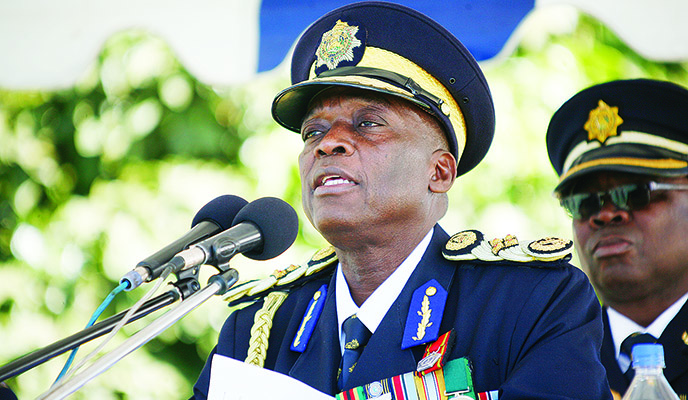
Police chief Augustine Chihuri
Former Police chief Augustine Chihuri

The parliamentary portfolio committee on Mines and Energy postponed the hearing.

The panel had summoned Chihuri along with his successor, Godwin Matanga and former Home Affairs minister, Ignatius Chombo but the deposed police boss failed to turn up without giving an explanation.

The committee also wanted the ZRP to clarify whether reports that the police were allocated a diamond concession in Chiadzwa were true.

But both Chombo and Matanga could not respond to questions fielded by the legislators saying they were aware of neither the concession nor the circumstances in which police were deployed to the mine fields.

Matanga asked the committee for time to do a thorough research and bring back accurate information within seven days.

This was after the committee’s chairperson Temba Mliswa asked him to clarify the issue of the ZRP concession.

“I notice that you skipped the issue of the mine, unless if you mean that the police were never empowered with a mine. Are you aware of a diamond mine called Gynyame,” asked Mliswa.

In his response, Matanga said he was not aware of the existence of the mine since he only assumed office recently.

“In as far as I am concerned, I read about Gynyame in the newspapers but for me to give information about Gynyame, I don’t have it. Maybe if my former boss (Chihuri) was here, he could have shed some light on that, but myself, I don’t have information about that,” said the police chief.

But legislators kept probing about the issue and asked him if he was not furnished with police documents when he took over office.

“The police is an institution which keeps records and there should surely be records somewhere unless you are saying this was a personal concession and not a ZRP concession. If it was a ZRP concession, there must be a response to that. We want to know how you mined diamonds and where did you take them to,” Mliswa said.

In response, Matanga said he had not done any research on the mine because it had not been stated in the invitation letter.

“Unfortunately, the Gynyame issue was not in the invitation letter, but now that I know information on it is required, I can go back and make the necessary information so as to bring the necessary information to accurately inform the committee, maybe within seven days,” said Matanga.

Chombo — who brought three lawyers to the committee — declined to answer questions on police deployments.

He said the role of deploying police officers belonged to the ZRP commissioner-general and not the minister of Home Affairs.

“The role of the minister of Home Affairs is clearly stated. The minister’s role is to give the commissioner-general of police general written directions but these directions shall not be inconsistent with those given by the president.

“The one that is responsible for the deployment, supervision of the police that have been deployment anywhere is contained in the Police Act and Section 221 of the
Constitution clearly states that the commissioner-general has role of and sole mandate to superintendent over the affairs and deployment of the police officer.

“As a minister, I was really restricted to policy issues such as the reduction of roadblocks, but how they do it is up to them. So my role was very little other than to convey to the police commissioner who is the superintendent over the affairs of the police,” said Chombo.

Chombo also professed ignorance to the existence of the mine.

The committee then agreed to adjourn the hearing to Friday next week when Matanga would be expected to bring the required information.

The committee also asked Matanga to locate Chihuri and the letter summoning him to the hearing. Daily News

Nurses threaten to join doctors strike

0

By Farayi Machamire

Nurses at Zimbabwe’s public hospitals have threatened to join striking doctors to put pressure on President Emmerson Mnangagwa’s cash-strapped government to increase their allowances and improve their working conditions.

File picture of strike by doctors and nurses in Zimbabwe several years ago

This comes after doctors working in Zimbabwean public hospitals went on strike at the start of the month to protest low salaries and shortages of essential supplies.

On Thursday, the Health and Child Care ministry convened a meeting with all health practitioners at the Health Services Board (HSB), with the conclave ending in a deadlock after the ministry allegedly back-tracked on an earlier agreement to resolve the concerns of both doctors and nurses.

Zimbabwe Nurses Association (Zina) secretary-general Enock Dongo said  health practitioners walked out of the meeting empty-handed.

“We did not ask for this meeting but it was them who called us and promised us that our grievances will have been met, that post-basic allowance has been reinstated, night duty allowance is going to be increased and on call allowance will be increased but today they now turn the tables on us,” Dongo fumed.

“The ministry of Health had promised us that we are only coming to this bipartite forum to put pen to paper, now we arrive here and we hear a different story altogether.  And to make matters worse, we had told our members the good news for our first meeting on Wednesday and now they are shifting goal posts.”

Zina’s Simangaliso Mafa said: “We have been disappointed to the last, reneging from their promises within 24 hours, we have been provoked. They are forcing us to take action that we did not want. This high level of arrogance cannot be tolerated by workers. We can’t, we can’t, if anything happens in the health delivery system, they are responsible.”

Health Workers Apex team leader Panganai Chivese said the repercussions of the nurses’ pull out will have to be shouldered by the Health ministry and the Health Services Board.

“We have been provoked by our authority. I don’t know why they want the total collapse of the health sector. We had not asked them for anything, they called us to come. So we have adjourned the meeting until tomorrow. It appears government is reneging on its promises because the minister had promised us and we expect officials to implement so we adjourn,” Chivese told the Daily News.

Meanwhile, the doctors’ strike has spread to all public hospitals in the country.

Mxolisi Ngwenya, spokesperson for the Zimbabwe Hospital Doctors Association (ZHDA), which represents more than 1 000 members, said: “The main issue we have raised currently is that it does not make sense for us to continue working in hospitals that do not have any drugs or sufficient equipment.” Daily News

Zimbabwe to clear multilateral debt arrears by September – central bank

0
RBZ Deputy Governor Dr Kupukile Mlambo

By Karin Strohecker | Reuters |

Zimbabwe expects to make up for all its debt arrears to major international lenders by September and could return to international capital markets thereafter, its central bank deputy governor said on Friday.

RBZ Deputy Governor Dr Kupukile Mlambo

Once one of Africa’s most promising economies, Zimbabwe suffered decades of decline under former President Robert Mugabe and has been shut out of international capital markets since it began defaulting on its external debt in 1999.

In 2016, Zimbabwe paid off 15 years’ worth of arrears to the International Monetary Fund (IMF). It is still years behind on payments to the World Bank and African Development Bank, however, hampering its ability to tap development financing from the two. 

“The ball is in our court, it is not with the IMF or the World Bank or the African Development Bank,” Khupikile Mlambo, deputy governor of the Reserve Bank of Zimbabwe, told Reuters in an interview on the sidelines of a London investment summit.

Zimbabwe was working on the Lima plan – a payment plan agreed with foreign lenders in 2015 in the Peruvian capital.

“We are on course for September for sure to repay,” he said.

Having already started to implement fiscal reforms, the government must also tackle high employment costs and low productivity in the public sector, Mlambo said.

Zimbabwe has $1.75 billion in foreign arrears. The IMF has suggested Harare cut public sector wages and farm subsidies as well as improving transparency in the mining sector and reaching an agreement on compensating farmers.

Once its multilateral arrears are cleared, bilateral debt would be next on the agenda, said Mlambo, which could happen by the end of the year.

“It is optimistic, but if we could do everything by December I would be very happy,” he said. “At least if we can clear all the multilateral debt, then we can begin to make approaches towards international capital markets.”

Mlambo said policymakers were also pushing measures to tackle the country’s acute shortage of U.S. dollars – its official currency since Harare ditched its hyperinflation-wrecked currency in 2009.

Shifting transactions away from physical cash into electronic transfers and payments should alleviate some of the pressure, he said, while increasing exports from and investment into the country should also provide liquidity.

Mlambo estimated that Zimbabwe had printed $290 million in “bond notes” since 2016, when it introduced the instrument to boost the amount of cash in day-to-day circulation.

Foreign funds’ difficulties in repatriating money from Zimbabwe has seen the number of foreign investors shrivel in recent years. But the central bank is launching a fund in the coming months to tackle this, said Mlambo, adding that preliminary agreements with all banks involved had been signed.

“We want to ringfence all the new investments that come in, so that these monies do not mingle with the local U.S. dollar that we have and it remains a really liquid foreign currency that they can take out.

Talking about economic expansion, he said recent droughts were not seen hurting economic growth, which is forecast at 4.5 percent in 2018.

“It is not as bad as it looked in December… We are still very happy with our forecasts,” adding that if planned policy measures to boost the economy were put in place, Zimbabwe’s economy could expand at an even faster rate.

Patson Dzamara – The matrix of a door…. follow Eddie Cross example

0
Former opposition MDC MP and economist Eddie Cross

By Patson Dzamara

Albert Einstein is arguably the most influential person of the 20th century and left behind an indelible mark on the sand of time.

BULAWAYO South MDC legislator, Eddie Cross

At the age of 76 his abdominal aortic aneurysm burst, leading to internal bleeding and severe pain. Even though the doctors recommended it, Einstein refused surgery. This is what he said, “It is tasteless to prolong life artificially. I have done my share; it’s time to go. I will do it elegantly.”

After doing all he did, after all his monumental contributions to science, Albert Einstein knew that the best thing to do when it’s time to go is going. One wise person once said that a good dancer is one who knows when to leave the stage. Sadly, very few in Africa understand the wisdom carried in that statement.

Isn’t it unfortunate that at times those who purport to be change agents resist change when it’s convenient for them. Our dilemma is that most public officials enter into politics from the standpoint of it being a source of livelihood rather than with the intention to serve.

Youths constitute 67% of Zimbabwe’s population. According to Zimbabwe Election Commission (Zec) chairperson Priscilla Chigumba, 60% of the registered 5.3 million voters for this year’s polls are aged between 18 to 40.

What can never be disputed is the fact that the decider of this forthcoming election is going to be the youth vote. Youths cannot be sidelined or disregarded anymore. Gone are the days when youths are relegated and confined to throwing stones during protests.

Many young people have been in the political trenches for a long time and they have developed their efficacies for such a time as this. It’s their time and they can’t be denied. Trying to stand in their way can only lead to detrimental repercussions.

The mushrooming of many independent candidates is a clear sign of the times and how the young people have embraced the spirit and notion that it’s their time. There is an unprecedented generational consensus converging on the reality that indeed this is an election for the youths.  This election will be one with the most independent candidates running for office since 1980.

On one hand, established political formations are not doing much to harvest this talent. It’s chiefly a result of entitlement and the fear of losing out to better talent. On the other hand, the prospects of the majority of independent candidates winning are very slim that’s despite the fact that their motivation is not necessarily misplaced.

Like it or not, Zimbabweans vote on partisan lines and so no matter how brilliant one’s manifesto is, it’s not going to be easy to make headway outside a party structure. I am not referring to just any of the numerous frivolous political parties, I am referring to those that win elections and it’s no-brainer which ones they are.

This doesn’t mean that it cannot be done. It can be done. Individuals like Hon. Temba Mliswa have done it before albeit under a different set of dynamics. I have seen one or two independent candidates who have done good work thus far to win an election and I wish them all the best.

Of course, the youth vote will influence the result of this election but it is important to note that they don’t just want to vote. They are also eager and prepared to run for office at various levels. Any person or organisation that understands and acts on this aspect does not only enhance the chances of exploiting the demographic dividends of this reality but they will be on the right side of history.

During an interview on StarFm, Hon. Eddie Cross said, “I am stepping down because I have served my 10 years and I am now passing the baton onto someone young and fresh.” Many youths, including myself have been and are still waiting to hear these words from some office bearers.

Hon. Cross understood that there is nothing that can stop an idea whose time has come. His wisdom must not only be commented on, some office bearers must follow his example especially those who stand for democracy. When the MDC Alliance in particular announces its candidates, it will be a critical marker in ascertaining whether we are moving forward or not.

We need leaders who are not selfish and it’s time for some to graciously pass on the baton to young people. Every door represents two things – entrance and exit. That’s the matrix of a door. It’s used to enter and simultaneously to exit. The matrix does not end at entrance, it ends at exit.

Patson Dzamara is a leadership coach, author and politician based in Zimbabwe.

ED commits to opening up media space

0

By Eric Chiriga

President Emmerson Mnangagwa yesterday said his government was working on reviewing media regulations to allow more players in the sector.

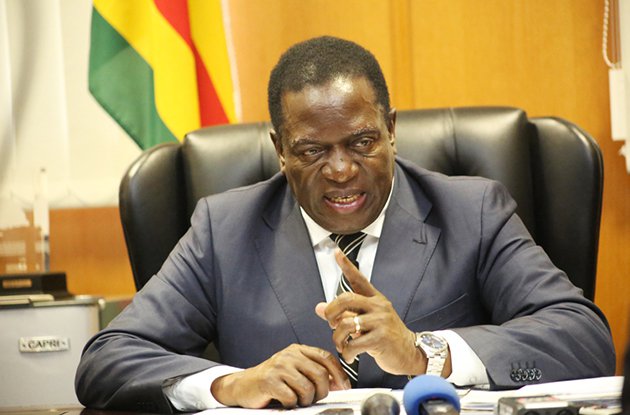
President Emmerson Mnangagwa

His commitment comes amid concerns over the sidelining of opposition political parties by State media ahead of 2018 elections, and lack of government’s will to promote media pluralism, which started during deposed Robert Mugabe’s rule.

Mnangagwa said his government supported the opening of more channels and radio stations.

He was responding to a concern over the matter, which had been raised by defunct Trust Bank managing director William Nyemba.

“I think it’s the way to go. My government has no problem at all to examine and address these issues,” he said.

“The current government is determined to embrace the international community, and to do so, we must look at our policies that constrain that (the coming in of various media players),” he said.

He said his government was seized with the matter and was looking at “areas where the voices of our citizenry can be heard through various channels to contribute, participate in the public private debate”.

“Such channels must be afforded to the people,” he said, adding “government must be there to articulate the views, goals, and aspirations of its people. We are not wiser than the people”.

However, Mnangagwa said the move “cannot be done overnight”.

He said “as a matter of fact, we are already looking into the issues”. Daily News

Mnangagwa speaks on doctors’ strike

0

By Eric Chiriga

President Emmerson Mnangagwa has said government is working on addressing striking doctor’s concerns in the most possible way.

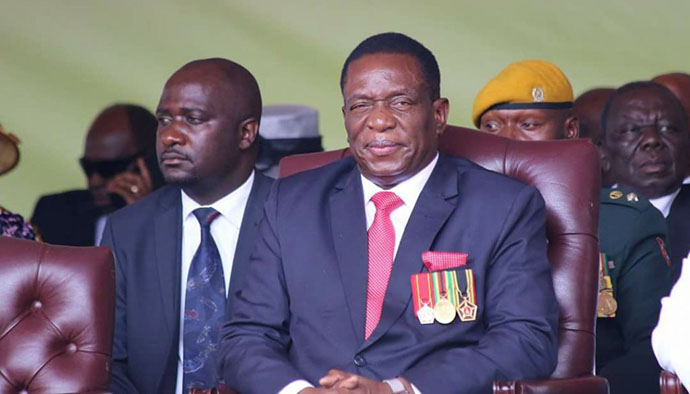
Vice President Emmerson Mnangagwa
President Emmerson Mnangagwa

This comes as the health professionals have downed tools for nearly a fortnight, demanding that government addresses their concerns, which include better working conditions and remuneration, among other demands.

Speaking after attending the CEOs Africa Round Table in the resort town  of Victoria Falls on Thursday, Mnangagwa — who has been in office after taking over from long-ruling 94-year-old Robert Mugabe last November, said the doctors’ had valid concerns.

“They have legitimate complaints,” he said.

He, however, said government was looking at capacity to meet their needs — “what we can do and cannot do”.

“I have asked (Finance minister Patrick) Chinamasa to look at government’s capacity to meet their demands,” he said.

Asked if he was going to intervene and address the impasse, Mnangagwa said the approach was not to discuss the matter in the press.

“It will spoil the negotiations,” he said.

This comes as the job action, the third in recent years, has crippled public health institutions — mainly Parirenyatwa Group of Hospitals (PGH) and Harare Central Hospitals — that were already facing challenges of oxygen shortages and poor funding due to meagre national budget allocations.

In response to the crisis, PGH management circulated a memo to staffers which read: “The senior resident medical officer (SRMOs) have gone on industrial action with effect from … March 8, 2017. The division of paediatrics has devised the following emergency measures to best provide patient care in this situation. Out Patient Department (OPD) and OI will close. Ward A2 casualty will close. Paediatrics patients will be screened in the main casualty.

“A guard to be provided to the admitting ward as staff on duty have been threatened and abused by irate patients. Clinics with new born babies for referral to Neonatal Intensive Care Unit (NICU) must call the NICU doctor on cover before sending. All babies below 1800g to be admitted directly into NICU, nurse on duty will admit and start therapy as per war protocols until doctor on cover attends to the patient. Babies who require review with minor problems will be seen in the post neonatal round only ill newborns to be admitted to NICU to wait doctor on cover review.”

“Due to the skeleton staff available, the following measures have been put in place. C2 is closed to cold cases. OPD is closed. Casualty officers to attend to emergencies only and admit straight to the ward with a management plan. Medical students to see the patients in the ward. Call rooms to be made available. SHO (Senior house officers in a junior position for graduate doctors who are under special training within a certain medical specialty)  from OI to participate in the emergency roster,”  the memo added.

Apart from better working conditions, the doctors’ demands also include that all current on-call allowances be revised upwards.

They also want the government to honour its word to subsidise purchase of cars and the Health Services Board to urgently implement the agreed vehicle duty-free framework.

In a statement on Twitter, the Zimbabwe Hospital Doctors Association has said: “The people should know doctors are tired of being away from the hospital, on strike over the same issues every year because the same individuals at the ministry of Health and Child Care are always not willing to solve the issues that matter.

“Are the people aware that their doctors use public transport to attend to dire emergencies because they cannot afford duty on second hand vehicles imported from Japan? Are the people of Zimbabwe aware that some government doctors that treated them between October 2017 and now were doing unpaid labour?

“Are the people of Zimbabwe aware that the doctors that treat the majority of our population in rural areas only get paid $16 each month as rural allowance? Are the people of Zimbabwe aware that the free healthcare for expecting mothers, under 5s and over 65 is meaningless in hospitals that have no fluids and drugs? Are the people of Zimbabwe aware that their government doctors get $1.50 an hour on-call allowance? For a 30-minute consultation, your doctor gets $0,75 bank transfer.” Daily News

‘Undenge’s children chucked out of varsity’

0
Minister Without Power: Dr Samuel Undenge
Former Minister Without Power: Dr Samuel Undenge

By Tendai Kamhungira

Former Energy minister Samuel Undenge has been dragged to the High Court by his daughters Bongai and Kumbirai, who are represented by their mother, seeking to force him to pay their school fees.

Minister Without Power: Dr Samuel Undenge
Former Minister Without Power: Dr Samuel Undenge

According to an urgent chamber application filed on Thursday, Undenge is in default of his obligations to pay fees for the children, who are both at Cape Town University in South Africa.

According to the children’s mother, Angeline, the children have been given notice to vacate the campus accommodation within 72 hours, as they are unable to register for the current semester because Undenge has not paid their fees.

“The respondent (Undenge) is neglecting his responsibility towards the applicants (Bongai and Kumbirai) without reasonable excuse.

“The maintenance court ordered and directed that he should maintain the applicants…,” she said adding that the court ordered him to pay for his children’s fees up to the age of 35.

She said Bongai is a third-year student and apart from her tuition, she requires accommodation, food and medical insurance.

“However, what is obtaining now is that she has not been able to register for the current semester (which has) just commenced because respondent has not paid, actually there is an outstanding balance which has been accruing interest.

“The balance due for payment for the last academic year is R144 261, 26…Because of respondent’s failure to pay the sum highlighted above, the college has now cancelled or withdrawn the housing offer and has now demanded that applicants move out of the college within 72 hours,” she said.

She also said Undenge has acted contemptuously considering that there is a court order demanding him to pay the fees.

“Unless this honourable court otherwise orders respondent to immediately pay, first respondent will suffer irreparable damage to her future. She faces the danger of failing to complete her studies, hence her future is in imminent danger,” she said.

Angeline also said that Undenge has an obligation to pay for Kumbirai’s school fees and other costs and said she had also given him the fees breakdown.

“Then respondent’s wife approached me with a security man threatening me saying she would not allow respondent to pay for foreign university fees for both applicants.

“Thereafter, I got a letter from respondent’s legal practitioners stating that respondent would pay the foreign fees for the first applicant only until she finished her studies but as for second applicant, it stated that he should enrol at any local universities affordable to him,” the court heard.

She said Undenge’s wife later approached her again threatening her.

“She further said she would indeed achieve it (her demands) since she was connected to the most powerful woman in the country. In the course of time, I then received a letter dated 13th of December 2016…respondent was no longer willing to pay for the foreign fees for first applicant despite having undertaken to do so. He made it plainly clear that if he was to pay for second applicant’s fees, he would do so for a local university only since he had other children needing to be assisted when they enrolled into universities,” the court was told.

She said Undenge does not have any children with his fourth wife, whom he is staying with but is paying for his wife’s children from another marriage, one of which is at a European university.

“Thus respondent has the luxury to do the best for another man’s children while he is prescribing his own biological children to such colleges that offer the lowest fees because he suddenly professes that he has no money for them,” Angeline said.

Undenge has not yet responded to the application in the matter still pending before the High Court. Daily News

Sadc won’t bring Mugabe joy

0

By Gift Phiri

The arrival in Zimbabwe of Sadc chairperson Cyril Ramaphosa today, is recognition of President Emerson Mnangagwa as president, analysts said yesterday, dismissing protests by ousted Zimbabwean leader Robert Mugabe that he was overthrown by his former deputy through a coup d’état  and his demand for talks to “undo this disgrace.”

Cyril Ramaphosa has become South Africa's president a day after embattled leader Jacob Zuma resigned.
Cyril Ramaphosa became South Africa’s president a day after embattled leader Jacob Zuma resigned.

Ramaphosa, who was elected President of South Africa by Parliament on February 15 after Jacob Zuma resigned, heeding orders of the ruling ANC to bring an end to his nine scandal-plagued years in power, arrives in Harare accompanied by the International Relations and Co-operation minister Lindiwe Sisulu and the State Security minister Dipuo Letsatsi-Duba for talks with Mnangagwa.

A wealthy businessman, Ramaphosa, who took over from Zuma as head of the 16-nation Sadc body, will pay a courtesy call on Mnangagwa at Munhumutapa — the citadel of State power.

The two will discuss “bilateral co-operation as well as regional, continental and global issues of mutual concern” and also “pay a particular focus on the latest political and security developments in the region, including the regional economic integration agenda in the Sadc,” the South Africa Presidency said in a statement yesterday.

Ramaphosa arrives in Harare two days after Mugabe called for a meeting with his successor Mnangagwa, saying that Zimbabwe must return to “constitutionalism”, following his ouster in November.

“He is improper where he is. Illegal. And if he is to correct that illegality, he would want me to discuss with him and we must undo this disgrace which we have imposed on ourselves, we don’t deserve it, we don’t deserve it, please we don’t deserve it, Zimbabwe doesn’t deserve it. We want to be a constitutional country.

“Yes we may have our shortcoming here and there, but overall we must obey the law, become, constitutional.

“People must be chosen to be in government in the proper way. I will discuss, I am willing to discuss, willing to assist in that process, but I must be invited, properly invited for that discussion.

“Currently, I am isolated and I am glad I have your company,” Mugabe said.

Analysts yesterday said by highlighting that he wants to talk ahead of Ramaphosa’s visit, Mugabe wants to escalate this issue back to Sadc as a broker.

The press conference was viewed as opportunistic and an attention seeking stunt meant to attract Ramaphosa.

Mugabe seem to be warming up to an initiative by former Foreign Affairs minister Walter Mzembi   to broker a deal aimed at having him and Mnangagwa smoke a peace pipe, and the former long ruling veteran brought in from the cold as a ruling party “elder” to back his former deputy’s presidential bid in mid-year elections.

Mzembi is pushing Mugabe to accept the proposition of a role similar to Zambian independence leader Kenneth Kaunda.

Mnangagwa said yesterday Mugabe “tendered his resignation in terms of Section 96, Sub-Section 1, of the Constitution of Zimbabwe.”

“He is entitled to express himself freely, as is the case for any private citizen,” he said.

“The Zimbabwe government continues to honour all its obligations towards the former president’s welfare and benefits, as provided for under the Constitution of Zimbabwe.

“The nation has moved on. Our focus at this time shall remain on preparing for free, fair and credible elections in 2018.”

Eminent political commentator and civil rights activist Brian Kagoro told the Daily News he wouldn’t know why Mugabe has chosen this particular time to break his silence regarding the November coup.

“Is it not already common knowledge that a few weeks ago, a new party called NPF launched following some petition to the African Union?

“Most politicians are astute opportunists; Mugabe for years was in their premier league. I am not sure that AU or Sadc will necessarily bring him joy.

“They lack the will power,  desire or instruments to reverse a position they took last year recognising Mnangagwa. If they act otherwise, I will be surprised, in fact shocked.

“Beyond the legal and constitutional questions — and these are compelling — Mugabe maybe negotiating his own safety or selfishly setting the stage for a future GNU in which his acolytes have a role.

“Worse still he could be sending warning shots to the establishment to stay off his family. It is about him, has always been about him and not the rest of us. We don’t matter to Uncle Bob.

“He refuses to apologise for all the misery he has caused. What a shame, disgusting in fact,” Kagoro said.

A peace and security analyst and also a doctoral researcher, Josphat Munetsi, told the Daily News Mugabe must be advised that he has no political traction and the November popular expression by the people of Zimbabwe remains paramount.

“To even imagine that he can escalate that to Sadc, AU (African Union) or any other inter-governmental body for them to reverse the current status quo is not only a failure to appreciate how this bodies function but merely ‘barking at a moving train’.

“For all we know, Sadc has continuously failed to deal with Lesotho, DRC and Madagascar while the AU has not fared any better either in Burundi, Sudan, DRC, Cameroon and elsewhere. Therefore to even dream that the status quo will change is an exercise in futility,” Munetsi said.

Stephen Chan, a professor of world politics at the School of Oriental and African Studies at the University of London, said he thinks Mugabe is setting out a carefully crafted programme of criticising Mnangagwa, and doing so in a needling fashion.

“However, neither Ramaphosa nor Sadc has any stomach for a return of Mugabe. There was a lot of silent relief that he went, and that it was done without blood. It is very much in the interests of Sadc that Zimbabwe regains some economic capacity,” Chan said.

“Right now, Zimbabwe is contributing nothing to Sadc as an economic unit, and Sadc leaders know that this was because of Mugabe’s essential refusal to address economic issues, concentrating instead on party power politics.

“Mugabe should in fact lay out an economic policy if he wanted to demonstrate his credentials as a leader — but it seems from various reports of his wanting his pension in cash that he cannot even use a credit card.”

Pedzisai Ruhanya, a post doctoral research fellow with the University of Johannesburg, cited the doctrine or principle of effectiveness that posits that if one takes over power by whatever means and proves that they are in full control of the State machinery and apparatus both coercive and consensual, they are legitimate.

“This is the case with (president) Mnangagwa whether it pleases Mugabe or not. Sadc, AU and the rest of the international community won’t listen to those Grace-inspired and instigated rants by Mugabe.

“The coming to Zimbabwe by (president) Ramaphosa is a form of legitimation of Mnangagwa presidency so Mugabe is wasting time.

‘Instead, he is encouraged to find common ground with the new authorities and secure the economic interests of his young family and stop those delusional outbursts,” the media and democracy scholar said. Daily News

Mnangagwa, allies respond to Mugabe

0
President Emmerson Mnangagwa converses with Vice Presidents General Constantino Chiwenga (Retired) and Kembo Mohadi on his arrival at Robert Gabriel Mugabe International Airport in Harare from the 30th Ordinary Session of the African Union Assembly. Looking on are Zimbabwe Defence Forces Commander Phillip Valerio Sibanda and Home Affairs Minister Obert Mpofu. — (Picture by Believe Nyakudjara)

President Emmerson Mnangagwa yesterday counselled his predecessor, saying the country has already moved on since his resignation.

President Emmerson Mnangagwa converses with Vice Presidents General Constantino Chiwenga (Retired) and Kembo Mohadi on his arrival at Robert Gabriel Mugabe International Airport in Harare from the 30th Ordinary Session of the African Union Assembly. Looking on are Zimbabwe Defence Forces Commander Phillip Valerio Sibanda and Home Affairs Minister Obert Mpofu. — (Picture by Believe Nyakudjara)

This comes after former president Robert Mugabe, in a recent interview with the media at his Borrowdale house, heavily criticised Mnangagwa as an illegitimate leader, who could not have been in power without the assistance of the army.

Mugabe said his removal was through a coup d’état, even though both the regional and international community had said the event did not amount to a coup.

Yesterday, Mnangagwa issued a statement to discredit Mugabe, stating he is seized with election preparation and that the country has since moved on.

“President Emmerson D. Mnangagwa has noted recent remarks made to the media by former president Cde Robert Gabriel Mugabe. On 21 November, 2017, former president Mugabe tendered his resignation in terms of Section 96, sub-section 1, of the Constitution of Zimbabwe. He is entitled to express himself freely, as is the case for any private citizen.

“The Zimbabwe government continues to honour all its obligations towards the former president’s welfare and benefits, as provided for under the Constitution of Zimbabwe. The nation has moved on. Our focus, at this time, remain on preparing for free, fair and credible elections in 2018. This is a key step in the immense task at hand, which is to lift our people from the effects of years of severe economic regression and international isolation,” reads part of the statement.

The Zimbabwe National Liberation War Veterans Association (ZNLWVA) also came out guns blazing, dismissing Mugabe’s averments as those being made by someone trying to seek relevance.

ZNLWVA secretary-general, Victor Matemadanda, said the High Court has since ruled that Mugabe’s removal was legal, challenging the former Zanu PF leader to appeal the ruling.

“If Mugabe has any other legal channels he can follow those. As far as we are concerned, the High Court said it was legal,” said Matemadanda.

He said Mugabe’s actions showed he continues to look down upon the people of Zimbabwe.

Matemadanda was among ZNLWVA executive members who were expelled from Zanu PF for stating that Mugabe had overstayed in power and was supposed to leave.

“He (Mugabe) is just trying to find relevance. By demanding to meet Mnangagwa, he is trying to appear as the authority apparent, as if he is the one who installs kings in Zimbabwe. Mnangagwa is the legitimate president of Zimbabwe and Mugabe must respect the will of the people,” Matemadanda said.

He further said Mnangagwa must refuse to meet with Mugabe, whom he accused of making unnecessary noise, adding that Mugabe risked losing the little respect that has been left of him, with high chances that there might be a withdrawal of the statesmanship honour conferred on him.

Mnangagwa’s allies Larry Mavima and Energy Mutodi also came to his defence yesterday, saying Mugabe was behaving as though he alone has the right to rule Zimbabwe.

Deputy Finance minister Terrence Mukupe said: “He needs to rest. He must write books telling us how he made his manoeuvres while president. I respect elders, but vaMugabe vakura, he is old.”

Meanwhile, Zapu president Dumiso Dabengwa has reacted angrily to claims by Mugabe that Zapu and Zipra were also to blame for the Gukurahundi massacres.

Dabengwa, who was the Zipra intelligence supremo during the liberation struggle, said the nonagenarian was trying by all means to justify himself on the genocide that claimed over 20 000 lives.

“We remind Mugabe that the arms caches and dissident allegations against Zipra were a deliberate and covet operation by the State secret service under then State Security minister Emmerson Mnangagwa, who himself remarked that they had to create a story and reason to justify the atrocities that followed the discovery,” he said.

“Today, he (Mugabe) conveniently forgets his usual song, in a classic example of truth always coming out no matter how one suppresses it. He deliberately forgets that he also created dissidents, with collaboration from South Africa’s Apartheid government, in operations that were led by Mnangagwa,” explained Dabengwa.

“All this was to create flimsy accusations and charges against Zapu and Zipra so as to justify their heinous crime against humanity in Matabeleland which was politically driven.”

In the interview, Mugabe said Zapu and Zipra are also to blame for the atrocities, and disputed that 20 000 people were killed.

“I doubt the number, but well it would be because you get some people with guns behaving recklessly,” he said.

Mugabe also blamed Mnangagwa and former intelligence director –internal Dan Stannard for leading the massacres while also admitting that they were getting instructions from him.

Dabengwa said the major aim of the operation was to institute a one-party state in Zimbabwe, with his party becoming the obvious target.

“His denial of the 20 000 deaths shows he really is mindful and aware of the magnitude of his madness,” he said.

“ Mugabe is fully aware that these 20 000 are direct deaths at the hands of the Fifth Brigade, the number does not include curfew-induced deaths of children, the elderly and the sick from malnutrition, hunger and disease and were never accounted for.

“He fully knows that Gukurahundi deaths run into hundreds of thousands, hence his refusal to acknowledge the mere 20 000 that was given by the CCJP, whose incomprehensive survey or investigations only covered Matobo and Tsholotsho districts.”

Dabengwa also said: “Mnangagwa should man up and take responsibility for his actions.” Daily News

Mugabe speaks out

0
Zimbabwe's former President Robert Mugabe

By Gift Phiri

Former president Robert Mugabe has spoken out for the first time since his exit, describing his dramatic ouster last November as a “coup d’etat” engineered by ally-turned-foe, President Emmerson Mnangagwa – with the help of the military.

Zimbabwe's former President Robert Mugabe
Zimbabwe’s former President Robert Mugabe

In an interview with South Africa’s SABC yesterday, Mugabe confirmed recent reports by the Daily News of escalating tensions between him and his successor.

He said he never thought Mnangagwa would turn against him and denounced his successor’s move to oust him last year as a coup.

Mugabe, 94, ruled Zimbabwe from independence in 1980 until he stepped down under pressure from Mnangagwa’s allies in the army in November.

Viewed by some as a liberation hero, others remember Mugabe for turning a promising country into an economic basket case and international pariah.

Mnangagwa, deputy president under Mugabe, has promised to open up Zimbabwe to foreign investment and mend ties with the West since assuming power.

“I never thought he whom I had nurtured and brought into government and whose life I worked so hard in prison to save as he was threatened with hanging, that one day he would be the man who would turn against me,” Mugabe said in his first interview since leaving office.

Mnangagwa was convicted of sabotage under white minority rule and sentenced to death. But he was spared the noose because it was deemed that he was too young to be hanged when he had committed the crime.

Mugabe spoke with anger and passion in his first press briefing, saying he was deeply aggrieved with what transpired.

“Today Emmerson is no longer on my side. I’m no longer the president, he is. I called him president the other day and he said, ‘oh no, no, no, please, don’t call me president, call me Emmerson’. I said I can’t call you Emmerson, ok. I said I will call you ED,” he said, speaking in a slurred speech.

He told the Press corp “I hope you will have the views I have shared published.”

 Mugabe said he was ousted in a “military takeover” and that Mnangagwa had assumed the presidency illegally.

“I don’t hate Emmerson, I brought him into government. But he must be proper, he is improper where he is. Illegal,” Mugabe said. “We must undo this disgrace, which we have imposed on ourselves. We don’t deserve it.”

“And if he is to correct that illegality, he would want me to discuss with him and we must undo this disgrace which we have imposed on ourselves, we don’t deserve it, we don’t deserve it, please we don’t deserve it, Zimbabwe doesn’t deserve it. We want to be a constitutional country.

“Yes we may have our shortcomings here and there, but overall we must obey the law, become, constitutional.

“People must be chosen to be in government in the proper way. I will discuss, I am willing to discuss, willing to assist in that process, but I must be invited, properly invited for that discussion. Currently, I am isolated and I am glad I have your company,” he said referring to the journalists.

The Press briefing at his home was organised by Jealousy Mawarire, the spokesperson of the National Patriotic Front, led in the interim by retired brigadier general Ambrose Mutinhiri, whom Mugabe seems to have thrown his full weight behind.

Since his fall from power, Mugabe has stayed at his Harare mansion with his wife Grace. His ousting was the culmination of a power struggle between Mnangagwa and Grace, who was being groomed by her husband as his potential successor.

Mugabe was granted immunity from prosecution and assured that his safety will be protected in his home country under a deal that led to his resignation.

He quit as Parliament began a process to impeach him, triggering wild celebrations on the streets.

Zimbabwe was once one of Africa’s most promising economies but suffered decades of decline as Mugabe pursued policies that included the violent seizure of white-owned commercial farms and money-printing that led to hyperinflation.

Mnangagwa has said Zimbabwe still wants to end discrimination between black and white farmers but will seek new ways to compensate those who have lost their properties. Former colonial ruler Britain said last month that Harare should press on with transparent and fair land reform.

Mugabe told South African television his departure was a “disgrace”. Since leaving office he has largely stayed out of the public eye

“It was truly a military takeover, there was no movement visible unless that movement was checked and allowed by the army,’ said Mugabe.

On events leading to his ouster, he said the army made sure the other organs of the State were neutralised completely.

“They neutralised the Central Intelligence Organisation, many of whose members were bashed, whose heads cracked. Some of them are missing to this day; their guns were taken away from them. The police had their armoury completely emptied. Their guns had gone, disappeared. Who had taken them? The army and there in the streets the tanks they rolled.

“What we never thought we had, some tanks. I didn’t know we had these tanks. I was told we had ancient ones, 1940 to 1980 tanks. T60 or is it T63 something. There, they were rolling; armoured cars running. And people were not allowed to move from one place to the other unless they got the permission of the army.

“Searches were taking place, left, right and centre; persons being arrested. It was truly a military takeover. There was no movement possible unless that movement was checked and allowed by the army; that’s what it was. I don’t know what you would want to call it but our people had not experienced such an environment before. We had prided ourselves on being very democratic everyday,” he said.

He also spoke about his workers persecution, saying they were being called one by one to be asked “very silly questions”.

He also revealed how former politburo members Jonathan Moyo, Saviour Kasukuwere and Patrick Zhuwao escaped from the jaws of the military.

“Yes, once upon a time we assisted them to get to safety. Guns, volleys of bullets were being fired at their houses, on their houses and a cry came, ‘please, please’ and it was my wife, mama save us, please save us. I wasn’t there, she organised some of her security, and said go. Go and save them, what happens to you, I don’t know. And she went and put together the cars and the persons that she had here. And so they were brought here to our house, … Jonathan Moyo, Kasukuwere and their families,” he said.

“The one had about four children, wife… the other wife and three children. We kept them here and we said to them we will keep your family. We said that to the men. We said you men, have your way. Go where you can but we will keep your wives and your children here. And so they left and we don’t know how and we don’t know where they went.  We don’t know where they went. And we kept their families here till the situation was slightly better, then they asked to get back to their homes.

Mugabe was forced to quit when the military stepped in and Zanu PF lawmakers launched impeachment proceedings against their once beloved leader.

Mugabe was instrumental in founding the Republic of Zimbabwe — but became known for his brutal policies and corrupt leadership.

His rule proved to be one of the most controversial of any world leader in the 20th or 21st century.

At 94 years of age when he was eventually replaced by a military coup he was by far the world’s oldest active national leader.

He was deposed by a military uprising but refused to resign from office for several days afterwards — prompting days of protests across Zimbabwe.

Eventually, he was persuaded to resign and he was replaced in his position as president and leader of Zimbabwe’s ruling Zanu PF party by Mnangagwa — known as ‘‘the crocodile’’. Daily News