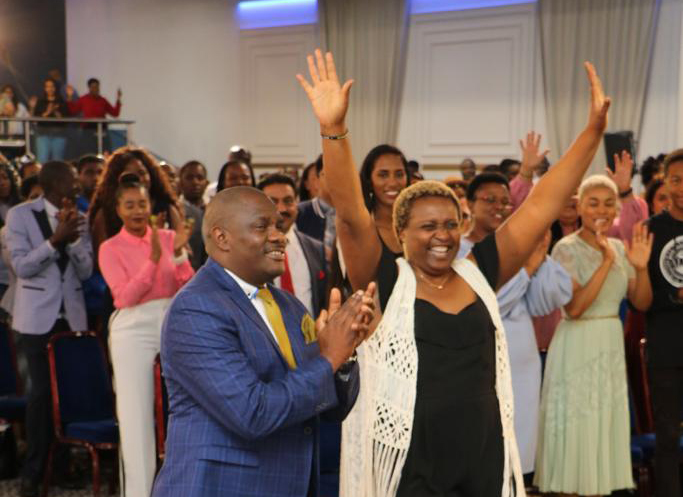
On Sunday, a lucky couple from the Spirit Embassy: Good News Church branch in London, Joseph Edson and his wife were left speechless after getting a free holiday to a destination of their choosing.
By Staff Reporter
Flamboyant preacher Uebert Angel is literally trying to fulfil the new name of his church. In October 2015 Spirit Embassy rebranded to the Good News Church. Now every Sunday lucky members of the church are being surprised with cars, debt payments and free holidays.
On Sunday, a lucky couple from the Spirit Embassy: Good News Church branch in London, Joseph Edson and his wife were left speechless after getting a free holiday to a destination of their choosing.
On Sunday, a lucky couple from the Spirit Embassy: Good News Church branch in London, Joseph Edson and his wife were left speechless after getting a free holiday to a destination of their choosing.
“What an emotional moment of my life after my Father, Prophet and mentor announced that he was going to send me and my wife out for HOLIDAY. A big thank you to you Mum and Dad for your 💕 @UebertAngel @BeverlyUAngel Surely you sent from GOD,” he posted on Twitter.
Only last month Angel surprised another member of his London branch by giving him an R-class Mercedes as a gift on Sunday during a service.
Brother Washington gets car from Uebert Angel
The lucky church member was identified as Brother Washington. In pictures posted to Angel’s instagram page, Washington can be seen weeping with joy as he thanked the preacher.
Angel went on to pay three months rent for a new member of the church, who has been attending for the past three weeks in London.
The flamboyant preacher however was not done. Angel went on to pay three months rent for a new member of the church, who had been attending church for only three weeks in London.
In May 2013, as covered previously by Nehanda Radio, Angel surprised one of his followers on a Sunday when he handed him the keys to a brand new Range Rover Sport worth over US$100 000. The car came with personalised number plates, “PSALM 23:5”.
In 2013, Angel bought a Mercedes Benz C200 Kompressor for his spiritual son, musician Mudiwa Mutandwa. The gift he said was in recognition of Mudiwa’s impressive musical year that saw him bagging three awards and ministering the ‘Word of God’ through song. Nehanda Radio
An independent candidate Noah Mangondo is challenging the Murewa South election results that confirmed Zanu PF’s Joel Biggie Matiza, as winner of the recently-held parliamentary poll.
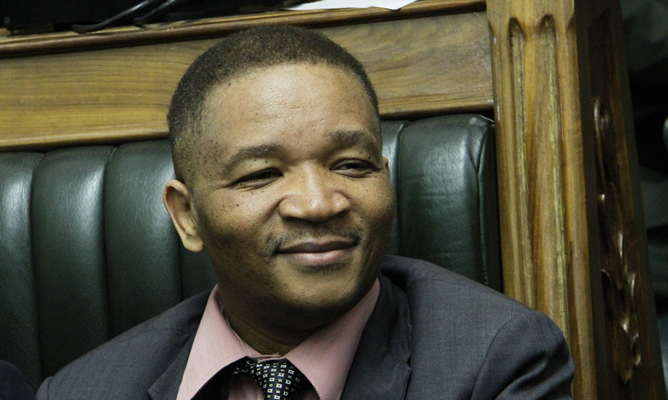
Joel Biggie Matiza (Picture by NewsDay)
Mangondo polled 10 653 votes against Matiza, who garnered 10 808 votes.
But in papers filed with the Electoral Court yesterday, Mangondo is seeking an order nullifying the declaration by the Zimbabwe Electoral Commission (Zec) that Matiza won the seat on the grounds that his campaign agents used illegal and intimidatory practices to secure the victory.
Mangondo has retained Gift Mtisi from the Zimbabwe Lawyers for Human Rights (ZLHR) as his lead counsel.
Mangondo, a former Zanu PF official purged for defying orders to stand down for Matiza in primaries, alleges Matiza’s victory was a result of outright corruption.
Matiza, a former Cabinet minister and the current Zanu PF Mashonaland East chairperson, is yet to file opposing papers.
An election petition challenging the election of a member of the National Assembly in a general election must be lodged with the Electoral Court within 14 days after the declaration of the results for the last constituency in the election.
Besides Mangondo, Gift Konjana of the MDC Alliance wants Dexter Nduna of Zanu PF’s win in Chegutu West invalidated.
The MDC Alliance’s Blessed Chebundo is also challenging the victory of Masango Matambanadzo of the National Patriotic Front (NPF) in Kwekwe Central.
Only an unsuccessful candidate for the parliamentary seat may lodge an election petition according to Electoral Act, section 167.
Political parties and members of the public cannot do so.
Section 167 of the Electoral Act allows an election petition to complain that the election was not valid “by reason of want of qualification, disqualification, electoral malpractice, irregularity or any other cause whatsoever”.
This is very widely phrased but the circumstances in which the Electoral Court can set aside an election are more limited. –DailyNews
MDC Alliance losing candidate for Chimanimani West Canaan Matiashe has been dragged before a magistrate here facing a $370 000 money laundering charge involving illicit diamond dealings.
Canaan Matiashe
Matiashe denied the charges when he appeared before magistrate Tendai Mahwe, who freed him on $300 bail. He was remanded to September 3.
He is being accused of money laundering as defined in section 8(1) (a) and (b) of the Money Laundering and Proceeds of Crime Act chapter 09:24.
According to court papers, Matiashe is alleged to have illegally dealt in diamonds between 2010 and 2018 during which time he invested at least $370 000 in properties.
He is alleged to have potentially realised more as the figure is yet to be full established.
Matiashe, the State contends, bought the properties to conceal or disguise the illicit origin of the money.
He allegedly bought a business building at Nyanyadzi Shopping Centre in Chimanimani, a residential stand at 10716 Greenside where he erected a residential property, purchased a house at number 1 Plover Close in Greenside and at number 9 Plover Close in the same low density suburb in Mutare.
The State is alleging that the money was a proceed of a crime of illegal dealing in precious stones from Chiadzwa diamonds fields which are now owned by Zimbabwe Consolidated Diamond Company.
Prosecution had unsuccessfully opposed bail claiming that he was a flight risk as he had political links outside the country, was likely to interfere with evidence or witnesses as well as that he was likely to commit other offences as he was allegedly not gainfully employed but lived off illegal diamond dealings.
One of the lawyers representing MDC Alliance senior official Tendai Biti was allegedly tortured by police as he tried to pursue State agents who had seized the former Finance minister.
Tendai Biti arrives at the magistrates courts in Harare, Thursday Aug. 9, 2018. Biti was deported to Zimbabwe following his arrest in Zambia after his asylum bid was rejected. Biti’s plight has raised concerns about a wave of repression against the opposition by the government of Zimbabwe’s President Emmerson Mnangagwa. (AP Photo/Tsvangirayi Mukwazhi)
Unite Saizi of the Zimbabwe Lawyers for Human Rights had his car tyres deflated, cell phone confiscated and assaulted by State security agents who did not want him to keep track of the police convoy that was transporting Biti.
This was revealed by Biti’s lawyer Beatrice Mtetwa who appeared together with Alec Muchadehama and Gift Mtisi during continuation of a court challenge, in which Biti is arguing that the court has no authority to prosecute him.
Harare magistrate Francis Mapfumo will hand down the ruling on August 30.
“Is it not true that a team of police officers that you travelled with intercepted Biti’s lawyer, punctured his tyres, disposed his cell phone and assaulted him to stop him from following the convoy you were travelling on?,” Mtetwa posed questions to investigating officer Jealous Nyabasa.
“…so it would be correct to say that police were involved in the raids at his residence and that of his mother, brother and friend such that the accused person perceived his life to be in danger and sought to apply for asylum in Zambia”.
Mtetwa added that Biti feared that he could be abducted and disappear, citing previous cases relating to Jestina Mukoko and missing activist Itai Dzamara.
Nyabasa disputed this, arguing that he was not aware of such violations.
He told the court that police’s conduct during the operation was lawful.
Mtetwa has already proved that Nyabasa had no deportation documentation authorising the extradition of Biti from Zambia more than a fortnight ago and had ignored the court order which showed that Lusaka High Court was due to hear the former Finance minister’s petition on August 8.
According to Mtetwa, a preamble to the warned and cautioned statement compiled by Nyabasa was dated August 8 to purport as though it had been issued before the Zambian order since Biti only signed it on August 9.
Nyabasa told the court that the date was a mistake and that he had not breached any deportation laws because he arrested Biti on Zimbabwean soil.
He claimed that Zimbabwean Immigration officials were the ones who handed Biti over to him and said he was not bound by any Zambian law or court order issued beyond Zimbabwe’s jurisdiction.
He then said he had a handover document which Mtetwa disputed saying it was endorsed as a handover document of “items” not people.
Biti is arguing that Zimbabwean courts do not have authority to prosecute him arguing that he was “abducted” from the Zambian government where he sought asylum under unconstitutional means. – DailyNews
Former National Housing Minister in the 2009-2013 coalition government, Fidelis Mhashu has died. The former opposition Movement for Democratic Change (MDC) MP for Chitungwiza North was 76.
Former minister Fidelis Mhashu dies
“The MDC has learned with extreme sadness the loss of one of the founding fathers of party of excellence, Hon Fidelis Mhashu. A fearless defender and veteran fighter for human rights, Hon Mhashu passed on at Parirenyatwa Hospital on Monday night,” the party said in a statement.
Mr Mhashu died on Monday night at Parirenyatwa Hospital after suffering a stroke and for some time had heart-related problems. His widow Monica confirmed the death.
“Yes, my husband passed on, on Monday night around 7pm at Parirenyatwa Hospital. He suffered a stroke in 2014 and since then he never fully recovered. He was also now having some heart problems.
“We are deeply hurt and it’s a major blow to us as a family because he was a loving and caring father. He was a unifier and generally a man of the people,” she said.
Incoming MDC Alliance MP for Zengeza West Job Sikhala on Tuesday paid tribute to Mhashu saying “It is sad ladies and gentlemen that God has finally did what he thought. Our mentor and godfather Fidelis Mhashu is no more. He passed on last night.”
Former Zengeza MP Tafadzwa Musekiwa also paid tribute to Mhashu as a mentor and godfather.
“He was my mentor, my godfather. From the days of the independent movement during the days of Kempton Makamure and Margaret Dongo, he never stopped campaigning for what’s right for the people of Zimbabwe.
“He almost died when he was assaulted whilst still a lecturer at Seke Teachers College whilst fighting against Macheka to be Mayor of Chitungwiza but he soldiered on till he passed on. He is one guy who brought me into mainstream politics and for that, I will forever be grateful.”
“Mdara Mhashu, as he was affectionately known as taught me two things which I will never forget. Firstly, he told me never forget the journey and never forget the people (whether still with us or not) who have contributed to this journey no matter what happens in the future.
“Secondly he taught me to always use a measured and sober non emotional approach to all problems that I faced in politics. This probably forms my Dovish instead of Hawkish way of my decision making to this day. MHSRIP, Musekiwa wrote in a tribute sent to Nehanda Radio.
Mhashu, a veteran politician in the opposition movement and a former lecturer at Seke Teachers’ College, is survived by his wife, Monica, four children and nine grandchildren.
Mourners are gathered at House No. 2317 Unit B, Seke, Chitungwiza. Burial arrangements will be announced in due course. Nehanda Radio
Opposition leader Nelson Chamisa yesterday hailed southern African leaders for not congratulating President-elect Emmerson Mnangagwa at a summit in Namibia held last week.
Heads of State from the 16-nation Sadc met for its 38th summit in Windhoek and in a communiqué, ignored Mnangagwa’s victory despite congratulating Angolan President Joao Lourenco and his Movement for the Popular Liberation of Angola (MPLA) party’s recent electoral victory.
“To our colleagues in Sadc, I want to really appreciate the position that they took. They did not congratulate Zanu PF, they did not congratulate Mnangagwa because they know he has not won,” Chamisa told a news conference at the party’s HQ in central Harare yesterday.
“I am really happy with that position. Some may want to say Mnangagwa was given the position of deputy chairperson of Sadc Organ Troika.
That position is given to a country; it is not Mnangagwa’s position.
“I will take up that position as head of State once the process is confirmed.
“We don’t want people who celebrate nothing and want to make it something.
“He has not been not been appointed, there is no confidence in him even from Sadc.
“That’s why he came back empty-handed. (Angola) President Joao Lourenco and MPLA were congratulated not Mnangagwa because they know that he has not won this election. The people have voted and they cheated.”
Sadc, however, urged Zimbabweans to remain calm while the legal process regarding the outcome of the elections that are being considered by the courts continues.
“To Sadc, please help us to heal the division in the country to cure the illegitimacy, crisis that we have,” Chamisa said.
“Sadc must come in and we start to negotiate a respectable exit of Mnangagwa and respectable exit of those who were voted out.” –DailyNews
The Zimbabwean government posited that the first elections after the November 2017 ouster of Robert Mugabe would enhance the state’s credibility and strengthen the country’s prospects for economic recovery. Voters responded in kind, heading to the polls in unprecedented numbers.
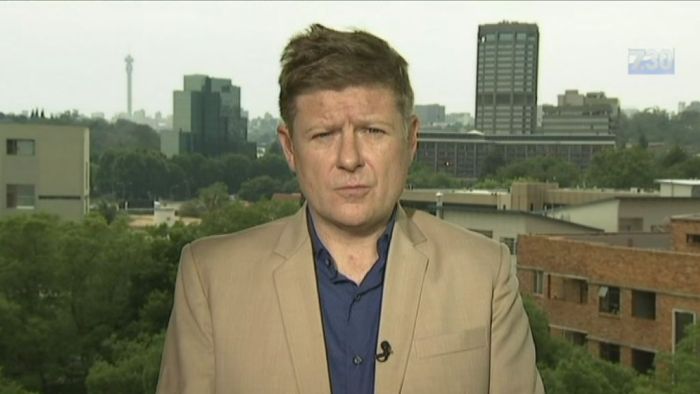
Piers Pigou
The results, however, confirmed that the country is deeply divided, with the opposition contesting the electoral commission’s determination that Emmerson Mnangagwa won the presidency.
Several parliamentary challenges are also underway in separate petitions. The opposition is accusing the electoral commission of bias and fraud in its legal petition to overturn the election results. The Constitutional Court is expected to announce its judgment in the case later in August.
Divisions deepened further after soldiers fired live ammunition upon protesters in the streets of Harare for the first time. The president and senior ruling party figures called for calm, blaming the opposition for the violence, yet remained conspicuously silent about any malfeasance on the security forces’ part. These conditions are a recipe for further unrest.
The Zimbabwean government’s credibility is in jeopardy – as is the international good-will generated by Mugabe’s departure. If it is to resuscitate momentum toward its vaunted goals of re-engagement and recovery, the government should hasten to demonstrate both at home and abroad that it is serious about reform and national unity.
It should work harder to include the political opposition and other interested parties in its deliberations, act on its commitments to transparency and accountability, and take concrete steps toward strengthening civilian oversight over the security sector.
A Closely Watched Vote
On 1 August, the electoral commission announced that the ruling Zimbabwe African National Union-Patriotic Front (ZANU-PF) had won a two-thirds majority in parliament: 144 seats to the Movement for Democratic Change (MDC) Alliance’s 64, reflecting a gain and loss of fifteen seats, respectively, compared with 2013. The commission has not provided an aggregated breakdown of actual votes per party. Unconfirmed assessments give ZANU-PF about 54 per cent of the parliamentary vote. The commission has not made public the results of local government polling.
The following day, the commission declared Emmerson Mnangagwa the victor in the presidential race, with 2,460,463 votes, over 300,000 more than his main rival Nelson Chamisa, who secured 2,147,436. These figures gave Mnangagwa 50.8 per cent compared to Chamisa’s 44.3 per cent, thereby averting a second round of polling by just under 38,000 votes. The 21 other presidential candidates collectively garnered less than 170,000 votes (5 per cent of the total), showing that the opposition’s fragmentation is not as profound as some had predicted.
According to state media, turnout was over 4.8 million – more than 85 per cent of registered voters – the highest since independence, with almost 1.5 million more voting than in any previous poll. Mnangagwa secured 350,000 more votes than Mugabe had in his 2013 landslide, while Chamisa scored almost double the tally of MDC’s former leader, Morgan Tsvangirai, showing a resurgence of opposition support. A parallel voter tabulation exercise conducted by civil society groups agreed that Mnangagwa had beaten Chamisa but said he had fallen short of the margin needed to avoid a second round.
Zimbabwe’s 2018 elections are some of the most closely scrutinised on the African continent in recent years. Preliminary reports from both official and informal observers have exposed an array of anomalies. A number of detailed and at times disparate assessments of the electoral commission’s data are ongoing.
In their final reports, the observer missions will need to carefully consider the extent to which these problems reflect deliberate manipulation, as alleged by the opposition, or simply unremarkable administrative glitches. The opposition has made some very strong claims about the evidence it purportedly has proving fraud, but several domestic commentators are dismissing these as unsubstantiated hyperbole.
Notwithstanding doubts about reported turnouts of over 90 and even 100 per cent at some polling stations, the massive participation rate shows significant interest in the electoral process, reinforcing perceptions that conditions for elections were significantly freer than in previous polls.
The campaign environment was relatively peaceful; the opposition was able to hold rallies unmolested. This brief window of opportunity somewhat mitigated the distortion of which the opposition complains, but it is clear that the playing field was not level.
The MDC Alliance’s Legal Challenge
On 10 August, the MDC Alliance submitted a weighty petition to Zimbabwe’s Constitutional Court challenging the presidential results and accusing the electoral commission of improper conduct. The Alliance claims that it in fact won the presidency by over 650,000 votes.
The court must now decide whether the evidence presented supports charges of fraud and whether the raft of discrepancies and alleged administrative and technical faults is so disturbing as to call Mnangagwa’s 50.8 per cent tally into question.
The electoral commission has already admitted certain mistakes, reducing the margin to 50.59. The Alliance claims that examination of the commission’s servers will establish that the numbers were falsified in Mnangagwa’s favour.
The common law system in Zimbabwe discourages activist courts, however, and the judges are likely to regard such an audit as a fishing expedition. There is also growing speculation that the court might use technicalities to avoid engaging the substance of the case. In their responses, both Mnangagwa and the electoral commission have argued that petitioners violated legal process.
The constitution gives the court three options: declare a winner; invalidate the election and call for a fresh vote; or issue any other order it deems appropriate. It could, for example, adjudicate that there was no widespread fraud as alleged by the opposition, but that the cumulative import of technical and administrative faults undermines the conclusion that Mnangagwa won 50.8 per cent of the vote.
In that case, the presidential vote would go to a second round. The court has fourteen days from 13 August in which to make its ruling, which will be carefully studied, but Zimbabwean courts have a habit of deferring publication of detailed arguments.
Repression
As expected, the 30 July polling was largely peaceful. The following day the electoral commission started to announce results and then inexplicably halted, resuming only some eighteen hours after midday on 1 August.
Alliance leaders had publicly warned that they would defend the vote. The Progressive Democratic Party leader and former finance minister in the 2009-2013 Zimbabwe Government of National Unity, Tendai Biti, claimed Chamisa had won. But the parliamentary results pointed to a massive ZANU-PF victory, which the opposition did not believe was possible without rigging.
Tensions rose as riot police deployed across the central business district of Harare. Several hundred opposition protesters took to the streets, a few of whom damaged property. The riot police, who appeared well equipped to deal with the situation, stepped back, yielding to soldiers (seemingly from the presidential guard) who had been waiting in the wings. Firing live ammunition and wielding sjamboks (whips), the soldiers moved in, shooting dead six people, several in the back, and injuring many more.
Mnangagwa and senior ZANU-PF leaders blamed the MDC for the violence, which some commentators misleadingly described as “clashes”. But it was clearly a military crackdown, with disproportionate force, upon unarmed civilians.
Although the president softened his line, announcing a commission of inquiry into the shooting, a roundup of opposition activists ensued, leading several to go into hiding. The police said they were looking for Biti, on the grounds that he incited the violence by illegally declaring victory for Chamisa, though his lawyers claim that they asked the authorities several times if he was wanted for questioning and were told he was not.
Biti, who was brutally tortured by security officers over a decade ago, fled to Zambia, seeking asylum. Despite a Zambian High Court order interdicting his deportation, the Zambian police handed Biti over to their Zimbabwean counterparts. He is now facing charges of public violence and illegally announcing election results.
The opposition and civil society organisations have claimed over 150 attacks upon their supporters and staff, including cases of abduction, sexual abuse, torture and assault. This number is expected to increase. In most instances, witnesses have identified members of the military or unidentified security operatives as alleged perpetrators.
Zimbabwe’s Human Rights Commission has confirmed many of the violations. The police raided the MDC Alliance’s headquarters and the homes of a number of its officials, including several polling officers; there appears to be a direct correlation between the clampdown and the opposition’s challenge of the election results. Arsonists have also burned down a number of homes of MDC Alliance polling agents in the post-election period.
The police claim that they invoked a section of the notorious Public Order and Security Act enabling them to seek military assistance. Mnangagwa has publicly backed this reasoning. But this provision is almost certainly unconstitutional as the military’s deployment is a presidential prerogative. The government has committed to repealing the law.
Some suggest that Mnangagwa was unaware of the soldiers’ deployment and that Vice President Constantino Chiwenga, Sibanda’s predecessor and the man who led the November 2017 coup against Mugabe, made the decision. Chiwenga oversees the country’s security cluster and was given direct responsibility for the defence portfolio by Mnangagwa, an arrangement that also has dubious legal standing since the constitution provides that the defence minister should have this job.
Speculation that Chiwenga is the real power behind Mnangagwa has morphed into allegations that another coup is pending and that the security sector is increasingly divided. The absence of clear leadership by the president has fuelled the suspicion. Chiwenga is looking to soften his image, opening a Twitter account that echoes the peace and unity messaging of Mnangagwa, as well as reaching out to civil society organisations to look into their allegations against the security forces.
Whatever the backroom manoeuvres, the army’s deployment on the streets of Harare to quell protest confirms the uncomfortable truth that, almost nine months after Mugabe’s removal, the military remains a pre-eminent force in Zimbabwe’s politics.
It raises serious questions about how the government can guarantee civilian oversight of the security and intelligence services. It has also reinforced concerns about the extent to which Mnangagwa is beholden to the military elements that put him in office.
Implications for Re-engagement, Reform and Recovery
After assuming the presidency, Mnangagwa distanced his administration from Mugabe’s, promising reforms and financial propriety, as well as re-engagement with the West and international financial institutions, aimed at attracting foreign and domestic investment as an integral part of economic recovery. This also included ill-defined commitments to improvements in governance, democracy and human rights. The West largely welcomed this stated shift in the ZANU-PF’s vision.
Observer missions and international journalists witnessed the elections and the violent aftermath first-hand. Inevitably, their reports home will set back the government’s re-engagement strategy. The question remains: to what extent?
The electoral turmoil poses a particular dilemma for the West, and the Mnangagwa government will watch its next moves very closely. The Zimbabwe Democracy and Economic Recovery Amendment (ZDERA) Act, signed by U.S. President Donald Trump on 8 August, is widely interpreted as authorising new sanctions, but it does not. The amendments in fact provide a set of conditions to be met if ZDERA penalties, first imposed in 2001, are to be lifted.
Several of these conditions refer to specific aspects of election conduct, such as ensuring that the military stay in the barracks. In light of what happened on 1 August, Washington is unlikely to remove sanctions any time soon. It remains to be seen whether Mnangagwa can make sufficient reforms to dissuade the U.S. from invoking ZDERA provisions that could hinder the Zimbabwean government’s access to desperately needed lines of credit.
In the meantime, re-engagement by the West is now likely to slow down. To regain lost ground and momentum in terms of building trust with those countries, the government will have to rapidly implement some of its promised reforms. In particular, it should focus on addressing concerns regarding its post-election conduct and what that means in terms of respect for the rule of law and inclusive governance.
This, in turn, will entail reaching out to the opposition, focusing on political reconciliation, and more broadly reforming the security and intelligence sectors, as well as the criminal justice system. Taking such measures, in addition to tackling major fiscal and monetary challenges the government has pledged to address, would be key to rebuilding international confidence and, in turn, fostering economic recovery and longer-term stability.
How the government of Zimbabwe rejuvenates its re-engagement strategy will be critical to the country’s prospects for economic recovery and political cohesion. For now, however, the government faces an immediate challenge, which is to persuade a deeply divided nation that it has the interests of all Zimbabweans at heart.
Piers Pigou is Crisis Group’s Senior Consultant for Southern Africa. Formerly he was Crisis Group’s Southern Africa Project Director, overseeing the organisation’s research and advocacy activities in South Africa, Zimbabwe, Madagascar and Angola.
Government is vetting applications made by MDC Alliance leader Nelson Chamisa’s specialised attorneys hired to help him in the Constitutional Court challenge against President-elect Emmerson Mnangagwa’s poll victory.
Advocate Jeremy Gauntlett (Gallo Images)
A top South African advocate has been drafted into Chamisa’s legal team to fight the opposition party’s Con-Court challenge to be heard tomorrow.
Advocate Jeremy Gauntlett, who was the lawyer for South Africa’s first black president, Nelson Mandela, joins Chamisa’s backroom strategists, with his lead advocate Thabani Mpofu heading into the Con-Court today.
The Con-Court challenge came after the Zimbabwe Electoral Commission (Zec) declared Mnangagwa winner of the just-ended July 30 elections with 50,8 percent of the vote ahead of Chamisa who managed 44,3 percent.
Chamisa’s legal team of local attorneys, being led by Mpofu already has two top legal minds from the neighbouring country that include advocates Tembeka Ngcukaitobi and Dali Mpofu.
The addition of Gauntlett significantly reinforces the team.
Gauntlett, co-author of Bar, Bench & Bullshifters: Cape Tales 1950-1990, was Mandela’s legal advisor and worked for luminaries such as Desmond Tutu and Chief Albert Luthuli, as well as the Biko family. He also helped pen South Africa’s first democratic Constitution.
Gauntlett also helped South Africa’s former president Jacob Zuma get off the hook and stitched a deal to have him repay State money spent on non-security upgrades to his private residence in Nkandla, after a scandal over lavish improvements including a swimming pool and amphitheatre.
Justice minister Ziyambi Ziyambi told the Daily News yesterday that three top South African advocates had officially applied for authority to work in the country and that he was processing their paperwork.
“They made their application on Friday afternoon after I had left the office so I only managed to look at them this morning (yesterday) and I have since tasked people to consider their application to see if they meet the requirement before we submit them to the Law Society of Zimbabwe,” Ziyambi said.
Ziyambi, however, complained that the lawyers had made their application late “yet they immediately ran to you (media) as if they had long applied and we were sitting on their papers”.
This comes as the International Commission of Jurists (ICJ) is also sending eminent African jurists to observe the Con-Court poll challenge.
A delegation consisting of African Judges and Jurists Forum (AJJF) secretary general Martin Masiga (Uganda) with retired chief justice Earnest Sakala (Zambia) and Justice Isaac Lenaola (Supreme Court of Kenya) is expected to arrive in the country for the hearing. ICJ African regional programme director Arnold Tsunga confirmed the development saying “it is the African judges and Jurists Forum that is the lead organisation.”
The ICJ also observed Kenya’s disputed poll challenge last year, which ended with the apex court of that country ordering fresh elections. – DailyNews
Zimbabwe Electoral Commission (Zec) chairperson Priscilla Chigumba has distanced herself from a bogus Twitter account that is posting controversial updates in her name. In a statement Chigumba said the Twitter account was bogus and created by individuals who sought to create confusion.
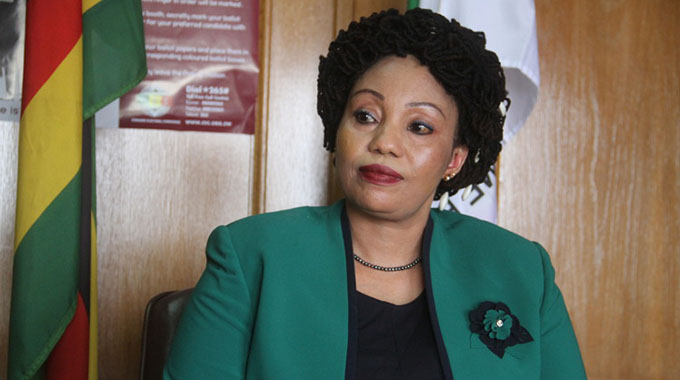
Zec chairperson, Priscilla Chigumba
“Zec wishes to inform members of the public that the chairperson of the commission, Chigumba, does not have a twitter account,” Zec acting chief elections officer Utoile Silaigwana said.
“The purported account on Twitter attributed to her is fake and a fraudulent creation of unscrupulous elements meant to mislead the public. Zec urges the public to disregard any statements posted on the fake Twitter account.”
Chigumba has come under the spotlight following her announcement of Zimbabwe’s harmonised election results.
Zec came under fire after it cut President-elect Emmerson Mnangagwa’s win by a marginal 0,1 percent, but insisted the error was purely clerical. –DailyNews
A section of war veterans who worked closely with the Generation 40 (G40) faction have reportedly been begging for mercy from their colleagues steering the main Zimbabwe National Liberation War Veterans Association (Znlwva).
Douglas Mahiya, Christopher Mutsvangwa (centre) and Victor Matemadanda (right) during a press conference in Harare. (Photograph: Jekesai Njikizana/AFP/Getty Images)
A section of Znlwva had, prior to former president Robert Mugabe’s ouster in November last year, tried unsuccessfully to push for the ouster of the Christopher Mutsvangwa executive.
The chairperson of Znlwva’s Bulawayo chapter, Cephas Ncube said they have received a number of apologies from some of the war veterans who used to work with the G40 faction, although he could not reveal their names.
“In their confused minds, they decided to behave the way they did. They want to come back; and we are welcoming them but on condition that they retrace their footsteps genuinely and not to bring chaos into the organisation,” Ncube told Daily News.
“All those that have come back, we have welcomed them and we are working well with them.
“They have shown that they regret the mistake of being misled by their rebel leaders,” he said.
Outside their factional battles, which were put to bed by the ascendency of President-elect Emmerson Mnangagwa to power following a soft coup led by the military last November, Ncube said they were still comrades-in arms with those who waged a war of attrition against them.
“We never fought with them, we were not fighting them but it is them who were fighting the legitimacy of the Znlwva executive.
“They were imposing themselves and pursing their agendas but at the end of it all, comrades remain comrades. They are our comrades,” he said. DailyNews