A potential water disaster is looming in Gweru amid indications that main potable water supplier, Gwenhoro Dam, is now at 18 percent capacity and the Zimbabwe National Water Authority (Zinwa) is on the verge of decommissioning the main water source.
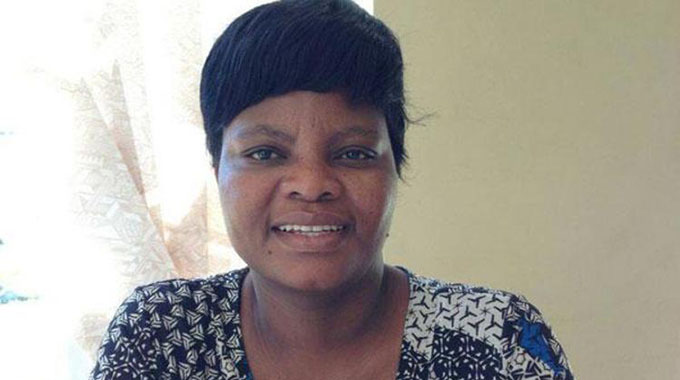
Elizabeth Gwatipedza
The dire situation has been worsened by the local authority’s failure to secure over $5 million to purchase new water pumps that could be installed at Amapongobge Dam, which is an alternative.
If the local authority fails to source water pumps for Amapongobge, the city could face a serious water disaster.
Only last year water woes caused the typhoid outbreak which left eight residents dead with over 2 000 requiring medical attention.
The city has since introduced water rationing after the pumping capacity dropped to 20 megalitres a day against the city’s demand of 60 megalitres, which has resulted in areas such as Mkoba 14 and Ascot suburbs going for weeks without water.
Speaking during a full council meeting last week, Ward 17 councillor Farai Muza said the water levels at Gwenhoro Dam were now critical adding that Zinwa had indicated that it will soon decommission the city’s major source of water.
“We are very worried that Zinwa is now going to decommission Gwenhoro Dam.
“This is serious and we need to start considering other options. We need the committee responsible for that to come up with stop-gap measures to address the water challenges,” he said.
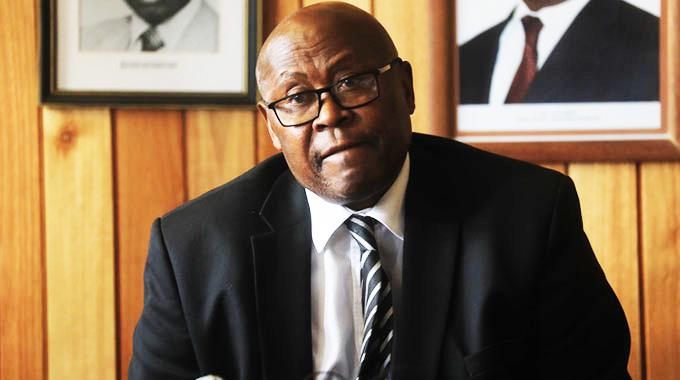
Gweru Mayor Cllr Josiah Makombe said the city’s alternative water source Amapongobge required five pumps for it to meet the city’s daily demand.
Cllr Makombe said Amapongobge had only one pump which was functional, and had no capacity to sustain the city.
“Water levels at Gwenhoro Dam are now at 18 percent. This is a disaster. At the moment we have introduced water rationing because we are only able to pump 20 megalitres a day.
“There is need for council to act fast and address this problem,” he said.
Gweru Town Clerk Ms Elizabeth Gwatipedza said financial constrains were hampering council’s efforts to address the persisting water challenges.
“When we enquired sometime back, a single water pump was costing US$750 000 and we wanted to purchase four.
“We only received $400 000 from Government for the procurement of those pumps and it is not enough. Probably now each costs $5 million.
“We engaged partners and financiers such as IDBZ, but they have told us that they were incapacitated to give us such huge sums of money, but said they could give us money to sink commercial boreholes,” she said.
Ms Gwatipedza said Unki Mine had agreed to lease the local authority a water pump while they had also approached Mimosa Mine for help. The Herald
Primary and Secondary Education Minister Ambassador Cain Mathema
By Nqobile Tshili
Government is set to craft a law to regulate operations of churches to curb criminal activities, a Cabinet Minister has said.
Home Affairs and Cultural Heritage Minister Cain Mathema
Home Affairs and Cultural Heritage Minister Cain Mathema said failure to regulate the activities of churches was creating a fertile environment for criminal activities such as money laundering and subversive behaviour.
Government’s decision comes at a time when some church leaders have been arrested for crimes such as rape and fraud.
“Religious organisations have to be registered so that their activities are monitored to curb crimes such as money laundering and other such crimes,” said Minister Mathema.
He said there was a danger of people engaging in subversive activities hiding behind the church.
Minister Mathema said Government was aware that some churches were involved in criminal activities hence the need for a law to regulate their operations.
He said churches should disclose their source of revenue and how they were spending it.
“If you are a religious organisation it is only fair in my view to tell us where you get your money from and how you are using it,” he said.
Responding to the proposal, Zimbabwe Council of Churches (ZCC) secretary-general, Reverend Kenneth Mutata said they will closely follow the development. The Chronicle
The Ministry of Public Service, Labour and Social Welfare has failed to account for or distribute goods donated by the Zimbabwe Revenue Authority (Zimra) which are reportedly lying idle and losing value in storerooms.
Auditor-General Midred Chiri (AFP Photo)
In her 2018 report, Auditor General Mrs Mildred Chiri said the ministry had failed to account for the goods which are meant to be distributed to vulnerable and needy individuals.
“There was poor accountability for goods donated to the Ministry of Public Service, Labour and Social Welfare by the Zimbabwe Revenue Authority (Zimra) held at Northcort Training Institute. Items donated were inconsistently being recorded either as bales, sacks, bags by quantities or by weight instead of maintaining a standard unit of measurement of classification of the goods,” said Mrs Chiri.
She said Northcort Training Institute personnel received the donated goods without physically verifying the quantities against the Issue Vouchers raised by Zimra.
“From interviews held with the staff, there were instances when deliveries were made by transporters in the absence of the Ministry’s head office administration personnel for accountability purposes as they are the ones who would have collected the items from Zimra,” she said.
Mrs Chiri said during a physical inspection of the donated goods, bales, sacks and bags of donated clothes and shoes were open and their contents were scattered on the storeroom floors.
“Although the Northcort Training Institute had a stores register in place, the register did not include vital information such as full description of items (specifications), quantities received, quantities issued, running balances and signature of the recipient,” she said.
Mrs Chari said four brand new and four used tyres were issued to one of the Ministry’s administration officers without the approval of the accounting officer. The recipient officer was the one who originated and authorised the letter of issuance.
According to Mrs Chiri the Ministry did not have a clear policy for management and distribution of the donations.
“At the time of the audit (March 12, 2019), I noted that there were over 200 bales of clothes and shoes, 16 brand new tyres and 1 200 second hand tyres of different sizes that were being kept at the institute, of which, these goods were being damaged by rodents and deteriorating in quality due to adverse weather conditions,” she said.
Mrs Chiri said there was no evidence of periodic or regular physical stock counts by supervisors both from the Ministry’s head office and the institute.
She said donated goods are exposed to misappropriation if the Ministry does not put adequate controls for delivery, receipt, recording and custody of goods.
“Failure to consistently record donated items compromises the accountability of same and without physical verification, it would be difficult to ascertain whether the received donations were properly recorded and accounted for,” said Mrs Chiri.
She recommended that the ministry should ensure that goods donated are consistently recorded using the same unit of measurement.
“The Ministry should ensure that bales, sacks and bags of donated goods are kept sealed at all times. Stores register should capture all important details such as full description of items (specifications), quantities received, quantities issued, balance (in stock) and signature of the recipient on issuances” said Mrs Chiri. The Chronicle
Allied Timbers Zimbabwe is seeking to recover $10 million from its former chief executive officer, Joseph Kanyekanye, which was lost through unlawful hefty discounts to selected customers, unauthorised allowances and diverting millions of dollars meant for payment of Value Added Tax (VAT) to other projects.
Joseph Kanyekanye
The development is a new strategy that is now being used by parastatals for employees whose actions would have caused loss of public funds.
Criminal charges in such cases involving public funds, are preferred, but separate civil proceedings helps recover lost public funds.
A recent audit report by KPMG, which is yet to be tabled in Parliament, shows that Allied Timbers owes the State $3 103 018 in unpaid VAT in respect of contract milling arrangements that were never accounted for.
Allegations are that Kanyekanye’s actions subjected Allied Timbers to tax liabilities, but the said milling contract arrangements were never accounted for.
He also stands accused of unlawfully spending US$14 007 on buying himself a Samsung tablet, paying himself unauthorised allowances for trips to South Africa and Botswana, paying his children’s school and examination fees without approval and encashing his leave days on his own.
Kanyekanye, according to the report, allegedly caused financial prejudice to the parastatal to the tune of US$2 765 892 through making unauthorised discounts to customers on the company’s timber.
Allied Timbers also lost US$4 972 892 through failure by Kanyekanye to acquit CD1 forms in respect of timber exports, thereby exposing the company to unnecessary tax liability.
To that end, Allied Timbers, through Harare lawyer Mr Caleb Mucheche of Caleb Mucheche & Partners, issued summons at the High Court claiming $10 million plus interest. Interest, according to the summons, should be paid at the prescribed rate of 5 percent per annum.
Allied Timbers is also claiming costs of the suit on a legal practitioner-client scale.
According to the plaintiff’s declaration, Kanyekanye during his tenure as chief executive officer, conducted business with negligence and caused financial loss the company.
“The defendant conducted the business of the plaintiff with gross negligence and gross incompetence in breach of the express and implied terms of his contract of employment coupled with his common law fiduciary duties and managing director-chief executive officer thus causing financial prejudice to the company and acting contrary to the best interests of the plaintiff,” reads the declaration.
Kanyekanye, according to the parastatal, should pay for the loss of public funds.
“The defendant’s wrongful conduct or omissions led to both financial loss to the plaintiff and loss of huge sums of public funds, the latter owing to the nature of the plaintiff as a parastatal,” read the papers.
The company claims it was put on an unnecessary expense in paying lawyers for the litigation, the call for an order for costs on a punitive scale.
Kanyekanye left Allied Timbers in 2015, after agreeing on mutual separation with the board.
Prior to the termination of his contract, Kanyekanye was on suspension after the board raised several charges of misconduct against him. The suspension was meant to facilitate investigations into his conduct which bordered on corruption, failure to observe operating procedures and gross insubordination. The Herald
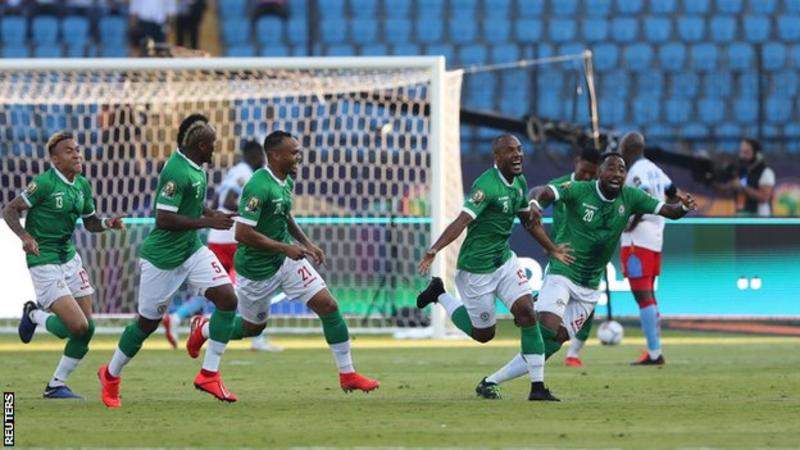
Africa Cup of Nations debutants Madagascar produced another upset to beat DR Congo 4-2 on penalties after a 2-2 draw and seal a quarter-final spot.
Madagascar were 190th in Fifa’s world rankings five years ago
In a thriller, Madagascar took a surprise lead through Ibrahim Amada’s superb 20-yard strike before Cedric Bakambu equalised with a header.
The Indian Ocean islanders restored their lead through Faneva Andriatsima’s header before Chancel Mbemba’s 90th-minute equaliser forced extra-time.
Madagascar scored all their penalties.
In contrast, DR Congo missed two, with Everton winger Yannick Bolasie’s attempt going over the bar to confirm Madagascar a quarter-final against Ghana or Tunisia in Cairo on Thursday.
Having beaten three-time winners Nigeria in the group stage as well as Burundi, Madagascar’s fairytale run continues after another impressive performance in Alexandria, Egypt.
They were 190th in Fifa’s rankings five years ago but have now advanced further in this tournament than hosts Egypt and holders Cameroon, both of whom went out on Saturday.
Before their 90th-minute equaliser, DR Congo were denied a penalty in controversial circumstances when Britt Assombalonga appeared to be fouled by Thomas Fontaine.
However, with the video assistant referee system not being used until the quarter-finals, their appeals were ignored. BBC Sports
African superpower Nigeria has signed an agreement which aims to increase trade between African countries.
The bloc aims to increase trade across African borders
This leaves Eritrea as the only African country not to be part of the trading bloc.
Nigerian President Muhammadu Buhari signed the landmark agreement at the African Union (AU) summit in Niger.
The first step is to cut tariffs for goods from countries within the bloc but the timeframe to do this is yet to be announced.
The AU says that the African Continental Free Trade Area – called AfCFTA – will create the world’s largest free trade area.
It also estimates that implementing AfCFTA will lead to around a 60% boost in intra-African trade by 2022.
Only 16% of international trade by African countries takes place between African countries, according to research by the African Development Bank in 2014.
At the moment some of that intra-Africa trade ranges from fresh fish from the Seychelles to petrol from Angola.
Why was Eritrea left out?
Eritrea did not participate in the negotiations because of their conflict with Ethiopia, according to the Commissioner for Trade and Industry of the AU Commission Albert Muchanga.
He adds that now the two countries are at peace and Eritrea has asked the AU to go through the agreement with them.
“So over time they are going to come on board” he said.
What are free trade agreements?
Free trade agreements are designed to cut trade tariffs between member countries.
Tariffs are a form of tax, like a border tax.
They are placed on goods coming into a country for a range of reasons, sometimes to try and protect a home-made product.
The purest free trade agreement (FTA) removes all border taxes or trade barriers on goods.
They get rid of quotas too, so there is no limit to the amount of trade you can do.
FTAs also help make a country’s exports cheaper and give easier entry to other markets.
They come in all sorts of forms and with different rules but in short, they make trade between countries as liberal as possible and allow for more rules-based competition. BBC News
In our series of letters from African journalists, technology writer Andile Masuku looks at what the launch of Facebook’s digital money could mean for Africa.
From early next year, Facebook intends to let its two billion-odd users – more than 139 million of whom are in Africa – make digital payments through its apps and popular messaging service WhatsApp using a new crypto-currency called Libra.
It could have profound implications for a continent which receives a huge amount of remittances – and is one of the least-banked regions of the world, something that has allowed for other innovations like mobile cash payments to take hold in Africa.
Andile Masuku
I relish the prospect of a network like Libra permanently disrupting the lucrative cash remittance businesses of large banks and money transfer services”
As a Zimbabwean living in South Africa, I have become numb to the daylight robbery that ensues whenever I receive money from abroad or send cash to my family back home.
As such, like many other cautious pragmatists, I relish the prospect of a network like Libra permanently disrupting the lucrative cash remittance businesses of large banks and money transfer services like Western Union and MoneyGram.
According to a World Bank report published last year, the cost of sending cash in sub-Saharan Africa was at least 20% higher than any other region in the world. The report revealed that sending $200 to and from the region in the first quarter of 2018 cost a whopping $19.
But we must not be naive to the myriad factors responsible for maintaining market inefficiencies and actively engineering economic complexities which corporations like Western Union exploit to great effect.
The fact is, many governments in Africa have enabled the remittance industry status quo and have come to rely on lining their coffers with remittance-related revenue.
Security risks
African governments are also deeply suspicious of crypto-currencies, like Bitcoin. The long list of countries which have, in some way or another, prohibited the use of crypto-currencies includes Nigeria, Kenya, Ethiopia and even my native Zimbabwe, which is well on its way to being a cashless society thanks to the growing adoption of mobile money services.
It abandoned its own currency for 10 years because of hyperinflation, and it is currently in the throes of trying to reassure a sceptical nation that the newly introduced Zimbabwean dollar has value.
Policy makers in Zimbabwe have argued that the idealised notion of a crypto-currency does not adequately take into account some of the very real limitations and security risks.
Think challenges in levying taxes, the risk of unwittingly enabling illicit activity and money-laundering, and of course the potential susceptibility to crypto-hackers.
Behind the jargon
What is a crypto-currency?: It is has no notes or coins, exists online, and uses a technology called blockchain to underpin it. The most well-known one, Bitcoin, is not issued by governments or traditional banks
What is blockchain? It is a method of recording data, a digital ledger of transactions distributed across computers around the world beyond the control of one person or entity
What makes Libra different from Bitcoin? It will use blockchain technology but the digital ledger will be managed by a group of known companies
And these are things that African leaders need to address with Facebook up front. In the US, lawmakers have already proposed a moratorium on the Libra rollout until Facebook assures Congress that Libra will not exacerbate money-laundering and the funding of terror groups among other issues.
Facebook’s Libra white paper, which outlines the tech giant’s plans to re-imagine global finance, does show that unlike completely decentralised digital currencies such as Bitcoin, which operate outside the oversight of central authorities or banks, Libra is set to be backed by a reserve of actual currencies and assets.
Facebook is using this difference to convince policy-makers that Libra is a bankable bet. It has the high-powered backing of the likes of Visa, MasterCard, Uber, Spotify and even South Africa’s PayU.
‘Free internet’ backlash
As Facebook representatives push back against concerns regarding the extent of the company’s self-interest in the Libra project, we would do well not to forget how it formerly served the world poverty-porn laden rhetoric to justify the global roll-out of Free Basics offering several years ago.
Back then, the tech firm audaciously sold Free Basics, which lets people in some countries access Facebook and other websites without charge, as mankind’s most significant development towards promoting “internet as a right” for all.
Dubbed by detractors as the “Internet According to Facebook”, many African countries lapped it up.
India, quite famously, did not, arguing that it undermined the principle of net neutrality – the idea that all internet traffic should be treated equally – and that it was improper to allow Facebook to deliver a dumbed-down version of the internet to hundreds of millions of people.
With the help of the pan-African mobile telephone operator Airtel Africa, Facebook rolled out Free Basics in no less than 17 African countries.
It is hard to argue that offering poor, disconnected Africans limited web access to services like health, education, jobs, communication and local content at no cost to them is anything but beneficial.
Yet Facebook’s now infamous business model of monetising user data makes it impossible to ignore the potential adverse long-term impact of allowing such a firm to profit from curating the only version of the internet millions of Africans may ever come to know.
Given the company’s high-profile shortcomings, there is good reason to distrust Facebook and many die-hard crypto-currency proponents think of the Libra concept as the perfect prop for a hopelessly broken global finance industry.
Critics also point to the ease with which African governments can cut off the internet and messaging apps, meaning if it suited them they could effectively cut off their citizens from accessing digital cash. Would it be wise for us to become too dependent on Libra?
The recent network issues on Facebook, WhatsApp and Instagram experienced in South Africa this past week have also served as a sober reminder of how economically disruptive relying on Facebook’s Libra could prove to be should a similar outage occur again.
I am encouraged by how key personalities within Africa’s innovative digital money community are leading impressively nuanced debate about the potential pros and pitfalls of Libra.
Social media posts and impassioned blog posts by Nigeria’s Seyi Taylor, who thinks if it proves cheap and convenient, uptake could be rapid, and Kenya’s Michael Kimani, who flags how it targets the poor, have so far prompted robust discussion online that one can only hope will filter into the hallowed halls of policy-making across the continent.
With that all said, if on a future Sunday I could send my folks $100 to pay for some cattle vaccines via a WhatsApp message, and they could immediately go to their local agri-mart and make a purchase using Libra – that would be rather nifty. BBC News
Riyad Mahrez scored a superb goal as Algeria cruised past Guinea 3-0 in Cairo to book their place in the Africa Cup of Nations quarter-finals.
Riyad Mahrez also scored in Algeria’s opening group win over Kenya
The Manchester City forward fired into the bottom corner after cleverly touching the ball past his marker, adding to Youcef Belaili’s earlier goal for the Algerians.
Adam Ounas sealed a one-sided victory with the third late on.
Algeria face either Mali or Ivory Coast in the last eight on Thursday.
The Desert Foxes dominated from the first whistle but Baghdad Bounedjah wasted an early opportunity when he side-footed the ball over the bar from close range after cushioning Adlene Guedioura’s pin-point cross with his chest.
They took the lead four minutes later when Bounedjah played a neat one-two with Belaili from a throw-in before the latter burst into the area and curled the ball into the far corner, although the presence of VAR may have seen it disallowed as Belaili appeared to commit a foul throw in the build-up.
Algeria captain Mahrez, who had had a relatively quiet opening 45 minutes, came to life with a moment of quality to send Guinea goalkeeper Ibrahim Kone the wrong way with a left-foot strike, before substitute Ounas tapped in Youcef Atal’s low cross from close range.
In contrast, Guinea were sluggish and had to wait until the 54th minute to produce their first shot on target, a speculative strike from 30 yards by Mady Camara, as Algeria claimed their fourth clean sheet in as many matches. BBC Sports
Captain John Mikel Obi has vowed to make his last Africa Cup of Nations one to remember for Nigeria and believes his presence in the squad could be a crucial factor in their bid for success.
Nigeria captain John Mikel Obi has won 89 caps for his country
The midfielder, 32, concedes this will certainly be his last appearance on the continental showpiece event and possibly for his country.
“It’s been an amazing ride for me in the national team,” Mikel told BBC Sport.
“Thirteen years I think is enough. I’ve won trophies, I’ve had a lot of amazing time. I think it’s time for these young guys to carry on.
“I’m mostly here in Egypt to support the young guys and make sure they’re on the right track.
“I think my presence is always important for them, hopefully I can finish with the trophy.”
Mikel has won a total of 89 caps for Nigeria, playing for them in the past two World Cups and helping the Super Eagles win the 2013 Africa Cup of Nations.
He also helped Nigeria finish third at the 2006 and 2010 Nations Cups.
He has made two appearances for his country at the ongoing tournament in Egypt, but missed their last-16 tie through injury as Nigeria secured a quarter-final date against South Africa with a 3-2 win over bitter rivals Cameroon.
Now Mikel is determined to play a part in Nigeria’s quest for a fourth continental title.
“If I’m fit, I’d love to play in the quarterfinal, but no need to rush,” he added.
“Hopefully if we can make it to the semi-finals I’ll probably be ready then and help the team if I’m needed.
A finalist with the youth side at the under-20 World Cup in 2005, the former Chelsea player believes he has had a successful run for the West African nation.
“Obviously winning the Nations Cup in South Africa was the high point, that’s why I want to help this young team to hopefully achieve their dreams,” he said.
“If we are able to win it here, I’ll be proud and they’ll be proud, then they can carry on from here.”
He was also one of Nigeria’s three over-age players as the African side won a bronze medal at the 2016 Olympics in Rio.





 From early next year, Facebook intends to let its two billion-odd users – more than 139 million of whom are in Africa – make digital payments through its apps and popular messaging service WhatsApp using a new crypto-currency called Libra.


