The Zimbabwe Revenue Authority says it will continue charging duty in foreign currency on goods designated to pay in forex despite the liberalisation of trading of the United States dollar exchange rate against Real Time Gross Settlement (RTGS) Dollars and all other currencies in the multi-currency basket.
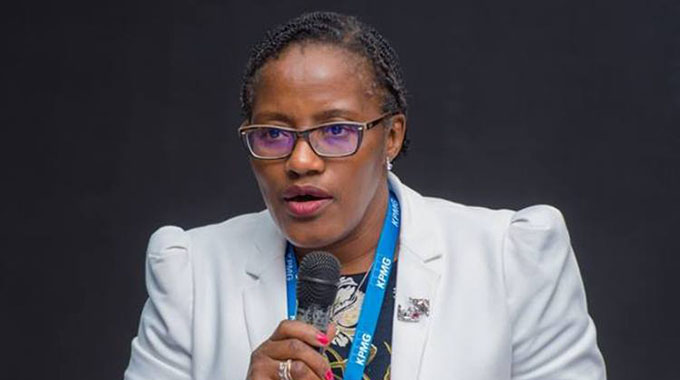
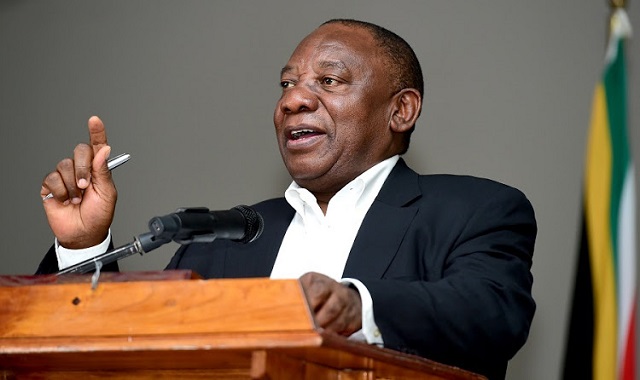
Zimra commissioner general Ms Faith Mazani
Last week, the Reserve Bank of Zimbabwe floated the exchange rate as it seeks to bring sanity in the foreign currency market, promote exports, boost Diaspora remittances and investments, eliminate multi-tier pricing and preserve the value of local forms of money.
The central bank had pegged RTGS balances at one-to-one with the US dollar, but shortages resulted in high premiums for US dollars in the unofficial market that is outside RBZ control.
Banks started trading the RTGS dollar on the interbank market platform on Friday at 2,5 RTGS dollars and indications are the figure might stay there for some time.
Following the floating of the exchange rate, many people had thought the prevailing rate would apply when paying duty of goods designated to pay in forex including motor vehicles.
Last year, the Government promulgated Statutory Instrument 252A of 2018, which provides for the payment of duty for selected goods, including luxury motor vehicles in forex to discourage usage of hard currency on luxury commodities.
Zimra commissioner general manager Ms Faith Mazani told The Herald Business yesterday that until the SI 252A was repealed, Zimra will continue collecting duty in forex on behalf of its principal.
“The Statutory Instrument is the law that has to be repealed first. Until it is repealed, Zimra will continue collecting duty on selected goods in foreign currency,” she said.
Charging duty in foreign currency is aimed at limiting spending of foreign currency on luxury goods at a time the country is facing crippling shortages of hard currency.
Under the new exchange regime, the central bank established an interbank foreign exchange market to formalise trade in foreign and local currencies through banks and bureaux de change on a willing-buyer, willing-seller basis.
This entails denominating the existing RTGS balances, bond notes and coins in circulation as RTGS dollars to establish an exchange between current monetary balances and foreign currency.
The RTGS dollars will become part of the multi-currency system and a legal instrument, which amends the Finance Act of 2009 that pegged the US dollar at par with bond notes and RTGS balances, has already been prepared and will be gazetted soon. The Herald
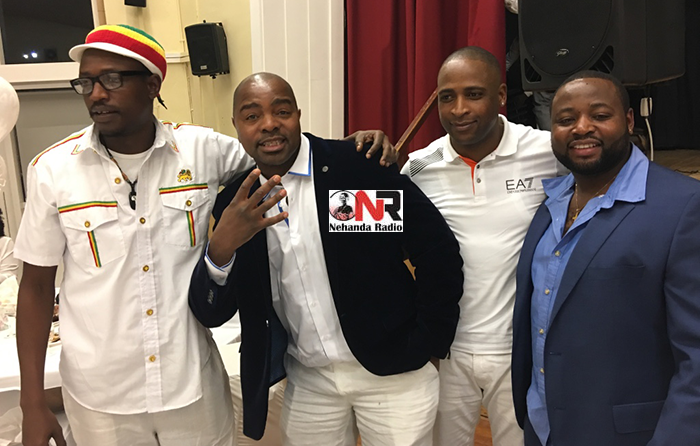
George Mbwando, Liberty Masunda, Brian Badza and Maxwell Dube
By Petros Kausiyo
As interest grows on Zimbabwe’s high-profile African Cup of Nations qualifying showdown with Congo-Brazzaville, former Warriors defender George Mbwando has implored the nation to rally behind coach Sunday “Mhofu’’ Chidzambwa and avoid putting the veteran gaffer under undue pressure.
George Mbwando, Liberty Masunda, Brian Badza and Maxwell Dube
The Warriors will host the Red Devils in the final Group G qualifier at the Nations Sports Stadium on March 24.
Chidzambwa’s men need at least a point from that game against the Congolese to seal their place at the Nations Cup finals, scheduled for Egypt in June.
Mbwando, who played under Chidzambwa as Zimbabwe made their maiden appearance at the Nations Cup jamboree 15 years ago, said he had noted with concern “some pressure being exerted on the coach ahead of this game.’’
“I have noticed that some people are clamouring for changes in the squad. I just think that trying to make a lot of changes will not be good because there are players who started the campaign and must finish it.
“It won’t be fair to just bring in players who didn’t help in the campaign, I think Mhofu knows which positions he needs to strengthen and he can use one or two players from Europe but, on the other hand, these players are still waiting for their passport for two years now and they could have also taken part in the qualifying rounds,’’ Mbwando said.
Now a coach who holds a UEFA A-Licence, Mbwando also backed Chidzambwa to write another piece of history by becoming the first coach to guide the Warriors beyond the group stage at the Nations Cup.
“I think the whole focus should be winning the last game and I’m sure at home they are going to finish the job. I am sure with Mhofu, given the right support, he can go past the group stages at the AFCON because Mhofu is Mhofu always full of surprises,’’ said Mbwando.
“I think we have almost achieved what we always wanted as a nation, to be regulars at such big tournaments like the AFCON. I think Mhofu with his experience knows what to do and which player to take to the AFCON.’’
Mbwando said although he supported the gradual infusion of Zimbabwean players based in the Diaspora, he was not amused with the frustrations many of them had to endure to secure local passports which would make them eligible for the Warriors. Chidzambwa is expected to name his squad at the end of this week but the former Dynamos coach has seen enough to know the significance of avoiding potential banana skins in games of the magnitude. The Herald
Malema was addressing a large crowd outside the Newcastle Magistrate’s Court on Monday following a brief appearance on charges of contravening the Riotous Assemblies Act.
Durban – Economic Freedom Fighters (EFF) leader Julius Malema on Monday, told hundreds of supporters in KwaZulu-Natal that he longs for the day when white South Africans serve black citizens.
Malema was addressing a large crowd outside the Newcastle Magistrate’s Court on Monday following a brief appearance on charges of contravening the Riotous Assemblies Act.
“I don’t want blacks to work for whites, I want you to work for yourselves; white people will work for you. That will be true freedom. You must teach them how to carry babies on their back. They must feel what our parents have been feeling,” he said.
Malema was addressing a large crowd outside the Newcastle Magistrate’s Court on Monday following a brief appearance on charges of contravening the Riotous Assemblies Act.
The case relates to utterances made by the politician in 2016 in Newcastle when he was addressing an EFF rally and called on supporters to identify land and seize it.
The case was postponed to July as Malema’s legal team has challenged the constitutionality of the Act in the Pretoria High Court. That case was heard in December and a judgment is pending. The outcome of the case will affect the Newcastle charges.
“We are not calling for white people to be killed, but for white people to be our domestic workers,” Malema told the cheering crowd.
But whites could only work for blacks when the country’s land was returned to the majority, he said.
Malema said the EFF would “take this land and make it more nicer and enjoyable for black people”.
He wasn’t calling for whites to leave the country, said Malema, because they weren’t going anywhere; there was no “ship” waiting to take whites away.
“I long for the day when a white man will be driving a tractor on your farm. I long for a day when [Democratic Alliance MP John] Steenhuisen will be driving a tractor on [EFF national spokesperson Mbuyiseni Ndlozi’s] farm. White privilege will come to an end under EFF,” Malema said, to cheers from the crowd.
White citizens who wanted to leave the country because they were “threatened” by black ownership should leave, he said.
“We will stay here with whites who appreciate that blacks must own all strategic things in the economy – land, banks, mines,” he said.
“When the black child is liberated, you will not worship everything white.”
Malema reiterated that he wasn’t “scared of going to prison to fight for the land”.
The African National Congress (ANC) was scared of white people, he said, because they were “too old”.
“They have been beaten by them, arrested by them. [But] I don’t understand why if you are young you are scared by white people,” he said.
“They have never beaten you, they are equal to you,” he said to cheers.
“This is Shaka Zulu’s land, not Van Wyk and Van Tonder’s land,” he said.
“This land belongs to our forefathers, who fought these bastards. And they thought they defeated our forefathers, and [that] they will defeat us now. Let them come. We are ready for them.” African News Agency/ANA
Former Sunday Mail editor Edmund Kudzayi on Saturday appeared in court after he was allegedly found in possession of articles with military style camouflage markings at a police roadblock in Harare.
Former Sunday Mail editor Edmund Kudzayi
Kudzayi (32) of number 3 Green Valley Heights, Quinton Road, Greystone Park in Borrowdale, Harare, was facing charges of unlawful possession or wearing of camouflaged uniform when he appeared before magistrate Mr Edwin Marecha.
He was granted $100 bail and the matter was deferred to March 8.
It is alleged that on February 22, the complainant on behalf of the State, a police officer, was on duty at a security roadblock carrying out “stop and search” on motorists along Domboshava road near Winchdon Shops, Borrowdale.
Prosecutor Mr Shepherd Makonde told the court that the police officer executed his duties of searching Kudzai who was driving a blue VW Tiguan registration number AEN 5016 after he was stopped.
While pulling off the road, it is alleged that Francis Murehwa, a member of the Zimbabwe National Army Military Police who was also on duty, observed an article with military style camouflage markings behind in the rear and alerted the member-in-charge at the roadblock.
It is the State’s case that the member-in-charge went on to search Kudzayi’s vehicle and recovered an umbrella and pouch with military style camouflage markings.
The court heard that this prompted the officers to arrest Kudzayi who was then escorted to Borrowdale Police Station where a report was made against him.
The State further stated that the umbrella and pouch with camouflaged colours are to be produced in court as evidence.
A 23-year-old Chitungwiza man was recently convicted of wearing a Zimbabwe National Army (ZNA) uniform when he was not a member of the force.
Tafadzwa Marumanadzo was convicted of unlawful wearing of camouflage uniform after a full trial by Chitungwiza magistrate Mrs Winfilder Tiatara.
Initially, Mrs Tiatara slapped him with a nine months jail term, but suspended three months on condition that he does not commit a similar offence in the next five years.
In his defence, Marumanadzo said the uniform belonged to his friend who was a member of ZNA, but had since relocated to South Africa.
In 2014 Kudzayi was arrested on charges of undermining the authority of former president Robert Mugabe and subverting or attempting to subvert a constitutionally-elected Government.
Kudzayi, who together with his brother Phillip were accused of attempting to subvert a constitutionally-elected Government using a Facebook character Baba Jukwa, had his charges withdrawn before plea in 2015. The Herald
Economic history is pregnant with case studies of nations which have magnetized sustainable foreign direct investments through maintaining clear, consistent and harmonious foreign and domestic policies. In contrast, since the early 2000 Zimbabwean local, regional and international policies have been higgledy-piggledy. As a result, Zimbabwean foreign direct investment (FDI) has been depressed.
Paddington Masamha
Fundamentally, the competition for FDI is aggressive the world over. As such, whenever foreign investors are evaluating potential investment destinations, major consideration is placed on the country’s institutions, policies (both foreign and domestic), human capital, freedom to control investments, indeginisation, empowerment and privatisation regulatory frameworks, political stability and a conducive legal framework for doing business.
Therefore, for a country to effectively and continually attract FDI, domestic and foreign policy consistency in the aforementioned areas is obligatory. Overall, Zimbabwean policies have been failing to attain the transparency (clarity), dependability (realibility) and consistency (stability) benchmarks. Such policy incongruences has thus greatly shaped the country’s FDI trends.
The post independence era has in general been dominated by policies which hinder the repatriation of profits, protection of private property rights and ensuring the general safety of investments. Having attained independence in 1980, the Zimbabwean foreign policy during the 80s was largely driven by the desire to achieve African independence (evidenced by the support given to the liberation movements in South Africa and Namibia).
Motivated by the desire to unify and uplift people of the African descent, pan-Africanism became the new policy direction of the 1990s. Having a strong belief in the Commonwealth of Nations, in 1991 Zimbabwe hosted the Commonwealth Heads of Government Meeting (CHOGM). During this period the nation enjoyed cordial relations with the West and Britain.
However, as the 2000 new millennium beckoned, the dramatic events of land invasions and fast track land-reform program signalled the anti-imperialist episode. Imperatively, the unbudgetted War Veterans Z$50 000 gratuity payments (plus the concomitant monthly pensions for life) marked the commencement of economic problems.
In brief, on the 14th of November 1997 an economic nightmare commonly referred to as “Black Friday” saw the Zimbabwean dollar loose about 71.5% of its value against the United States dollar. The subsequent 46% stock market crush was inescapable. Such a dramatic economic turn was largely blamed on government’s fiscal failures to stick to budgets (i.e. failing to live within their means).
The 1998 DRC war involvement then worsened Zimbabwean budgetary needs given that the war gobbled over a billion United States dollars. Whilst the government was saddled with a brewing economic crisis, civil society groups formed the National Constitutional Assembly (NCA) which debated political and economic reform agendas. Interestingly, in 1999 an opposition party named the Movement for Democratic Change (MDC) was formed.
Faced with an aggressive competitor, debilitating economic situation and international pariah against widespread human rights abuse, the Zimbabwean government formally announced the “fast track” land reform program in July 2000.
Through dislodging commercial white farmers and replacing them with the original land owners, the economic mantra of, “Land is the Economy; the Economy is Land” as well as, “Our land is our prosperity” transformed into a ZANU PF melody.
In an attempt to dislodge the opposition party (largely blamed as a regime change agent and a black imperialist) the anti-West crusade gave birth to a culture of political violence, abductions, intimidation and various human rights violations.
The Zimbabwean and Western country toxic relations were marked with popular Mugabe chants such as ‘Blair keep your England, and let me keep my Zimbabwe’ whilst westerners labelled the former President as a dictator. Political commentators and song writers also joined the anti-West movement where Tambaoga’s popular lyric of ‘the Blair that I know is a toilet’ evolved into a national jingle.
Sadly, the economy kept on nose-diving. Having the 2002 Presidential elections credibility challenges (obviously emanating from the voter intimidation, violence and human rights abuse), the Mugabe regime pulled Zimbabwe out of the Commonwealth in 2003. Following the human rights abuse, Zimbabwe was internationally isolated. Political sanctions under the widely known Zimbabwe Democracy and Economic Recovery Act (ZDERA) were invoked in 2003.
As a counter measure, Zimbabwe adopted the ‘Look East Policy.’ Unfortunately, the economic turmoil remained unabated. Over and above the human created conundrums which largely emanated from the episodic political blunders, the economy was plagued with recurrent droughts. The poor agricultural yields as a result of the poorly executed fast track land reform program was further aggravated by the poor international commodity prices.
Beleaguered with the strain of the mass exodus of white commercial farmers, a new migration of businesses (uprooting investments) ensued. The massive de-industrialization was largely driven by a myriad of unpalatable business operating constraints, such as excessive controls, liquidity challenges, foreign currency constraints and a generally porous regulatory system which failed to guarantee the protection of private property rights.
Together with his trusted lieutenants, the former President kept preaching the “Rambai Makashinga” gospel. Two major dramatic events further worsened the Zimbabwe’s poor human rights records. The 2003-2008 Chiadzwa ‘blood’ diamond mining attracted international spotlight. Moreover, the widely known operation Murambatsvina brought the nation’s human rights records to its lowest ebb.
Regardless of having stern warnings against promulgating populist policies meant to garner votes, the Indigenization and Economic Empowerment Act was signed in 2008. The policy gave Zimbabweans the right to take over and control 51% equity stake of the foreign-owned companies in Zimbabwe. The state of policy misunderstanding, policy confusion and policy inconsistency which accompanied the Indigenization and Economic Empowerment Act was significantly massive.
The leadership in similar fashion to the land reform program had not done due diligence regarding the practicality, feasibility and expediency of the regulation. Basically, the government’s empowerment drive was ill-timed and the 51% stake absurd given that the economy was going through an economic depression (the empowered people’s pockets were empty). Instead this scenario created a great loophole for the elite to increase their ‘financial loot’.
The political behaviour and ideologies of the ruling ZANU PF has largely shaped Zimbabwean domestic policies. For instance, emanating from a regulatory standpoint, the repressive Public Order and Security Act (POSA) and the Access to Information and Protection of Privacy Act (AIPPA) were the main instruments used to disregard basic human rights.
These policies were meant to suppress the energy of political activists and opposition leaders who were assumed to be pushing the ‘regime change’ agenda and reversing the gains of the liberation struggle. This governance system was efficacious but on the contrary, through creating international seclusion, it repelled existing and potential investors.
The Zimbabwean domestic and foreign regulatory policies have largely been restrictive. For instance, faced with a negative Balance of Payments position, protectionist policies have largely dominated the importation of goods and services. The random use of import quotas, embargoes, duties and tariffs has largely been government’s reactive measures. The regulations have thus been a source of national chaos hence the failure to meet the policy consistency and policy clarity benchmarks.
The impromptu changes have also negatively affected the Zimbabwean mining sector. The mining industry being the main target for the indigenization program, the policies governing the ownership of mineral rights and the withdrawal of company leases after exploration success has caused our under performance on the Fraser Institute’s mining risk reports. As such, the historic blatant disrespect of property rights has culminated into an FDI drought.
Habitually, domestic regulations have been incoherent. Particular mention should be given to the overnight currency regulations particularly during the Gideon Gono era. The frequency of promulgations and the unpremeditated changes of statutory reserve requirements, capital ratios and various bank lending regulations is largely the reason why banks failed to execute their main mandate of financial intermediation.
It is without a doubt that the relentless money printing (which largely exacerbated the nation’s record breaking hyperinflation) turned the Zimbabwean economy into a highly risky investment zone. Hyperinflation and the political risk twin culminated into the bank failures, massive de-industrialization, high unemployment and negative economic growth. Investors shunned the Zimbabwean market.
Historically, the rapid and abrupt policy shifts have exhibited the lack of policy rationality. Instead of learning lessons from his predecessor, the current Reserve Bank governor appears to have inherited the same stance particularly with the management of the surrogate bond notes.
The currency is deemed to be at par with the US dollar but the recent separation of RTGs/Bond note and Nostro accounts is a conflicting signal. The double standards regarding the currency issue repels meaningful investments.
Zimbabwe is not new to sloganeering. Whilst all these policy inconsistencies were commonplace, the gospel of economic liberalization has always been preached. During the years 2000-2008 Zimbabwe was at least liberalized on paper and practically under command economic management systems.
The widely known price and exchange rate controls were the order of the day. For instance, the widely known July 25 2007 price control grounded the economy. The price control distortions obviously gave birth to foreign currency and goods black markets.
Currently, Zimbabwean foreign policy largely has an economic bias. This is however largely in theory rather than in practice. The ‘Zimbabwe is Open for Business’ is a great international marketing mantra. At least in theory the message within the slogan is rational, however the domestic and local policies are signaling a contrary position. Currently, the major defining moments particularly in the year 2018 is the 1 August killing of unarmed civilians, the heavily disputed 30 July Presidential election results and the ultimate Constitutional court ruling.
In the quest for legitimacy, the current Zimbabwean President opened up the space for international election observers. However, the unfortunate post-election killings have reversed the gains of the nation’s reform agenda.
This position is further worsened by the domestic policy austerity measures which are currently lopsided towards revenue reforms instead of the much needed expenditure reducing stratagems. The new-year started badly given the unfortunate January 2019 fuel price protests. The internet shutdown, unrestrained use of power and brutal killings has attracted the attention of not only regional but international leaders.
Given that the economy is receding, the magnanimous strategy expectation was to bolster aggregate demand and then contain public sector expenditures. To encourage foreign capital investments and technology transfers, tax exemptions and tax holidays should have been the fiscal authorities’ language.
However, through their ‘Austerity for Prosperity’ mantra, overtaxing the poor is the new order. The mantra of ‘necessary pain’ is being accentuated. The proposed 5% reduction in top government official salaries is a smaller dosage to warrant any commitment to fiscal restraint. The nation’s problems emanate from persistent deficits, but reforms are predominantly revenue based.
Assuming the new leadership was serious about expenditure reforms, before the 30 July elections, the reform agenda should have focused on reducing the bloated government. For instance, Zimbabwe has 270 members of parliament, 80 senators, 20 ministers (which obviously have deputy ministers), permanent secretaries and directors for government ministries and 10 provincial governors.
One would expect such a ballooned government to record tangible success stories. Instead, the size of the public sector has traditionally been the economy’s encumbrance. The much needed fiscal consolidation and structural reforms are being neglected.
The lack of political will to institute good governance reforms is worrisome. Particularly, the new leadership will only be deemed a true ‘new dispensation’ if they adopt the public declaration of assets (meant to fight corruption), public declaration of personal annual tax returns, demilitarize government institutions, promote economic freedom, respect the rule of law and private property rights as well as introducing political hygiene. Going forward, governance and structural reforms are indispensable for the charm of ‘open for business’ to yield results.
Zimbabwe should shy away from interventionist policies. The leadership is fully cognizant of the fact that an open attitude to global competition and maintaining a favourable investment climate is the vital cog for FDI inflows.
However, like the predecessor leadership, liberal economics is only a theoretical commitment given the massive appetite for command management systems. Zimbabwe needs the free market determination of prices. The currency controls are derailing economic recovery. To attract FDI, the government should demonetize the bond note and adopt full dollarization.
The current pursuit of comprehensive economic diplomacy underpinned by re-engagement with the international community will only make Zimbabwe an attractive investment destination once domestic and foreign policies are harmonious.
The nation should distance itself from the past policy incongruences which were commonly identified with policy ‘hip-hop’ or ‘kiya kiya’ economic management policy experiments. Policy certainty and clarity forms the fulcrum of not only foreign but domestic investments.
Paddingtom Masamha is an independent Financial and Economic Analyst. He can be reached on email [email protected]and Twitter @PMasamha
Last night I posted an MDC rally video on my social media platforms and I asked whether the MDC elective congress campaigning was already in full swing.
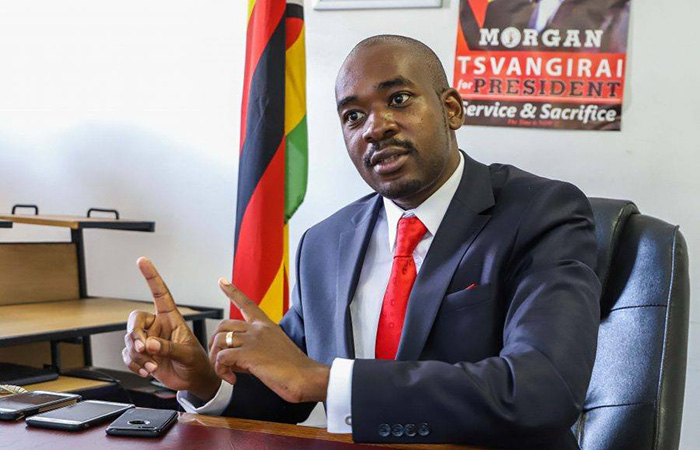
President of the opposition Movement for Democratic Change (MDC) Nelson Chamisa
Many of my social media contacts responded with a multitude of opinions, but those opposed to Nelson Chamisa brought up one issue that they hope to use to try and stop his national tidal wave of support at the MDC congress in May of this year.
The common thread seems to be saying that Nelson Chamisa will be elected or dismissed by MDC delegates and not the general social base outside the MDC, therefore anything can happen and his national popularity doesn’t matter so goes the idea.
Here is my personal view, Nelson Chamisa took over from Morgan Tsvangirai and within five months of leading the MDC after Tsvangirai’s death, Chamisa had managed to get over 2 million votes in a general election, invariably those were mainly Chamisa votes and I will explain why.
The MDC as a party did not perform as well as Chamisa did and that is a fact borne in numbers and not opinions, look at the MDC parliamentary tally against Chamisa’s official presidential tally.
It is either Chamisa has become a much stronger brand than his own political party or his party did not invest as much as they should have in the parliamentary race.
The other two contenders for the MDC leadership are lawyer Douglas Mwonzora and engineer Elias Mudzuri, two gentlemen that I have known personally over the years, and I have the utmost of respect for both of them.
I even spent two nights living at the Mudzuri homestead in Zaka whilst filming his father in 2008 after Sekuru Mudzuri and his children had been beaten up by the military in the post election violence of 2008, the scenes are in my documentary film A Violent Response.
So I know and respect all three men involved in this internal presidential race, but mine is just an opinion based on the realities on the ground and not political emotions because I am not even a member of the MDC but just a social commentator.
The MDC must understand that an internal party election is not just about them, but also about the national social base that they intend to attract at a general election.
It is about people who are not even MDC members, but folks who will either make the MDC win or lose a general election in 2023 all things being equal.
No party can ever win a general election with its own card-carrying members only, that is what I will call the Nelson factor, an element that the other two contenders for the MDC Presidency simply don’t have.
If the MDC elects any other candidate other than Nelson Chamisa, they might as well kiss goodbye to 2023, and that is why ZANUPF folks are so energized on supporting the other two MDC candidates on social media.
There is an openly anti-Chamisa frenzy from well-known ZANUPF social media surrogates and there is a reason for that disingenuous wave of support for anyone other than Nelson Chamisa.
ZANUPF knows that if the economy doesn’t dramatically improve and President Emmerson Mnangagwa has to face Chamisa at the polls again in 2023, it will be an electoral massacre of unimaginable proportions for the President.
Let us deal with strictly common sense and facts as opposed to partisan rambling and irrational arguments.
The average voter in 2023 will be below 35 years of age, those born in 2000 will be 23 years of age and those born in 2005 will be voting for the first time.
They don’t have any emotional ties or defined political attachment to either the MDC or to ZANUPF, they will pick a candidate that best represents their economic interests and someone they can identify with, someone they can imagine visualizing their future.
This is plain common sense that we can’t even argue with by positing opinions or otherwise, this is just the reality today as we speak in Zimbabwean politics.
So there are two things that will likely happen, Wamba as Nelson Chamisa is popularly known by his supporters will carry the day and ZANUPF will have to work extra hard to avoid using violence as a power retention tool in 2023.
ZANUPF and President Mnangagwa will also have to work extra harder on the economy in order to win the general election in 2023 all things being equal.
If the MDC elects someone else other than Wamba in May at their elective congress, something which I doubt they will do, they will stand NO chance at the polls in 2023, it will be a catastrophic error of political judgment and tact.
Wamba will likely lead a much bigger break away MDC at the instigation of his supporters in the unlikely event of him losing to either Mudzuri or Mwonzora.
Such a split will have the consequence of dividing the opposition vote and that can only benefit the incumbent ruling party depending on other variables at play in 2023.
This explains why the ruling party is salivating at the thought of Nelson Chamisa losing the MDC presidency in May.
So any MDC delegate who has the interests of their party at heart will have to vote for Wamba if they envision being a political party running a government.
They don’t have to like Wamba but he is the man of the moment, and if they desire winning an election then their choice is a no brainer, it will be Nelson Chamisa.
If they vote otherwise, their vote will ensure and perpetuate their comical stay in the opposition ranks because we now know that the floating and average voter is likely to vote for personalities and not necessarily political parties.
I don’t see any other meaningful argument beyond Wamba’s case, not because of anything else but just plain common sense.
He is MDC’s future for now and electing him will be a step closer to fulfilling that dream that has been deferred for 19 years of engineered election heartbreaks for their party.
Then there is the argument that Chamisa is not yet polished politically and that he is too much of an entertainer than your traditional politician, but then who is he being compared against?
The person that he will meet at the polls is President Mnangagwa, so on what basis is the suitability argument based on when comparing the two men?
Zimbabwe’s situation is akin to a home whose roof has been blown away by a thunderous storm accompanied with lightning, and that is NO exaggeration at all.
We have no currency of our own, we have no medicines in our hospitals, we have no food security, we have no foreign exchange in our banks, we don’t even have sufficient local currency going around, we have no jobs and the list goes on.
Now for those seeking a different political direction to ZANUPF there is only one question to answer and again it is premised on the central argument of common sense.
Do you get to choose whether you must put Harvey tiles or the Blue Roof type when rain is pouring into your home damaging your property?
It is pointless for the social and professional elites to complain about the quality of the political candidates in the opposition when the elites themselves see politics as beneath them.
Until the day they chose to go out and campaign, distributing fliers and voting for the likes of Nkosana Moyo and Noah Manyika who seem to espouse their values, then they must be content with those that chose to do the foot work on the ground.
Politics is a game of free association, why not form political parties that embrace those values and campaign for them?
In all this wave of popularity, Nelson Chamisa needs to unite the opposition movement if he emerges the winner and his supporters must be humble and not allow the tyranny of majority to become their identity of engagement.
Hopewell Chin’ono is an award winning Zimbabwean international Journalist and Documentary Filmmaker.
He is a Harvard University Nieman Fellow and a CNN African Journalist of the year. He is also a Fellow at the University of Oxford’s Africa Leadership Institute.
Hopewell has a new documentary film looking at mental illness in Zimbabwe called State of Mind, which was launched to critical acclaim.
The recently departed music superstar Oliver Mtukudzi wrote the sound track for State of Mind.
It was recently nominated for a big award at the Festival International du Film Pan-Africain de Cannes in France. You can watch the documentary trailer below.
Greetings from Zimbabwe, Your Excellency. I hope I find you in the best of health. Incidentally, this letter is all about health.
President Cyril RamaphosaRamaphosa.jpg
I, like so many others am grateful for the huge role that Zanu PF and Zapu played in the liberation of our country through Zanla and Zipra respectively, a liberation that also quickly facilitated the liberation of South Africa through the ANC’s Umkonto we Sizwe and Namibia’s freedom through Swapo’s armed wing, PLAN.
Our liberation movements will forever be one solid, united front against all forms of external aggression. Aluta continua.
Your Excellency, today I bring to you a special request on behalf of our leaders, the same leaders who liberated us almost 40 years ago.
As you are aware, our country has been going through a serious economic crisis caused by unjustified sanctions against our sovereign nation of Zimbabwe.
I am so happy that you at least are doing your best to have these sanctions removed as soon as possible. And when you pay your first official visit to our beloved country, we shall receive you with open arms.
My humble request is related to the recent incident where some misguided Zimbabweans, domiciled in South Africa, saw it fit to abuse your hospitality by making monkey noises outside Cape Town’s Groot Schuur Hospital ostensibly to force the hospital authorities to remove our ill vice president, Constantino Guveya Chiwenga, whom they thought was receiving attention there. But he was not.
Our leaders deserve the best care possible out there because of the demanding nature of their jobs.
We certainly cannot risk their lives with mediocre medical attention.
That is why they now fly out of the country to get specialist treatment, whatever it takes.
Our parlous hospitals are in such a sorry state that some medical staff have resorted to using condoms as gloves.
Medical staff is always on strike for better wages.
All the major hospitals are so under-equipped, patients are sometimes referred elsewhere.
Even the food leaves a lot to be desired.
Drugs are either in short supply or are expired.
Mortuaries are overcrowded as relatives cannot afford to claim bodies of loved ones.
As I write, those patients who don’t want to pay their medical bills after being discharged are detained in the hospitals by the hospital authorities.
They want to leave without even paying a cent, imagine!
Are these the medical facilities that our leaders should be treated in?
A resounding NO! What would the world think of us, a sovereign nation?
I beseech you, Your Excellency, to consider the following request.
Please build a hospital that will exclusively give the best medic treatment available to our leaders.
Instead of chartering expensive jets to be flown to places like India, they could be flown in these jets straight to this hospital.
If a new hospital cannot be built, at least consider setting aside one hospital with modern facilities exclusively for the benefit of our leaders, their immediate family members, and other close relatives.
This can be a government-to-government thing.
The patients currently being treated in that hospital can then be treated elsewhere.
If the need arises, the hospital can also accommodate other African leaders when they fall sick.
This is what African solidarity is all about. Pan Africanism, nay, Ubuntu, at its best.
Let’s shame our detractors once and for all! I pray that you will consider my humble request.
Former president Robert Mugabe took the occasion to celebrate his 95th birthday to twist the knife into President Emmerson Mnangagwa and all those he accuses of using illegal means to kick him out of power in November 2017.
Then Zimbabwean President Robert Mugabe flanked by his then deputy Vice President Emmerson Mnangagwa
The teetotaller denounced the use of lethal force by Mnangagwa to crush last month’s protests, and warned that his successor faces the spectre of being overthrown because “God has his own way of punishing rogues and cruel people”.
“You want to shower yourself with praises despite being at the top? You are not God ED. Today you are at the top, tomorrow you will be at the bottom, bear that in mind. God has his own way of punishing rogues and cruel people,” Mugabe said.
“We condemn the violence on civilians by soldiers,” he said. “You can’t do without seeing dead bodies? What kind of a person are you? You feed on death?” he fumed.
Since his ouster, Mugabe has rarely been seen in public. The first time he emerged out of his shell was towards the July 30, harmonised poll when he invited members of the Fourth Estate to his palatial home in Borrowdale.
In that interview, Mugabe threw his weight behind MDC Alliance presidential candidate Nelson Chamisa — infuriating his former comrades in Zanu PF who were expecting him to back Mnangagwa.
As a citizen of this country, Mugabe is surely entitled to his views — just like any other Zimbabwean. His vitriol is also not without merit.
Mnangagwa has disappointed many ever since he assumed the reigns, with his most grievous wrongs being the deployment of the military to quell protests.
After the August 1, debacle, the army was deployed once again last month to crush protests over steep fuel prices, resulting in the death of a dozen people.
His excesses have thrown off-rails Zimbabwe’s re-engagement efforts, making it even harder for his administration to revive the country’s economy.
What we, however, find strange with Mugabe’s holier-than-thou attitude is that he has conveniently forgotten about his excesses during his 37 years of iron-fisted rule. It’s like a kettle calling the pot black.
Fifteen months is too short a period for Zimbabweans to have forgotten how Mugabe turned what was once Africa’s promising economy from being the breadbasket of the region into a basket case.
Zimbabweans may have forgiven him, but they are not fools as to forget how he trampled on people’s basic rights to keep power.
The least Mugabe can do is to keep quiet to allow wounds to heal or at least capitalise on this opportunity to apologise for every wrong he presided over during his reign. DailyNews
Vice President Constantino Chiwenga back from India
By Tendai Kamhungira
Vice President Constantino Chiwenga is back from India where he was receiving treatment for an abdominal ailment, a government official has confirmed.
Vice President Constantino Chiwenga back from India
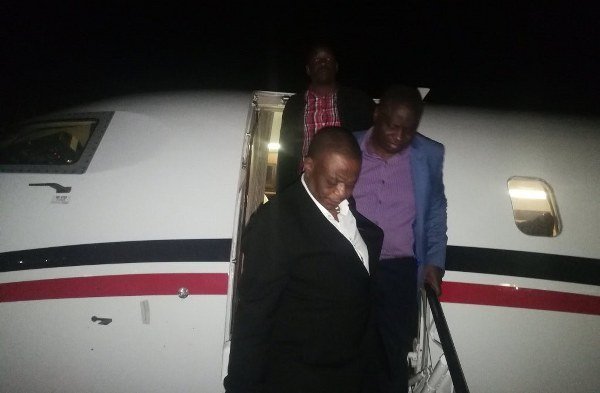
Chiwenga traveled to India with his wife Marry and Health deputy minister John Mangwiro about two weeks ago.
Speaking to the Daily News yesterday, Mangwiro said they had a safe journey back to the country, adding that Chiwenga had recovered. “He is well and everything is okay,” Mangwiro said, without giving further details.
According to reports from India, Chiwenga’s trip back home was delayed on Friday after the plane, a Boeing 737 with registration mark A6-RJX, developed a problem soon after taking off, forcing it to return to the terminal.
The plane, which is believed to cost $500 000 to charter from India to Zimbabwe, is said to be kitted with medical equipment inside.
Citizens have often castigated government officials for routinely seeking medical help abroad, shunning the local public health system, which has collapsed with hospitals struggling to provide medicines to patients.
Chiwenga was last seen in public on February 5, 2019, when he appeared on national television while attending President Emmerson Mnangagwa’s Cabinet meeting. On the same day, he dismissed reports that he had been airlifted to neighbouring South Africa for treatment, castigating the social media for wishing him ill.
“There are determined to hear that I am sick, they want me dead, but that cannot be, I am very fine and well, I am actually doing my job as a politician,” he was quoted saying. Chiwenga is one among a list of Zimbabweans who have been trooping to India for private health care.
India has become popular because of its advanced healthcare system, drawing foreigners from Africa, the Middle East, Pakistan, and Bangladesh, for complex paediatric cardiac surgery or liver transplants — procedures that are not done in their home countries.
They also come from the United Kingdom, Europe, and North America for quick, efficient, and cheap coronary bypasses or orthopaedic procedures.
India ranks among the top 20 of the world’s countries in its private spending, at 4,2 percent of Gross Domestic Product.
In October last year, deputy chief secretary to the President and Cabinet George Charamba disclosed that Chiwenga was on special diet because of the delicacy of his intestines which had been affected by acids.
“Apparently, you have to give it time to allow internal body tissues to heal both large and small intestines were attacked. But he must also remain calm and rested to ensure that there is no relapse into excessive secretion of acids in the body. He is on a special diet because of the delicacy in his stomach,” Charamba was quoted as saying.
Since leading the coup that toppled former president Robert Mugabe in November 2018, Chiwenga has become a larger-than-life character in the country’s politics.
Despite his domineering political profile which is loved and hated in equal measure, his health has been a source of bother.
The former Zimbabwe Defence Forces commander early last year traced his health woes to the days when he orchestrated Mugabe’s fall.
He claimed that he was suffering from “nhuta,” something he claimed caused his skin to lighten and triggered speculation that he was bleaching his skin.
“It was during that time that I fell ill. I had this skin sickness (nhuta) that affected my whole body from beneath my feet to my back and the journalists started saying I was using skin lightening creams, but that was not the case.
“I was sick. I have decided to talk about it because that is what you see, but you should know that everything that happens comes with a price. We then sent everything to South Africa to find out what was causing the sickness, but they failed to treat it.
“It was then that my (late) sister Margaret approached Sister Redemptor (Roman Catholic nun) and was given herbs that I began taking until I was healed. But before I took the medication they also prayed for me,” Chiwenga said at the burial of his sister Margaret.
The 61-year-old ex-soldier has appeared in public with swollen hands and in some instances with a cannula on his hand, and has also shown signs of irritation in public. DailyNews
Former Finance minister and senior opposition politician Tendai Biti has said his conviction on charges of unlawfully and falsely announcing the results of last year’s presidential election was a flagrant abuse of the court process.
Tendai Biti, a prominent Zimbabwean politician, is seen before his release at the magistrates courts in Harare, Monday, Feb, 18, 2019. A Zimbabwean court has convicted prominent opposition politician Tendai Biti for announcing that his party’s leader won disputed elections held in July. Biti was on trial for “unofficial and false declaration of results.” (AP Photo/Tsvangirayi Mukwazhi)
Biti, vice chairperson of the main opposition MDC, was fined $200 after being hauled before the courts last year on charges of announcing that MDC Alliance leader Nelson Chamisa had won the presidential election.
Biti, who fled the post-election military/police crackdown in Zimbabwe, was later deported by Zambian authorities after a failed asylum bid. He has vowed to continue “fighting tyranny and illegitimacy” in the country despite his conviction.
The Harare East member of Parliament was convicted by Harare magistrate Gloria Takundwa who fined him $200, or alternatively spend seven days in prison for the offence.
He paid the fine.
His lawyer Alec Muchadehama said they will be appealing on the grounds that the trial was full of contradictions in the manner in which it was handled.
Following his conviction, the Harare East legislator and lawyer said he was unfazed by the conviction, which could be ominous for him.
It remains to be seen if the Law Society of Zimbabwe will renew his practicing certificate after the conviction.
“I am innocent, absolutely innocent but the problem is the person leading the country is a very unstable predatory person in the name of Emmerson Mnangagwa. I am just a symptom of the bigger challenges affecting the country led by a very unstable person,” Biti said.
“Throughout history, autocrats have always abused the law to further the cause of power retention and aggrandisement,” Biti said.
“The conviction will not deter us. It will not break us. No bullet, bomb or prison will stop our resolve to end tyranny, illegitimacy and fascism in Zimbabwe.
“I think that it will be so critical for the leadership of our party, advocate Nelson Chamisa and for everyone else in the leadership, that we provide the necessary leadership to guard and protect our people …,” Biti said.
Chamisa also said Biti was one of the pillars of his movement who was “being targeted for telling the truth and was aware of targeting of lawyers, doctors for human rights and even with (Robert) Mugabe at his worst we never saw such attack on human rights.”
“This is why we have said there is a political problem where politics is contaminating the justice delivery system.
“We are continuing to challenge that and we are not shaken as a movement and are so committed to ensure that Zimbabwe is a democratic society.
“We are reasonably confident that Sadc will come to support the people of Zimbabwe.
“We are also going to knock at the doors of the United Nations and the international communities at large to make sure those issues are resolved,” he said.Biti blasts false poll results conviction. DailyNews