The primary aims and objectives of the Zim-agora are:
1) Critical Analysis: To provide a platform for critical analysis of Zimbabwean political economy questions, particularly in the context of elite succession contestations within the ruling ZANU-PF party and the broader securocratic state.
2) Public Discourse: To foster public discourse on topical issues such as corruption, climate change diplomacy, public policy, human rights, and democracy within the framework of transitology political discourses and narrative shaping.
3) Empirical and Theoretical Grounding: To offer an empirically, theoretically, and locally grounded window into the Zimbabwean political economy, interrogating recent movements within the security sector and their implications for stability and sustainability.
4) Weekly Think-Tanking Papers: To produce weekly think-tanking papers that provide critical analysis of current political economy questions, power configurations within the party-state-military-business complex, and the roles of opposition and civil society organizations.
5) Democratic Space: To tackle the shrinking democratic space in Zimbabwe and explore pathways to transition and improve human life from the ills of a securocratic state.
Crackdown on Dissenters: Teaching the Tortoise to Hurry in Zimbabwe
Introduction
A walk through the cities of Zimbabwe, a nation renowned for its resilient spirit and peace-loving nature, reveals a grotesque political atmosphere where intensified state crackdown on dissenters is unfolding.
In street corners, commuter bus ranks, and vegetable marketplaces, whispers of state brutality grow louder day by day.
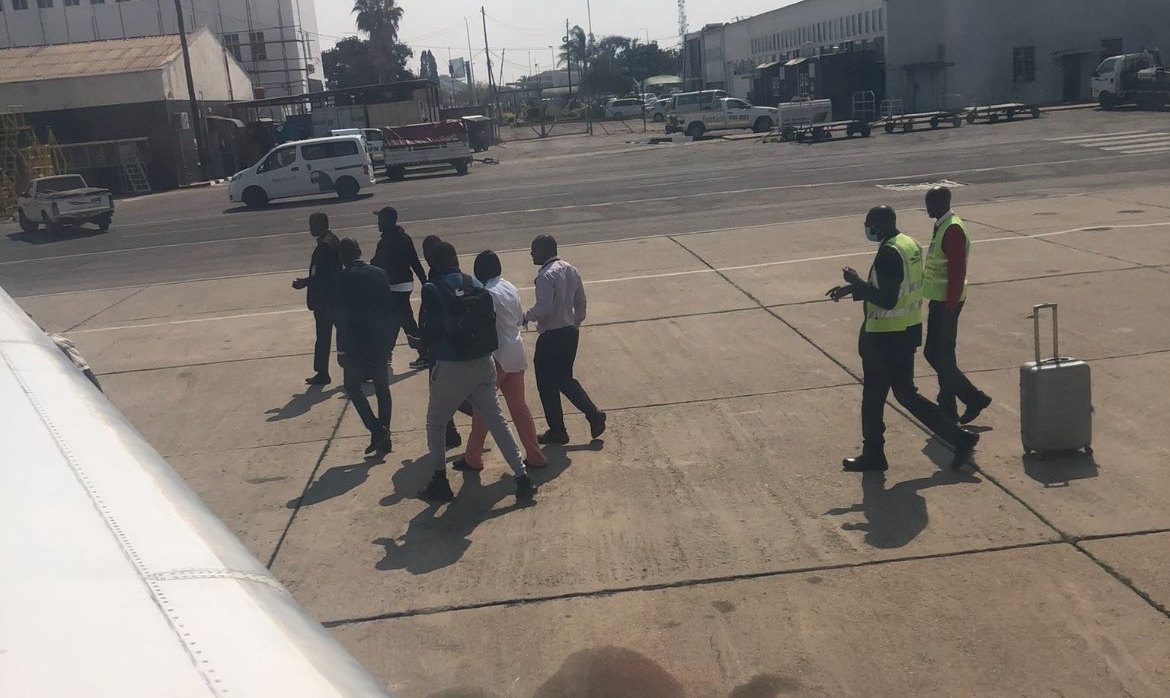
Fuming, citizens discuss reports of the brutal arrest and detention of 78 opposition members on 16 June, 2024, along with the latest 31 July, 2024, arrest and torture of four human rights defenders: Robson Chere, Namatai Kwekweza, Samuel Gwenzi, and Vusumuzi Sibanda.
This crackdown on opposition and human rights defenders during the SADC Industrialization Week has been glaring and brazenly daring in the state’s disregard for constitutional rights and democratic norms.
It has also shaken the key African values of Hunhu/Ubuntu—the very foundations upon which the republic is glued together.
In African hunhu/ubuntu culture, it is taboo for a man of the house to chastise a child or quarrel with his wife in front of visitors.
No matter the cause, disputes are resolved peacefully and amicably to show hospitality and reverence not only to the important guest but also to preserve the family name from consequential bad publicity.
This is a Common Moral Position (CMP), establishing the foundation of African society.3 Hunhu/ubuntu are basic norms “… that flow within African notions of existence and epistemology in which the two constitute a wholeness and oneness.”
However, the government’s glaring defiance of the two foundations of society – constitutional norms and culture – has cast a dark shadow over the country’s public posture, its culture, and its democratic aspirations.
The Zimbabwe Democracy Institute’s argument is that the crackdown is a political legitimacy deficiency syndrome, the symptoms of later stages of a decaying social contract upon which the very existence of government, and consequently the state, lies.
In this Zim-agora, we diagnose the underlying problem symptomized by this crackdown, exploring its implications on the social contract, the legitimacy of the state, and the future of Zimbabwe.
Through a blend of critical analysis and tapping into African knowledge systems, we delve into how a traditionally peace-loving and risk-averse populace is being pushed against the wall in undemocratic ways.
The metaphor of teaching a tortoise to hurry aptly captures the absurdity and urgency of the situation, as the state’s heavy-handed tactics inadvertently fuel the very unrest they seek to suppress.
Join us as we navigate this intricate landscape, shedding light on the erosion of legitimacy and the unintended consequences of a securocratic state’s desperate bid to maintain control.
The Anatomy of a Crackdown: Lessons from Mugabe’s Last Days
The recent onslaught against the opposition and civil society activists is best understood within the context of a securocratic state—a state that prioritizes regime security over citizens’ rights and demands, using coercive state apparatus to forcefully coerce its political rivals into submission or elimination.
It is within this state context that the crackdowns are deployed for regime survival. Three key strategies are observably deployed to achieve this end.
First is the criminalization of dissent. In recent years, the Zimbabwean government has systematically targeted opposition leaders, journalists, and activists using the coercive state apparatus to protect the ruling elite’s survival.
For instance, journalist Hopewell Chin’ono was arrested in July 2020 after exposing a multimillion-dollar COVID-19- related corruption case.
Political activist Jacob Ngarivhume was arrested in July 2020 for calling for a nationwide protest against government corruption, and opposition leader Job Sikhala spent months in prison for his political views.
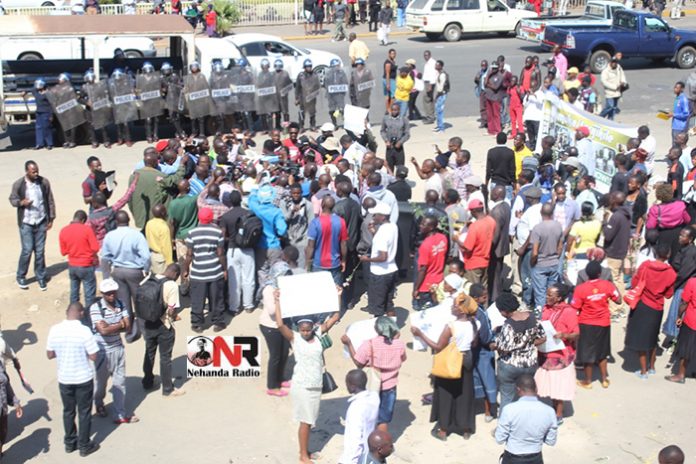
Second is use of coercive state apparatus for the suppression of protests. The state has frequently used excessive force to disperse protests.
Examples include the violent crackdown on August 1, 2018, protests against the delayed release of election results, which resulted in civilians being shot by the army in the capital, Harare.
The January 2019 protests against rising living costs saw the army and police deployed across the country, resulting in many deaths and brutal injuries.
Health workers protesting poor working conditions were also criminalized, with some, like Peter Magombeyi, being abducted and tortured.
Third is the use of lawfare, solidified through the enactment of the “Patriotic Bill,” which further criminalizes dissent.
As argued earlier, a ruling elite that survives through these tactics suffers from a political legitimacy deficiency syndrome—the symptoms of later stages of a decaying social contract upon which the very existence of government, and consequently the state, lies.
The social contract between the state and its citizens in Zimbabwe has entered later stages of decay. The government’s reliance on security forces to maintain order highlights a lack of trust and legitimacy—the two values needed to run a democratic republic.
The political legitimacy refers to a voluntary support given by citizens to the political system by virtue of being perceived to be the rightful authority.6 Where the ruling elite rely of force and coercion to enforce policy, it is a sign that they have lost their legitimacy.
The legitimacy of the securocratic state and the ruling elite, has been eroded by various factors, such as the decline in electoral support, the deterioration of the rule of law, the violation of human rights, the closure of the civic and democratic space, the disputed elections, the endemic corruption, the poor service delivery, the economic collapse, and the social unrest.
The erosion of the social contract has been evident in successive disputed elections, reports of biased electoral management bodies populated with loyalists of the ruling Zanu PF elites, deployment of quasi-securocratic entities like the Forever Associates Zimbabwe (FAZ) to interfere with the electoral processes, and the deployment of the police to block opposition campaigns detailed in the SADC and EU Election Observer Missions’ reports, among others.
These are telltale signs of a ruling class that knows it cannot win a free contest for power, as it has lost the trust of the citizens.
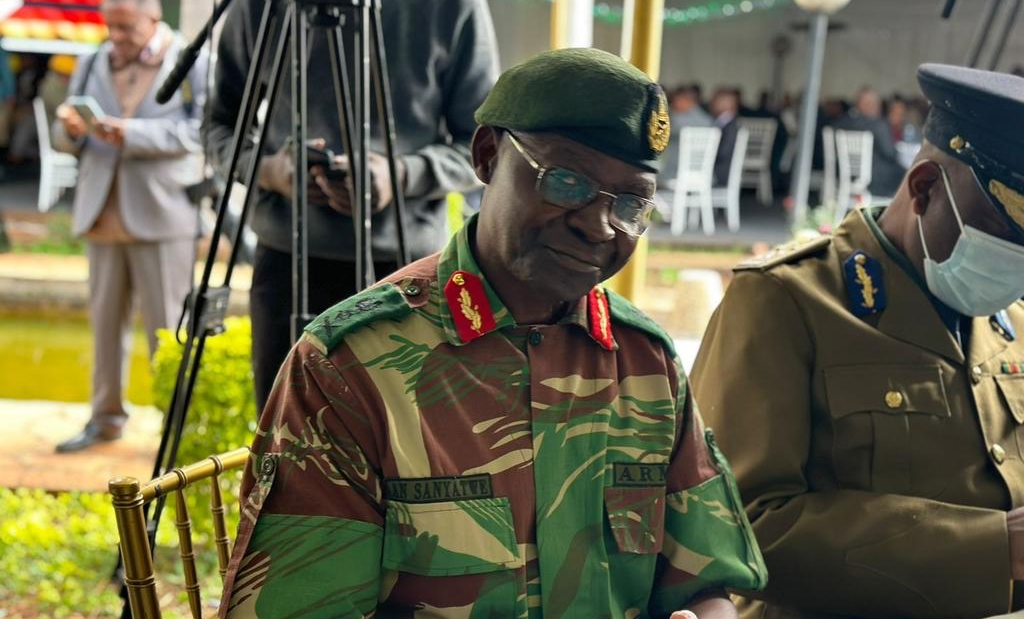
The deployment of the army and the crackdown on dissent are indicative of a government more concerned with preserving its power than addressing the needs and aspirations of its people.
Thus, the recent deployment of security forces to quell possible protests is a clear indication of the government’s intent to maintain control and suppress any form of dissent, as it is likely to lead to citizens’ transition agency.
This move reflects deep-seated fears within the ruling elite about potential uprisings and public protests. The heavy-handed approach is reminiscent of the tactics employed during Robert Mugabe’s final days in power, where government reshuffles and crackdowns were used to quell opposition and maintain a grip on power.
Lack of Elite Consensus and Fear of Internal Implosion
The current attacks on civil liberties are not merely responses to external threats but also reflect internal fissures within the ruling party. Infighting and power struggles have created an atmosphere of paranoia, leading to preemptive measures to prevent any faction from hijacking public protests.
These internal fissures within the ruling Zanu PF party are evident in their nationwide political activities promoting President Mnangagwa’s continued stay in power until 2030, despite constitutional provisions (i.e., sections 91 and 328 (7)) that prohibit him from remaining in power for more than two terms ending in 2028.
This is encapsulated in a slogan popularized by President Mnangagwa’s allies in Masvingo and Midlands provinces: “2030, VaMnangagwa vanenge vachipo vachitonga,” meaning “in 2030, President Mnangagwa will still be there, ruling.”
Discrediting the slogan, Zanu PF National Political Commissar Mike Bimha stated in April 2024 that the new slogan calling for the extension of President Mnangagwa’s tenure beyond 2028 is not recognized by the party. He argued:
The commissariat never said we have a new slogan. I don’t know. It didn’t come from the commissariat… People are free to express themselves in their own way. I want to suppose that they are saying in 2030 VaMnangagwa will still be alive and I think it’s a good wish for him to be still alive even beyond that. There is no problem with that… Zanu PF follows the Constitution. Elections come every five years. We had elections and we won those elections. Elections will come again in 2028 and we will win anyway. That is where we are.
At a recent Zanu PF gathering in Chikomba, Vice-President Constantino Chiwenga refrained from chanting the slogan, in sharp contrast to elites who had spoken ahead of him and chanted it.
This division at the upper echelons of the party is a product of fear and uncertainty, as different factions vie for control and influence.
Thus, the crackdown on opposition and civil society is a strategy to dissuade them from identifying and exploiting this emerging critical juncture, which many scholars identify as a cracking point in the life cycle of an authoritarian regime.11 Early identification and strategic input by opposition and democracy defenders have historically led to democratic transitions in authoritarian regimes.
Each faction within the elite is wary of the other teaming up with the opposition and civil society to gain control of state power. Lessons from the last days of Robert Mugabe’s rule are worth reiterating.
In November 2017, a similar critical juncture occurred when the faction aligned with current President Mnangagwa teamed up with the military, civil society, and the opposition to capture state power from the late President Mugabe.
African history is rich with case studies showing that once a power transition through a coup d’état occurs successfully, successive transitions are likely to follow suit, as military takeover becomes revered as the most effective means to state power.
This is especially true where democratic platforms for expressing dissent and alternating power are rendered defunct by the authoritarian regime.
Opposition Dilemma: Weaknesses and Opportunities
In the wake of these developments, the role of the opposition becomes crucial for several key reasons.
First, the opposition is essential in providing citizens with an alternative pathway out of the brutal crackdowns and socio-economic hardships, rekindling the democratic dream.
By presenting a viable alternative, the opposition can inspire hope and mobilize the populace towards a more just and equitable society.
Second, the opposition must organize citizen agency into a goal-oriented movement, directing citizens’ frustrations towards the rightful targets—the state—in constitutional and democratic pathways.
This organization helps prevent the displacement of grievances, which could otherwise lead to anarchy. By channelling discontent into structured, peaceful protests and advocacy, the opposition can maintain order while pushing for change.
Third, the opposition provides structured leadership, necessary to coordinate the citizens’ movement towards resolving their grievances. Effective leadership can unify disparate groups, ensuring that efforts are cohesive and strategically sound.
However, the opposition in Zimbabwe currently faces significant challenges. It is weak and fragmented, struggling to present a united front against the ruling party.
The government’s actions have further marginalized opposition voices, making it difficult for them to mobilize and challenge the status quo.
To overcome these obstacles, the opposition needs to consolidate its various factions and present a cohesive front. This unity is crucial for gaining the trust and support of the populace.
The opposition must articulate a clear, compelling vision for the future that addresses the immediate concerns of the citizens while laying out a roadmap for long- term development and stability.
This includes engaging with communities at the grassroots level can help build a strong, loyal support base. This approach ensures that the opposition’s efforts are grounded in the real needs and aspirations of the people.
By addressing these areas, the opposition can strengthen its position and offer a viable alternative to the current regime, ultimately contributing to the restoration of democratic norms and the protection of citizens’ rights in Zimbabwe.
Training a Tortoise, the Art of Running
There is a Zimbabwean proverb that warns leaders not to teach a tortoise the art of running. This proverb metaphorically highlights the dangers of transforming peace- loving, docile, and risk-averse individuals into reckless and unpredictable beings. Such a transformation can lead to destructive extremes. To fully understand the consequences of recent crackdowns, a metaphorical analysis of the tortoise provides rich insights.
The tortoise, with its sturdy shell and slow, deliberate movements, embodies patience and resilience. Its physical appearance, characterized by a hard, protective shell and a cautious demeanor, mirrors the nature of Zimbabweans—peace-loving, risk-averse, and often slow to anger. The tortoise’s tendency to retreat into its shell when threatened is akin to the Zimbabwean populace’s initial response to oppression: a preference for peace and avoidance of conflict.
However, even the most patient creature can be pushed to its limits. Imagine scorching the sand beneath a tortoise’s feet. The heat and discomfort would eventually force it to move, albeit slowly at first. But as the intensity increases, the tortoise, driven by survival instincts, might exhibit uncharacteristic haste and aggression.
Similarly, the Zimbabwean people, when subjected to relentless oppression and violence, may transform from a state of timidity to one of chaotic dissent. The state’s heavy-handed tactics, intended to suppress opposition, could inadvertently ignite a fervent and uncontrollable pushback, much like teaching a tortoise to hurry.
The Crackdown and Worldwide Young People Dissent
When citizens suffer from tax burdens, high costs of living, joblessness, coupled with state crackdowns and the closure of democratic spaces, they can easily turn to violent opposition against the state.
In Africa, the most recent June 18, 2024 leaderless protests in Kenya, “Generation Z” which led to the rejection of the country’s 2024 Finance Bill withdraw by President Ruto on June 26, 2024, and the reshuffle of the entire Cabinet on June 11, 2024 is another case in point.
Elsewhere in Bangladesh, nationwide student engineered protests ousted the Bangladesh government from power.
However, as these case studies revealed, success of such citizens’ efforts depends on the extent of coordination and resolve of the leadership. Dollard et al (1939)’s frustration- aggression hypothesis explains that this kind of frustration may lead to aggression on two key conditions: when the chances of continued resilience towards a goal are no longer foreseeable and, when the frustration selectively targets certain groups of the population leaving others.
Currently, Zimbabweans are ranked among the most taxed citizens in Southern Africa, with almost half of their salaries lost through PAYEE and VAT taxes, in addition to a new tax burden in form of sugar tax, wealth tax, and toll tax among others. In addition, the state has been progressively closing the civic and democratic spaces of dissent including the opposition.
The arrest of 78 opposition members on 16 June 2024 and their imprisonment for several days, along with the latest 31 July 2024 arrest and torture of four human rights defenders, Robson Chere, Namatai Kwekweza, Samuel Gwenzi and Vusumuzi Sibanda has historical parallels whose outcomes were a rude awakening for the masses.
They are reminiscent of the September 1956 Southern Rhodesian state’s hike in bus fares, which led workers to spend 30 percent of their earnings on transportation coupled with existing colonial taxation tools such as the Cattle tax, Dog tax and Hut Tax introduced in the 1890s which sought to syphon wealth from the poor indigenous people to sustain the elites.
This sparked a historic boycott organized by The City Youth League and led to the formation of the formidable opposition, the Southern Rhodesia African National Congress (SRANC) in 1957.
The Whitehead administration banned the SRANC in 1959 and arrested 307 leaders in Operation Sunrise.
Successor parties, the National Democratic Party (NDP), the Zimbabwe African People’s Union (ZAPU), and the Zimbabwe African National Union (ZANU), were also banned, marking the beginning of a political turning point towards a confrontational violent revolution in Southern Rhodesia.14 But has Zimbabwe’s government crossed all the lines to incur the kind of aggressive reaction from the citizens?
Lessons from Zimbabwe’s History of Resistance
From the 1896-97 First Chimurenga/Umvukela to the 1964-79 Second Chimurenga/Umvukela/War of Independence in Zimbabwe (Southern Rhodesia), it took 67 years of resilience under the Rhodesian settler state, which “clamped down extensive repressive measures, broke the nationalists, imprisoned their leaders, and intimidated their followers… Resistance was futile and exile-based.”
It was not until the nationalists abandoned their defunct strategy and deployed the mujiba system to win the hearts of the people and be one with them that they began to be a formidable revolution.
For instance, the late retired General Mujuru, then a commander, who first trained under the Russians and later the Chinese, recalled, “In the Soviet Union, they had told us that the decisive factor of the war is weapons. When I got to Itumbi, where there were Chinese instructors, I was told that the decisive factor was the people.”
The brutal crackdowns and closure of non-violent spaces for dissent and alternative voices pushed the peace-loving and risk-averse Zimbabweans to abandon their decades-old peaceful civil disobedience means and turn to a bloody revolution against their government as a means to resolve the political and economic problems besetting them.
Two key observations are noteworthy. First, the nationalist opposition showed a strong resolve and resilience shown by their continued forming successive political parties after the other despite the state’s response by using law-fare to shut them down.
Second, the mediating role of opposition leadership described by the late retired General Mujuru above was very key to turning citizens’ frustrations into aggressive response and directing it to the state to prevent displaced aggression.
Beyond the Crackdown: A Way Forward for Zimbabwe
The deployment of security forces and the crackdown on dissent in Zimbabwe are clear indicators of a government in crisis and huge legitimacy deficit.
The internal fissures within the ruling party, coupled with a weakened social contract and a fragmented opposition, create a volatile political landscape.
Moving forward, it is essential for all stakeholders to engage in dialogue and work towards rebuilding trust and legitimacy. Only through inclusive and participatory processes can Zimbabwe hope to achieve lasting stability and progress.
As we continue to monitor the situation, it is crucial to remain vigilant and analytical. Understanding the underlying causes and implications of these developments will help us navigate the complexities of Zimbabwe’s political landscape and contribute to meaningful change.
The Zimbabwe Democracy Institute (ZDI) is a politically independent and not-for-profit public policy think-tank based in Zimbabwe.