There are moments in the life of a nation when language itself seems to recoil from what it is asked to carry.
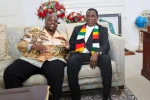
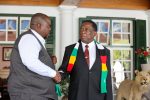
In contemporary Zimbabwe, the spectacle of high-profile death prophecies directed at ageing and visibly ailing political figures is one such moment.
It beggars belief—not merely because of its brazenness, but because of its curious redundancy. When the body is already in decline, when time has made its quiet but unmistakable claim, what precisely is being foretold?
At first glance, prophecy occupies a sacred and culturally resonant space. Within many African epistemologies, the prophetic voice has historically served as a moral compass—warning against excess, injustice, or spiritual drift.
It has been less about prediction in the narrow sense, and more about correction, restoration, and communal balance.
Yet what we increasingly witness in Zimbabwe’s public sphere appears to depart from this deeper tradition. The prophecy, instead of illuminating the unknown, seems to gravitate towards the self-evident.
One is compelled to ask: where is the value in declaring the mortality of those already advanced in years or weakened by illness? Is this foresight, or is it theatre?
If prophecy merely affirms what biology has already made probable, then its epistemic worth becomes questionable. It ceases to be revelation and begins to resemble opportunism—an appropriation of spiritual authority for public spectacle.
There is, however, another dimension worth considering. Prophecy, particularly when directed at figures occupying the presidium or those in proximity to power, may not be about death per se.
Rather, it may function as a coded discourse on succession, legitimacy, and the anxieties that attend political transition.
In such a reading, the “death” being prophesied is as much symbolic as it is physical—a shorthand for the end of an era, the loosening of entrenched authority, or the inevitability of change.
Yet even this more charitable interpretation does not entirely absolve the practice. For prophecy, when stripped of ethical grounding, risks becoming a tool of psychological manipulation. It can instil fear, shape public perception, and subtly influence political calculations.
In a context where institutions are fragile and trust is unevenly distributed, the prophetic voice can carry disproportionate weight—whether deserved or not.
Moreover, there is a moral question that cannot be easily dismissed. To publicly anticipate the death of another, particularly in a manner that appears calculated to attract attention or confer relevance, raises concerns about dignity and intent.
Is the prophet serving the public good, or merely cultivating a following? Is this an act of spiritual duty, or a performance calibrated for visibility?
One might argue that such prophecies endure precisely because they resonate with a populace attuned to both spiritual narratives and political uncertainty.
Zimbabwe’s history, marked by liberation struggle, economic turbulence, and contested governance, has cultivated a citizenry that often seeks meaning beyond the immediately visible.
In such a landscape, prophecy can offer a sense of order, even when its content is ambiguous or, indeed, obvious.
And yet, if prophecy is to retain its integrity, it must aspire to more than the predictable. It must challenge, not merely confirm; illuminate, not merely echo.
Otherwise, it risks becoming what it now increasingly appears to be: a mirror held up to inevitability, reflecting back what we already know—that age advances, that illness weakens, and that mortality, in the end, requires no herald.
In this sense, the current proliferation of death prophecies aimed at Zimbabwe’s political elite does not deepen our understanding of the future.
Rather, it exposes a present in which the sacred is entangled with the strategic, and where the language of destiny is, perhaps, being asked to do the work of politics.
If there is value to be found, it may lie not in the prophecies themselves, but in what they reveal about us: our anxieties, our fascinations with power, and our enduring search for meaning in the face of the inevitable.
The question, then, is not whether these prophecies will come to pass, but whether they were ever saying anything of consequence at all.
Dr Sibangilizwe Moyo writes on Church and Governance, politics, legal and social issues. He can be reached at [email protected]