The sequence of events surrounding Wicknell Chivayo’s now-withdrawn US$3.6 million pledge to Members of Parliament exposes a striking inconsistency at the heart of Zimbabwe’s political establishment, one that raises two plausible, and equally consequential, interpretations.
On one hand, Chivayo explicitly claimed that his proposed donation had received “express approval” from President Emmerson Mnangagwa, referring to him as “the principal.”
This was not an offhand remark. It was central to the legitimacy of the pledge, positioning the donation as not merely a private philanthropic act, but one implicitly sanctioned at the highest level of the State.
It does not take a rocket scientist to realise that Chivayo was referring to the President when he said he got an “express approval granted by the principal.”
Wicknell said: “I am therefore VERY PLEASED to announce that, following an EXPRESS APPROVAL granted by the PRINCIPAL….”
The timing, just weeks before Parliament debates the contentious Constitutional Amendment (No. 3) Bill, only amplified the political weight of that claim.
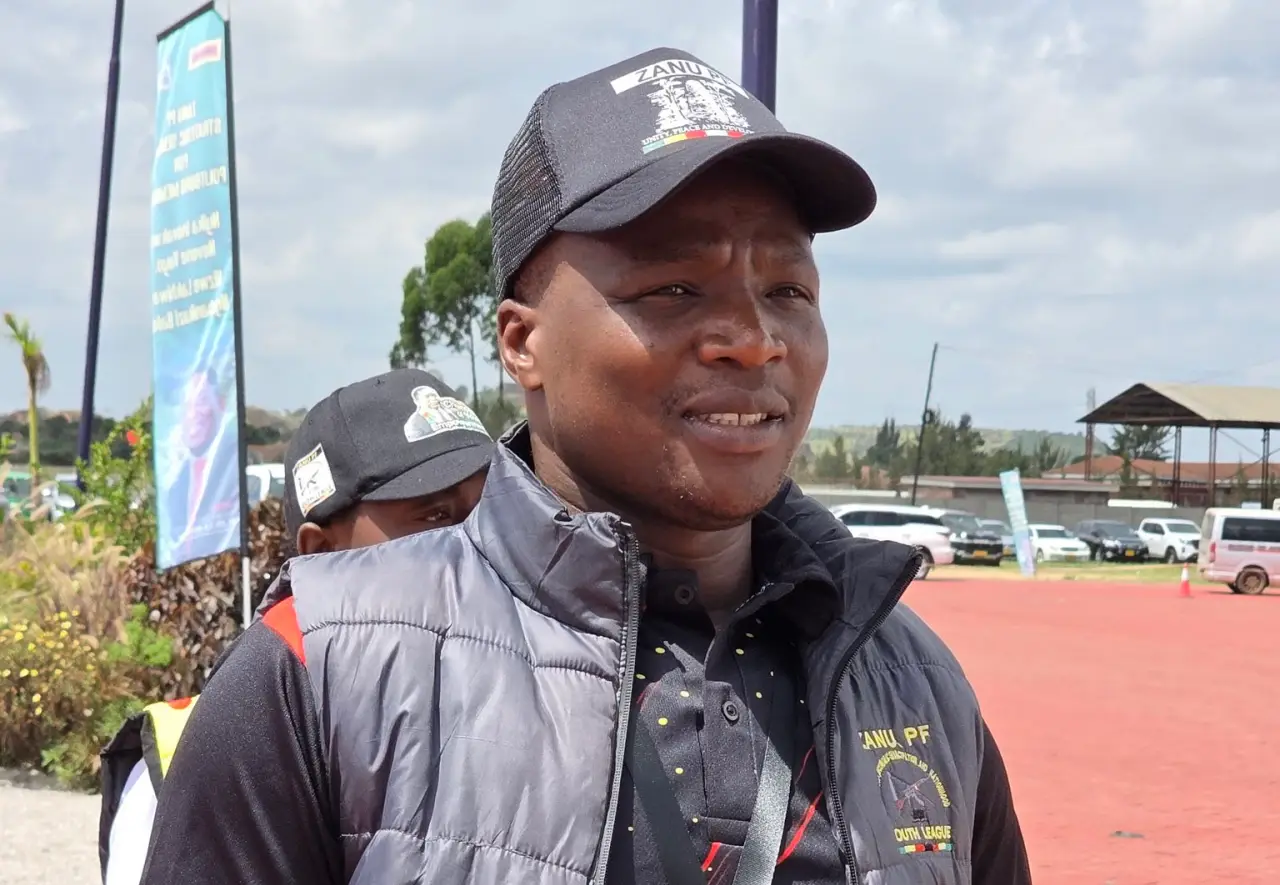
Led by John Paradza, the Zanu Youth League did not treat the donation as a coordinated or endorsed government initiative.
Instead, it publicly rebuked the move, warning that it risked undermining parliamentary independence and could be perceived as an attempt to influence legislators.
Crucially, the Youth League went further, urging Parliament to reject the funds altogether, a position that would be politically difficult to sustain if the initiative had indeed been formally sanctioned by the President.
Chivayo’s claim of presidential approval is taken at face value, then the Youth League’s intervention suggests an unusual and highly public contradiction within the ruling party itself.
It would imply that a key party structure openly challenged and effectively derailed, a plan linked to the Head of State, President Emmerson Mnangagwa.
That scenario points to internal fractures, competing centres of influence, or at the very least, a breakdown in coordination within Zanu-PF’s political machinery.
On the other hand, if the Youth League’s stance is read as authoritative, then it casts serious doubt on Chivayo’s assertion that he had Mnangagwa’s backing in the first place.
The absence of any confirmation from the President’s Office, combined with the speed and firmness of the Youth League’s rejection, strengthens the possibility that the businessman overstated or misrepresented his level of access and approval to bolster the credibility of his pledge.
Chivayo’s subsequent actions deepen this ambiguity. After facing criticism, he withdrew the parliamentary donation, expressing “regret” over the fallout and acknowledging that he may have misjudged both the timing and the channel. This time around not mentioning the President.
However, rather than stepping back entirely, he escalated the commitment to US$5 million, this time redirecting the funds through Zanu-PF’s provincial structures.
Notably, even in retreat, Chivayo did not explicitly reaffirm the claim of presidential approval. Instead, he framed the controversy as a matter of “protocol” and “consultation,” subtly shifting from authority to error.
That rhetorical shift may indicate an attempt to de-escalate without fully conceding that his original justification was flawed.
The Youth League’s position, meanwhile, remained anchored in institutional integrity, warning against any “real or perceived” attempts to influence State arms.
Their insistence that such matters should not be transactional, especially in a period when Parliament is preparing to vote on a sensitive constitutional amendment, reinforces concerns that the donation, regardless of intent, carried significant political implications.
Taken together, the evidence points to two uncomfortable possibilities: either a businessman invoked presidential authority that may not have been formally granted, or elements within the ruling party publicly distanced themselves from and ultimately blocked an initiative that had higher-level political blessing.
It is, however, difficult to understand Mnangagwa’s position, particularly given that at times he appears to indicate left while turning right.
The Constitutional Amendment (No. 3) Bill is intended, among other things, to extend Mnangagwa’s term of office beyond 2028, when his second and final term is due to end.
The President has consistently stated that he would not seek a third term, describing himself as a “constitutionalist.” However, developments on the ground suggest a different reality.
The Bill has already gone through a disputed public consultation process in which many opposition members were reportedly prevented from contributing their views, with some allegedly attacked by known Zanu-PF supporters.
Mnangagwa has allowed the process to proceed, seemingly signalling an interest in extending his tenure, an outcome critics argue could undermine the Constitution.
Just last week, Mnangagwa dismissed Jessie Majome from her position as chairperson of the Zimbabwe Human Rights Commission after she openly criticised the Constitutional Amendment (No. 3) Bill hearings as lacking inclusivity.
Against this background, it becomes difficult, even for independent observers, to determine whether Mnangagwa is involved in Chivayo’s controversy, particularly given that the businessman’s donation was allegedly intended to influence Members of Parliament to support the Bill.
Discover more from Nehanda Radio
Subscribe to get the latest posts sent to your email.