By Phillimon Mhlanga
HARARE – The government has ordered the state owned power utility to revise its load-shedding schedule, as Zimbabwe battles a power supply crisis that has ruined the economy.
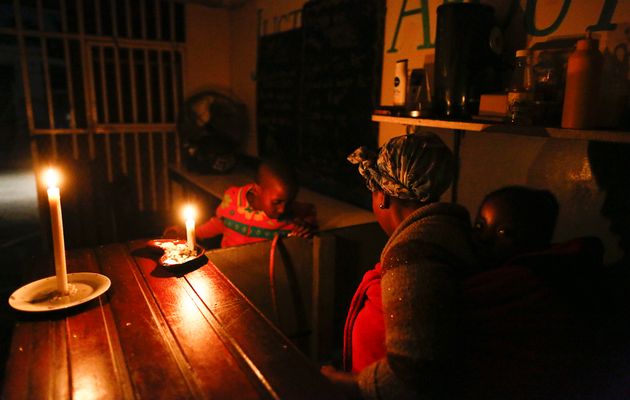
ZESA Holdings’ power distribution subsidiary, the Zimbabwe Electricity Transmission and Distribution Company (ZETDC) cuts supplies every day for as long as 18 hours across the country, as it struggles to meet demand amid breakdowns of its five power stations and falling water supply levels at Kariba Dam.
More than a decade of economic collapse left the power stations in disrepair, with generators operating well below their capacity. The situation has been worsened by low water levels for electricity generation at Kariba due to poor rainfall in the last seasons.
The Financial Gazette can reveal that the Minister of Energy and Power Development, Samuel Undenge, has issued a directive to the power utility to revise its schedule. Undenge confirmed the development, saying the new schedule would be published soon.
ZESA commercial director, Ralph Katsande, said the power utility and government were looking at various options to reduce load shedding.
The rolling blackouts across the country have seen most households and businesses subjected to more than twenty hours of load-shedding daily, a situation described by electricity consumers as devastating.
“ZESA recently published a tight load-shedding schedule but to manage the situation, I have directed ZESA to come up with rationalised and equitable load-shedding schedule which will be published soon,” said Undenge.
Kariba Hydro Power Station was generating about 750 megawatts (MW) of electricity but that has been reduced to 475MW. This is a reduction of close to 300MW.
There are now growing fears that should the water levels at the dam fall further, power generation will have to be stopped owing to water shortages, a situation which would put the power utility in a quandary.
The country is currently generating about 900MW, according to the Zimbabwe Power Company, a power generation subsidiary of ZESA, against an estimated national demand at peak periods of 2 200MW.
To cover the short fall, the power utility has been importing electricity from regional power utilities, but this has also not been enough to meet demand.
Imports are currently only coming from Mozambique’s Hydro Cahora Bassa, which has been supplying a paltry 50MW, but on a non-firm contract.
The electricity situation has serious repercussions on the recovery of the productive sectors of the economy such as manufacturing, agriculture, mining and tourism, which government wants to drive the country’s economic recovery.
Electricity supply was expected to be one of the key drivers of government’s economic revival strategies under the Zimbabwe Agenda for Sustainable Socio-Economic Transformation (Zim-Asset).
Zim-Asset envisages increased access to electricity by domestic consumers, both within urban set-ups and rural communities. Government is, however, through the power utility, working to close the electricity deficit in the country through several projects that include the expansion projects at Kariba South Power Station and Hwange Power Station.
Government has also launched a national solar water heating programme which will see electric geysers being replaced by those powered by solar as it battles to find a solution to perennial power shortages.
Electric geysers have been identified as among the major contributors to high electricity consumption among domestic electricity users. Nearly 40 percent of a domestic household’s electricity bill, according to Undenge, goes towards water heating. It is estimated that there are close to 300 000 electric geysers in the country.
Undenge said if these were replaced by solar geysers, the country may achieve a power saving of up to 400MW. This power saved can be channelled to other productive sectors of the economy. Financial Gazette
Discover more from Nehanda Radio
Subscribe to get the latest posts sent to your email.