Arsenal have beaten Tottenham to the signing of teenage defender William Saliba from Saint-Etienne for £27m, on the day Real Madrid midfielder Dani Ceballos also joined on loan.
William Saliba (right) joined Saint-Etienne in 2016
Saliba, 18, signed a five-year contract but will continue his development with the Ligue 1 club next season, before joining Arsenal in the summer of 2020.
Spanish international Ceballos has joined on a season-long deal.
The 22-year-old has played 56 times for Madrid since joining from Real Betis.
Of the loan signing, Gunners head coach Unai Emery said: “We’re excited to see Dani join us. He is a talented player with big technical ability, creativity and precision.”
Ceballos, capped six times by his country, will wear the number eight shirt this season and could make his debut against Lyon in the Emirates Cup on Sunday.
The signing of Saliba is the culmination of interest dating back to autumn 2018 and comes despite late interest from Tottenham.
The France youth international’s return to Saint-Etienne next season was a non-negotiable condition of the deal.
“We’re delighted William is joining us,” Emery said. BBC Sports
British heavyweight Dillian Whyte tested positive for a banned substance before his victory against Oscar Rivas on Saturday.
Dillian Whyte is the WBC’s number one ranked heavyweight
If the result is confirmed, 31-year-old Whyte could face an eight-year ban, because it would be his second offence.
He served a two-year ban from 2012 to 2014 for unknowingly taking an illegal supplement.
Whyte survived a ninth-round knockdown to beat Colombian Rivas on points at London’s O2 Arena.
He is the mandatory challenger to WBC world heavyweight champion Deontay Wilder.
UK Anti-Doping (Ukad) told the BBC it would be making no comment. It is not known what the banned substance is.
Representatives for Whyte have declined to comment. He can ask for a ‘B sample’ to be analysed – but if that also tests positive he will have to request a hearing to appeal.
Whyte’s promoter Eddie Hearn has posted on social media: “Further to reports, I can confirm that both Dillian Whyte and Oscar Rivas were subject to extensive Voluntary Anti-Doping Association (Vada) and Ukad testing for their bout. Both fighters were cleared to fight by both bodies and the BBBofC.”
ADVERTISEMENT
Rivas’ promoter Yvon Michel reacted to the news – which was first reported by website Boxing Scene – by tweeting his “great stupefaction”.
In a statement to the BBC on Thursday, he said: “We have learned this information like everybody else on Boxingscene.com yesterday evening. I have not heard from any concerned parties yet to get confirmation or counter.
“I will wait to know more before any more comments. Nobody from our team was aware of the situation before the fight or after the fight up to this moment.”
It is not yet known what impact this could have on Whyte’s hopes of fighting American Wilder.
In 2012, Whyte’s appeal against a ban was rejected, although a tribunal accepted his claim he did not knowingly take the banned substance.
Argentine boxer Hugo Santillan has died from injuries sustained during a title fight, just days after the death of Russian fighter Maxim Dadashev.
Santillan was a former South American super-featherweight champion.
The 23-year-old collapsed in the ring on Saturday shortly after his WBC Latino Silver lightweight bout with Eduardo Javier Abreu in Argentina ended in a draw.
He was taken to hospital and underwent emergency surgery but died on Thursday.
“Rest in Peace, Hugo Santillan,” the World Boxing Council said in a tweet.
Santillan is the second boxer to die from injuries sustained in the ring this week after Dadashev’s death was confirmed on Tuesday.
The 28-year-old had been hospitalised with bleeding on the brain after his IBF light-welterweight fight against Subriel Matias was stopped at the end of the 11th round last Friday.
He underwent emergency surgery but failed to recover.
Boxing promoter Kalle Sauerland tweeted on Thursday: “A sad, sad week for boxing.” BBC Sports
In Scarborough, people flocked to the beach to enjoy Wednesday's hot weather
The UK has had its hottest July day on record, with temperatures reaching 38.1C (100.6F) in Cambridge.
In Scarborough, people flocked to the beach to enjoy Wednesday’s hot weather
The previous record for July was 36.7C (98F), with Thursday’s top temperature falling just short of the all-time high of 38.5C, reached in 2003.
Commuters are facing disruption after Network Rail reported a number of heat-related incidents on the railway.
Forecasters have warned the heat could lead to downpours in some areas, causing more disruption to travellers.
The Met Office said the temperature reading from Cambridge was only the second time the UK had gone over 100F.
The July heat record was first broken at around 13:30 BST on Thursday when the Met Office said the temperature at Heathrow reached 36.9C.
The previous hottest July day was recorded on 1 July 2015, also at Heathrow, with a temperature of 36.7C.
Elsewhere in Europe, Germany reached a new temperature record of 41.5C on Thursday, with other countries in the region facing the possibility of new all-time highs.
The UK’s current highest ever temperature was recorded at Faversham, Kent, in August 2003.
How is it affecting travellers?
Network Rail said heat-related incidents were causing disruption across the rail network and warned people to check with train operators or the National Rail website before travelling to see how their journey was affected.
It said it was working “flat out” to fix the issues as quickly as possible.
The Rail Delivery Group, which represents train operators and Network Rail, said the disruption was particularly bad in London and the South East and warned problems could continue until the weekend.
Robert Nisbet, director of nations and regions at the group, said 20 out of 26 train companies had been affected by cancellations and speed restrictions.
“We believe there could be roll-on impacts tomorrow, because many of the trains will be in the wrong places, many of the rail staff will be in the wrong places and it will take time to re-set, to stabilise the timetable again,” he said.
“We could see disruption up until the weekend.”
It was ‘like a sauna’
Vivienne Tsui, 23, told the BBC she was waiting to be evacuated from a train in “unbearable” heat after it stopped just after departing from Euston station at around 13:30.
Passengers were told the train, bound for Manchester Piccadilly, had suffered a power shortage and there was no air conditioning, she said.
“It’s been unbearable, like a sauna. I had to get out of my seat because I felt like I couldn’t breathe,” she said.
The University of Manchester worker said she did not know whether she would be able to get back to Manchester on Thursday and would have to contact her work.
“I don’t know what arrangements have been made for us once we get off this train,” she added.
Travellers face delays and cancellations to journeys between London Euston and Watford Junction until at least 19:00 after overhead electric wires were damaged.
East Midlands Trains and Thameslink are advising passengers not to travel after damage to overhead wires between London St Pancras and Luton.
Speed restrictions are in place on some train routes because of high track temperatures.
Great Western has cancelled some trains between London, Cardiff and Swansea because of the heat and routes between London and Scotland are also affected.
Delays and cancellations are also expected for journeys across the Gatwick Express, Great Northern, Southern and Thameslink networks until the end of the day.
Other rail companies, including Greater Anglia, East Midlands, LNER and Hull Trains are advising people not to travel.
Southeastern Railway is the latest to suggest customers avoid all but “absolutely necessary” travel.
What’s the forecast?
On Thursday, Scotland recorded its hottest day of the year at 31C, while in Wales it was forecast to exceed 30C. A weather front close to Northern Ireland will keep it cooler.
Later on Thursday, eastern Scotland and the north and east of England could see rain, with a Met Office yellow warning for thunderstorms in place from 15:00 BST on Thursday into early Friday morning.
There are warnings that the storms could trigger travel delays, flash flooding, and power cuts.
Heatwave hits Europe
On the continent, Germany set a new temperature record of 41.5C on Thursday.
Belgium and the Netherlands also faced the possibility of new all-time highs, a day after recording their highest-ever temperatures on Wednesday.
A red alert has been issued for Thursday in northern France – with temperatures of 41C forecast in Paris.
French reports suggest five deaths might have been linked to the heatwave.
How to stay safe
People are being urged to help out vulnerable friends, relatives and strangers in the heat.
Age UK has issued guidance for older people to stay safe while homeless charities are handing out water and sun cream.
Public Health England has maintained a level three heat health watch for eastern areas of England.
In Bristol, thousands of people have been left without water after a water main burst, with Bristol Water saying the problem might have been caused by the heat.
Homeless charities are handing out water and sun cream to rough sleepers across the country and Public Health England has issued a level-three heat health watch for eastern areas of England.
Police have also warned of the risks of cooling off in open water, after three bodies – believed to be swimmers – were recovered in London and Gloucestershire.
Britain is not used to such extreme temperatures, which means some people could be vulnerable to heat exhaustion.
The NHS recommends keeping all babies under six months out of direct sunlight, and older infants should be kept out of the sun as much as possible, particularly between 11:00 and 15:00.
They should be kept in the shade or under a sunshade if they’re in a buggy or pushchair. Sun cream with a high sun protection factor should be applied regularly – particularly if children are in water.
All children should be given plenty of fluids and the NHS says babies who are being breastfed may want to feed more than usual, but will not need water as well as breast milk.
NHS advice also says people should cool off immediately if they show the following symptoms: headaches, feeling dizzy, loss of appetite, nausea, excessive sweating, cramps, fast breathing and intense thirst.
For more information on how to keep safe in the heat, read:
Is the heatwave caused by climate change?
While extreme weather events like heatwaves occur naturally, “research shows that with climate change they are likely to become more common, perhaps occurring as regularly as every other year”, the Met Office says.
It conducted a study last year that found that the UK was now 30 times more likely to experience heatwaves compared with the year 1750, because of “the higher concentration of carbon dioxide (a greenhouse gas) in the atmosphere”.
Records going back to the late 19th Century show that the average temperature of the Earth’s surface has increased by about one degree since industrialisation.
A climatology institute in Potsdam, Germany, says Europe’s five hottest summers since 1500 have all been in the 21st Century.
Scientists are concerned that rapid warming linked to use of fossil fuels has serious implications for the stability of the planet’s climate.
What are the UK’s current record temperatures?
The current record temperatures across the UK are:
England and UK: 38.5C (101.3F) in Faversham, Kent on 10 August 2003
Scotland: 32.9C (91.2F) in Greycrook, Borders on 9 August 2003
Wales: 35.2C (95.4F) in Harwarden Bridge, Flintshire on 2 August 1990
Northern Ireland: 30.8C (87.4F) in Knockarevan, County Fermanagh on 20 June 1976 and Shaw’s Bridge, Belfast on 12 July 1983
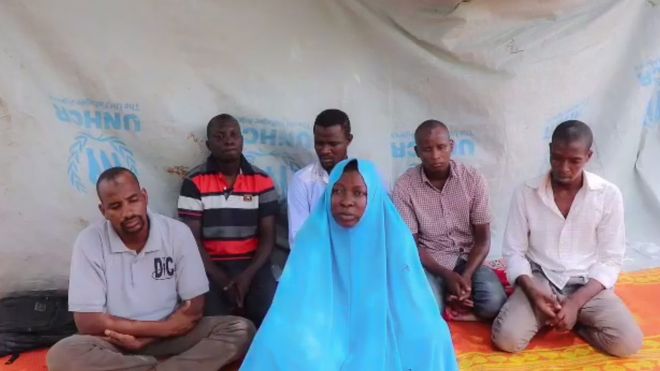
The video shows an aid worker, who gives her name as Grace, asking for help from the international community
An international charity says six of its aid workers who were kidnapped in Nigeria last week have appeared in a video.
The video shows an aid worker, who gives her name as Grace, asking for help from the international community
Action Against Hunger says the six – comprised of one staff member, plus drivers and health workers employed locally – are “apparently in a good condition of health”.
It is urging captors to release them.
The video, seen by the BBC, shows one of the aid workers wearing a blue hijab.
Surrounded by five men believed to be her colleagues, the woman says her name is Grace, and calls on the Nigerian government and international community to intervene.
No group has claimed responsibility for the abduction but it is suspected to be the work of Islamist insurgents.
There are two main groups active in north-eastern Nigeria where the abduction happened – Boko Haram and the rival Islamic State of West Africa Province (Iswap) group.
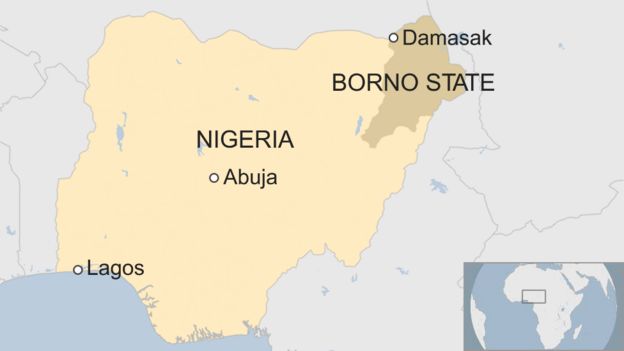
Earlier this week, Action Against Hunger released a statement saying a convoy of its vehicles on the road to Damasak, in Borno State, had been attacked. It said one of the drivers was killed, and the rest of the team were missing.
“These are humanitarian workers who chose to devote their lives to helping the most vulnerable,” the Paris-based charity says in its latest statement released on Thursday.
GETTY IMAGES
The Nigerian military says it has cracked down on the Boko Haram insurgency, and the government claims the militants have been largely brought under control.
But the BBC’s Chris Ewokor in Abuja says militant groups are still active in Nigeria and continue to carry out attacks with devastating consequences in the region. BBC News
Up to 150 people may have drowned in a shipwreck off the coast of Libya, the UN refugee agency says.
Migrants often make the perilous journey from Libya to Europe in overcrowded boats, like this one pictured in early July
A further 150 people were rescued by fishermen and returned to Libya by coastguards, the UNHCR said.
It is not clear if the migrants were on one or two boats that left the Libyan town of al Khoms, some 120km (74.5 miles) east of Tripoli.
If confirmed, it would be the deadliest shipwreck in the Mediterranean so far this year.
At least 65 migrants died in May after their boat capsized off the coast of Tunisia. Sixteen people survived.
About 164 people died on the route between Libya and Europe in the first four months of 2019, UNHCR figures show.
Thousands of migrants attempt to cross the Mediterranean to Europe every year, and Libya is a key departure point.
Those who make the journey often travel in poorly maintained and overcrowded ships, and many have died.
But since mid-2017, the number of migrant journeys has declined dramatically.
The decline is largely because Italy has engaged Libyan forces to stop migrants from setting off or return them to Libya if found at sea – a policy condemned by human rights organisations.
The UN has repeatedly said people rescued in the Mediterranean should not be sent back to Libya because of the conflict and the inhumane conditions in which migrants are kept, the BBC’s Imogen Foulkes reports.
In the first three months of 2019, some 15,900 refugees and migrants arrived in Europe via Mediterranean routes – a 17% decrease on the same period in 2018. BBC News
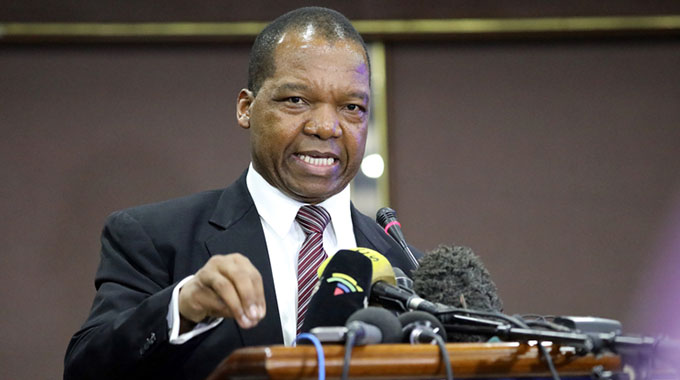
Oil firms, chrome miners, embassies and international organisations in Zimbabwe can use foreign currencies for local transactions, the central bank said, easing rules for some sectors in a bid to boost the flow of dollars in the economy.
The Reserve Bank of Zimbabwe (RBZ) Dr John Mangudya
Last month, Zimbabwe banned the use of foreign currencies in domestic transactions after renaming its RTGS currency Zimbabwe dollar and making it sole legal tender, ending a decade of dollarisation.
The exemption, announced on Wednesday and which the central bank hopes will unlock $1.3 billion held in banks by exporting companies, individuals and international organisations, is the latest unexpected policy change by the government. It could embolden critics who argued that last month’s currency reforms were hurried.
The ban on domestic use of foreign currencies caught the market by surprise as only a week before, President Emmerson Mnangagwa and Finance Minister Mthuli Ncube had repeated a pledge to only introduce a local currency at the end of this year.
The new rules have stoked inflation, which soared to a new 10-year high of 175.66% in June, raising fears of the return of hyperinflation of a decade ago.
Those holding foreign currency have been reluctant to sell on the official interbank market, where the Zimbabwe dollar has slid by 30% since June 24 to trade at 8.9 to the greenback on Wednesday.
In a circular to banks seen by Reuters, the Reserve Bank of Zimbabwe said those earning foreign currency would be allowed to buy fuel in dollars and that chrome mining firms and smelters could buy chromium from small scale producers in forex.
“To facilitate increased accessibility of fuel in the country and to reduce pressure on the inter-bank foreign exchange market, direct fuel imports are still permissible,” the central bank said in the circular.
Shortages of fuel, dollars and medicines and rolling power cuts lasting 18 hours a day are throttling an economy grappling with a severe drought that has cut the staple maize harvest by half.
Analysts say currency reforms in a country where the population is distrustful of government economic polices and the national currency can not quickly fix the deep problems that have constrained economic growth. Timeslive
Tunisia’s first freely elected President, Beji Caid Essebsi, has died aged 92, the country’s presidency says.
Beji Caid Essebsi was admitted to hospital on Wednesday night
He was the world’s oldest sitting president. He was admitted to hospital on Wednesday but officials did not say why he was receiving treatment.
Essebsi won Tunisia’s first free elections in 2014 following Arab uprisings across the region.
He was admitted to hospital last month after suffering what officials said was a severe health crisis.
They gave no further details at the time. But Prime Minister Youssef Chahed, who visited him in hospital, urged people to stop spreading “fake news” about his condition.
Seven days of national mourning have been declared following his death. The speaker of parliament, Mohamed Ennaceur, is to take over as interim president.
Earlier this year, Essebsi announced that he would not stand in elections expected in November.
He told a meeting of his ruling Nidaa Tounes party that someone younger should take charge. He said it was time to “open the door to the youth”.
The elections will now be held before the scheduled date on 17 November, according to the country’s electoral commission.
Essebsi was a former lawyer who studied and trained in the French capital Paris. During his long political career he also served as interior minister and speaker of parliament.
He rose to prominence after former Tunisian President Zine el-Abedine Ben Ali was ousted in 2011 after 23 years in office.
As president, Essebsi largely maintained stability in Tunisia. But critics said his government was too authoritarian in its response to security challenges.
Tunisia has won praise as the only democracy to emerge from the revolutions of the so-called Arab spring.
But in recent years the country has suffered attacks by Islamists and economic problems, with unemployment a persistent issue. BBC News
The Zimbabwe national football team will face a tough 2022 World Cup qualification campaign after they dropped three places in the negative on the latest FIFA World Rankings released Thursday for the month of July.
On the back of a forgettable African Cup of Nations campaign that ended with a 4-0 drubbing by DR Congo, the Warriors dropped three places and now occupy an unfashionable position number 112 in the world.
Zimbabwe slipped to number 27 in Africa, behind top seeds Senegal (20th in the world), who won silver at the African Cup of Nations and Tunisia (29th), who finished fourth in the continental tournament in Egypt.
The Warriors now face a long and winding World Cup qualifying campaign beginning with a preliminary tie in September before the group stages of the World Cup qualifiers.
Before the release of the latest rankings, the Warriors had a bye to the second round of the World Cup qualifiers as they were ranked number 26 in Africa but their latest drop means Central African Republic who were 27th has leap frogged them.
Central African Republic are now 26th and Zimbabwe 27th meaning the southern African nation will have to compete in the 28 lowest associations in Africa in the first round.
The first round will consist of 14 home-and-away ties, featuring the 28 lowest ranked teams in Africa.
The draw for the first round is scheduled to take place on 29 July 2019. The FIFA World Ranking of July 2019 will be used for the seeding of round 1.
Zimbabwe will aim to qualify into the second round of World Cup qualifiers which will see the top 26 ranked CAF teams joined by the 14 winners from the first round. These teams will be drawn into ten groups of four teams.
Meanwhile, Belgium remain the top ranked team in the world while South American champions, Brazil are second and France are third. ZimmorningPost
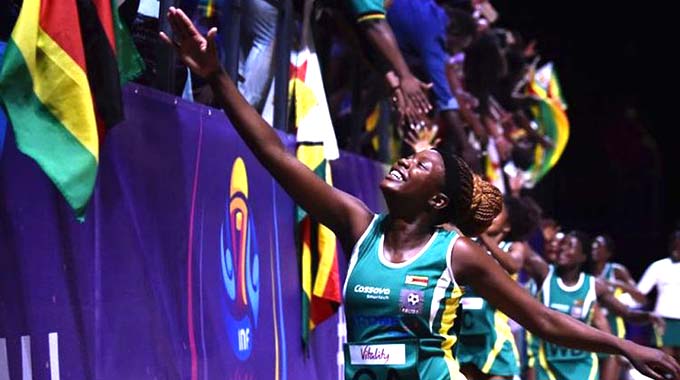
Minister of Sports Kirsty Coventry has promised the Zimbabwe Gems that late and uncoordinated payment of allowances will not happen again adding government was working around the clock to recognise the team appropriately.
The Zimbabwe Gems won over fans the Netball World Cup in Liverpool, England
The Gems arrived yesterday from their World Cup campaign in Liverpool where they stunned many to finish eighth.
Speaking to the Gems at a breakfast meeting held in their honour Harare Thursday, Kirsty said government was working on a package to reward the team for their inspired performances in Liverpool.
“We are working on being able to present something to you to show you our appreciation that will be coming in the next few weeks,” Coventry said.
“We will have some other exciting things to make sure that we show you our gratitude and appreciation for all your hard work,” she added.
Coventry, promised as a way forward, that communication will be done in time to make sure support for the Gems is not provided late as was done during the recent trip.
“I would like to take this opportunity to say that moving forward. We saw and I remember when you first qualified, came to your first training last year, we started to have conversations around the support you would need and I think at the end of the day the support eventually came but it came late and I think moving there will be more communication especially through the Sports Recreation Commission (SRC), and through the board and through the national federation, putting in a timely manner the events that they have coming up, the funding that they would need, the support that they would need from us because at the end of the day we want to try and make sure our sports across Zimbabwe are more professional,” she said.
Speaking at the same event, Zimbabwe Netball Association president Leticia Chipandu paid tribute to the Zimbabwe government.
“I sincerely want to thank the government of Zimbabwe for making it possible for the Gems to go to the World Cup by supporting them financially otherwise it wouldn’t have been possible without the support of our government through the SRC,” she said. ZimmorningPost







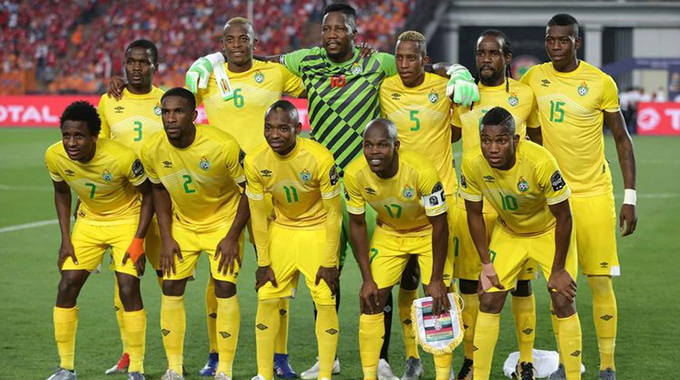 On the back of a forgettable African Cup of Nations campaign that ended with a 4-0 drubbing by DR Congo, the Warriors dropped three places and now occupy an unfashionable position number 112 in the world.