By Tatenda Dewa
Opposition Zimbabwe People First (ZimPF) interim president, Agrippa Mutambara, has strongly urged his former boss, President Robert Mugabe, to desist from manipulating the security sector during elections.
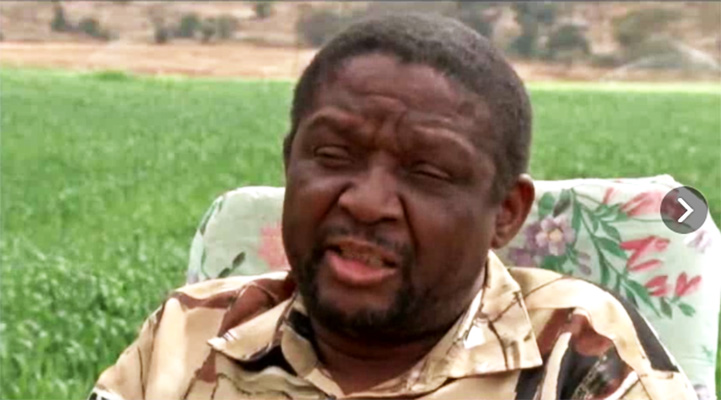
Mutambara, a former senior soldier and ambassador who served under Mugabe for a long time before joining the opposition during a purge of ruling Zanu PF dissidents more than two years ago, expressed concern that the military and other security sector units were being abused to favour the sitting regime.
Zimbabwe is set for general elections next year and there are fears that soldiers, the police and intelligence servicemen could once again be unleashed on the electorate to guarantee a Zanu PF win.
“With the mandatory 2018 general elections fast approaching, the Zimbabwe People First (ZimPF) party strongly urges Robert Mugabe, as the current president of Zimbabwe, and Zanu PF, to desist from abusing State institutions, particularly the security sector, to manipulate electoral processes,” said Mutambara in a statement on Friday.
Mutambara was recently elevated to the interim presidency of ZimPF following a series of internal leadership fights.
ZimPF was launched in early 2016 but suffered a split hardly a year after its formation, with the founding president and ex-Mugabe deputy, Joice Mujuru, going on to establish the splinter National People’s Party (NPP).
There was a further split when other founding senior members, Didymus Mutasa and Rugare Gumbo were elbowed out to make way for Mutambara.
The ZimPF caretaker leader said the roles of the security were stipulated by the constitution, which provided that it must be impartial and confine itself to ensuring national security and sovereignty.
“Soldiers and other security agents must strictly uphold the Constitution and are expected to conduct themselves in a non-partisan manner. They must not further the interests of a particular party and prejudice the lawful interests of any political party or individual.
“The Constitution stipulates that they must not be active members of any political party and clearly bars them from harming the fundamental rights of citizens. This means that soldiers must be confined to the barracks and other security agencies to their constitutional spaces and roles,” added Mutambara.
He bemoaned the involvement of the military in previous elections whereby they were accused of intimidating and persecuting Mugabe’s critics and members of the opposition.
“The Constitution gives each and every Zimbabwean equal and inalienable rights to free, fair and peaceful elections. That entails that elections must be free from violence, intimidation, partisan manipulation or other malpractices,” said Mutambara.
“Sadly, the security sector has been linked to unconstitutional conduct in the past, with Mugabe and Zanu PF abusing its members in order to win elections by hook and crook. Mugabe has used his position as the commander of the Defence Forces to order them to do things they clearly do not enjoy.
“Past elections have been marred by reports of the military, police and national intelligence being ordered, obviously unconstitutionally, to harass members of the opposition, civil society critics of the current regime, and other citizens perceived to be against the Mugabe establishment,” he said.
He rapped Mugabe and Zanu PF for forcing security agents to aid their election campaigns, saying it “disenfranchises the electorate through intimidation, persecution and deliberate exclusion from electoral processes”.
The military has since 2000 been accused of violently clamping down on the opposition so as to cow them from challenging Mugabe and Zanu PF.
Soldiers have been deployed to rural and urban areas, beating up suspected opposition members and reportedly campaigning for Zanu PF.
They were linked to the mass persecution and murder of supporters of the opposition Movement for Democratic Change (MDC-T) during a 2008 presidential run-off.
The MDC-T leader, Morgan Tsvangirai, had beaten Mugabe in the first round of elections in March but did not get enough votes to form a government, forcing the June 27 run-off which was marred by widespread violence.
This compelled Tsvangirai, who at one time took refuge at a local embassy and also fled to Botswana, to withdraw from the contest.
In the 2013 elections, the military was accused by the opposition and local civil society of collaborating with a Chinese security outfit to rig the elections in favour of Mugabe and the ruling party.
Mutambara called on the Zimbabwe Electoral Commission (ZEC) “to uphold its constitutional role of ensuring non-violence, freeness and fairness in the 2018 elections”.
“The party also urges the Zimbabwe Human Rights Commission (ZHRC) to be diligent, professional and non-partisan and document all unconstitutional conduct involving the security sector and name and shame those that abuse it. Above all, Mugabe must come out clean and denounce the abuse of the security sector in election time,” added Mutambara.