The African Academy of Sciences and Royal Society has awarded chairperson of Midlands State University’s Chemical Technology Department Dr Gift Mehlana £300 000 to establish an independent research that will address global challenges affecting Zimbabwe.
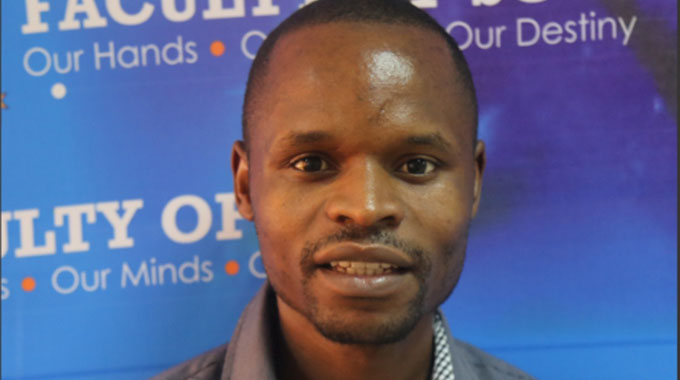
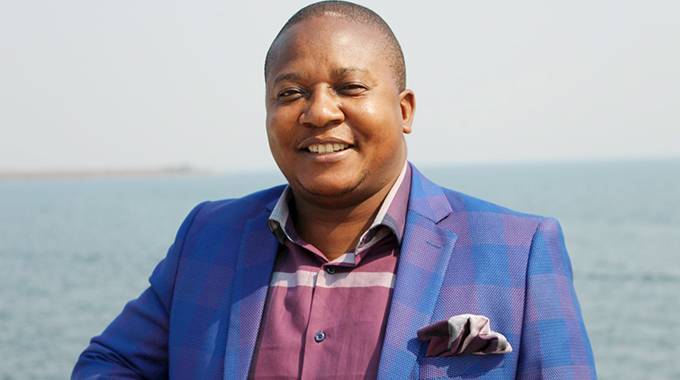
Dr Gift Mehlana
The award was presented at Naivasha in Kenya where scientists from across the African continent convened from April 4 to 5 to celebrate the start of their two-year Future Leaders-African Independent Research (FLAIR) fellowship.
Dr Mehlana was among the 30 FLAIR and the only Zimbabwean representing a local institution who received the award out of a pool of 700 applicants.
He is working on technology to capture carbon dioxide (CO2) and convert it to other useful chemicals, such as formic acid and methanol, addressing environmental concerns and providing organic starting materials for the chemical industry in countries devoid of fossil oil resources.
In an interview with The Herald after winning the grant, Dr Mehlana commended the academy for the gesture which he said will benefit the nation.
“This gesture comes at a good time when our nation is employing robust measures to revive the economy through industrialisation where science and research are key. Research is key to the economic development of Zimbabwe.
“Therefore Zimbabwe is going to benefit from the sophisticated equipment that will allow us to carry out research which in turn will address some of the challenges that we are facing as a nation,” he said.
Dr Mehlana said the grant will enable him to train the next generation of scientist for Zimbabwe and improve the research culture at MSU.
“This fellowship will provide an opportunity for me to train the next generation of scientists in Zimbabwe. Through this grant, MSU will acquire sophisticated equipment which will allow us to carry out quality research.
“The research culture at the institution will be influenced through this, the university will have free access to the Royal Society journal which will immensely boost our research.”
He said the grant will give him the opportunity to network with international scientists.
“The grant will give me an opportunity to network with researchers from the United Kingdom and in our region, I am looking forward to the prospects of carrying out research on carbon dioxide capture and conversion.” The Herald
A Zimbabwean man who works as a police sergeant in the United Kingdom has been dismissed from his job after he “tried to avoid” being charged with drink driving.
Taurayi Chamboko of Bedfordshire Police (Picture by Dunstable Today.co.uk)
Taurayi Chamboko of Bedfordshire Police was stopped by officers after overtaking an unmarked police car “in poor driving conditions” on 9 November, a misconduct panel heard.
He “immediately” produced his warrant card and later “feigned illness” to avoid producing a urine sample.
His actions were found to amount to gross misconduct.
‘Police underfunding must be addressed’ says departing chief constable
Chief Constable Jon Boutcher said he “could not be more disappointed” by Mr Chamboko’s behaviour.
“You overtook two cars at high speed in poor driving conditions and when stopped you produced your warrant card immediately,” he said.
“I have absolutely no doubt you tried to avoid the police process that day.”
‘Did not co-operate’
Mr Boutcher said the police sergeant “tried to frustrate officers” when he was stopped at 22:30 GMT and it took five attempts before Mr Chamboko provided a road-side breath test sample.
PC Tau Chamboko
It gave a reading of 58 micrograms of alcohol per 100ml of breath – the legal limit is 35 micrograms.
At the police station, Mr Chamboko was found “slumped in his cell” and “did not co-operate with questions asked”.
He was taken to hospital and did not provide a further sample until 04:30 – which also came back as over the limit.
Mr Boutcher said the sergeant delayed the process “by feigning illness”.
At the hearing at police headquarters, Mr Chamboko said he was “terribly sorry” for his actions and blamed his behaviour on dealing with grief after the deaths of three close relatives.
Jim Mallen from the Police Federation said the police sergeant was also affected by “work-related stress”.
Mr Chamboko said he visited a friend and drank cognac from 10:00-13:00 before sleeping for nine hours.
He had 16 years’ police service and was described by his colleagues as “dedicated, hardworking and committed”.
As he dismissed Mr Chamboko without notice, Mr Boutcher said: “It is a great sadness that an officer of your standard is lost to policing.” BBC News
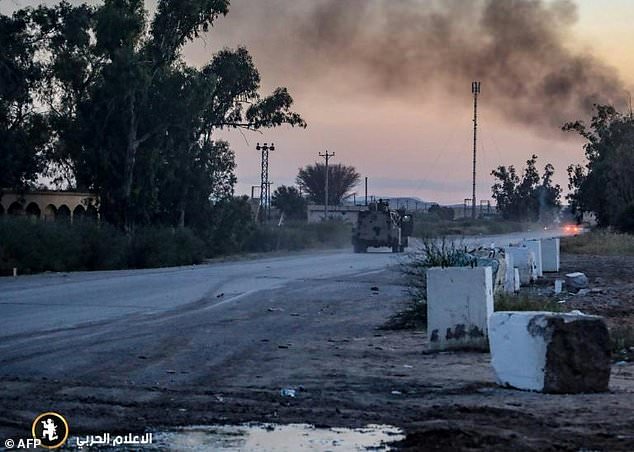
The battle for Libya’s capital intensified as the UN Security Council prepared to meet Wednesday to discuss the crisis gripping the North African country, where armed rivals are locked in a deadly power struggle.
Military strongman Khalifa Haftar’s self-proclaimed Libyan National Army (LNA) says it has seized a barracks in the Aziziya area south of Tripoli
The closed-door talks in New York come a day after the United Nations postponed a Libyan national conference aimed at drawing up an election roadmap because of fighting raging on Tripoli’s doorstep.
Libya has been riven by divisions since the NATO-backed overthrow of dictator Moamer Kadhafi in 2011, with various armed groups and two parallel governments vying for territory and oil wealth.
Heavy arms fire was heard during much of Tuesday night in the Ain Zara district on the southeastern outskirts of Tripoli as military strongman Khalifa Haftar’s forces pressed an assault aimed at taking the capital from the UN-backed Government of National Accord (GNA).
“The clashes have intensified. We’re afraid to leave the house,” a resident told AFP by telephone from the area, where roads were reported to have been blocked, hindering people’s efforts to flee.
The violence has already displaced thousands and left several dozen people dead.
The Libyan Red Crescent said it had evacuated civilians on Wednesday morning but had so far only had access to combat zones controlled by the GNA.
Thirty families were evacuated from Ain Zara and Wadi Rabi, a district further south, to reception centres or to homes of relatives and friends, the Red Crescent said on its Facebook page.
The UN has warned that nearly half a million children in Tripoli were “at immediate risk”.
Haftar’s self-styled Libyan National Army (LNA), which controls swathes of the country’s east, said it had seized a barracks in the Aziziya area around 50 kilometres (31 miles) south of Tripoli after “ferocious clashes”.
It said several fighters loyal to the UN-backed government had been detained and their weapons seized.
The internationally recognised government carried out several air raids against LNA positions south of Tripoli, and also hit supply lines in central Libya, GNA spokesman Colonel Mohamed Gnounou said Tuesday.
Haftar’s forces appear to be advancing on two fronts, from the south and southeast of Tripoli, while coastal roads to the east and west of the city are defended by fighters loyal to the GNA.
– ‘Spare civilians’ –
Haftar has defied international calls, including from the Security Council and the United States, to halt the surprise offensive launched on Thursday.
The UN’s high commissioner for refugees, Filippo Grandi, called for the warring parties to “spare civilians, including refugees and migrants trapped in the country”.
The UN children’s agency (UNICEF) urged all parties “to refrain from committing grave violations” against children, including the recruitment of child soldiers.
“Nearly half a million children in Tripoli and tens of thousands more in the western areas are at a direct risk due to the intensification of fighting,” it said.
The GNA’s health ministry on Monday put the death toll in the fighting at 35. Haftar’s forces have said 14 of their fighters have died.
The UN said the clashes have displaced some 3,400 people.
Led by Fayez al-Sarraj, the GNA’s authority is not recognised by a parallel administration in the east of the country, which is allied with Haftar.
LNA spokesman Ahmad al-Mesmari accused the unity government of “allying itself with Islamist militias” from the city of Misrata 200 kilometres (120 miles) east of the capital.
– Peace efforts stalled –
International efforts to end the Libyan conflict have repeatedly failed.
Rival leaders agreed last year to hold elections before December 10, 2018 under a French plan, but that vote never materialised.
The national conference, which had been scheduled for April 14-16 in the central city of Ghadames, aimed to fix dates for legislative and presidential elections, and work towards a new constitution.
UN envoy Ghassan Salame, announcing its postponement, said: “We cannot ask people to take part in the conference during gunfire and air strikes.”
He expressed hope the meeting would take place “as soon as possible”.
Haftar, whose key allies are the United Arab Emirates, Egypt, Saudi Arabia and Russia, is a former Kadhafi military chief who has emerged as a major player in Libya’s political struggle.
His offensive threatens to plunge the country into a full-blown civil war and has thrown into sharp relief the divisions between world powers over how to end the chaos that has riven Libya since 2011. AFP
Prime Minister Benjamin Netanyahu was on track for victory in Israel’s election on Wednesday after nearly complete results put him in position to form a right-wing coalition and further extend his long tenure in office.
Benjamin Netanyahu
The results from Tuesday’s vote came despite corruption allegations against the 69-year-old premier and placed him on a path to become Israel’s longest-serving prime minister later this year.
His close ally President Donald Trump, who has swung US policy sharply in Israel’s favour and openly backed Netanyahu, said the prime minister’s victory gives the White House’s long-awaited peace plan a “better chance.”
Netanyahu’s Likud party looked set to finish with a similar number of seats in parliament to his main rival, ex-military chief Benny Gantz’s centrist Blue and White alliance.
But the results showed the Likud and other right-wing parties allied to the prime minister with some 65 seats in the 120-seat parliament.
Final results were expected on Thursday, with ballots for soldiers and other special categories of voters yet to be counted.
The results would seem to leave President Reuven Rivlin, who must ask one of the candidates to form a government, with little choice but to pick Netanyahu.
Intensive coalition negotiations will follow and could drag on for days or even weeks.
Rivlin said he would begin consultations with party heads next week ahead of making his decision.
His office said that to show transparency the consultations would be broadcast live in their entirety for the first time.
The close race between the two main parties had led to uncertainty after polls closed Tuesday night and exit surveys were released.
Both Netanyahu and Gantz claimed victory after the initial exit surveys that gave Blue and White the most seats.
But even then Netanyahu appeared best placed to form a coalition, with both parties falling far short of an outright majority.
– ‘Magnificent victory’ –
Netanyahu spoke in the early hours of Wednesday at the Likud’s post-election party in Tel Aviv and called it a “magnificent victory.”
As he walked onto the stage to chanting crowds, he planted a kiss on the lips of his wife Sara.
“It will be a right-wing government, but I will be prime minister for all,” he said.
Earlier while addressing cheering supporters who waved Israeli flags at an event hall in Tel Aviv, Gantz urged Rivlin to ask him to form the government.
But speaking to journalists outside his home on Wednesday morning, Gantz backed away without fully conceding.
“We’re waiting until the end of the results,” he said.
“This is a historic accomplishment. There has never been a party so large, so significant, with so many good people that was founded in such a short period of time.”
The vote had long been expected to be close, even with Netanyahu facing potential corruption charges.
Fighting for his political life, Netanyahu spent the weeks ahead of the vote campaigning furiously to energise his right-wing base.
Besides Trump, other Netanyahu allies including Indian Prime Minister Narendra Modi, Italy’s Deputy Prime Minister Matteo Salvini and Austrian Chancellor Sebastian Kurz offered congratulations.
Gantz, a newcomer to politics, mounted a strong challenge by brandishing his security credentials while pledging to undo damage he says Netanyahu has inflicted on the country with divisive politics.
The election was in many ways a referendum on the premier who has built a reputation as guarantor of the country’s security and economic growth, but whose populism and alleged corruption left many ready for change.
He engaged in populist rhetoric critics said amounted to the demonisation of Arab Israelis and others.
True to form, Netanyahu issued a controversial pledge only three days before the election, saying he planned to annex Jewish settlements in the occupied West Bank should he win.
Extending Israeli sovereignty on a large scale in the West Bank could end already fading hopes for a two-state solution with the Palestinians.
It is a move long championed by Israel’s far right.
– ‘King Bibi’ –
Netanyahu sought to portray himself as Israel’s essential statesman during the campaign and highlighted his bond with Trump.
He spoke of Trump’s recognition of Jerusalem as Israel’s capital and of Israel’s claim of sovereignty over the annexed Golan Heights.
Trump’s plan for Israeli-Palestinian peace is expected to be released in the coming weeks.
Netanyahu also used Trump-like tactics, calling the corruption investigations a “witch hunt” and denouncing journalists covering them.
Gantz, a 59-year-old former paratrooper, invoked the corruption allegations against the premier to make his case that it was time for him to go.
He called Netanyahu’s annexation pledge an “irresponsible” bid for votes.
Gantz said he favoured a “globally backed peace agreement” with Israel holding on to the large West Bank settlement blocs, adding he opposed unilateral moves.
He sought to overcome Netanyahu’s experience by allying with two other former military chiefs and ex-finance minister Yair Lapid.
Netanyahu has been premier for a total of more than 13 years.
But “King Bibi,” as some have called him, now faces the prospect of becoming the first sitting prime minister to be indicted.
The attorney general has announced he intends to charge Netanyahu with bribery, fraud and breach of trust pending an upcoming hearing. AFP
European leaders were poised to delay Brexit on Wednesday, but questions remained over just how much longer to give Prime Minister Theresa May to deliver an orderly divorce — and what conditions to attach.
Theresa May seen here with Emmanuel Macron
French President Emmanuel Macron arrived in combative mood, demanding Britain set out a clear path forward and dismissing reports the leaders had already decided to give May space of up to a year.
But as May prepared to lay out her plan to her 27 colleagues, other officials suggested they would indeed be open to pushing back Brexit for several months if Britain undertakes to hold European elections in late May.
Without a postponement, Britain is due to end its 46-year membership of the European Union at midnight on Friday with no deal, risking economic chaos on both sides of the Channel. May has said she will need until June 30 to ratify the withdrawal agreement.
European Council president Donald Tusk, the summit host, has instead proposed a “a flexible extension” and Germany’s Chancellor Angela Merkel also said the EU leaders might well back a delay “longer than the British prime minister has requested”.
But, as he arrived, Macron warned: “For me, nothing is decided, nothing, and in particular, since I hear rumours, not a long extension.”
He repeated his insistence that May must provide more guarantees that the delay would serve a useful purpose, saying he wanted to hear “what is the political plan behind it”.
May agreed a divorce deal with the EU last November but MPs in London have rejected it three times, forcing her to turn to the main opposition Labour party in a bid to find a way through.
– ‘As soon as possible’ –
But these talks are moving slowly, and she is under intense pressure from hardline Brexit supporters in her Conservative party not to compromise.
As she arrived, May said she wanted to leave the EU “as soon as possible”.
“I’ve asked for an extension to June 30 but what is important is that any extension enables us to leave at the point at which we ratify the withdrawal agreement,” she said.
She said she still hoped to leave the EU on May 22, the last day before Britain must hold European Parliament elections.
EU leaders have already agreed one delay to Brexit, from March 29 to April 12, and Tusk has warned there is “little reason to believe” the British parliament can ratify May’s deal by June 30.
A draft copy of the summit conclusions seen by AFP before the leaders sat down to finalise it said “an extension should last only as long as necessary and, in any event, no longer than [XX.XX.XXXX].”
“If the withdrawal agreement is ratified by both parties before this date, the withdrawal will take place on the first day of the following month,” the draft says.
Czech Prime Minister Andrej Babis said he expected EU leaders to delay Brexit for “much more time” than May asked, on condition that it holds European elections.
Britain has already reluctantly begun preparations for the polls, setting the date for May 23, although officials insist they could still cancel it at the last minute.
The draft conclusions say that if Britain fails to take part, it will leave the bloc on June 1.
If an extension is agreed, Brussels will portray it as a concession to Britain, with some members — particularly France — not keen to see the disruptive Brexit drama drag on much longer.
EU members want to ensure that a semi-detached Britain does not seek leverage in Brexit talks by intervening in choosing the next head of the European Commission or the next multi-year EU budget.
May will make her case to her colleagues before leaving them to discuss the length of the Brexit delay — and any conditions — without her.
Britain was originally due to leave the EU on March 29. But Brussels agreed an extension after the British parliament rejected the withdrawal agreement negotiated with May.
Brexit: what’s next?
May’s ministers have begun cross-party talks with Labour on a compromise to get the withdrawal agreement through the House of Commons.
Labour leader Jeremy Corbyn wants Britain to commit to remaining within the EU customs union, an idea that many in Europe would be keen to accommodate.
“We would be generous in negotiating that, understanding that the UK couldn’t be a silent partner in such an arrangement — it would have to have a say in decisions being made,” Irish premier Leo Varadkar said as he arrived at the summit.
A Ghana-based start-up has received $1.5 million from Ebay billionaire Jeff Skoll to support its work in changing Africa’s pharmaceutical industry to make medicines more affordable.
mPharma founder Gregory Rockson
MPharma is one of five social businesses to receive awards from the Skoll Foundation at this week’s Skoll World Forum, Britain’s leading event for social enterprise.
Pharmacy owners in African countries such as Ghana and Nigeria have to negotiate prices individually with drug suppliers, meaning the same medicine can cost different amounts in different pharmacies, said mPharma founder Gregory Rockson.
Because there is little regulation, drug prices are marked up by middlemen and often become exorbitant, he said.
MPharma works by managing drug supply for multiple pharmacies, so it can negotiate bulk prices and re-distribute medicines as needed. The pharmacists only pay for what they sell, which incentivises mPharma to keep prices low.
“We want every African patient to be able to get access to the medicine they need, irrespective of their socioeconomic background,” Rockson told the Thomson Reuters Foundation.
“We hope that by doing that we can create the largest and most impactful healthcare company in Africa.”
Medicines account for 20 to 60 percent of health spending in low- and middle-income countries worldwide, compared with 18 percent in more developed countries, according to the World Health Organization (WHO).
Up to 90 percent of people in developing countries have to pay for medicines out-of-pocket, making them unaffordable for much of the population, says WHO.
“We have a challenge in many African countries as it relates to the availability of products, the quality and the affordability,” said Tania Holt, who leads healthcare activities in Africa for the U.S. consulting firm McKinsey & Company.
Start-ups as well as governments and donors are working to find solutions to these three problems, she said.
“I think it’s an area that lends itself very nicely to disruption … so it’s exciting to follow the start-up community as they engage in solving a very big challenge,” said Holt.
MPharma aims to eventually supply drugs to public hospitals as well as private pharmacies, cutting out what Rockson says is a large amount of bribery, corruption, and fraud.
It has also launched a micro-payment solution called Mutti for certain life-saving, high-end drugs.
Since launching in Ghana in 2014, the company is now present in Nigeria, Zambia and Zimbabwe and last month bought the second-largest pharmacy chain in Kenya.
Polite Kambamura - Mines and Mining Development Deputy Minister
By Tiisetso Motsoeneng
Zimbabwe may withdraw mining rights from companies that take too long to dig for minerals, the deputy mines minister said on Wednesday, part of efforts to lift output in a sector vital to the country’s economic revival.
Polite Kambamura – Mines and Mining Development Deputy Minister
Zimbabwe sits on the second-largest known platinum deposits after neighbouring South Africa and President Emmerson Mnangagwa is keen to revive mining after years of reticence by foreign investors during the Robert Mugabe administration.
Speaking to investors and executives at a mining conference in Johannesburg, Polite Kambamura said details of the so-called “use it or lose it” approach to mining policy would be made available in due course.
“We will be calling owners of such mineral resources to come forward and show cause why they are not mining,” he told Reuters on the sidelines of the conference.
“If we’re not satisfied with their explanation or mining plans, then we will kindly ask them to give that resource back to the government.”
As part of plans to boost mining export revenues to $12 billion a year as of 2023 from $3 billion now, Kambamura also said the country was putting policies in place to make it easier for mining companies to boost production, while urging investors to restart mines that closed in periods of political upheaval.
Last month, Zimbabwe said it would scrap the controversial indigenisation law under which foreign companies are restricted to only 49 percent of their Zimbabwean operations.
Zimbabwe, which counts South Africa’s Impala Platinum and Anglo American Platinum among its mining investors, is also in talks with an industry body, the Chamber of Mines, about reviewing and streamlining mining taxes.
“The ministry is looking at the whole array of taxes like royalties etc to streamline them and establish a more competitive regime,” Betirai Manhando, president of the Chamber of Mines, said at the same conference.
MIDDLE-INCOME ECONOMY
About a year ago, Mnangagwa won the first election since the removal of Mugabe in 2017, and has laid out an economic transformation strategy that his government hopes will turn the country into a middle-income economy by 2030.
Though investors at the conference did not dispute the prospect of lucrative returns from the country’s underdeveloped mining, tourism and agricultural industries, they were worried about shortages of foreign currency.
“Currency convertibility is a big issue for investors,” said Richard Tait, a director at Harare-based private equity outfit Mangwana Capital – which is trying to raise $150 million for investments in Zimbabwe.
Mangwana’s investments that mainly earn foreign currency should deliver returns of more than 20 percent, Tait told Reuters.
Zimbabwe ditched a discredited 1:1 dollar peg for its dollar-surrogate bond notes and electronic dollars on Feb. 20, merging them into a transitional currency called the RTGS dollar. (Reporting by Tiisetso Motsoeneng; Editing by Dale Hudson and Kirsten Donovan)
The death toll from the cyclone that ripped into southern Africa last month is now above 1,000, while the number of cholera cases among survivors has risen above 4,000.
A man stands next to the wreckage a vehicles washed away on March 18, 2019 in Chimanimani, eastern Zimbabwe, after the area was hit by the cyclone Idai. – A cyclone that ripped across Mozambique and Zimbabwe has killed at least 162 people with scores more missing. Cyclone Idai tore into the centre of Mozambique on the night of March 14 before barreling on to neighbouring Zimbabwe, bringing flash floods and ferocious winds, and washing away roads and houses. (Photo by Zinyange AUNTONY / AFP)
The United Nations has described Cyclone Idai, which hit Mozambique, Zimbabwe and Malawi nearly a month ago, as “one of the deadliest storms on record in the southern hemisphere.”
Zimbabwe’s information minister on Tuesday said the death toll in that country has risen to 344. Mozambique has reported 602 deaths and Malawi at least 59.
Zimbabwe’s efforts are now “confined to recovery of the deceased” and the government will send pathologists to Mozambique to help identify bodies, said Information Minister Monica Mutsvangwa.
An unknown number of Zimbabweans were washed down mountainsides into Mozambique, which also has turned from search and recovery efforts to relief work providing food and shelter to survivors.
Zimbabwe, whose economy is badly struggling, said it needs $612 million to assist survivors and has appealed for international support.
A final death toll is yet to be established and might never be known.
A cholera outbreak among survivors was declared in Mozambique on March 27 and had led to 4,072 cases and seven deaths as of Tuesday morning, according to government figures.
Most of the cases of the acute diarrheal disease have been in Mozambique’s hard-hit port city of Beira, where running water recently was restored. The system, however, reaches just 60% of the population of roughly 500,000.
More than 745,000 doses of oral cholera vaccine have been distributed since the vaccination campaign launched last week, the government said. Cholera is spread via contaminated water or food and can kill within hours if untreated. Treatment is relatively easy with rehydration and antibiotics.
Now malaria is a growing concern as floodwaters continue to recede in parts of the sodden region. More than 7,500 cases of the mosquito-borne disease have been reported, the government said.
Associated Press writer Cara Anna in Johannesburg contributed.
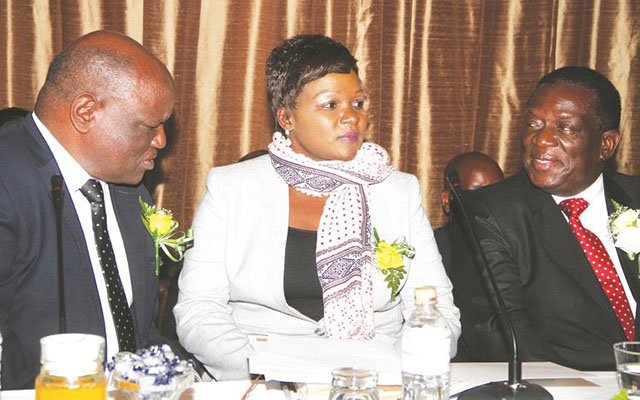
Then Vice President Emmerson Mnangagwa (right) chats with Chief Justice Luke Malaba (left), while Justice, Legal and Parliamentary Affairs Secretary Mrs Virginia Mabhiza looks on during the launch of Prosecuting Authority of Zimbabwe Strategic Plan document in Harare. — (Picture by Justin Mutenda)
Zimbabwe’s government has promised to exhume and rebury the bodies of thousands of people killed during a 1980s military campaign aimed at crushing dissidents, state media reported Wednesday.
Then Vice President Emmerson Mnangagwa (right) chats with Chief Justice Luke Malaba (left), while Justice, Legal and Parliamentary Affairs Secretary Mrs Virginia Mabhiza looks on during the launch of Prosecuting Authority of Zimbabwe Strategic Plan document in Harare. — (Picture by Justin Mutenda)
The Herald newspaper cited the secretary in the justice ministry, Virginia Mabhiza, as calling the reburials part of measures supported by President Emmerson Mnangagwa to bring closure to the killings between 1983 and 1987. She did not say when they will start.
Mnangagwa was state security minister and enforcer for then-leader Robert Mugabe at the time, publicly supporting the campaign. Like Mugabe he has refused to apologize for his alleged role but recently said people should be free to talk about the killings.
In Operation Gukurahundi — or “the early rains that blow away the chaff” in the local Shona language — a North Korean-trained brigade rampaged through Matabeleland.
A 1997 report by the Catholic Commission on Peace and Justice, drawing on more than 1,000 interviews, said 10,000 to 20,000 civilians were killed.
The killings only ended when Joshua Nkomo, a leader in the war for independence and rival of Mugabe with strong support in the Matabeleland region, agreed to join the ruling party in 1987.
Many of the dead were buried in shallow graves, mass graves and disused mines. Others disappeared, according to the 1997 report and witness accounts.
Mabhiza said Zimbabwe’s government will assist people whose parents died in the campaign to get proper identity documents, as well as medical help for those injured.
She also promised “protection mechanisms for those affected by Gukurahundi to be free to discuss their experiences.” Previously, several people were arrested for discussing the killings in public while artworks depicting the era were banned from public view.
A mother has apologised after a video showing her kicking her daughter led to a wave of criticism online in China.
The mum was filmed on 8 April in China’s eastern city of Hangzhou
The video has been viewed by more than 22 million people and many voiced their outrage. A lawyer from the women’s federation in the city of Hangzhou said the act was “suspected domestic violence”.
A baby care company revealed the child to be Niu Niu, a well-known clothes model with whom they work.
Niu Niu’s mother has issued an apology saying the incident was “absolutely not child abuse” and tens of thousands of people have been discussing her response.
It is unclear who shared the original video, which was filmed on 8 April, but it has been widely shared by the newspaper Beijing News.
Niu Niu’s mum has been criticised for both kicking her daughter and for using her to generate an income. On the Twitter-like platform Weibo, one user’s comment, “relying on your child to earn money is one thing but yet you still kick her?”, has been liked 2,000 times.
Another wrote: “I really feel for your daughter. At that age she’s supposed to be carefree, but she’s making money for you. She is not a tool.”
China News Weekly says that Niu Niu works with many local businesses and that her cute appearance has meant that “orders have been large”.
In reply, Niu Niu’s mum told Beijing News: “My husband has a job, our family does not rely on Niu Niu to make a living.”
She has also set up her own Weibo account and and posted an apology saying: “There was no harm caused in this video of me disciplining, I am deeply sorry that this video has been misunderstood by you all.
“My daughter and I are close and she absolutely receives the best care and love.
“More than 70,000 people on Weibo have been discussing the apology and some think that no harm was done.
“This is not child abuse, although I can’t see much love,” said one person.
Something that is thought to have emerged after China ended its one-child policy is the concept of spoilt rotten or “bear children”.
There has also been a lot of debate in the country about whether people should use force to discipline their children, but Nui Nui’s mum says everybody does it.
She told Beijing News: “No parent can say that they’ve never laid a finger on their child.
“I have very rarely hit my child. I did it one time because it was dark and Niu Niu was running on the road and at the time I was frantic. How could I kick her in the leg for no reason?”