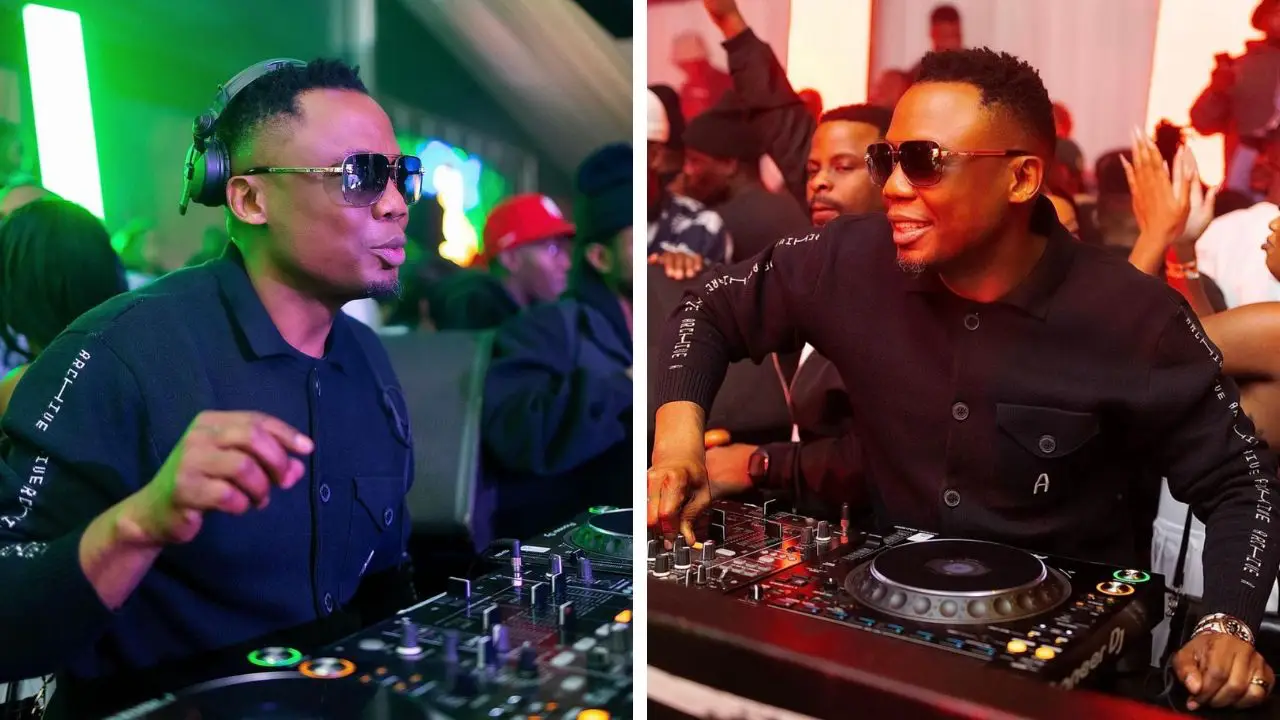
South African musician DJ Tira (Picture via Instagram - @DJTira)
DURBAN – DJ Tira has officially announced that he and his long-time partners will no longer be hosting FACT Durban Rocks, bringing an emotional chapter in Durban’s entertainment history to a close.
After 14 years of growing the event into one of the city’s most recognisable annual celebrations, the award-winning DJ and music exec has revealed that the FACT brand will now be put up for sale.
Describing the decision as the end of an era, DJ Tira said FACT Durban Rocks had reached a meaningful point in its journey. He shared that December 2025 will mark the 30th FACT event since the brand was first introduced, a milestone he believes is fitting for a handover.
“This December will mark our 30th FACT event, which feels like a meaningful milestone. We believe it is the right moment to pass the torch to new and upcoming talent,” Tira said in part of his statement.
In a detailed statement shared online, Tira reflected on the festival’s resilience over the years.
He recalled how FACT survived difficult moments, including the COVID-19 pandemic, by adapting to host outdoor broadcasts and picnic-style events to keep the spirit alive despite restrictions.
He expressed heartfelt gratitude to the people who stood by the festival from the beginning, including loyal fans, corporate sponsors such as SAB and Schweppes, and the city of Durban itself.
According to Tira, their continued support played a major role in sustaining the event and allowing it to grow into a city-wide spectacle.
Tira also acknowledged feedback from fans over the years, particularly around event closing times. He said the team always tried to strike a balance by offering safe transport options and extended late-night entertainment for those who wanted to celebrate responsibly.
Confirming the future of the brand, DJ Tira said this coming New Year’s Eve will be the final FACT Durban Rocks hosted by the current partners. He added that the time has come to allow fresh and emerging talent to take the reins and shape the next chapter of the festival.
“This New Year’s Eve will be the final event organised by the current partners. In January 2026, the FACT brand and its trademarks will be put up for sale.
“We have cherished every FACT event and especially value the relationships we have built with our community, including those who appreciated the late-night hours and the effort to ensure everyone got home safely,” read the statement.
Zimbabwean comedian Madam Boss and South African TikTok star Ziyabukwa Ngqose (Pictures via Facebook - Madam Boss and Ziya Ngqose)
HARARE – Zimbabwean comedian Madam Boss didn’t mince her words as she told South African TikTok star Ziyabukwa Ngqose, who was dating businessman and influencer Valentine Kuzondishaya, also known as VK Lion Heart, that she got what she deserved.
Ziya has been throwing tantrums on social media, hinting to people that her once glamorous relationship with VK has come to an end. She even went as far as throwing shade at her ex-boyfriend, telling people not to be “fooled by scammers.”
A post that caught Madam Boss’s attention was when Ziya said, “Never try to fix what you didn’t break.”
Madam Boss was quick to jump into the comment section, telling the TikTok sensation that she got what she deserved and she has no right to cry or act like a victim in this case.
“You don’t fix what you didn’t break- but you also don’t break what you didn’t build,” said Madam Boss.
She added, “You watched another woman cry after taking her husband. You thought you would die together, but look where you are now. Life has a way of correcting itself. They are probably back together now.
“You’re a beautiful lady- find your own man, not someone’s husband. I’m sure you can find someone who is truly yours. This is a lesson to all ladies, don’t break someone’s home thinking you’ll end up winning.”
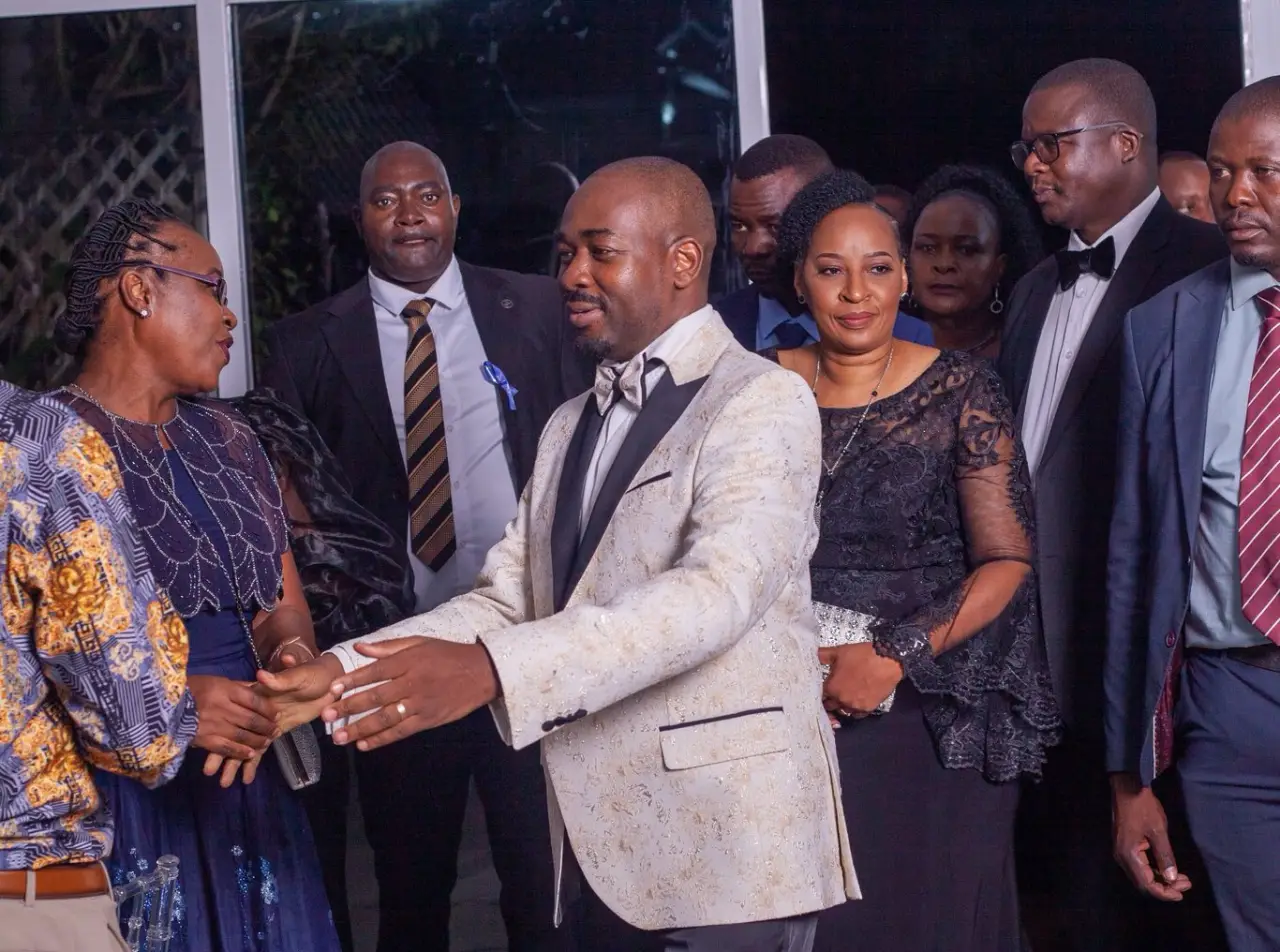
Former Citizens Coalition for Change (CCC) leader Nelson Chamisa at the Annual Charity Dinner in Harare (Picture via Facebook - Nelson Chamisa)
HARARE – Former Citizens Coalition for Change (CCC) leader Nelson Chamisa has vowed to return to active politics, saying he remains energised and committed despite spending the past two years largely out of the public spotlight.
Speaking at an annual charity dinner last week, Chamisa said he was ready to continue the political struggle, drawing inspiration from the late opposition leader Morgan Tsvangirai, whom he praised for never betraying supporters.
Chamisa said Tsvangirai had “run his race” with integrity and left a standard that he felt obliged to uphold.
He described the founding opposition Movement for Democratic Change (MDC) leader as a father figure and suggested that his own continued relevance unsettled the ruling Zanu-PF party, even during his period of relative silence.
He claimed that despite not speaking publicly for an extended period, he remained firmly in the minds of his political opponents, Zanu-PF.
“Morgan Tsvangirai did his best, we were together, and he never let you down. Because he did his best, I will have to do my best. And I’m saying Morgan to my father because that is the name that is known in heaven,” the outspoken politician stated.
“He ran his race. He never betrayed people. Not one day. That’s why you see them scared even when we are silent. For the past two years, I have not uttered a word. But everyday, I dominate their minds. Thank you Zanu-PF for allowing me to live in your heads, rent free.”
Former Citizens Coalition for Change (CCC) leader Nelson Chamisa at the Annual Charity Dinner (Picture via Facebook – Nelson Chamisa)
Chamisa said he would be transparent if he ever felt unable to continue, but stressed that this was not the case.
“I have the energy, I have the power and commitment to go forward,” he said, adding that, with God’s help, he was confident of ultimately securing victory.
“I want to tell those who are mobilising to keep mobilising, because next year we are going to go big. Next year, we are going to change the direction of this country. If you knew what I know, then you would be celebrating,” he said.
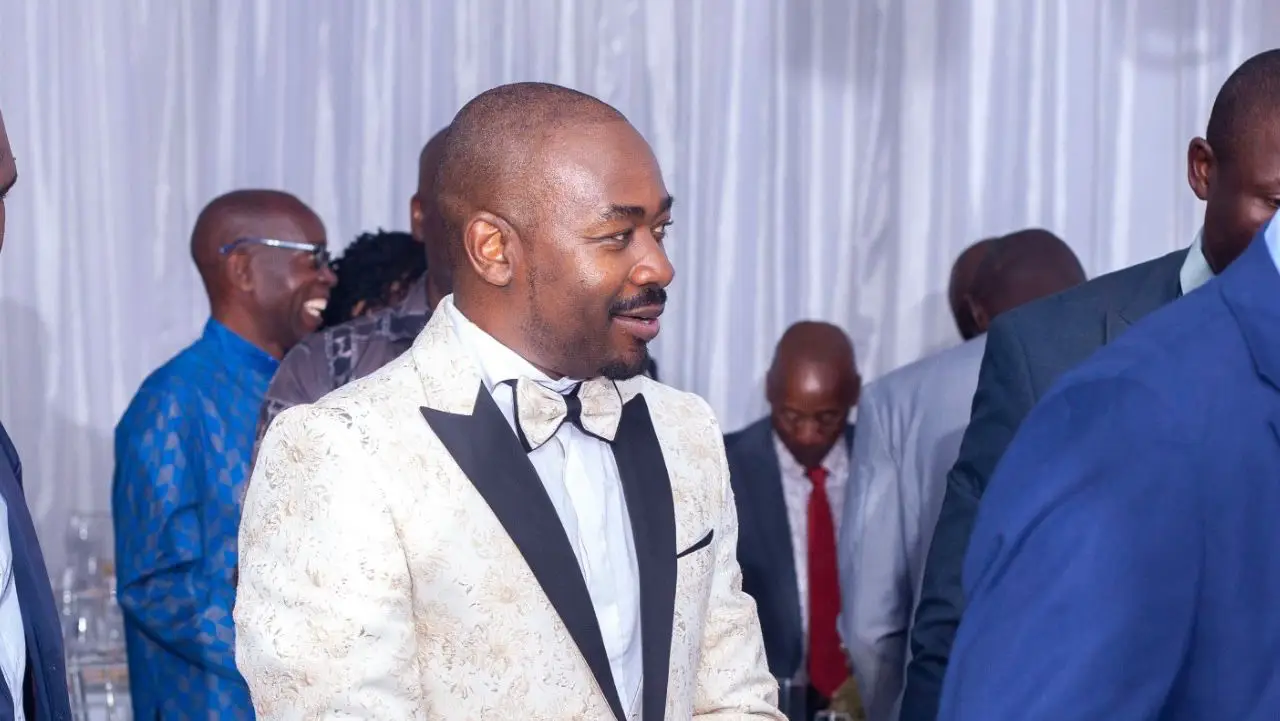
Former Citizens Coalition for Change (CCC) leader Nelson Chamisa at the Annual Charity Dinner in Harare (Picture via Facebook – Nelson Chamisa)
Reacting to President Emmerson Mnangagwa’s attempt to extend his term in office, Chamisa said they would fight the so-called Agenda 2030.
“You cannot think that a little resolution within your organisation is the one that should be used to run this country.
“The country belongs to the people, even if you make your amendments in Parliament, we will be here, we will stop this because it’s not about an individual but about the people,” Chamisa said.
“Some are saying I have left, taken my wife with me, do they know me, especially the way I love (rural home) Gutu. Why would I even leave when I have a pot that is cooking and it’s about to be dished?
“What is more intriguing is that those who said they wanted me out of the way and have never wished me well are at the forefront of being my spokespersons, why?” he asked.
Chamisa dumped the CCC in January 2024 citing that the party had been captured and infiltrated by Zanu-PF. During this time, a shadowy politician, Sengezo Tshabangu, had emerged claiming to be the Secretary General of the party.
Through the assistance of the courts and Parliament, Tshabangu grabbed CCC finances and fired dozens of MPs and councillors aligned to Chamisa. His actions resulted in Zanu-PF effectively attaining a two thirds majority in Parliament with proxy MPs.
It began, as these things often do, with what should have been a footnote. A birthday celebration. A preacher in attendance. A few affectionate words caught on camera.
Within hours, the moment had escaped the room and entered the public square, replayed, analysed and argued over with a fervour that surprised even those accustomed to Nigeria’s hyper-vigilant religious culture.
When Apostle Joshua Selman attended the recent birthday celebration of Sandra Areh, popularly known as Selwoman (a play on Selman), and publicly referred to her as “my love”, the reaction was immediate and polarised.
Defenders invoked privacy and warned against intrusion into a man of God’s personal life. Critics sensed something more unsettling, though many struggled to articulate exactly what it was. The discomfort lingered not because of scandal, but because of history.
For years, Selman and Areh have occupied a familiar yet undefined public space. Close enough to invite speculation. Undefined enough to deflect it.
The birthday moment did not create the controversy. It crystallised it. It compressed years of ambiguity into a single symbol and forced a question that had long been deferred.
What are the ethical obligations of clarity when a spiritual leader’s personal relationships become publicly instructive?
This is not a question about sexual morality. There is no allegation of impropriety here. It is a question about leadership, power and responsibility.
More precisely, it is a question about what prolonged silence teaches when the person who remains silent wields immense spiritual authority.
To answer it honestly requires moving beyond gossip and into structure. Psychology explains how ambiguity affects the human mind. Scripture sets a higher bar for leaders than for private citizens.
Power analysis reveals who benefits and who bears the cost when clarity is delayed. Taken together, these lenses expose a problem that does not rely on scandal to be serious.
Joshua Selman’s rise has been built on discipline, theological seriousness and an insistence on depth over spectacle. That reputation matters, because credibility in ministry is cumulative.
It is earned not only through preaching, but through coherence between message and life. When a leader who teaches clarity in obedience and decisiveness in faith appears to model prolonged relational ambiguity, followers notice. Even when they cannot quite say why.
From a psychological perspective, the issue is straightforward. Human beings are not wired to live indefinitely in “almost”. Emotional closeness, repeated proximity and symbolic language such as “my love” are not neutral signals.
The brain reads them as pair bonding in progress. When that bonding is not resolved through commitment or clear disengagement, it produces a loop of hope, restraint and reinterpretation.
Psychologists call this intermittent reinforcement. It is one of the most powerful drivers of attachment. It keeps people invested not through certainty, but through possibility.
Over time, the person with less control over the outcome – Sandra in this case – experiences heightened anxiety disguised as patience. Life decisions are quietly postponed.
Alternatives fade without formal rejection, meaning prospective suitors who would otherwise have asked her out are kept at bay by the appearance that she is already taken. Thus waiting becomes a way of life.
Joshua Selman, the person with greater control in this situation, experiences something different. Comfort without urgency. Emotional benefit without decisive cost.
This asymmetry does not require bad intentions. It is a function of power and biology. But its effects are real. And when such a dynamic plays out in public view, it does not remain personal. It becomes a lesson.
That lesson matters in a church culture already prone to spiritualising delay. Young women learn that endurance is godliness.
Young men learn that discernment – which supposedly is what Selman may be engaging in, thereby delaying to move the relationship forward – has no deadline. Neither lesson is psychologically healthy.
Both are reinforced when leaders appear to inhabit relational grey zones without consequence.
Scripture is less forgiving of such ambiguity than modern church culture often is. The Bible sets a higher standard for leaders, not because they are less human, but because their lives teach whether they intend them to or not.
Paul’s instruction that an overseer be “above reproach” is not moral minimalism. It is optical integrity, an imperative to not only do the right thing, but also to be seen to be doing the right thing.
“Now the overseer is to be above reproach, faithful to his wife, temperate, self-controlled, respectable, hospitable, able to teach” (1 Timothy 3:2).
Jesus is even more direct about clarity. “Let your yes be yes, and your no be no. Anything beyond this comes from the evil one” (Matthew 5:37). James adds that “a double-minded man is unstable in all his ways” (James 1:8).
These are not abstract virtues. They are warnings against the spiritual cost of prolonged indecision.
Biblically, discernment is not indefinite. It has a horizon. Beyond that horizon, delay becomes avoidance wrapped in spiritual language. Scripture treats time as a moral resource.
“Be very careful, then, how you live. Not as unwise but as wise, making the most of every opportunity” (Ephesians 5:15 to 16). To consume another person’s time without clarity is not neutral stewardship but an act of recklessness and being inconsiderate.
Leaders are also accountable for the effect of their lives on those they lead.
“Be shepherds of God’s flock that is under your care, watching over them” (1 Peter 5:2). The shepherd is judged not only by personal innocence, but by what the flock learns from his conduct. When ambiguity becomes normalised, confusion follows.
Power analysis sharpens this further. Power does not require coercion or force to operate. It flows from structure. In this case, Selman’s power over Sandra flows from spiritual authority, public reverence and control of narrative.
His silence about defining their relationship or clearly cutting ties with her itself becomes an exercise of power, because it controls timing and meaning.
Even when a woman is intelligent, consenting and strong, the costs of delay are uneven. Public association narrows her narrative options. Leaving invites scrutiny.
Waiting is praised as faith. Asking for clarity risks being framed as impatience or lack of spirituality. Choice exists, but inside constraint.
The man, by contrast, absorbs less cost. His authority remains intact regardless of outcome. If clarity eventually comes through marriage, he is praised for patience.
If it comes through disengagement, the story is reframed quietly. This asymmetry explains why ethical responsibility rests more heavily on the one with greater power, namely Joshua Selman.
Church culture often disguises this imbalance by spiritualising female endurance. Women are celebrated for waiting well. Men are celebrated for discerning slowly if she is the right one. What looks like virtue can easily become conditioning. Not empowerment.
Supporters often argue that the public is owed nothing. That privacy must be protected. This is true, up to a point. Leaders do not owe congregations intimate details.
But once personal relationships begin to function as public symbols, silence stops protecting privacy and starts teaching confusion.
History suggests that unresolved ambiguity rarely ends well. Sometimes a leader marries someone else suddenly. The previously associated woman fades from view. Sometimes she is reassigned or quietly disappears.
Sometimes time resolves the situation through exhaustion rather than honesty. In each case, the cost is disproportionately borne by the less powerful party.
There is, however, a healthier model. It is neither intrusive nor radical. It begins with private honesty. A leader must decide whether he is genuinely open to marriage before emotional proximity deepens. Boundaries must precede affection, not follow it.
If courtship becomes visible, transparency must replace symbolism. No cryptic language. No public affection without declared intent.
Discernment should be time-bound. The man can’t say in good conscience that he is still trying to discern the woman’s suitability for marriage indefinitely. It should be done within a reasonable time.
This is where trusted mentors and elders should provide accountability. When a decision is reached, behaviour must align immediately.
If marriage is intended, timelines protect dignity. If it is not, distance protects hearts. Silence protects no-one, but is instead harmful to the woman and some onlookers, especially the church being led by the man.
The controversy surrounding Selman’s birthday appearance matters because it exposes a wider tension in modern ministry. The gap between message and method.
The distance between what is preached about clarity, discipline and sacrifice, and what is modelled when decisions are deferred.
The church does not need perfect leaders. It needs coherent ones. Leaders whose private lives do not quietly contradict their public teaching. Silence may feel safe, but in leadership it often speaks the loudest.
In the end, this is not a call for intrusion, but for courage. Selman must demonstrate courage by deciding and communicating clearly if he intends to marry Sandra or not.
Clarity is not cruelty. Distance is not rejection. Decision is not betrayal. They are forms of care. Otherwise he is ruining his reputation and slowly wrecking Sandra’s life even without intending to.
If the modern church is serious about integrity, it must stop mistaking prolonged ambiguity for wisdom. And its leaders must remember that how they love teaches as powerfully as what they preach.
Gabriel Manyati is a Zimbabwean journalist and analyst delivering incisive commentary on politics, human interest stories, and current affairs.
Fans left confused as 'Madzibaba' Nicholas Zakaria is buried via Muslim rituals (Picture via Facebook - Nicholas Zakaria)
CHIWESHE – Fans of legendary sungura musician Madzibaba Nicholas Zakaria were left tongue-tied after witnessing the singer’s burial which followed Muslim rituals.
Zakaria, better known as Senior Lecturer, was laid to rest on Sunday at Chavhakaira Village in Chiweshe, following his untimely passing on 11 December.
Debate erupted on social media as fans discussed how they were left confused by the burial rituals performed at the singer’s funeral.
His coffin was destroyed at the gravesite, and his corpse was removed from the coffin, wrapped in a white cloth, which he was buried in.
Some questioned why the musician was not buried according to apostolic or traditional customs, citing his stage name “Madzibaba,” which many associated with apostolic faith practices.
Makuriwani vaive Madzibaba vari Muslim futi?” questioned user Ba Kendrick Jay.
Evidence Macharaga also had a rhetorical question, “Anga asiri madzibaba we kumasowe here?”
“Kutaura chokwadi apa ndopaita confusion chaiyo, ko kana mamuchida kuvaviga pachi muslim sei vasina kuvigwa day ravafa, aaah amheno zororai murugare snr lecturer,” said Mai Wesley Lesley.
Journalist Hopewell Chin’ono took it upon himself to explain to those who seemed perplexed about what was happening.
“This was common in many parts of Africa, including Zimbabwe. I remember when we were children, when my uncle died, I think it was in 1978 or 1979. His grandchildren and children bought a coffin.
“They were surprised when the elders instructed that the coffin would be destroyed because he was going to be buried wrapped in a blanket or in a reed mat, as per his instruction.”
He added, “Caskets and coffins came with the colonial project. They were not part of how our people buried their dead. Burial was simple, dignified, and rooted in community and spirituality rather than display.”
“There is nothing strange or exceptional about this practice. It is part of our history, our culture, and our way of honouring the dead.
“In the Islamic world, including the Middle East, North Africa, and parts of Asia, burial is done without a coffin. The body is wrapped in a white shroud, kafan, and placed directly in the ground. This is standard Islamic practice.”
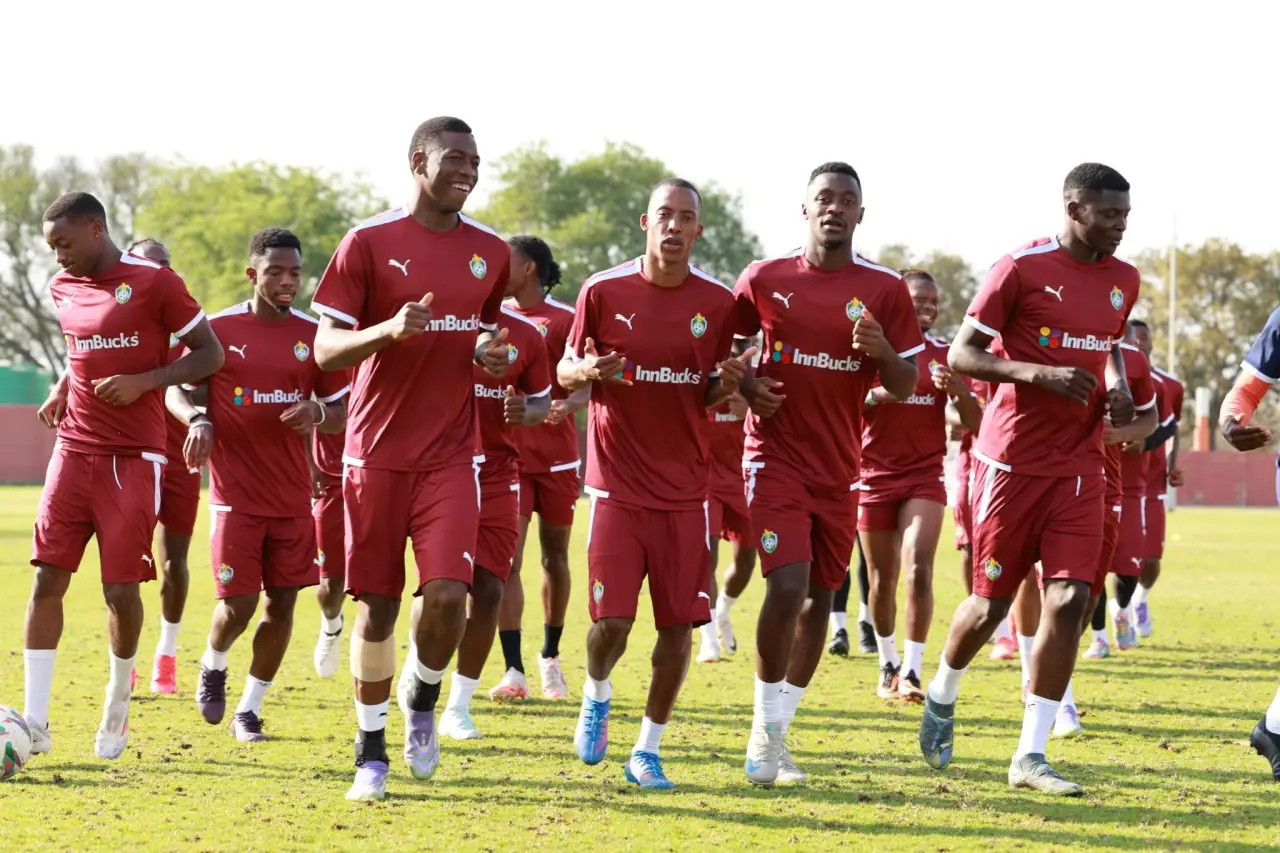
Zimbabwe Warriors players training at the University of Johannesburg in South Africa. (Picture via X -Zimbabwe Football Association)
HARARE – The Zimbabwe national football team, the Warriors, are set to leave the country for Morocco on Tuesday as preparations for the prestigious Africa Cup of Nations (AFCON) tournament intensify.
Zimbabwe are currently camped in Harare, where they have been preparing for the competition over the past two weeks.
The Warriors are in Group B alongside Egypt, Angola and South Africa and will be hoping to progress beyond the group stages for the first time in the nation’s history.
They will open their campaign against Egypt on 22 December, face Angola on 26 December and wrap up their group matches against South Africa three days later (29 December).
Meanwhile, Warriors coach Marian “Mario” Marinica named his final squad last Thursday.
Here is the Warriors squad:
Goalkeepers
Washington Arubi (Marumo Gallants) Elvis Chipezeze (Magesi) Martin Mapisa (MWOS FC)
Former Norton legislator Temba Mliswa seen here with President Emmerson Mnangagwa (Picture via X - Temba Mliswa)
HARARE – Former Norton legislator Temba Mliswa has accused sections of Zanu-PF’s leadership in Manicaland Province of greed, corruption and disregard for the party constitution following the nullification of presidential adviser Paul Tungwarara’s attempted co-option into the Central Committee.
Mliswa said the insertion of the Politburo into the Manicaland co-option process “reeks of greased hands and lined pockets,” arguing that the party’s constitution clearly stipulates who qualifies to fill the vacant seat.
He maintained that the position should have gone to a woman from the same administrative district as the outgoing member, a requirement he said Tungwarara does not meet.
Mliswa dismissed claims that the dispute reflected factional infighting, instead blaming what he described as greed among Manicaland leaders.
He said National Political Commissar Munyaradzi Machacha had correctly stated in the nullification notice that the seat must be filled by a woman from the same district, adding that the rules were unambiguous.
“What part of that clarity in the requirements needs the obfuscation of the Politburo?” Mliswa asked.
He warned that failure to adhere to the constitution undermines the party’s credibility and the rights of women within Zanu-PF. He cited Manicaland Women’s League figures such as Angeline Gata as examples of capable female leaders who were being overlooked.
“The party needs to be consistent in adhering to their Constitution even where individuals are paying their way up the ladder as it is clear that the various leaders in Manicaland were given money and they resolved to go against a clear Constitutional dictate.
“Why is the party allowing such flagrant disregard for the rights of women? Manicaland has very able female leaders like Cde Gata who did well winning her constituency.
“She is young too. Overlooking such sends a wrong message about women, how they are not respected in the party,” Mliswa stated.
Zanu-PF has delivered a major setback to presidential adviser Paul Tungwarara (Picture via X – Monika Chanda)
His remarks came after Zanu-PF’s national leadership formally voided Tungwarara’s co-option, which had been approved by the Manicaland Provincial Coordinating Committee (PCC) during its 7 December 2025 meeting.
The decision was conveyed in an 11 December letter from Machacha to provincial chairperson Tawanda Mukodza.
In the letter, Machacha ruled that the PCC had violated party procedures by endorsing a candidate who was not from the same administrative district as the former Central Committee member, Dorothy Mabika of Chipinge.
Tungwarara is not from Chipinge, making the co-option unconstitutional, according to the party’s rules.
Machacha also reiterated Zanu-PF’s prohibition on inducements, cautioning that the distribution of money, food or other goods to influence internal processes would amount to vote buying and could lead to disqualification.
Several PCC members accused Tungwarara of handing out cash and food at the December 7 meeting.
Senior party officials said the nullification was intended to uphold discipline and constitutional order. Treasurer-General Patrick Chinamasa publicly endorsed the decision, saying he supported Machacha’s ruling “one hundred percent.”
Mliswa rejected comparisons between Tungwarara’s case and the earlier co-option of businessman Kudakwashe Tagwirei in Harare, arguing that the two situations were “vastly different.”
He said Tagwirei’s elevation followed established procedures, while Tungwarara was a recent political entrant whose rapid rise had unsettled party structures.
Trendsetting Westprop Holdings is introducing the first ever apartments north of Harare Drive at the US$4 billion Pomona City (Picture via Westprop Holdings)
HARARE – A quiet real estate revolution is unfolding fast across Harare. WestProp Holdings, through its bold developments at Pomona City, Pokugara, Millennium Heights and The Hills Luxury Golf Estate, is weaving together a new urban fabric – one that not only transforms land but also inspires surrounding suburbs to reimagine themselves.
The ripple effect of the development corridors is now being evidently felt as nearby properties are getting a facelift.
The developments – a brainchild of visionary Ken Sharpe are acting as a spark to ignite the recalibration of old suburbs and incite a wave of change of use on some properties.
The mixed-use smart city enclaves that are self-contained boast of modern infrastructure, green spaces, and integrated amenities setting the tone for sustainable urban living. The ripple effect is clear: nearby suburbs are upgrading to align with WestProp’s standard.
Pokugara brings bespoke homes and landscaped communities into Harare’s real estate scene. By blending exclusivity with accessibility, it has become a magnet for families seeking modern comfort.
The development has nudged adjacent neighborhoods to reinvest in property upgrades, sparking a wave of suburban regeneration.
Millennium Heights encourages density and vibrancy. Property owners near the development are responding by modernizing commercial centers and embracing vertical growth.
The Hills Luxury Golf Estate that combines recreation and residential is influencing nearby suburbs to regenerate.
Soon to rise, the Mall of Zimbabwe will be the largest retail and entertainment complex in the country. Positioned as a regional hub, it will anchor a development corridor that connects residential estates, commercial zones, and leisure destinations.
Its gravitational pull is already prompting adjacent suburbs to rethink their commercial strategies, preparing for increased foot traffic and economic activity.
Together, these projects form development corridors—linear zones of growth that stitch Harare’s urban landscape into a cohesive whole.
WestProp Holdings is not just building estates; it is catalyzing regeneration, compelling abutting suburbs to modernize, upgrade, and align with a new vision of city living.
“Our story is not about isolated projects, but about urban evolution. Each development is a spark, and together they ignite a transformation that radiates across Harare, creating a city that is smarter, greener, and more inclusive,” says Sharpe.
Zanu-PF has delivered a major setback to presidential adviser Paul Tungwarara (Picture via X - Monika Chanda)
MUTARE – Zanu-PF has delivered a major setback to presidential adviser Paul Tungwarara after the party’s national leadership nullified his attempted elevation to the Central Committee, ruling that the Manicaland provincial executive violated internal procedures and prematurely celebrated the move.
The reversal, confirmed in a 11 December 2025 letter from National Political Commissar Munyaradzi Machacha, immediately voided Tungwarara’s co-option, which had been approved by the Manicaland Provincial Coordinating Committee (PCC) during its 7 December meeting.
Senior party figures said the decision was necessary to uphold Zanu-PF’s rules, with Treasurer-General Patrick Chinamasa fully endorsing the nullification.
“I support the decision of Cde Machacha one hundred per cent,” Chinamasa said, arguing that the circumstances surrounding the attempted co-option were clear for all to see.
Buhera West legislator Tafadzwa Mugwadi posted a cover of the Zanu-PF Constitution on Facebook with a caption: “ZANU PF Constitution. Over to you Manicaland. Be literate.”
Machacha’s communication to provincial chair Tawanda Mukodza stated that the PCC had disregarded guidelines requiring that any replacement for a Central Committee vacancy must come from the same administrative district as the outgoing member.
The vacant seat previously belonged to Dorothy Mabika of Chipinge, while Tungwarara is not from the district.
Machacha also reiterated the party’s ban on inducements, warning that “issuance of money, goods or services” by aspiring candidates would amount to vote buying and result in disqualification.
Several PCC members had accused Tungwarara of distributing cash and food during the December 7 meeting.
Tungwarara, who has risen rapidly in Zanu-PF politics through his involvement in multiple presidential programmes, has never voted in a Zimbabwean election, according to senior party insiders familiar with his record.
His high-profile philanthropic activities and nationwide cash donations have unsettled some officials who say money is increasingly shaping internal political competition.
The Manicaland PCC has now been instructed to restart the nomination process, with national leadership stressing that any replacement must come from Chipinge in line with the party constitution.
The setback marks one of the most visible public embarrassments for Tungwarara, whose growing political ambitions have generated both support and discomfort within ruling-party structures.
The contest for a single Central Committee seat in Manicaland has also exposed deepening rivalries within an informal network of politically connected power brokers inside Zanu-PF.
The vacancy became a proxy battle between competing camps seeking to control provincial influence and to curb the sway of retired Lieutenant-General Anselem Sanyatwe.
Tycoon Kudakwashe Tagwirei allegedly backed Justice Matsatsira and deployed emissaries across the province in the days leading up to the vote. However, despite expectations that the outcome had already been secured, Matsatsira was defeated.
The meeting was instead won by Tungwarara, who reportedly relied on his own combination of cash, provincial fixers and quiet assurances of future rewards.
Former Zanu-PF legislator Joseph Chinotimba (Picture via X - @SekuruGora6)
HARARE – A recently circulated video of former Zanu-PF legislator Joseph Chinotimba has added new momentum to ongoing debates inside Zanu-PF regarding the use of money, cars and cash handouts to cultivate political support ahead of the party’s 2028 succession race.
In the video, Chinotimba is heard telling a colleague at the Zanu-PF headquarters that he confronted senior party officials in a closed-door meeting, criticising what he described as the “shameless” parade of wealth by certain individuals aligned to powerful factions.
He expressed frustration that people “who do nothing but play songs using their bodies” were now receiving cars, a comment understood to be aimed at recent high-profile vehicle donations to musicians, social media personalities and party loyalists.
“Munongoti chero atambisa magaro motope vanhu vasina nebasa,” he is heard saying in the video clip.
His remarks echo mounting criticism within sections of the ruling party over the growing influence of businessmen such as Wicknell Chivayo, Paul Tungwarara and Kudakwashe Tagwirei, who have in recent months distributed vehicles and cash to individuals backing President Emmerson Mnangagwa’s Vision 2030 political programme.
Critics inside and outside the party argue that these donations amount to the buying of political loyalty and are deepening divisions within Zanu-PF.
Chinotimba’s video comes weeks after Vice President Constantino Chiwenga delivered one of his most direct critiques yet of the flashy displays of wealth by newly rich Zimbabweans linked to the ruling elite.
Speaking at a public gathering, Chiwenga questioned the priorities of individuals who had “accumulated significant wealth” but were not investing in productive sectors of the economy.
“Some people wake up saying, ‘I am now rich, I now have money,’” he said.
“Why don’t they build factories for people to get employment from that money if it’s excessive?”
He also warned against relying on foreign investors for national development, insisting that no outsider would build Zimbabwe on behalf of its citizens.
Although Chiwenga did not mention names, his remarks were widely interpreted as criticism of the same business figures now under scrutiny for their largesse within Zanu-PF.
Chinotimba’s remarks and Chiwenga’s comments highlight simmering tensions in the ruling party as internal debates intensify ahead of the 2028 leadership transition.
Since the 2017 military coup that ousted former President Robert Mugabe, Chiwenga, who played a central role in the process, has been regarded as the automatic successor to Mnangagwa.
The emergence of the 2030 agenda, promoted by Mnangagwa’s loyalists and backed by well-connected business interests, has, however, been viewed by analysts as an attempt to delay or block Chiwenga’s ascendancy.
Although President Mnangagwa has consistently dismissed allegations that he intends to remain in power beyond 2028, he has not stopped his supporters from promoting the 2030 agenda.
In fact, when his loyalists chant slogans linked to extending his rule, he is often seen smiling and clapping, raising questions about his sincerity regarding the constitutional two-term limit.