I do not get away very often but right now I am in the Eastern Cape which is my wife’s home base. We have not been here for 7 years and the changes and challengers are very visible. We tend to forget that not long ago this was a country being governed by the Nationalist Party and was trying to implement the most comprehensive form of racial segregation in world history.
We also tend to forget that this is a big country, with a very violent history. The Zulu kingdoms and their impact on the smaller tribal groups in southern Africa. The Afrikaners trekking away from the hated English control of the Cape after they had conquered it by the slaughter of the indigenous Khoi Khoi people.
The Treks fighting their way to dominance on the highveld then seeking their continued Independence from the British in the Boer War when a handful of young men on horseback held 500 000 British soldiers at bay. The British then created the first Concentration Camps and crushed the rebellion by starving the Boers into submission.
Granted Independence by the Empire, the white South African population, funded by the natural wealth of South Africa, built up the most modern and advanced economy in Africa.
Faced with the problem of the growing sophistication of the indigenous black population, the Afrikaner intellectuals who had formed the first Communist Party outside of Russia and who now dominated the Afrikaner people, conceived of the idea of Apartheid, separate development.
We also tend to forget how powerful the small, but influential Afrikaner intellectual establishment was. Hendrik Verwoerd went to Milton School in Bulawayo and became the first Nationalist President of the Republic of South Africa.
A brilliant mind, his motive was to protect “his” people while allowing the others who occupied the country a separate existence in their own land. Just as idealistic as the vision of the Communists and just as doomed to failure, they threw everything they had into the idea.
When challenged by the global consensus and opposition from the rest of Africa, fuelled by the liberation movements that were gradually forcing the iron grip of colonial domination out of the continent, the Afrikaners threw everything into the struggle for their independence and control.
The “total onslaught” was met with violence and force. But when faced with the reality that the struggle was lost, the Afrikaners agreed to a transition to democracy within a unitary State.
The country that emerged from this process had all the baggage created by half a century of Apartheid control and administration. Three quarters of all black children were raised in single parent families. Black townships were overcrowded and desperately poor.
Education standards were miles apart and the country faced the very real threat of a mass exodus of the white population with all their experience and skills and their accumulated wealth.
Then came what became known as the Mandela Magic. This tall, thin man with age and suffering written all over his face and in his sunset years after nearly 30 years in detention, came out of prison and became State President.
The image of him holding the World Cup in his hands after a predominately white team of rugby players had won it at the home of Afrikanerdom in Pretoria, will be forever etched in the granite of South African history.
His adoption of the Afrikaner National Anthem as a part of the new South African anthem together with a Zulu hymn first penned in Zimbabwe, seemed to wrap it all up for the Afrikaners.
They retreated into their own racial laagers, decided that if they could not take back control of the State, they would become influential and economically significant. They turned back to their farms and business.
Symbolic of this drive is Nationale Pers. In 1994 this was a group of Afrikaans newspapers who were largely the voice of the Afrikaners in South Africa. Now it is the third largest media company in the World, it controls MTN and 10 Cent in China and every Director is expected to speak Chinese.
As a result, you seldom hear of criticism by the ANC or the Government of the Afrikaners. In many respects this has been part of the cement that has held this new country together. But it has not been enough and what I have found in South Africa, is a national debate about the future. Confidence is at rock bottom.
We tend to also forget that the ANC is the oldest political party in Africa and despite all the challenges, has remained a multiracial movement with support in all the many tribes and racial groups of this country.
They have an element that intellectually can hold its own anywhere and remain true to the Freedom Charter that guided their struggle for human and democratic rights. But it also has to overcome the structural and other ills of the past.
Although South Africa remains probably the most advanced African State and has a powerful economy and a well-run fiscus and Reserve Bank, it simply does not have the resources required to level the playing field.
Whites remain wealthier on the whole, better educated and have thrived in the real private sector. Black and mixed race communities remain marginalised and poor. However, those with power in the system have carved out for themselves a lifestyle that is exceptional even in international terms.
The evidence of wealth linked to power is everywhere, corruption is endemic. State controlled agencies are simply honey pots for the connected and are collapsing.
So ordinary people, everywhere and in every community, are asking themselves if there is a future here. Its like the debate in Rhodesia before Independence in 1980. Here the massive exodus (perhaps due to the Mandela influence) has not happened but is gathering momentum.
But more serious is the question – can South Africa offer its children a better future? If they cannot restore law and order, the rule of law, a cessation of violence and the many structural and infrastructural problems they face today, then the answer is no.
And if that is the case then there is no future for anyone in this beautiful and fascinating land. South Africa needs to find itself again, needs to rediscover what makes things work, much like Deng in 1975 – do our cats catch mice?
2024 is another milestone in the tortured history of South Africa. The ANC faces the reality that they might lose their majority, and then what?
In other African States when this situation has presented itself to the entrenched oligarchy, they have reacted with more violence, abandoned any pretext of democracy and become a military dominated State.
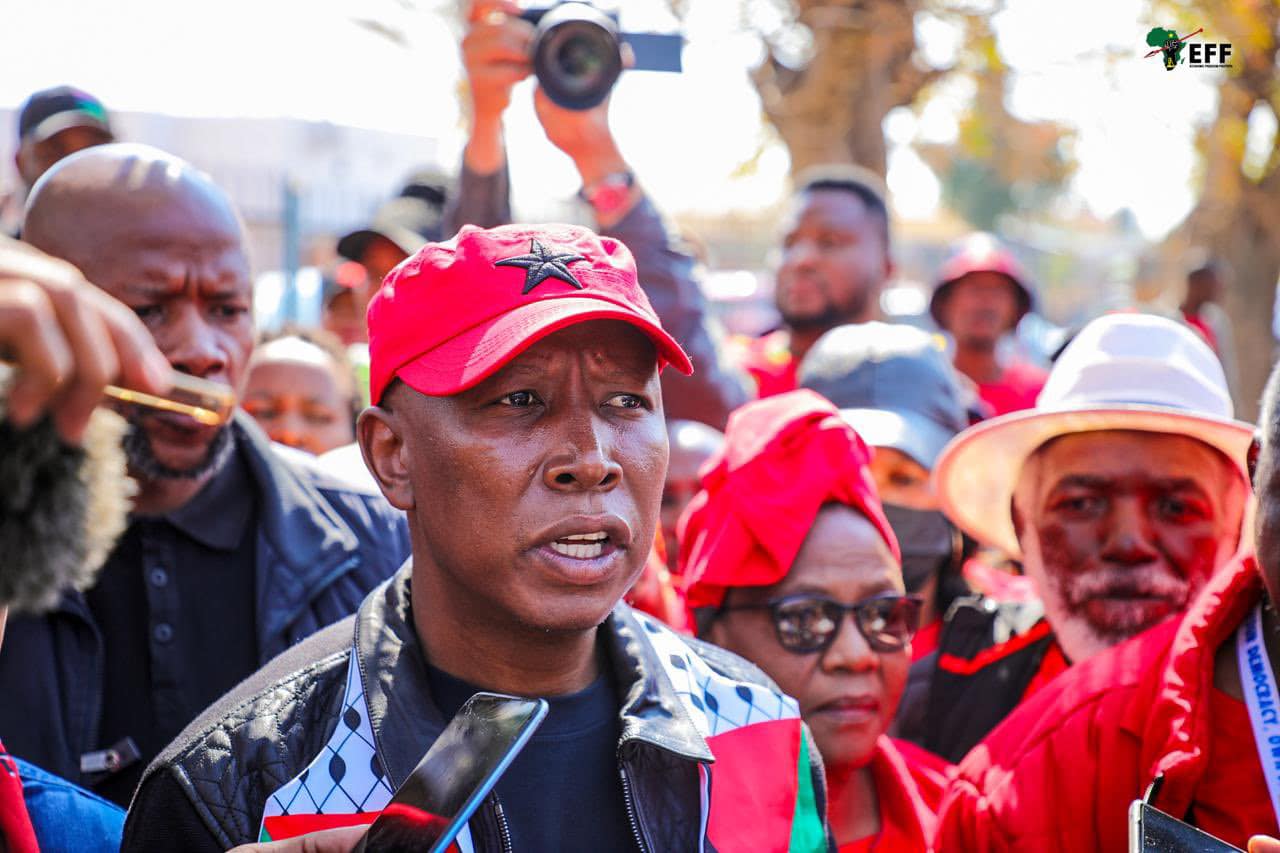
That is unlikely in South Africa, but political chaos and instability is a real possibility. An ANC/EFF alliance would be a disaster but someone better come up with a better alternative, and soon.
In the meantime, I tell my relatives and friends not to be too pessimistic about Africa. Africa is changing and growing up and still offers those of us who choose to make it home, an amazing life. But you have to make it happen.
Eddie Cross, Eastern Cape, 11th May 2023
Eddie Cross is an economist and former opposition Bulawayo South MP. He writes here in his personal capacity. You can follow his blog African Herd