Home Blog

Zimbabwe targets influencers like Madam Boss over undeclared online income

0
Zimbabwean socialite and comedienne, Madam Boss, real name Tyra Chikocho (Picture via Facebook - Madam Boss)

Zimbabwe’s tax authority has issued a firm warning to social media influencers and digital content creators, urging them to bring their earnings into compliance as a deadline for voluntary disclosure approaches.

The Zimbabwe Revenue Authority (ZIMRA) announced that individuals generating income from platforms such as Facebook and YouTube must regularise their tax affairs before May 30, 2026, or risk penalties and potential legal action.

Over recent years, the rapid growth of digital media has opened lucrative opportunities for online personalities.

High-profile influencer Madam Boss recently disclosed that her monthly earnings from Facebook can exceed US$20,000 during peak periods—highlighting the scale of income now being generated in the sector.

However, such earnings are now firmly under the scrutiny of tax authorities. ZIMRA’s directive applies not only to Madam Boss but also to other well-known figures in Zimbabwe’s digital space, including Mai Titi, Comic Elder, DJ Towers, Ritz and Mama Vee.

Voluntary Disclosure Window Nearing Closure

ZIMRA has introduced a voluntary disclosure programme designed to encourage taxpayers—including those in the digital economy—to declare previously undeclared income.

Participants who provide full and accurate information will have penalties waived, although interest on outstanding taxes will still be charged.

In a public notice, the authority emphasized that disclosures made under the programme will not automatically lead to audits or criminal investigations. This provision is intended to encourage compliance before enforcement measures intensify.

The amnesty period, however, is limited. Once it expires at the end of May, individuals found to be evading taxes could face significant fines and possible prosecution.

Broad Scope Beyond Influencers

Although public attention has largely focused on new rental income tax measures introduced on January 1, 2026, the voluntary disclosure initiative extends across multiple sectors. It applies to both individuals and businesses, including informal traders, transport operators and those earning income online.

ZIMRA has made it clear that digital earnings—particularly from platforms like Facebook and YouTube—are a priority area. The authority is also monitoring cases where individuals’ assets or property developments appear inconsistent with their reported income.

The disclosure facility covers a wide range of tax categories, including Income Tax, Value Added Tax (VAT), Pay As You Earn (PAYE) and Capital Gains Tax (CGT).

Digital Tax Rules Tightened

Earlier in 2026, the government clarified the implementation of the Digital Services Withholding Tax (DSWT), introduced under Finance Act No. 7 of 2025. The measure, effective from January 1, targets payments made to foreign suppliers of digital services such as streaming platforms, online advertising and e-hailing applications.

Finance Minister Mthuli Ncube stated that the tax is aimed at ensuring fair contributions from cross-border digital transactions.

Compliance Now Essential

Tax experts say the message from authorities is clear: online income is no longer outside the formal tax system. As digital creators continue to earn substantial revenues, compliance obligations are being enforced more strictly.

Those earning from online platforms are required to register with ZIMRA, declare their full income and settle any outstanding liabilities before the deadline. While the voluntary disclosure programme offers relief from penalties, failure to act in time could result in serious consequences.

US envoys head to Pakistan as Iran denies any direct meeting planned

0
Rio de Janeiro, Brazil, July 6, 2025. Iranian Foreign Minister Abbas Araghchi during a meeting at the BRICS 2025 plenary session. — Photo by A.Paes via DepositPhotos.com

Senior U.S. officials are preparing for a diplomatic mission to Pakistan as tensions over Iran’s nuclear programme continue, despite Tehran publicly denying that any direct negotiations with Washington are scheduled.

Steve Witkoff and Jared Kushner are expected to travel to Pakistan in what the White House describes as a renewed effort to advance discussions in the region. The move comes amid conflicting accounts from Washington and Tehran بشأن whether talks are actually underway.

According to White House press secretary Karoline Leavitt, the United States is engaged in dialogue after Iran initiated contact and requested an in-person meeting. However, Iran’s foreign ministry has rejected that characterization.

In a statement posted on X, a spokesperson for Iran’s foreign ministry said that while Foreign Minister Abbas Araghchi had arrived in Pakistan, no bilateral meeting with U.S. representatives had been arranged. Instead, the spokesperson indicated that Iran’s position would be communicated through Pakistani officials.

U.S. President Donald Trump offered few details about who Washington might be engaging with on the Iranian side, saying only that the administration is dealing with “the people that are in charge now.”

He also suggested that Tehran could soon present a proposal aimed at meeting U.S. demands, telling Reuters: “They’re making an offer and we’ll have to see.”

Washington has maintained a firm stance in its negotiations, insisting that Iran abandon its stockpile of enriched uranium and commit to never developing nuclear weapons.

Escalation in Lebanon Despite Ceasefire

Meanwhile, violence has continued in Lebanon even after a temporary truce was extended. Israel reported killing six members of Hezbollah in strikes carried out on the same day a three-week ceasefire extension was announced by President Trump.

Israeli officials said the operations were conducted in self-defense, emphasizing that they retain the right to act against Hezbollah threats despite the ongoing ceasefire agreement.

Pentagon Warning to Iran and Criticism of Europe

At the Pentagon, Defense Secretary Pete Hegseth delivered a stark warning to Tehran, urging it to “choose wisely” and pursue a diplomatic resolution. He cautioned that the United States remains fully prepared to resume military action if necessary.

Hegseth also took aim at European allies, criticizing what he described as ineffective discussions over security in the Strait of Hormuz. He dismissed such efforts as “fancy conferences” and urged more direct action.

UK Reaffirms Falklands Sovereignty

Separately, the British government has responded firmly to reports questioning U.S. support for the United Kingdom’s claim over the Falkland Islands.

Officials at Downing Street and the UK foreign secretary reiterated that the islands remain British territory following a Reuters report about an internal Pentagon document. The draft memo reportedly explored potential measures against NATO allies that have not increased their involvement in addressing tensions with Iran.

The Falkland Islands have been under British control since the UK repelled an Argentine invasion in 1982, a point government officials emphasized in their response.

Frank Buyanga’s prison hell: Inside the tycoon’s legal logjam in South Africa

0
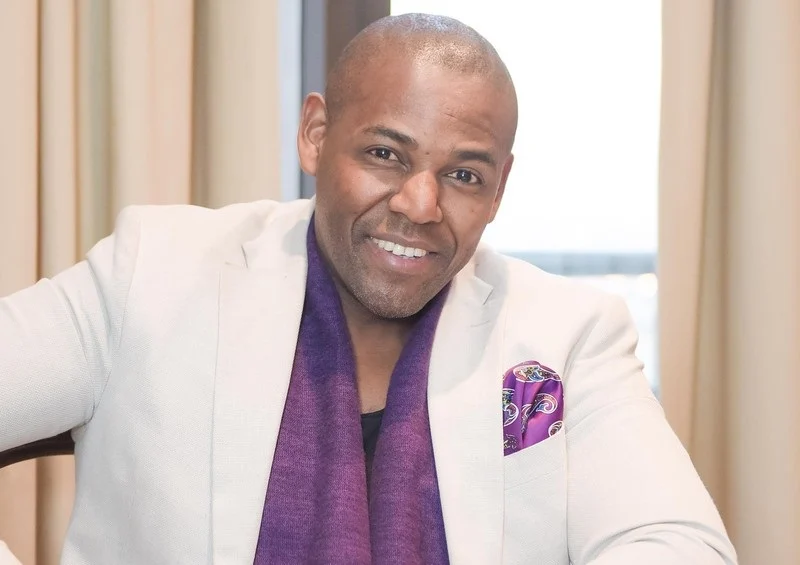
Businessman Frank Buyanga Sadiqi (Picture via Linkedin)

​For a man who once navigated the world in private jets and curated a life defined by the hum of Italian supercars, the silence of a South African remand cell must be deafening.

Frank Buyanga Sadiqi, the flamboyant businessman whose “fblifestyle” brand was once the envy of social media, has hit a wall of judicial granite.

On 13 April 2026, the North Gauteng High Court in Pretoria delivered what many view as the final blow to his immediate hopes of freedom, dismissing his application for leave to appeal with a chilling finality.

​Judge Holland-Muter’s ruling was succinct but devastating. The court found no reasonable prospect that an appeal would succeed, nor any compelling reason for another court to entertain the matter.

For Sadiqi, who has remained in custody since his dramatic arrest in November 2022, the judgment ensures that his three-year odyssey through the South African penal system will continue indefinitely.

​The Sandton Sting and the Red Notice

​The saga began not with a financial audit, but with a high stakes operation at an upmarket Sandton hotel. Acting on a Zimbabwean warrant and an Interpol Red Notice, the South African Police Service and Interpol agents swooped on the businessman, bringing a screeching halt to his life of luxury.

The initial spark was a bitter, long-running child custody battle that escalated into criminal allegations of kidnapping in April 2020.

​However, what started as a domestic dispute has mutated into a complex web of criminal charges. Under Randburg case 3/5921/2022, Sadiqi faces a formidable trinity of legal threats: kidnapping, contempt of court and significant immigration violations.

While his legal team has fought a war of attrition through dozens of applications, the state has remained unyielding, arguing that the businessman is a flight risk with the resources to disappear into the global ether.

​Political Puppet Masters?

​Beyond the dry parchment of court records, the case has taken on a sinister, investigative hue. Sadiqi’s legal representatives have frequently broken cover to allege that this is no ordinary criminal prosecution. They claim their client is the victim of a coordinated “hit” orchestrated by the highest echelons of power in Zimbabwe.

​The narrative they present is one of Shakespearian intrigue. Allegations have surfaced involving powerful figures linked to President Emmerson Mnangagwa’s family. According to these claims, the judicial pressure on Sadiqi is not merely about a custody dispute or immigration status, but is instead a retaliatory strike linked to a personal conflict involving a woman associated with the Zimbabwean First Family.

These assertions have been taken to South African commissions of inquiry, with Sadiqi’s camp alleging corruption and the weaponisation of the National Prosecuting Authority. While the NPA has officially noted these concerns, the prosecution has not blinked, maintaining that the law is simply taking its course.

​A Body Breaking Under the Strain

​Inside the prison walls, the toll is reportedly physical as much as it is psychological. Sources close to the businessman suggest that the once robust tycoon is a shadow of his former self.

Having spent over 1200 days in pre-trial detention, reports of failing health, including a severe bout of pneumonia and chronic respiratory issues, have added a humanitarian dimension to the legal deadlock.

​Human rights advocates have begun to question the ethics of such prolonged detention without a trial conclusion. In the eyes of the law, Sadiqi remains innocent until proven guilty, yet he has already served a duration equivalent to a significant prison sentence.

This “legal limbo” has sparked debate regarding the efficiency of the South African justice system and whether the sheer volume of Sadiqi’s own applications has inadvertently built the very walls that keep him inside.

​The Zimbabwean Front

​While he fights for breath in Pretoria, the ground is shifting beneath his feet in Harare. In late 2025, the Zimbabwean High Court delivered a separate, crushing blow, ruling that Sadiqi was involved in a series of fraudulent property deals. The court declared numerous transactions void and unlawful, stripping away layers of his corporate empire.

This parallel legal front reinforces the state’s depiction of Sadiqi not as a persecuted entrepreneur, but as a systematic manipulator of legal and financial systems.

​The Final Stand

​The dismissal of his leave to appeal effectively strips Sadiqi of his primary defensive shield. The state can now proceed toward a full trial without the constant interruptions of interlocutory appeals. For the man who once moved through the world with untouchable flair, the reality is now a stark courtroom and a guarded cell.

​The “Buyanga Affair” stands as a cautionary tale of how quickly a gilded life can be dismantled by the grinding gears of two nations’ legal machineries.

Whether he is a victim of political persecution or a fugitive finally facing the music, Frank Buyanga Sadiqi remains the protagonist of one of Southern Africa’s most expensive and exhausting legal drama.

Gabriel Manyati is a Zimbabwean journalist and analyst delivering incisive commentary on politics, human interest stories, and current affairs.

Zimbabwe farmers warn fuel price spike could cripple winter wheat production

0
Tulbagh, Western Cape, South Africa. 28 February 2024. Large fuel tanker delivering fuel to a service station in Tulbach, Western Cape, South Africa. — Photo by Petertt via DepositPhotos.com

Rising fuel prices and escalating costs of agricultural inputs are threatening the ability of farmers in Zimbabwean to return to the fields to prepare for the winter wheat season, a representative body has said.

In a statement, the Zimbabwe Farmers Union (ZFU) said the current producer price structure is no longer aligned with the realities on the ground, leaving farmers exposed to significant financial strain.

The warning follows recent fuel price adjustments by the Zimbabwe Energy Regulatory Authority, which have seen diesel costs climb sharply over a short period.

Diesel, a critical input for land preparation and irrigation, has risen from around US$1.52 per litre during the last farming season to above US$2.00 per litre, a jump that farmers say is not sustainable.

“The prevailing pricing framework does not adequately reflect the volatility in production costs,” the ZFU said, highlighting a widening gap between fixed producer prices and the rising cost of essential inputs such as fuel and fertilizers.

The ZFU warned that the imbalance is eroding profitability in wheat farming, with many producers now questioning the viability of continuing with the crop under current conditions.

“It is becoming increasingly difficult for farmers to justify wheat production as projections show reduced returns after harvest,” it said.

“The key concern now is identifying measures that can shield vulnerable farmers while improving productivity and ensuring stable incomes,” it added.

The ZFU said mechanization costs, heavily dependent on diesel, are emerging as a major obstacle, particularly for small-scale farmers who rely on hired equipment.

“With fuel prices at current levels, the cost of operating tractors and irrigation systems has escalated beyond the reach of many producers,” it said.

It said the development has already begun to affect preparations for the winter cropping season, with reports of delayed land tillage in several provinces.

The ZFU cautioned that if the situation persists, Zimbabwe could struggle to meet its targeted 120 000 hectares under wheat.

“Mechanization and irrigation form the backbone of winter wheat production, yet they are increasingly becoming inaccessible to the average farmer. This is slowing down land preparation and may ultimately compromise national output,” it said.

As the planting window approaches, the ZFU urged policymakers to review pricing models and introduce support mechanisms to cushion farmers against rising input costs. New Ziana

The Chikurubi Chronicles: The bloody rise and fall of Chidhumo and Masendeke

0
The late notorious outlaws Edmund Edgar Masendeke and Stephen Chidhumo (Pictures via CID)

​In the mid-1990s, a chilling shadow stretched across the Zimbabwean high-veld, reaching from the neon-lit avenues of Harare to the dusty transit towns of the Midlands. It was an era defined by a peculiar, high-stakes brand of terror.

Mothers used two names to quieten disobedient children, and shopkeepers bolted their doors long before the sun dipped below the horizon. Those names -Stephen Chidhumo and Edgar Masendeke – were more than mere entries in a police ledger.

They were the architects of a national neurosis. Together and apart, they represented a breakdown of the social contract, a duo whose penchant for violence was matched only by their uncanny ability to vanish like ghosts before the reaching arms of the law.

​To understand the genesis of these men is to understand the fractures of post-independence Zimbabwe.

By the 1990s, the initial euphoria of 1980 had buckled under the weight of Economic Structural Adjustment Programmers (Esap). Urbanisation was surging, but the promise of formal employment remained a mirage for many.

Chidhumo and Masendeke were products of this disillusionment. Born into modest rural backgrounds and migrating toward the urban promise, they found a landscape where the gap between the haves and the have-nots was widening.

While most navigated these hardships with quiet resilience, these two chose a path of predatory opportunism. Their formative years were spent in the peripheral shadows of society, honing a disregard for authority that would soon escalate from petty theft to cold-blooded homicide.

​The reign of Masendeke was particularly gruesome. His modus operandi lacked the supposed “social bandit” veneer sometimes attributed to outlaws; it was raw, visceral and terrifying.

Operating frequently in the Gutu and Kwekwe areas, he was a master of the ambush. In one of his most infamous acts, he was linked to the brutal murder of a businessman, a crime that shocked the nation not just for the loss of life, but for the calculated indifference displayed.

Masendeke was a man who moved through the bush with the expertise of a scout, making the Zimbabwe Republic Police (ZRP) appear lumbering and outmatched.

​Chidhumo, meanwhile, was the tactical counterpart. If Masendeke was the blunt instrument, Chidhumo was the sharp blade.

His criminal career was a litany of armed robberies and murders that spanned the border into South Africa and back. The ZRP faced a crisis of public confidence as Chidhumo bypassed checkpoints and evaded cordons with an almost supernatural ease.

The media at the time painted them as a “Bonnie and Clyde” of the Zimbabwean underworld, though the reality was far less romantic. They were men who viewed human life as a secondary consideration to the loot in their hands.

​The zenith of their notoriety arrived with the Great Escape. In 1995, Chidhumo was incarcerated at Mutare Main Prison. In a feat that mirrored a cinematic thriller, he and a cohort of other inmates scaled the walls and vanished into the night.

It was an embarrassment of the highest order for the Zimbabwe Prison Services. The subsequent manhunt was the largest in the country’s history, involving paramilitary units and cross-border coordination.

When he was eventually recaptured in Mozambique and sent to the “Star Chamber” of Chikurubi Maximum Security Prison, the public assumed the saga had ended.

​They were wrong. In 1997, Chidhumo orchestrated yet another escape, this time from the supposedly impenetrable Chikurubi. He did not go alone; he was joined by three others, including the equally feared Masendeke.

For a brief, terrifying window, the two titans of the Zimbabwean underworld were at large together.

This period remains a dark chapter in the nation’s memory. The police were forced to admit that they were dealing with individuals who possessed an intimate knowledge of their internal protocols.

The breakthrough finally came through a combination of exhaustive forensic tracking and the slow erosion of their support networks.

Chidhumo was apprehended in Mozambique once more, while Masendeke was cornered in a dramatic operation that saw him finally shackled and brought to face the scales of justice.

​The subsequent trials were a media circus. Every seat in the gallery was filled, and every word uttered by the prosecution was dissected in the local dailies.

During the proceedings, the men appeared surprisingly mundane – gone was the aura of the “super-criminal,” replaced by the haggard faces of men who had spent their lives looking over their shoulders.

Justice, though slow, was absolute. Chidhumo was convicted of multiple counts of murder and robbery. Masendeke faced a similar fate for his litany of atrocities.

Both were sentenced to death, a verdict that was met with a complex mixture of relief and sombre reflection by the Zimbabwean public.

​However, the deaths of Chidhumo and Masendeke did not immediately erase them from the national psyche. Instead, they transitioned from men into myths.

Rumours persisted for years that they possessed “juju” or traditional charms that made them invisible to police or allowed them to transform into animals to escape capture.

This mythology serves as a fascinating sociological case study. In a society grappling with rapid change and economic instability, the supernatural became a way to explain the failures of modern institutions like the police.

The “reality” was likely far more prosaic: they were simply resourceful, desperate men who exploited the weaknesses in a strained bureaucratic system.

​Their legacy is a scarred one. To the families of their victims, they remain monsters whose names should never be uttered. To the police force, they represent a period of profound trial that eventually led to more robust investigative techniques.

To the general public, they are a cautionary tale about the dark side of the Zimbabwean dream. Their stories highlight the necessity of a strong social fabric; when young men feel they have no stake in the legitimate economy, the allure of the “outlaw” lifestyle becomes a potent poison.

​Reflecting on the era of Chidhumo and Masendeke 30 years later, we see a country that has moved on, yet still carries the memory of those tense nights.

They remind us that the thin line between order and chaos is maintained not just by locks and bars, but by the hope of its citizens.

When Chidhumo and Masendeke were finally executed in the early 2000s, the trapdoor did not just close on two men; it closed on an epoch of unprecedented criminality.

They remain, in the annals of Zimbabwean history, a grim reminder of a time when the law was a suggestion and the night belonged to the shadows.

Gabriel Manyati is a Zimbabwean journalist and analyst delivering incisive commentary on politics, human interest stories, and current affairs.

Jabulani Nkomo accused of conflict links in Highlanders US$120,000 project deals

0
Jabulani Nkomo, son of the late Vice-President John Landa Nkomo (Picture via The Chronicle)

Concerns have emerged over the handling of sponsorship funds at Highlanders FC, with insiders raising questions about possible conflicts of interest involving Jabulani Nkomo, son of the late Vice President John Landa Nkomo, who was appointed to oversee financial disbursements linked to businessman Wicknell Chivayo.

Chivayo pledged a US$1 million sponsorship package to the club last year, aimed at supporting its operations amid financial challenges. As part of the arrangement, Nkomo was appointed curator to help manage and oversee the funds in coordination with the club’s executive.

The appointment was presented as a mechanism to ensure transparency and accountability. However, multiple sources within the club now allege that the process may be falling short of those expectations.

At the centre of the concerns is a landscaping tender for the Highlanders clubhouse, where quotations seen by Nehanda Radio (first published by sports journalist Tafadzwa Chigandiwa) list Nkomo as the client.

The documents, from LOC Distributors Zimbabwe, relate to the supply and installation of kikuyu lawn across three football pitches.

Two separate quotations, one totalling US$64,515 and another US$58,650, have raised questions about pricing discrepancies and procurement procedures. The combined value exceeding US$120,000 has triggered scrutiny from insiders who fear possible inflation of costs.

Further concerns have been raised over the construction of a durawall at the same premises, reportedly linked to Nkomo. Sources claim the project, which remains incomplete, is believed to have cost approximately US$109,000.

Critics argue that Nkomo’s reported association with a company involved in bidding for projects funded through the sponsorship could present a conflict of interest, particularly given his oversight role in the disbursement of funds.

The developments have added to growing debate around governance and accountability in the use of private sponsorship funds within Zimbabwean football.

The sponsorship arrangement traces back to June 2024, when Chivayo committed US$1 million to Highlanders FC, including an initial US$250,000 disbursement, with the remainder expected to follow.

Separately, in October 2024, Chivayo donated US$250,000 to a trust established in honour of the late John Landa Nkomo.

He also gifted Nkomo’s son, Jabulani, a Ford Ranger Wildtrak valued at approximately US$80,000, moves that underscored the close ties between the businessman and the Nkomo family.

SA prosecutors seek 2 years for Mugabe’s son, 30 years for Matonhodze in shooting case

0
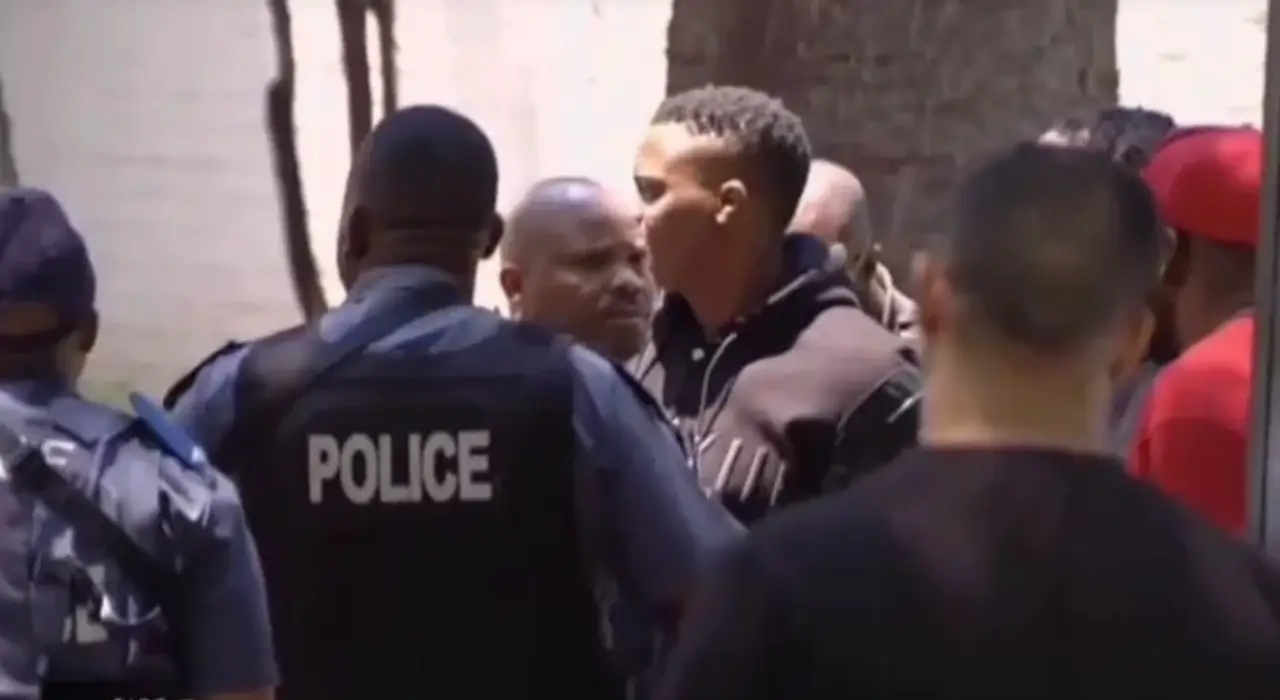
Bellarmine Chatunga Mugabe being taken away by police after the shooting incident (Picture via SABC News)

State prosecutors in South Africa are seeking a combined 2 years’ imprisonment for Bellarmine Chatunga Mugabe and 30 years for his co-accused Tobias Matonhodze as the pair await sentencing on April 29 in a case involving firearm offences and attempted murder.

Mugabe, son of former Zimbabwean leader Robert Mugabe, pleaded guilty to contravening immigration laws and pointing a firearm. The State is pushing for 12 months’ direct imprisonment for pointing a firearm and another 12 months for violating firearms regulations.

The firearm-related offence is linked to a separate incident that occurred about two weeks before the shooting at his Hyde Park home.

Matonhodze, who admitted to more serious charges, faces a substantially longer potential sentence.

Prosecutors are seeking five years for attempted murder, 12 years for unlawful possession of a firearm, 12 years for defeating the ends of justice, and a further 12 months for contravening firearms laws. He also faces a fine for unlawful possession of ammunition.

The case centres on the shooting of Mugabe’s security guard, Sipho Mahlangu, at the Hyde Park residence. The court heard that Mahlangu is to receive R400,000 in compensation, with R250,000 already paid and R150,000 still outstanding.

The investigating officer told the court that a harsher sentence is warranted, citing the accused’s failure to reveal the whereabouts of the firearm used in the incident. Prosecutors argue this demonstrates a lack of remorse and aggravates the offences.

The defence, however, is seeking a non-custodial sentence for Mugabe, arguing that his guilty plea reflects accountability. Lawyers also suggested the firearm may have been removed by another individual, noting that other people were present at the time.

Both accused admitted to immigration violations, while Matonhodze also pleaded guilty to defeating the ends of justice in connection with attempts to conceal evidence after the shooting.

The court is expected to deliver its sentencing decision on April 29.

Was Chiwenga right to accuse Tagwirei of ‘stealing’ and ‘concealing’ Zanu PF stake in Sakunda?

0
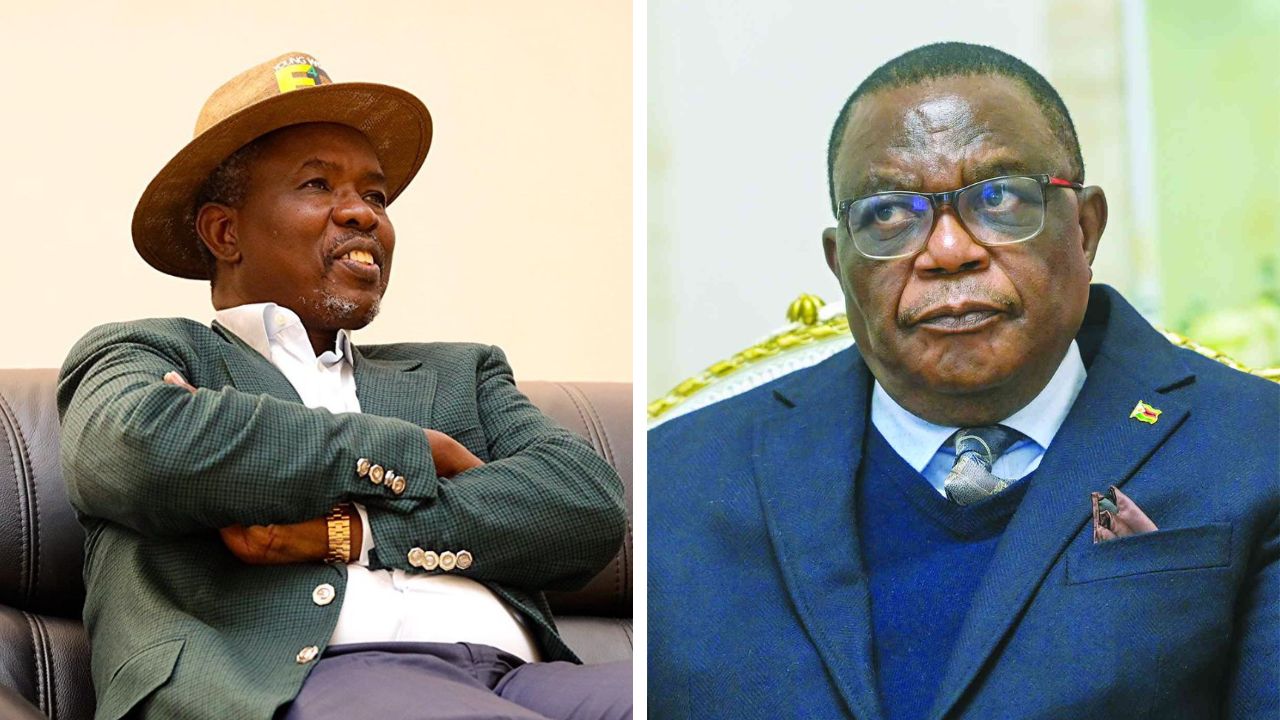
Controversial tenderpreneur Kudakwashe Tagwirei and Vice President Constantino Chiwenga (Pictures via X - Zanu PF official and Tatarstan.ru, CC BY 4.0 , via Wikimedia Commons)

In 2017, General Constantino Chiwenga, as head of Zimbabwe’s armed forces, led the military coup which brought President Emmerson Mnangagwa to power and won Chiwenga the vice presidency.

The two have since fallen out and are fighting over Mnangagwa’s apparent desire to stay in office for an unconstitutional third term.

In September 2025, Chiwenga brought the fight to the Zanu PF politburo, the party’s highest decision making body. The Vice President submitted a dossier alleging that criminals surrounding the president were corrupting the ruling party.

The document, obtained by ZimLive, contained an explosive allegation concerning Kudakwashe Tagwirei, a close ally of Mnangagwa and rumoured to be a rival candidate to Chiwenga to succeed the President, and fuel giant Sakunda Holdings.

Sakunda’s joint venture with commodity trading giant Trafigura sold fuel worth between $600 million and $800 million each year in the 2014 to 2017 period, while from 2016 to 2019 Sakunda received over US $1 billion in public funds to buy seed and fertiliser in the controversial Command Agriculture programme.

Specifically, Chiwenga complained of: the stealing and concealment by Kudakwashe Tagwirei of the party’s 45 percent shareholding in Sakunda Holdings held by Mvuto Investments (Private) Limited, an investment vehicle of the party held through our National Reconstruction Group, which was purchased in November 2013.

In October 2025, Zanu PF’s legal secretary Ziyambi Ziyambi hit back at Chiwenga, circulating a rebuttal document. Ziyambi denied that the party holds shares in Sakunda, although he maintained a careful silence about the National Reconstruction Group and Mvuto Investments.

Who is behind Mvuto Investments and the National Reconstruction Group?

In 2014, Mvuto Investments’ shareholders were Happyton Bonyongwe – the then director general of the Central Intelligence Organisation (CIO), the country’s spy agency – and two former ministers: Walter Chidhakwa and Joel Biggie Matiza. Mvuto’s links to the CIO do not end there. The company’s registered address was the fifth floor of Livingstone House, an address frequently used by the CIO to register its companies.

Further, Mvuto and Sakunda appear to share the same company secretary, who had also played a similar role at a CIO-controlled firm.

Maurice Makoni was appointed as the company secretary for Mvuto Investments, Todware Investments, a CIO-linked solar energy company, and Sakunda Holdings in 2014.

The National Reconstruction Group’s existence was first inadvertently revealed by Bonyongwe, when the former spy chief gave evidence to a parliamentary inquiry into the CIO’s co-ownership of Kusena Diamonds, a mining company. He left his briefing papers on public view, showing that the CIO owned 10 percent of Kusena, with 40 percent held by the National Reconstruction Group, “which represented Zanu PF.”

The National Reconstruction Group had also purchased agricultural goods worth $2 million in 2013. These may have been used by Zanu PF for distribution in rural areas to help buy votes in the election that year.

Did Mvuto Investments really own 45 percent of Sakunda?

Sakunda’s records at Zimbabwe’s deeds registry (which frequently has filings that are out of date or incomplete) do not mention Mvuto Investments.

The Chief Operating Officer of Sakunda has claimed in parliamentary hearings that 54 percent of the company is owned by Tagwirei, with the remaining 46 percent held by Tagwirei’s wife, Sandra Mpunga.

However, Chiwenga’s pointed mention of the National Reconstruction Group, the presence of the former CIO boss on the board of Mvuto Investments, and Tagwirei’s experience with hidden ownership structures raises the possibility that this might not be the whole story.

Sakunda’s beneficial owners may also have changed over time. One source in a position to know said that they were unaware of Mvuto when they, the source, were appointed to the position in which they had access to relevant information in 2018 but claimed that Mnangagwa played a role: “Kuda [Tagwirei] always said Sakunda was not just his, and the president was also owner [sic].”

If Chiwenga was right, how much would Zanu PF have lost?

Suppose Chiwenga was correct, and the National Reconstruction Group really should have owned 45 percent of Sakunda via Mvuto Investments—did the ruling party lose out financially?

We can provide a partial answer by comparing the audited accounts of Sakunda Supplies, Sakunda Holding’s joint venture with Trafigura, and a leaked spreadsheet, first obtained by the Organised Crime and Corruption Reporting Project, which details offshore payments to Tagwirei.

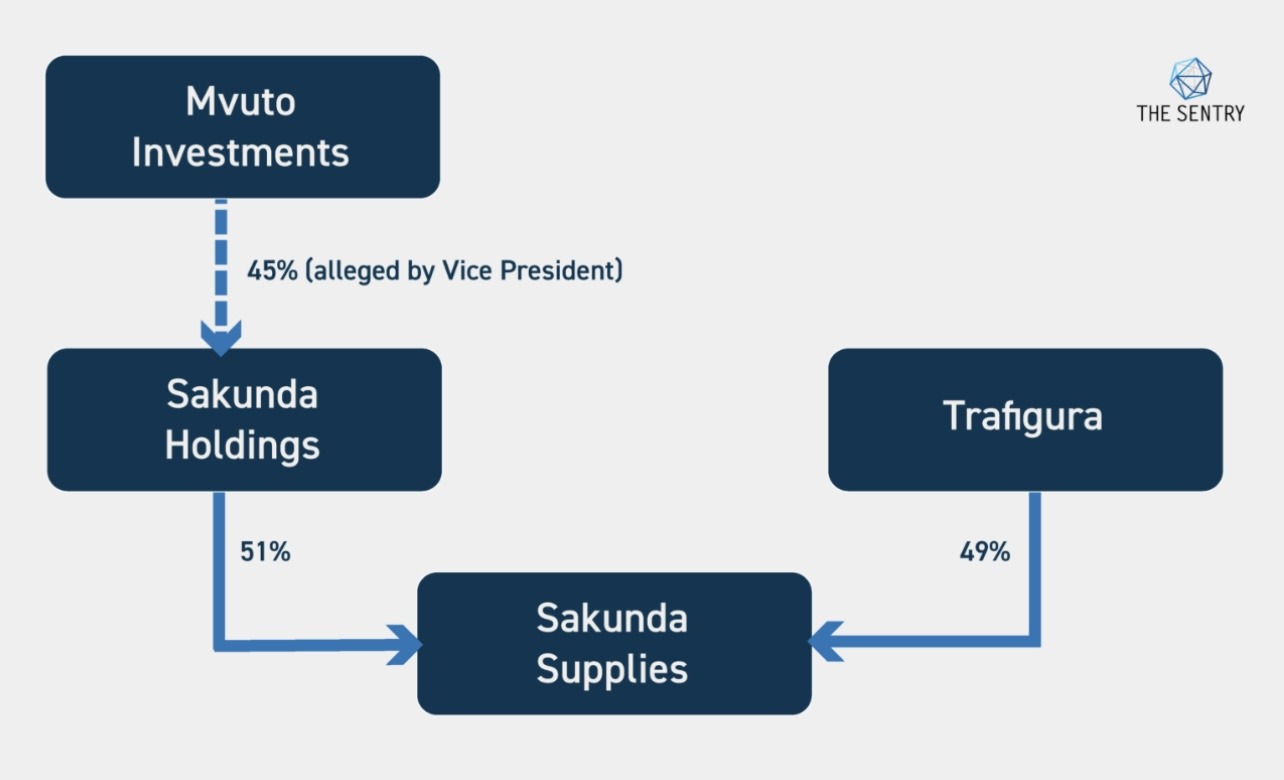
If the allegation made by the Vice President is correct, the relationship between Sakunda Holdings, Sakunda Supplies, and Mvuto Investments should have looked like this:

SakundaOne standard route for a shareholder to get paid is through dividends, paid out of post-tax profits. However, many privately owned companies seek to report lower profits, which incur corporate income taxes, and instead to extract value in other ways. This is the pattern we see at Sakunda Supplies.
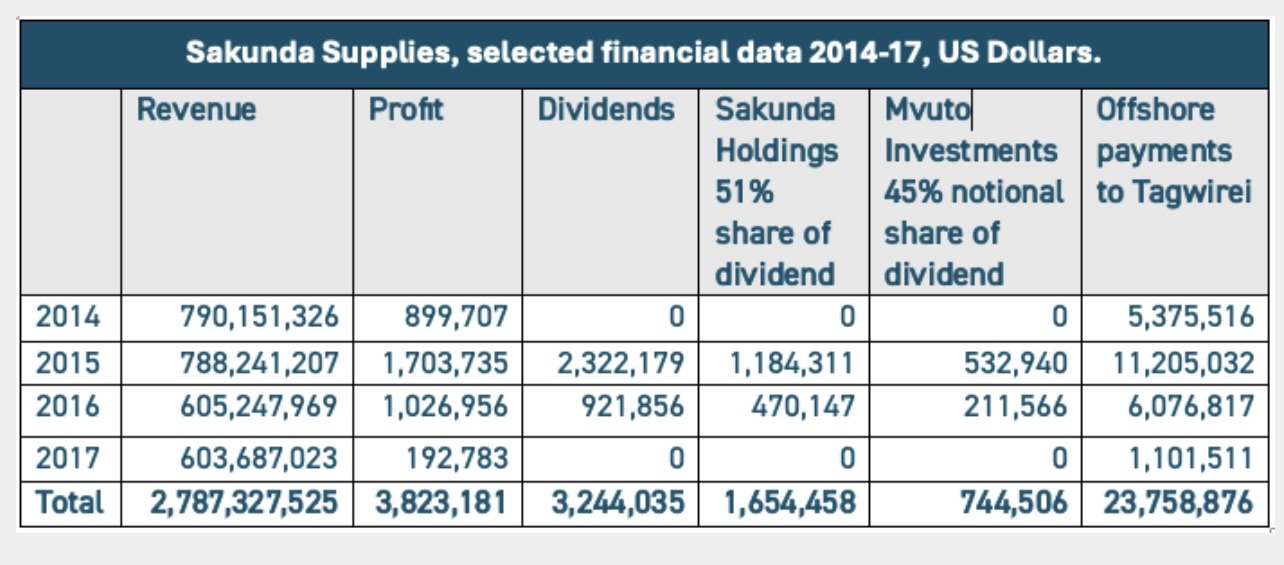
Tagwirei was contractually entitled to fees from Trafigura that dwarfed the dividend payments. During the 2014–2017 period, Tagwirei received $23.7 million offshore, while any 45 percent shareholder of Sakunda Holdings—in this scenario, Mvuto—would have earned less than $1 million from Sakunda Supplies’ dividends, assuming that Sakunda Holdings itself paid any dividend during that period.

SakundaTrafigura declined to comment to The Sentry but had previously told the OCCRP that the details presented to the firm by the media organization were “factually inaccurate.”

Tagwirei also told the OCCRP that he denied all the accusations put to him but did not respond to The Sentry’s request for comment.

Chiwenga’s allegations have not been answered adequately by Zanu PF’s legal secretary, and both the party and Sakunda still have questions to answer about their precise relationship.

If Zanu PF did hold a hidden stake, then these leaked financial documents suggest the vice president may have a point when he complains of ‘concealment.’

This article was originally published by The Sentry

ZACC targets Powertel leadership over fraud, procurement irregularities claims

0
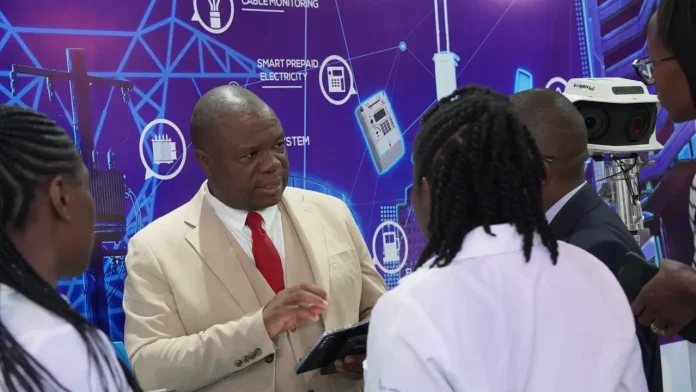
Powertel Managing Director Mr. Willard Nyagwande, touring the Powertel exhibition stands at ZITF 2025 (Picture via X - @PowerTelZW)

The Zimbabwe Anti-Corruption Commission (ZACC) has launched an investigation into Powertel’s top leadership following serious allegations of fraud and procurement irregularities, placing the state-owned telecommunications firm under intense scrutiny amid concerns over governance and accountability, Nehanda Radio can reveal.

Sources familiar with the matter said the anti-graft body moved in last week after receiving a formal complaint from pressure group Citizens Against Corruption (CAC), which raised concerns over financial irregularities, weak internal controls and possible abuse of office within the organisation.

The complaint, lodged last month, centres on allegations against Powertel’s Acting Managing Director Willard Nyagwande and members of the executive team.

It outlines claims of internal instability, including reported disputes among senior managers that are said to be affecting the company’s operations and staff morale.

“The Acting Managing Director is engaged in persistent confrontations with senior management, creating an environment of hostility and instability,” CAC noted in its complaint to ZACC.

Investigators are understood to be examining suspected lapses in financial oversight that allegedly allowed a junior employee to defraud the company, raising questions about accountability at higher levels of management.

The probe is also expected to assess whether any senior officials may have benefited, directly or indirectly, from the alleged irregularities.

Procurement practices are another key focus area.

Concerns have been raised over advance payments to suppliers without adequate safeguards, as well as the use of a consignment stock model that critics argue could be open to manipulation and preferential treatment of selected contractors.

In addition, allegations relating to expenditure on international travel by senior executives are likely to form part of the inquiry, with questions over whether such trips delivered value to the organisation.

The developments come after Citizens Against Corruption called for intervention by both ZACC and the Corporate Governance Unit in the Office of the President and Cabinet, citing what it described as systemic governance failures within Powertel.

“These lapses point to a failure of accountability mechanisms and raise serious questions about those entrusted with safeguarding public resources,” the complainant stated.

Contacted for comment, Nyagwande said he was not permitted to speak on the matter and referred this publication to the company’s Acting Group Stakeholder Relations officer, Prisca Utete.

“Im not allowed to respond to such issues for now,” he said.

Confirming that investigations are underway, Utete said: “The matter is subjudice.”

ZACC has not yet issued an official statement on the scope or timeline of the investigation.

Seven family members killed in KwaZulu-Natal; three suspects arrested

0
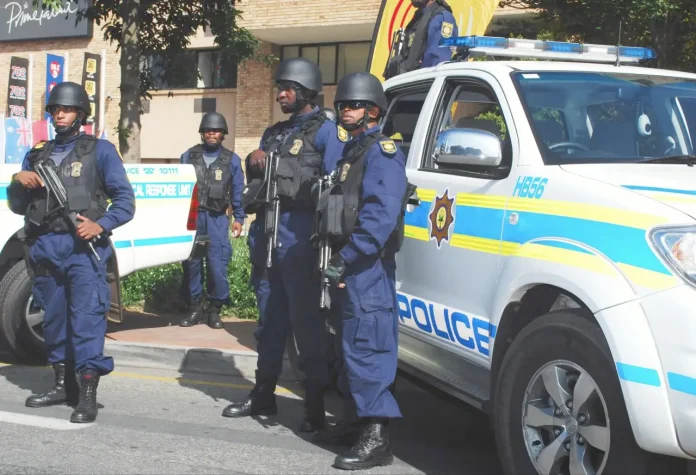
On 17 May 2010 the South African Police Service (SAPS) demonstrated along with Emergency Services how efficient they will be during the 2010 World Cup. Thousands of spectators joined the parade through the streets of Sandton. (Picture via ER24 EMS (Pty) Ltd., CC BY-SA 2.0 , via Wikimedia Commons)

Police in KwaZulu-Natal have arrested three suspects following the abduction and killing of seven members of the same family on the province’s north coast earlier this week.

According to investigators, the victims were taken from their home in Newtown, Newark, on Tuesday, 21 April 2026.

Authorities say the suspects forced entry into the property and removed all seven occupants, including a 20-year-old woman and an 83-year-old elderly person, before transporting them to Melmoth.

The case came to light the following morning when a domestic worker arrived at the residence and found signs of a break-in, with the family and a vehicle missing. Police launched an immediate investigation, which led to arrests in Hlomendlini and later in Dendetu, Sundumbili.

Two suspects were initially detained in Hlomendlini, where officers recovered a mobile phone linked to one of the victims.

A third suspect was subsequently arrested in Sundumbili and found in possession of a firearm. In total, authorities seized 11 mobile phones believed to be connected to the case.

Police allege that one of the suspects had previously worked for the victims and may have played a central role in the crime. Investigators say the victims were restrained before being transported to Melmoth.

Authorities further allege that the suspects forced the victims to provide banking details and PIN numbers. During the incident, multiple financial transactions were reportedly carried out using the victims’ accounts.

Police say three of the victims were shot, while the remaining four died from stab wounds. The bodies were discovered in Melmoth on Wednesday.

Provincial Police Commissioner Lieutenant General Nhlanhla Mkhwanazi commended the rapid progress made by officers but expressed concern over the circumstances of the case.

He noted that crimes of this nature can be difficult to prevent and emphasised the importance of swift police response. He also warned employers, particularly in rural and isolated areas, to exercise caution when hiring staff and to conduct thorough background checks.

Mkhwanazi added that individuals known to victims are often involved in crimes in secluded communities and confirmed that investigations are ongoing to determine whether the suspects are linked to other offences in the province.

The three suspects, aged 21, 26, and 28, are scheduled to appear before the KwaDukuza Magistrate’s Court on Friday, 24 April 2026. They face multiple charges, including kidnapping, murder, rape, and armed robbery.

Police say further inquiries are under way as authorities continue to gather evidence.