A British-born transport manager who spent more than three decades in Zimbabwe has shared a remarkable account of his role in helping rebuild rural communities after independence, describing how transport logistics became a critical tool in improving the lives of millions of small-scale farmers.
John Rushton, now 81 and living in Shropshire, England, says his involvement began shortly after Zimbabwe attained independence in 1980 when he accepted an unusual assignment that would take him deep into former guerrilla strongholds in Manicaland Province.
At the time, Rushton was working for Browns Transport in Marondera when officials from Zimbabwe’s Central Intelligence Organisation (CIO) approached the company seeking assistance in delivering agricultural inputs to rural communities as part of the new government’s reconciliation and development programme.
The task involved transporting fertiliser, seed and agricultural chemicals into remote areas that had been devastated by years of conflict and where roads remained damaged by landmines and neglect. Many transport operators reportedly declined the challenge because of the risks involved.
Rushton accepted.
One of his first missions took him to Regina Coeli Mission in Nyamaropa, a former guerrilla assembly point where thousands of ex-combatants were based after the war.
“I was Police Anti-Terrorist Unit fighting terrorists based in Chimoio, Mozambique. You are now asking me to enter their base camp,” Rushton recalled. “I felt that the Lord had chosen me to take on this challenge.”
He describes navigating treacherous roads, building makeshift river crossings and working alongside former adversaries to establish supply chains capable of reaching isolated farming communities.
According to Rushton, what began as a short-term assignment evolved into a four-year effort to distribute thousands of tonnes of agricultural inputs across Manicaland and Mashonaland provinces.
He says the programme helped establish farming cooperatives, encouraged the cultivation of crops such as tea and coffee, and enabled rural families to generate income and pay school fees.
As Zimbabwe’s rural development strategy expanded, Rushton later joined Swift Transport, where he played a leading role in coordinating some of the country’s largest agricultural logistics operations.
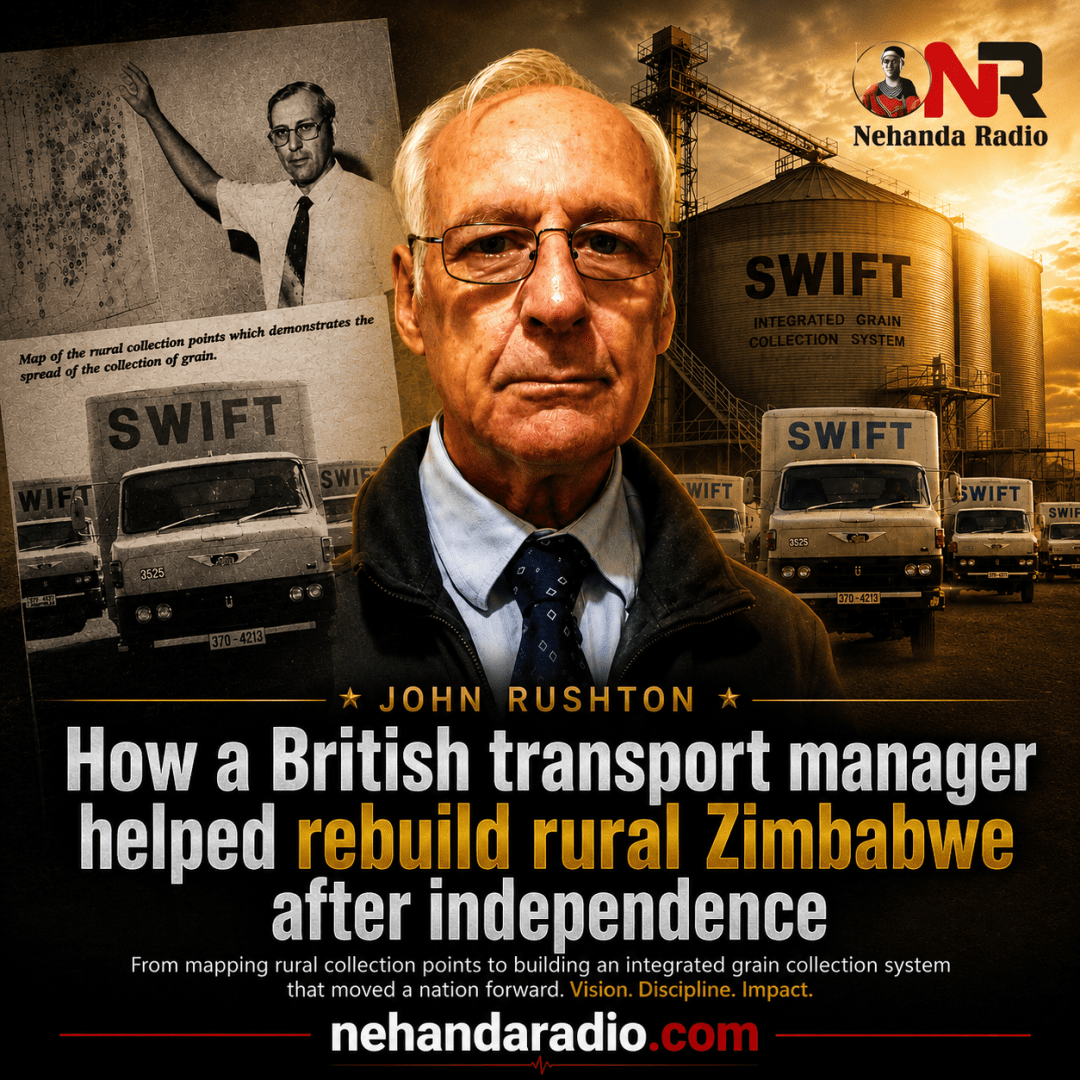
In 1985, he was appointed to oversee the collection and movement of maize from newly established rural depots, working with more than 70 transport companies and over 100 trucks to move tens of thousands of tonnes of grain from communal farming areas.
The initiative was praised by business organisations and government agencies as an innovative approach to rural development and agricultural marketing.
Rushton was also involved in major donor-funded programmes supported by international organisations and governments, including the European Economic Community, USAID, Save the Children, the Canadian International Development Agency and several European governments.
These projects focused on delivering fertiliser, seed, farming equipment and drought-relief supplies to remote communities.
One of the largest operations took place during the severe drought of the late 1980s, when Rushton coordinated the delivery of 14,500 tonnes of agricultural inputs to 482 destinations across five provinces.
The programme reached some of Zimbabwe’s most inaccessible areas and involved collaboration between government agencies, transport operators, seed producers and international donors.
Beyond road transport, Rushton was also involved in a government-backed survey of Lake Kariba in 1986 that examined the potential for donor-funded transport services using fast boats and barges to improve access to isolated communities along the vast inland waterway.
Reflecting on his decades in Zimbabwe, Rushton says he remains proud of his contribution to rural development.
“Over 44 years in Zimbabwe, I experienced a fulfilling life with my wife and three children,” he wrote. “I spent 30 of those years working to improve conditions for rural communities and more importantly saving millions from facing poverty in Zimbabwe.”
His account offers a rare personal perspective on the logistical challenges, reconciliation efforts and development programmes that shaped Zimbabwe’s rural economy during the first decade after independence.
Discover more from Nehanda Radio
Subscribe to get the latest posts sent to your email.