Activist Rutendo Benson Matinyarare has found himself at the centre of a growing political storm after an extraordinary public exchange with Presidential Adviser Paul Tungwarara prompted questions about the motivations behind his fierce opposition to Constitutional Amendment Bill No. 3 (CAB3).
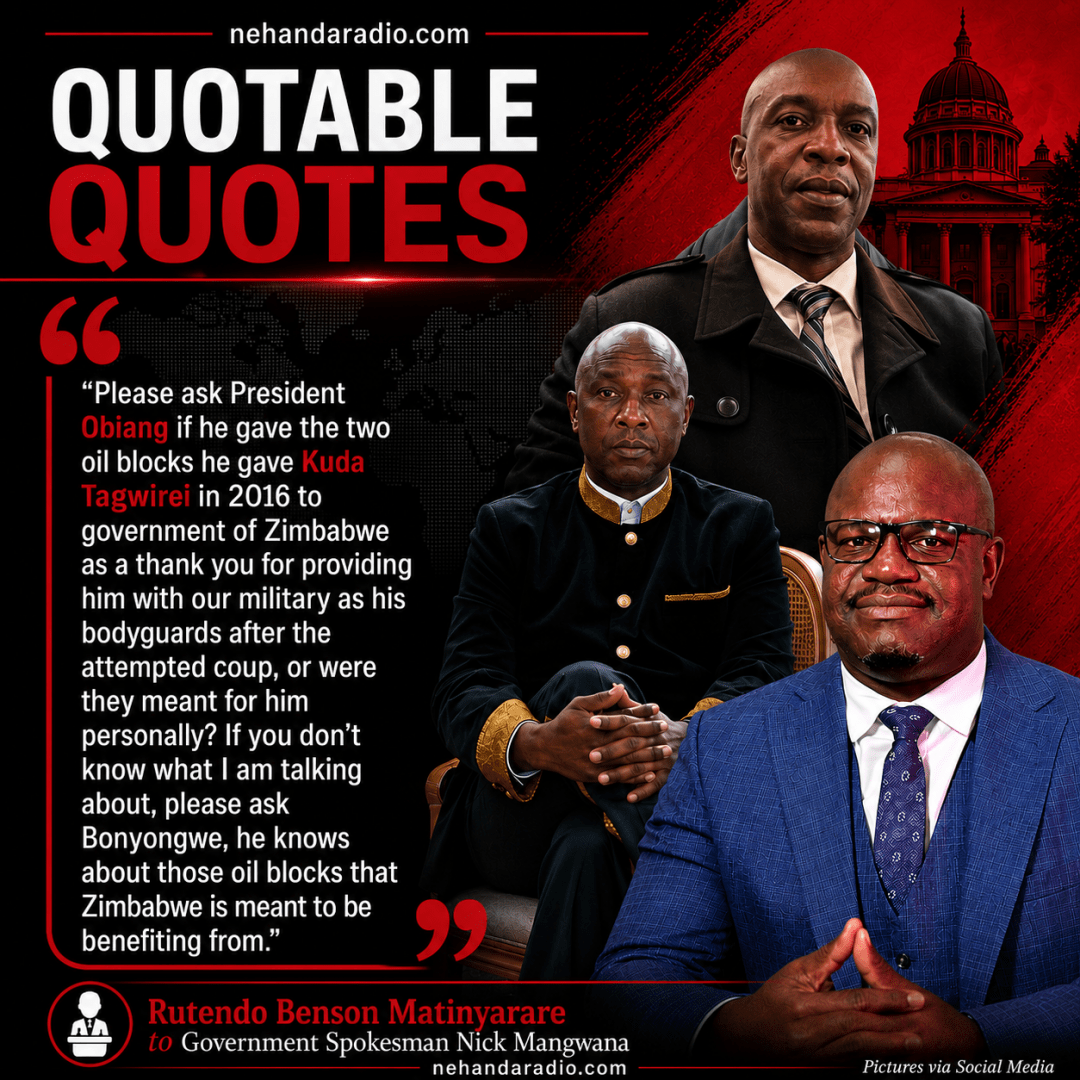
For months, Matinyarare has been one of the most vocal critics of CAB3, using social media platforms to attack the proposed constitutional changes while also releasing leaked audio recordings involving several prominent public figures, including former Norton MP Temba Mliswa and author Joshua Maponga.
However, a series of posts exchanged with Tungwarara over the weekend has fuelled speculation that the activist’s grievances may have been linked to unpaid political work he claims to have carried out on behalf of individuals connected to the government.

The controversy began when Tungwarara publicly appealed for calm, saying he had followed Matinyarare’s work with admiration but was concerned about his attacks on President Emmerson Mnangagwa and his decision to air disputes on social media.
He invited the activist to a roundtable discussion to address his concerns.
In response, Matinyarare said individuals who had worked for the country and promoted the President’s agenda should receive recognition and compensation.
He claimed he had participated in campaigns against sanctions, efforts to stop the deportation of Zimbabwean workers from South Africa, initiatives to improve Zimbabwe’s diplomatic relations with Rwanda and programmes designed to promote a positive image of Zimbabwe internationally.
“Now all we are asking for is reciprocity and the correction of an injustice,” Matinyarare wrote.

The exchange took a dramatic turn when Tungwarara praised Matinyarare’s response and announced that, as a first step towards reconciliation, he should collect a Toyota Land Cruiser 300 Series before their planned meeting.
Matinyarare accepted the offer and elaborated on his frustrations, alleging that he had carried out assignments at the request of presidential advisers and envoys, often at personal and financial cost, only to be abandoned when it came time for remuneration.
“In executing my mandate, I put my life and business interests at risk,” he wrote, adding that he became one of the most unpopular Zimbabweans in South Africa because of his activism.
The public exchange immediately triggered debate on social media, with critics questioning whether Matinyarare’s campaign against CAB3 had been driven by principle or by a dispute over payment.

Several users openly suggested that his criticism of government figures was linked to unresolved financial grievances rather than constitutional concerns. Others questioned whether his position on CAB3 would change if the remuneration dispute was settled.
The controversy has also renewed attention on Tungwarara’s own remarks about disputes involving individuals close to the presidency.
Before engaging Matinyarare directly, Tungwarara had argued that many public attacks on President Mnangagwa stemmed not from opposition to government policies but from unresolved business disagreements involving people within the President’s circle.
He urged those associated with the presidency to resolve disputes privately and avoid damaging the President’s image through public conflicts.

The episode has added another layer to the increasingly heated debate surrounding CAB3, with supporters and opponents of the Bill now arguing not only over the proposed constitutional changes but also over the credibility and motivations of some of the loudest voices in the national conversation.
Matinyarare remains a polarising figure. Supporters credit him with spearheading anti-sanctions campaigns through the Zimbabwe Anti-Sanctions Movement (ZASM) and raising awareness of regional issues, including the conflict in eastern Democratic Republic of Congo.
Critics, however, accuse him of courting controversy and frequently shifting political positions.
As questions continue to swirl around the exchange with Tungwarara, the affair has become one of the most talked-about political stories on Zimbabwean social media, raising fresh questions about activism, patronage and influence in the country’s increasingly polarised political environment.
Discover more from Nehanda Radio
Subscribe to get the latest posts sent to your email.