Conflicting accounts have emerged over the nature and purpose of South African President Cyril Ramaphosa’s recent trip to Zimbabwe, raising questions about whether the visit was official, private, or driven by the urgent political situation in Harare.
Statements from both governments appear to offer differing explanations. The South African presidency described the trip as a “working visit” focused on “issues of mutual and bilateral interest.”
However, Zimbabwe’s state broadcaster, ZBC News, characterised it as a “private visit” to President Emmerson Mnangagwa. The meeting took place at Mnangagwa’s Precabe Farm in Kwekwe.
The lack of a formal announcement prior to the trip has also drawn attention. Reports indicate that even some officials within South Africa’s foreign affairs department, Department of International Relations and Cooperation (DIRCO), were unaware of the visit.

Zimbabwean journalist Hopewell Chin’ono has linked the visit to internal political dynamics within Zimbabwe.
According to Chin’ono, Ramaphosa’s trip may have been aimed at addressing tensions within the ruling Zanu-PF party, including disputes over succession and proposed constitutional amendments to extend Mnangagwa’s term.
Chin’ono further reported that Ramaphosa privately reassured Mnangagwa that South Africa would not support any unconstitutional change of government, amid alleged concerns over potential military intervention linked to Vice President Constantino Chiwenga.
These claims, however, have not been officially confirmed by either government.
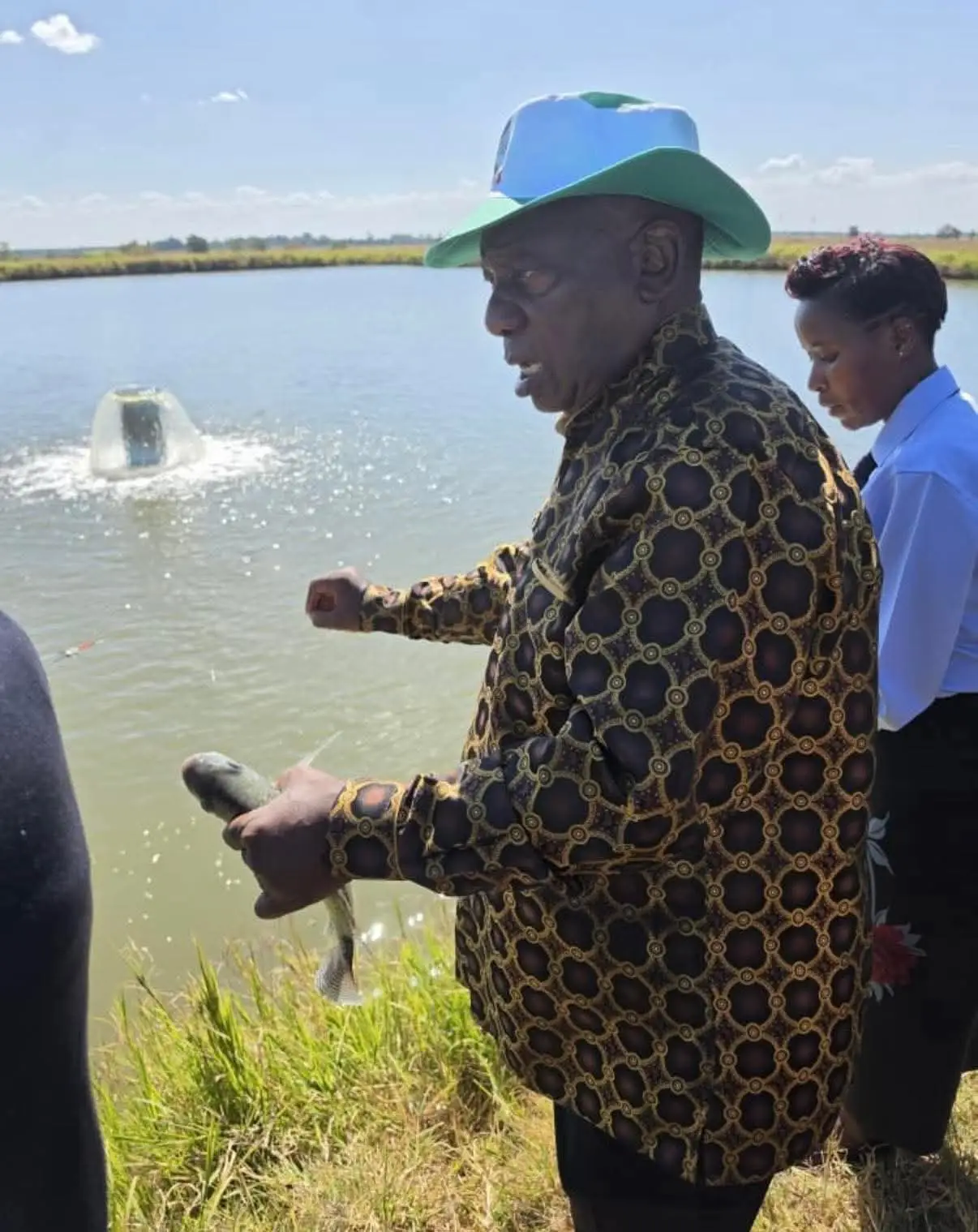
“They toured the farm, where the South African president was shown Mnangagwa’s Ankoli cattle and fish breeding pools.
“When they reached the ostriches, Ramaphosa is said to have remarked, in a pointed and politically loaded statement, that ‘nothing and nobody will remove my elder brother from power unconstitutionally.’
“The remark was made in the presence of members of the delegation accompanying the two leaders,” Chin’ono stated.
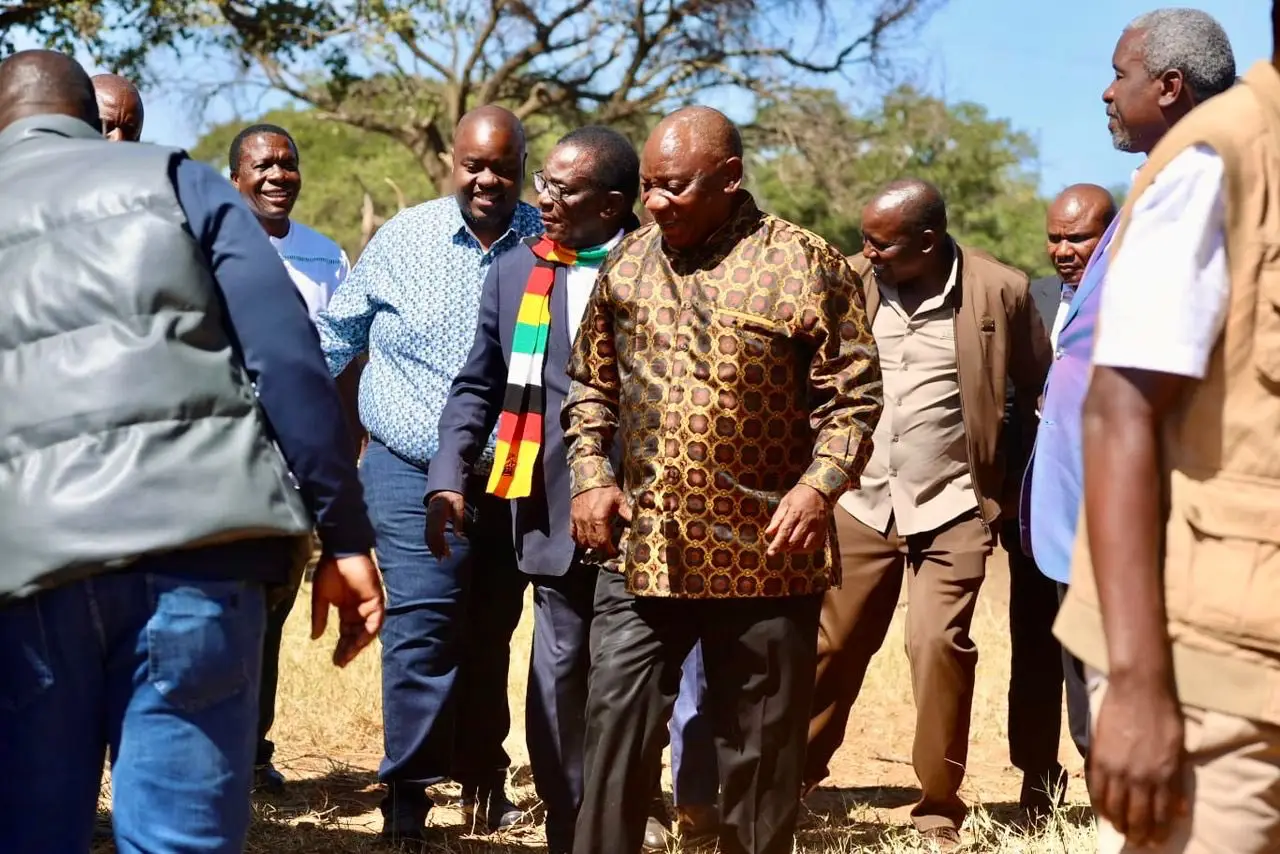
The visit also included a select group of Zimbabwean businessmen, among them Kudakwashe Tagwirei and Wicknell Chivayo, who were said to have attended private discussions with the two leaders.
Public statements from individuals who attended the meeting, including businessman Chivayo and presidential adviser Paul Tungwarara, focused largely on economic cooperation and agricultural productivity, portraying the visit as an opportunity to strengthen bilateral trade and investment ties.
“This visit highlighted the strong bilateral relationship between Zimbabwe and South Africa. In March 2025 alone, Zimbabwe exported goods worth USD 581.9 million, with South Africa accounting for nearly 24.4% of these exports.
“Conversely, South Africa’s exports to Zimbabwe reached USD 4.3 billion in 2025, spanning machinery, cereals, vehicles, and fuels. These figures reflect the depth of trade integration and the opportunities for further collaboration,” Tungwarara stated in a statement.

Chivayo stated: “Without doubt, Zimbabwe and South Africa stand poised to unlock even greater MUTUALLY BENEFICIAL opportunities, anchored on a SHARED HISTORY, complementary strengths and VISIONARY LEADERSHIP for both Countries.
“Hosting the leader of one of Africa’s most advanced economies was indeed a moment to REVEL in and reaffirmed the BILATERAL TIES between Zimbabwe and South Africa.”
Despite these explanations, key details about the agenda, participants, and outcomes of the closed-door discussions remain unclear.

Political activist Rutendo Benson Matinyarare said “Last night, Ramaphosa’s official Presidential page on X had to set the record straight by stating that he came for a working meeting in Zimbabwe and not for a bromance with Mnangagwa.
“Ramaphosa came to deal with an emergency crisis in Harare caused by Mnangagwa’s CAB3 unconstitutional power grab, that even people like me have refused to support.
“CAB3 has caused a huge storm inside ZANU PF, to the point that the biggest power in Africa has had to come and mediate the crisis that could cause unrest in Zimbabwe.
“This is why the architects of the Bill came out to make Ramaphosa’s visit look like an endorsement of Mnangagwa when it is in fact the opposite and a sign that, as we warned them, CAB3 is being rejected to a point that it has become a regional security threat.
“The bottom line is that Ramaphosa’s visit was a crisis management intervention because Zimbabwe is on the brink of a coup, if not a civil war.
“We have been warning Harare that CAB3 is a national and regional security risk, and this visit—along with the false narratives around it—is confirmation that those concerns are materialising faster than expected,” Matinyarare added.
Discover more from Nehanda Radio
Subscribe to get the latest posts sent to your email.