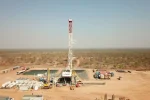
Zimbabwe is fast-tracking its Muzarabani oil and gas project to reduce reliance on imported fuel, aiming to stabilize local supplies, shield the economy from volatile global energy prices driven by Middle East tensions, and strengthen the country’s energy security.
The Muzarabani oil and gas project, located in the Cabora Bassa Basin in Northern Zimbabwe, is now the most advanced hydrocarbon exploration initiative in the country, according to the government.
Invictus Energy, an Australian based company which is focused on exploring and developing the Cabora Bassa Basin, has completed extensive seismic surveys and drilled the Mukuyu 1 and Mukuyu 2 wells, confirming the presence of hydrocarbons.
Deputy Minister of Mines and Mining Development responsible for oil and gas, Caleb Makwiranzou, told Parliament this week that the government and Invictus Energy have finalised a Petroleum Production Sharing Agreement (PPSA), providing a stable and internationally competitive legal framework for petroleum extraction.
Preparations for well pads at Musuma 1 are expected to be completed by the end of the first quarter, paving the way for drilling campaigns and gas field appraisals.
“The global energy crisis presents both challenges and opportunities,” Makwiranzou said.
“Zimbabwe relies heavily on imported petroleum, and these conflicts make it urgent for us to explore and develop our own energy resources.”
The government has set up an inter-ministerial working committee, involving the Ministries of Finance, Energy, and Mines, to support and expedite the project. Partnerships with local companies, including Mutapa, are also being leveraged to ensure rapid progress.
The urgency comes as the Zimbabwe Energy Regulatory Authority (ZERA) recently announced the second fuel price increase this month, citing cost pressures from the Iran conflict.
Diesel now sells at US$2.05 per liter and petrol at US$2.17, prompting transport operators across the country to hike fares, further straining commuters.
Makwiranzou highlighted that natural gas from Muzarabani could complement Zimbabwe’s hydroelectric and solar energy, strengthen energy security, and support industrialization, while positioning the country as a regional energy hub with potential collaboration with Mozambique.
“We have to look at the regional energy hub potential. The Cabora Bassa Basin or Muzarabani is giving us an opportunity and the proximity to Mozambique’s existing gas infrastructure means that we can be able to cooperate or enter into a joint venture with Mozambique on the Southern Africa Power Corporation,” the Deputy Minister said.