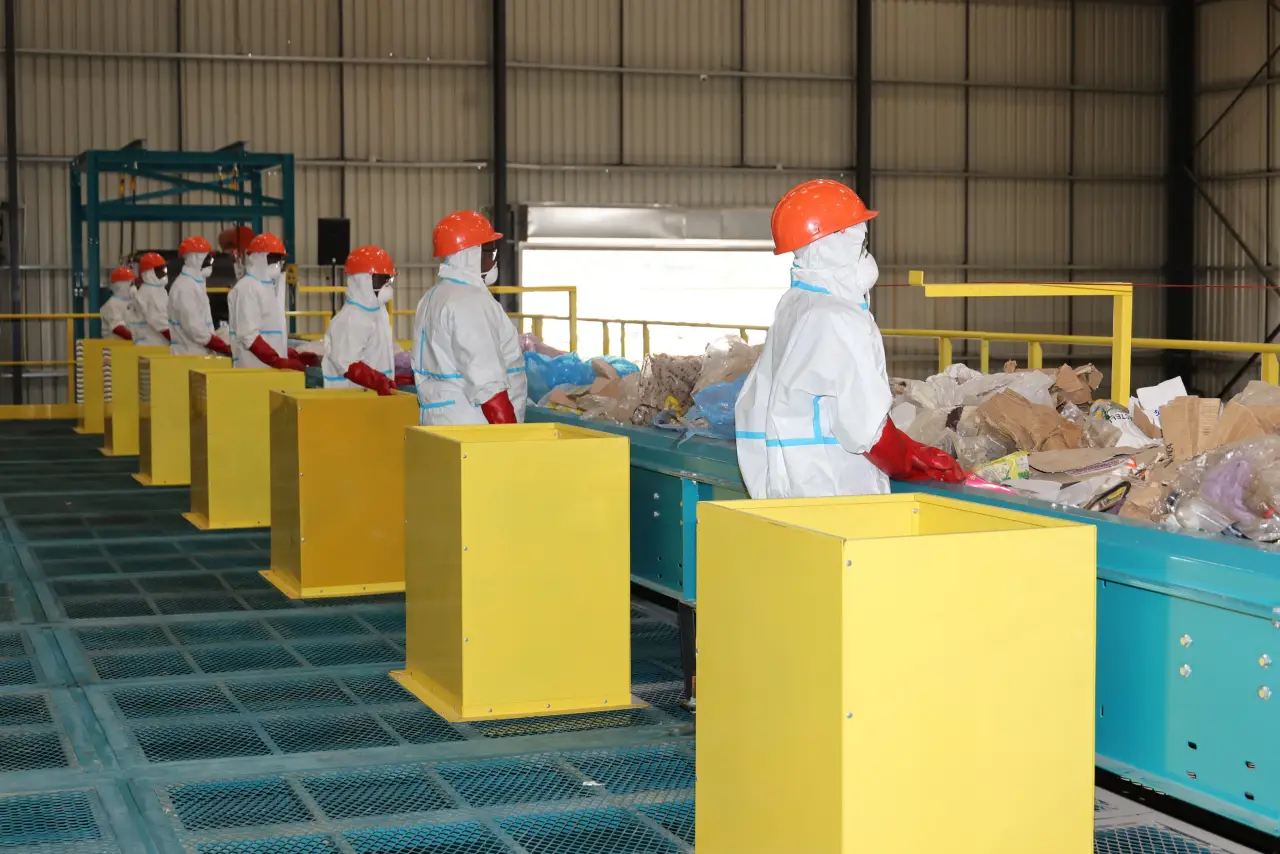
HARARE – President Emmerson Mnangagwa on Thursday commissioned the Geo Pomona Waste Management Sorting Plant in Harare, celebrating it as a stride towards environmental sustainability, even as the project remains mired in significant corruption allegations, including claims of inflated, guaranteed payments to a company with reported ties to the First Family and concerns over the deal’s transparency and financial burden on Harare residents.
Mnangagwa also commissioned a fleet of 45 refuse collection trucks that the company will use in its operations.
The event, coinciding with World Environment Day, was hailed by the President as a “critical step in Zimbabwe’s drive toward environmental sustainability and modern urban infrastructure.”
Speaking at the commissioning, Mnangagwa cited the project as a success of public-private partnerships under the Second Republic.
The Geo Pomona project is expected to address Harare’s long-standing waste crisis by enabling waste separation and recycling, with plans for a future waste-to-energy initiative projected to feed 16 to 22 megawatts into the national grid.
The commissioning, however, takes place amidst significant and persistent allegations of corruption surrounding the Geo Pomona deal.
Critics, including prominent investigative journalist Hopewell Chin’ono and local residents’ associations, have raised concerns about the transparency and financial implications of the agreement.
The City of Harare entered into a 30-year deal with Geo Pomona Waste Management (a subsidiary of Netherlands-registered Geogenix BV), agreeing to pay a minimum of US$14.6 million annually, or US$41,000 per day, for waste delivered.
This figure reportedly doubled to US$90,000 per day after the 2023 elections.
While the government initially stated it would assume responsibility for payments, leaked contract details suggest the financial burden ultimately falls on Harare ratepayers, who are compelled to collect fees and remit them to the government for payment to Geo Pomona.
This arrangement could see Geo Pomona pocketing a minimum of US$162 million over five years from refuse collection and street cleaning services alone.
“The client (CoH) shall continue to charge, bill and collect fees for services being provided by the contractor (Geo Pomona),” Clause 23 of the contract reads.
“The client shall remit to the contracting party (government), all revenue collected from users for services being provided by the contractor in terms of this contract.
“At all times during the duration of this contract, (the) contracting party shall be allowed access to the client’s revenue account to determine the performance/execution of work and settlements of payments due to the contractor.”
Concerns have also been raised about the awarding of the contract without an open tender process.
Former Local Government Minister July Moyo reportedly directed the city to proceed without tenders or consultations, and the deal was later endorsed by current Local Government Minister Daniel Garwe and Harare Mayor Jacob Mafume.
Mafume, who initially opposed the deal, later ratified it after his return to office following internal opposition party leadership changes. According to the NewsHub, Mafume denied allegations of receiving a US$200,000 monthly bribe.
The parent company, Geogenix BV, has faced corruption allegations in Europe, particularly in Albania, and has been accused of obscuring its real ownership.
Locally, Geo Pomona is fronted by Delish Nguwaya, who has known links to Mnangagwa’s family and was previously suspiciously acquitted of charges related to a US$60 million Covid-19 procurement contract.
Despite the contract officially commencing on November 25, 2024, and Geo Pomona starting work on February 10, 2025, residents’ associations like the Combined Harare Residents Association (CHRA) and Harare Residents Trust (HRT) report that consistent waste collection remains a significant challenge.
“The Harare Residents Trust rejects, and is firmly opposed to the implementation of, the deal by the City of Harare in partnership with the government and Geo Pomona Waste Management,” HRT Director Precious Shumba told The Standard.
“Corruption is driving this deal. The key people involved in the deal make one realise that this is a cartel bent on siphoning public funds to a company backed by the powerful ruling elites and their proxies,” said Shumba.
Nguwaya recently revealed plans to expand Geo Pomona’s services nationwide, replicating the Harare model, and secured an arrangement during Mnangagwa’s visit to Belarus for the procurement of refuse and street cleaning trucks, underwritten by the Zimbabwean government.
This expansion is moving forward despite ongoing concerns about service delivery and the financial implications of the Harare deal.
Discover more from Nehanda Radio
Subscribe to get the latest posts sent to your email.