spot_img

Zimbabwe and Zambia plan to re-tender aborted US$5 billion hydro dam project

Must Try

Trending

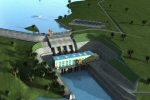
Zimbabwe and its neighbour Zambia are reportedly restarting a project to build a US$5 billion hydropower plant on the Zambezi River.

The project, called Batoka Gorge, was originally awarded to General Electric and Power Construction of China, but those contracts were cancelled due to irregularities in the procurement process.

- Advertisement -

According to NewZwire and Bloomberg, the Zambezi River Authority (ZRA), a joint venture between Zambia and Zimbabwe that oversees the Kariba Dam complex, will manage the re-tendering process.

Bids are expected to be received by April 2025 with a goal of selecting a new developer by September of that year.

Work on the 2,400-megawatt Batoka Gorge project was initially scheduled to begin in 2020 but has been delayed by several factors, including the Covid-19 pandemic and trouble securing funding.

- Advertisement -

The project is also seen as important for mitigating the effects of drought in the region. Drought, blamed on El Niño, has caused water levels at Kariba Dam to recede, prompting Zambia to declare a national disaster.

“Additional hydroelectric schemes will facilitate reservoir regulation for power generation and flood management,” said ZRA Chief Executive Officer Munyaradzi Munodawafa.

“This means generation will be increased at Batoka during the peak season while water will be banked at the Kariba Dam for use during the dry season.”

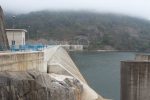
While low water levels are a concern, ZRA does not expect Kariba Dam to be decommissioned. The dam currently supplies 214MW of power to each country.

- Advertisement -

Batoka Gorge is expected to help alleviate some of the water flow problems at Kariba and also directly contribute “a significant increase to the desperately needed power supply capacity of Zambia and Zimbabwe,” Munodawafa said.

However, Zambia’s power utility, Zesco, has recently expressed some reservations about the project. Zesco’s managing director, Victor Mapani, said the company is looking at alternative hydropower sources in the northern part of the country, where there is more water.

“The alternative is to diversify from hydro into other avenues,” Mapani said.

“For example, there’s a plan to put up the Batoka on the Zambezi. Even if you put up a plant there, if there’s no water, it will be a white elephant. Our idea is to move hydropower generation from the southern part of the country to the north, where the waters are better placed.”

- Advertisement -

Related Articles

Eddie Cross: There are solutions to the power crisis we face in Zimbabwe

50
By Eddie Cross The electrical power crisis that has enveloped southern Africa has its roots in our post liberation history. Prior to that, the utilities created by the States of southern Africa exhibited considerable foresight and planning. This was led by the power utility of South Africa which had visionary leadership at the time and like China in the past 50 years, turned their huge coal reserves into a cheap source of electrical energy. They installed enough power generation capacity to feed their own markets and to supply the deficit in their neighbours. In Zimbabwe and Mozambique, their governments invested massively in the Kariba and Cahora Bassa Dams with a combined capacity of 3 600 megawatts of cheap hydroelectricity. The Kariba Dam remains the largest man made dam in the world in terms of water storage capacity. These investments were well ahead of their time and contributed massively to regional power demand. Southern Africa moved from the era of colonial and white domination to Independence and democracy and the new Governments took for granted their self sufficiency in power and did little to make the necessary investments to maintain self sufficiency and to replace ageing infrastructure. By the time they woke up to the fact, it was already too late to avoid a crisis in supply and distribution.
Tugwi-Mukosi is the largest interior water body in Zimbabwe and boasts vast irrigation potential while opportunities also exist to develop a vibrant tourism industry

‘Kariba, Tugwi-Mukosi power projects too expensive for poor Zimbos’

9
Temba Mliswa: "The costs are also inflated. The various responsible committees should check these things. Tugwi-Mukosi is another example, it was pegged at US$55 million, went to US$120 million and then someone got the tender at US$140 million. The taxpayers bear all these humongous costs. How does the country grow? Worse off, the companies are foreign and the money goes out. The benefit of the project becomes minuscule."
The Batoka project involves construction of a dam, powerhouses, roads, transmission infrastructure and houses in both Zambia and Zimbabwe

Council of Ministers to review Batoka Hydro-Electric Scheme/Kariba Dam Rehab

0
The Zambezi River Authority will tomorrow host the 38th Council of Ministers (COM) virtual meeting to review progress on key bilateral projects including the 2400 MW Batoka Gorge Hydro-Electric Scheme.
The Batoka project involves construction of a dam, powerhouses, roads, transmission infrastructure and houses in both Zambia and Zimbabwe

Batoka Gorge project pre-construction works begin

0
The contractor in charge of the 2400MW Batoka Gorge Power Project has begun pre-construction works, building towards full implementation of the mega energy generation scheme by Zimbabwe and Zambia.
Boats on the shores of Lake Kariba

Five earthquakes rattle Kariba

0
Areas around Kariba Dam were hit by five earthquakes in the first week of this month, the Zambezi River Authority (ZRA) and Meteorological Services Department (MSD) have said.

Don't miss a story

Breaking News straight to your inbox.

No spam just news !

- Advertisement -spot_img

Latest Recipes

Latest

More Recipes Like This