By Chalton Hwende
As we celebrate Heroes Day it is important to place Zimbabwe’s liberation struggle in its correct perspective as a collective uprising by the poor working class against colonialism.
The liberation struggle was indeed a culmination of the pioneering activities of an organised working class in Southern Rhodesia which first resisted colonialism under the leadership of trade union leader Benjamin Burombo who formed and led the African Workers Voices Association in 1947 in Bulawayo.
After the death of Burombo a new crop of trade unionists and nationalists led by Joshua Nkomo would take over the leadership of the resistance movement in the late 1950s before launching an armed liberation struggle in the 1960s.
Many students and disgruntled youths would join the working class in the liberation movement in the 1970s.
Josiah Tongogara a young man who joined the liberation struggle and became a prominent ZANLA military commander during the 1970s would die on 26 December 1979 in a mysterious road accident in Mozambique.
Like Herbert Chitepo before him Tongogara was an illustrious liberation war commander who died before he could live in an independent Zimbabwe, a dream he had spent most of his youth fighting to achieve.
Joining the liberation struggle at a young age Tongogara is one of the many young Zimbabweans who made a conscious decision to confront the colonial regime and sacrificed their lives in a brutal bush war so that Zimbabwe could be independent.
It is heartbreaking that Tongogara a man who contributed so immensely to the liberation of the black majority died before he could enjoy the fruits of his heroic sacrifices.
But Tongogara is not the only gallant fighter who could not make it into independent Zimbabwe. Thousands of other young Zimbabweans who joined the liberation war, many of them having dropped out of school to participate in the armed struggle, did not make it into the independent Zimbabwe.
Thousands lost their lives on the war front in and outside the country while many others were killed during targeted bombings by the Rhodesian army on military bases and refugee camps in Mozambique and other neighbouring countries where the liberation movement operated from.
As we commemorate Heroes Day it is important for the current generation of Zimbabweans to honour these fallen heroes and remember the supreme sacrifices made by those brave young men and women who joined the liberation struggle but never made it back alive. They paid the ultimate price for our freedom.
There is no doubt that the young men and women who left their families to join the liberation struggle were a rare breed of brave compatriots who, although they understood the dangers associated with taking up arms against an brutal colonial regime, still took the decision to join the war.
These young and fearless cadres had realised that it was unacceptable for the black majority to be subjugated by the colonial regime and live as second class citizens in their own country while the settlers took away their land, livestock, minerals and freedom.
In the final analysis the young men and women of the 1970s were convinced that the only way to liberate themselves and create an equal and democratic society was to take up arms and wage a war of liberation against the settler regime.
This culminated in a protracted war whose objective was to remove the oppressive colonial minority government and replace it with a democratic black majority government.
The current generation of young people should learn important lessons from the bravery, sacrifice and ideological clarity of the gallant youth of the 1970s.
However, there is no doubt that while the armed struggle succeeded in achieving political independence in 1980 the business of the liberation struggle remains unfinished.
Unfinished because while we are independent as a country we are not yet free as a nation. The liberation struggle was not only about political independence but also about freedom.
Unfinished because while we removed the settler government and replaced it with a black government in 1980 we do not have a majority government running the affairs of our nation state. The liberation struggle was not only about removing a white government and putting a black government in its stead. It was about replacing a minority government with a majority government.
Forty years after independence we are still to achieve the important one-man-one-vote objective of the liberation war.
Elections under successive ZANU PF governments continue to be rigged, while many citizens are denied the right to vote in an independent Zimbabwe.
As we speak Zimbabweans living in the diaspora continue to be denied the right to vote even when the country’s constitution explicitly guarantees this right.
The liberation war was a war against inequality and economic exclusion. It was a war against discrimination and oppression.
But in the post colonial state the majority of black Zimbabweans are still excluded economically. Land and mineral resources are still owned by a minority population of blacks directly linked to the ruling party and its political elites.
Up to today discrimination on the grounds of political affiliation and ethnicity is commonly practiced by the ruling elites. Inequality is manifested in the widening gap between the rich and the poor.
The post colonial regime has adopted and perfected the oppressive laws used by the pre-independence government. This has resulted in targeted arrests and abductions of opposition party members and perceived anti-government activists and the closure of democratic space.
All these are clear signs that the business of the liberation struggle remains unfinished.
It is therefore the responsibility of the current generation of young men and women to take over from where the youth of the 1970s left and complete the unfinished business of the liberation struggle by joining the national democratic struggle to in order to achieve equality, freedom, economic inclusion, one-man-one-vote and the installation of a majority government through free and fair elections.
While the liberation struggle was about taking up arms the current national democratic struggle is about occupying the streets and demanding free and fair elections in the spirit of citizens convergence for change.
This is the only way to honour the fallen liberation war heroes who paid to the ultimate price during the armed struggle to liberate us from colonial bondage.
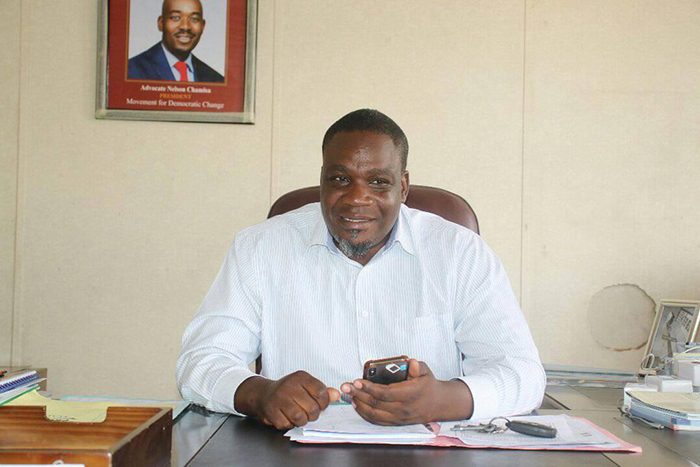
Chalton Hwende is the Secretary General of the main opposition MDC Alliance