By Fidelis Munyoro
Sums in accounts denominated in US dollars were legally converted to sums denominated in Zimbabwe dollars in terms of a Reserve Bank of Zimbabwe directive when the local currency was reintroduced, the Supreme Court has ruled, overturning a High Court decision last year that threatened a major financial crisis.
The High Court in May last year declared unconstitutional, a Reserve Bank of Zimbabwe (RBZ) exchange control directive converting sums in accounts originally designated in US dollars into Zimbabwe dollar-denominated accounts if the money in the accounts originated locally.
The Supreme Court allowed the appeals by CABS, RBZ and Ministry of Finance and Economic Development challenging the lower court’s decision ordering CABS to pay business partners Ms Penelope Douglas Stone and Mr Richard Harold Stuart Beatie the US$142 000 deposited in their business account in US dollars.
The legal fight between the business partners and their bank spilled into the High Court following RBZ exchange control directive RT120/2018 issued on October 4, 2018.
The directive separated the RTGS account, even if it had been denominated in US dollars, from a nostro foreign currency account based on the source of funds, basically whether the money was earned locally or was the proceeds of an export deal.
The concept of the nostro foreign currency account came into existence following RBZ’s Monetary Policy Statement of October 1, 2018.
Aggrieved by the High Court decision CABS along with the RBZ and Finance Ministry took the matter up to the Supreme Court on appeal.
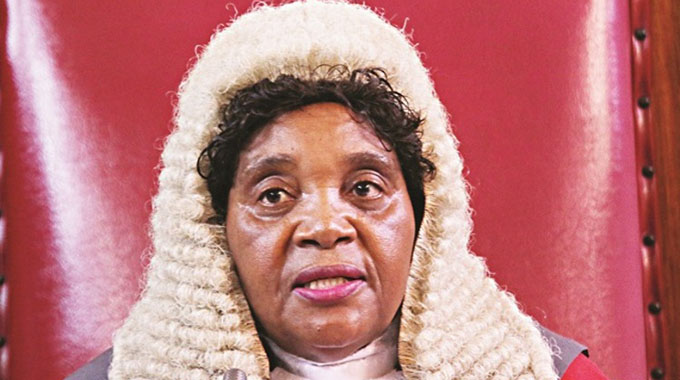
A panel of three judges, comprising Deputy Chief Justice Elizabeth Gwaunza, Justice Lavender Makoni and acting judge of appeal Justice Samuel Nyakudya, found a misdirection by the judge, warranting the superior court to interfere and quash the High Court decision.
Writing the judgment for the Supreme Court, Deputy Chief Justice Gwaunza said a court is duty bound to consider and determine every issue that is placed before it unless such issue has been resolved.
In the lower court the Stone-Beatie Studio lawyers did not challenge the validity of the 2018 directive on the basis that it offended against any provisions of the Constitution. The court found that the order of the High Court requiring CABS to pay the amount in foreign currency could not be categorised as an order issued in the exercise of a court’s power in constitutional matters, that is an order arising from pleadings.
“Because the order was granted as a result of the court a quo having gone on a frolic of its own, it stands to reason that no consequential relief could competently flow from it,” said Dep Chief Justice Gwaunza.
She went on to uphold that CABS, RBZ and the Minister were correct in their submissions that the lower court created a (constitutional) case for the Stone-Beatie Studio and went on to decide the matter in their favour.
“By setting aside the 2018 directive on the basis that it was unconstitutional, the court a quo granted relief that was neither motivated nor sought by the respondents,” she said.
“The relief that the court granted against CABS was therefore incompetent and cannot be sustained.”
Further the court ruled that by considering the constitutional validity of the 2018 Directive, the High Court not only went on its own frolic, but did so in a manner that violated the principles of subsidiarity.
CABS lawyer Advocate Thembinkosi Magwaliba appearing for the appellants argued that the 2018 Directive could not be declared unconstitutional without regard to the constitutionality of the enabling provisions under which it was made in the relevant Act.
In the High Court Justice Happias Zhou granted the duo’s application on the grounds that it was legally and morally unjustified for the central bank to change the currency of a bank account by simply renaming it.
The judge said such conduct was an affront to the tenets of the Constitution which binds the State and all institutions, respect “transparency, justice, accountability and responsiveness’’.
The value of good governance enshrined in the Constitution demands that a new approach to decision making be embraced by all arms of the government and other public institutions.
The Finance Minister was represented by Professor Lovemore Madhuku while Adv Lewis Uriri acted for the RBZ. The Herald