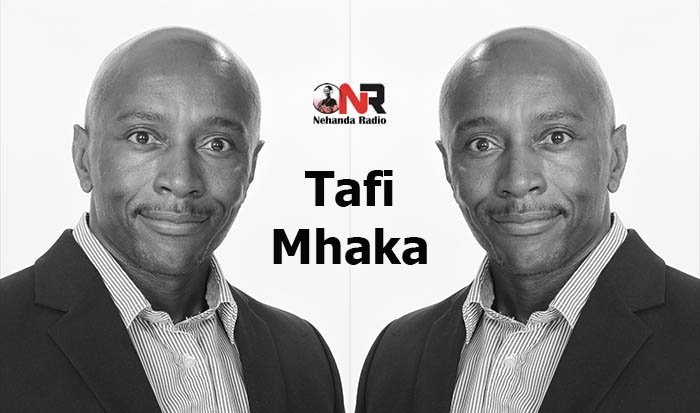
By Tafi Mhaka
In a piece for The Standard, titled, “The question that the MDC-Alliance must answer”, Professor Ken Mufuka dares Nelson Chamisa and the MDC Alliance to make a hard decision before the 2023 elections: play ball or fight the system.
The MDC Alliance remains in parliament and the many formidable obstacles that conspired to produce a disputed election in July 2018 remain intact.
From ZEC to the government media and military complex, the unashamedly partisan forces that helped thwart the MDC Alliance’s electoral rise are stronger than ever.
Still, speaking on the 2023 poll, Chamisa has vowed to stop the election, claiming there would be “no election that is not an election, we are sick and tired of rituals.”
Often the man speaks very well, but predictably to no avail.
To quote Professor Jonathan Moyo, “a major weakness of opposition politicians in Zim is their failure to understand that speech is useful only if it leads to action.”
Indeed, whatever grand plan he might have, it remains stuck in his guarded imagination: Chamisa is yet to unleash any defiant and consequential action.
Mufuka, however, states, “the economy cannot be mended without a general settlement. Secondly the international community will not accept the incarceration of opposition members.”
While fixing the economy will require a bipartisan effort, backed by the lifting of economic sanctions, the second statement is very problematic.
The international community’s ability to influence ordinary policing or legal activities in Zimbabwe, like elsewhere, is severely limited.
After Diane Rwigara was jailed on dubious charges in Rwanda, the West tried but failed to get President Paul Kagame to organise her release.
Last year, the same international community watched as former Egyptian President Mohamed Morsi died a slow, agonising death in a Cairo jail.
It also watched helplessly as Cameroon’s President Paul Biya jailed Maurice Kamto, Cameroon’s main opposition leader, for nine months in 2019.
And as President Yoweri Museveni’s administration has repeatedly harassed and jailed Ugandan MP and pop star Bobi Wine, the West has been confined to releasing harmless press statements.
Clearly, the global community’s ability to impact democracy and change is erroneously overrated.
Look at Iran and Venezuela: the West’s diplomatic manoeuvring, political pressure and sanctions there have backfired.
In Venezuela, despite the economy imploding and the US recognising Juan Guaido as interim president, President Nicolas Maduro has retained power.
Even a $15m bounty for information leading to Maduro’s arrest has failed to remove the former bus driver from the presidency.
Obviously, instead of deflating tyranny, western interventions have regularly strengthened the rule of uniformed forces, despots and conservative leaders.
That is the problem with external intervention: it is often plagued by unintended political consequences.
Should Chamisa be jailed unfairly, the EU / US bloc might release a strong statement and impose further economic sanctions on Zimbabwe.
But, how would a press release and additional economic sanctions help the MDC Alliance’s political situation?
Conversely, however, China and Russia would publicly support the Zanu-PF government, consequently diminishing the morality of western actions.
So, to be honest, it is no longer about what the global community might do.
It is about, what we might do.
It really is about, what we can do to liberate ourselves from the clutches of economic depression and steely repression.
Indeed, this is the time to forget about outside help.
The need to promote progressive change is strong and just.
So the most pressing question is: why hasn’t Chamisa stood up to fight for our constitutional rights?
Why hasn’t he led a fight for the everyday necessities that remain beyond the reach of ordinary Zimbabweans?
Why hasn’t he begun the fight for electoral and media reforms?
What is he possibly waiting for: another disputed election?
Leadership is about timely sacrifice and our leaders are meant to lead from the front.
For example: before 1980, as a freedom fighter, former President Robert Mugabe put his life in jeopardy, to help achieve our democracy.
Besides suffering an obvious loss of freedom, holed up in prison for over a decade, Mugabe missed his son’s funeral.
He obviously sacrificed much, and may have lost his life.
That is leadership.
That Chamisa might be jailed on flimsy or serious charges, especially after lowly activists have died and mysteriously disappeared, shouldn’t be our greatest fear.
That Chamisa has not discovered a sensible threshold that warrants immediate mass resistance to a litany of government excesses and failures in such troubled times should worry us immensely.
Amid a rising COVID-19 onslaught, it is easy to forget that last year, Parirenyatwa Group of Hospitals’ paediatrics head, Dr Azza Mashumba, fought back tears as she lamented a lack of basic facilities and medical equipment at Zimbabwe’s largest hospital.
Let down by the government’s failure to prioritise the practical needs of a dilapidated and largely underfunded health sector, she cried publicly.
That alone should have had the MDC Alliance out on the streets, demanding the resignation of the health minister and implementation of a massive, strategic realignment of budget allocations towards rehabilitating the health sector.
Indeed, the MDC Alliance might have forced the government to prepare for a medical eventuality such as the COVID-19 pandemic.
Mashumba’s pleas, however, only managed to generate accusations of corruption and incompetence and repeated condemnation of the government’s inability to provide basic and advanced health care facilities.
Still, as expected, that monotonous sounding criticism didn’t stir a change from the government.
It is time for the endless, doomed theorising to stop.
With or without the possibility of suffering imprisonment, the MDC Alliance leadership must stop displaying fear and take the fight to Zanu-PF.
Tafi Mhaka is a Johannesburg-based writer and commentator. His debut novel, Mutserendende: The African in Us, will be published in 2020.
Discover more from Nehanda Radio
Subscribe to get the latest posts sent to your email.