By Hudson Yemen Taivo
In the name of balanced press, can you please permit me to share my own views on the ongoing discussions regarding the life (and death) of Learnmore Jongwe and his wife Rutendo Muusha.
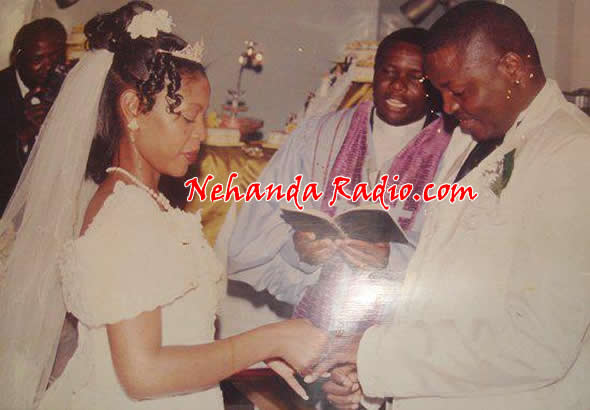
Like many of your readers, I only caught the discussion midway when it spilled to your opinion pages, first through an article by Mr Brighton Mutebuka on what he offered as an inconvenient truth about what happened.
This was followed by a counterview by Mr Tinomudaishe Chinyoka who basically negated everything that Mr Mutebuka had said. I feel given the polarised views offered by these two gentlemen, your readers will benefit from a truly neutral view offered by someone without any vested interests in the story.
Sir, it is my submission that the views expressed by Mr Chinyoka and Mr Mutebuka, while divergent are biased and they leave your readers short changed once they get to the end of their long, winding and poorly written articles.
What irks me even more is the fact that the two writers try to take the moral high ground by courting the reader through sweeteners and disclaimers at the beginning of their submissions. This is meant to hoodwink an unsophisticated reader into thinking that what he is about to read is a balanced view.
In fact the disclaimers and declarations of impartiality at the start of both their articles are so long and winding that you begin to wonder if they will ever begin to address the issue suggested by the article title. In contrast, my article will be much shorter, and to the point.
Mr Mutebuka’s dislike of Jongwe is evident in his article. As Mr Chinyoka points out, Mutebuka focuses too much on Jongwe’s family background and his purported “insider” knowledge as Rutendo’s classmate giving himself the licence to declare himself an authority on the matter.
Having praised Jongwe as an intelligent and charming young man, Mr Mutebuka knows that he has laid the ground for his next move, and the reader won’t begrudge him for looking at “both” sides of the coin. In reality Mr Mutebuka knows that his only intention was only to focus on the nasty side of the coin, but he knows he was unlikely to convince anyone if he just went for it straightaway.
Mr Mutebuka goes on to savage Jongwe by chronicling rumours and innuendos which he knows are hard to prove. As I read the latter description of Jongwe, I began to doubt if this description what that of the same Jongwe I knew or someone else with the same name.
We know people’s private lives are private, but I found it hard to reconcile the monster that Mr Mutebuka invented with the lively jovial fellow that I knew for at least four years at the UZ, and a few others as a neighbour in Lincoln Green (opposite Belvedere, near National Sports Stadium).
Whatever misgivings I have of Mr Mutebuka’s description of Jongwe, Mr Mutebuka was right on one thing, Learnmore Jongwe killed his wife, and that is an undeniable fact. What is less clear are the motives, but Mr Mutebuka’s theories are largely nullified by his obvious dislike of and disdain for the man.
Mr Chinyoka is in total denial of Jongwe’s guilt, but tries to wriggle out of it by being too legalistic. I am an engineer, so I am unlikely to be awed by lawyers (intellectually or professionally), particularly when they try to win arguments on legal technicalities.
But I knew Jongwe too, being an R96 like him (that is, we started our courses in 1996), our paths crossed many times. He was a very likeable gentleman, but unlike others I will not try to sweeten my submissions by recalling several personal encounters I had with him as a way of trying to court the reader to buy my story.
Mr Chinyoka’s description of Jongwe’s character is largely accurate, and no one who interacted with him as a student and soon after will find fault with Mr Chinyoka’s views. It is true that Jongwe was not generally a wolf in sheep’s clothing, as Mr Mutebuka would have us believe. But he wasn’t a saint either, despite attempts by Mr Chinyoka to portray him as whiter than white.
There were certain flaws in Jongwe’s character, as in all of us, and those who knew him would attest to that. But none of those flaws would make him a potential murderer. I would have wanted to give credit to Mr Chinyoka for declaring his obvious bias towards Jongwe, but I doubt if he did it as an honest man, or as another tactic to lure his readers into trusting him.
As an aside, did you notice how Mr Chinyoka tries to claim even higher ground by pretending to worry about the couple’s orphaned kid? That kind of emotional blackmail works for simpletons, and I know this because when I was a part time political writer in my younger years I was a past master of that tactic, and many more besides! It is because I used to do it better that I find myself swearing at the computer when no one of the responders highlights this obvious hoodwinkery. But I digress.
Any reasonable person who followed the story when it broke out in 2001 knows that Jongwe killed his wife. What happened was out of character, perhaps a spur of the moment thing, but kill his wife he did. Blame Zanu PF for many things, but spare them this one.
Why would they kill Jongwe’s wife to make a political point? Yes Jongwe was good, but he wasn’t that good, come on! He was only a lawyer, for Christ’s sake! No amount of legal wriggling will hoodwink any right thinking person into believing that he didn’t do it.
For me, it is for that reason that I always cringe when I see people posting memories of Jongwe and portraying him as some sort of hero or saint. It doesn’t erase all that he did in his earlier life particularly as a student leader, but to pretend that his last act in this world (killing his wife) doesn’t matter, and focus on imagined enemies and weird conspiracy theories can only convince only a handful of patients at Engutsheni Mental Hospital.
No, Jongwe killed his wife and heroes don’t kill their wives. As a society, Zimbabweans are so steeped in hero-worshipping that they are always in perpetual denial even when their hero is in perpetual denial. This is why we are stuck with Robert Mugabe on one side and Morgan Tsvangirai on the other even when we know both have gravely failed their supporters.
But we don’t gain anything by inventing lies about those we dislike even if we are making a valid point (Mr Mutebuka). Similarly, we make ourselves appear like fools when we try to be too clever and sophisticated when the truth is just simple as it was in this case (Mr Chinyoka).
*The writer is not a lawyer and writes here is his personal capacity.
Discover more from Nehanda Radio
Subscribe to get the latest posts sent to your email.