There are moments when a nation seems to gasp in unison. This was one of them.
Within hours of reports that Thomas “Mukanya” Mapfumo had accepted businessman Wicknell Chivayo’s invitation to perform at Jah Prayzah’s wedding and Chivayo’s own birthday for a package reportedly worth around US$1 million, including a substantial performance fee and other benefits, social media erupted.
The accusations came swiftly and mercilessly. “He has sold out.” “The last revolutionary has fallen.” “Money has bought what prison, exile and censorship never could.”
The disappointment was visceral because it was never really about a concert. It was about an idea. An idea that one man, after decades of standing against political power, would remain forever untouched by its gravitational pull.
Zimbabweans were not merely reacting to a business transaction. They were mourning what they believed was the collapse of a moral monument.
Their anger deserves to be taken seriously because Thomas Mapfumo is not just another musician who climbed the charts and grew old.

For almost half a century, he has been the soundtrack of Zimbabwe’s political conscience. His Chimurenga music gave voice to liberation aspirations before independence.
Later, when many liberation heroes became defenders of power rather than servants of the people, Mapfumo redirected his lyrics against corruption, repression, greed and betrayal.
He paid a price for that defiance. His increasingly confrontational music attracted official hostility. Eventually he left Zimbabwe and lived for years in self-imposed exile in the United States as relations with Robert Mugabe’s government deteriorated.
During those years he became something larger than an entertainer. He became proof that artistic courage could survive political intimidation.
That is precisely why this latest development hurts so many people.
The controversy is inseparable from the identity of the man making the offer.
Wicknell Chivayo is no ordinary promoter. He is one of Zimbabwe’s most politically connected businessmen, whose name has repeatedly surfaced in controversies surrounding lucrative government-linked business deals.
Although he has denied wrongdoing in relation to various allegations over the years, public perceptions have been shaped as much by politics as by legal processes.
Alongside this has emerged another Chivayo. The flamboyant benefactor.
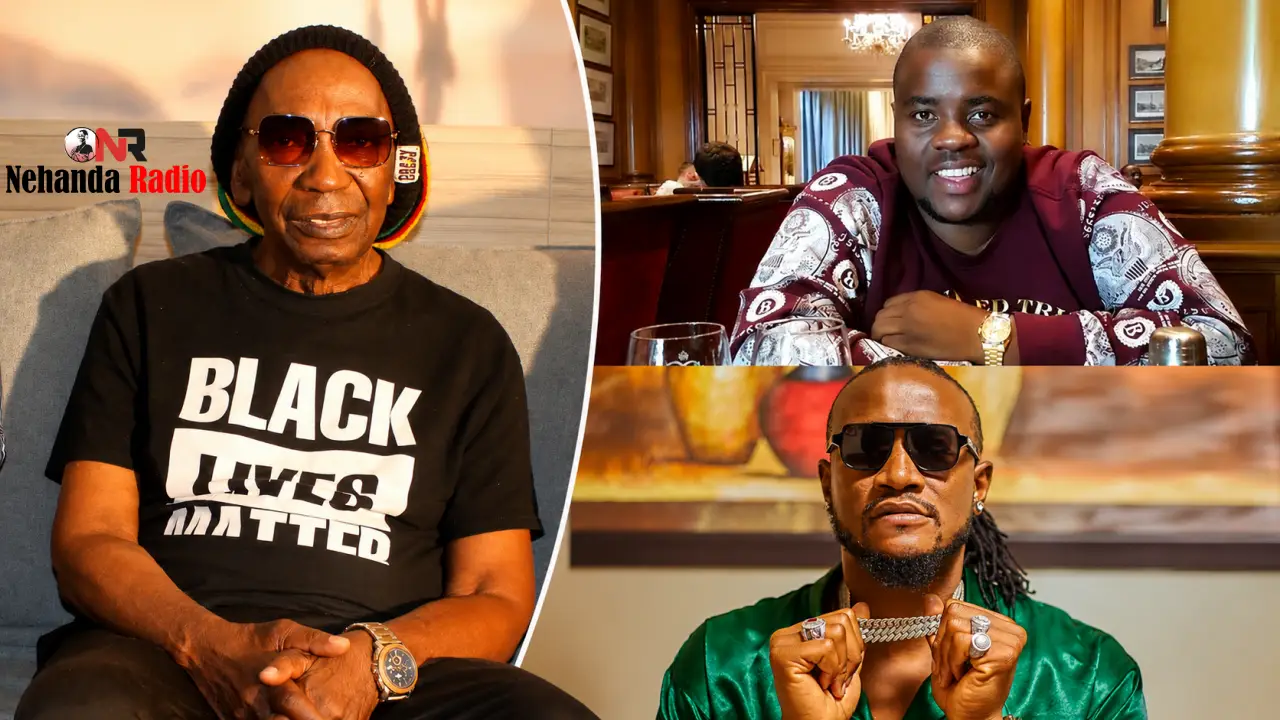
Over the past few years Zimbabweans have watched him hand out expensive vehicles, cash gifts and other rewards to musicians, gospel singers, football legends, entertainers, churches and a wide range of public figures.
Sungura star Alick Macheso received a luxury vehicle. Gospel musicians have been presented with cash and cars. Former football stars have received generous donations. Churches have benefited from substantial gifts.
Entertainers from across the cultural spectrum have found themselves publicly celebrated by Chivayo’s generosity, with each announcement dominating social media and each recipient becoming the subject of another national debate.
Whether viewed as genuine philanthropy or carefully choreographed political theatre, the pattern has become impossible to ignore.
Many Zimbabweans now see Chivayo as an unofficial cultural patron operating in close proximity to political power. His reported offer to Mapfumo, worth around US$1 million including a substantial performance fee and additional benefits, therefore carries symbolism far beyond its financial value.
Critics argue that accepting this invitation is fundamentally different from accepting payment from an ordinary concert promoter. Their concern is not the money itself. It is the source.
They fear that receiving such generosity from someone so closely associated with Zimbabwe’s political establishment inevitably softens the symbolic distance that Mapfumo spent decades creating.
For them, this feels less like a commercial engagement than a public embrace by the very ecosystem his music challenged. Even if no political conditions were attached, the symbolism alone, they argue, diminishes the independence that made Mukanya exceptional.
His authority rested not only on the lyrics he sang but on the distance he maintained from centres of political patronage. That distance now appears, in the eyes of many critics, to have narrowed dramatically.
That perception explains the fury.
But there is another question that deserves equal honesty.
What exactly do Zimbabweans expect from Thomas Mapfumo?
Do they expect him to remain permanently frozen in the role they assigned him 30 years ago? Do they expect an octogenarian to continue carrying the nation’s moral burden without ever thinking about his own financial security?
Zimbabwe has an extraordinary habit of demanding lifelong sacrifice from its heroes while quietly excusing compromise everywhere else.
Politicians enrich themselves. Businesspeople navigate whichever political winds promise opportunity. Lawyers represent clients they privately dislike. Journalists work for media owners whose politics they may not share. Ordinary citizens make daily compromises simply to survive.
Yet somehow it is the artist who must remain forever poor if he wishes to remain politically pure.
Why?
Zimbabwe is not a country where old age guarantees dignity.
Inflation has repeatedly destroyed savings. Economic uncertainty has become permanent. Pension systems inspire little confidence. Healthcare grows more expensive. Extended families continue relying on elderly relatives long after retirement.
Even celebrated musicians often receive remarkably little from decades of creative work because weak copyright enforcement, piracy and the collapse of the recording industry have robbed many artists of sustainable incomes.
Zimbabwe’s musical history is littered with cautionary tales. Patrick Mkwamba, one of the country’s finest guitarists and composers, helped shape the sound of modern Zimbabwean music, yet he has spent much of his later life battling financial hardship.
Leonard Dembo, whose songs remain staples on Zimbabwean radio decades after his death, enjoyed enormous popularity but never accumulated wealth remotely proportionate to the value he created. His music enriched the nation’s cultural heritage far more than it enriched his own bank account.
Those stories are not isolated tragedies. They are part of a recurring Zimbabwean story in which extraordinary talent is too often rewarded with admiration rather than financial security.
Musicians provide the soundtrack to weddings, funerals, independence celebrations, political rallies and everyday life. Their songs become part of the nation’s collective memory, yet many grow old without reliable royalties, meaningful pensions or adequate retirement savings.
Against that backdrop, it becomes difficult to argue that Thomas Mapfumo should deliberately reject one of the largest financial opportunities of his career simply to preserve an image that others have constructed for him.
Legends also pay medical bills. Legends also worry about children and grandchildren. Legends also support extended families. Legends also deserve financial security.
There is something deeply romantic, and deeply unfair, about insisting that the people who inspired the nation must continue living as permanent martyrs while everyone else pursues comfort.
Perhaps the greater contradiction lies within us.
We have elevated Mapfumo beyond humanity. We no longer allow him ordinary human choices because we transformed him into a permanent symbol.
Symbols are convenient because they never grow old. They never become tired. They never think about retirement. They never ask what happens when applause fades but monthly expenses remain.
Human beings do.
Accepting money does not automatically amount to endorsing every belief, action or political association of the person providing it. Commercial engagements and ideological conversion are not necessarily the same thing.
Performing at an event is not, without additional evidence, equivalent to abandoning decades of political conviction.
That distinction matters because Zimbabwe has become increasingly unable to distinguish between association and endorsement. In a country where politics permeates almost every sphere of public life, every handshake is interpreted as allegiance, every photograph as a declaration and every financial transaction as ideological conversion. Reality is often more complicated than that.
One may disagree with Mapfumo’s decision. One may worry about its symbolism. One may even conclude that he underestimated the emotional significance of accepting such an offer.
But certainty should not replace evidence.
Perhaps what many Zimbabweans are grieving is not an actual betrayal but the collapse of an idealised version of Thomas Mapfumo they created for themselves.
Heroes become prisoners of public expectation. The higher we place them, the harder they fall whenever they behave like ordinary people.
Zimbabwe’s history has been shaped by patronage politics, liberation mythology and impossible expectations. We celebrate resistance until resistance demands too much from us.
We condemn compromise while quietly practising it in countless invisible ways. We expect our ageing icons to preserve our moral innocence even as the nation repeatedly normalises accommodation with power.
That contradiction says as much about Zimbabwe as it does about Mapfumo.
The real story, then, is not whether Thomas Mapfumo chose the money.
The real story is why Zimbabwe still expects its ageing heroes to shoulder impossible moral burdens that the rest of society abandoned long ago.
Until we confront that uncomfortable truth, every controversy involving Mukanya will reveal less about the man himself than about a nation that has repeatedly normalised compromise while demanding permanent sacrifice from the few people it still insists on calling heroes.
Discover more from Nehanda Radio
Subscribe to get the latest posts sent to your email.