By MacDonald Dzirutwe
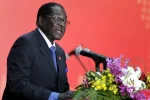
Zimbabwean President Robert Mugabe threatened “tit-for-tat” retaliation against companies from Britain and the United States on Sunday if the Western nations persisted in pressuring his government with sanctions and what he called “harassment”.
Mugabe’s latest verbal broadside against his main Western critics followed their questioning of his re-election in a July 31 vote that his rival Morgan Tsvangirai denounced as a “coup by ballot” which he said involved widespread vote-rigging.
Mugabe, who at 89 is Africa’s oldest leader, has rejected the fraud allegations and was sworn in on Thursday for a new five-year term in the southern African nation that he has ruled since its independence from Britain in 1980.
“They should not continue to harass us, the British and Americans,” he told supporters at the funeral of an air force officer.
“We have not done anything to their companies here, the British have several companies in this country, and we have not imposed any controls, any sanctions against them, but time will come when we will say well, tit-for-tat, you hit me I hit you.”
British companies in Zimbabwe include banking groups Standard Chartered Plc and Barclays Plc. These are already the target of a so-called “indigenisation” policy that requires they cede a majority stake to black Zimbabweans.
The policy has also been applied to foreign mining houses in the mineral-rich country including those owned by South African companies such as Impala Platinum.
The United States has a far more limited corporate presence in Zimbabwe than Britain.
TARGETED SANCTIONS
Mugabe and prominent members of his ZANU-PF party, which won a two-thirds majority in the July 31 election, are the targets of financial and travel sanctions imposed by the United States and the European Union. These were applied by Washington and Brussels to punish alleged election-rigging and abuses of power.
The European Union in March eased most sanctions against Zimbabwe after the country’s voters approved a new constitution which paved the way for July’s poll, but kept Mugabe and nine of his closest associates on the list.
It will review relations with Zimbabwe because of its “serious concerns” about the election, EU foreign policy chief Catherine Ashton said on Thursday. Its verdict on the vote will be crucial to a decision on whether it continues to ease sanctions.
Britain said last week Mugabe’s re-election could not be deemed credible without an independent investigation into allegations of voting irregularities.
U.S. officials also said the July 31 election was flawed and Washington had no plans to loosen sanctions until there were signs of change in the country.
In contrast, observers from the regional 15-nation Southern African Development Community (SADC) and the African Union broadly endorsed the vote as free and peaceful, and called on all parties to accept its results.
Mugabe still enjoys support in Africa for his role in the liberation guerrilla war that helped end white-minority rule in what was formerly Rhodesia, and led to its independence.
He frequently accuses his critics of racism and of wanting to recolonise Zimbabwe. “They think, we the blacks are inferior, they are superior. But in Zimbabwe we will never accept that a white man, merely because he is white is superior, no. We will chase them away,” Mugabe said about Western powers on Sunday. Reuters