A report by Human Rights Watch
Human Rights Watch is dedicated to protecting the human rights of people around the world. We stand with victims and activists to prevent discrimination, to uphold political freedom, to protect people from inhumane conduct in wartime, and to bring offenders to justice.

We investigate and expose human rights violations and hold abusers accountable. We challenge governments and those who hold power to end abusive practices and respect international human rights law. We enlist the public and the international community to support the cause of human rights for all.
Human Rights Watch is an international organization with staff in more than 40 countries, and offices in Amsterdam, Beirut, Berlin, Brussels, Chicago, Geneva, Goma, Johannesburg, London, Los Angeles, Moscow, Nairobi, New York, Paris, San Francisco, Tokyo, Toronto, Tunis, Washington DC, and Zurich.
Summary of this report
Reforming Zimbabwe’s security sector is key to ensuring that the upcoming 2013 presidential and parliamentary elections are credible, free and fair. The elections could usher in a government that would introduce and implement far-reaching reforms in the security sector and in other sectors.
The current “unity government” has, for various reasons, failed to advance such important reforms, many of which have a huge bearing on the human rights situation in the country, especially around elections.
The new constitution, signed into law by President Robert Mugabe on May 22, 2013 following a March 16 referendum and the approval by the Zimbabwe parliament, replaces the 1979 Lancaster House Constitution. The new constitution may prove beneficial to the electoral process as it prohibits any changes to the electoral law once elections have been called.
Also, it restores citizenship and voting rights to those born in Zimbabwe to a parent or parents with citizenship of another Southern African Development Community (SADC) country but resident in Zimbabwe. While very important, the new constitution is only one of the reforms required for an environment conducive for credible elections.
More crucial for the elections – and the government that comes to power – will be the role played by Zimbabwe’s state security forces, particularly the Defense Forces, the police, and the Central Intelligence Organization (CIO). The security forces have a long history of partisanship on behalf of President Robert Mugabe and the Zimbabwe African National Union–Patriotic Front (ZANU-PF), one of the parties in the current unity government, and the former ruling party.
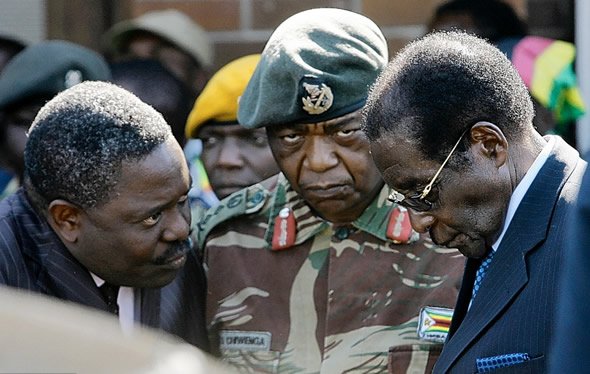
Since independence in 1980, the army, police and CIO have operated within a system that has allowed elements within their ranks to arrest, torture and kill perceived opponents with impunity. As such, reforming the security sector is essential in ensuring that presidential and parliamentary elections due by October 29, 2013, are credible, free and fair.
There are expectations that the elections would usher in a democratically elected government with interest in addressing the country’s longstanding and serious human rights issues. But as things stand, the chances of having free, fair and credible elections are slim, particularly given the shortcomings of security sector reforms and reforms in other sectors.
This report is based on research conducted by Human Rights Watch in Zimbabwe’s Harare, Bulawayo, the Midlands, Manicaland, Mashonaland East, Central and West provinces in November and December 2012, and in February 2013. The report illustrates how the partisanship of the security forces’ leadership has translated into abuses by these forces against the MDC and civil society organizations across the country and in political interference.
Human Rights Watch interviewed over 50 victims of abuses, legislators, journalists, members of the army and police, lawyers, and rights activists. We also reviewed Zimbabwe’s Lancaster House constitution and new constitution, various laws and regulations, police reports, newspaper accounts and reports by local human rights organizations.
There is an urgent need, ahead of the elections, for Zimbabwe’s security forces to be drastically reformed, to create a political environment conducive for holding non-violent and credible elections. Should the security forces fail to adopt a professional, independent and non-partisan role during elections, the new constitution and other recent reforms including the setting up of a new Zimbabwe Electoral Commission (ZEC) and the licensing of private daily papers, may be insufficient to deliver the elections needed to put Zimbabwe on a democratic and rights-respecting track.
Institutional reforms have not been introduced by the power-sharing unity government consisting of ZANU-PF, President Mugabe’s party, and the two factions of his Movement for Democratic Change (MDC). Prime Minister Morgan Tsvangirai heads the larger of MDC’s two factions. The unity government was established under the 2008 Global Political Agreement (GPA), which was underwritten by SADC and the African Union (AU).
It was intended to make institutional and legal reforms to create a conducive environment for the holding of free and fair elections. However, the outcome of the GPA was a ZANU-PF dominated government with significantly more power than MDC’s two factions. ZANU-PF has used its dominance to frustrate or block reform efforts.
Zimbabwe’s security forces, notably the military, have, for several years, interfered in the nation’s political and electoral affairs in ways that have adversely affected the ability of Zimbabwean citizens to vote freely.
This was particularly evident during the 2008 elections where the army played a major role in supporting widespread and systematic abuses that led to the killing of up to 200 people, the beating and torture of 5,000 more, and the displacement of about 36,000 people. Since then the leadership of the military, police and CIO, all appointed by President Mugabe, remain unchanged, as have their clear, public and vocal support for President Mugabe and ZANU-PF.
The partisanship of the security forces’ leadership has translated into abuses by these forces against MDC members and supporters, and civil society organizations. Although the Lancaster House and the new constitutions, as well as various laws, requires neutrality and impartiality from the security forces, no effort has been made to enforce them.
Beyond the open endorsement of ZANU-PF, the security forces have been deployed across the country where they have intimidated, beat and committed other abuses against Zimbabweans perceived to be supporting the MDC or critical of the ZANU-PF officials in government. No members of the security forces are known to have been disciplined or prosecuted for acting in a partisan manner or committing criminal offenses against the MDC and its supporters.
Concerns about the role of the security forces extend not only to situation prior to election day and the voting itself, but to the critical post-election period.
Instructively, the CIO has no legislative framework guiding its institutional set up and operations. It is a department within the President’s Office—the Department for State Security—with a minister responsible for it and a director-general running it, its operations are shrouded in secrecy. The CIO has operated more as the intelligence arm of the ZANU-PF and has been implicated in serious human rights abuses against ZANU-PF’s political opponents.
The unity government, with support from SADC and the African Union, should urgently take steps to ensure the political neutrality of the security forces, namely by investigating and prosecuting alleged abuses by security force personnel, publicly directing the leadership of the security forces to carry out their responsibilities in a professional and impartial manner, and appropriately punishing or prosecuting those who fail to do so.
Urgent reforms are also needed to increase the likelihood of credible, free and fair elections. These include electoral reforms to ensure the independence and enhance professionalism of the Zimbabwe Electoral Commission, and an updated voters roll under ZEC’s exclusive control. Civil society groups, including human rights organizations, should be able to freely conduct voter education across the country.
State media should give equal access to all political parties without bias or favor, and laws infringing on the right to freedom of expression should be amended or revoked. Finally, there should prompt deployment of long-term domestic, regional and international election observers with unfettered access to all parts of the country.
Recommendations
To the Unity Government of Zimbabwe
• Promptly investigate and prosecute, in accordance with national law and international standards, members of the security forces against whom there is evidence of criminal responsibility for serious abuses including arbitrary arrests, torture and other ill-treatment;
• Publicly direct commanders of the security forces to ensure all public statements and actions reflect a commitment to a strictly neutral political role in accordance with the constitution and international law;
• Promptly investigate and take appropriate disciplinary action against officers in the security forces, regardless of rank, who have violated laws and regulations prohibiting partisan conduct;
• Take necessary measures to ensure that appointments, training and conduct of members of the security forces, police, Registrar General’s office, and staff of the Zimbabwe Electoral Commission secretariat conform to the requirements of strict political neutrality in the discharge of their duties.
• Empower the National Security Council to ensure effective parliamentary oversight through, among other things, disbanding the parallel and informal Joint Operations Command;
• Facilitate unfettered, long-term elections observation by both domestic and international observers;
• Institute urgent electoral reforms including cleaning up and updating the voters’ rolls, ensuring that members of the security forces are able to vote freely with the secrecy of their vote guaranteed, instituting mechanisms to ensure that state media is impartial and non-partisan, and repealing or revising laws such as POSA and AIPPA that infringe basic freedoms; and
• Enact legislation to govern the operations of the Central Intelligence Organization and provide for civilian oversight of its work.
To the Southern African Development Community (SADC) and the African Union (AU)
• Press the unity government of Zimbabwe to urgently take necessary measures to ensure that the security forces act in a politically neutral manner at all times, including during the election period, and to take appropriate action against the security forces leadership that fails to do so;
• Send a public message that partisanship by Zimbabwe’s security forces during the elections could result in a refusal to endorse the election outcome, or other consequences; and
• Deploy long-term observer missions in Zimbabwe in sufficient numbers well in advance of the elections to monitor the situation and make recommendations for credible, free and fair elections.
To the Government of South Africa
• Press the unity government of Zimbabwe to urgently take necessary measures to ensure that the security forces act in a politically neutral manner at all times, including during the election period, and to take appropriate action against the security forces leadership that fails to do so;
• Call on SADC and the African Union to send a public message that partisanship by Zimbabwe’s security forces during the elections could result in a refusal to endorse the election outcome or other consequences; and
• Support the deployment of long-term observer missions in Zimbabwe in sufficient numbers well in advance of the elections to monitor the situation and make recommendations for credible, free and fair elections.
To the European Union, the United States, and the United Nations
• Support SADC initiatives to press Zimbabwe’s political leaders to urgently reform the security forces and implement other electoral reforms ahead of elections;
• Immediately seek accreditation for long-term observation of Zimbabwe elections to promote credible, free and fair elections;
• For those approached by Zimbabwe for financial support for elections, insist on observing those elections to ensure they fully comply with international standards.
III. Methodology
This report is based on research conducted by Human Rights Watch in Zimbabwe’s Harare, Bulawayo, the Midlands, Manicaland, Mashonaland East, Central and West provinces in November and December 2012, and in February 2013. Human Rights Watch interviewed over 50 victims of abuses, legislators, journalists, members of the army and police, lawyers, and rights activists. We also reviewed Zimbabwe’s Lancaster House constitution and the new constitution, various laws and regulations, police reports, newspaper accounts and reports by local human rights organizations.
Additionally, material from previous Human Rights Watch research missions to Zimbabwe contributed to the production of this report.
For security reasons, some details about individuals and locations of interviews have been withheld when such information could place a person at risk. All interviewees freely gave their consent to be interviewed and were informed that they could end or withdraw from the interview at any point if they so wished. No inducement has been offered or solicited by interviewees.
IV. Background
The close, partisan relationship between the leadership of Zimbabwe’s security forces and the former longtime ruling party, ZANU-PF, goes back to the pre-independence struggle against white minority rule.
Beginning in the 1960s, ZANU-PF had a guerilla military wing, the Zimbabwe African National Liberation Army (ZANLA), while the Zimbabwe People’s Revolutionary Army (ZIPRA) was the military wing of the Joshua Nkomo-led Zimbabwe African People’s Union (ZAPU), the rival political party.
At independence in 1980, the newly formed government led by Robert Mugabe (then as executive prime minister) integrated the two military wings – ZANLA and ZIPRA – together with the Rhodesian Forces to form the Zimbabwe National Army led by Gen. Solomon Mujuru, a ZANLA leader.
The bulk of current leaders of Zimbabwe’s security forces, including defense forces commander, Gen. Constantine Chiwenga, air force commander Air Marshall Perence Shiri, the police commissioner, Gen. Augustine Chihuri, and central intelligence organization director, Retired Maj. Gen. Happyton Bonyongwe, are former ZANLA combatants who fought in Zimbabwe’s liberation struggle.
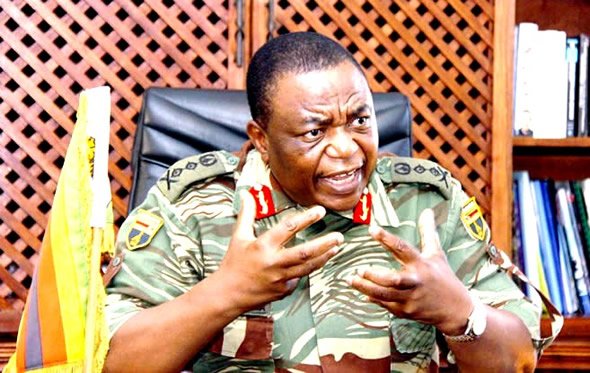
ZANU-PF and ZANLA leaders have often claimed that the armed liberation struggle, not the 1980 elections, led to Zimbabwe’s independence, and that ZANU-PF’s authority to govern is primarily derived from violent struggle. This attempt to delink Zimbabwe’s independence from the 1980 elections undermines basic human rights including freedom of association, and the right to participate in national political processes, as these are viewed as secondary to the armed liberation struggle.
The first post-independence overt military involvement in Zimbabwe’s political affairs was during the period from 1983 to 1987 when Mugabe and ZANU-PF deployed a section of the army, the Fifth Brigade (a special army unit trained by North Korean instructors and code named “Gukurahundi” – the rain that washes away the chaff), ostensibly to quell dissident disturbances in the Midlands and Matabeleland provinces.
The disturbances were characterized by violence between ZIPRA and ZANLA soldiers as well as sporadic attacks on civilians by agents of apartheid South Africa. Instead, the brigade was used to destroy ZAPU’s political base in those provinces. It appears ZANU-PF used the pretext of the dissident disturbances to unleash violence on the ZAPU supporters of ZAPU, to ensure the dominance of ZANU-PF,and render ZAPU irrelevant .
The Fifth Brigade carried out systematic and widespread atrocities such as torture and extrajudicial executions of more than 3,000 people (ZAPU leader Joshua Nkomo put the figure at 20, 000) in Matabeleland and Midlands provinces between 1982 and 1987.
Although Mugabe set up a commission of inquiry, the Chihambakwe Commission, into the Gukurahundi atrocities, its damning findings were leaked but never officially made public and its recommendations on the security sector were never implemented. This marked the beginning of post-independence military involvement in political affairs on ZANU-PF’s side and the resultant impunity.
In 1988 the ZANU-PF government issued Clemency Order Number 1, granting amnesty to all those involved in human rights violations committed between 1982 and 1987, benefiting mainly the army and the state security agency, the Central Intelligence Organization (CIO).
Successive election periods in 1985, 1990, 2000, 2002, 2005 and 2008, were characterized by widespread political violence mainly perpetrated by ZANU-PF, its allies, and government agencies, including sections of the army and the CIO. In 1993, Mugabe, who had become president, granted amnesty to two state agents convicted of attempted murder of an opposition candidate, Patrick Kombayi, who contested the 1990 elections.
In 1995 Mugabe again issued amnesty for all politically motivated crimes and human rights abuses, including beatings, arson, kidnapping and torture. On October 6, 2000, following widespread political violence during parliamentary elections, Mugabe pardoned those responsible for politically motivated crimes committed during the January-July 2000 campaign period.
In the lead up to the June 2008 presidential runoff elections, Human Rights Watch investigations found that the Joint Operations Command (JOC), comprising Mugabe and the heads of the security forces, was responsible for orchestrating widespread political violence throughout the country against the opposition Movement for Democratic Change (MDC).
This violence resulted in the killings of hundreds of perceived MDC activists and supporters and the beating, torture and forced displacement of thousands more. As with previous state-sponsored political violence, the authorities failed to hold accountable those responsible, entrenching impunity within the security forces.
In addition to the close political alliance between the leadership of ZANU-PF and the security forces, another driving force for political interference by the security forces has been the need to protect ill-gotten wealth and other vested economic interests.
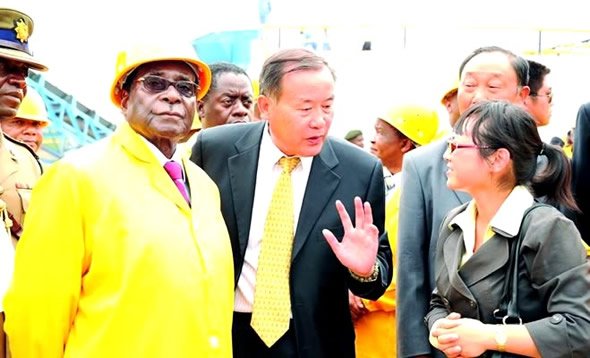
This has included control of revenue from Marange diamond fields where sections of the army directly own and run mining companies. The leadership of the security forces has also supported Mugabe and ZANU-PF’s continued dominance in government to protect them from prosecution for their role in rights abuses – as they have protected the security forces in past.
Human Rights Watch investigations indicate that it is largely the security sector leadership that is openly partisan towards ZANU-PF and benefitting from political patronage; the rank and file of the security forces remains independent and professional. To ensure that ZANU-PF partisanship is entrenched within the lower ranks of the security forces, the leadership of the security forces in May 2012 scrapped all recruitment requirements, opting instead for recruitment on the basis of subscription to vague national values which in practice are largely subscription to ZANU-PF policies.
There has been widespread concern expressed in the media and by civil society activists that this was designed to facilitate direct recruitment of unqualified ZANU-PF youths into the security forces. Human Rights Watch investigations also indicate that recruitment into the army, CIO, and prisons services clandestinely takes place through ZANU-PF aligned provincial governors across the country, all of whom are appointed by President Mugabe on the ZANU-PF platform.
ZANU-PF has become riddled with factionalism and severely weakened by internal infighting over succession to Mugabe, who has led the party since 1977. Increasingly the party has relied on the security forces to confront political opposition, and intimidate and coerce voters into ensuring a ZANU-PF electoral victory. The security forces have over the years become crucial to ZANU-PF’s survival.
Reforming the security forces is essential both for leveling the political playing field prior to the elections, but also for ensuring that following the elections the security forces will act in an impartial manner.
The timing of national elections is governed by Zimbabwe’s 1979 Lancaster House constitution, which provides that parliament, unless dissolved earlier, shall last for five years, counting from the day the person elected as president enters into office.
Mugabe was sworn in on June 29, 2008, and the presidential and parliamentary term of office ends on June 29, 2013, with fresh elections constitutionally required to be held no more than four months after that date, that is, by October 29, 2013. The new constitution states that the timing of the coming elections will be governed by the Lancaster House constitution.
Part 2: Zimbabwe’s Security Sector Legal Framework
Discover more from Nehanda Radio
Subscribe to get the latest posts sent to your email.