GWERU – A prominent Gweru businessman allegedly kidnapped, drugged and sodomised two primary school boys aged 11 and 12 years.
Smile Madhaka
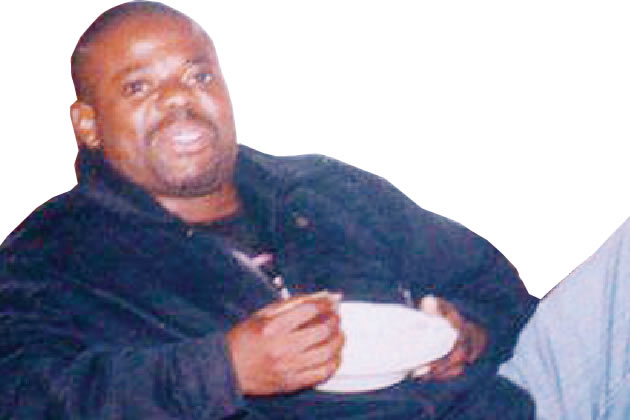
Smile Madhaka, 34, of Mkoba 19 suburb, who runs night clubs in Mkoba 1, 9 and 11 and a Pool Club in the Midlands capital, allegedly picked the boys from school and abused them for a period of three months.
He appeared briefly before Magistrate Judith Taruvinga on Wednesday facing two counts of aggravated indecent assault.
The court heard he gave the boys $5 to buy their silence.
Madhaka was not asked to plead.
He was remanded in custody to July 21 for trial after his bail application was denied.
The court is also awaiting medical results from the doctor who examined the boys.
For the State, Daniel Tafuma told the court that sometime in April this year, Madhaka who has a night club in Mkoba 1 which is close to Bumburwi Primary School went to the school where he met the two juveniles.
He said Madhaka offered the boys a lift.
“Inside his vehicle, he offered them bread and drinks. After consuming the food which could’ve been laced with a drug, the boys fell unconscious,” said Tafuma.
He said after some time the boys gained consciousness only to realise they were in Mkoba 3 near the Salvation Army Church.
Tafuma told the court that the boys had been dumped there by Madhaka.
“When the boys recovered they realised that they were near Salvation Army Church and that their pants were soiled,” said Tapfuma.
He said before he dumped them, Madhaka told the boys that he was going to pick them up at Mkoba Police Station bus stop on Wednesdays, Thursdays and Fridays. The abuse went on till June 26 this year.
Tafuma said Madhaka would intoxicate the boys with laced food and drinks before sodomising them.
He said he also gave them $5 to share.
Tafuma said the matter came to light after the boys’ parents reported to the police leading to his arrest.
Meanwhile, police in Midlands have called on parents and guardians to always keep an eye on their children while monitoring their behaviour.
Midlands Provincial police spokesperson Inspector Joel Goko said even boys were at risk of sexual abuse.
“Every child is at risk of sexual abuse and we therefore urge parents and guardians to always monitor their behaviour. There are perverts out there who prey on innocent children and we therefore urge parents to always keep an eye on their children to curb such crimes,” he said. The Chronicle
PARLIAMENT was rocked by a new language row on Wednesday when Deputy Speaker Mabel Chinomona told an MP to ask her question in English, instead of Ndebele.
Priscilla Misihairabwi-Mushonga
Umzingwane MP Priscilla Misihairabwi-Mushonga (MDC) had risen to ask Tourism Minister Walter Mzembi a question, and used Ndebele which is spoken by most of her constituents.
Zimbabwe has 16 official languages under the Constitution, but only English, Ndebele and Shona have been approved for parliamentary debates.
Parliament employs intepreters and MPs can use supplied headsets when faced with a language barrier, but it is thought these have not worked for months.
“I’d like to ask the Minister of Tourism why when investors come to Zimbabwe they face visa problems,” Misihairabwi-Mushonga said in Ndebele, as one legislator yelled ‘taura neShona!’ (speak in Shona!).
The MP paused, and then pressed on: “Can you work with the Ministry of Foreign Affairs so that when investors come in they don’t have problems? Some Chinese were chased when they came here. What are you doing to rectify this?”
Chinomona, in the Chair, then asked the MP to speak in English, stating that Mzembi does not understand Ndebele.
“… I would want to appeal to you to speak in English as the Hon Minister is not versed in Ndebele and I know that you’re able to speak in all the languages,” said Chinomona.
“May you ask your question in English so that the Minister can understand your question?”
Misihairabwi-Mushonga complied with the Deputy Speaker’s ruling saying: “I’ll do so Madam Deputy Speaker, but I think that he should be able to understand Ndebele. I think he said he understands Ndebele.”
Minister Mzembi, in his response, said: “I’m born of a Ndebele mother and a Karanga father. For the benefit of the greater audience, because her question is really international, I would plead that she just recasts it in English and I know that the Ndebele audience from my mother’s side will benefit from the answer in English.
“So, may I plead with the Hon Member to just recast it in English?”
Chinomona reiterated: “I thought I had already given a ruling on this issue. Hon Misihairabwi, can you please assist the Hon Minister because he doesn’t understand the language.”
Chinomona was again in the chair this month last year when she told then Transport Minister Obert Mpofu to answer a question in Shona, and the minister refused.
Speaking in Shona, Zanu-PF legislator Monica Chigudu, quizzed the Ndebele-speaking minister about the lack of progress on the upgrading of the Harare-Beitbridge highway where fatal accidents continue to occur.
Since his interlocutor had chosen to speak in their mother tongue, Mpofu, the MP for Umguza, elected to respond in Ndebele.
Said the minister: “Honourable Chigudu ubuze umbuzo oqakathekileyo. Kunzima ukulungisa yonke imgwaqo sikhathi sinye kodwa ngiyathembisa ukhuthi iMasvingo iyabe isile dual road ngesikhathi esifitshane [Honourable Chigudu you asked an important question. It’s very difficult to fix all roads at once, but I promise that Masvingo will have a dual carriageway soon].’’
Out of order, decided the Deputy Speaker who immediately intervened.
“Order! Honourable Minister, I plead with you Honourable Minister to try to respond to the question in the language that she has posed the question. Honourable Members, behave yourselves in the House,” said Chinomona.
Mpofu shot back: “I think it would be better if I use English for the interpretation in the Hansard.”
A raucous noise followed with inaudible interjections from legislators after which Mpofu added: “I’m advised by my colleagues that I should proceed in Ndebele.”
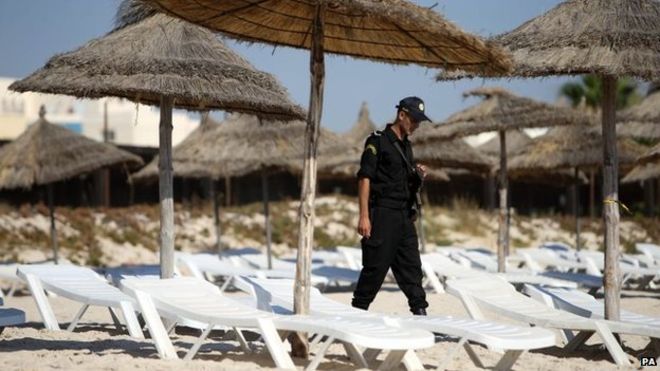
Security has been stepped up in the wake of the attack in Sousse
The first of thousands of British tourists are due to return home from Tunisia after a warning that another terror attack is “highly likely”.
Security has been stepped up in the wake of the attack in Sousse
Thirty Britons were killed in an attack in Sousse last month – and the Foreign Office is urging Britons to leave.
Some tourists waiting to leave the country said they felt disappointed – and afraid – after the warning, adding they saw no option but to leave.
Tunisia criticised the UK’s advice, saying it was “what terrorists want”.
Between 2,500 and 3,000 British package holidaymakers are believed to be in Tunisia, as well as about 500 independent travellers.
The Association of British Travel Agents said its members were aiming to bring customers home in the next 48 hours.
Michelle Ayres, who is among those waiting to leave Sousse, said: “Everyone’s disappointed here – and I speak for many people… but obviously they haven’t got an option.
“We actually feel we’d be safer in the hotel than leaving it at the moment. We’re worried not about getting to the airport. Everybody’s thinking ‘What’s going to happen? Is there a threat to us?’ and that’s why they’re getting us out.
“The people who came in two days ago had armed police chaperone their buses… We didn’t have that when we arrived here so something has obviously changed.”
Security ‘chaos’
A gunman killed 38 holidaymakers in the 26 June beach attack, prompting Tunisia to declare a state of emergency and increase security at tourist sites.
The UK government said there was no new “specific or imminent” threat but intelligence had led officials to the view that a further terrorist attack was “highly likely”.
Foreign Secretary Philip Hammond said the Tunisian investigation into the Sousse attack – and an attack in March on the Bardo Museum near Tunis which left 22 dead, including one Briton – was continuing and Tunisian authorities had “made clear they want to track down further individuals who they suspect may have links” to the attacks.
He said a security assessment in tourist areas found more work was needed “to effectively protect tourists from the terrorist threat”. BBC
Uganda’s former Prime Minister Amama Mbabazi has told the BBC he “will not back down” in his preparations for a presidential bid, despite his arrest on Thursday.
Amama Mbabazi
Mr Mbabazi, a former close ally of President Yoweri Museveni, was arrested while travelling to canvass support.
The government says that he violated public order laws by attempting to hold meetings without permission.
The president is widely expected to seek re-election next year.
Leading opposition figure Kizza Besigye was also arrested on Thursday ahead of a planned campaign rally outside the capital Kampala.
Both men were later freed.
Mr Mbabazi said he held President Museveni directly responsible for his arrest.
Last month, Mr Mbabazi said he would challenge Mr Museveni, 70, by seeking the nomination of the ruling National Resistance Movement (NRM). BBC
HARARE – Three Fidelity Printers and Refiners bosses including the chief executive officer were on Thursday brought before the courts on allegations of defrauding the country’s sole gold buyer of more than $2,6 million.
Fidelity Printers and Refiners
Allen Marimbe (49) is jointly charged with the company’s chief operating officer and finance director Godknows Hofisi (41) and senior finance manager Tinashe Mumbengegwi (35).
Hofisi and Mumbengegwi have another pending fraud charge before the same court involving close to $800 000 in which they also swindled their employer.
They were released on $2 000 bail each coupled with stringent conditions after prosecutor Mr Michael Reza abandoned his appeal against their release.
Mr Reza had invoked section 121 of the Criminal Procedure and Evidence act which allows the State to hold suspects for a week while it considers appealing.
On the fresh $2 669 146 fraud charge, the trio appeared before magistrate Mr Vakayi Chikwekwe.
They were remanded in custody to today for bail application.
The company’s company secretary Terrence Tererayi Machawira (41) and an accountant Ronald Madhara (47) are also on bail as they are also facing fraud charges. The Herald
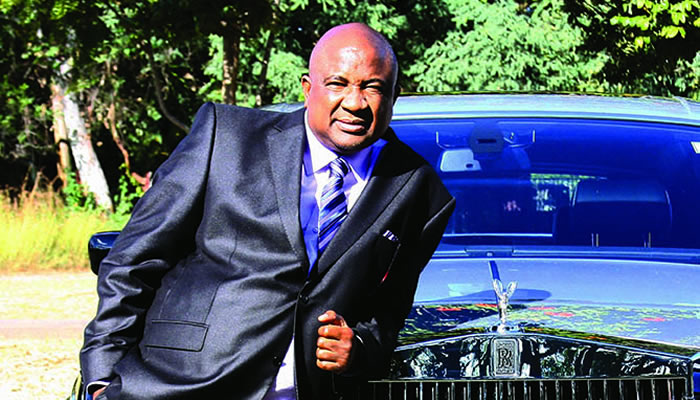
HARARE – The land ownership dispute pitting businessman Philip Chiyangwa and Orda Housing Development Consortium in Harare South took a new twist yesterday after the tycoon rejected a settlement proposal from land barons in the area.
Philip Chiyangwa
At least 13 land barons from Orda Farm, which belongs to Sinsene Investments, a subsidiary of Pinnacle Property Holdings owned by Chiyangwa, are on the police wanted list.
The 13 are linked to the housing development consortium in connection with the illegal sale of stands at Orda Farm, commonly known as Southlea Park in Harare South.
The police are offering a reward for their arrest.
Orda Housing Development Consortium, through their lawyers Tamuka Moyo Attorneys, had submitted a settlement proposal to Chiyangwa undertaking to pay compensation for the land.
But Chiyangwa said yesterday that he had rejected the proposal, adding that the offer was just a deceptive move to buy time by the individuals who were facing arrest.
In their proposal, the consortium had offered to buy the disputed land at a rate of $12 500 for every 240 square metres, among other things.
“That our client accepts the standard you proposed of using the Fidelity Life Assurance process for the project at the rate of $12 500 for a piece of land of 240 square meters,” the lawyers said.
“That our clients will acquire from you the entire section of Orda Farm with the exception of approximately 8,5 hectares which are under the control of Sensene Investments (Private) Limited.
“The approximate area of 605 hectares will thus be sold, in its entirety, to our clients.”
But Chiyangwa dismissed the proposal as mere posturing.
“The fact of the matter is that I have rejected the proposal which is just a ruse by these crooks in order to buy time,” said Chiyangwa.
“This consortium is made up of discredited people who are being sought by the police and the proposal was signed by the same people who are facing arrest.
“They must just forget it and I will only deal directly with the beneficiaries of the illegal sale of my land.
“I have title deeds to the property.”
The housing consortium comprises 56 corporates that illegally settled over 8 000 people at the farm, which Chiyangwa said is rightfully owned by Sensene.
Although the Government recently returned the farm and two other farms in the area to Chiyangwa, the consortium has resisted moves by the business mogul to take over the farms.
The consortium officials contend that the decision by the Ministry of Local Government, Public Works and National Housing to return the farms to Chiyangwa was null and void.
The consortium contended that Chiyangwa could not claim ownership of the farms since the land had been compulsorily acquired by Government to benefit low-income home seekers.
Chiyangwa had previously refused to negotiate with the consortium, offering instead to engage directly with the beneficiaries of the stands in relation to compensation while threatening to evict stand holders who refused to subject themselves to Sensene.
Government recently warned land barons involved in corrupt and illegal allocation of residential stands that they faced prosecution. The Herald
HARARE – A war of words erupted during a parliamentary committee meeting yesterday between Local Government, Public Works and National Housing Minister Saviour Kasukuwere and chairperson of the Parliamentary Portfolio Committee on Youth, Indigenisation and Economic Empowerment, Justice Mayor Wadyajena over the work of the committee.
Local Government, Public Works and National Housing Minister Saviour Kasukuwere shakes hands with Parliamentary Portfolio Committee on Youth, Indigenisation and Economic Empowerment chairperson Justice Mayor Wadyajena at Parliament Building in Harare
Kasukuwere was appearing before the committee to give oral evidence on the circumstances surrounding the establishment of the Zimunya-Marange Community Share Ownership Trust that was established in 2012.
Five diamond mining companies in Marange — Mbada Diamonds, Marange Resources, Jinan, Diamond Mining Corporation and Anjin Investments — were said to have pledged a combined $50 million towards capitalisation of a diamond company that was to be owned by the community.
However, when the companies appeared before the Indigenisation committee they claimed that they had not pledged anything while Anjin Investments said they had only pledged $1,5 million.
Minister Kasukuwere, who presided over the establishment of a number of Community Share Ownership Trusts as Minister of Youth Development, Indigenisation and Economic Empowerment, has been on record saying the mining firms misled the committee.
When he appeared before the committee yesterday, Minister Kasukuwere insisted the firms had pledged through shareholders who were in agreement with the Government policy on empowering indigenous Zimbabweans.
The blow-by-blow clash started when Wadyajena said the committee investigations did not amount to a witch-hunt before Kasukuwere interjected saying: “Well it appears so. I think it’s a big witch-hunt. A misplaced one.”
Wadyajena asked how and why the committee would witch-hunt him.
“Mr Chairman, you have been very careless, I have recordings of your own discussions with journalists. I have recordings of your own self speaking on television and trying to impute that there has been corruption. We respect this committee, we respect Parliament but this institution must never be used for political grand standing. We must take each other seriously,” he said.
But Wadyajena interjected: “Honourable Minister if you have any recordings there are authorities where you can take them to.
“You are free to take them anywhere, I won’t be intimidated. I am doing my job and I will continue with this investigation.”
Minister Kasukuwere said he had a right to clear his name that had been tarnished by Wadyajena.
Said Wadyajena: “Honourable Minister whether you say I have abused my position or what, I will not entertain that. May you please behave yourself.
“As I said before the purpose of the meeting is not witch-hunting. We are just doing our oversight role as mandated by the Standing Orders Section 160 and 167.”
But Minister Kasukuwere said: “Of course I still feel and strongly believe that witch-hunts are part and parcel of what you are doing but in a way that is part of youthful exuberance.”
Responded Wadyajena: “Honourable Minister are you an animal that can be hunted? I doubt! I am just doing my job. May you please allow me to do my job.”
Then Minister Kasukuwere said he was too big to be hunted by youths like Wadyajena whom he said was trying to use a catapult to kill an elephant adding that he would lose the fight.
Wadyajena implored Minister Kasukuwere to present evidence of him to the National Assembly Speaker or the Clerk so that they could take action than just threatening him.
Kasukuwere said the decision whether to take the issue up with authorities was his although he felt he was being subjected to political harassment.
“I think your conduct Mr chairperson of your very esteemed committee is not correct. I am a Member of Parliament just like you, elected by the people of Zimbabwe to be in Parliament. I think you must take this House seriously.
“We get worried when you make press statements on issues that are before Parliament, I have not been heard conclusively and you are quoted on a number of press articles including dabbling with these matters on the Internet,” said Minister Kasukuwere.
This prompted MDC-T legislator for Mkoba, Mr Amos Chibaya to call for a truce between the two saying it was their party politics.
But Wadyajena interjected: “I am challenging him to present the evidence of me talking to journalists to the authorities. He can’t just be making reckless statements. This is a reckless statement. You have to take the matters where you are supposed to take them not to me. If you are so sure I have gone around and issued press statements. I have never issued press statements. You can approach the Speaker of Parliament.” The Herald
File picture of vendors clashing with municipal police
By Innocent Ruwende
HARARE – At least 26 illegal vendors were arrested yesterday for stoning Harare municipal police officers who were dismantling an illegal vendors’ tent along Speke Avenue.
26 nabbed as city cops, vendors clash
Out of the 26, 23 were fined $25 each for “conduct likely to cause breach of peace”, while three remained in custody after they were charged with assault at Harare Central Police Station.
Police at the station denied that the vendors were detained there, but their lawyer Mr Kudzai Kadzere of Kadzere, Hungwe and Mandevere Legal Practitioners confirmed the arrests.
Harare acting provincial police spokesperson Assistant Inspector Simon Chazovachiyi dismissed rumours that two of the vendors died at the police station after being beaten by municipal police.
He said police had not arrested any vendors and that it was possible that municipal police had arrested them and taken them to Harare Central for administrative purposes.
But Mr Kadzere said he visited Harare Central Police station to assist the vendors.
“Some of my clients have just been released after paying fines, but three of them are still in custody after they were charged with assault,” he said.
Municipal police had to use batons to keep the illegal vendors at bay.
The tent had been erected by the National Vendors Union of Zimbabwe (NAVUZ) which is led by Stan Zvorwadza.
The union is on record urging vendors to defy the Government directive to leave the streets and occupy designated sites.
NAVUZ director Mr Samuel Wadzai confirmed that 26 illegal vendors were arrested over the skirmishes.
“Six of them were injured, one is serious, I think he was hit by a blunt object. We have since engaged lawyers to handle the case. We want to make it clear that we do not condone the use of force by authorities. We should begin dialogue.”
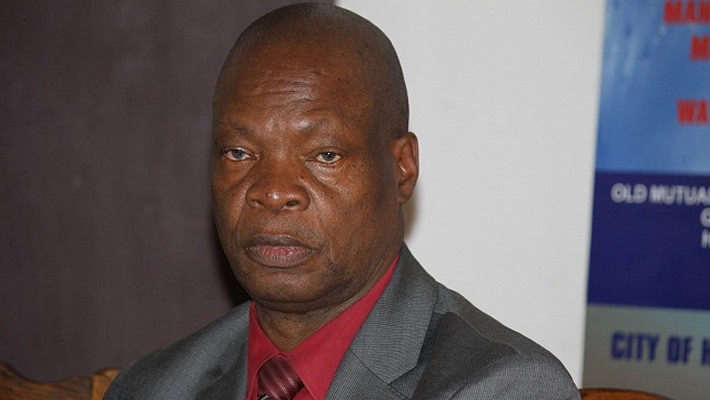
HARARE – On Tuesday last week, Harare mayor, Bernard Manyenyeni, dropped a bombshell. The city’s town clerk, Tendai Mahachi, was stunned. The entire council stood shocked. Dozens of journalists scrambled out to send out the surprise news.
Tendai Mahachi
Manyenyeni’s unilateral decision to send the long serving town clerk on forced leave to pave way for “many issues that council is seized with that can be best addressed in his absence”, has sent tongues wagging: Is this the final exit of the city’s 64-year-old controversial town clerk?
Mahachi is turning 65 years in November, the new globally recommended retirement age. He has served the Harare City Council since 2004 when he joined Town House as its turnaround strategist.
During Tuesday’s full council meeting, where the announcement was made, Manyenyeni was flanked, to his right, by an astounded chamber secretary, Josephine Ncube — who will act in Mahachi’s capacity — and to the left by an even more bewildered and visibly shaken Mahachi.
There were no customary high table handshakes as everyone solemnly filed out of the chamber at the end of the meeting and the “no hard feelings inherent” that the mayor denied existed, was evidently thick in the air.
A swarm of scribes immediately stormed Manyenyeni to seek clarity.
In the hallway leading to his office, the mayor hand-delivered the letter of indefinite suspension to Mahachi.
Each man walked away — to their offices, Mahachi humbly, Manyenyeni importantly.
And the location of their offices meant they gave each other backs immediately and this could well have been the last time the two men shared presence in the marble corridors of this grandiose establishment where the affairs of Zimbabwe’s capital are handled — though some would prefer to say, mishandled.
Could this finally be the end of Mahachi’s reign over a city with an estimated three million residents, most of who think he ransomed them?
Many think this time around Mahachi could indeed be on his way out; although many others are not forgetting the one person that has stood by Mahachi’s side, through thick and thin, and who has successfully blocked anyone lurching in Mahachi’s direction — even Parliament.
That person is former local government minister, Ignatius Chombo.
And Manyenyeni knows it very well.
Former Harare mayor, Muchadeyi Masunda came and tried to get rid of Mahachi and failed after Chombo got in the way.
Manyenyeni has tried it before, and failed.
Last year, Manyenyeni suspended Mahachi following revelations that he and his top executives had accorded themselves obscene salaries but only hours later, Chombo reversed the decision.
The Parliamentary Portfolio Committee on Local Government summoned Mahachi to give explanations, and like one standing on the proverbial solid ground, the town clerk pitched up with a pay slip which showed he earned the moribund Zimbabwean dollar.
And when Chombo was accused by the same committee of covering up for Mahachi, he said the mayor had been overzealous and involved himself in turf issues and overstepped his boundaries in the process.
The action by Chombo raised tempers and a barrage of criticism from residents and civic groups who felt his action was tantamount to more than just protecting Mahachi.
The rage against Chombo was showcased in the form of demonstrations, court applications, outbursts on social media by stakeholders and even hunger strikes by distraught residents as they demanded answers.
But Mahachi remained at Town House.
A stone-faced Mahachi declared that Manyenyeni’s decision was bizarre and senseless.
He vowed to take the issue “somewhere”. Meanwhile, he is defiantly reporting to work.
In forcing Mahachi to go on leave, Manyenyeni said council would want to address issues to do with the succession plan, the obscene salaries which have caused the local authority to work without a budget, outstanding workers salaries and issues to do with service delivery.
That Mahachi has stayed on at Town House, despite plausible pretexts for his dismissal, is an issue that has been topical in recent years but the last few months have been horrific for him, which gives many people hope that this time, just maybe, the chickens could be coming to home to roost.
Last year he was embroiled in a forgery storm after being accused of tinkering with his date of birth to extend his tenure of office and escape the job cuts targeting those above the age of 60.
Before that, he was on the firing line after reports that he and fellow senior staff misused a loan facility meant for water rehabilitation.
In February this year, residents associations piled pressure on him to quit on the basis that he had dismally failed in service delivery; and the following month, residents stormed a full council meeting at Town House demanding his ouster after his administration proposed the introduction of prepaid water metres.
At the end of May, council gave him a 60 day ultimatum to clear the employee salaries backlog, failure of which he would be axed.
And interestingly, that deadline (June 30) became the very day that Manyenyeni sent him on forced leave.
The mayor seemed to have discovered that suspending him would have immediately attracted Chombo’s overplaying hand and so he subtly went the forced leave way, to circumvent Chombo.
But whether or not Mahachi will bounce back, it was celebration time for residents’ associations who have been at war with the embattled Mahachi.
Some even called for his sacking altogether.
“This comes as sweet news because we have been lobbying the council and government for the permanent ouster of Dr Mahachi from Town House owing to straight cases of abuse of office and authority, and manipulation of council systems, including abuse of the water account,” the Harare Residents Trust (HRT) director, Precious Shumba said, congratulating the mayor for the bold move.
Combined Harare Residents Association chairman, Simbarashe Moyo said: “We have been waiting for this moment for a long time and it has come. We hope the man doesn’t go back to Town House again and that the minister will distance himself from this if he truly respects the self governance principle of local authorities.”
The next few days will thus be interesting. With his pillar, Chombo now reassigned to another ministry, it would be interesting to note what inclination the new Local Government Minister, Saviour Kasukuwere, will have on the issue. Financial Gazette
Former Reserve Bank of Zimbabwe governor, Gideon Gono, once flatteringly described President Robert Mugabe as the grandmaster of politics, whose political machinations can dramatically alter the course of events in one surprise stroke that leaves many speechless.
President Robert Mugabe tinkered with his “deadwood” Cabinet line-up
And Monday’s Cabinet reshuffle precisely summed up the 91-year-old veteran politician’s extraordinary mastery of political power play.
While contemporary analysis of Zimbabwean politics has, wittingly or unwittingly, decided to dismiss this week’s Cabinet reassignments and appointments as merely recycling of dead wood by a man at his wits’ end as far as controlling his party’s internal ructions is concerned, President Mugabe’s move simply highlighted that he is very much alive to the ambitions of everyone around him in ZANU-PF.
Only late last month he alluded to the fact that anyone routing for either Vice President Emmerson Mnangagwa or Vice President Phelekezela Mphoko to succeed him, was exercising in futility. Those propositions, which only serve to divide the ruling ZANU-PF, would not be entertained, he subtly warned.
And sending Mnangagwa to China on the eve of selecting Mphoko as the focal point of government policy coordination and implementation could only mean that the two frontline contenders for his office have been asked to work together and prove their worth.
With Zimbabwe’s Chinese “all-weather” friends not playing ball as far as helping the country reverse its economic misfortunes, Mnangagwa has to bring back home that major investor; Mphoko has to make sure that the country’s chronic policy inconsistencies are corrected to instill investor confidence in, not only the Chinese, but also in the West whose investments have largely remained offshore.
That the ZANU-PF government is desperate to prove its critics wrong and that Mnangagwa and Mphoko have no choice but to work together, if they were not doing so, is just one of the many messages that have strongly come out of this long awaited Cabinet reshuffle.
And in all his seemingly ineffective Cabinet reshuffles, President Mugabe has exhibited one major strength: The element of surprise reminiscent of the mysterious ways of a crocodile.
Leaving the critical Ministry of Information, Media and Broadcasting Services vacant after its former holder, Jonathan Moyo, was reassigned to the Ministry of Higher and Tertiary Education, was another signature move as he maintains his grip on his lieutenants, like a grand chess player who expertly shifts pawns on the board.
Obviously Moyo had become increasingly powerful in his former position and being an academic, it is possible that President Mugabe could have also seen potential in him to change the fortunes of the country’s tertiary education sector, although many people are convinced that the “Prof”, as he is affectionately known, has been thrown into the Siberia of Zimbabwean politics.
The return of Moyo into Cabinet, even after many were also convinced that the professor’s flirtation with the ruling party were waning, was yet one of the characteristics of President Mugabe’s mastery of the game of smoke and mirrors in politics.
However, leaving the Information Ministry post vacant has bred speculation that there could be no suitable candidates at the moment as potential candidates like the presidential spokesperson, George Charamba, chose to remain civil servants, despite them calling the shots from the sidelines.
Nonetheless, President Mugabe’s decision to ruthlessly purge his party after the factional fights between Mnangagwa and former vice president Joice Mujuru got out of hand, has undoubtedly limited the veteran leader’s options.
Plucking Ambrose Mutinhiri and Nyasha Chikwinya from out of the blues to respectively fill the Mashonaland East Provincial Affairs and the Women, Gender and Community Development posts, probably highlights this dilemma.
That these two were actually linked to the Mujuru faction, as has been suggested elsewhere, and that, for instance, Mutinhiri’s ambitions to land the party and government’s vice presidency caused serious friction in ZANU-PF, only serves to prove that there was some measure of desperation in these appointments.
While Monday’s Cabinet reshuffle may have ended weeks, if not months, of speculation, the reassignments present an opportunity for conjecture.
If events of the past few months have had any lessons for the country, then those lessons may well have been redefined on Monday.
One would have expected that Saviour Kasukuwere and Ignatius Chombo, who crossed swords over their preference of different candidates for the June 10 by-elections, would have been punished for fomenting divisions in the already fractious party.
But, instead, they were both assigned the key ministries of Local Government, Public Works, National Housing and Urban Development and that of Home Affairs.
There might be a catch to it.
Obviously, Chombo, following his recent mastery of the art of courtesy when he was conversing with the First Lady Grace Mugabe in Kadoma, was handsomely rewarded with the Home Affairs Ministry.
The reassignment may have surprised him as well since he had become part of the local government furniture, a compromising situation which was increasingly rendering him incapable of controlling land barons who have caused urban planning chaos across the country.
The reassignment was probably meant to save him from a difficult and embarassing situation.
While Chombo’s mission, if any, at Home Affairs is yet to come to light, Kasukuwere’s job is well cut out for him.
In fact, he may have unknowingly applied for the post when, during campaigns for the June 10 by-elections, he said: “ZANU-PF will now have to start addressing urban challenges head on. Service delivery and incompetence of local authorities concerned…Frank discussion on urban matters is going to be core in addressing the malaise. It can’t be business as usual, the time has come.”
And indeed, he has hit the ground running. His first target is the Harare City Council, and his first targets in Harare will be vendors and the land barons that Chombo left to flourish.
Although Kasukuwere may be eager to prove himself as well as swerve people’s attention from his past controversial performances and other ministries, dealing with the country’s urban chaos will not be a stroll in the park, as the economy continues to struggle.
Kasukuwere is indeed already talking tough, but in these desperate times of serious economic troubles one would have hoped that a Cabinet reshuffle of this nature would bring stability, first to the ruling party and secondly to the economy, for rhetoric by people like Kasukuwere to make sense.
Otherwise when Oppah Muchinguri and Kembo Mohadi, like ever obedient toddlers, are the two faces that complete President Mugabe’s mini reshuffle, then one can only conclude that, for now, everyone in ZANU-PF has been checked, but its business as usual on the economic front. Financial Gazette