Home Blog Page 6318

The Indigenisation Mirage: Alex Magaisa

0
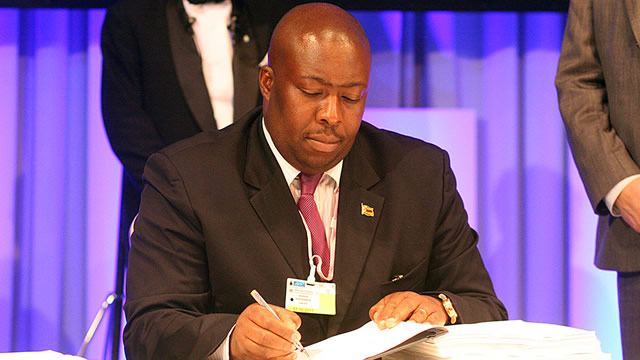
Former Indigenisation Minister Saviour Kasukuwere

By Alex T. Magaisa

The harsh exchange reported between Government Minister Saviour Kasukuwere and Chairman of the Parliamentary Committee on Indigenisation and Empowerment, Justice Wadyajena, is yet another reminder of the mirage of indigenisation and the arrogance that accompanies the conduct of governmental business.
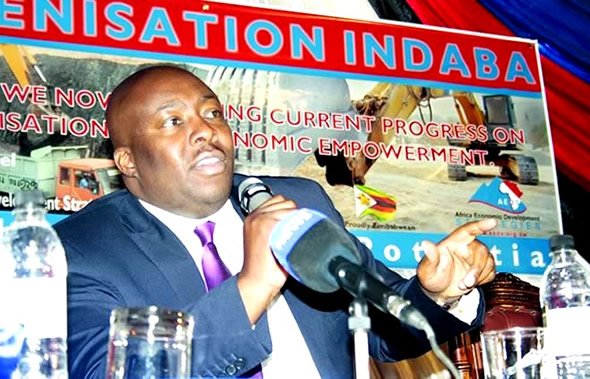
Former Indigenisation Minister Saviour Kasukuwere

For years, Zanu PF has touted land reform, indigenisation and lately, beneficiation as their flagship policies. All  are grounded in the reasonably-couched language of social justice and fairness. In Kasukuwere, the policy of indigenisation had a combative and abrasive advocate.

During his tenure, took indigenisation to the top of the political agenda and it served Zanu PF well. It sounded well to most local ears but was disturbing to foreign investors. Under indigenisation, foreigners were supposed to give up at least 51% of ownership of big business operating in Zimbabwe.

The philosophy behind it is hard to fault. The idea of locals benefiting from resources in their areas makes sense to anyone who cares about social justice and the need to protect the vulnerable against the aggressive nature of global capitalism. It is also a principle captured in the celebrated Convention on Biodiversity, signed at Rio in 1992 – locals must benefit from their resources.

It is also an idea that was included in the new constitution. The national objective on national development, in s. 13(4) of the constitution provides that, “The State must ensure that local communities benefit from the resources in their areas”.

Indeed, Zimbabwe is not the only country that has policies designed to protect local interests in this way. In 2009, Indonesia passed a new mining law, banning the export of unprocessed minerals after January 2014. It requires mining companies to process and refine raw minerals in Indonesia.

The law also requires foreign shareholders in mining to divest shares in their businesses in order to achieve majority Indonesian ownership within 10 years from the commencement of commercial production.

All this is part of a narrative of “resource nationalism” which is popular in resource-rich nations of the Global South, which for years have exported cheap raw materials, only to pay steep prices importing finished products made from those materials. Resource nationalism is meant to counter this exploitation.

During his tenure as Minister of Youth, Indigenisation and Empowerment, Kasukuwere was its great apostle and exponent. His aggressive style made it a central theme of the Zanu PF narrative in the run-up to the 2013 elections. It became an important campaign tool.

A number of community-share ownership schemes were launched amid great fanfare. He gave ultimatums in various areas, including finance, where he clashed with the then Governor of the central bank, Dr Gideon Gono. In the end, the policy was felt the most in the mining industry. The flagship deals involved platinum and diamond mining companies or so the nation was told.

But a few weeks ago, during a hearing of the Parliamentary Committee on Indigenisation, it emerged that only one of the deals that were touted by the Government had materialised. This was confirmed at the hearing by the head of Brainworks Capital, the company that was engaged by the Indigenisation Ministry to advise on and negotiate the indigenisation deals. All others, amounting to $1 billion had apparently been abandoned.

It also emerged that Brainworks Capital was engaged by the Ministry without following the rules of public procurement – it did not go to tender, signalling potential corruption in the award of the deal with would yield a substantial amount in fees.

One of the most glaring examples of the deception is the community-share ownership scheme linked to the Marange diamond fields. In 2013, President Mugabe was paraded on national media holding a $50 million cheque, representing the contributions made by the 5 diamond companies operating in the mining fields. It was supposed to benefit the local communities around Marange. But as it turns out, this was a real dummy. It was all a lie.

When the diamond mining bosses appeared before the Parliamentary Committee on Indigenisation, they denied that they had ever made pledges of $10 million each to the community share-ownership scheme’s fund. The then Governor of Manicaland, Christopher Mushohwe was implicated in those murky dealings around the Marange diamond fields, with allegations that he had directed funds to be paid into a personal account.

Overall, he gave unconvincing responses when grilled by the same Parliamentary Committee. Ironically, when President Mugabe reshuffled his Cabinet earlier this year, Mushohwe was elevated from Minister of State for Manicaland Province to become Minister of Indigenisation!

Much earlier, when Mushohwe was grilled, the Parliamentary Committee on Indigenisation also called Saviour Kasuwere in his capacity as former Minister of Indigenisation. Kasukuwere was reported to have declined on the basis that he was no longer the responsible Minister.

At the time, Francis Nhema, now deposed, was the Minister of Indigenisation. Kasukuwere’s stance was wrongly backed by the then Clerk of Parliament, Austin Zvoma. At the time, I wrote that both Kasukuwere and Zvoma were wrong. The new constitution makes it clear in s. 107(2) that:

“Every Vice-President, Minister and Deputy Minister must attend Parliament and parliamentary committees in order to answer questions concerning matters for which he or she is collectively or individually responsible”.

The provision imposes a mandatory obligation on Vice Presidents and Ministers to attend Parliament or its committees to respond to any questions. They do not have the option of refusing to attend.

They cannot say, as Kasukuwere and Zvoma said at the time that he is not responsible for that Ministry because the principle of collective responsibility applies, too. We are pleased, therefore, to see that sense eventually prevailed, and that Minister Kasukuwere attended the Parliamentary Committee’s hearing. He should have done so a long time ago.

The harsh exchange between the Minister and the Chairman of the Parliamentary Committee suggests a bad relationship between the two men.  The Minister seems to think the Chairman is driving a personal agenda. For his part, the Chairman is adamant that he is only performing his job.

Beyond that, the way it’s going, this will be interpreted as a sub-plot to the succession drama in Zanu PF. Wadyajena is said to be a close associate of Vice President Mnangagwa and this will be seen as yet another move to squeeze Kasukuwere in the battle to succeed President Mugabe.

But this succession narrative will obscure what should be an important investigation into an issue of national significance. What really happened to the indigenisation deals? Why were they abandoned? What happened to the $10 million pledges? Who is telling the truth – the mining bosses who are saying they never made the pledge, or Minister Kasukuwere who is saying they did?

Are there rent-seekers who might have prejudiced the nation and the local communities by extracting ‘rents’ from the mining companies? Why was Brainworks engaged without going to tender? How much did they earn from the work they did on behalf of the Ministry? Who are the real beneficial owners of Brainworks Capital? What else has it done for and on behalf of the government?

All these are crucial questions that demand answers. The Parliamentary Committee on Indigenisation has a lot of work on its hands. They have been carrying on these hearings for more than a year now. There is a lot that seems rotten in this whole package.

There are too many skeletons in the closet and soon enough they might begin to talk.  For its part the Parliamentary Committee must persist with its enquiry. That is exactly what Parliament should be doing. That is its constitutional role – bringing Government to account. No-one should feel offended. We often criticise MPs for sleeping on the job. They must earn their keep.

Alex Magaisa can be reached on [email protected] . This article was first published on AlexMagaisa.com 


Mexican drug lord Guzman escapes jail

0

Top Mexican drug lord Joaquin Guzman, known as El Chapo or “Shorty”, has escaped from a maximum security prison for a second time, officials say.

Guzman had been recaptured in February 2014

In a statement, Mexico’s National Security Commission said Guzman was last seen in the showers of the Altiplano jail late on Saturday night.

He was the leader of the Sinaloa cartel, which smuggles huge amounts of illegal drugs into the US.

His recapture in 2014 was hailed as a victory for Mexico’s government.

Officials say that Guzman’s escape was discovered when officers checked his cell in the Altiplano prison, which is near Mexico City.

A search operation has been launched and flights have been suspended at a nearby Toluca airport.

Guzman escaped from a Mexican high-security prison in 2001. He hid in a laundry basket after bribing prison officials.

He had been serving a sentence of more than 20 years after being arrested in Guatemala in 1993.

The US has indicted him on federal drug trafficking charges.

Guzman was arrested in Guatemala in 1993, but escaped from a high security jail in Mexico in 2001

His arrest last year was a success story for Mexican President Enrique Pena Nieto. At the time of his arrest Guzman was paraded before the media in Mexico City.

World’s most wanted

Guzman was born in the town of Badiraguato, probably 57 years ago, and became an important figure in the drug cartels of the 1980s.

His rise to head of the Sinaloa cartel made him the world’s most wanted drug trafficker.

The cartel controls much of the flow of cocaine, marijuana and methamphetamine to the US.

Before his recapture in 2014, the US state department had offered a reward of up to $5m (£3.2m) for information leading to his arrest.

His wealth is estimated at $1bn (£630m). BBC

Health Ministry to respond to Mudede on ‘dangerous’ contraceptives

0
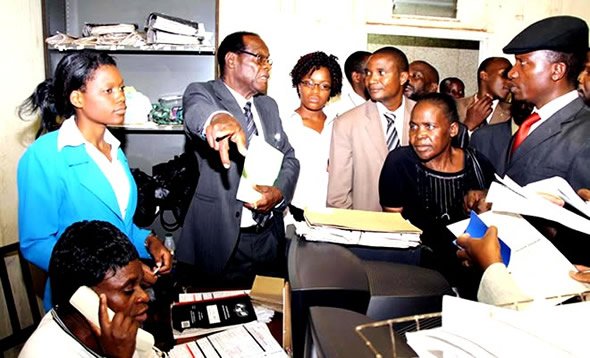
Mugabe's trusted election rigger: Registra General Tobaiwa Mudede (in glasses)
Registra General Tobaiwa Mudede (in glasses)

By Shamiso Yikoniko

HARARE – Parliament has summoned the Health and Child Care Ministry to explain complications associated with certain female contraceptives. Also expected at the hearing are officials from the Medicines Control Authority of Zimbabwe.

Mugabe's trusted election rigger: Registra General Tobaiwa Mudede (in glasses)
Registra General Tobaiwa Mudede (in glasses)

Women’s Affairs, Gender and Community Development Parliamentary Portfolio Committee chair Beatrice Nyamupinga said they invited the ministry after Registrar-General Mr Tobaiwa Mudede recounted to them risks associated with some contraceptives.

Mr Mudede told the committee that the West was promoting dangerous birth control measures to de-populate developing countries, and advocated traditional birth control methods.

Zimbabwean women largely use pills, injectables, implants; while men usually opt for condoms. Some women say implants cause headaches, dizziness, breast tenderness, weight gain, irregular menstruation, mood swings, depression and acne.

According to the Multiple Indicator Cluster Survey Report (2014), Zimbabwe’s contraceptive prevalence rate for use of modern contraceptive methods is 66,5 percent, with just 0,5 percent using traditional methods. Thirty-three percent do not use any contraceptives.

Nyamupinga said, “We have invited the Ministry of Health and Child Care and the regulatory authority to explain, or rather, respond to claims by Mr Mudede.

“The Registrar-General has had this debate for a long time, but the two authorities have remained quiet and that has left many women confused. If the claims being made by Mr Mudede are true, why has MCAZ gone ahead to register these dangerous contraceptives? We want them to come for the hearing within two weeks.”

Health Ministry Acting Principal Director (Preventive Services) Dr Owen Mugurungi said modern contraceptives were safe despite their side-effects.

“We acknowledge that modern contraceptives are with some side-effects. However, no type of medication is without side-effects.

“We think modern methods are still safe, acceptable and useful in reproductive health,” he said.

“The socio-economic benefits outweigh the side-effects. Those who would have developed side-effects can always find alternatives, meaning the side-effects can be managed.

“Modern contraceptives enable women’s bodies to recover after child birth and also allow women to actively participate in economic activities.” The Sunday Mail

Islamic State leader in Afghanistan ‘killed by drone’

0
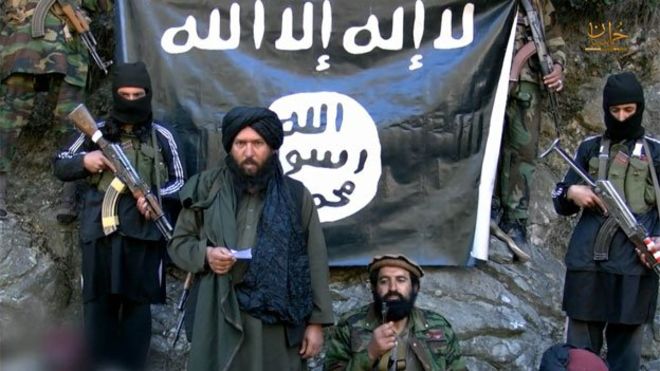
A still from a propaganda video showing the leader of IS in Khorasan, based around Afghanistan and Pakistan

Hafiz Saeed, the leader of the Islamic State group in the Afghanistan and Pakistan region, has been killed in a drone strike, the Afghan intelligence agency says.

A still from a propaganda video showing the leader of IS in Khorasan, based around Afghanistan and Pakistan

Saeed was killed in the strike in Achin in Afghanistan’s eastern Nangarhar province on Friday night, it said.

Some 30 other IS militants were killed, the agency said. There has been no independent verification.

A drone strike on Tuesday reportedly killed another top IS figure.

The Afghan intelligence agency, the NDS, said Friday’s strike was carried out by US-led coalition forces in coordination with intelligence provided by the spy agency.

Nato forces have had a new mandate since the start of the year but can still carry out drone strikes.

There has been no response from Islamic State on the reports and the Afghan government has given no official confirmation.

An NDS spokesman has told the BBC that this attack, combined with Tuesday’s strike, will have a significant impact on security for Afghanistan.

This is only the third time that US-led forces have agreed to use drones against IS in Afghanistan, says the BBC’s David Loyn in Kabul, showing the seriousness which both the government here and the international coalition are taking the threat of the organisation taking root in Afghanistan.

There had been reports in April that Saeed, also referred to as Hafiz Saeed Khan, was killed while planting a bomb.

Nangarhar’s Achin district is close to the border with Pakistan. The Islamic State group refers to the Afghanistan-Pakistan region as Khorasan state.

Nangarhar has seen an upsurge of fighting in recent weeks, mostly between IS and the Taliban, forcing thousands of people to flee their homes.

The province is one of the areas where IS militants are most active in Afghanistan.

Tuesday’s strike reportedly killed Shahidullah Shahid, a former member of the Pakistani Taliban who defected to the IS group.

Again, there has been no independent confirmation of his death.

He was the most prominent of a group of fighters who appeared in a video in January, apparently filmed in Pakistan, pledging allegiance to the self-styled Islamic State.

Shahidullah Shahid was reportedly killed in another drone strike on Tuesday

Tuesday’s strike also killed another senior IS commander and scores of militants, intelligence officials say.

Another IS militant commander, Mullah Abdul Rauf, was reported killed in a drone strike in February.

The NDS recently released a video on Facebook showing how its special forces were fighting against the IS threat.

IS first made its presence felt in Pakistan in April, when its regional spokesman claimed its fighters had shot dead three Pakistani soldiers. BBC

Zim music videos quality improving but …

0
Hope Masike
Hope Masike

By Andrew Moyo

Most local artistes have been finding it difficult to penetrate the international market and this has been attributed to a number of factors, chief amongst them being the poor quality of their music videos.

Hope Masike
Hope Masike

However, local music video directors have been upping their game, producing videos that can compete on the international stage.

From the creativity to the picture quality, most videos that have been released these past few months are a true testament of the strides being made in the industry.

In this day and age, music video channels have become the main highways that can make or break artistes on the international scene.

Besides creating hype for artistes, music videos also promote their image by displaying their personality and style, thereby generating interest within the audience.

Considering that a channel like MTV Base has a reach of 48,5 million African viewers in 10,5 million households across 48 countries in sub-Saharan Africa, getting regular airplay on such a channel would massively boost an artiste’s recognition internationally.

Only a few local artistes have had the opportunity of having their music videos aired on international channels.

Some of the local artistes who have been aired on Channel O include DJ Stavo, Buffalo Soldier and Willom Tight.

The availability of advanced video filming equipment like Black Magic and 4K cameras, with most filmmakers realising the importance of such, has made it easier for producers and directors to come out with high definition quality videos.

Producers have also been taking their time to make sure that they come out with solid products with some videos taking months to complete and budgets in the thousands.

Some of the exceptional videos that have been released include Hope Masike’s “Huyai Tinamate”, Ray Dizz’s “Party Remix” and Roki’s collaboration with XQ “Alleluya” to mention just a few. The music videos display a high level of maturity in music video production.

However, with all the effort exerted in improving the quality of music videos, it is still proving difficult for local artistes to get airplay on many international channels.

Some artistes have taken their music videos to Channel O or Trace, but the videos never get to be aired on these channels.

Chad Philip, who is managing Ray Dizz’s affairs was recently in South Africa to push his artiste’s latest music video. He shared with this publication some of the things that most music channels look at before airing videos.

“The main reason why Zimbabwean music videos are not getting airplay on most foreign channels is that they are not of very good standard,” said Chard.

With many music stations competing for viewers, most channels are reluctant to play videos from unfamiliar artistes.

“The song and video might be good, but if artistes are not really popular they might not be aired. The only channel a new artiste can get airplay is Channel O because these other stations don’t break new acts unless they have big budget videos and collaborations.”

TV stations also look at how popular the artiste is in their home country.

“They look at whether the song is charting in the artiste’s home nation as well as other regional countries. ‘‘These are some of the reasons why Zimbabwean videos are not being aired on DStv channels.” Kenako Media’s executive music producer Desmond Gwaza who was part of the team responsible for producing Roki and QX’s “Alleluya” music video confirmed Chard’s explanations.

“We have submitted our video to Channel O and MTV Base and they gave us a set of requirements, which I think our video surpassed.

‘‘These guys do not just look at the quality of the video but they also want the audio to be on point,” said Gwaza.

With their song doing well on local charts and getting regular airplay, the chances that international music channels would also want to tap into the local audience are very high.

“MTV Base appreciated our video and we are expecting them to start airing it in a few weeks.”

When The Sunday Mail Leisure contacted Channel O, they issued a statement to shed more light on some of their requirements for videos to be aired on their channel. They also highlighted their views on Zimbabwean music.

According to Channel O, for a music video to be considered for broadcast, it must meet the technical and quality specifications of the channel and these can be requested via email at [email protected].

No payment is required.

It is also important to note that the video must be relevant to the urban youth music market that Channel O serves. In addition, music videos for songs that have achieved local and international acclaim stand a better chance of being screened.

In this light, it has emerged that some of the local videos might have great quality but the music genres may not be in line with the international channels’ markets.

“While Channel O does not receive many music videos from Zimbabwe that meet all play listing criteria, Zimbabwean artistes have featured on the channel and some have received Channel O Music Video Awards and nominations,” read part of the statement.

With Channel O showing interest in engaging local artistes, it is just a matter of time before gateways start opening up for local artistes if they keep improving on video production. The Sunday Mail

The Prince coming home to DeMbare

0
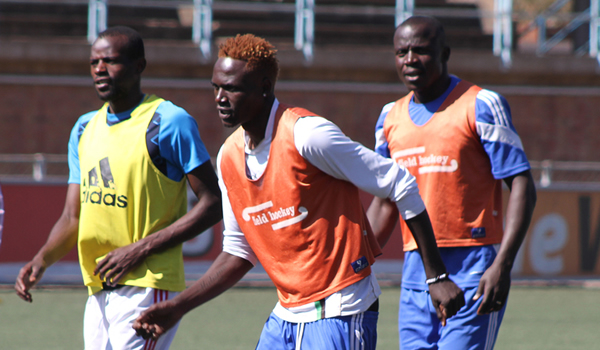
FIRE POWER . . . Dynamos’ new arrivals Richard Kawondera (left), Rodreck Mutuma (centre) and Takesure Chinyama go through their paces during a training session at Rufaro on Friday. — (Picture by Kudakwashe Hunda)
FIRE POWER . . . Dynamos’ new arrivals Richard Kawondera (left), Rodreck Mutuma (centre) and Takesure Chinyama go through their paces during a training session at Rufaro — (Picture by Kudakwashe Hunda)

By Langton Nyakwenda

RODRECK MUTUMA is dying to wear the Dynamos jersey once more. The gangly striker is in line to play against Hwange at Rufaro today if negotiations between the champions and Caps United conclude before kick-off.

FIRE POWER . . . Dynamos’ new arrivals Richard Kawondera (left), Rodreck Mutuma (centre) and Takesure Chinyama go through their paces during a training session at Rufaro on Friday. — (Picture by Kudakwashe Hunda)

Mutuma agreed personal terms with DeMbare midweek for a sensational return, but clearance from Makepekepe — where the lanky striker inked a two-year deal at the beginning of the season — had not come through by yesterday.

DeMbare are desperate for a sharp striker and were by last night also still waiting for Takesure Chinyama’s international transfer certificate from South Africa.

There are indications negotiations with Makepekepe are yielding results with the club’s acting chairman Mordecai Sachikonye saying they would not stand in Mutuma’s way.

“Look, these negotiations are tripartite; they involve the two clubs and the player himself. As Caps United we will not stand in his way.

“If he wants to rejoin Dynamos we will strike an agreement with them and the deal will be sealed,” said Sachikonye, who is standing in for on-leave Lewis Uriri.

Dynamos secretary Webster Chikengezha said the champions are pushing hard to conclude the deal.

“We have been talking to (Caps United), we will continue even till late today (yesterday) or even until (Sunday) morning before kick-off,” he said.

Mutuma says he “is dying for a chance to wear that blue jersey again”.

“This is my home, I want to play for DeMbare again,” said the striker after a Dynamos practice match with Division One side Yadah Gunners last Thursday.

Dynamos coach David “Yogi” Mandigora, who missed his mid-season target by three points, has demanded a better second half, and adding Mutuma and Chinyama to the ranks could do the trick for his misfiring forward line.

“Takesure will be a massive addition; he has both the technique and the experience. He brings that touch we were missing upfront.

“The advantage is that he has been training with the team for the past three months.

“As for Roddy, no doubt he is a good player, he will improve our game,” said Mandigora.

While doubts hang over the pair’s immediate availability, DeMbare can today call on new signing Richard Kawondera.

Reigning Northern Region Division One League Soccer Star of the Year Zivanai Mhanda’s papers were processed on Friday and the central midfielder could also make his debut.

DeMbare talisman Ronald “Rooney” Chitiyo sustained an ankle injury in the Yadah Gunners game and is unlikely to feature against Chipangano.

Dynamos have 27 points, the same haul that record-breaking Kallisto Pasuwa’s side garnered at the same stage last season as they went on to win a fourth straight PSL title.

“There are no more easy games and I think my boys did reasonably well, though I am not happy, we recorded too many draws.

“We now have to step a gear up, that is why we have made some changes to the squad, we want to add firepower upfront,” Mandigora said.

Dynamos drew 1-1 against Hwange in the reverse fixture at the Colliery.

Hwange have always struggled against Dynamos on the road, having last won in Harare on October 17 2010 when former Warriors striker Rodwell Chinyengetere scored an 85th minute winner.

However, Timothy Sibanda, one of the most experienced players in the league having debuted for Hwange in April 2004, believes playing against Dynamos is easier than playing against “the so-called small teams”.

“Our players know they can build their names when playing against Dynamos especially at Rufaro where thousands will be watching. The players are self-motivated and Dynamos should not expect a stroll in the park,” he said.

Hwange are fifth from bottom and will face DeMbare with a depleted side as they are missing five key players. The trio of Newman Sianchali, Phakamani Dube and Nkosana Siwela were involved in a road accident early last week and are recovering at home.

Isaac Masame and Tonisani Sibelo are out injured.

Today’s Fixtures

WhaWha v Dongo Sawmill (Ascot), Dynamos v Hwange (Rufaro), Triangle v Highlanders (Gibbo), How Mine v Buffaloes (Luveve) The Sunday Mail

Dzamara Prayer: Tsvangirai shares stage with Jabulani Sibanda

0
Jabulani Sibanda greets Morgan Tsvangirai

By Never Kadungure

HARARE – Opposition leader Morgan Tsvangirai on Saturday shared the stage with notorious former war veteran’s leader Jabulani Sibanda at a prayer rally for abducted journalist Itai Dzamara in Highfield, Harare.

Jabulani Sibanda greets Morgan Tsvangirai

Sibanda was expelled from Zanu PF and the war veterans association last year in November after claiming that the First Lady Grace Mugabe had carried out a “bedroom coup”. He also claimed that power from President Mugabe had been “sexually transmitted” to the First Lady who was now running the country.

Before his expulsion Sibanda had risen to prominence by leading terror campaigns against opposition activists in several elections held in the country. On Saturday he cut a humble figure as he greeted Tsvangirai and shared the stage with him in demanding Dzamara’s safe return.

Speaking at the prayer meeting, Tsvangirai said Dzamara had brought Zimbabweans together regardless of their political diversity.

“What I see here is national convergence in our diversity, we are all saying Mugabe and his government are responsible. By the same spirit it means we can work together to rescue our nation from this mess.”

“I never thought that I will share the same platform with Jabulani Sibanda, but here we are, together, speaking the same language of change. ”

Itai Dzamara's wife Sheffra  and his brother Patson seen with Itai's two children
Itai Dzamara’s wife Sheffra and his brother Patson seen with Itai’s two children

Leaders of other political parties who spoke at the prayer meeting said the government was responsible for the abduction of the journalist who was taken from a barbershop in Glen View on the 9th of March. Dzamara was bundled into a white Isuzu twincab by suspected state security agents.

Among the leaders who joined Tsvangirai in speaking against the abduction were Jabulani Sibanda, Zapu Vice President, Ms. Emilia Mukaratirwa, former Hurungwe West MP, Temba Mliswa, Transform Zimbabwe President, Jacob Ngarivhume and several civic society leaders.

Also present was Mavambo Kusile Dawn (MKD) President, Dr Simba Makoni who read the joint statement signed by the leaders of six political parties. These were Makoni himself, Tsvangirai, Didymus Mutasa of People First, Jacob Ngarivhume, Dumiso Dabengwa (ZAPU) and Tendai Biti (Secretary General of MDC Renewal).

In the statement, the leaders said the State was liable for the disappearance of Dzamara and urged the government to comply with the High Court order to periodically update the nation on its efforts. Tsvangirai’s wife later handed over groceries and cash donated by Zimbabweans to the Dzamara family.

Zim Asset a failure: Numbers do not lie

0
Tendai Kwari
Tendai Kwari

By Tendai Kwari

“In pursuit of a new trajectory of accelerated economic growth and wealth creation, my government has formulated a new plan known as the Zimbabwe Agenda for Sustainable Socio-Economic Transformation (Zim Asset): October 2013-December 2018.

Tendai Kwari
Tendai Kwari

Zim Asset was crafted to achieve sustainable development and social equity anchored on indigenization, empowerment and employment creation which will be largely propelled by the judicious exploitation of the country’s abundant human and natural resources”, signed Robert Gabriel Mugabe, President of the Republic of Zimbabwe. The Office of the President and Cabinet will monitor and evaluate the implementation, monitoring and evaluation of the Plan (Zim Asset. pg 6 -11).

Facts and figures are indicating that Zim Asset, going towards the end of its third term before 2018, is going to be a failure. Numbers do not lie. The following is a compilation of data from various sources which will reflect that Zim Asset needs a quick and acute resuscitation to have any chance of credibility.

Employment: A new labour force survey in Zimbabwe suggests that the informal sector is huge. As formal employment slides and retrenchments mounting, there is no chance of the government fulfilling its manifesto pledge of creating 2.2 million jobs. According to a Zimstat report, 94.5% of the 6.3 million defined as employed are working in the informal sector. The size of the informal sector is much greater than the widely used World Bank estimate of around 60%. The African Development Bank (AfDB, 2015) puts at more than 80.0% of workers employed in the informal sector.

However, The Economist Intelligence Unit [EIU] pointed out that it is not just the size of the informal sector that is concerning but the extent and speed of its growth. The Zimstat concurred that the vast majority of workers still in formal employment are still earning less than the officially estimated total consumption poverty line for a family; which is estimated at US$508 a month for a family of five people.

Job Creation: The ruling party Zim Asset promised to create 2.2 million jobs by 2018. The Zimstat noted that since 2011 the total workforce has been growing by some 270,000 people a year, and over the five year period (2014-2018) of Zim Asset development plan, about 1,35 million jobseekers will come into the labour market. For the target of 2.2 million jobs to be met, the government would have to find work for all the currently unemployed workers (800 000) as well as the intake of new job seekers.  As a result, unemployment and underemployment – especially in the informal sector will get much worse, and with it the socio-political climate will continue to deteriorate.

On the high rate of unemployment, Zim Asset blames the low production in key sectors. The nexus of economic stabilisation without increased production in key sectors has not helped the situation as unemployment remains high above 50%, thereby requiring Government to implement policies that must turnaround the fortunes of the key productive agricultural, mining, manufacturing and tourism sectors in the near future (Zim Asset, pg 24).

Manufacturing: Manufacturing capacity utilisation has fallen to 39.6% in 2013, according to the 2014 manufacturing sector survey published by the Confederation of Zimbabwe Industries (CZI, 8 October 2014). The main reasons for the sector’s problems, according to CZI, are weak domestic demand, working-capital constraints and completion from imports. Deteriorating infrastructure, power shortages, water shortages and inefficient transport networks has exacerbated the problems.

The AfDB concurs with CZI by pointing out that production in the manufacturing sector is expected to decline further due to import competition and the financial problems of firms. Manufacturing sector activity continues to be weighed down by outdated plants and machinery, cheap imports, the high cost of production and liquidity constraints. Capacity utilisation has shed 3.3 percentage points, from 39.6% in 2013 to 36.3% in 2014. Erratic power supplies, lack of capital, higher input costs, obsolete machinery and dilapidated infrastructure have all constrained capacity utilisation.

According to the Chief Regional Economist  of Africa Development Bank (AfDB), the manufacturing sector saw a drop in activity between 2011 and 2014: at least 4 610 companies closed down, resulting in a loss of 55 443 jobs (2015 Budget Statement). Another key determinant of success for the manufacturing sector is the issue of access to credit. Firms are struggling to get long-term and cheaper funds that are commensurate with production.

Economic Growth: Economic growth slowed to around 3% in 2014, and only a marginal improvement is expected for 2015 and 2016, with persistent de-industrialisation and a growing informal economy. According to the Chamber of Mines, the mining sector continues to operate below capacity amid a host of challenges, including depressed metal prices, lower capital and Foreign Direct Investment (FDI) flows, high cost structures, sub-optimal royalties and power shortages (Afdb. 2015).

The International Monetary Fund (IMF: April 21, 2015) in a Press Release No.15/175 stated that Zimbabwe’s economic prospects remain difficult. Growth has slowed and is expected to weaken further in 2015. On the contrary, Zim Asset (pg 27) points out that “the economy is projected to grow by an average of 7.3%. It is expected to grow by 3.4% in 2013 and 6.2% in 2014 and continue on an upward growth trajectory to 9.9%. However, Zim Asset states that “the country is projected to be a growth leader in Sub-Saharan Africa towards 2020.””

On the 17 April 2015, the minister of Finance & Economic Development Patrick Chinamasa wrote A Letter of Intent to Ms. Christine Lagarde, Managing Director – IMF. In the Letter of Intent, Memorandum of Economic and Financial Policies, and Technical Memorandum of Understanding, under the sub-topic Policies for the Remainder of the Year, Chinamasa acknowledged the declining economy of Zimbabwe.

He wrote, [I quote]:

 · The current economic situation remains difficult, but Government policies continue to focus on improving the country’s growth prospects and capacity to repay: Growth continues to slow down reflecting low business and investment confidence, scarce liquidity, and the substantial decline in international prices for our major exports. Risks are tilted to the downside. Over the medium term, we expect that the timely and full implementation of our economic blue print, ZIM ASSET, would accelerate growth substantially.

· The external position remains precarious with low levels of international reserves, a large current account deficit and growing external arrears. The large current account deficit is mainly financed by short- and long-term loans to the private sector, which has continued to access international credit and has remained current on its payments. Nevertheless, we have succeeded in reversing the trend by slightly improving reserve coverage and reducing the accumulation of external arrears.

· Inflation continues to be quite low, reflecting the depreciation of the South Africa rand and weak domestic demand.

Fiscal Policy: Fiscal developments for the ten months to October 2014 show that cumulative revenue collections remained 7% below target. Revenue shortfalls are mainly due to company closures and job losses. The AfDB further noted that Government expenditures, including loan repayments, for the ten months to October 2014 were higher than targeted due to additional employment costs and higher loan repayments. Employment costs, excluding loan repayments, amounted to 80% of total expenditures. They were higher than budgeted as public wages and salaries were increased by the civil service salary review, implemented from April 2014. The expenditure mix remains highly unsustainable, with current expenditures constituting about 90% of total expenditures.

Agriculture: The agricultural sector was allocated 4 percent of the total budget in the 2014 National Budget. The AfDB noted that the targets set in the Zimbabwe Agenda for Sustainable Socio-Economic Transformation (Zim Asset, 2013-2018) will be difficult to achieve without additional funds to invest in the agricultural sector in addition to funds provided for in the budget.

The agricultural sector, being the backbone of the economy underpinning economic growth, food security and poverty eradication, continues to experience severe systematic challenges within its entire value chain ranging from lack of agricultural financing to lack of affordable inputs (Zim Asset, pg 20).

Economic and Political governance: Starting a business in Zimbabwe is a highly costly and time-consuming exercise. According to the World Bank report, Doing Business 2015; Zimbabwe stands at 180 in the ranking of 189 economies on the ease of starting a business. It takes 90 days and costs 114.6% of income per capita. Comparatively, in South Africa it only takes 19 days to start a business and costs only 0.3% of per capita income (AfDB. 2015).

While a number of ministries and government departments are responsible for infrastructure development in the country, the high percentage of recurrent expenditure limits infrastructure development. Lack of a comprehensive institutional framework for infrastructure development is also a concern. There is no clear legislative framework to enhance the role of the private sector in the financing and management of infrastructure projects through public-private partnerships (PPPs).

Public sector management, institutions and reform: The right to private property is an important part of Zimbabwe’s Bill of Rights in the new constitution; it is guaranteed and protected. There have, however, been media reports on farm evictions targeting white-owned farms during the course of the year 2014. This negatively affects the incentive for businesses to invest in the country.

The utilities and infrastructure sector has also not been spared, as roads, civil aviation and railway networks across the country have not seen major improvements and modernisation due to shortage of capital and long term investment opportunities. In the urban areas, capacity challenges exacerbated by the corruption of erstwhile councillors also affected the efficient operation of councils resulting in poor water and sewage reticulation systems (Zim Asset, pg 23).

Constitution: Though the new constitution was adopted in May 2013, by December 2014 many pieces of legislation had not been amended accordingly. In the 2014 Freedom in the World ratings by Freedom House, the country is rated as not free, with an overall freedom rating of 5.5 (1.0=best, 7.0=worst). The 2014 ratings are a slight improvement from the 2013 rating of 6.0.

Human Development: The budget allocation to the health sector declined from 10% in 2013 to 8% in 2014. Food insecurity among households across the country remains high due to the combined effect of recurrent droughts, occasional floods and high unemployment. The 2014 rural livelihoods assessment report published by the Zimbabwe Vulnerability Assessment Committee (ZimVAC) stated that a third of Zimbabwe’s children are stunted due to malnutrition. It also indicated that 6% of the rural population – some 565 000 people – will be in desperate need of food assistance in the first quarter of 2015.

Zimbabwe’s HIV prevalence rate increased to 15.0% in 2013, from 14.3% in 2012. This increase can be attributed to the rising poverty and unemployment levels. However, Zim Asset (pg 21) has noted that the health delivery system continues to be adversely affected by sporadic outbreaks of epidemics such as typhoid and dysentery, increased maternal mortality, shortage of funds to produce essential drugs and equipment and to rehabilitate dilapidated infrastructure.

The last paragraph, on the foreword of the Zim Asset document, written just above the signature of the President of the Republic of Zimbabwe, Robert Gabriel Mugabe reads, “The Office of the  President and Cabinet will play a leading and coordinating role as overseer of the implementation process to ensure attainment of set targets of the Plan. Our guiding Vision is “Towards an Empowered Society and a Growing Economy”. ”

Meanwhile, the electorate, the long suffering masses and citizens of Zimbabwe are waiting in anticipation, especially for the promised 2.2 million jobs.

You can follow Tendai Kwari on twitter @tendaikwari

Zanu PF plots new MDC-T city siege

0

By Faith Zaba and Owen Gagare

ZANU PF is plotting to put MDC-T-led local authorities — particularly Harare and other major municipalities — under siege as part of a grand plan to reclaim control in the 2018 general elections, while also pushing to recover lost political ground from the main opposition party in urban constituencies, it has emerged.

Saviour Kasukuwere
Saviour Kasukuwere

Senior Zanu PF and government officials told the Zimbabwe Independent this week that President Robert Mugabe’s cabinet reshuffle this week, apart from dealing with the ruling party’s internal leadership succession dynamics, was a grand plan for the 2018 general elections.

The machination resolves around aligning Zanu PF national commissar Saviour Kasukuwere’s party duties with his government responsibilities as the new Local Government minister.

In the party Kasukuwere is responsible for organising the structures and mobilising support. In government, he will preside over a massive bureaucratic structure which has a national footprint as he will be in charge of rural and urban councils countrywide. He will also oversee provincial and district administrators, as well as traditional chiefs — Zanu PF’s electoral kingpins in its rural strongholds — and headmen, among others.

Provincial ministers — who are a new version of the old governors who represent Mugabe in the regions — will also work hand-in-hand with Kasukuwere leading to the 2018 polls.

“The cabinet reshuffle was meant to deal with internal party issues, but its most important aim was to come up with an elections grand plan,” a senior cabinet minister said.

“The plan resolves around Kasukuwere as our (ruling party) national commissar and now Local Government minister. He will coordinate party and government activities in preparation for the 2018 elections. The most critical thing is that he will, of course, use government infrastructure to help the party, especially in urban areas where we need to push to reclaim seats under MDC-T control. The first step is to take over the councils and use them as a base to fight to win back towns and cities in the next elections.”

Another minister said Zanu PF already had a pedestal to fight back after grabbing 16 seats previously held by MDC-T, including in the opposition party’s strongholds of Harare and Bulawayo.

“We have already partly bounced back in Harare and Bulawayo after the by-elections, but we need a strategy to increase our gains and Kasukuwere will spearhead that campaign. You will see the siege we will soon lay against MDC-T municipalities,” the minister said.

A senior Zanu PF official said battle lines between Zanu PF and the MDC-T were already drawn after Kasukuwere threw down the gauntlet to main opposition party by confronting its Harare mayor Bernard Manyenyeni and his councillors over the sensitive issue of vendors in the capital’s central business district.

Kasukuwere hit the ground running, ordering them to act against hawkers or face a fierce backlash.

In an interview with the Independent on Tuesday, Kasukuwere said it was the local authorities’ responsibility to clean up the cities and towns. He warned that if the MDC-T councils fail to act they might be booted out and possibly be replaced with ministerial commissions reminiscent of his predecessor Ignatius Chombo’s era.

“The city of Harare is under the MDC-T and its leader Morgan Tsvangirai is saying the city must decay. He says he has registered 65 000 people and the mayor says these vendors are ours politically. We can’t have people who are negligent in their work where there is willful violation of their own rules and regulations including by-laws,” Kasukuwere said.

“What we want to see are mayors enforcing their by-laws and getting the cities clean. If they are scared of Tsvangirai, I have no option but to seek an alternative structure that will not allow for the chaos to continue.

“So if the cities cannot discharge their responsibilities, I have no option but to look for an instrument that will allow me to ensure that the cities continue to discharge their functions in the best interests of their ratepayers and business. You cannot get voted in and mess up those voters.”

Kasukuwere added: “They have to sort themselves out very quickly. They are already behind time. We can’t have disorder. The city council must be run properly. If Manyenyeni and others are not up to the task, we will find a way to ensure that we have a city that runs and don’t blame it on President Mugabe when that happens.

“Councils must shape up or ship out. If the council does not clean the town, I will clean the Town House.” .

Sensing danger, Manyenyeni unleashed municipal police on Wednesday, two days after Kasukuwere’s appointment, on the vendors. However, there have been running battles between the municipal police and vendors.

Manyenyeni has now turned to Kasukuwere who told the Independent he should approach Police Commissioner-General Augustine Chihuri for help.

The operation is now in its third day, but the street pavements remain teeming with vendors suggesting the operation is doomed to fail, which is exactly what Zanu PF wants. “If they (MDC-T officials and councillors) fail to remove vendors, they are gone,” one Zanu PF official ominously warned yesterday.

Vendors in the city centre are the starkest and ubiquitous manifestation of the country’s economic problems, particularly company closures, job losses and unemployment.

If Zanu PF succeeds and manages to get rid of councils in major cities and towns, the party will have access to cheap land to embark on massive housing projects, targeting all classes. This will be part of its elections ploy, official say.

Kasukuwere said top on his list is the provision of accommodation by building secure apartment complexes like the ones in South Africa and Britain.

“A lot of people want housing. We should build the city going up to save agricultural land. Let’s create bona fide businesses and institutions that are prepared to develop the land and build houses. The land belongs to the state and citizens must get it without paying a bribe. We are going to restore dignity in this country,” he said.

Housing projects have in past helped Zanu PF win in MDC-T strongholds, for instance the party has won in two consecutive elections in Harare South because of housing cooperatives.

Zanu PF’s Tongesayi Mudambo won the Harare North seat in 2013, which includes parts of Borrowdale, after the party established housing projects in the constituency, particularly Hatcliffe.

The Zanu PF grand plan thus hinges on establishing as many housing projects as possible and dishing out affordable land to home-seekers, among other things. Expanding Harare and other cities will facilitate gerrymandering — manipulation of constituency boundaries — which is part of Zanu PF’s election rigging mechanisms.

Zanu PF has many ways of influencing elections in its favour as shown by disputed electoral outcomes since the emergence of the MDC in 1999, through the 2002 presidential vote, the 2008 presidential poll run-off and the 2013 elections.

The ruling party is also banking on the MDC-T boycotting elections. The opposition has been sending contradictory messages on this issue; sometimes saying it will boycott and then flip-flopping to say it will not.

MDC-T spokesperson Obert Gutu yesterday said: “Our position hasn’t shifted one bit. The MDC position on elections is that we will not participate in elections in the absence of the reforms that we have articulated in detail.” Zimbabwe Independent

Cabinet Reshuffle: Mugabe plans for 2018

0

By Faith Zaba and Owen Gagare

PRESIDENT Robert Mugabe’s reshuffling of cabinet this week was premised on managing Zanu PF internal dynamics while also preparing for the 2018 general elections well ahead of time, government insiders told the Zimbabwe Independent this week.

President Robert Mugabe

In his cabinet reshuffle, Mugabe removed Information minister Jonathan Moyo and deployed him to Higher Education. Oppah Muchinguri, who was at Higher Education, was shifted to Water where she replaced Saviour Kasukuwere who was posted to Local Government to take over from Ignatius Chombo appointed new Home Affairs minister.

Chombo replaced Kembo Mohadi who was redeployed as State Security minister. The ministry has been without a substantive minister since the removal of Didymus Mutasa in December last year. Vice-President Emmerson Mnangagwa was reportedly running it in the meantime.

Labour minister Prisca Mupfumira was appointed Acting Information minister.

Minister of State for Mashonaland East Provincial Affairs, Joel Biggie Matiza was removed and told to focus on his new role as Zanu PF chairperson for the same province. Matiza was replaced by former youth development minister retired Brigadier-General Ambrose Mutinhiri.

Zanu PF MP Nyasha Chikwinya was appointed Women Affairs minister which many thought would be given to First Lady Grace Mugabe.

Vice-President Phelekezela Mphoko, who is also in charge of National Healing responsibilities, was also assigned to take charge of policy co-ordination and implementation in the Office of the President and Cabinet.

Government insiders say Mugabe’s cabinet changes were politically motivated; calculated to achieve succession and electoral objectives not to ensure efficiency and delivery.

Internally, Mugabe caved in to pressure from Mnangagwa and his supporters to remove Moyo whom they wanted moved to Education last December, saying he was using his position to build his profile while attacking and undermining his real or perceived rivals. The Mnangagwa camp complained Moyo was using the state media to undermine rivals, while propping himself up.

Insiders say Mnangagwa gained in that regard as he had his ally Mupfumira deployed to replace Moyo albeit on a temporary basis.

Information is critical in Zanu PF succession wars. The shifting of Chombo to Home Affairs and Mohadi to Security also left Mnangagwa with key allies in critical ministries. Even though Chombo and Mohadi are not in his inner circle, they are reportedly in his camp. Security ministries are key in Mugabe’s succession battle as they could be used to protect allies or hound rivals.

However, Mnangagwa did not get all he wanted, government insiders say.

Mugabe, for example, did not re-assign a person like his close ally War Veterans minister Chris Mutsvangwa whom he would have preferred as new Information minister.

Besides, Mnangagwa’s ally Matiza was removed and replaced by Mutinhiri, a Mujuru associate. Mnangagwa reportedly wanted his wife Auxillia appointed Women Affairs minister if Grace was not going to be deployed there. However, Mugabe appointed Chikwinya, another Mujuru ally.

Insiders say in his reshuffle Mugabe not only wanted to reward Mnangagwa and his allies, but also to create a balance in his team to avoid making one faction too powerful to a point of being a threat to him. By appointing Kasukuwere Local Government minister, which is more powerful than the Water ministry where he was, Mugabe was trying to create a counterweight against Mnangagwa’s faction, while addressing electoral issues.

With an eye on the 2018 general elections, Mugabe appointed Mnangagwa’s rival Kasukuwere to a ministry which is important in the electoral scheme of things as it gives the minister control over municipalities, provincial and district, administrators chiefs and other traditional leaders such as headmen critical in mobilising voters during campaigns.

Officials said Kasukuwere was appointed to the ministry to aid his work as political commissar ahead of the 2018 elections. He is expected to use his influence as Local Government minister and commissar to strengthen the party ahead of elections.

Analysts say Zanu PF has long collapsed into state structures as a party and now relies on them to divert and abuse state resources for political agendas, especially during elections.

Alex Magaisa, a constitutional expert and academic based at the University of Kent, UK, said: “All this means the Local Government minister is in fact a mini-president, being in charge of the local government structures in the entire country.

“It seems clear that Kasukuwere has been given this important portfolio to dovetail neatly with his role as political commissar of Zanu PF, all of this with an eye towards the 2018 elections.

“Now with one man wearing both hats as political commissar and the Local Government minister, this will essentially blur the distinction between party and the state.”

Magaisa added that: “This is about Zanu PF consolidating its power and control across the country, merging the state structures and party structures for maximum effectiveness.

This means when the opposition talks of electoral reforms they must realise that in fact President Mugabe and Zanu PF are consolidating the structures that give them an advantage and no reforms of the Electoral Act will affect these structures.”

A senior politburo official told the Independent that Zanu PF was actually now preparing for the 2018 elections.

“We have to win in 2018. We are now looking ahead. Kasukuwere as national commissar, working with the traditional leadership, provincial ministers and councils can have a big influence on the political scene,” the official said.

By giving Mphoko more powers, Mugabe also ensured that he would act as a bulwark against Mnangagwa ascendancy and thwart threats to his position. Mphoko is increasingly becoming a rival to Mnangagwa as he quickly learns the ropes in the party and government.

Only recently, he publicly rejected claims he was a second vice-president junior to Mnangagwa, saying they were equal. Mugabe reportedly also backed Mphoko on this during a recent Youth League national assembly meeting. Zimbabwe Independent