Home Blog Page 5377

Judge blasts magistrates for flooding superior courts with unwarranted cases

0

By Mashudu Netsianda

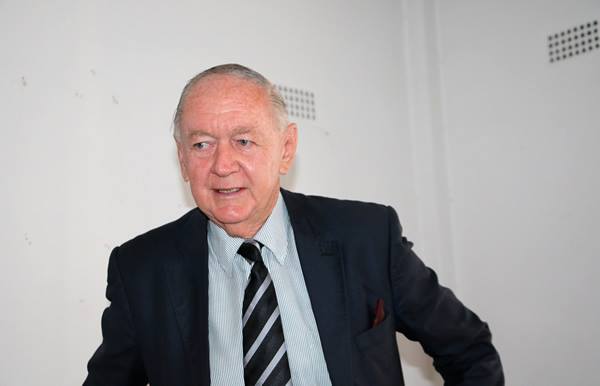
A high court judge has blasted magistrates and prosecutors for continuously flooding superior courts with unwarranted cases coming on appeal in defiance of the High Court’s guidelines.
High Court dethrones bishop

Bulawayo High Court judge Justice Nicholas Mathonsi made the remarks following an application for bail pending appeal by Clive Ndlovu of Esigodini.

Esigodini magistrate Mr Lungile Ncube sentenced Ndlovu to an effective 12 months in jail for assaulting a local businessman he suspected of having an affair with his wife.

Justice Mathonsi’s anger was directed at Mr Ncube who settled for a term of imprisonment when Ndlovu actually met the threshold for community service.

“Owing to this intransigence on the part of magistrates who continue to studiously ignore the guidelines given by this court in respect of community service, and a prosecution that will oppose anything for the sake of it, this court is inundated, as it is now, with so many cases coming on appeal and as opposed bail applications which should not be opposed at all,” said the judge.

“Both the prosecution and magistrates appear impervious to the pronouncements of superior courts in this jurisdiction relating to considerations of community service as an option where the court has, in sentencing an accused person, settled for a term of imprisonment which is less than two years and the accused person meets the threshold for community service.”

Justice Mathonsi said decisions by superior courts were binding on all lower courts.

“It is time to remind them (magistrates) that this court, being a superior court, is not only a court of record but its decisions are binding on all inferior courts. They are binding on all the magistrates who are bent on ignoring them,” he said.

Ndlovu was granted a $200 bail pending appeal after noting an appeal at the Bulawayo High Court citing the State as the respondent.

He was ordered to report once a week at Esigodini Police Station and to reside at his given address until the matter is finalised as part of the bail conditions Justice Mathonsi ruled that there was misdirection on sentence.

He said magistrate did not make an inquiry into the suitability of community service for Ndlovu.

“The trial court did not conduct an inquiry into the suitability of community service for the accused person, which was misdirection. In addition, the trial did not consider the mitigating factors set out by the appellant,” he said.

Justice Mathonsi said the magistrate’s finding that the injuries sustained by the complainant were life threatening, was not supported by medical evidence.

The judge said Ndlovu’s appeal has prospects of success.

Ndlovu, through his lawyer, Mr Siphosenkosi Nkomo of Mathonsi Ncube Law Chambers, argued that the sentence imposed on him was excessive and induced a sense of shock considering the circumstances of the case.

Mr Nkomo said although his client qualified for community service, the magistrate did not bother to consider that option.

The lawyer argued that if given bail, there was no likelihood that Ndlovu would abscond.

The State, through Mr Trust Muduma, opposed the application, arguing that there were no prospects of success against conviction.

The court heard that Ndlovu assaulted the complainant at Habane Township in Esigodini on suspicion that he was having an affair with his wife because of the manner he called her.

He confronted the businessman at a bar in Esigodini leading to an altercation.

Ndlovu struck the complainant on the forehead with a brick and inflicted a deep cut. Last week the Deputy Chief Justice Luke Malaba blasted his sub-ordinates at the Bulawayo High Court for “poorly” handling matters involving of rival camps fighting over the control of the Apostolic Faith Mission of Africa (AFMA), saying they exuded a lack of understanding of the law.

The judges who handled the controversial AFMA matters include Justices Nokuthula Moyo, Martin Makonese, Maxwell Takuva and Lawrence Kamocha. Chronicle

Prominent Bulawayo businessman jailed for fraud

0

By Mashudu Netsianda

A prominent Bulawayo businessman who masqueraded as a lawyer and sold his house worth $60 000 to two people who paid for the property in full, has been sentenced to four years in jail.

nesbert-chikaka-fraud-16-june
Nesbert Chikaka (59), director of Nisma Engineering in Thorngrove industrial area and resides in Hillside suburb, was convicted of fraud by Bulawayo magistrate Ms Charity Maphosa.

The magistrate suspended one year for five years on condition that Chikaka does not within that period commit a similar crime.

Chikaka will serve an effective one year after Ms Maphosa further suspended two years on condition that he restitutes $60 000 to the complainant on or before March 6 next year.

The other complainant did not pursue the case in court.

In his defence, Chikaka denied any misrepresentation, arguing that he asked for a loan from the complainant, Ms Vimbai Manemo who then later tried to sell his house without informing him.

Chikaka said he was arrested on the strength of a flawed agreement of sale he made with Ms Manemo.

“I sold the house to Lindiwe Ndebele on December 2, 2014, for $60 000 because I wanted to raise funds for a certain business that I wanted to venture into. Ndebele paid a deposit of $30 000, which was not enough and I then approached Vimbai Manemo who requested title deeds for my house as security in order for her to advance me a loan of $20 000 and I gave her,” he said.

Chikaka said that when Ms Ndebele paid the balance, he contacted Ms Manemo intending to pay back her money, but she refused and reported the matter to police, claiming she had been duped.

Prosecuting, Mr Alfred Makonese said sometime in May 2015, Chikaka approached Ms Manemo and told her that she was selling a house located at Southwold suburb.

The complainant got interested and offered to buy the house which Chikaka was selling for $60 000.

Ms Manemo made an initial payment of $40 000 and she was given the title deeds. The two agreed that an agreement of sale would be drafted once the complainant paid the outstanding balance of $20 000. “During the same month, the complainant approached the accused person after she had raised the remaining $20 000,” said Mr Makonese.

The court heard that Chikaka and Ms Manemo proceeded to the complainant’s lawyers where an agreement of sale was drafted and the complainant paid the balance.

During the process of transferring the property to Ms Manemo it was discovered that the house had already been sold to Ms Ndebele for the same amount on December 2 last year, and an agreement of sale was drawn to that effect.

“Before Ndebele could effect a change of ownership, Chikaka then again sold the house to Ms Manemo for $60 000 and it was also paid in full resulting in an agreement of sale being done,” said Mr Makonese.

Chikaka was found in possession of the two agreements of sale as well as the proof of payment from both complainants. A report was made to police leading to his arrest. Chronicle

Matt Le Tissier ‘given naked massage’ by coach Bob Higgins

0

Former England and Southampton footballer Matt Le Tissier has said he was given a “naked massage” by a coach at the centre of sex abuse allegations.

Former England and Southampton footballer Matt Le Tissier

Bob Higgins, a former youth officer at the club, is accused of historical sexual abuse against young players.

Mr Le Tissier said he was not abused but the incident was “very wrong”.

He added allegations of sexual abuse in football “have not come as a big surprise”. Mr Higgins denies wrongdoing.

Describing the incident, Mr Le Tissier told BBC South:

“Everyone was kind of naked and getting thrown on this bed… and a very quick massage – it was uncomfortable.. it’s very, very wrong for a start – looking back on it, you think it’s wrong but as a young boy you thought ‘is this normal’?

“It’s pretty disgusting. What went on is not normal behaviour. When you hear the stories of naked soapy massages, hairy bum competitions… you look back at it now and think ‘hang on, what was going on?’.

“Obviously boys talk at that age, they take the Mickey, it kind of gets covered up as a bit of banter at that stage. But as you grow into an adult, you look at it and think ‘that’s not right’.”

Mr Le Tissier, who joined Southampton in 1985 aged 16, added: “I would like to think the bravery of the boys that have come out will encourage everyone else who experienced those kind of things.”

The BBC understands Mr Higgins left Southampton after concerns were raised about his behaviour and a TV documentary then broadcast the testimony of eight alleged victims.

Mr Higgins has denied all allegations and was acquitted of sexual abuse charges in 1992.

The FA has launched an internal review into historical abuse allegations.

In a statement, it said: “The FA has today published the full terms of reference for the review into issues arising from the recent press reports relating to allegations of non-recent child sexual abuse in football.”

The review covers what was known and what actions were taken by the FA from the 1970s. The FA said the precise number of players, alleged abusers and clubs it would investigate was as yet unknown.

It has appointed Clive Sheldon QC to lead the review, replacing Kate Gallafent QC, who was originally appointed.

Southampton FC has said it is working with police and investigating how it has handled these issues in the past.

The BBC has made several attempts to speak to Mr Higgins without success. BBC News

Fake U.S. embassy shut down in Ghana after issuing visas for 10 years

0

By Will Kirby | Express.co.uk |

Authorities in Ghana have busted a fake US embassy that had issued illegally obtained visas for a decade, according to the US State Department.

The fake Ghanian embassy, which operated for a decade, had a picture of President Obama on the wall

The sham consulate was run by criminal network from a small rundown building in Accra, the country’s capital.

The operation was shut down over the summer but US authorities did not release a statement until Friday.

The statement said: “It was not operated by the United States government, but by figures from both Ghanaian and Turkish organised crime rings and a Ghanaian attorney practicing immigration and criminal law.

“The criminals running the operation were able to pay off corrupt officials to look the other way, as well as obtain legitimate blank documents to be doctored.”

Authorities carrying out the raids found legitimate US visas and false identification documents – including birth certificates – for sale at £4,700 ($6,000).

There were also Indian, South African and Schengen zone visas – both authentic and counterfeit – as well as 150 passports from 10 different countries.

A fake Dutch embassy was also uncovered during the operation, employing Turkish citizens posing as consular officers although authorities in the Netherlands have not yet commented on the allegations.

The demand for Western visas in Africa makes the visa market a big target for organised crime, with gangs often use bribery to get round the law.

The actual US embassy in Ghana is house in a large, well protected building

Authorities are unsure how many people have entered the US and other Western countries using the documents obtained from fake embassies.

The actual US embassy in Ghana is housed in an enormous building in one of the most exclusive areas of Accra and their operating methods are a far cry from the suspicious activities of the sham embassy.

According to the US State Department, the fake consulate “did not accept walk-in visa appointments, instead, they drove to the most remote parts of West Africa to find customers.

“They would shuttle the customers to Accra, and rent them a room at a hotel nearby.

“The Ghanaian organised crime ring would shuttle the victims to and from the fake embassies.”

Ex-wife drags Sulu to court

0
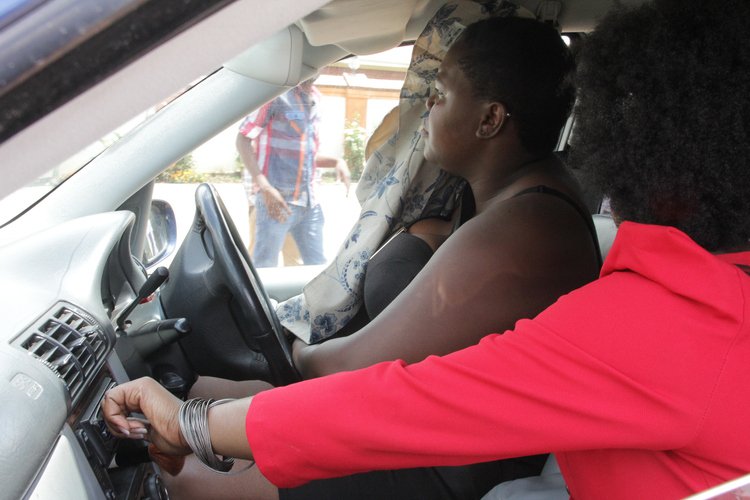
Marigold and a friend in their car at the wedding venue entrance

By Fungai Jachi

Suluman Chimbetu’s ex-wife, Marigold Mutemasango yesterday dragged the Dendera musician to the civil court over maintenance of their two minor children.

Marigold and a friend in their car at the wedding venue entrance

In her submissions, through her lawyer Melusi Moyo, Marigold said Sulu is failing or neglecting to take care of the two children despite having a legal; obligation to do so.

“The respondent (Sulu) has offered US$100 for the two kids to cater for accommodation, food, school fees, and medical expenses amongst other things.

“He has not been candid with the court to disclose his income but still expects the court to believe him when he says US$100 is sufficient,” submitted Marigold.

Sulumani Chimbetu and his new wife, Linda Samuriwo show their marriage certificate.

She further said Sulu says he has a family but refuses to state how much he spends on them.

“His new wife is employed and he is not the only one who takes care of his family but is trying to imply that he is just to run away from his obligation to maintain the two minor children in question.”

Marigold also argued that Sulu does not have a legal obligation to take care of his extended family and his children have a right to enjoy the standards of living commensurate to their father’s income.

“The applicant is staying with her father and the two minors and respondent must be able to provide for the children’s accommodation since he is a well-known musician who has the means to provide them with decent accommodation.

“There are school fees arrears at the children’s school which is a clear indication that he has not been taking care of them,” submitted Marigold.

Sulumani Chimbetu and wife Linda

She also claimed that Sulu was withholding his financial records from her.

“In 2012 the courts once granted an order for US$1000 maintenance for both kids at a time when they were not in school and their needs were not as compelling as they are today but today he has the guts to offer US$100. This offer is not being made in good faith,” she said.

Marigold said Sulu must find her and the two minors decent accommodation in medium to low density areas to match where he stays with his other children.

In her initial founding affidavit, Marigold claimed US$3200 for both children before downsizing the amount to US$1500 in her oral submissions.

However, Suluman, through his lawyer, Violet Dzingirai, submitted that the US$100 will be enough for the minors.

Added to the amount, he offered to settle the school fees arrears, pay the school fees of US$300 per term for both children, put them on his medical aid, buy them clothes, groceries and toiletries among other things.

He submitted that his wife is paying for his accommodation as she is working as a data capturer.

Sulu said the 2012 order which Marigold referred to was appealed against when he asked for a downward variation from US$1000 to US$170 for both children and the order was granted in 2013.

He submitted that Marigold then approached the courts to withdraw the order of US$170 citing that it was not enough to take care of the children and proposed an out of court settlement in which they agreed that Sulu would assist her in any way either in cash or otherwise to avoid a situation that would see them in court again.

“The respondent survives on music business and contrary to popular belief, his music business is not flourishing and he is struggling to make ends meet,” submitted Sulu. H Metro

Macheso ex-wife: Tafadzwa off the hook in assault case

0
Tafadzwa Mapako and her legal team walk out of the Civil Magistrates Court. PIC: Angela Jimu

By Bornwise Mtonzi

Tafadzwa Mapako who was standing accused of assault walked out of court a happy woman after her assault charges were dropped.

Tafadzwa Mapako and her legal team walk out of the Civil Magistrates Court. PIC: Angela Jimu

Tafadzwa was facing charges of assaulting a man at the Castle Biggest Braai Festival held last month with an empty beer bottle after an altercation over a chair.

Mapako, 33, was said to have attacked one Talent Munyanyi after accusing his friend of taking a chair she had been sitting on.

The complainant told the court that she came to him and apologised that is why he decided to drop the charges.

The charges were dropped when she appeared before Harare Magistrate Victoria Mashamba.

Allegations she was facing are that she had an alteration with one Talent whom she approached at the same function after one of his friends took a chair she was sitting on.

Talent who was in the company of his friends however denied ever taking the chair and this did not go well with Tafadzwa.

It is said she took some of the food that Talent and his friends were eating and attempted to throw it away.

The court heard that Talent managed to hold the food away from Mapako and they asked her why she was behaving in such a manner.

Mapako is alleged to have taken an empty beer bottle and hit Talent once just below his left eye. Lovemore Siyamunda represented the State. H Metro

Wicknell speaks on prophets

0
Flamboyant businessman Wicknell Chivayo

Businessman Wicknell Chivayo has added his voice on antics by modern day prophets.

Flamboyant businessman Wicknell Chivayo

Chivayo was speaking on Star FM amid reports that local church leader Paul Sanyangore made his congregants drink sewage.

The businessman suggested the prophets are giving him a free service as he finds his car cleaned without going to a carwash.

“Vamwe vanopiwa tumachira, hanzi ukaona mota yaunoda unoipukuta. When I park my Mercedes ndowana ichipenya apa ndisina kuenda nayo ku carwash yapukutwa,” he said.

How do we get out of this hole?

0
Eddie Cross
Eddie Cross

By Eddie Cross

I cannot believe it’s the end of the year – where did 2016 go? One thing I know for certain and that is if nothing changes here, we are in a hole so deep it is beginning to feel as if there is no way out.

Eddie Cross
Eddie Cross

By my calculations the Government in Zimbabwe has now converted all surplus cash in the formal sector of the economy into some form of State debt – treasury bills, an overdraft at the Reserve Bank and a programme to expropriate the hard currency earnings of our exporters at $200 million a month.

The delinquency of this regime has no limits, not satisfied with the theft of State revenues at over $2 billion a year through rampant and in certain cases carefully managed corruption, they have expropriated the hard earned cash savings of the entire country for the second time – last time it was between 2000 and 2008. The mechanism used then was hyper inflation caused by simply printing money in vast quantities.

This time they have run a budget deficit of over 20 per cent for three and a half years and in the process the State, through the Ministry of Finance and the Reserve Bank have borrowed all the formal sector savings from the GNU era.

The most visible sign of this are the long queues at banks when people try to get their money out of the banks. I have news for them – their money has gone and all that the banks can give them is a small trickle of hard currency supplied by the Reserve Bank from hard currency expropriated from exporters.

This has got to the point where it is becoming more and more difficult to get money out of the banks and finally the regime has resorted to printing a new local currency to try and fill the gap. The commercial Banks support this measure because it means that they can sell Bond Notes at par with the US dollars and thereby reduce their US dollar obligations to their clients.

The Reserve Bank is delighted because they can now sell notes in US dollars after printing them at a cost that is a few cents per dollar note. Those who owe others money are also delighted as they can see themselves being able to buy the new currency at a significant discount and then settle their US dollar credits at a fraction of their real value.

But on the down side, anyone who works in the formal sector for a salary and is paid through the Bank will now have to draw his/her money out of the Bank in a currency that will depreciate rapidly. This means that by these means the regime will achieve what they cannot do through the front door – a sharp reduction in the cost of employment.

The new currency is selling on local markets at 2:1 against the US dollar and this can only depreciate as time goes by. In the short term they may be able to get full value from traders in goods, but not for long. Market prices are already rising and real inflation is again a possibility as the new currency replaces the hard currencies in circulation.

Some major traders are reporting brisk business – people are buying bond notes and using them to buy goods at the face value of the new notes. They are speculating that in a month or so, prices will have risen and goods will be in short supply. I cannot see any reason why they should be wrong. All government departments will now be paid in the new currency and local authorities will have to accept the new notes at par with the US dollar.

In essence what we have here is a State sponsored and administered Pyramid scheme and every Banker should be watching their USD obligations building up in their accounts with alarm. They have no chance of ever meeting their obligations to their clients until the State starts meeting its obligations to buy back treasury bills with real dollars plus interest and to wipe out its overdraft at the Reserve Bank in the same way. On its own there is absolutely no chance of this being possible any time soon, some might say, ever.

Is there a solution to these problems, is the question everyone is asking. The answer is yes, but it will take surgery and a long period of recuperation. Let’s look at what is required.

Firstly, although our problems are largely economic, the solution begins with required political changes. For a start, the 92 year old geriatric in charge of our affairs has to step down – there is no way that any solution can be made to work while he is in his present position. Mr. Mugabe has to go – and as soon as possible.

Secondly, we need a peaceful, orderly and legal transfer of power to a successor who can steady the ship and chart a new course forward. I think everyone knows what that might mean.

Thirdly, the new Government must move swiftly to calm local markets and reassure investors and the international Community. The latter will not be satisfied with rhetoric – they will want fundamental commitments to change in both political and economic policies against a strict time table.

Fourthly, the new regime must deliver what it promised and take the country to the next elections which, this time, must be held under free and fair conditions compliant to regional standards as expressed in the SADC protocols.

Fifthly, an election must be held that meets every ones expectations and allows a new democratically elected government to come to power.

That is the political road map and this could take 6 to 18 months to implement. While this is going on the Country must make the necessary sacrifices to restore economic stability – that starts with restoring fiscal discipline and eliminating the budget deficit. Providing this is achieved and the political road map is delivered on schedule to every ones satisfaction, then a stabilisation and growth plan can be implemented with IMF/World Bank help.

This programme could be delivered in two stages – the first of which would be implemented during the transition to a democratic election. This would involve some emergency stabilisation funding and humanitarian relief to help restore stability and to deal with the liquidity problem and meet basic human needs.

This would require that the Government do its part – reduce expenditure and wipe out the budget deficit and remove obstacles to growth – including scrapping indigenization requirements and restoring the rule of law and property rights.

By the time we came to the elections, the above economic programme would have started to deliver growth and some stability. The time would also be used to negotiate a major debt programme for the post election phase. By my estimates the debt programme would have to take care of up to US$30 billion in government debt.

This should be possible and as soon as this is put in place a programme to get the economy, growing at double digit rates for the next 20 years. This will rapidly enable the country to meet its international and local obligations with low inflation growth that will generate millions of new jobs and gradually formalize the economy.

I cannot see any other way out of this hole we are in and the main goal in the short term must be to stop the people in charge from digging us in any deeper.

Let’s just pray that that does not take real violence.

Eddie Cross
Bulawayo, 2nd December 2016

Pablo Escobar’s hired killer ‘robbed in Colombia’

0

A man who worked as a hired killer for Colombia’s late drug lord Pablo Escobar says he was robbed in Colombia’s second-largest city, Medellin.

jhon-jairoJhon Jairo Velasquez, better known as Popeye, said two men on motorbikes pulled up alongside him as he was driving in his car.

They pointed guns at him and robbed him of his luxury brand glasses, two gold bracelets and a mobile phone, he said.

Velasquez was released in 2014 after spending 22 years in prison for murder.

‘I did not resist’

Velasquez confessed to killing 300 people and also claimed a hand in up to 3,000 killings in the 1980s and 1990s, when he led a team of hired killers working for the Medellin drugs cartel.

Since his release, he has been living in Medellin and regularly broadcasts messages on his own YouTube channel commenting on everything from Colombian politics to the escape and recapture of Mexican drug lord Joaquin “El Chapo” Guzman.

Velasquez said it was the second time he had been targeted in such a way but police said he had not reported the incidents.

He said the same had happened to him a few months back but at that time he had managed to knock one of the robbers over with his car.

Velasquez said that this time he did not put up any resistance because his lawyer had advised him to make sure he stayed within the law.

‘Afraid of Popeye’

He criticised Medellin mayor Federico Gutierrez for what he said was a lack of security in the city.

“The mayor is an idiot, this city is totally in the hands of these motorcyclists,” he said.

In response, Mayor Gutierrez tweeted [in Spanish]: “It’s disconcerting that someone who caused so much damage should now lecture me about morality. We are fighting the illegality he helped create.”

Residents of Medellin also took to Twitter to marvel at the irony of the man who once caused terror in the city falling victim to crime himself.

One woman suggested starting a collection for the “poor victim” so he could buy a new pair of Cartier glasses while another joked that she hoped he would get psychological help to overcome the shock.

But many others also said that the robbers must have been extremely brazen to target one of the most feared men in the country and wondered what that meant for the security of ordinary citizens. BBC News

LRA commander Dominic Ongwen pleads not guilty to war crimes at ICC

0

The first former child soldier to appear at the International Criminal Court has pleaded not guilty and told judges he was a victim too.

dominic-ongwenLords Resistance Army (LRA) commander Dominic Ongwen said the LRA was responsible and he had also suffered from the atrocities.

Ongwen, now in his early 40s, was a boy when he was abducted by the notoriously ruthless rebel cult.

He faces 70 counts of war crimes and crimes against humanity in Uganda.

Mr Ongwen is accused of leading attacks on four camps for internally displaced people (IDPs) in northern Uganda, murdering and torturing civilians, and forcing women into marriage and children to take part in the fighting.

But he told the court the charges should be brought against the LRA and its leader Joseph Kony, not him.

“It is the LRA who abducted people in northern Uganda, killed people in northern Uganda and committed atrocities in northern Uganda. I’m one of the people against whom the LRA committed atrocities. It is not me who is the LRA,” he said.

When asked if he wanted to plead guilty, he said the trial against him “amounts to my going back into the bush for a second time” and asked the judges if they disputed that his life had been ruined.

However ICC prosecutor Fatou Bensouda said Mr Ongwen was a “murderer and a rapist” who rose to become one of the most senior commanders in the LRA as a result of his “unwavering loyalty and ferocity”.

He was in charge of one of the LRA’s four brigades and most of his soldiers were children, she said.

Mr Ongwen played a “prominent role” in the attacks on IDP camps, she said. Residents were murdered, their homes burned and survivors forced to carry off looted provisions. Those too weak to do this were killed and nursing mothers whose babies slowed them down saw them thrown into the bush and left to die.

In one incident, Ms Bensouda said, Mr Ongwen ordered his child soldiers to kill an old man by biting him and then stoning him to death.

Mr Ongwen also played a “central role” in the LRA’s ongoing abduction of children as young as six.

Boys were made to carry out torture and murder to convince them they could never be accepted back into civilian society, she said.

Girls meanwhile were “held for years in sexual and domestic slavery and subjected to repeated rape”, she said. The defendant himself “benefited most from their misery” and had sex with them “from a very young age”.

Ms Bensouda said Mr Ongwen’s own experience was not a justification for victimising others.

“It cannot begin to amount to a defence or a reason not to charge him for the choice that he made,” she said.

Mr Ongwen was captured in the Central African Republic in January 2015, after being sought by US and African forces since 2011.

He is said to be the deputy to LRA commander Joseph Kony, who is still on the run.

Uganda agreed that Mr Ongwen should be tried by the ICC despite being a fierce critic of the court.

The LRA rebellion began more than two decades ago in northern Uganda and its estimated 200-500 fighters – many of them child soldiers – have since terrorised large swathes of central Africa. More than 100,000 people are thought to have been killed.

Many Ugandans are waiting to see if, at least in this situation, justice will be done.

The ICC outreach office and the International Centre for Transitional Justice (ICTJ) have set up several live-streaming points – in Kampala and in the north for the next two days – to bring the court proceedings to the people directly affected.

Several of these screens are in Lukodi, Pajule and Odek villages, which formerly hosted camps for the internally displaced and are the scenes of many of the crimes Mr Ongwen is accused of.

There is also a live-viewing point in the defendant’s own home village of Coorom in Amuru district.

In northern Uganda, the proceedings are being translated into local language so ordinary people get a sense of what is happening.

Though many are interested in seeing what happens in the Hague, some in northern Uganda think justice is only one part of the process. Many, especially those who suffered years of displacement, are focusing on rebuilding their lives.

Some among those directly affected had wanted Dominic Ongwen to be tried at home. BBC News