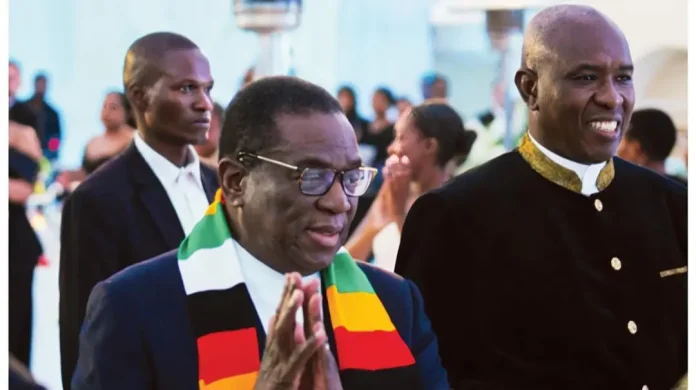
Highlanders team manager and former Soccer Star of the Year Zenzo Moyo (right) - Picture via Facebook - Marshall Gore
Highlanders team manager and former Soccer Star of the Year Zenzo Moyo has urged supporters to remain patient, insisting the club’s current technical team is among the strongest ever assembled at Bosso.
The Bulawayo giants have quietly built momentum after an inconsistent start to the 2026 Castle Lager Premier Soccer League campaign, collecting 11 points from their last five matches and extending their unbeaten run to six games.
Despite sitting seventh on the table, Highlanders are only six points behind leaders Hardrock and have suffered just one defeat in 15 league matches.
Moyo, who won the Soccer Star of the Year award in 2000, believes the experience within the coaching department will ultimately pay dividends as the club marks its centenary celebrations.
Highlanders FC head coach Benjani Mwaruwari is officially unveiled by the club in January 2026 (Picture via X – @wicknellchivayo)
Led by former Zimbabwe captain Benjani Mwaruwari, the Highlanders technical team also includes former Bosso stars Bekithemba Ndlovu, Mkokheli Dube and veteran goalkeeper Ariel Sibanda.
Speaking to Zimpapers Sports Hub, Moyo said supporters should focus on the team’s resilience rather than the number of drawn matches.
“Our fans have to be patient. Over the years, I think this is one of the best technical teams that our club has assembled when we talk of experience,” said Moyo.
Highlanders recorded a 2-1 victory over FC Hunters at Barbourfields Stadium on Sunday, securing only their fourth win of the season but maintaining their impressive record of just one loss.
The club has drawn 10 matches so far, the highest number in the league, a statistic that has frustrated some supporters.
However, Moyo believes the team’s low defeat count is a sign of progress rather than concern.
“At the end of the day, people must not judge us by the number of draws that we have picked up. Remember, we have lost just once this season,” he said.
The former striker noted that Highlanders are already performing better than they were at the same stage last season, when they had suffered three defeats.
“We know what we are doing. There is no need for them to press the panic button. We are not doing badly. People should look at the draws; we have lost once and it shows we are building something.
“The technical team is cooking something special as we celebrate 100 years. We are calling for patience and more patience.”
Moyo also defended the credentials of the coaching staff, highlighting their success both as players and coaches.
“Beke has won three or four championships, Mkokheli has five championships, I have won three. Ariel was one of the longest-serving players, while coach Mwaruwari played at the highest level. We are talking about people who know what they are doing; it’s not like we were picked from the streets.”
Highlanders are among the league’s form teams alongside Scottland and Herentals, with all three clubs collecting 11 points from their last five matches.
Traditional rivals CAPS United have managed six points during the same period, while Dynamos have collected seven.
At the other end of the table, Agama and Manica Diamonds have shown signs of improvement. Agama have climbed out of the relegation zone after collecting seven points from their last five matches, while Manica Diamonds have earned nine.
TelOne and Triangle United have struggled most in recent weeks, each managing just two points from a possible 15.
Mai TT with former friend turned rival Patricia Jack (Pictures via Social Media)
Prominent Zimbabwean comedienne and social media personality Mai TT is one of two complainants in a new cyberbullying and harassment case against social influencer Patricia Jack, who was remanded in custody after appearing before the Harare Magistrates’ Court on Wednesday.
Prosecutors allege the 35-year-old published offensive and defamatory content targeting Mai TT and another woman across Facebook, TikTok and WhatsApp, causing emotional distress and reputational harm.
Jack appeared before the Harare Magistrates’ Court and was remanded in custody pending bail proceedings scheduled for Thursday.
According to the State, Jack allegedly used various social media platforms to post messages and videos targeting the complainants in separate incidents.
In one case, prosecutors allege that she published content on Facebook and TikTok accusing popular comedienne and social media personality Mai TT of being involved in prostitution and theft.
The State further alleges that Jack claimed to have previously been romantically involved with Mai TT’s husband before making derogatory comments about her children.
A second complainant alleges that Jack circulated WhatsApp messages and social media posts accusing her of engaging in extramarital relationships. Prosecutors also claim that Jack falsely alleged the woman was HIV positive and receiving antiretroviral treatment.
The State contends that the publications were intended to intimidate, harass, bully and cause emotional harm to the complainants.
Jack has been charged under provisions of Zimbabwe’s Cyber and Data Protection Act relating to cyberbullying and harassment.
The latest allegations come only weeks after Jack was convicted of disorderly conduct following an incident at Highlands Police Station in Harare.
In April, she admitted to creating a disturbance at the station after arriving there following the arrest of a friend.
Prosecutors said she shouted at police officers, used abusive language and repeatedly invoked the names of senior government officials while accusing officers of corruption.
The court heard that she threatened to use her alleged connections to have officers dismissed and accused police at the station of accepting bribes, conduct which prosecutors said disrupted operations and brought the station into disrepute.
Appearing before magistrate Tapiwa Kuhudzai, Jack pleaded guilty to the disorderly conduct charge and was fined US$150 or, in default, 30 days in prison.
While condemning her behaviour, magistrate Kuhudzai noted that she was a first-time offender and a single mother when imposing sentence.
During mitigation, Jack told the court she was divorced, cared for an 11-year-old child and earned a living as a social influencer. She apologised for her conduct and assured the court she would not commit a similar offence again.
The State was represented in that matter by prosecutor Takudzwa Mutyavaviri, while the complainant was represented by Emma Habeza of ZRP Highlands.
With her latest court appearance, Jack has once again found herself before the Harare Magistrates’ Court, where she now faces a fresh legal battle over her online activities.
Zimbabwe could remain under Zanu-PF presidential control until 2044 if the proposed Constitution of Zimbabwe Amendment Bill No. 3 (CAB 3) is passed in its current form, political commentators and analysts have warned amid growing national debate over the controversial constitutional changes.
The Bill, which is expected to be introduced in Parliament this week, proposes far-reaching amendments to Zimbabwe’s Constitution, including extending presidential and parliamentary terms from five years to seven years, postponing the 2028 harmonised elections to 2030, and changing the method of electing the President from a direct popular vote to a parliamentary process.
If approved, President Emmerson Mnangagwa’s current second and final term would be extended by two years from 2028 to 2030.
Journalist Hopewell Chin’ono argued that the proposed constitutional changes could effectively guarantee Zanu-PF control of the presidency for nearly two decades beyond 2028.
“The mathematics of the proposal are straightforward, if the bill passes this year, ZANUPF will be assured of the presidency for the next 18 years without fear of any meaningful opposition,” Chin’ono said.
He added: “If President Mnangagwa receives the additional two years, his tenure would extend to 2030. Under the proposed constitutional framework, a successor chosen in 2030 would serve a seven-year term until 2037. If re-elected for a second seven-year term by parliament, that president would remain in office until 2044.”
According to Chin’ono, the proposed shift from direct presidential elections to parliamentary selection would significantly alter Zimbabwe’s democratic framework.
“In practical terms, this means that from 2028 onwards, Zimbabwe will go for sixteen years without a direct presidential election. The presidency would effectively be determined by Parliament rather than by the electorate,” he said.
Critics argue that the proposed amendments would fundamentally alter Zimbabwe’s democratic system by removing the electorate’s direct role in choosing the Head of State.
Bulawayo mayor David Coltart, on Sunday, said the public parliamentary vote on CAB 3 would expose which legislators were willing to defend the Constitution.
“Whilst I agree that voting on CAB 3 should be secret given the excessive intimidation prevailing in Zimbabwe around the issue, there is one silver lining in Ziyambi’s decree, and it is this, the public vote will let the public know exactly who are our truly brave and patriotic MPs,” Coltart said.
Justice Minister and Zanu-PF legal secretary Ziyambi Ziyambi has defended both the contents of the Bill and the planned voting procedure, insisting that voting by show of hands promotes transparency and accountability.
Addressing a Zanu-PF provincial coordinating committee meeting in Chinhoyi over the weekend, Ziyambi dismissed calls for a secret ballot in Parliament.
“We want our Zanu-PF candidates to be voted for. So, if they come fooling you that a secret ballot is the best because MPs will be bribed, refuse, because it will be public voting and transparent,” he said.
CAB 3 has triggered intense debate across Zimbabwe’s political landscape, with opposition figures, legal experts and civil society organisations arguing that some of the proposed amendments affect foundational constitutional provisions and should therefore be subjected to a national referendum.
Among the contentious provisions are proposals to increase presidential influence over Parliament through additional appointed members and the removal of direct presidential elections.
Critics say this could consolidate executive authority while weakening democratic accountability.
However, Zanu-PF officials and some legislators insist the amendments can legally be enacted through the parliamentary process without a referendum.
Self-styled Citizens Coalition for Change secretary-general Sengezo Tshabangu defended the constitutional amendment procedure, arguing that Zimbabwe’s process remains more consultative than those used in several Sadc countries.
“They do not take long to amend their respective constitutions because, in most of those countries, they do not employ the 90-day consultative period or the referendum process,” Tshabangu said in reference to countries such as Botswana, Namibia, Seychelles and South Africa.
The debate has also intensified because legislators themselves stand to benefit from the proposed changes, as MPs and councillors would also receive a two-year extension of their terms if the Bill becomes law.
Political observers say this creates potential conflicts of interest for lawmakers tasked with voting on the proposal.
With Zanu-PF holding a dominant parliamentary majority and the opposition fragmented, analysts say the Bill has a realistic chance of passing unless significant divisions emerge within the ruling party itself.
If enacted, Zimbabwe would enter a new constitutional era in which Presidents are elected by Parliament rather than directly by citizens, potentially allowing the ruling party to maintain control of the presidency for decades through its parliamentary majority.
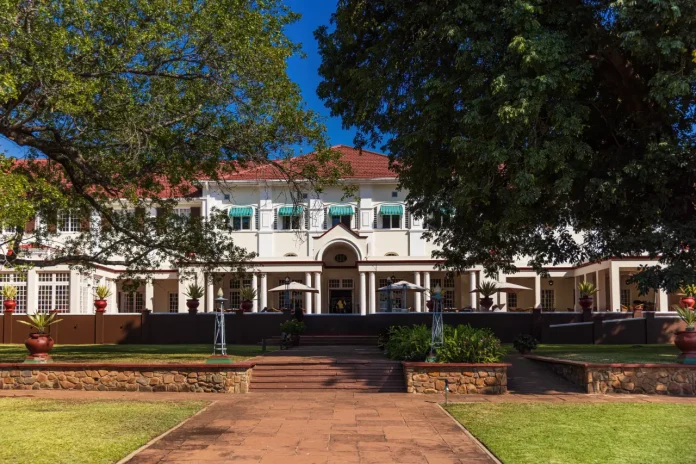
The guest terrace inside the historic Victoria Falls Hotel — Photo by WOPictures via DepositPhotos.com
Meikles Limited has once again moved toward exiting the hospitality sector, reopening discussions to sell its remaining tourism-related investment despite having abandoned similar plans only months ago.
The Zimbabwe Stock Exchange-listed conglomerate announced in a cautionary statement that it is currently engaged in negotiations involving a potential disposal of its remaining hospitality interests.
The group said the proposed deal could qualify as a Category 1 transaction under Section 253 of Statutory Instrument 134 of 2019.
Should the transaction proceed, shareholders will be required to vote on the proposal at an Extraordinary General Meeting that the company said will be convened at a later date.
Meikles cautioned investors that the outcome of the negotiations could significantly influence the value of the company’s shares and advised shareholders to exercise care when trading in the stock until further details are released.
The development signals another shift in the group’s position regarding the iconic Victoria Falls Hotel business. Meikles currently holds a 50 percent stake in the company that operates the hotel alongside its partner, African Sun Limited.
That investment became the company’s final hospitality asset after the sale of Meikles Hotel in Harare to Dubai-based Albwardy Investments for US$20 million in 2019.
The latest announcement comes less than six months after Meikles publicly indicated it would retain its interest in Victoria Falls Hotel.
In December 2025, the company said it had reconsidered earlier plans to divest from the property, citing strong prospects for Zimbabwe’s tourism industry and growing confidence in the sector’s future performance.
At the time, Meikles revealed that discussions had taken place during 2024 with Albwardy Investments, a company that has steadily expanded its footprint in Zimbabwe’s hospitality market.
Albwardy’s recent US$30 million acquisition of Kingdom Hotel in Victoria Falls has fuelled market speculation that the investor could pursue additional tourism assets in the resort city.
Adding to the significance of the Victoria Falls Hotel investment, the historic property’s owner, Emerged Railways Properties, is expected to begin a major refurbishment programme in 2026.
Meikles has not disclosed the identity of the party involved in the current negotiations, nor has it revealed the potential value of the proposed transaction.
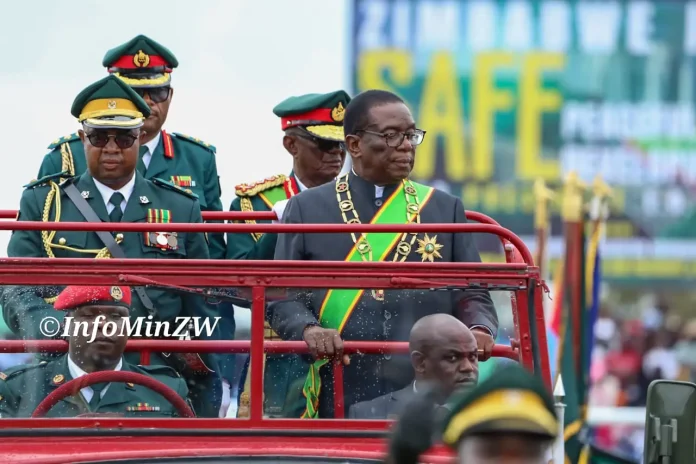
President Emmerson Mnangagwa inspects the Parade, at Maphisa Stadium for the Independence Day celebrations, 18 April 2026 (Picture via Ministry of Information)
President Emmerson Mnangagwa reportedly told retired generals and former senior civil servants that “whoever wins, wins” during meetings over the controversial Constitutional Amendment Bill No. 3 (CAB3), in remarks that are likely to deepen perceptions of a growing succession struggle within the ruling party.
The remarks were contained in a press statement issued on June 2 by retired Air Marshal Henry Muchena on behalf of retired generals and former senior civil servants, following engagements with Mnangagwa on May 18 and 19 over the proposed constitutional amendments.
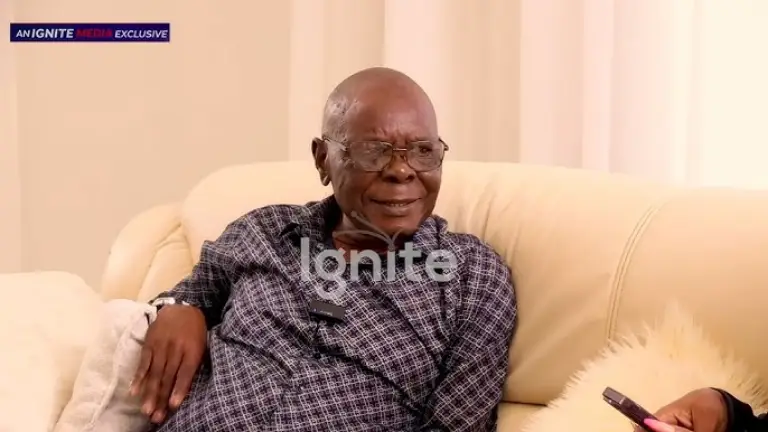
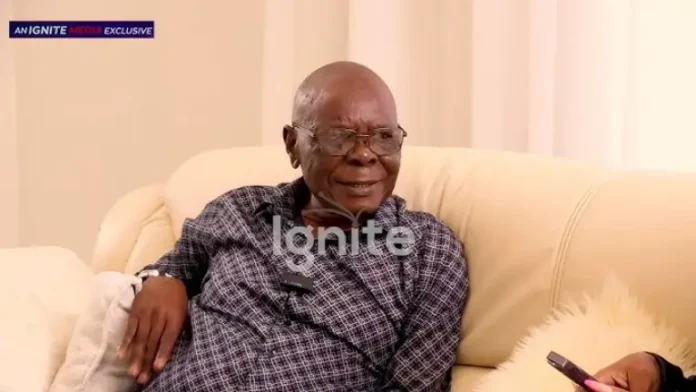
Retired Air Marshal Henry Muchena during an interview with Ignite Media in April 2026 (Picture via YouTube – Champions Network TV)
The group said they had warned Mnangagwa about the dangers posed by CAB3, including what they described as the alienation of citizens from the constitutional order and divisions within Zanu-PF. According to the statement, Mnangagwa responded by saying: “whoever wins, wins.”
“When we placed before the President our caution regarding the dangers of this constitutional amendment chief among them, the alienation of the citizenry from the constitutional order and eventual alienation of our membership in Zanu-PF, his response was, in his own words, ‘whoever wins, wins.’
“That response speaks for itself. It lays bare the contempt with which the constitutional concerns of citizens and members of our party are regarded at the highest level of executive authority,” Muchena stated.
Vice President Constantino Chiwenga (Picture via ZBC News)
The comments are expected to fuel speculation of an intensifying battle over succession within Zanu-PF, where Vice President Constantino Chiwenga has widely been viewed by political observers and sections within the party as a frontrunner to eventually succeed Mnangagwa.
Mnangagwa has repeatedly said publicly that he intends to leave office at the end of his current term in 2028, but opponents of the amendments argue the process is designed to consolidate political power.
In their statement, the retired military officers and former civil servants accused Mnangagwa of being “the principal architect and principal beneficiary” of CAB3. They further alleged that businessman Kudakwashe Tagwirei was financially sustaining the constitutional amendment process, claiming he believed he would become a “secondary beneficiary” of the proposed changes.
The group also claimed the consultative process around CAB3 had been manipulated and did not reflect the genuine views of Zimbabweans. They alleged citizens were pressured into signing letters supporting the bill while opposing voices were excluded from media coverage.
The Bill, expected to be tabled in Parliament this week, seeks sweeping changes to Zimbabwe’s Constitution. Among the proposed amendments are extending presidential and parliamentary terms from five to seven years, delaying the 2028 harmonised elections to 2030, and replacing the direct election of the President by voters with a parliamentary selection process.
Should the proposals pass, Mnangagwa’s current second and constitutionally final term would be extended by an additional two years, allowing him to remain in office until 2030.
The retired generals have renewed calls for a national referendum on the proposed constitutional amendments, arguing that such significant changes should be subjected directly to the will of the people.
They further revealed that constitutional challenges against CAB3 had already been filed before the Constitutional Court on May 20. They said they hoped the judiciary would independently assess the legality of the amendments without political interference.
In addition, the group accused unnamed political actors of attempting to influence legislators through financial inducements. They alleged provincial party chairpersons received vehicles and payments of US$100,000 to support CAB3, while MPs were allegedly earmarked to receive US$50,000 each in exchange for backing the bill.
The statement also criticised Justice Minister Ziyambi Ziyambi over remarks regarding whipping Zanu-PF MPs to support the amendments, arguing legislators should instead be accountable to voters.
The retired generals and former senior civil servants warned MPs and senators against supporting what they described as an unconstitutional extension of presidential and parliamentary terms, saying Zimbabweans would remember those who “chose personal enrichment over constitutional duty.”
Zimbabwean billionaire Strive Masiyiwa seen here at Yale University in the United States (Picture via Facebook - Strive Masiyiwa)
Zimbabwean telecoms entrepreneur and Econet founder Strive Masiyiwa has shared a deeply personal account of humiliation and perseverance during the early years of his struggle to establish a mobile telecommunications business in Zimbabwe, while cautioning young entrepreneurs against being discouraged by displays of wealth and success on social media.
In a reflective statement shared while visiting the United States, where he recently received an honorary doctorate from Princeton University, Masiyiwa recounted how he was once publicly mocked at a bank during the difficult years in which he was battling authorities for a mobile telecommunications licence in Zimbabwe.
According to Masiyiwa, he had spent hours waiting unsuccessfully for an appointment with a bank manager when a former acquaintance arrived with an entourage and was immediately granted access.
“He spotted me in the queue and called out loudly: ‘Strive! How are you?! I hear you have fallen on hard times, my friend!’ then laughed loudly,” Masiyiwa said.
The businessman said the individual mocked his ambitions and dismissed his entrepreneurial vision, telling him that educated “dreamers” were destined to work for “real business people.”
Masiyiwa said the encounter came during one of the most difficult periods of his life, when he was attempting to secure support for a mobile telecommunications venture that many believed had no future.
“After I failed to get that bank appointment, I went home and slumped to my knees and prayed for strength,” he said.
Using biblical imagery, Masiyiwa reflected on how some individuals appear to gain wealth and influence rapidly, only to disappear from prominence just as quickly.
“I have seen such people who seem to flourish out of nowhere, and appear to have it all, spreading themselves like bay leaves on the surface of the water,” he wrote.
“But then I looked and they had vanished just as suddenly.”
Masiyiwa urged aspiring entrepreneurs not to be distracted or demoralised by social media portrayals of success, saying many online platforms amplify unrealistic lifestyles and unhealthy comparisons.
“DON’T LET IT GET TO YOU!” he said.
“There is nowhere it is written that you have to stay on those platforms, or even follow them so that they enter your feeds.”
The remarks come months after Masiyiwa publicly revisited the long legal and political struggle that led to the birth of Econet Wireless Zimbabwe.
Speaking at an extraordinary general meeting earlier this year, where shareholders voted overwhelmingly in favour of delisting Econet Wireless Zimbabwe from the Zimbabwe Stock Exchange, Masiyiwa recounted how the then state-owned Posts and Telecommunications Corporation rejected his 1993 proposal to introduce mobile telecommunications technology.
At the time, Zimbabwe had only about 14,000 fixed telephone lines nationwide, leaving the vast majority of citizens without access to communication services.
Masiyiwa proposed a joint venture in which the state would retain majority control while he managed operations, but the proposal was dismissed on the grounds that there was “no future in mobile telecommunications.”
The rejection triggered a prolonged legal battle that lasted nearly five years and culminated in a landmark Supreme Court ruling that forced the government to issue a mobile telecommunications licence in 1997.
Econet Wireless Zimbabwe officially launched in 1998, ending the country’s telecommunications monopoly and helping drive rapid expansion in mobile phone access across Zimbabwe and the wider region.
Today, Econet forms part of the broader Econet Group, which operates across multiple African markets and sectors.
WestProp Holdings has taken another major step towards sustainable urban development with the installation of a one-megawatt solar plant at Millennium Heights, transforming the estate's 54-bay car park into a renewable energy hub. (Picture via WestProp Holdings)
WestProp Holdings has taken another major step towards sustainable urban development with the installation of a one-megawatt solar plant at Millennium Heights, transforming the estate’s 54-bay car park into a renewable energy hub.
The solar-powered car park now generates clean energy for the residential development, helping ensure uninterrupted electricity supply for residents while reducing reliance on the national grid.
The project forms part of WestProp’s broader vision to create environmentally sustainable communities and deliver on promises made when launching the 1,000-unit Millennium Heights estate.
WestProp Holdings has taken another major step towards sustainable urban development with the installation of a one-megawatt solar plant at Millennium Heights, transforming the estate’s 54-bay car park into a renewable energy hub. (Picture via WestProp Holdings)
What was once a conventional parking area has been transformed into a large solar canopy that simultaneously provides shade for vehicles and generates renewable energy for the estate.
WestProp chief executive Mr Ken Sharpe said the development reflects the company’s long-term commitment to green energy and sustainable living.
“By harnessing the sun, we demonstrate our commitment to environmental stewardship. The solar plant provides shade and comfort while generating renewable energy that cuts reliance on fossil fuels,” said Sharpe.
He added that sustainability remains central to the company’s development strategy.
“Sustainability is our guiding principle. From gas reticulation to solar integration, we embed eco-friendly solutions into every development. The Millennium Heights solar car park shows how lifestyle and sustainability can coexist seamlessly.”
WestProp Holdings has taken another major step towards sustainable urban development with the installation of a one-megawatt solar plant at Millennium Heights, transforming the estate’s 54-bay car park into a renewable energy hub. (Picture via WestProp Holdings)
WestProp plans to expand the initiative by installing additional solar-covered parking bays on future apartment blocks, increasing the amount of energy generated across the development.
The company says the investment forms part of its wider objective of moving all its developments off the national grid through renewable energy solutions.
Beyond powering homes, the solar installation also supports Millennium Heights’ advanced security infrastructure, including 24-hour monitoring systems, controlled access points, surveillance cameras and perimeter protection.
Millennium Heights has also become an attractive investment destination, with many property owners using their apartments as short-term rental units through platforms such as Airbnb, creating additional income streams while benefiting from growing demand for premium accommodation in Harare.
The estate forms part of the larger Millennium City project, which WestProp describes as Zimbabwe’s first purpose-built smart urban ecosystem.
Residents will eventually live, work, shop and relax within a connected environment that includes residential developments, office space, the planned Mall of Zimbabwe and a recreational wetland park.
Linked with the neighbouring Pokugara Estate, Millennium Heights is designed as part of an integrated community combining apartments, townhouses and family homes supported by shared infrastructure and services.
Through investments in renewable energy, sustainable water systems and smart infrastructure, WestProp says it is building future-proof communities that balance modern lifestyles, investment opportunities and environmental responsibility.
As the flagship development within Millennium City, Millennium Heights continues to position itself as a model for sustainable urban living in Zimbabwe.
President Emmerson Mnangagwa seen here with controversial tenderpreneur Kudakwashe Tagwirei (Picture via Social Media)
The recent wedding associated with the family of businessman Kudakwashe Tagwirei may go down as one of the defining psychological and political symbols of Zimbabwe’s current era.
Not because people should not celebrate weddings, and not because wealth itself is evil. But because of what the spectacle represented against the backdrop of a collapsing society marked by poverty, unemployment, collapsing public services, and growing hopelessness among ordinary Zimbabweans.
For many citizens, the event felt less like a family celebration and more like a public declaration of power: “We are here. We are rich. We are powerful. We are untouchable.”
And perhaps even more disturbing was the apparent emotional detachment between the extravagance on display and the suffering surrounding it.
Zimbabweans watched scenes of conspicuous consumption while:
The emotional contradiction was too large to ignore. The wedding became symbolic of something much larger: the emergence of a politically protected elite culture increasingly disconnected from the emotional reality of ordinary Zimbabweans.
The Rise of the “Zvigananda”
Vice President Constantino Chiwenga reportedly referred to this emerging class using the now popular term “Zvigananda” a phrase increasingly used to describe flashy, politically connected elites associated with extreme displays of wealth and working with the president.
What makes this moment psychologically fascinating is not merely the existence of wealth. It is the style of wealth. The brazenness, the fanfare, the need for spectacle, and the almost compulsive public performance of abundance.
Historically, established elites often learn discretion. Old money tends to understand restraint because power that feels secure rarely needs constant theatrical display. But Zimbabwe’s emerging elite appears different. There is something emotionally loud about the culture:
• luxury cars
• massive handouts
• public gifting
• extravagant parties
• visible domination through money
This suggests something deeper psychologically: not confidence, but insecurity.
When Unmet Needs Distort Human Behaviour
Mental fitness theory offers an important lens here. Human beings are fundamentally driven by needs. Psychologists such as Abraham Maslow and family therapist Virginia Satir demonstrated that unmet human needs profoundly shape behaviour, identity, and emotional functioning.
Needs are not merely physical. Human beings also carry:
When these needs are threatened or unmet, fear emerges, and beneath fear lies something even deeper: the fear of psychological or physical death.
The Bible captures this symbolically in Genesis when Adam says: “I heard thy voice in the garden, and I was afraid, because I was naked; and I hid myself.” Nakedness here can be understood psychologically as vulnerability. Clothing is a basic need and its absence brought about fear and hiding.
Exposure.
Lack.
Need.
And fear.
The human nervous system reacts intensely to states of vulnerability because survival itself feels threatened.
Why Excess Often Comes From Fear
This is where many analyses of Zimbabwe’s elite culture fail.
People assume greed comes only from abundance.
But psychologically, excessive accumulation often comes from fear and unresolved deprivation. A person whose nervous system was shaped by:
may continue operating from survival psychology even after acquiring enormous wealth, because they are externally rich but internally afraid.
This is why:
• accumulation becomes compulsive
• display and show off becomes exaggerated
• compassion weakens
• power becomes emotionally addictive
The nervous system still believes:
“There is not enough.”
“I could lose everything.”
“I am unsafe.”
And so, the person keeps grabbing.
The Poor Nervous System in a Rich Environment
One of the most important insights in this discussion is this: changing a person’s financial condition does not automatically change their nervous system.
Someone can become wealthy while psychologically remaining trapped in survival fear and poverty or at least a poor value system. The same nervous system that operated during poverty may still be operating after wealth arrives and distorting thinking, emotions and actions.
Behaviour in this case is just a tip of the iceberg. This creates what might be called: POOR PSYCHOLOGY INSIDE RICH CIRCUMSTANCES.
The result is often:
• selfishness
• emotional detachment
• inability to regulate desire
• compulsive excess
• obsession with protecting one’s own family circle
This may partly explain why political systems shaped by zvigananda often produce:
• nepotism
• tribalism
• patronage networks
• loyalty politics
• concentration of power within close circles
Because psychologically: opening systems feels dangerous. Sharing power feels unsafe and trusting broader society feels threatening.
The Children of Excess
One particularly tragic dimension of this culture is its effect on children. There is also the daughter of presidential advisor Tinotenda Tungwarara and the public controversies surrounding displays of wealth and gifting culture.
Paul Tungwarara and his daughter Tinotenda Tungwarara (Pictures via X – @PresFunds and Instagram – Tino Tungwarara)
The deeper issue here is developmental. The adolescent brain is still forming:
• identity
• values
• emotional regulation
• moral orientation
• understanding of human worth
When young people are socialized into environments where:
• wealth equals value
• public display equals importance
• poor people become spectators
• human dignity becomes transactional
their developmental process may itself become distorted, and the danger is not merely spoiled children but the danger is intergenerational distortion of values.
The Baboon and the Whistle
The African image of the baboon that finds a whistle and becomes intoxicated by the sound it produces is an interesting metaphor to use to understand the behaviour of the Zvigananda.
The baboon blows uncontrollably:
• excited by attention
• fascinated by noise
• overwhelmed by stimulation
The more others react, the more frantic the performance becomes. This metaphor captures something psychologically important about sudden or insecure wealth: it can produce emotional intoxication where money becomes:
• spectacle
• identity
• stimulation
• social domination
And the individual begins PERFOMING wealth rather than simply living.
The Psychological Danger of Elite Detachment
A society becomes extremely dangerous when elites lose emotional connection with ordinary suffering. History repeatedly shows that when ruling classes:
• normalize inequality
• flaunt excess publicly
• become emotionally insulated
• treat citizens as spectators rather than participants,
mass resentment slowly accumulates beneath the surface and this is why prominent lawyer, Sipho Malunga’s warning is psychologically and politically important: “Predatory politics generates mass grievance.
Mass grievance generates mass anger. Mass anger generates mass mobilization. Always!” Human beings can tolerate suffering for long periods. But humiliation is different because it accumulates emotionally and eventually societies react.
Zimbabwe’s Most Dangerous Problem
Yet perhaps the greatest tragedy right now is not even elite behaviour itself, but may be the paralysis of ordinary citizens where disorganized outrage, fragmented frustration, hopelessness, fear, silence and the sense that: “Nothing can change.”
This is dangerous psychologically because societies collapse internally before they collapse externally. When populations lose:
• moral courage
• collective agency
• emotional clarity
oligarchic systems deepen.
The Mental Fitness Challenge
This is why mental fitness matters profoundly in this moment as Zimbabweans face a difficult challenge of how to resist consciously without becoming consumed by rage, despair, or hatred, because unconscious anger can itself become destructive.
The answer is not passivity but regulated participation. Here the Mental Fitness principle becomes essential: Pause. Return. Choose. Pause before reacting impulsively.
Return to the body rather than being consumed by collective emotional chaos and rage Choose consciously rather than participating unconsciously in cycles of fear, greed, humiliation, and domination.
Final Reflection: Fear Dressed as Luxury
Perhaps the deepest tragedy of Zimbabwe’s emerging elite culture is this: that what appears externally as confidence and success may internally be fear, fear of vulnerability, losing power. Fear of becoming ordinary again.
Fear of exposure. Fear of death itself. And when fear controls wealth and power, society suffers because fear without regulation rarely produces wisdom, restraint, compassion, or justice but produces accumulation, control, excess, and eventually, instability.
Zimbabwe now stands at a dangerous moral and psychological crossroads, and one hopes that before the noise of money, luxury, and political spectacle completely drowns the nation’s conscience, enough Zimbabweans will still find the courage, clarity, and emotional grounding to say:
This is not the direction we want for our collective future.
Retired Air Marshal Henry Muchena during an interview with Ignite Media in April 2026 (Picture via YouTube - Champions Network TV)
A group of retired military officers and former senior civil servants has launched a blistering attack on the proposed Constitution Amendment Bill No. 3 (CAB3), accusing President Emmerson Mnangagwa and businessman Kudakwashe Tagwirei of driving a process they claim is designed to serve narrow political interests rather than the national good.
In a strongly worded statement signed by retired Air Marshal Henry Muchena, the group warned President Mnangagwa, parliamentarians and influential business figures backing the constitutional amendments that they risk finding themselves on the wrong side of history.
The retired officials said they remain opposed to what they described as attempts to “mutilate” the Constitution through CAB3 and revealed that recent engagements with Mnangagwa on May 18 and 19 had failed to address their concerns.
According to the statement, the former military and civil service officials had previously petitioned Parliament in March, arguing that the public consultation process surrounding CAB3 was fundamentally flawed and did not reflect the genuine views of Zimbabweans.
They insist that constitutional changes of such magnitude should be subjected to a national referendum rather than being pushed through Parliament.
The group claimed that during their meetings with Mnangagwa, the President dismissed submissions challenging the legality and constitutionality of the amendment process.
They alleged that when confronted with concerns over the proposed changes, Mnangagwa responded that “whoever wins, wins,” which they interpreted as evidence that he is the chief architect and principal beneficiary of the proposed amendments.
The retired officials said the meetings left them convinced that the President is personally driving the constitutional changes and disregarding concerns raised by those opposed to the bill.
Retired Air Marshal Henry Muchena interview in April 2026
They further alleged that tenderprenuer Tagwirei is playing a significant role in supporting the amendment process and claimed that parliamentary consultations and the legislative debate surrounding CAB3 are being orchestrated to secure a predetermined outcome.
Among the most serious allegations contained in the statement were claims that large sums of money were being deployed to secure political support for the amendments.
The retired officials alleged that a US$31 million fund had been assembled to influence the constitutional process and claimed that Members of Parliament had been promised US$50,000 each in exchange for supporting the amendments.
They also alleged that provincial party chairpersons had been rewarded with Toyota Land Cruiser 300 vehicles and cash payments of US$100,000 each.
No evidence was provided to substantiate the allegations, and neither Mnangagwa, Tagwirei nor those accused of receiving inducements had publicly responded at the time of publication.
The group also expressed concern over ongoing Constitutional Court challenges against CAB3, arguing that the judiciary now represents one of the final safeguards for Zimbabwe’s constitutional order.
They urged judges to determine the matter independently and without political interference.
In one of their strongest criticisms, the retired officials accused Parliament of being captured by political and financial interests linked to supporters of the amendment bill.
They called on Zimbabweans to hold lawmakers accountable for their positions on CAB3 and warned MPs against supporting measures that could alter presidential succession arrangements or extend terms of office without direct public approval.
The former officials concluded by reaffirming their commitment to what they described as the values of the liberation struggle and pledged to continue pursuing legal, constitutional and civic avenues to oppose the bill.
CAB3 has emerged as one of the most contentious political issues in Zimbabwe, drawing criticism from opposition parties, church organisations, civil society groups and some former ruling party figures who argue that the proposed amendments could weaken constitutional safeguards and democratic accountability.
Supporters of the bill, however, maintain that the proposed changes are necessary reforms intended to improve governance and address constitutional anomalies.
Former Reserve Bank of Zimbabwe (RBZ) Governor Dr Gideon Gono (Picture via Social Media)
In the twilight of 2007, Harare existed in a state of suspended economic animation. Supermarket shelves, once groaning with produce, were reduced to cavernous expanses of dust and solitary bottles of vinegar.
Fuel queues snaked across city blocks like sluggish, rusting reptiles, whilst outside commercial banks, thousands of citizens slept on cardboard pavements, waiting to withdraw sums that would not buy a loaf of bread by midday.
The nation was drowning in paper. The bearer cheque, an architectural absurdity born of necessity, evolved from a temporary convenience into a symbol of sovereign capitulation.
At the vortex of this monetary maelstrom stood one man: Dr Gideon Gono. As Governor of the Reserve Bank, Gono was neither a detached academic nor a passive observer.
He was the hyperactive technocrat who, armed with a printing press, attempted to command the waves of economic reality to recede, tethering his legacy to one of the most spectacular financial collapses in modern history.
To understand the man who would later trade in trillions, one must return to the dust of Buhera. Born in December 1959, Gono’s early life was defined by the structural neglect of rural areas.
Raised in an environment where poverty was an institutional fixture rather than an accidental misfortune, his formative years at Daramombe High School instilled a fierce, almost desperate hunger for advancement.
Unlike the elite nationalists who glided from missionary schools to foreign universities, Gono’s path was gruellingly unconventional. His career began not in a boardroom, but as a tea boy at National Breweries in Kwekwe.
It is a detail his detractors use to mock him, yet it reveals the core of his psychological makeup. Gono did not inherit power; he engineered it through sheer, nocturnal grit, studying via correspondence with the Rapid Results College.
Through sheer willpower, he secured bookkeeping qualifications, mastered the rigours of the Chartered Institute of Secretaries, and eventually earned an MBA from the university.
This autodidactic journey shaped a specific worldview. Gono became a pragmatic, ultra-utilitarian financial operator who viewed economics not as a series of rigid institutional laws, but as a problem-solving exercise.
For a man who had climbed from the scullery to the executive suite by mastering practical accounting, numbers were malleable things, tools to be deployed rather than dogmas to be worshipped.
By the 1990s, this populist, charismatic energy propelled him through the ranks of the commercial banking sector. His tenure at the Commercial Bank of Zimbabwe, then a troubled institution, solidified his reputation as a financial turnaround artist.
Gono re-engineered the bank, cultivated a folksy, accessible persona, and, crucially, caught the eye of President Robert Mugabe.
In Gono, Mugabe found a rare specimen: a highly competent corporate manager who possessed an unswerving loyalty to the liberation state and a shared disdain for orthodox Western prescriptions.
When Mugabe appointed him Governor of the central bank in November 2003, the state was already entering its existential crisis.
Gono assumed office precisely as the structural foundations of the economy were fracturing. The Fast Track Land Reform programme, launched in 2000, had decapitated commercial agriculture, the nation’s primary foreign currency earner.
International isolation followed swiftly, punctuated by the introduction of targeted sanctions. As traditional credit lines vanished and the opposition Movement for Democratic Change gained ground, the ruling party regime felt besieged. In response, the state centralised its power, retreating into a defensive crouch of liberation-war nationalism.
When structural revenues collapsed, ordinary state machinery seized up. It was during this period of institutional paralysis, exacerbated by the urban dislocations of Operation Murambatsvina in 2005, that the Reserve Bank mutated.
Under Gono, the central bank ceased to be a mere regulator of monetary policy; it became an alternative treasury, a shadow government, and the ultimate guarantor of state survival.
Finding the state’s coffers empty and its survival threatened, Gono pioneered a doctrine of aggressive central bank interventionism, captured under the euphemism of “quasi-fiscal activities.”
If the Ministry of Finance could not tax or borrow, the Reserve Bank would simply create credit. Gono stepped into the vacuum, funding everything from the procurement of national fuel and electricity to the state’s controversial agricultural mechanisation programmes.
The central bank bought tractors, distributed seed, subsidised failing state enterprises, and managed complex foreign currency allocation systems.
In Gono’s calculations, this was a patriotic necessity. He viewed himself as a firefighter inside a burning building, ignoring the standard operating procedures of central banking because the house itself was on the verge of total collapse.
The architecture of these interventions had systemic consequences across the entire fabric of society.
For example, the agricultural mechanisation subsidies entrenched elite patronage while agrarian productivity collapsed. Direct fuel and utility procurement managed to achieve short-term regime survival, but it came at the cost of the total depletion of foreign currency reserves.
Gono defended this unorthodoxy by explicitly rejecting standard monetarist theory, famously declaring: “Printing money for the productive sector is not inflationary, it is also not inflationary when the money is used for infrastructural development like building dams.”
Most notoriously, the uncapped currency printing triggered a catastrophic monetary feedback loop. As bearer cheques grew zeroes at an exponential rate, hyperinflation breached the boundaries of comprehension, peaking in late 2008 at an astronomical 89.7 sextillion percent per annum.
The consequences were socially devastating. Decades of middle-class savings were wiped out in days, pensions vanished into thin air, and public trust in the very concept of a national currency was utterly destroyed.
In the face of impending economic apocalypse, as the local dollar melted down around him, Gono remained defiantly locked into his strategy, famously shouting to his critics, “I will print and print the money!”
Furthermore, the central bank’s interventions became fuel for a sprawling system of patronage politics. The cheap foreign currency and free agricultural equipment distributed by the bank frequently found their way into the hands of political elites, reinforcing the power structures of the ruling party while the broader populace suffered.
Historically, this invites comparison to other hyperinflationary managers, such as Argentina’s various central bank presidents during the crises of the late 1980s, or Turkey’s recent experiments with unorthodox monetary policy.
Yet, while those figures operated within erratic democratic frameworks, Gono operated within a highly militarised, post-colonial liberation state where economic policy was subordinate to regime survival.
This reality forces a serious engagement with the profound moral and professional ambiguity of Gono’s governorship. His defenders argue with absolute conviction that without his unorthodox interventions, the state would have suffered a complete structural collapse, leading to a humanitarian catastrophe and total anarchy.
Gono himself robustly defended this record against his political opponents, stating: “As governor of the central bank I have no regrets about the fact that my team and I have not hesitated to put out the fires that some vested interests have been setting up to burn our country’s economy.”
Conversely, his critics maintain that his actions provided the financial oxygen that sustained an increasingly authoritarian regime, allowing it to avoid necessary political reforms and structural adjustments.
By printing money to fund patronage and cover up structural economic vandalism, Gono, in the view of his detractors, engineered an economic crime that impoverished millions to save a select few.
The psychological burden of this role must have been immense. Gono found himself trapped in an impossible dialectic: a trained accountant forced to preside over the total subversion of accounting reality, writing policy in a theatre where political imperatives overrode arithmetic truths.
When the grand experiment finally collapsed into forced dollarisation in 2009 and the subsequent Government of National Unity took the printing press away, the curtain fell on an era of unprecedented monetary radicalism.
Ultimately, Gideon Gono cannot be easily dismissed as either a heroic patriot or an unprincipled enabler. He remains both simultaneously: a highly capable, exceptionally driven firefighter who, in his determination to save the burning structure of the state, used fuel instead of water. His legacy stands as a cautionary monument to the limits of technocratic voluntarism when confronted with profound structural decay.
For post-colonial African states, his governorship offers a sobering lesson on the fragile relationship between political power, central banking, and economic reality, proving that while a sovereign state can print its own currency, it can never print its own truth.