



The Morgan Tsvangirai I knew and served
Adapted from the introduction in the 2026 book titled : Morgan Tsangirai : Service and Sacrifice

Morgan Tsvangirai looked slightly rattled as he spoke to us. But even as he seemed shaken while making his point, he spoke like a man convinced about the chastity of his mission; a man who would forge ahead regardless of the circumstances.
Unsure about his future, given the treason charge hanging over his head, the man sitting before us was pleading his innocence. He was exhibiting a stoic determination in his avowed conviction that he was not a murderer and would never soil his hands with human blood.
The venue was his fifth-floor office at the Movement for Democratic Change (MDC) headquarters at Harvest House in Zimbabwe’s capital, Harare. The day was a chilly and windy Tuesday morning in February, 2002.

I was still living my other life as a journalist at the privately-owned The Daily News, then the country’s most influential newspaper.
At this interview with Tsvangirai, I was with fellow journalist Dumisani Muleya, then with The Zimbabwe Independent, a privately-owned weekly rag in the country.
A grainy video implicating Tsvangirai in a treason plot to assassinate then President Robert Mugabe had just been flighted on Australia’s Special Broadcasting Services (SBS).
Without soliciting his side of the story as any ethical media house would do, the local State media had latched onto the story, running with a one-sided version obviously in a bid to dent the reputation of the man who had become Mugabe’s main political nemesis in the Presidential election slated for only a month later in March 2002.
The then MDC spokesperson Learnmore Jongwe, now late, had chaperoned Dumisani and I into Tsvangirai’s office to hear his side of the explosive story.
The long-drawn treason charge was to end more than two-and-a-half years later on Friday, 15 October 2004 when Justice Paddington Garwe, sitting with his assessors, delivered a not guilty verdict and duly acquitted him.
But for me, the grit and determination that I saw in Tsvangirai’s demeanour during that interview in 2002 showed a committed man who was prepared to face any challenge.
I was later to notice the same tenacity to soldier on, notwithstanding gruelling setbacks, when he lost his dear wife Susan in a car accident in March 2009.
I was now working for the MDC as its Director of Information and Publicity when his wife met her death in a gruesome accident that shocked a nation still bristling with hope following the consummation of the inclusive government only the previous month.
At Susan Tsvangirai’s death, I equally saw a man with an undaunting spirit to brave through all manner of tragedies and setbacks.
Like all mortals, Tsvangirai had his own weaknesses and inadequacies. And these included his famed weakness with women.
I was to later learn as his spokesperson for almost 10 years that the man just had this steely nerve to brave it all regardless of the situation around him.
In the face of the frequent threats on his life and his own hubris that tilted him towards scandals mainly to do with women, one would always expect Morgan Tsvangirai to trudge forward with verve and confidence, whatever the circumstances.

Endurance. An arrogant determination. Tenacity. Fortitude. A stubborn forthrightness. Service and sacrifice.
This was the hallmark of this man, notwithstanding his glaring frailties and inadequacies that equally encumbered him in a big way.
Before the treason charge interview alluded to earlier, I had for some years in my vocation as a journalist met and spoken to Dr Tsvangirai many a time.
I had covered the MDC’s launch at Rufaro Stadium in Harare in September 1999. I had also covered for The Daily News the MDC’s inaugural Congress at the Aquatic Complex in Chitungwiza in January 2000.
During his gruelling Presidential election campaign in January 2002, just a month before the treason charge interview in his office, we had met for a long chat over drinks during his campaign stop-over in Bindura, the provincial capital of Mashonaland Central.
With my friend and then fellow journalist, Sydney Masamvu, we had shared relaxed moments with Tsvangirai at the Old Coach House near Trojan Mine in Bindura, the mine where he was once a plant foreman before he rose to lead the country’s national labour federation, the Zimbabwe Congress of Trade Unions.
At the Old Coach House, with us enjoying our beers and Morgan Tsvangirai, as usual, sipping at a glass of white wine, the MDC leader had given us snippets of his vision for the country if he won the election some two months later.
Masamvu and I, both political reporters of our respective newspapers at the time, even managed to squeeze out of Tsvangirai a few names of his potential Cabinet line-up if he were to win the March 2002 Presidential election.
Regrettably for us, he insisted the Cabinet list disclosure was strictly off-the record!
I was later to leave journalism to officially join the MDC as the opposition party’s Director of Information and Publicity some two weeks after the party’s first leadership fallout in October 2005.
Now in the party secretariat, I had the opportunity to work closely with Morgan Tsvangirai.
In August 2010, with him now the Prime Minister in a coalition government, he invited me to serve as both his spokesman and the Director of Communications in the Office of the Prime Minister.
Thus began a journey of a politician and a key lieutenant-an eventful odyssey that was to lapse with his death on 14 February 2018.
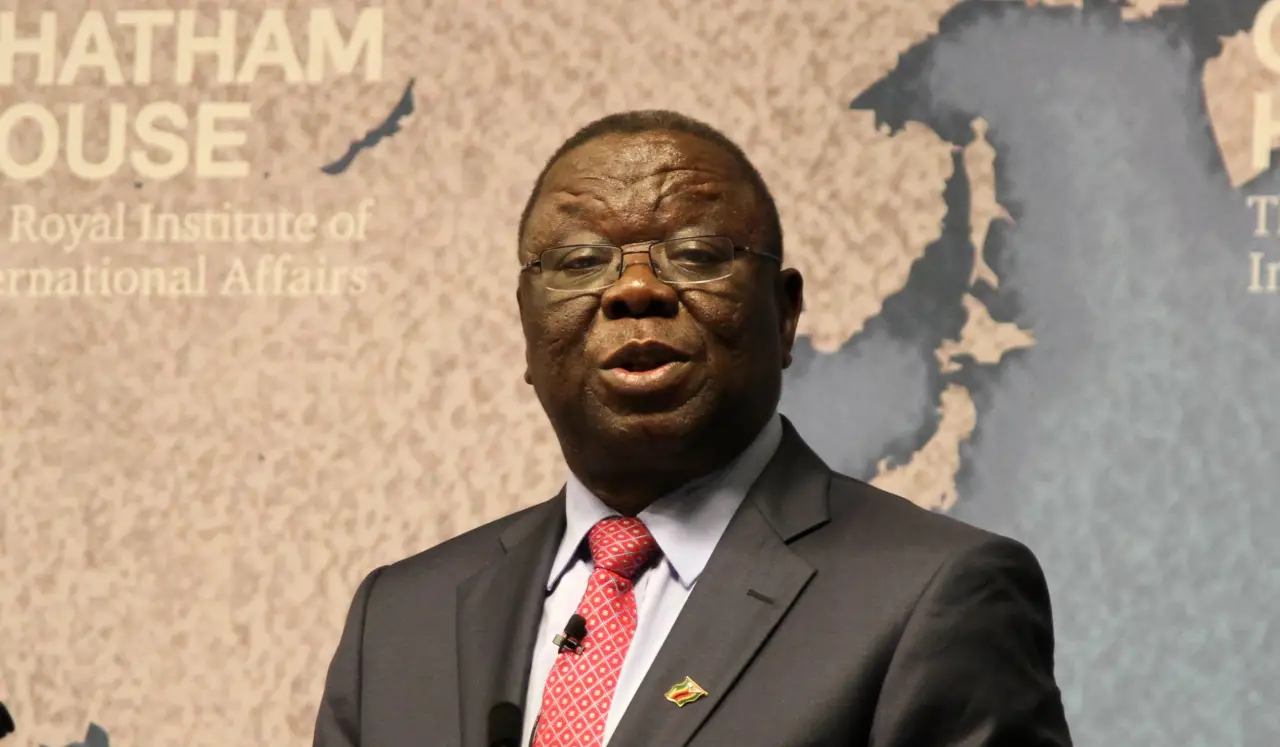
We travelled the country together. We travelled long flights across Africa and across the world together, with me minding his communication, scripting his speeches and determining the message pitch both in the country and in the various world capitals.
In spite of his major weakness mainly to do with women and his discomforting penchant to repeat your allegations in the presence of the person you would have gossiped about in their absence, Morgan Tsvangirai was a charming boss.
A rare breed of political principals who could even afford to attend unannounced the family funerals of his underlings, as he did when he turned up to pay his condolences at my grandmother Martha Tamborenyoka Gombera’s funeral at our rural home in Domboshava in May 2014.
While in government, he showed he was a man of remarkable fortitude.
When he was sworn in as Prime Minister of Zimbabwe in February 2009, the country was on its knees. Basic social services had collapsed. Inflation had run amok while schools and universities had lost several terms and semesters respectively as the economic crunch ate away the social fabric and basic social services.
But in four-and-a-half years between 2009 and 2013, with him and the combined MDCs now added to the wheel of government, Zimbabwe’s economy was rescued from the precipice.
I wish to state from the outset that this book offers a subjective narrative from the perspective of Dr.Morgan Tsvangirai, who was twice awarded honorary doctorates during his time as Prime Minister of Zimbabwe.
So, this book is a subjective text that presents the issues mainly from Dr.Tsvangirai’s perspective, as told to me by him.
This book is a grossly summarised narration of Dr Tsvangirai’s stint in government as a key State player; his achievements, his frustrations, his fears and the setbacks he encountered, including what he presumed to be the betrayal by both friends and foes alike.
Dr Tsvangirai’s views captured in this book are a product of interviews at his Highlands home in Harare specifically for this literary work, the conversations and intense discussions shared during political programmes in the countryside and on the long flights and travels both within and outside the country.
Some of his views and perspectives in this book are extracts from press statements and speeches written during the 10 years of a working amity between a politician and his spokesperson, who was also his speech writer.
The book starts by setting the backdrop of the national crisis by the time Dr Tsvangirai entered government in February 2009. This backdrop includes the two deaths in his immediate family that became a painful preamble as he began a monumental assignment to rebuild the country as Prime Minister of the land.
The book also chronicles the achievements, as well as his personal frustrations during his tenure as Prime Minister.
Apart from Dr Tsvangirai’s perspectives and reflections that have never been made public about his dealings with—-and impressions of—-former President Robert Mugabe,
The book covers his work in government and also contextualises his numerous amorous escapades.
This book equally covers the logic and circumstances around his decision to appoint two more Vice Presidents in his MDC-T party, which decision impacted in a negative way on party stability, both before and well after his demise.
The book also includes the MDC’s commissioned report of how the 2013 plebiscite was pilfered, Dr Tsvangirai’s perspective on the November 2017 coup as well as his reconciliation and reunion with former allies Hon. Tendai Biti and Professor Welshman Ncube with whom he had founded the original MDC in 1999.
His reunion with his two former colleagues, both of whom had served as secretaries general under his presidency at two different periods, resulted in the formation in 2017 of the MDC Alliance, a broad front whose formation Dr Tsvangirai personally spearheaded following nationwide consultations.
For Dr Tsvangirai, the MDC Alliance turned out to be a legacy issue, his unheralded effort at leaving behind a united opposition.

The book is written in the second person but largely from Dr Tsvangirai’s perspective on the issues that happened around him, all undergirded by his firm belief that his time in government was a vocation of service and sacrifice, not only by himself but by his party’s deployees in government, party members and ordinary Zimbabweans.
He always saluted the faith and the support that Zimbabweans always placed in him, the ordinary men and women who had braved brutality and violence to entrust him with the Presidency in the bloody aftermath of the 29 March 2008 plebiscite in which he famously trounced strongman Robert Mugabe, though he was denied the chance to govern as President.
Later, after his tenure in government had terminated in 2013, I personally convinced him that the tenacious story of his stint in government deserved to be crystallised in the form of a book.
His initial thought was that the book be titled “Working with Mugabe.” We haggled over this, with me arguing that he could not include his nemesis in the title of a literary work about himself. I argued that he could not “other” his literary work by elevating his political competitor in a book about his own personal experiences.
We finally agreed to settle on “Service and Sacrifice”, which had been the running theme and dictum of his presidential campaign in the 2013 election.
Dr Tsvangirai even makes reference to this book in his valedictory, heartfelt message to the people of Zimbabwe delivered on Monday, 8 January 2018, the day before he left for South Africa, only to come back demised.
His public message in which he alludes to this book turned out to be his last personal message to a people he loved and had conscientiously served both as party leader and as Prime Minister of the country.
That farewell, January 8, 2018 message to the people of Zimbabwe, which makes reference to this book, was widely covered by the media at the time, though no one at that instance presumed it to be his last public statement.
That heartfelt missive, which in every sense reads like a farewell message by a man who knew his race had run its full course, is published in full in Chapter 7 of this book.
Initially, the plan was to write this book under his name but for the practical reason that he died before we had finalised the book and without him authorising the final manuscript, I decided to write it under my name.
Suffice to say, at one point in late January 2018, while he was in the infirmary in South Africa where he later met his demise, he wanted me to fly over to discuss this book. This was the time Engineer Elias Mudzuri was the acting President.
However, logistical impediments were deliberately thrown in the way to ensure that the trip would not materialise, robbing me the opportunity to meet up with my boss and tie up issues to do with the book, which I was then writing in his name as the author.
Added to the fact that he died without ticking off and approving the final manuscript, I felt it improper to have this work published under his name. This then informed my decision to exercise my Constitutional right to freedom of expression by telling Dr Tsvangirai’s story under my name not only as a journalist who had interviewed him; but also telling the story of a political principal I had closely worked with and for whom I was a spokesperson until his unfortunate death.
After all, I had agreed with him that this story shall be told.
However, even though I have recast it in the second person, this book reflects Dr Tsvangirai’s personal views, as told to me by himself and that is why in his final public statement on 8 January 2018, he makes reference to it, albeit under the belief that it would be written in the first person.
Indeed, save for a few instances of author intrusion where I have offered my own comments and pointers, this book offers Dr Tsvangirai’s views about his tenure in government. His uncle Innocent Zvaipa, now a Member of Parliament, his wife Elizabeth and his son, Richard, would sometimes be present during some of the interviews I had with him for this book.
Even my former colleagues in the OPM, former Minister of State in the Office of the Prime Minister Hon. Jameson Timba and former chief secretary to the Prime Minister Ian Makone knew that I was working on this book.
So save for the very minor incidents of author intrusion, the entirety of the book are Dr. Morgan Tsvangirai’s views. This includes the views expressed in the last chapter, chapter 7, which was his own public statement signed off under his hand.
At one point, having sat down with him to understand his feelings, views and emotions before setting off to write about the death of his first wife Susan, which aspect is covered in Chapter 2 of this book, I returned to give him the completed script.
Upon reading it, he literally broke down, looked at me and said he would not have done a better job himself. He said I had aptly captured his feelings as he had expressed them in two earlier interviews with me on the subject.
He had insisted that the book should carry that sad chapter of the death of his first wife, which death he claimed had spawned a huge void in his life—-a void that had regrettably exposed his gross inadequacies, particularly his weakness for women.
As his spokesperson for almost 10 years, I had gruelling but sometimes hilarious experiences in my quest to keep my boss’s multiple amorous escapades from the public glare. I remember at one point having a torrid time putting out the fires on a story involving one Lauretha Nyathi, a Bulawayo woman with whom he had a son, for whom he was now paying maintenance.
I had not known about this until I received a call from a journalist who wanted to hear Dr Tsvangirai’s response on the matter. I told the reporter I was busy and that I would get back to him. A few minutes later, I got a call from Nelson Chamisa, then the party spokesman, who had received a similar call of the same inquiry from the same journalist.
We both agreed to drive to the principal’s house to understand the matter and to synchronise our responses to the press on this potential scandal.
We drove to his residence and found him sitting in the lounge.
Dr Tsvangirai told us he had indeed met Lauretha in an elevator; that they had exchanged numbers, that one thing had led to another and now there was a son for whom he was now paying maintenance.
Chamisa and I looked at each other, wondering how we were going to spin our boss out of this sordid mess; the muddle of a whole Prime Minister who casually exchanged phone numbers with girls in the elevator and then proceeded to have unprotected sex with them!
We told him we had come because we wanted to hear the truth of what actually happened so that we could decide together how best we could protect the brand: given the inquiries we were now getting from the media over the matter.
He must have understood our predicament but instead of offering any advice on how we could spin our way out of this scandal, he blurted out a statement whose import was that we were now supposed to do our job, now that he had told us the truth of what had happened: “Saka modii manje, ndimika mune basa rakaoma kudai rekuchengetedza brand rinovata madzimai?” (Now how are you going to proceed on this one, given your onerous task to protect a reckless brand given to casual, unprotected sex?)
It was as if he was talking about some other brand and not himself. Chamisa and I looked at each other and could only afford a chuckle at the boss’ remarks well after we had left the precincts of his residence.
A few days later, Dr Tsvangirai, his lawyer Innocent Chagonda and I sat down and did a statement in a bid spin him out of his amorous lockdown.
On another occasion, in the morning of Wednesday, 25 July 2012 in Canberra, with members of the Australian Air Force waiting on both sides of the rolled-out red carpet for the Prime Minister of Zimbabwe to board the Australian Air Force helicopter to nearby New Zealand on a diplomatic assignment, we delayed departure by several minutes.
As the soldiers from the Australian Air Force patiently waited on the terminal tarmac, with their hands on their foreheads in a veneration salute for a routine procedure that was supposed to last less than a minute, it was unbeknown to them that there was a serious matrimonial dispute in the protocol vehicle that had Dr Tsvangirai and his wife, Elizabeth.
Mrs Tsvangirai was refusing to board the same plane with Zimbabwe’s ambassador to Australia at the time, Her Excellency Jackie Zwambila.
Ambassador Zwambila’s diplomatic remit also covered New Zealand and she was supposed to be on the same flight with us. But Mrs Tsvangirai would have none of it. She had apparently heard that there was an amorous relationship, either present or past, between Dr Tsvangirai and the good ambassador and she was not going to board the same copter with her.
The trip later proceeded without further incident, but with the Australian Air Force soldiers having waited some minutes longer with their hands on their foreheads as matrimonial rancour raged in the Zimbabwe Prime Minister’s protocol vehicle.
Later that evening back in Canberra after our return from Wellington and at the Prime Minister’s invitation, Hon. Jameson Timba, then the Minister of State in the Prime Minister’s Office and I spent a large part of the evening in Doctor Tsvangirai’s hotel suite, soothing the highly frictional matrimonial tempers.
Dr Tsvangirai had faith in some of his lieutenants and would entreaty them to assist if he felt they could execute the assignment. Such was the trust.
They say there is no smoke without fire; even though of course tear-smoke is just smoke with no accompanying blaze. I never got to know whether it was just smoke, or fire, or both on this particular matter.
Until his death, I never got to ask Dr Tsvangirai whether there was any fire to the billowing Zwambila “smoke” that engulfed the runway that chilly July morning in Canberra!
Those were some of the epic moments with our highly affable boss who, despite his weakness for women, remained sincere and honest in his mission to serve his country.
Indeed, as Morgan Tsvangirai’s spokesperson, one learnt to always be on the guard for the inevitable romantic scandal that could drop on your lap, and from which you had to spin him out.
For me, what was humbling was that he would always entrust me with handling these filial romantic aberrations that would otherwise be handled by a family spokesperson, as he did on 18 November 2011 when he was deemed to have married one Locardia Karimatsenga Tembo.
He told his brothers to steer away from the matter and to defer and refer all press issues to do with Karimatsenga Tembo to my attention.
Such was his faith in my capacity to communicate his mind.
This book could have been published earlier. The delay was mainly due to my strident academic pursuit at the University of Zimbabwe that only ended in 2020, as well as two gruelling and highly involving election campaigns in 2018 and 2023, all of which detained my attention.
I wish to thank my colleague, Jameson Zvidzai Timba who was the Minister of State in the OPM for his keen pair of eyes that read the manuscript of this book.
I wish to posthumously thank my late boss, Dr Tsvangirai, for the trust in me over the years, for the interviews, for the animated and insightful conversations we had and for his rich personal reflections that he shared with me and that form the material for this book.
It takes a lot of belief and faith for a national leader to entrust you with the onerous responsibility to communicate their mind as their spokesperson, a responsibility that I now carry one last time by telling Dr Tsvangirai’s story in government but from his own perspective and in his own words.
So it painfully came to pass that on a Tuesday afternoon in February 2018, as they interred Dr Morgan Richard Tsvangirai in the loamy soils of the Tsvangirai family compound at Humanikwa village in Buhera, I felt a swelling wetness in my eyes. The surging feeling within me at that moment was that a part of me was being buried as well.
For the body that had entrusted its voice in me was now being physically planted into the very innards of Mother Earth.
As they shovelled the soil over his final resting place besides his late wife Susan, I knew then that the positively arrogant journey of service and sacrifice had run its full course.
I also knew then that the trademark raucous, booming, carefree laughter that had awed all who had known him would never be heard again!
The above piece is an extract from the preface or introduction in a recently published book by Luke Tamborinyoka, Tsvangirai’s spokesperson for 10 years until Morgan’s death in 2018.
Tamborinyoka, a seasoned journalist and eminent columnist, is currently based in England. You can buy his book HERE

